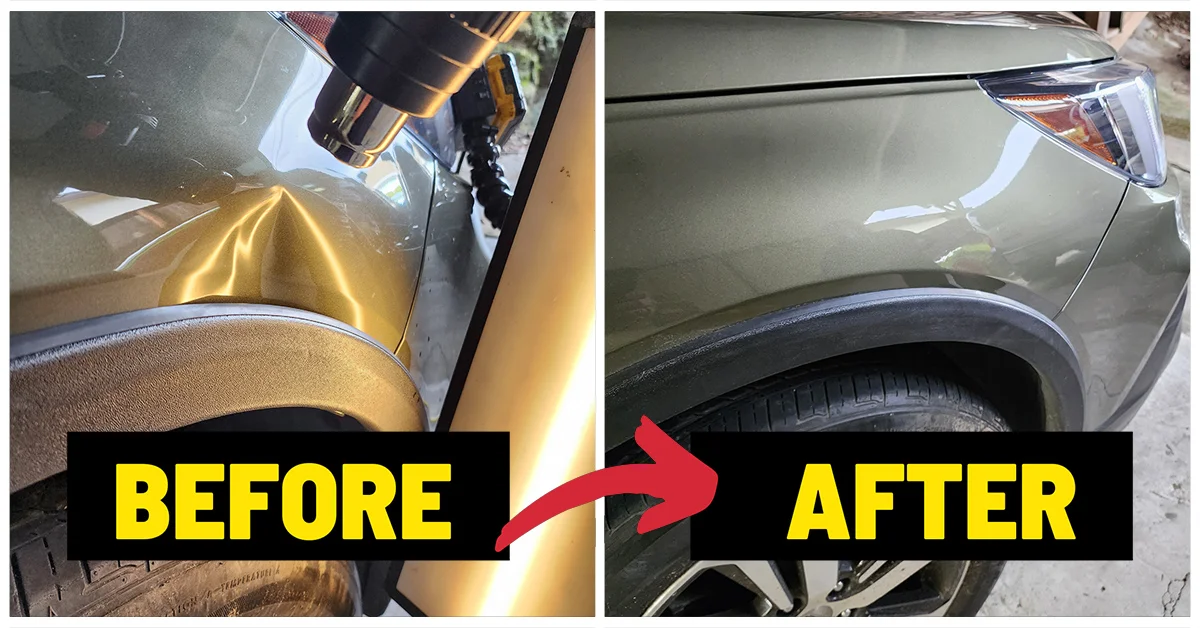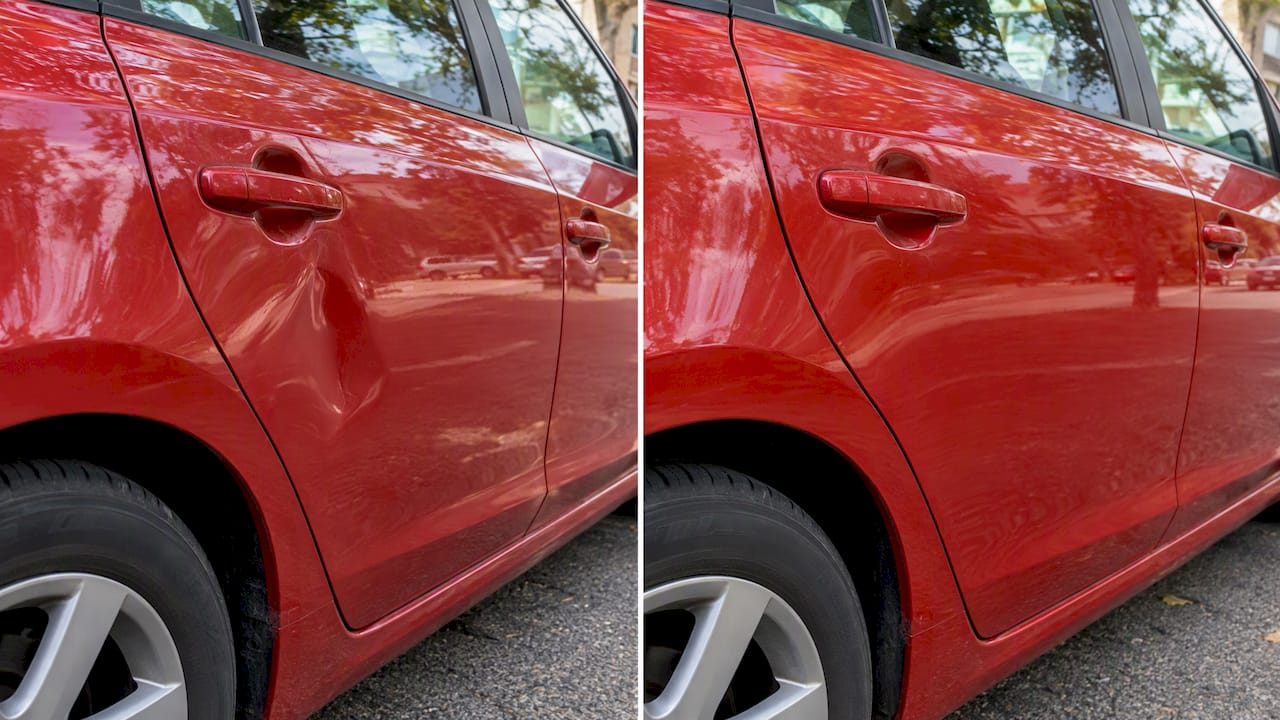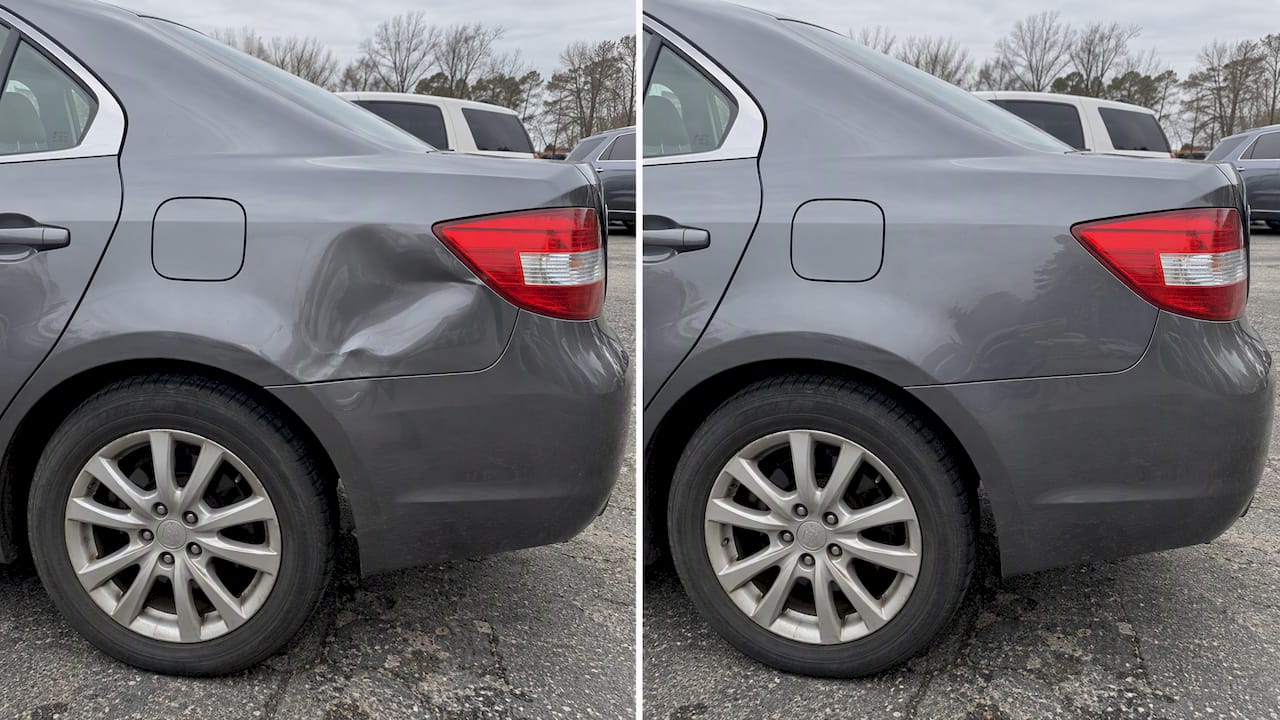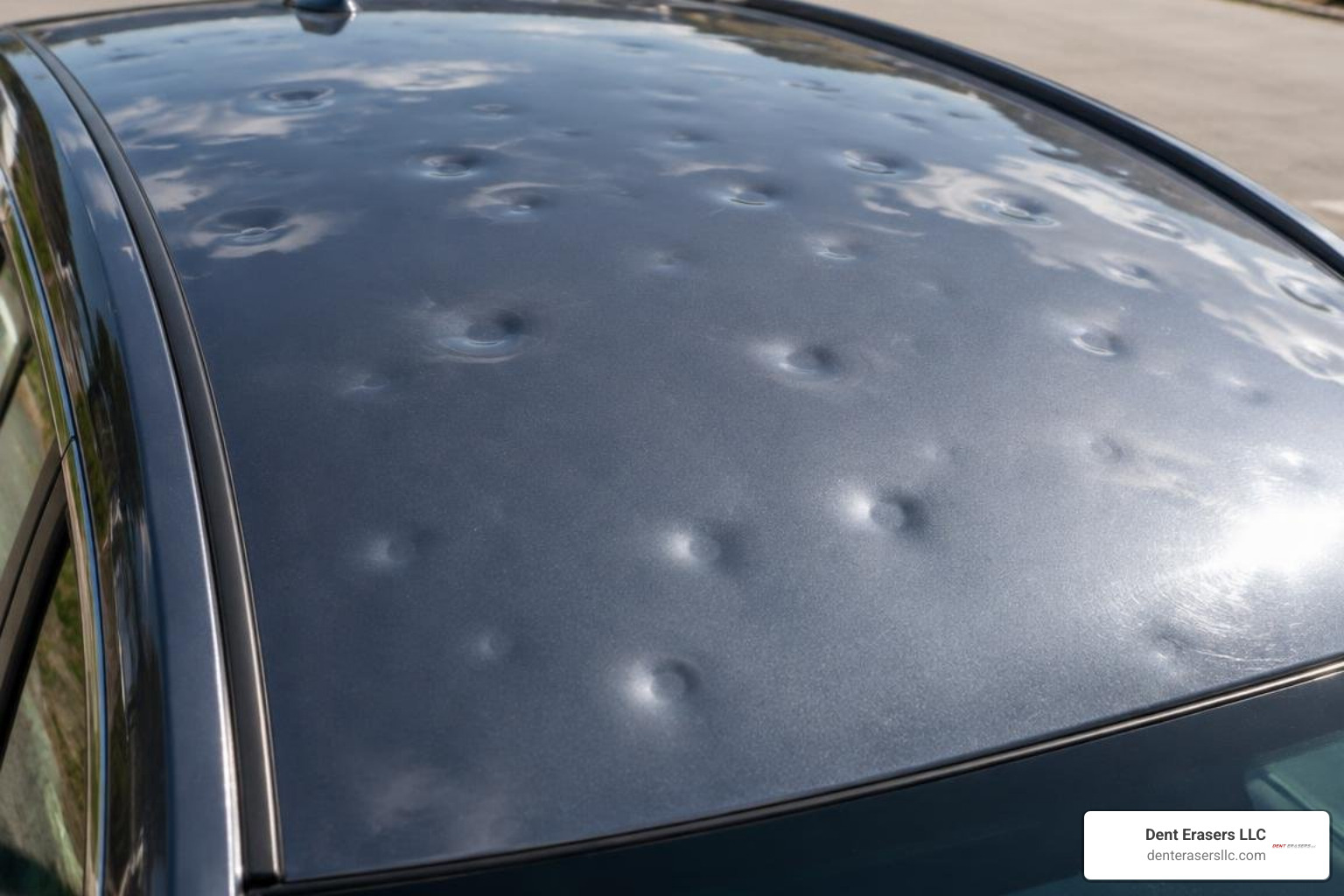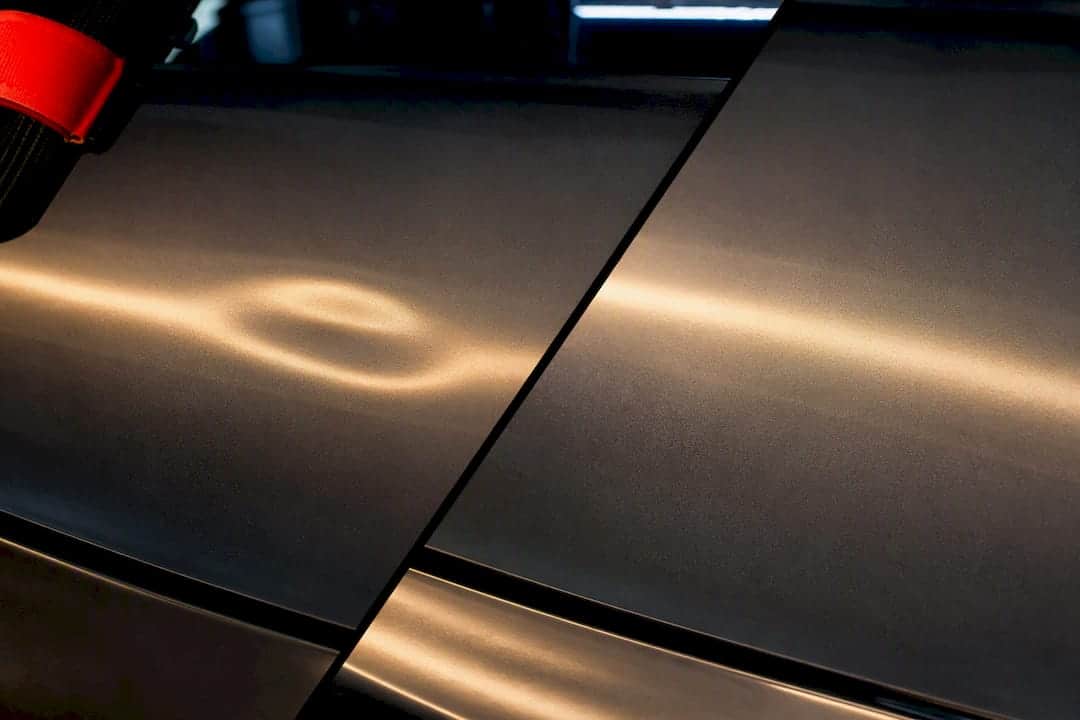
There is no single hard maximum on PDR size limits. Many large, shallow dents get fixed without a paint job, while a small, tight crease can be impossible to pull. The deciding factors are the dent’s shape, its depth, whether the metal has stretched, and whether a technician can reach the backside. A professional inspection using the five-factor checklist is the only way to know for sure.
TL;DR:
- Wide, shallow dents are often repairable regardless of their surface area, while sharp creases or deep pits usually indicate stretched or fractured metal.
- Dent shape, depth, metal stretch, and backside access are more critical than size in determining if PDR can succeed.
- Materials like ultra-high-strength steel, boron steel, and areas near sensors or hem flanges often prevent PDR regardless of dent size.
- Technicians assess damage by comparing it to everyday objects and using a five-factor inspection, not just by measuring it with a tape.
- Large, shallow damage on flat panels can respond well to onsite repairs, but complex or old dented areas may require traditional collision repair.
Table of Contents
- PDR Size Limits by Category: What Size Dents Are Realistic?
- Why Shape and Depth Matter More Than PDR Size Limits
- Which Panels and Materials Fall Outside PDR Size Limits?
- How Technicians Measure a Dent and Decide If It’s Repairable
- Time and Cost Expectations Across Different Dent Sizes
- Red Flags That Signal PDR Won’t Work
- A Mobile Technician’s View on Borderline Dents
- What a Mobile PDR Assessment Actually Covers
- Sources
- FAQ
PDR Size Limits by Category: What Size Dents Are Realistic?
Most shops sort dents into rough size tiers, but those bands are guidelines, not guarantees. A dime-sized ding on a hood behaves very differently than the same diameter dent on a sharp body line, so treat the ranges below as a starting point for a conversation with a technician, not a strict rulebook.
- Minor dings: Shopping cart dings, hail pockmarks, and small door dents. These are the bread and butter of PDR, with a very high success rate when the paint is intact.
- Medium dents: Parking lot dents, small collision marks, bigger hail strikes. Repairable in most cases, but outcome depends heavily on depth and how close the dent sits to a body line or edge.
- Large damage: Basketball-sized panel dents from a rolled cart, a fallen branch, or a low-speed bump. Often fixable if the metal stayed shallow and the panel is relatively flat, though it usually calls for more advanced glue-pull or rod work and a longer session.
A wide, shallow 10-inch dent on a flat hood is frequently an easier job than a 2-inch crease folded into a door’s swage line. Panel geometry changes everything, which is why a phone estimate is never as reliable as an in-person look at the damage.
Why Shape and Depth Matter More Than PDR Size Limits
Size grabs your attention, but shape decides whether PDR works. A wide, shallow dent usually keeps the metal within its elastic range, meaning it wants to spring back once the pressure that caused it is gone. That is exactly what makes it a good PDR candidate, no matter how large the surface area looks.
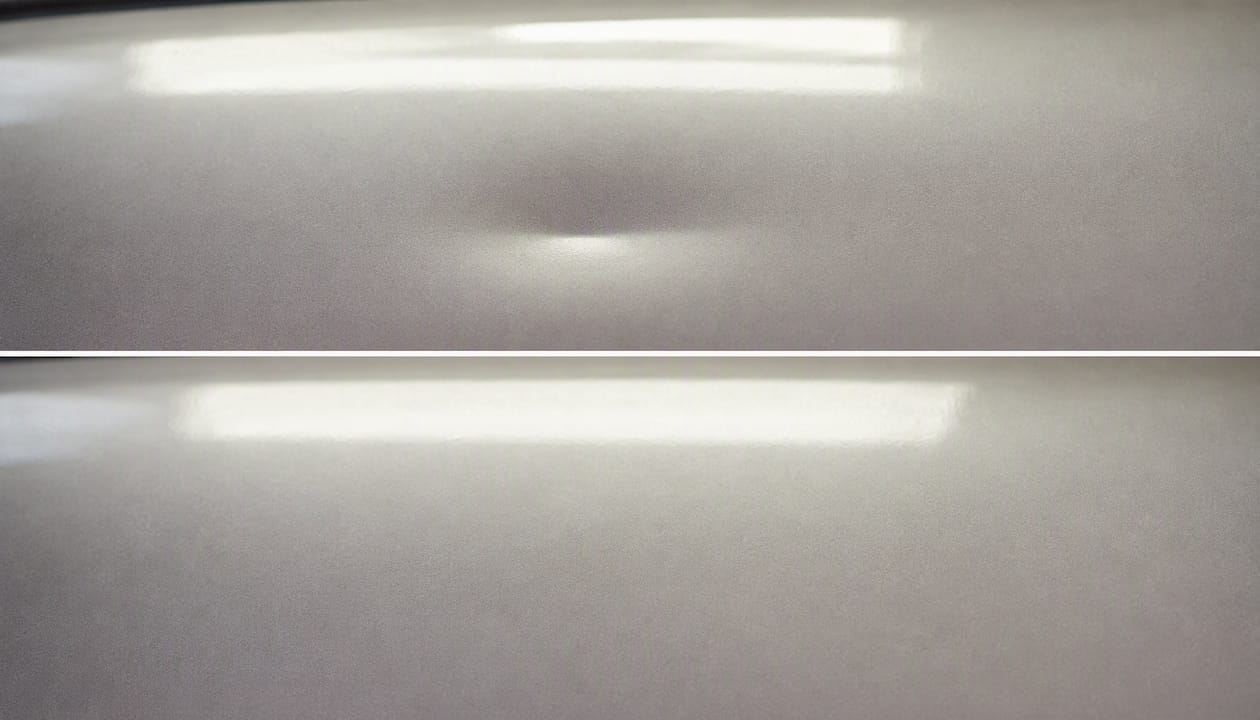
Sharp creases tell a different story. A crease means the metal folded rather than flexed, which often stretches or fractures the panel’s surface at a microscopic level. According to Dent Evo’s explainer on PDR limits, paint must stay intact, the metal cannot be cracked or overstretched, and there has to be usable backside access for PDR to succeed at all. Size barely factors into that list.
Access changes the math too. A dent a technician can reach with a rod from behind is a different job than one that requires a glue-pull kit worked entirely from the front, and some locations do not allow either approach.
- Wide, shallow dents: often repairable regardless of footprint.
- Sharp creases or deep pits: usually indicate stretched or fractured metal.
- Rod access from behind: generally the fastest, cleanest method when available.
- Glue-pull from the front: necessary when there is no backside access, but slower and pricier.
Pro Tip: Run your fingers slowly across the dent instead of just looking at it. A crease you can feel as a sharp fold, rather than a smooth bowl, is a strong sign the panel may need traditional bodywork instead of PDR.
Which Panels and Materials Fall Outside PDR Size Limits?
Not every panel plays by the same rules, and modern vehicle construction has quietly narrowed what PDR can touch. DentAdvisor’s technical breakdown of PDR limitations points to a few consistent trouble spots.
- Ultra-high-strength steel (UHSS) and boron steel: Common in pillars, rocker panels, and roof rails for crash protection. These metals resist the controlled flexing PDR relies on, so they’re often treated as no-repair zones regardless of dent size.
- Aluminum panels: Aluminum has different springback behavior than steel and needs dedicated tools kept separate from steel work to avoid cross-contamination. A dent that would be routine on a steel fender can require a different technique entirely on an aluminum hood.
- ADAS sensor zones and hem flanges: Bumpers carrying radar or camera sensors, plus the folded metal edges within about an inch of a panel’s hem flange, are frequently off-limits. The metal there is doubled over and often bonded with adhesive, which limits both access and leverage.
None of these limits are about the dent being too big. They’re about the panel itself refusing to cooperate.
How Technicians Measure a Dent and Decide If It’s Repairable
Talk to enough PDR technicians and you’ll notice they measure damage against everyday objects rather than a tape measure. It’s a fast, consistent shorthand that also protects the shop from underquoting a job.
- Reference sizing. Dents get compared to a coin, a half-dollar, a tennis ball, or a grapefruit. NAPDRT’s consumer guidance instructs technicians to round up, not down, whenever a dent’s footprint exceeds its reference size, since that keeps pricing honest on borderline cases.
- The five-factor inspection. Dent Werx outlines the criteria technicians run through before touching a panel: paint and coating condition, metal stretch and geometry, panel material, location relative to edges and supports, and whether there’s a workable access route.
- Clustered dents. Overlapping or connected dents get evaluated as a group, not individually, because the metal in between them has already absorbed stress from both impacts.
Intact paint alone never greenlights a repair. All five factors have to line up.
Time and Cost Expectations Across Different Dent Sizes
Price follows complexity, not just square inches. A small ding might take fifteen minutes; a large, awkward dent with poor access can eat an entire afternoon.
- Small dents: Minutes to about an hour, usually priced at the lower end of a shop’s range.
- Medium dents: Typically require longer workshops depending on panel removal needs.
- Large or complex dents: Several hours, sometimes staged across multiple sessions when glue-pull work is involved.
Depth, access difficulty, and whether a panel needs to come off the car all push labor time up. On the insurance side, carriers sometimes favor full panel replacement once a PDR estimate creeps close to replacement cost, particularly outside of hail claims, where PDR is usually the preferred route. Our pricing guide breaks down what drives those numbers in more detail.
Red Flags That Signal PDR Won’t Work
Some damage announces itself as a lost cause the moment a technician looks closely. Knowing these signs before you book an appointment saves everyone time.
- Cracked or micro-cracked paint. Micro-cracks visible under magnification are usually enough to disqualify a panel, since pushing metal under cracked paint tends to spread the damage.
- Sharp creases or oil-canning. A crease or a panel that flexes unnaturally (oil-canning) signals the metal has lost its elastic memory.
- Dents near hem flanges, pillars, rockers, or roof rails. These reinforced zones resist movement and often cannot be reached safely.
- Prior filler, repaint, or double-skin panels with no access. Bondo or a mismatched respray usually means the panel already failed once; inaccessible double-skin construction removes the rod-access option entirely.
One industry note worth remembering: DentAdvisor’s technical analysis flags ADAS sensor zones as an additional keep-out area, separate from the mechanical issues above, because disturbing a sensor mount can throw off calibration. When any of these show up, the honest answer is a collision center, not a rod kit.
A Mobile Technician’s View on Borderline Dents
Working on-site means we see every version of “how big is too big” in a single week: a shallow dent that looks alarming but pulls clean in twenty minutes, and a small crease that turns out to be unworkable. The pattern holds. Large, shallow damage on a flat panel usually surprises people by how well it responds, while old repairs and sharp folds are what actually stop a job cold.
— Brian Blanc
What a Mobile PDR Assessment Actually Covers
Denterasersllc built its onsite process around the same triage a shop would run, just brought to your driveway or office lot. A mobile assessment includes sizing the dent against reference objects, running the five-factor inspection, and giving you a realistic time and price estimate before any tool touches the panel.

If the damage crosses into stretched metal, cracked paint, or an OEM-restricted zone, we say so and point you toward conventional collision repair instead of forcing a PDR fix that won’t hold. That honesty is part of what our large dent repair service is built around, whether the damage is a shallow ding or a larger panel dent that needs careful glue-pull work. Booking is simple: request an onsite mobile dent repair estimate and we’ll assess your vehicle at your location, no shop visit required.
Sources
For deeper reading on sizing and repair limits, see NAPDRT’s consumer procedure page, Dent Evo’s limits explainer, and DentAdvisor’s technical limits summary. For a body shop’s perspective on PDR processes, Eurobahn Auto Body Shop’s PDR page is also worth a look.
- NAPDRT – PDR procedure page
- PDR Limitations: Technical Analysis of When Paintless Dent Repair Won’t Work | DentAdvisor
- How PDR Technicians Decide If a Dent Can Be Repaired Without Paint – Dent Werx
FAQ
How big of a dent can PDR fix?
There’s no fixed cutoff. Large, shallow dents on flat panels, sometimes basketball sized or bigger, are often repairable, while much smaller creases can be off limits if the metal has stretched.
What are the limitations of paintless dent repair?
PDR runs into trouble with cracked or micro-cracked paint, sharp creases, stretched or fractured metal, hem flanges and reinforced edges, and panels with prior filler or repaint work.
How is a dent’s PDR size classified?
Technicians compare the dent’s footprint to reference objects like a half-dollar, tennis ball, or grapefruit, and always round up to the next size category if the damage exceeds the reference.
Does dent age affect whether PDR will work?
Yes. Metal that’s sat dented for months or years can develop “metal memory,” making it stiffer and less responsive to PDR techniques than a fresh dent of the same size.
Can Denterasersllc fix large dents onsite?
Technicians run a five-factor inspection during a mobile assessment and will attempt large, shallow dents onsite when the panel and access allow it. Current pricing for large dent jobs is listed on the large dent repair page.