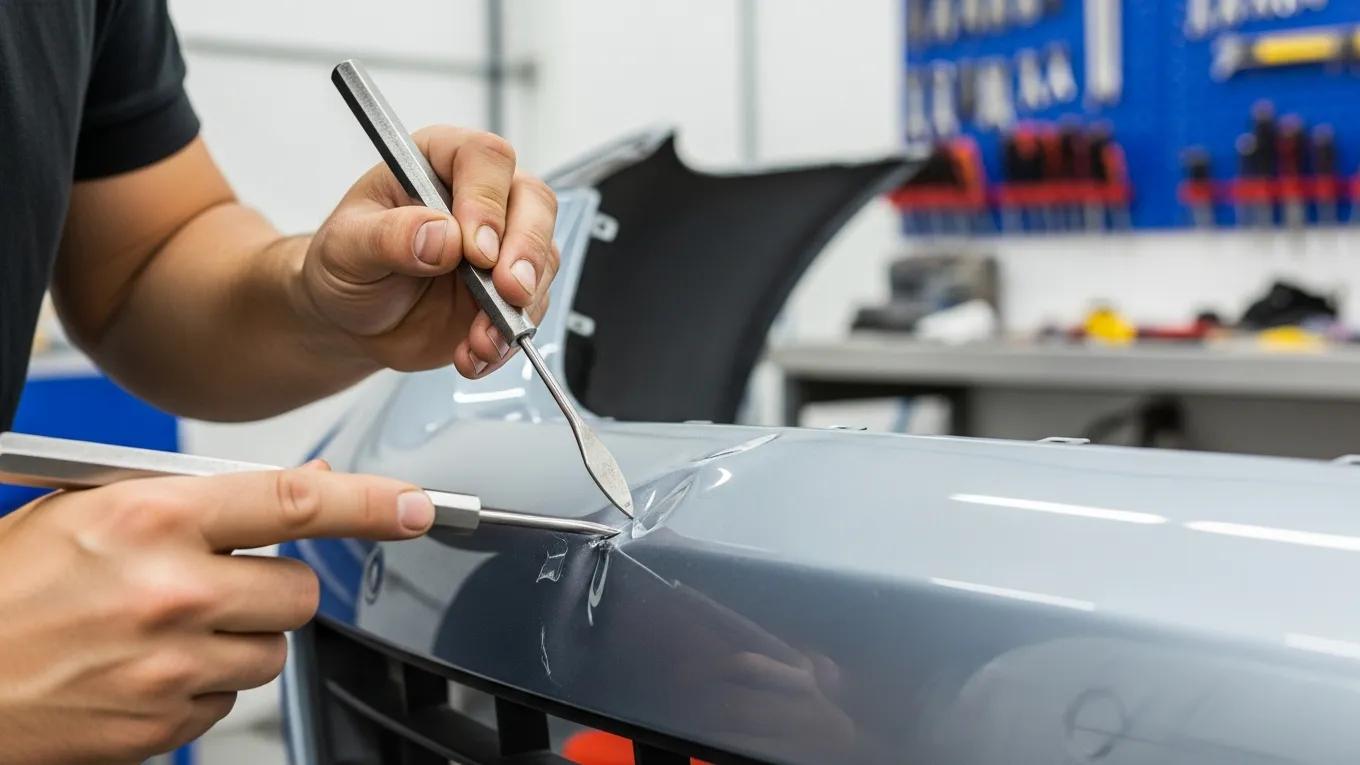
Advanced Plastic Bumper Repair: Seamless Restoration Solutions
By Brian Blanc, Dent Erasers LLC
Plastic bumper repair protects both appearance and function. This article summarises the main approaches—paintless dent repair (PDR) and seamless repair—explaining when each applies and the convenience of mobile dent repair services in Contra Costa County.
Plastic bumpers are common today because decades of design development and material innovation have prioritised lightweight protection and repairability.
Evolution of Automotive Plastic Bumper Design
Federal regulations on vehicle protection and damage resistance have driven major changes in bumper design, appearance and material selection since 1973. These standards evolved over subsequent decades, producing a broad range of bumper systems that use various plastics and elastomeric materials.
An overview of automotive plastic bumpers, 1990
Key Takeaways
- Paintless Dent Repair (PDR) can remove minor dents without repainting, preserving the factory finish.
- Common PDR techniques include push-to-paint and glue pulling; heat or light may assist on plastic panels.
- Small dents, many hail dents, and select creases are often suitable for paintless repair.
- Mobile dent repair in Contra Costa County brings technicians to your home or workplace for fast, on-site service.
- Seamless repair (filling and repainting) restores larger or paint-damaged areas with a smooth, colour-matched finish.
- Typical repair costs vary by method and severity; verify insurance coverage before proceeding.
What is Paintless Dent Repair and How Does It Preserve Your Plastic Bumper?
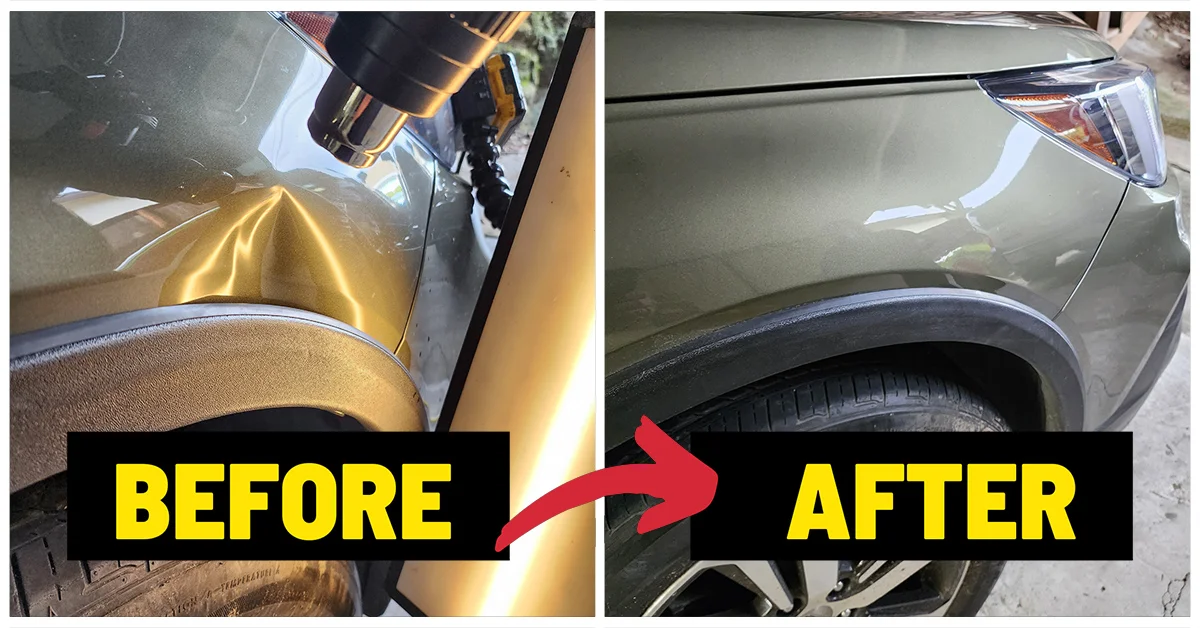
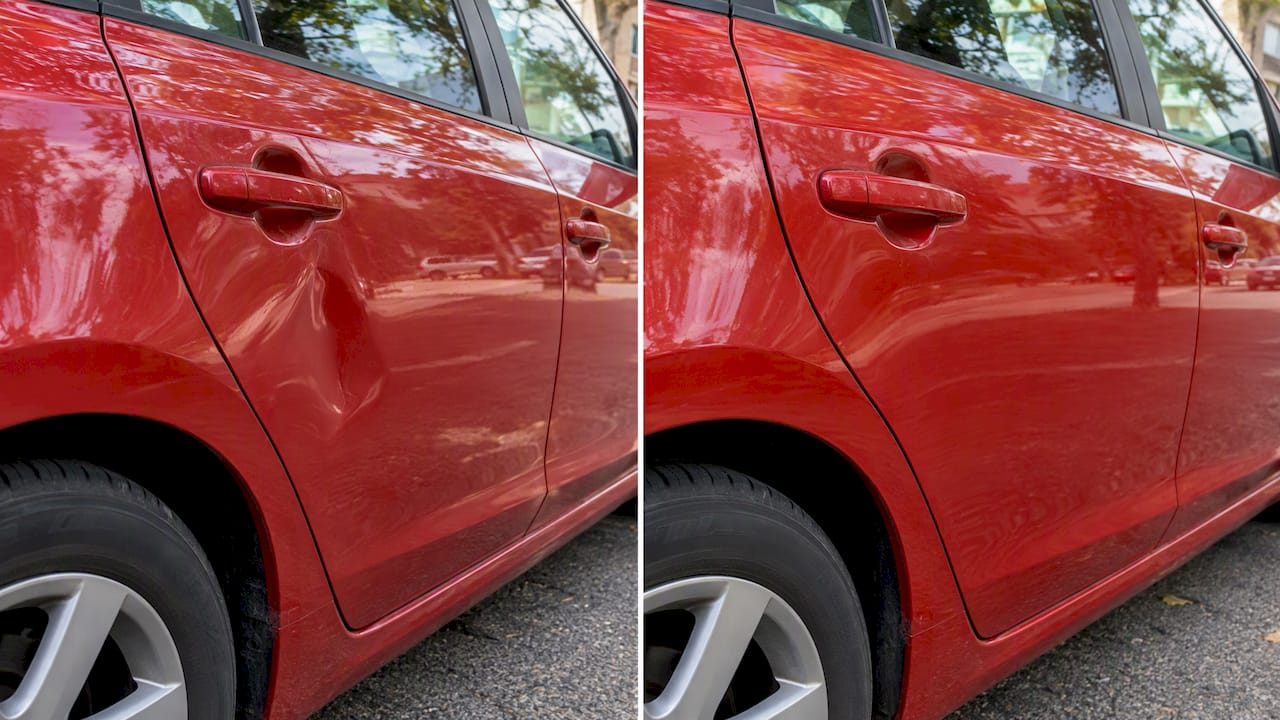
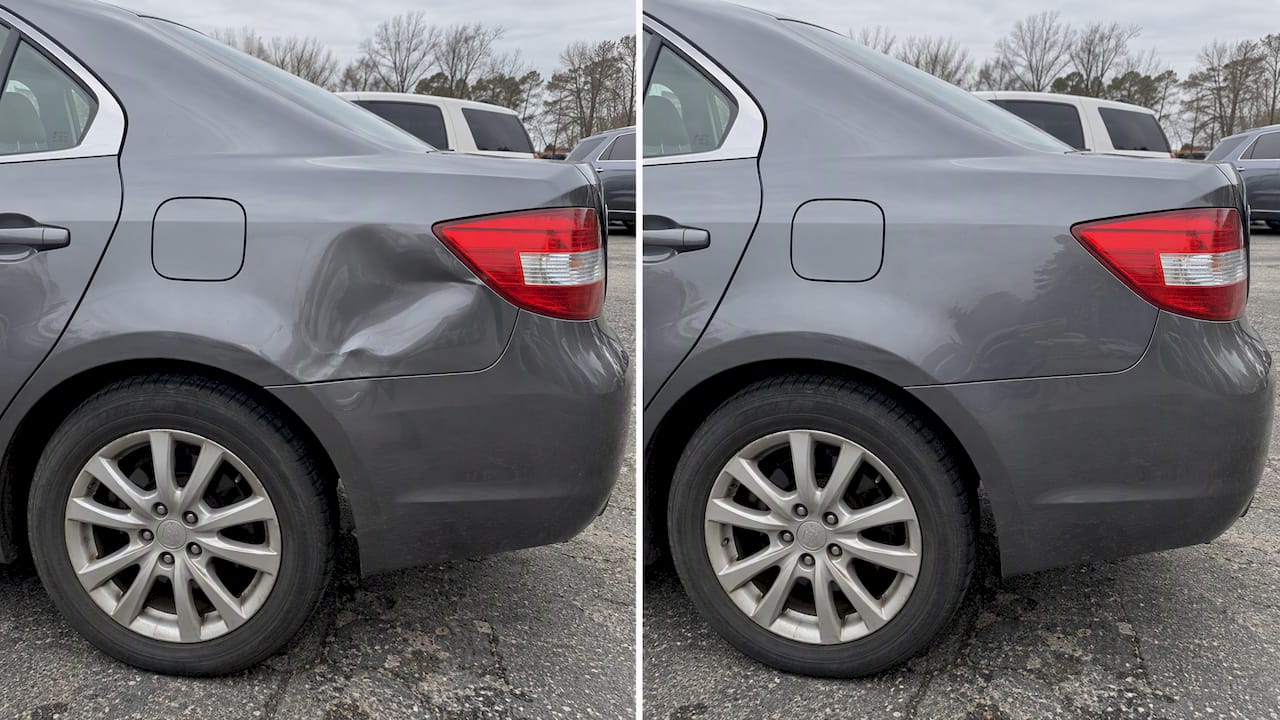
Paintless Dent Repair (PDR) removes minor dents and dings without repainting by reshaping the bumper back to its original contour using specialised tools. Keeping the factory paint intact avoids colour mismatch and helps preserve resale value.
PDR depends on precise, purpose-built tools that reshape the bumper from behind or the surface without disturbing the paint.
Paintless Dent Remover Design for Bumper Repair
When a vehicle body receives dents, scratches or bumps, repairs are often needed and parts such as fenders, bumpers or bonnets may be replaced. A paintless dent remover is designed to correct dents without removing paint. These tools are built to operate at multiple angles, allowing repairs that other devices cannot perform within the same constraints.
Design & Development of Dent Remover without Removal of Paint, MZ Khan, 2025
How Paintless Dent Repair Maintains Original Paint and Finish
PDR uses push-to-paint (working from behind) or glue-pulling (from the surface) to restore contour while leaving paint intact. Controlled heat or light can soften plastic for safer reshaping. Properly executed, these methods produce subtle, hard-to-detect repairs.
Which Types of Bumper Dents Are Ideal for Paintless Repair?
- Minor Dents and Door Dings : Small, shallow dents that do not break the paint surface are ideal for PDR.
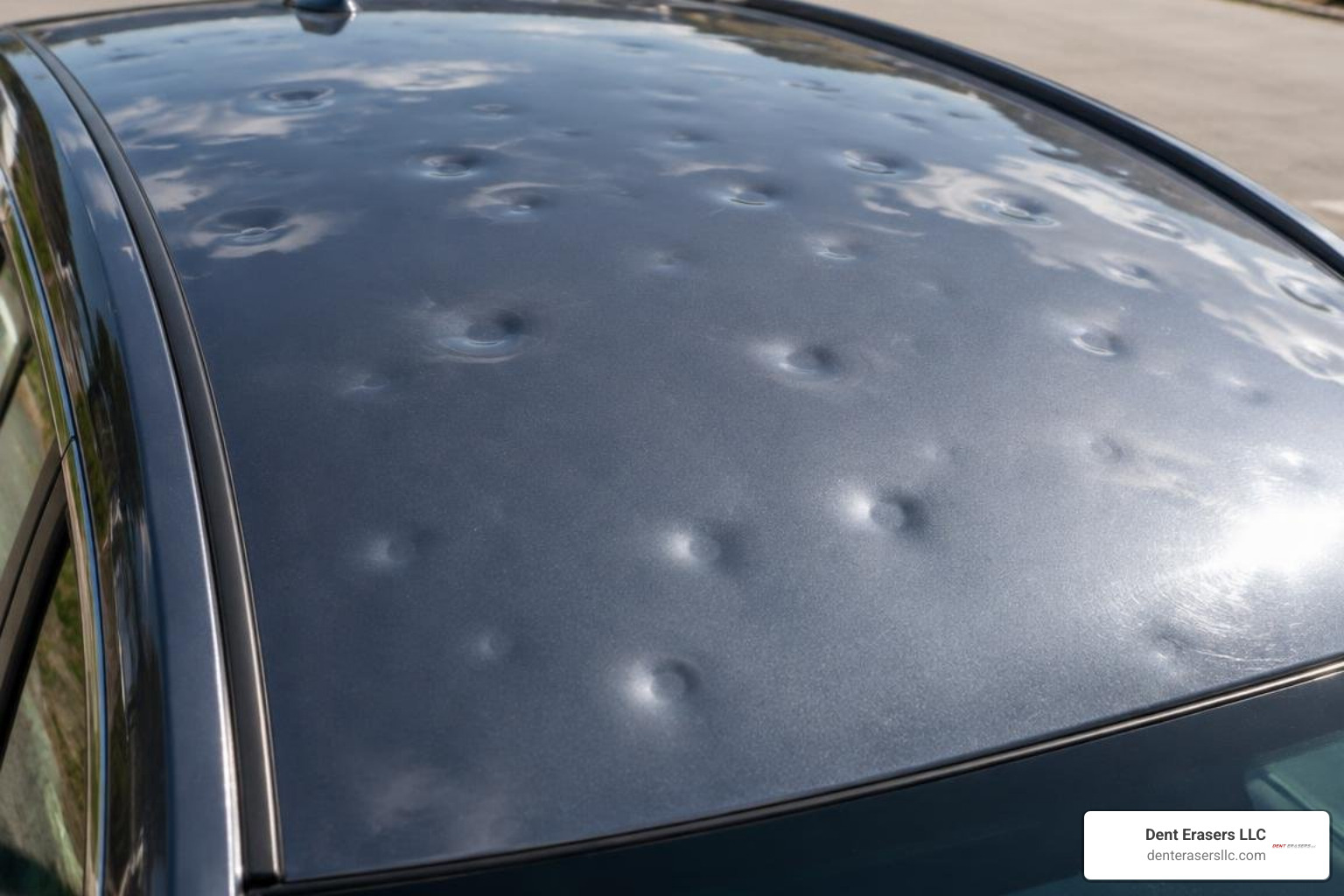
- Hail Damage Dents : Many hail dents can be repaired with PDR since the paint typically remains intact.
- Creases and Body Line Dents : Some creases can be corrected with specialized PDR techniques, depending on the severity.
Knowing whether a dent qualifies for PDR helps you pick the most efficient, cost-effective option.
What Are the Benefits of Mobile Dent Repair Services in Contra Costa County?
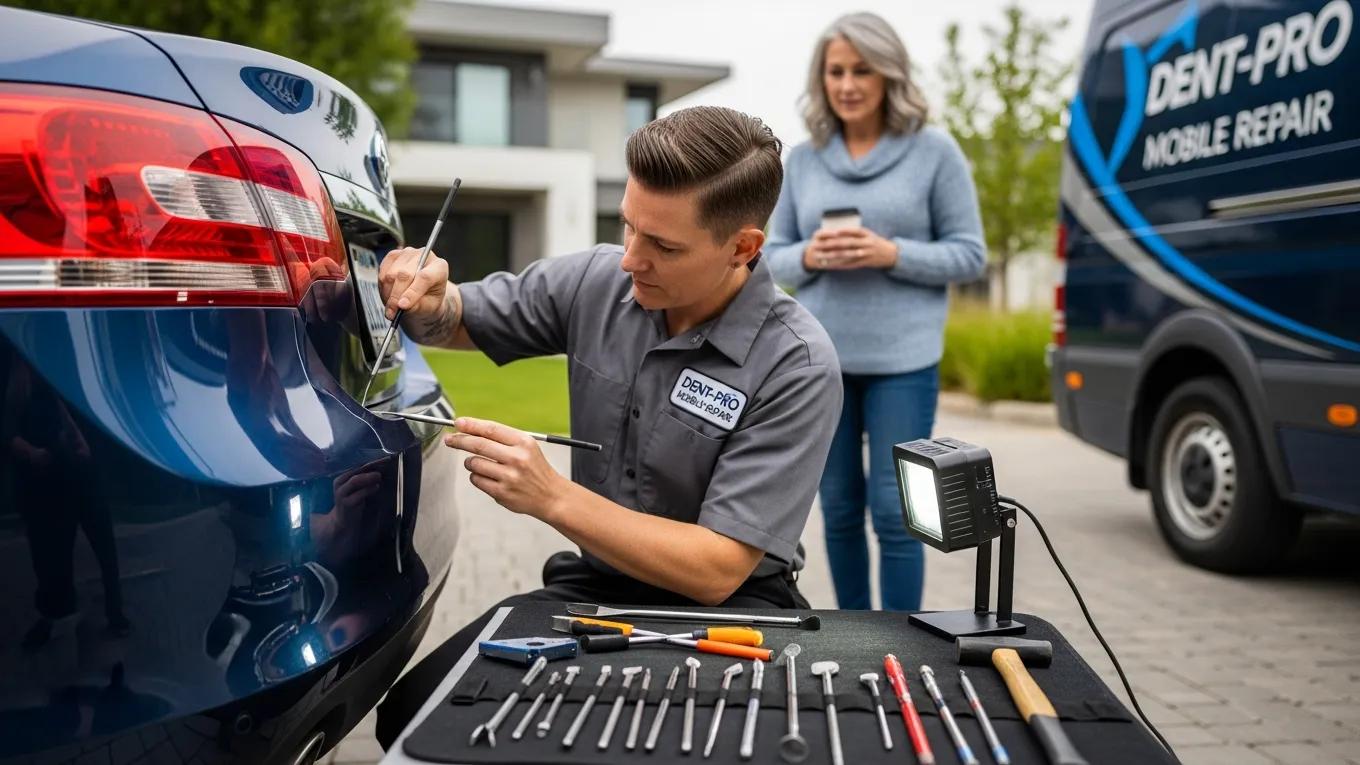
Mobile dent repair reduces downtime by bringing professional technicians and PDR tools to your chosen location. The model emphasises convenience without sacrificing quality.
- Convenience of Mobile Services : Schedule repairs at home or work to save time.
- Cost-Effectiveness : Lower overhead often means competitive pricing for mobile work.
- Quality of Service : Trained technicians use established PDR and repair techniques comparable to body shops.
Mobile repair is a practical choice when you want professional results with minimal disruption.
How Mobile Repair Enhances Convenience and Saves Time
On-site mobile repair eliminates the need to visit a shop or arrange alternate transport. Many PDR jobs finish within hours; flexible appointments make scheduling easier.
What to Expect During an On-Site Plastic Bumper Repair Appointment
Technicians start with a damage assessment and then recommend PDR or seamless repair. You will receive an explanation of the chosen method and an estimated completion time.
- Assessment of Damage : Inspection determines dent type and best repair approach.
- Repair Techniques Used : Technicians apply PDR or fill-and-paint methods as appropriate.
- Duration of Repairs : Most mobile PDR jobs complete within a few hours; seamless repairs require more time for sanding and paint.
A clear plan and timing estimate help set realistic expectations before work begins.
How Does Seamless Plastic Bumper Repair Restore Your Vehicle’s Appearance?
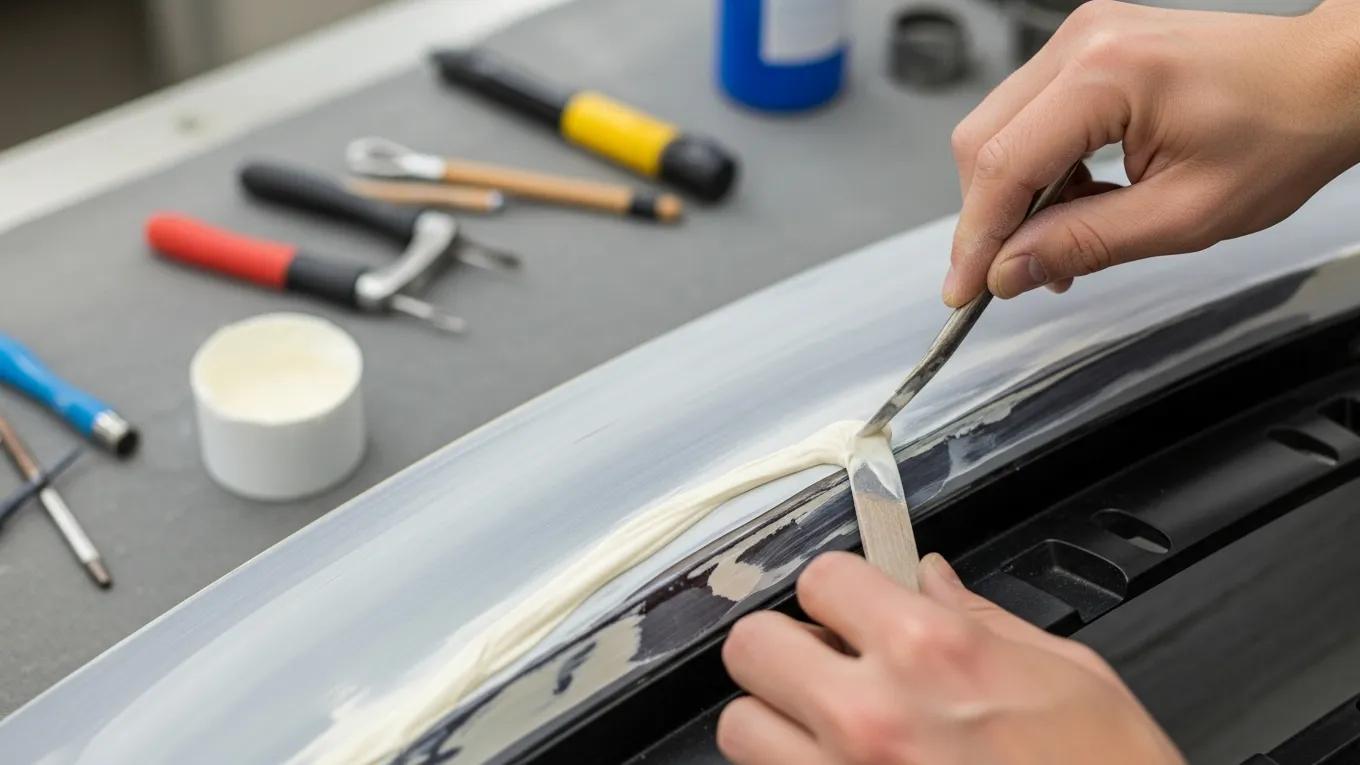
Seamless repair uses sanding, filler and colour-matched repainting to create a uniform surface on larger or paint-damaged areas. Technicians feather, sand and blend paint to match the factory finish for a smooth result.
In addition to traditional filling and repainting, material science advances provide new repair options for polymer bumpers.
Friction Stir Welding for Polymer Bumper Repair
The automobile industry, construction, electrical packaging and transportation sectors rely heavily on polymeric materials for their light weight, strength and corrosion resistance. When structural breakdown or material failure occurs, timely repair is required. Recent reviews have examined joining polymer-to-polymer and polymer-to-metal using the friction stir welding (FSW) process.
A review on advancement in friction stir welding considering the tool and material parameters, VK Mahakur, 2021
What Are the Typical Costs and Insurance Considerations for Bumper Dent Removal?
Repair costs depend on damage severity and method. Typical ranges are modest for PDR and higher for seamless repairs; confirm your insurer’s policy before proceeding.
For an estimate, Dent Erasers LLC accepts requests by email at denterasersllc@gmail.com or by phone at (510) 773-9900 to discuss options and schedule an appointment.
This table summarises typical services, price ranges and key benefits to help you compare options.
Frequently Asked Questions
What is the difference between paintless dent repair and seamless bumper repair?
PDR restores shape without repainting and suits minor dents. Seamless repair fills and repaints larger or paint-damaged areas to recreate a smooth finish.
How long does a typical bumper repair take?
PDR jobs often finish within a few hours. Seamless repairs take longer—several hours to a day—because of sanding, filling and paint curing.
Can all types of bumper damage be repaired using paintless dent repair?
No. PDR works best when the paint is intact. Deep creases, cracks or paint-breaks usually need seamless repair or other methods.
What should I do if my insurance does not cover bumper repairs?
If insurance does not cover the repair, consider paying out-of-pocket, requesting multiple quotes, or discussing payment options with repair shops.
Are mobile dent repair services as effective as traditional body shops?
Yes. Many mobile technicians are trained and equipped to deliver results comparable to traditional shops; choose a reputable provider with solid reviews.
What materials are commonly used in seamless bumper repair?
Seamless repairs typically use epoxy or polyester fillers, primers and colour-matched automotive paints selected for adhesion and a smooth finish.
Conclusion
Choosing professional plastic bumper repair—PDR when appropriate, or seamless repair when necessary—helps maintain your vehicle’s finish and value while addressing damage efficiently. For Contra Costa County owners, mobile repair adds convenience by delivering professional service at your location. Contact Dent Erasers LLC to learn about options and schedule an appointment.