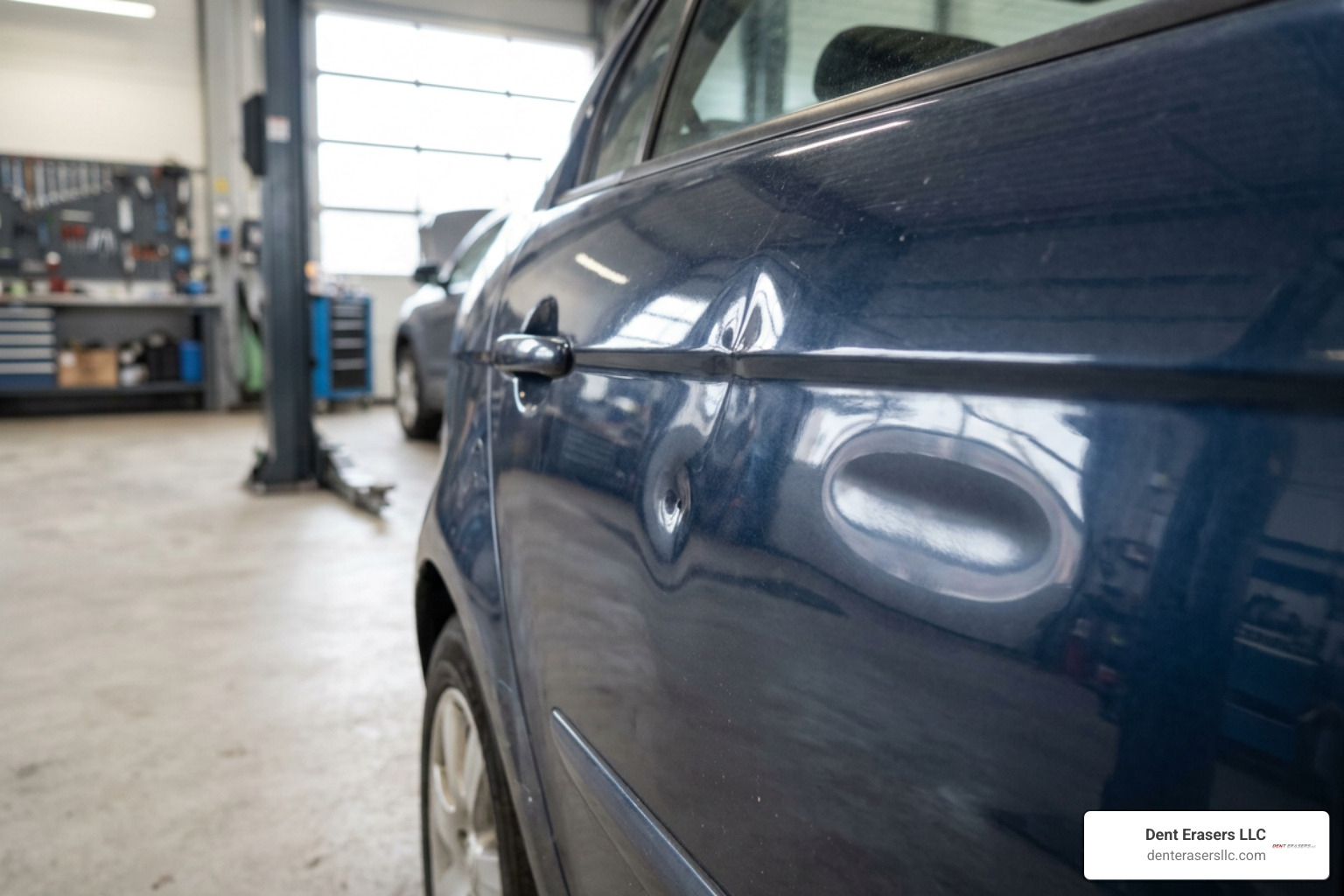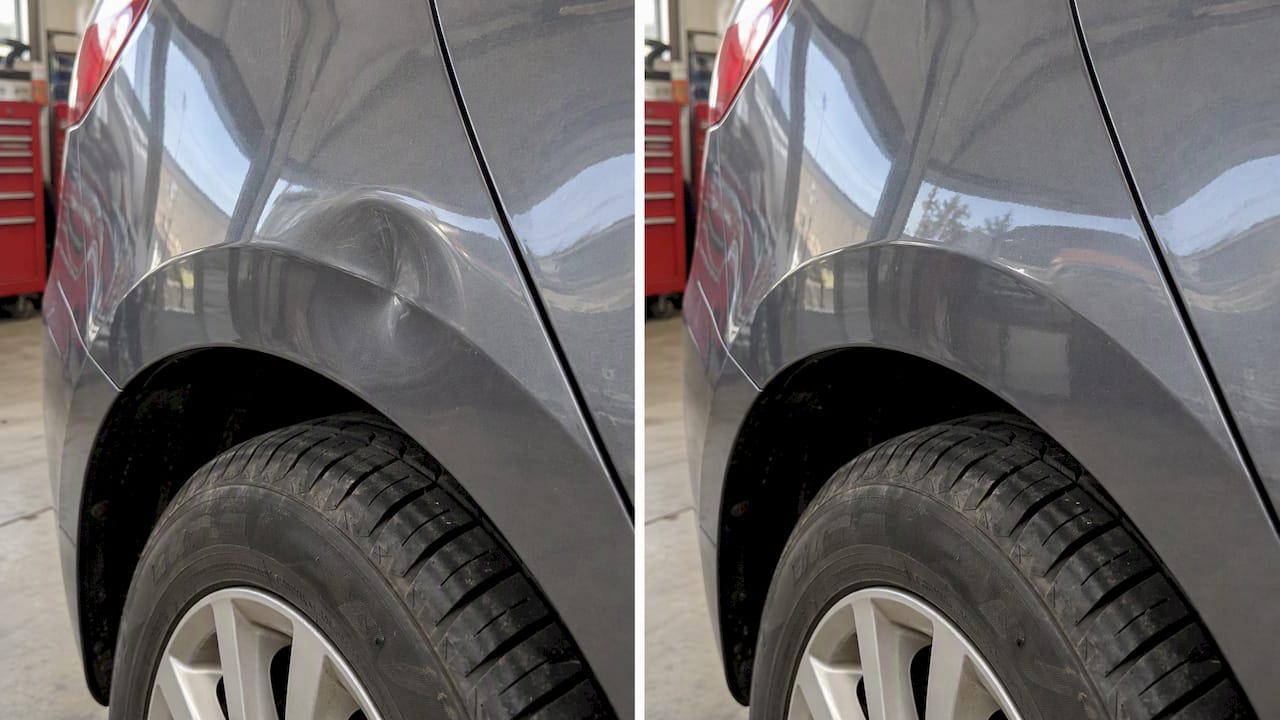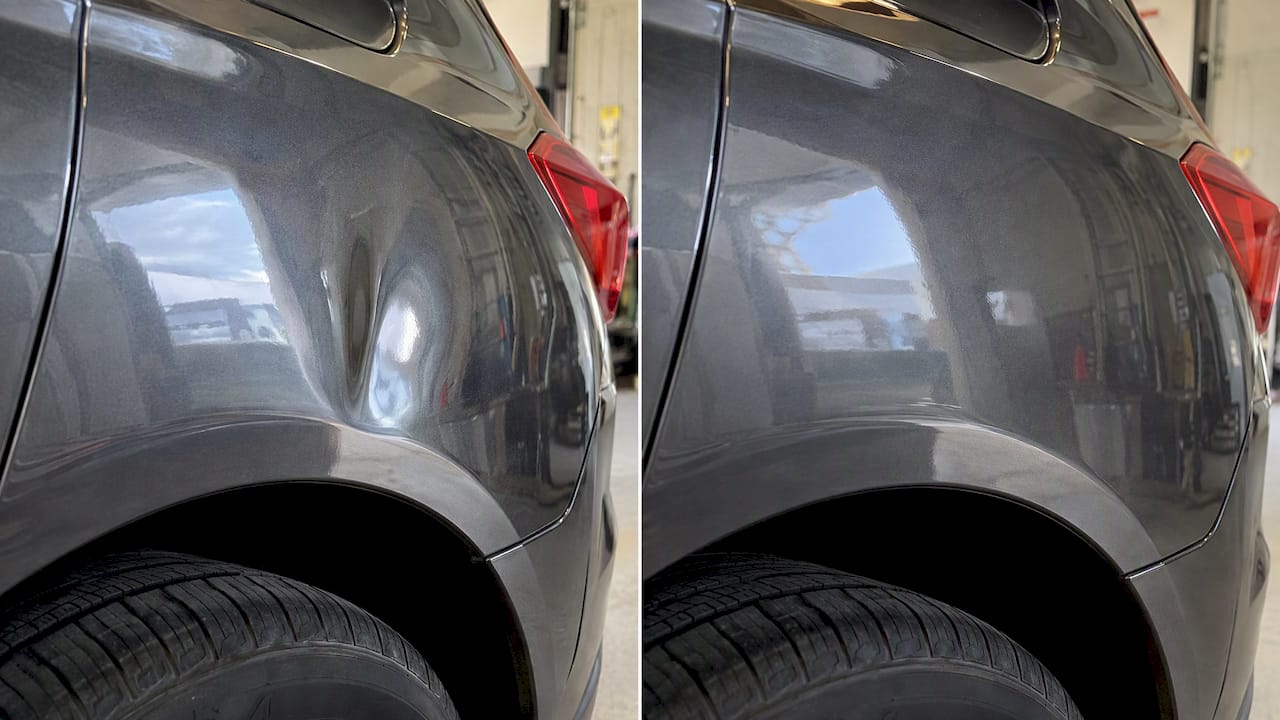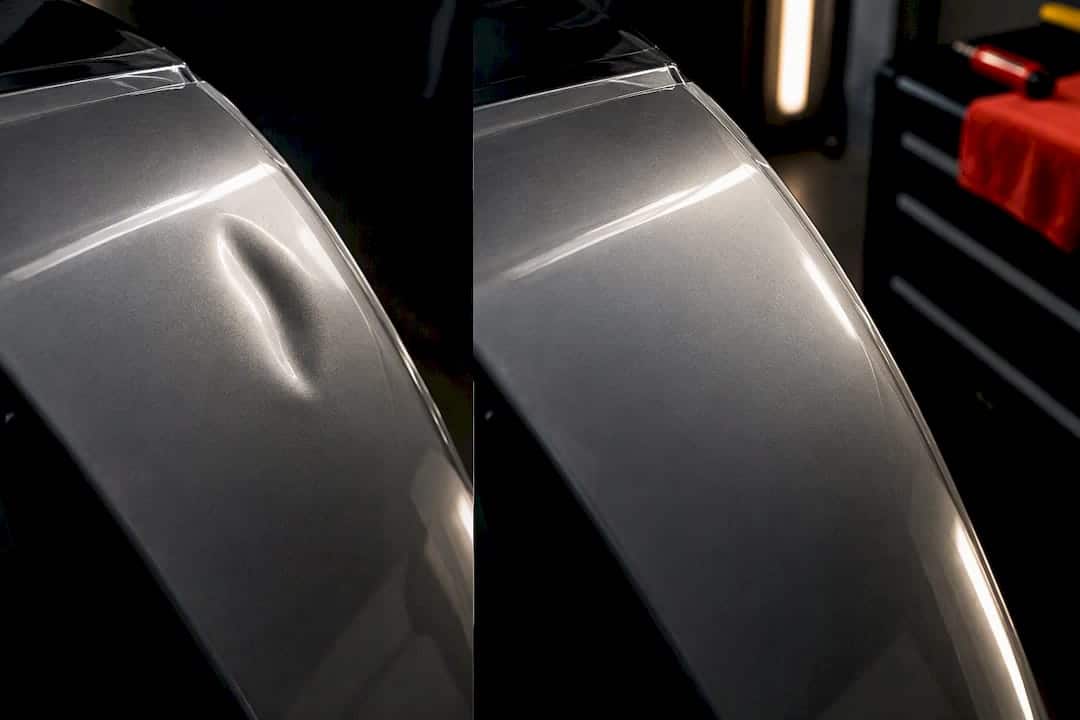
Yes, paintless dent repair often works on panels covered with paint protection film, but success hinges on three things: whether the technician can reach the back of the panel, whether the film is still bonded tightly to the paint, and whether the paint underneath is actually intact. Before you book anything, photograph the dent from several angles and note where it sits on the panel. Then get a technician to look at it in person, because guessing at feasibility from photos alone almost always leads to a bad estimate.
TL;DR:
- Proper access to the back of the panel, intact paint underneath, and strong bonding of the film are critical for successful paintless dent repair on PPF-covered panels.
- Techniques like internal push are safest, while glue-pull and knockdown methods require careful inspection and proper tools to avoid damaging the film.
- Visible damage to the film, such as whitening or creasing, often necessitates full replacement rather than repair, especially for cars under warranty or resale.
- Proper inspection involves thorough lighting checks, moisture detection, and waiting at least 48 hours before washing to confirm the repair’s integrity.
- Owners should avoid DIY fixes or aggressive tools and always consult professionals for dents near bodylines, aluminum panels, or with paint chips for reliable results.
Table of Contents
- PPF and Dent Repair: What Technicians Check Before They Touch the Panel
- PDR Techniques and How Each One Interacts With PPF
- Recognizing When PPF Needs Repair or Full Replacement
- Checking Your Repair and Protecting the Film Afterward
- What Owners Can Safely Do and When to Stop
- How a Mobile Technician Actually Approaches a PPF-Covered Dent
- Keep the Film or Replace It? A Quick Perspective
- Ready to Get Your PPF-Covered Dent Assessed?
- Sources
- FAQ
PPF and Dent Repair: What Technicians Check Before They Touch the Panel
I tell every customer the same thing before we schedule a repair: what you send me matters as much as what I find when I get there. A blurry photo and a vague description turn a fifteen-minute assessment into a longer conversation, and sometimes into a wasted trip.
Here’s what actually helps a technician give you a real answer instead of a guess:
- Your VIN, so we know the exact panel material and factory paint specs
- Full-panel photos plus close-ups of the dent from at least two angles
- The panel location (door, fender, hood) and roughly when the dent happened
- The PPF brand and installer, if you know them, since adhesive formulas differ
Once we’re on site, the inspection follows a specific order. We check whether the film is still bonded flat against the metal or if it’s lifted anywhere near the dent. We look for paint chips or cracking trapped under the film, because that changes the entire plan. We assess the panel material and its curvature, and we figure out whether we can get behind the panel to work the metal at all.
That last point drives the whole decision. I-CAR’s intake protocols treat documentation and backside access as the two variables that determine price and timeline, not the size of the dent you can see. Metal comes first, film comes second. We fix the shape underneath, then we evaluate whether the film survived the process.
PDR Techniques and How Each One Interacts With PPF
Not every paintless dent repair method treats a film-covered panel the same way, and that’s the part most owners never hear explained; for more on techniques and considerations, see PDR techniques and PPF considerations.
Internal push works from behind the panel using rods and leverage, and it’s usually the safest option on PPF because nothing touches the film’s surface at all. Glue-pull repair uses adhesive tabs and a slide hammer or bridge tool pulled from the outside, which means the tabs sit directly on the film. I-CAR’s training curriculum for glue-pull repair and trim removal covers exactly this kind of technique and inspection discipline, and it’s a big reason technique matters as much as raw skill. Knockdown work taps high points down gradually and needs careful pressure control near film edges, where a heavy hand can create stretch marks in the coating.
A few tools have no business anywhere near PPF:
- Suction cups with aggressive industrial adhesive, which can pull film right off the paint
- Stud welders, which burn through film and leave scorch marks
- Sharp pry tools or picks, which puncture the coating in seconds
Pro Tip: If a technician reaches for a glue-pull tab kit on your PPF-covered panel, ask what adhesive remover they use afterward. The wrong solvent leaves a hazy ring that’s harder to fix than the original dent.
Recognizing When PPF Needs Repair or Full Replacement
Sometimes the metal comes back perfectly and the film still needs attention, and this is where a lot of owners get surprised.
Look for whitening around the repair area, creases that trace the exact shape of the old dent, lifted edges near where the tools worked, or a cloudy patch that suggests moisture got trapped between film and paint. Any of those means the film took real damage even if the paint underneath looks fine.
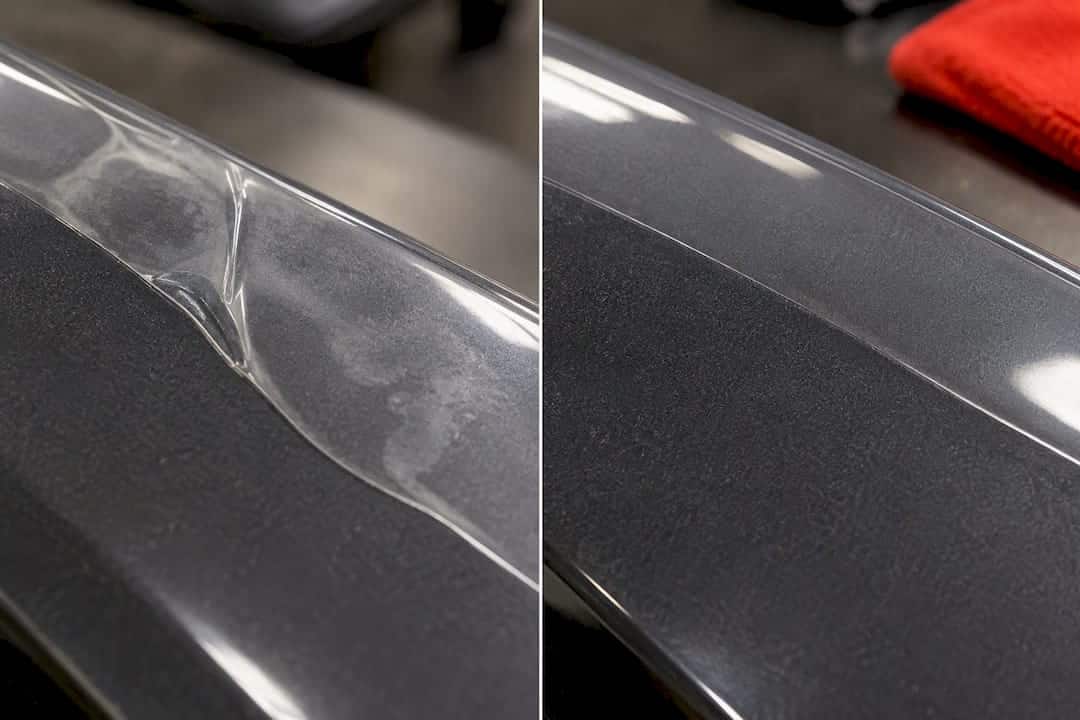
Warranty coverage almost never treats these situations the same way. XPEL’s warranty terms draw a hard line between manufacturing defects and damage caused by an impact or a third party, and that distinction determines whether replacement is covered or comes out of your pocket. 3M makes a similar point about its film’s heat-activated self-healing: it smooths out light surface scratches, but it was never designed to undo actual panel deformation, so don’t assume a healed-looking surface means the film escaped structural damage.
Document everything with photos, then contact your installer or warranty administrator before anyone attempts removal.
Checking Your Repair and Protecting the Film Afterward
A good repair earns a good look. Walk around the panel and inspect it under at least two different light angles, since flat overhead lighting hides a lot that raking sunlight reveals instantly.
- Check for whitening or haze directly over the repaired area.
- Look for any sign of trapped moisture, which shows up as a cloudy bubble under the film.
- Run a finger gently along nearby edges to feel for lifting that wasn’t there before.
- Wait at least 48 hours before washing, and when you do, keep pressure washer jets away from panel edges and seams.
3M’s own installation guidance warns specifically about forcing water under disturbed edges with a pressure washer, which is one of the fastest ways to undo an otherwise clean repair. If anything looks off after a week, call your installer before it gets worse.
What Owners Can Safely Do and When to Stop
You can photograph the damage, keep the car out of the sun and away from rain until it’s assessed, and resist the urge to heat the panel and push on it yourself. That’s the safe list, and it’s short on purpose.
What you should never attempt: glue-pull repairs without training, sharp pry tools of any kind, aggressive suction devices meant for bare metal, or blasting a pressure washer near a fresh repair’s edges.
Some situations call for a professional every time, no exceptions:
- Dents sitting directly on a bodyline or panel edge
- Aluminum panels, which behave differently under pressure than steel
- Any dent where you can see paint chips or cracking through the film
Pro Tip: Dents at wheel arches or tight bodylines often look small but prove harder to fix than a larger dent on a flat door panel. Car and Driver’s repair guidance makes this exact point: visible size tells you almost nothing about actual difficulty. Panel curvature and backside access decide that.
How a Mobile Technician Actually Approaches a PPF-Covered Dent
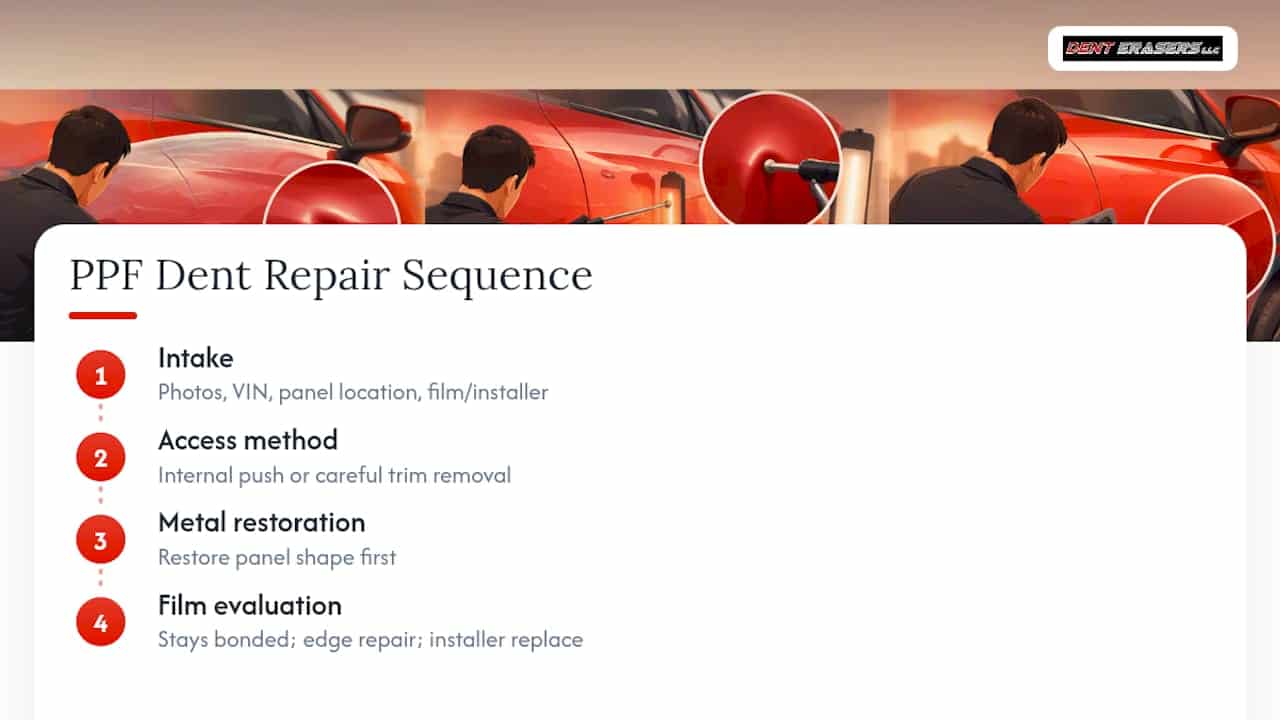
When we get a call about a dent under PPF, the process starts before we ever touch the car. We ask for photos, the VIN, the exact panel location, and the film brand or installer name if the owner has it. That intake step tells us what we’re walking into instead of discovering it on-site.
On location, we work the metal first using whichever access method fits the panel, whether that’s internal push through an existing opening or careful trim removal to reach behind a door skin. Only after the shape is restored do we evaluate the film: does it stay bonded and clear, does it need an edge repair, or does the installer need to replace it? Our full checklist for paintless dent removal walks through this same order of operations in more detail, and it’s worth reading if you want to know what to expect before we arrive.
Keep the Film or Replace It? A Quick Perspective
Preserving the original film makes sense when the dent is minor, the paint underneath is untouched, and adhesion still looks solid after the repair. Replacement becomes the smarter call the moment you see creasing, whitening, or any adhesive failure, because a car heading toward resale or still under a paint warranty can’t afford a hazy patch that raises questions. Weigh what you actually value: keeping the factory film intact, or knowing the surface is provably sound.
— Brian Blanc
Ready to Get Your PPF-Covered Dent Assessed?
Mobile dent repair services offer an alternative to hauling your car to a shop and waiting days for a bay to open up by coming to your driveway or office lot and working on the panel on-site. This means less time off your schedule and no rental car headache while your PPF gets evaluated. Our mobile dent repair service covers everything from small dings to large dent repairs and minor dent repairs, and we handle plastic bumper repair too when the damage extends beyond the panel itself.

Before your appointment, send us clear photos of the dent, your VIN, the panel location, and your PPF installer’s name if you have it. That’s the same intake information any qualified technician needs, and it lets us tell you upfront whether we’re looking at a straightforward metal repair or a case where the film will need attention from your installer afterward. Visit our service page to request a quote or get on the schedule.
Sources
For deeper technical detail, review I-CAR’s PDR training package, 3M’s paint protection film FAQ, XPEL’s warranty page, and AAA’s hail damage guide. For precise warranty interpretation, always contact your installer or warranty administrator directly.
- 3M Paint Protection Film FAQ
- XPEL warranty information
- How to fix car dents and dings inexpensively | Car and Driver
FAQ
Can You Do Paintless Dent Repair on PPF?
Yes, in most cases, as long as the technician can access the back of the panel and the paint underneath the film is intact. I-CAR’s training standards treat inspection and technique as the deciding factors, not the dent’s visible size.
Can Damaged PPF Be Repaired?
Small issues like edge lifting sometimes get resolved with a local edge reseal, but whitening, creasing, or adhesive failure usually calls for replacement. XPEL recommends contacting your installer before authorizing any removal so warranty coverage isn’t affected.
What Dents Cannot Be Removed With PDR?
Dents on sharp bodylines, panel edges, or aluminum panels with visible paint chips are often the hardest to fully resolve. Car and Driver notes that panel curvature and backside access matter more than the dent’s diameter when judging feasibility.
How Long Does PPF Stay on a Car?
Most quality film holds up for several years under normal driving conditions, though exact lifespan depends on the brand, installation quality, and how the vehicle is maintained. Current details on service pricing and offerings are available directly on the Denterasersllc site.