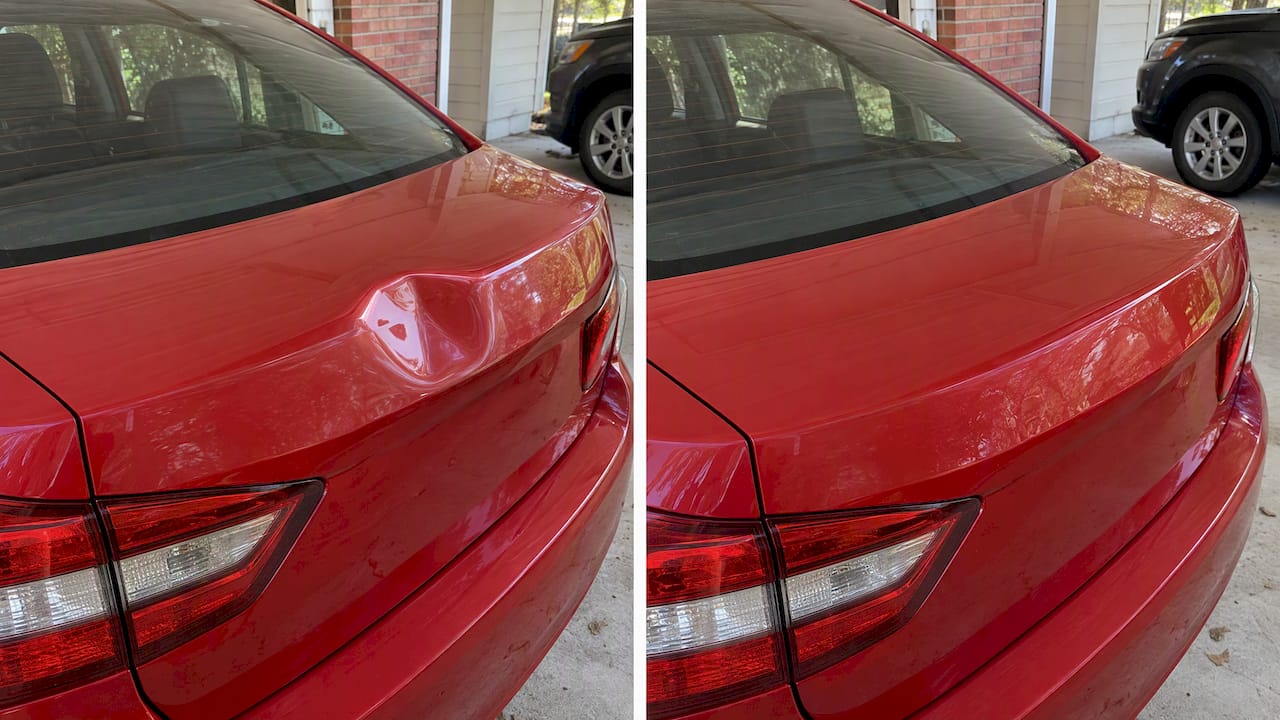
To preserve factory paint, keep anything abrasive off it, shield it from chips and contaminants, and fix dents without sanding or repainting. Wash gently, polish rarely, protect the surface with wax, coating or film, and choose paintless dent repair when metal gets pushed in. Once original paint is sanded and resprayed, you can’t get it back.
TL;DR
- Every polish, buff or respray removes or replaces the original finish, so prevention beats correction.
- Wax, ceramic coating and paint protection film do different jobs. Film stops chips, coatings fight dirt and chemicals.
- Dents are the biggest threat to original paint, because body shop repair means sanding, filler and new paint.
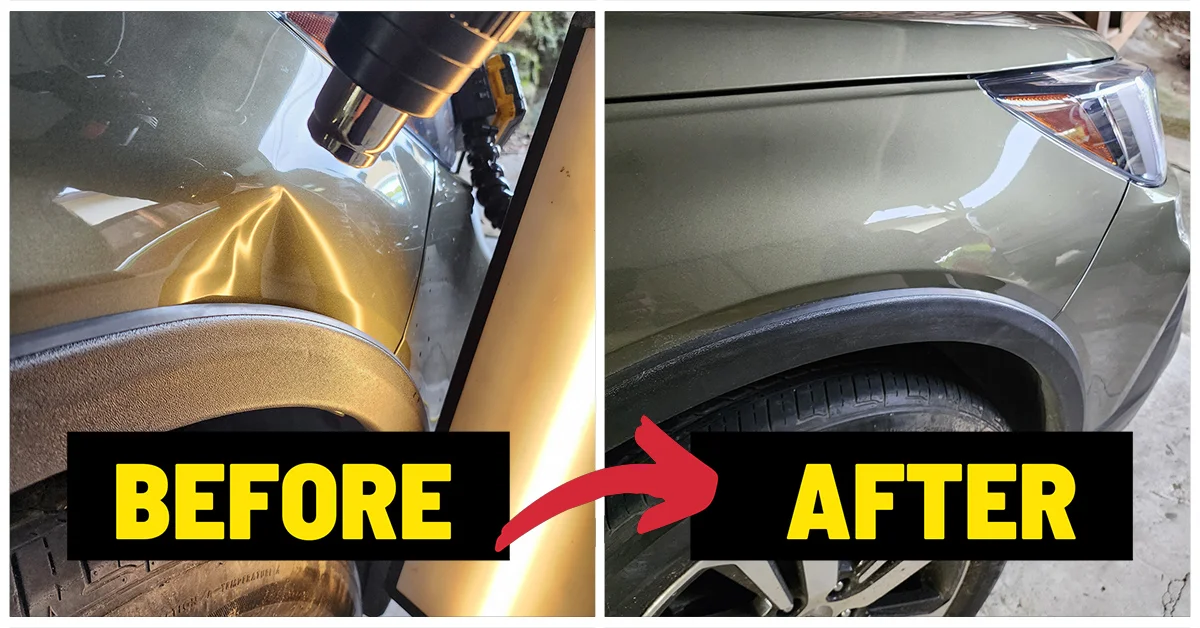
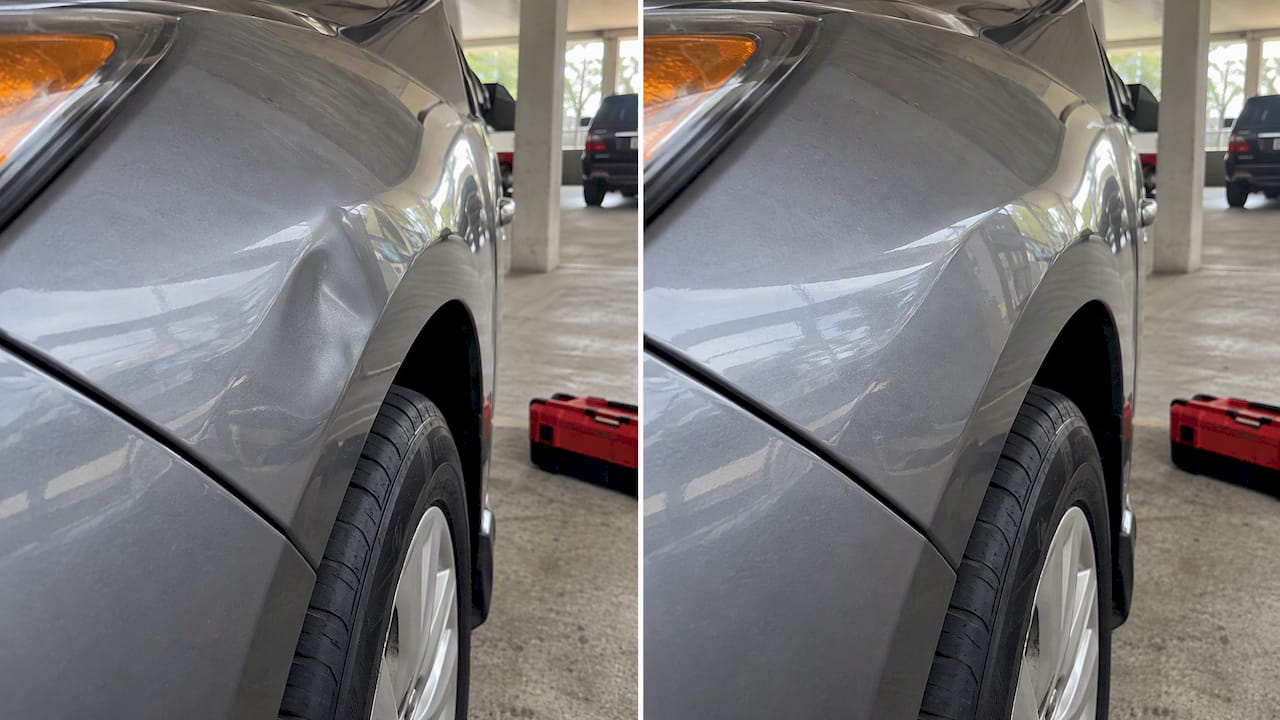
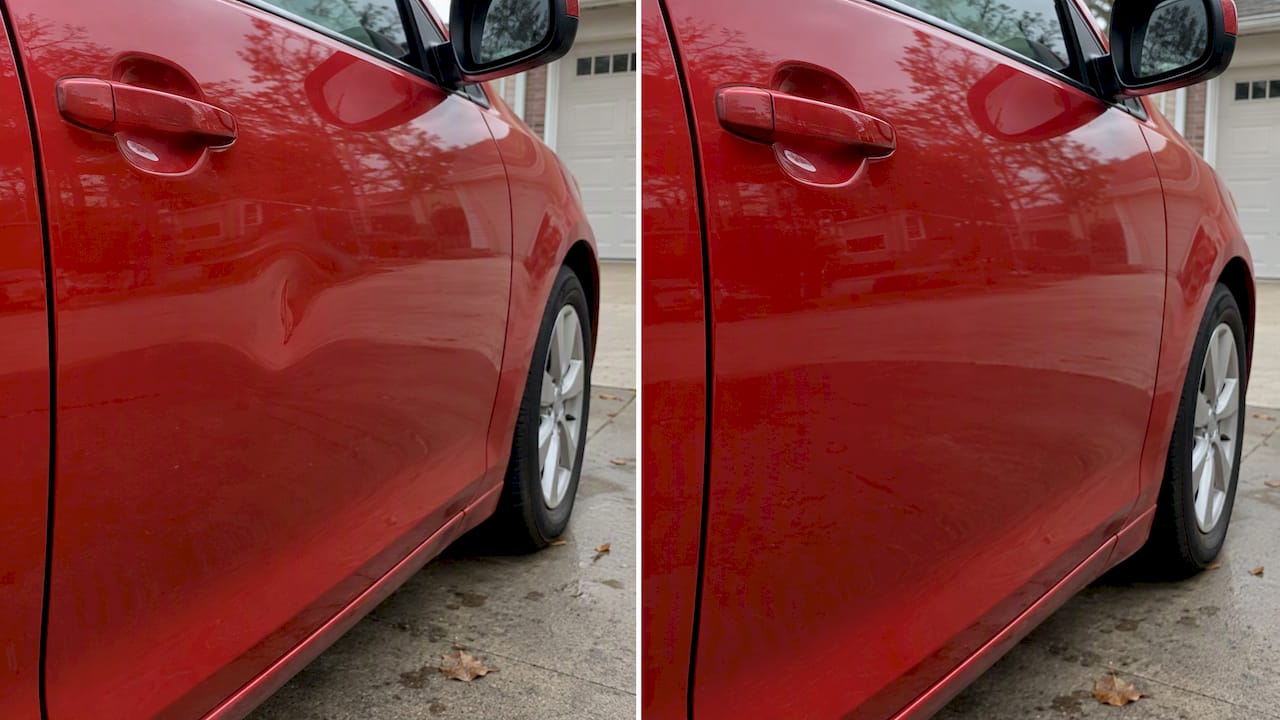
- Paintless dent repair reshapes the metal from behind and leaves the factory finish untouched.
- On classic cars, test the paint’s condition before you apply anything to it.
Table of Contents
- Why original paint is worth protecting
- The polishing trap
- Wax, ceramic coating or film: which does what
- Dents: the fastest way to lose factory paint
- Contaminants: clean them the safe way
- Preserving original paint on a classic car
- Our perspective
- Get a dent fixed without a repaint
- FAQ
- Sources
Why original paint is worth protecting
Modern factory paint is a layered system, and the clear coat on top is the sacrificial layer. It takes the UV radiation, road debris and contaminants so the color and primer underneath don’t have to. Paint technology has also moved on: manufacturers replaced the delicate enamels and lacquers of years past with durable polymers.
That matters for value as well as looks. A factory finish is a one-time asset. Once it has been sanded or repainted, a vehicle’s authenticity and resale appeal can be permanently diminished, which is why preservation-minded shops treat the original finish as the thing to protect on luxury and vintage cars. The same logic applies to your daily driver, just with lower stakes.

The polishing trap
Most owners reach for a buffer when they see swirls. It works, but at a cost. Buffing removes light scratches by leveling the clear coat, and every correction takes away a small portion of that protective layer. Repeated polishing thins the barrier over time.
The habit to build:
- Wash with a clean mitt and plenty of water, not a dry rag or a brush.
- Dry with a soft microfiber towel.
- Reserve machine polishing for damage you can’t live with, and do it rarely.
- Put your effort into prevention instead: protect the surface so it needs less correction.
Wax, ceramic coating or film: which does what
These products get lumped together, and they shouldn’t be. Here is how they compare in plain terms.
| Protection | What it does best | What it won’t do |
|---|---|---|
| Wax or sealant | Seals the surface, adds gloss, easy to reapply | Stop a rock chip |
| Ceramic coating | Repels dirt and water, resists chemicals and UV | Absorb physical impact |
| Paint protection film (PPF) | Guards against stone chips, UV and other damage as a transparent adhesive film | Fix a dent in the panel |
| Paintless dent repair | Removes dents while keeping the original paint | Replace regular washing and protection |
The point of the table: none of these replaces the others. Film covers the high-impact areas such as the front bumper, hood edge and mirrors. A coating or wax handles the rest. Neither helps once a door has met a shopping cart. That is a dent problem.
Dents: the fastest way to lose factory paint
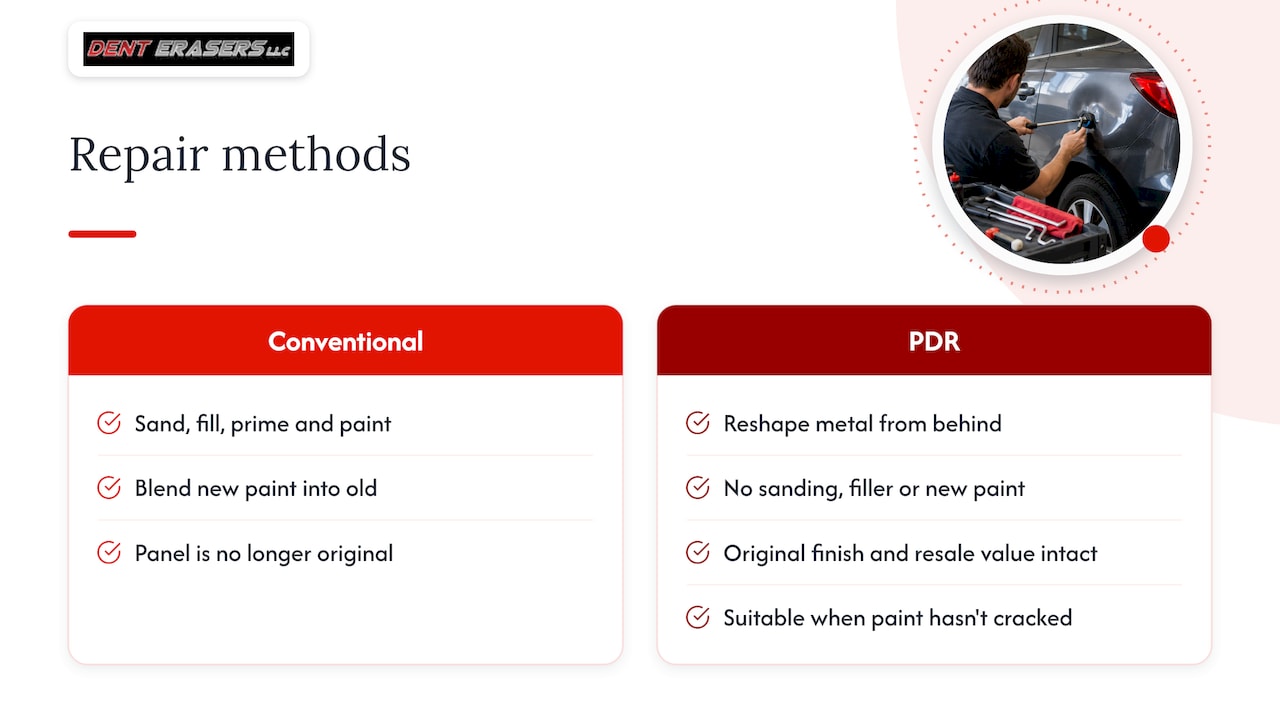
A dent doesn’t just bend metal. In a conventional shop, fixing it usually means sanding the area, applying filler where needed, then priming and painting, and blending the new paint into the old. You end up with a panel that is no longer original.
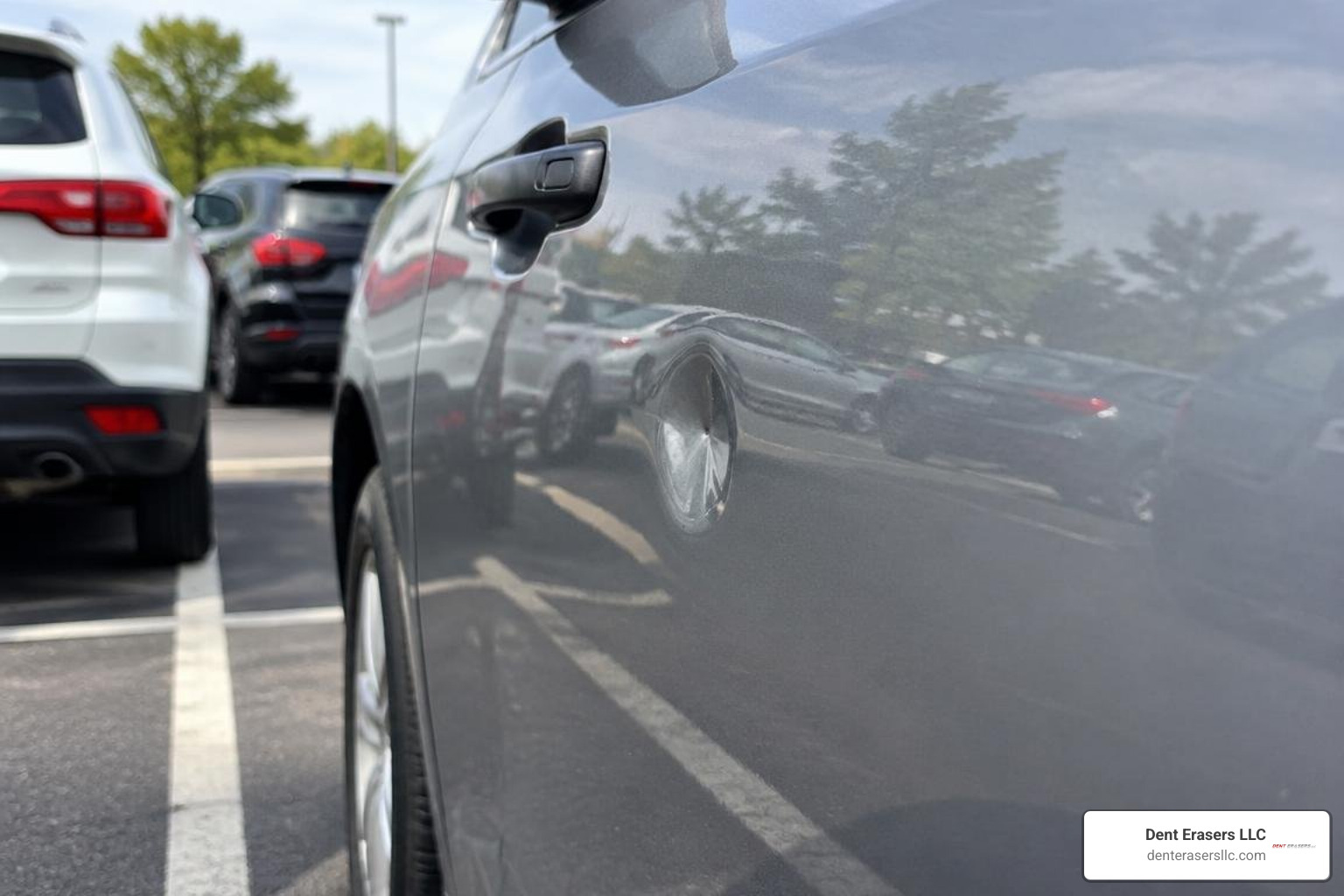
Paintless dent repair avoids all of that. Technicians work the metal back into shape from behind or underneath, so there is no sanding, filler or new paint, and the original finish and resale value stay intact. It suits dings, door dents and hail-type damage where the paint hasn’t cracked.
It has limits. Sharp creases, stretched metal or paint that has already chipped may need other work. We cover those tradeoffs honestly in our guide to PDR pros and cons, and explain how the process works in what paintless dent repair is and why it helps.
What PDR typically costs here
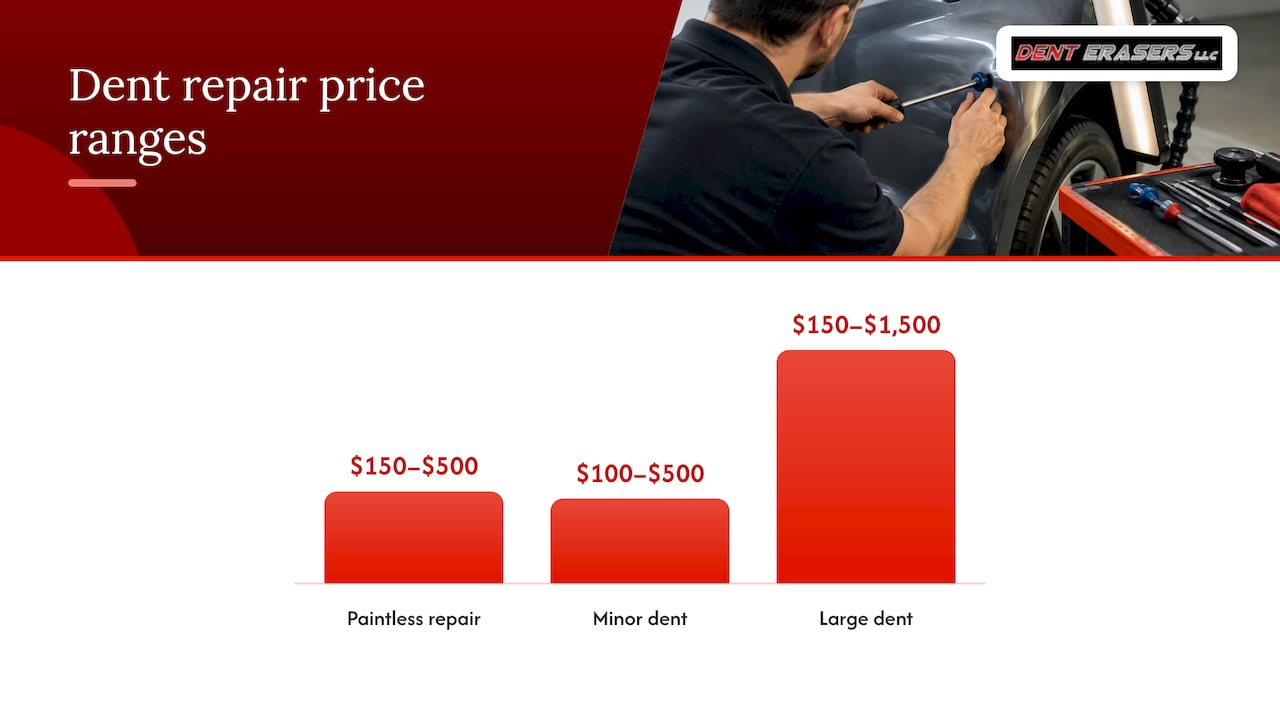
Our published ranges: paintless dent repair runs $150 to $500, minor dent repair runs $100 to $500, and large dent repair runs $150 to $1,500. The final number depends on the dent’s size, depth and location, so a photo quote is the quickest way to know.
Contaminants: clean them the safe way
Paint on your car, whether from a road crew or a spill, tempts people to scrub. Don’t. Guidance from a county risk management office says to get to a pressure wash quickly, since it will loosen most waterborne traffic paint unless it has dried. For stubborn residue, it recommends softening it with WD-40 or a mild solvent for one to two hours, then pressure washing. It specifically advises against scrubbing and scouring cleansers, which damage the clear coat.
Bird droppings, tree sap and bug splatter work the same way: soften, then rinse. Friction is what harms the finish.
Preserving original paint on a classic car
Older paint is less forgiving, so a few rules apply.
- Check the condition first. Before any film goes on, the paint and any body filler must be stable and well adhered. Adhesive can pull away brittle or failing original finishes.
- Expect custom work. Pre-cut film patterns often don’t fit vintage bodies, so the install needs an experienced hand.
- Don’t chase perfection. A well-kept original with honest wear often matters more to collectors than a flawless respray.
- Fix dents without paint. If a classic picks up a ding, PDR is usually the way to keep its as-built finish, provided the paint is sound.
For more on high-end vehicles, see our guide to paintless dent removal for high-end cars.
Our perspective
We have more than 27 years in dent repair, and one thing has stayed constant: owners come to us worried about the paint, not the dent. They are right to be. A dent can be fixed, but original paint can’t be put back once it is gone.
So we start every job by asking whether the finish is still intact. If it is, we aim to repair the panel without touching it. That is why we work mobile, at your home or workplace, with eco-friendly methods and no trip to a body shop. Our luxury and vintage customers tend to be the most particular, and the approach is the same for a daily commuter: keep what the factory gave you.
Our advice is simple. Protect the paint with sensible washing and the right coating or film, and call us early when a dent appears. Small dents are easier to fix before a second door ding or a pressure wash makes things worse.
— Brian Blanc
Get a dent fixed without a repaint
If you have a dent and want the factory finish left alone, our mobile dent repair comes to you in Contra Costa County and surrounding areas. We also handle luxury, classic, motorcycle and lease return work. Send photos through our free dent quote page and we will tell you whether PDR fits.
FAQ
Does ceramic coating protect against rock chips?
Not in a meaningful way. Ceramic coatings resist dirt, water and chemicals, but they don’t absorb impact. For chip protection, paint protection film is the product designed for the job, and many owners use both.
Does buffing damage factory paint?
Yes, a little each time. Buffing levels the clear coat to remove scratches, which means removing some of it. Occasional correction is fine, but repeated polishing thins the protective layer, so rely on prevention first.
Will paintless dent repair hurt my original paint?
No, when the paint is intact. The technician works the metal from behind, so nothing is sanded or repainted. If the paint is already cracked or chipped at the dent, that area may need a different repair, and we will tell you before work starts.
Can I put paint protection film on an old car?
Sometimes, but check the paint first. Brittle or poorly bonded original paint and filler can lift when film is removed or applied. Vintage shapes also need custom-fitted film, so choose an installer experienced with classics.
Sources
- Paintless Dent Removal, autotraining.edu
- Paint to Protect: Part II, autotraining.edu
- Paint Protection Film and Classic Cars, Hagerty Media
- Procedure for Removing Paint from Vehicles, Clark County, WA
- Studying scratching/buffing mechanism of clearcoats, Eastern Michigan University
- How August Precision Helps Preserve Classic and Vintage Cars