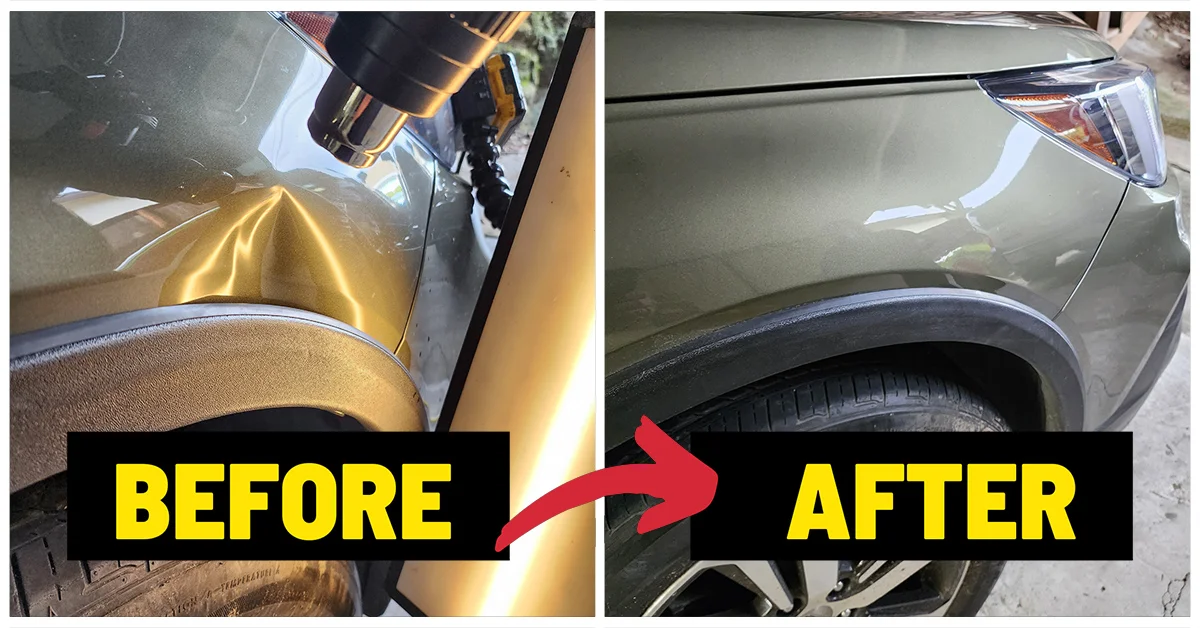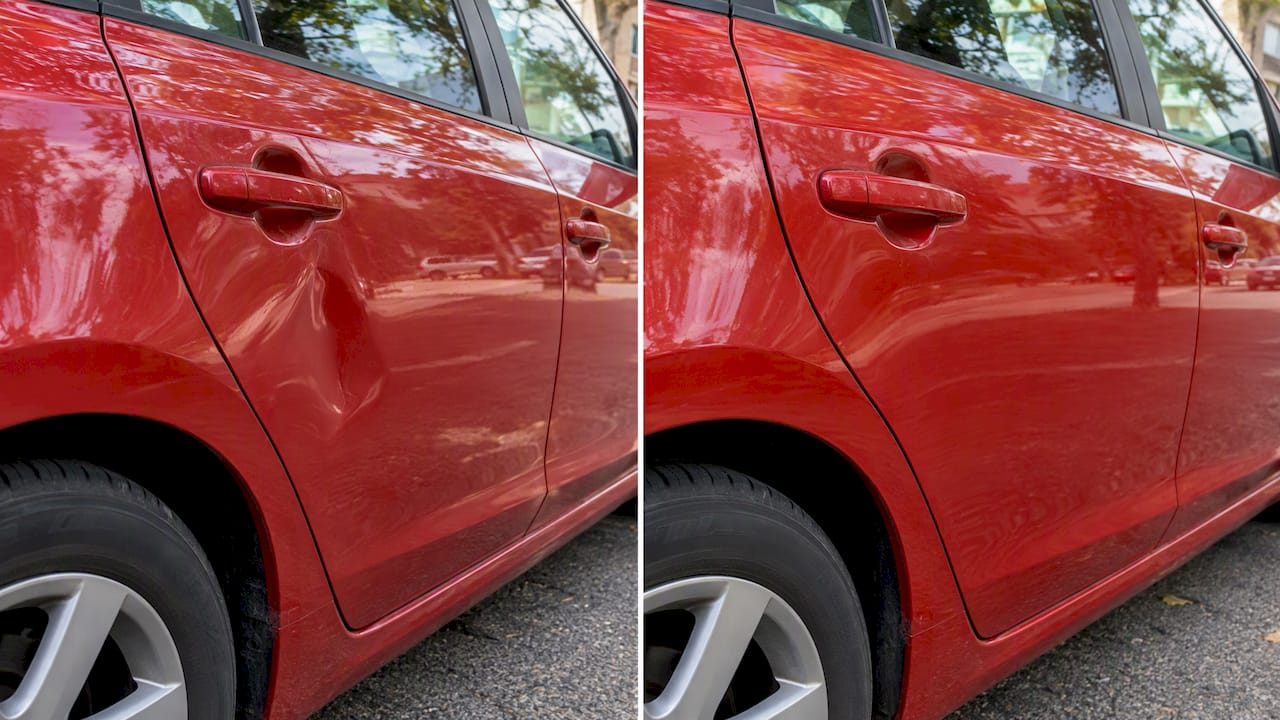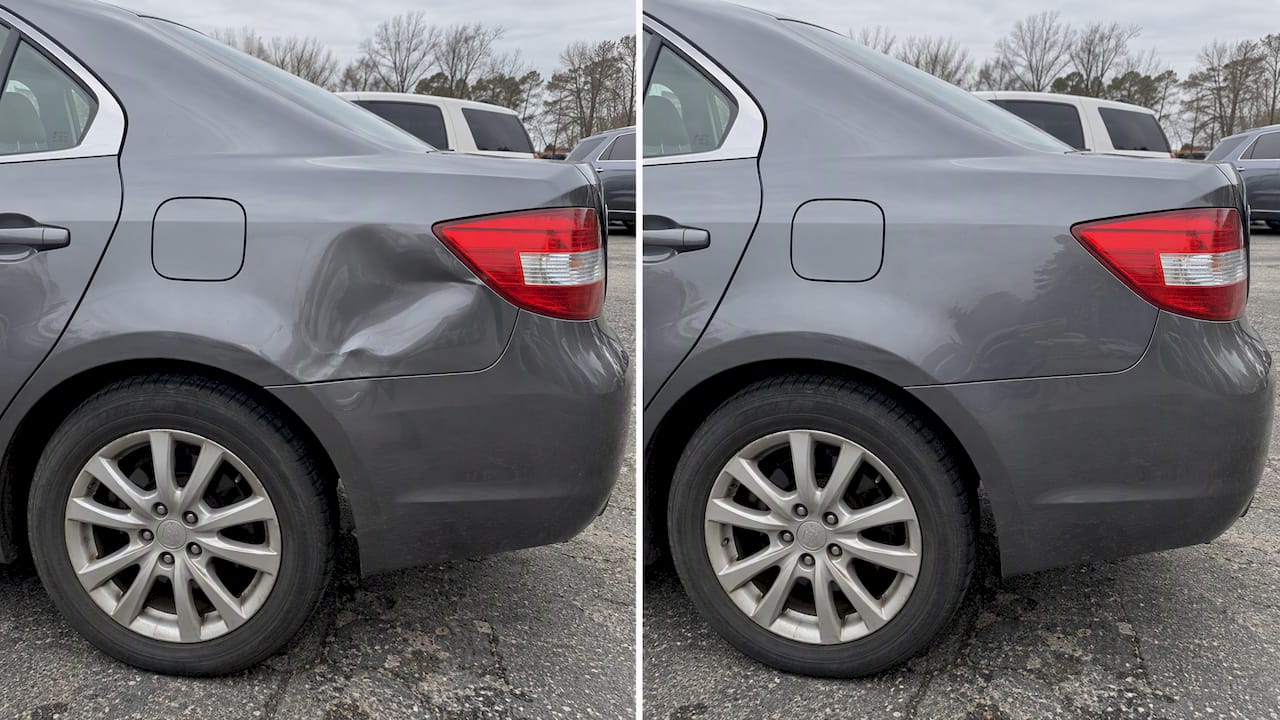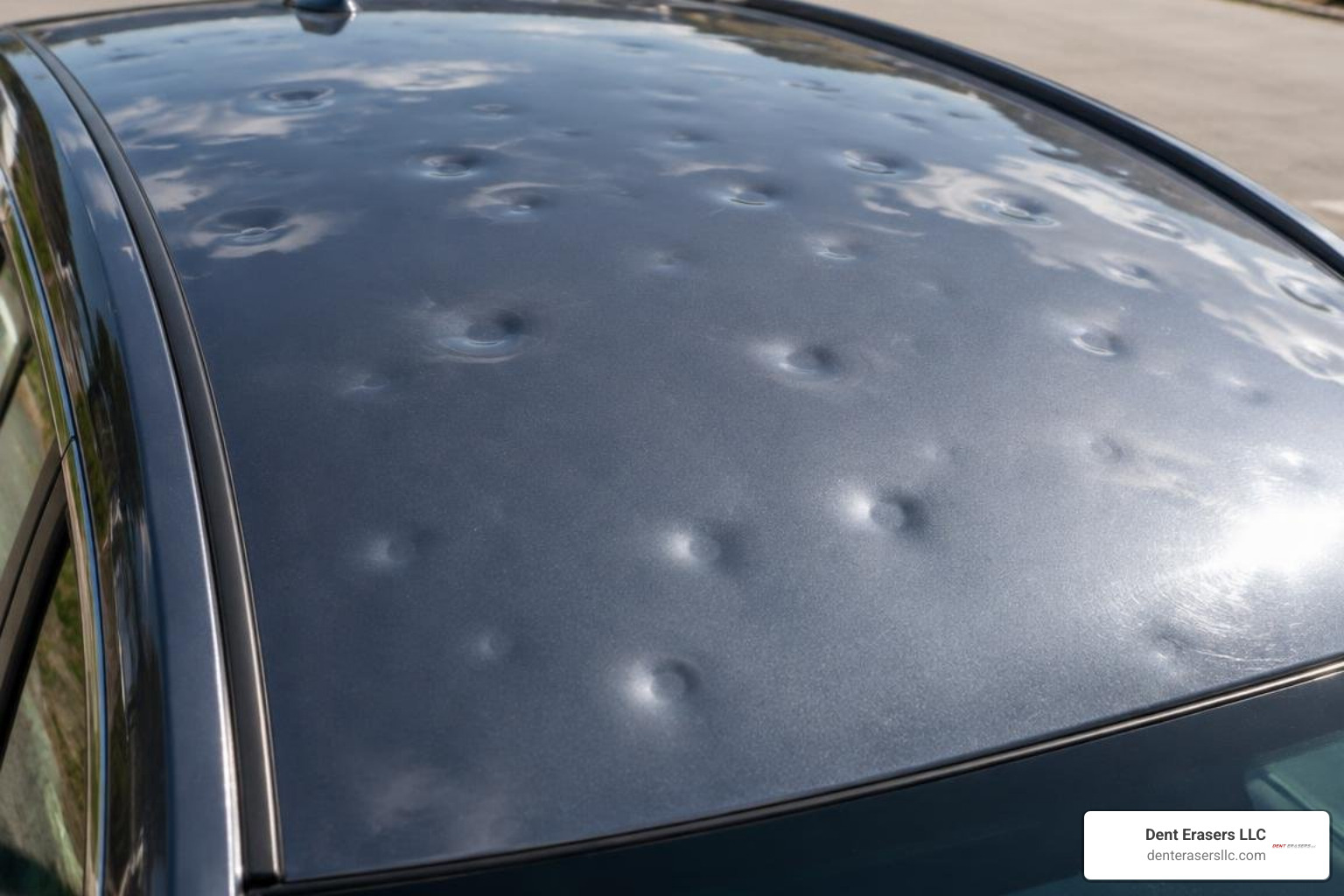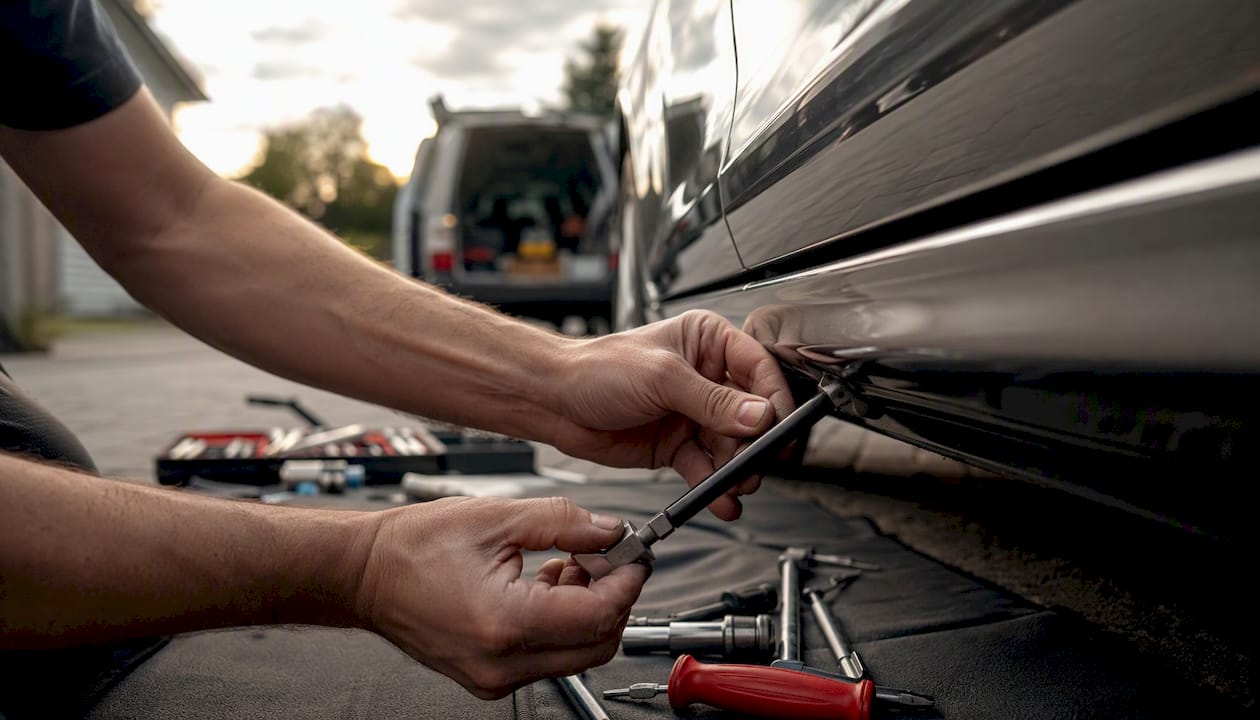
Shallow dents with intact paint respond well to paintless dent repair. Creases, cracked paint, or soft, rusted metal need traditional body filler and repaint, a weld-in panel replacement, or, for budget jobs, a slip-on panel. The right choice comes down to one question: is the damage cosmetic or structural?
Here’s the quick match-up:
- Shallow dent, paint intact, panel reachable from behind → paintless dent repair (PDR)
- Crease or cracked paint, metal still solid → traditional body filler and repaint, sometimes with stud-weld pulling first
- Rust, perforation, or “crunchy” metal → cut-and-weld replacement (or a slip-on panel for a budget-friendly, non-structural fix)
As a rule of thumb: if the paint is unbroken and you can get a tool or your hand behind the rocker, a DIY glue-pull or a PDR technician can likely handle it. If the metal feels soft, flakes, or has a hard crease, stop and call a professional — that’s a structural repair, not a weekend project. Keep reading for the full cost, timeline, and decision breakdown below.
Key Takeaways
Rocker panel dent repair success depends on matching the method to the damage: PDR for cosmetic dents, weld-in replacement for structural rust, and body filler or slip-on panels for the middle ground.
| Point | Details |
|---|---|
| Match method to damage type | Intact paint and shallow dents call for PDR; rust or soft metal calls for weld-in replacement. |
| Budget by scope, not guesswork | Expect repairs with repaint and blending commonly fall in a mid-range cost, and full replacement is a significant expense. |
| Insurance rarely covers plain rust | Coverage usually requires the damage to trace back to a specific collision, flood, or hail event. |
| DIY has real limits | Glue-pull and basic PDR are reasonable; stud welding and rust repair belong with a professional. |
| Mobile PDR fits cosmetic, time-sensitive jobs | Denterasersllc handles shallow dents with intact paint on-site, preserving factory finish with a warranty. |
Table of Contents
- Rocker Panel Dent Repair Options at a Glance
- How Each Rocker Panel Repair Method Actually Works
- Rocker Panel Repair Cost and Timeline Expectations
- How to Assess Rocker Panel Damage Before You Choose a Fix
- DIY Rocker Panel Dent Repair: What You Can (and Can’t) Handle
- How to Choose the Right Rocker Panel Repair Shop
- When Mobile Paintless Dent Repair Is the Right Call
- Get an On-Site Rocker Panel Repair Estimate
- Sources
- FAQ
Rocker Panel Dent Repair Options at a Glance
Before you commit to a repair path, it helps to see how the main options stack up side by side. Cost, turnaround, and whether the fix restores real structural strength vary more than most car owners expect.
| Method | Typical Cost | Time to Complete | Factory Finish Match | Restores Structural Integrity | Tools & Skill Required | Best-Suited Damage |
|---|---|---|---|---|---|---|
| Paintless dent repair (PDR) | Low | Hours | Excellent (original paint kept) | Not applicable (no structural loss) | Moderate to high (specialized rods, glue kits) | Shallow dents, paint intact |
| Glue-pull / stud-weld pulling | Low to moderate | Hours to one day | Good with proper finishing | Partial, depends on metal condition | High (stud welder, slide hammer) | Creases in solid, rust-free metal |
| Body filler & repaint | Moderate | 1 to 3 days | Good to excellent with skilled blending | No (cosmetic only) | High (bodywork, spray equipment) | Creased or scuffed metal, no rust |
| Slip-on panel | Low | Half day to one day | Fair to good | No | Moderate (hand tools, fasteners) | Cosmetic cover-up, budget rust jobs |
| Weld-in replacement | High | 2 to 5 days | Excellent when done right | Yes | Very high (welder, metal fabrication) | Rust perforation, structural damage |
A few quick rules cut through the noise fast. If you’re cost-sensitive and the paint is untouched, PDR wins every time. If appearance matters most and the dent has cracked the paint, plan on body filler and a proper repaint with blending into the door and quarter panel. If safety is the priority and the metal feels soft, only a weld-in replacement restores the rocker’s real strength.
One more thing worth knowing before you call your insurer: rust is usually excluded from coverage unless it’s tied to a specific covered event like a collision or flood, according to Progressive’s guidance on replacement cost versus actual cash value.
How Each Rocker Panel Repair Method Actually Works
Understanding the mechanics behind each method makes it obvious why one approach fixes your dent and another one just wastes your money.
Paintless dent repair (PDR)
PDR technicians access the backside of the rocker panel through wheel wells, inspection holes, or by carefully removing interior trim, then use specialized rods and glue-pull tabs to gently massage the metal back into shape from behind. No sanding, no filler, no repaint. That’s why it preserves the factory finish, including the original paint’s exact color and texture, something no repaint can perfectly replicate. The catch is access. Rocker panels are boxed structures on most unibody vehicles, and PDR only works when a technician can reach the dent’s backside or use a glue-pull system on the front. It also can’t fix a dent where the paint has already cracked or where the crease is sharp enough to work-harden the metal, according to EZ Auto Spa’s overview of rocker panel PDR limitations.
Glue and adhesive pulling
Glue-pull kits use a hot-glue tab bonded to the dent’s surface, paired with a slide hammer or pull tab to draw the metal outward. It’s a reasonable option for small, shallow dents where backside access is blocked. The limitation is depth and shape. Boxed rocker sections resist even pulling, and if you overdo it, you risk stretching the metal into a low spot that’s actually harder to finish than the original dent.

Stud-weld and slide-hammer pulling
For creases in heavier-gauge sill steel, technicians weld small studs directly onto the dented area, then use a slide hammer to pull the metal back toward its original contour. This method handles damage that glue tabs can’t grip. The overview process runs stud welding, methodical pulling, removing the studs, grinding the welded points flush, then applying filler to finish the surface. It’s effective, but it demands real welding skill and the right equipment, according to RapidRepair’s step-by-step sill restoration guide.

Traditional body filler and repaint
When the crease is too sharp for pulling alone, or the paint has already cracked, filler and repaint become necessary. The tricky part isn’t the filler. It’s blending. Rockers sit at the seam between doors and quarter panels, so a mismatched blend is the single most visible sign of a rushed repair job. Technicians in body shop forums consistently point to poor blending as the fastest way to expose a low-quality repair, especially with metallic or pearl finishes where even a slightly off angle of spray changes how light hits the panel.
Slip-on rocker panels
Slip-on panels install over the existing rocker, typically bolted or clipped into place, without cutting or welding anything. They’re the fastest and cheapest way to cover cosmetic damage or hide surface rust, which makes them popular for budget repairs on older vehicles. But they don’t restore structural strength, and they don’t fix what’s underneath. If you slip a panel over active corrosion without cleaning and treating it first, you trap moisture against bare metal and accelerate rust rather than stopping it, a tradeoff RealTruck’s rocker panel guide lays out clearly. Done right, with the underlying metal cleaned and the panel properly sealed, a slip-on can hold up for years on a car that isn’t relying on that section for crash strength.
Weld-in replacement
When metal feels soft or crumbles under light pressure, that section is structurally compromised and needs to come out entirely. Weld-in replacement means cutting out the corroded section, test-fitting a new panel, tack welding it in place, then stitch welding in short segments to control heat and prevent warping, following the sequence Hemmings outlines for fabricating a replacement panel. After welding, the interior cavity needs protection, because a sealed steel box that’s been reheated and reopened is exactly the kind of space where rust returns fastest if it’s left untreated.
Method suitability at a glance:
- PDR: best for shallow dents with intact paint and clear backside access; worst for creases, cracked paint, or rust.
- Glue-pull: best for small shallow dents with no access; worst for boxed sections or deep damage.
- Stud-weld pulling: best for solid metal creases; worst for anyone without welding experience.
- Filler and repaint: best for cosmetic damage on rust-free panels; worst when color-matching skill is lacking.
- Slip-on panel: best for budget cosmetic fixes on non-structural sections; worst when active rust sits underneath untreated.
- Weld-in replacement: best for rust perforation or structural compromise; worst as a DIY project without fabrication tools.
Pro Tip: After any stud-weld pull or panel replacement, apply cavity wax through the factory drainage holes before you close everything back up. Skipping this step is the single most common reason a “fixed” rocker panel starts rusting again within a year or two.
Rocker Panel Repair Cost and Timeline Expectations
Budgeting for rocker panel work means separating cosmetic fixes from structural ones, because the price gap between them is significant.
| Repair Scope | Typical Cost Range | Time to Complete |
|---|---|---|
| PDR only (no repaint) | A few hundred dollars | A few hours |
| Repair with repaint and blending | $1,200 to $2,500 | 1 to 3 days |
| Slip-on panel installation | Low, comparable to PDR pricing | Half day to one day |
| Full weld-in replacement with premium repaint | Several thousand dollars | 2 to 5 days |
These figures track with the ranges reported by Cost Insider’s rocker panel repair cost breakdown, and they shift based on a handful of predictable factors:
- Access difficulty: interior trim removal or wheel well work adds labor hours.
- Paint type: metallic and pearl finishes take longer to blend and often cost more than solid colors.
- Rust extent: more corrosion means more metal to cut and replace, not just patch.
- Local labor rates: shop rates vary by region and specialty (structural welding commands more than cosmetic bodywork).
- Drying and curing time: repaint jobs need cure time between coats, which stretches a same-day repair into a multi-day job.
On insurance: standard policies typically don’t cover rust as ordinary wear, but if the rocker damage stems from a covered event like a collision, a comprehensive or collision claim may include it, per MoneyGeek’s breakdown of rust coverage rules. If you’re filing a claim, ask your shop for an itemized estimate with separate line items and photos documenting the damage. That documentation is often the difference between an adjuster approving related rust work and denying it outright.
How to Assess Rocker Panel Damage Before You Choose a Fix
A five-minute inspection tells you almost everything you need to know about which repair path fits your car.
- Look at the paint. Cracks, chips, or exposed metal rule out PDR immediately.
- Press or gently tap the dented area. A firm, solid feel means the metal is sound. A soft or “crunchy” feel means rust has eaten through the panel’s strength.
- Check the drainage holes along the bottom of the rocker for bubbling paint or rust flakes, both signs of corrosion working from the inside out.
- Examine door alignment and sills. Gaps that have shifted or a door that no longer closes cleanly can point to deeper structural movement.
- Consider access. Can you reach behind the panel through the wheel well or an inspection port? If not, PDR options narrow fast.
If metal feels soft under light pressure, that section has lost structural integrity and needs full replacement rather than a cosmetic patch, since a soft spot signals the corrosion has already compromised the steel’s strength.
Crunchy, flaking, or soft metal anywhere near the rocker means one thing: this isn’t a paint problem anymore. It’s a strength problem, and it needs a welder, not a buffer.
If you spot floor pan buckling or visible door misalignment alongside the rocker damage, stop the inspection there and get a shop to look at it. Those signs point toward frame or unibody involvement that goes well beyond a rocker panel repair.
DIY Rocker Panel Dent Repair: What You Can (and Can’t) Handle
Some rocker panel dents are genuinely DIY-friendly. Others turn into expensive lessons fast.
Reasonable DIY territory includes shallow dents where you can reach a dent rod behind the panel, and small, shallow dings suited to a basic glue-pull kit. What you should leave alone: deep creases, anything with cracked paint, and any hint of rust. Those need either welding equipment you probably don’t own or corrosion treatment that requires cutting the panel open.
For basic PDR and glue-pull work, you’ll need dent rods or a glue-pull kit, hot glue tabs, a slide hammer, and patience. A stud welder is a different story entirely. It’s not a beginner tool, and using one without proper technique risks overheating thin sheet metal or creating pinholes that invite rust later, a caution echoed in RapidRepair’s sill damage guide.
Common DIY mistakes include over-pulling a dent until the metal stretches into a new low spot, thinning the panel with excessive grinding after stud removal, and slapping a slip-on panel over untreated rust, which traps moisture and speeds up corrosion rather than stopping it.
A glue-pull attempt, at a high level, means cleaning the surface, bonding a tab, pulling gradually, and reassessing between pulls rather than yanking hard once. A stud-weld job follows welding a stud, pulling with a slide hammer, removing the stud, then grinding and filling: a sequence that rewards patience and punishes rushing.
Pro Tip: If your DIY pull closes off any backside access to the cavity, spray cavity wax through the nearest drainage hole before you call the job done. That one step prevents most of the rust comebacks I see on amateur rocker repairs.
For readers weighing whether a bigger dent falls outside DIY range, our guide on popping out large dents without a body shop walks through where that line usually sits.
How to Choose the Right Rocker Panel Repair Shop
Getting a trustworthy estimate starts with asking the right questions, not just comparing bottom-line prices.
- Ask how much rocker-panel-specific experience the technician has, since this area behaves differently than a door or fender.
- Ask to see before-and-after photos of prior rocker repairs, ideally on a similar make or model.
- Ask whether the repair comes with a written warranty or guarantee.
- Ask how they handle paint blending into adjacent panels, especially with metallic or pearl finishes.
- Ask whether they treat internal cavities with wax or primer after any welding.
Watch for red flags in the estimate itself: vague line items without a breakdown, no photo documentation, no warranty offered, or a shop that hesitates to show you real examples of past work. Any of those should send you looking elsewhere. Our checklist for vetting a quality auto body shop covers additional questions worth asking before you commit.
Combine your damage assessment, your budget, how much the appearance matters to you, and your vehicle’s overall value to land on a final path. For anything involving rust or structural questions, get two or three written estimates before deciding. For a straightforward cosmetic dent with intact paint, a single specialist’s quote from an experienced PDR technician is usually enough.
When Mobile Paintless Dent Repair Is the Right Call
Denterasersllc built its service around exactly the scenario where PDR shines: shallow dents, intact paint, and an owner who doesn’t want to lose a day sitting in a shop waiting room. Mobile service means a technician comes to your home or office, inspects the damage on-site, and in many cases completes the repair the same visit, all while preserving your car’s original factory paint.
Mobile PDR is the ideal fit when:
- The dent is shallow and the paint hasn’t cracked
- You need the car back the same day
- You’d rather skip a shop visit entirely
It’s not the right fit when the metal is creased, soft, or shows rust, and in those cases, an honest technician will tell you upfront that you need traditional bodywork or a weld-in replacement instead of trying to force a PDR fix.
When you request an estimate, ask the technician to document the damage with photos and provide an itemized breakdown, useful for your own records and essential if you’re filing an insurance claim. Denterasersllc backs its repairs with a warranty and keeps a gallery of completed jobs so you can see real results before booking. For bumper-adjacent cosmetic work, the plastic bumper repair page outlines what’s included in an on-site visit.
A publisher’s take on choosing the right repair path
The costliest mistake I see owners make isn’t picking the wrong repair method. It’s picking based on price alone before they’ve actually assessed the damage. A $150 slip-on panel over active rust isn’t cheaper in the long run. It’s a repair you’ll pay for twice. Denterasersllc’s mobile PDR work covers the cosmetic end of this spectrum well, but I’d rather tell you honestly when your rocker needs a welder than sell you a fix that won’t hold. Structural safety always outranks saving a few hundred dollars.
Get an On-Site Rocker Panel Repair Estimate
If your rocker panel damage matches the cosmetic profile we’ve walked through, shallow dent, paint intact, easy access, you don’t need to haul your car to a shop and lose a day waiting. Denterasersllc sends a technician to you, inspects the panel on-site, and can often complete PDR work in the time it takes to run errands elsewhere.

That’s the real advantage over a traditional shop visit for this kind of damage: no dropping the car off, no rental car juggling, no waiting days for an open slot. Denterasersllc’s technicians document every job with photos and provide itemized estimates, which matters whether you’re paying out of pocket or working with your insurer on a related claim. The company backs its repairs with a warranty and keeps a gallery of completed work so you know what to expect before a technician ever shows up. Browse the brand and service overview to see the full range of vehicles covered, then request an estimate for your rocker panel and get a repair time window that works around your schedule instead of the shop’s.
Sources
- Replacement cost vs. actual cash value (Progressive)
- Rocker Panel Dent Repair Cost Guide 2026 – Cost Insider
- Definitive guide to truck & car rocker panels (RealTruck)
- Rapidrepair
- How to fabricate and install a replacement rocker panel (Hemmings)
FAQ
How can I fix a dented rocker panel?
The right fix depends on the damage: paintless dent repair works for shallow dents with intact paint, while creases, cracked paint, or rust require body filler and repaint, a slip-on panel, or a full weld-in replacement.
How much does it cost to fix a dented rocker panel?
Minor PDR work costs remain relatively low; repaint and blending jobs fall into a moderate price range, and full replacements with premium finishes are considerably more expensive.
What dents cannot be removed with paintless dent repair?
PDR can’t correct dents where the paint has cracked, sharp creases that have work-hardened the metal, or any area where rust has weakened or perforated the panel.
Does insurance cover rocker panel replacement?
Standard policies typically exclude rust as ordinary wear, but if the damage stems from a covered event like a collision or flood, comprehensive or collision coverage may include the replacement, especially with documented photos and an itemized estimate.