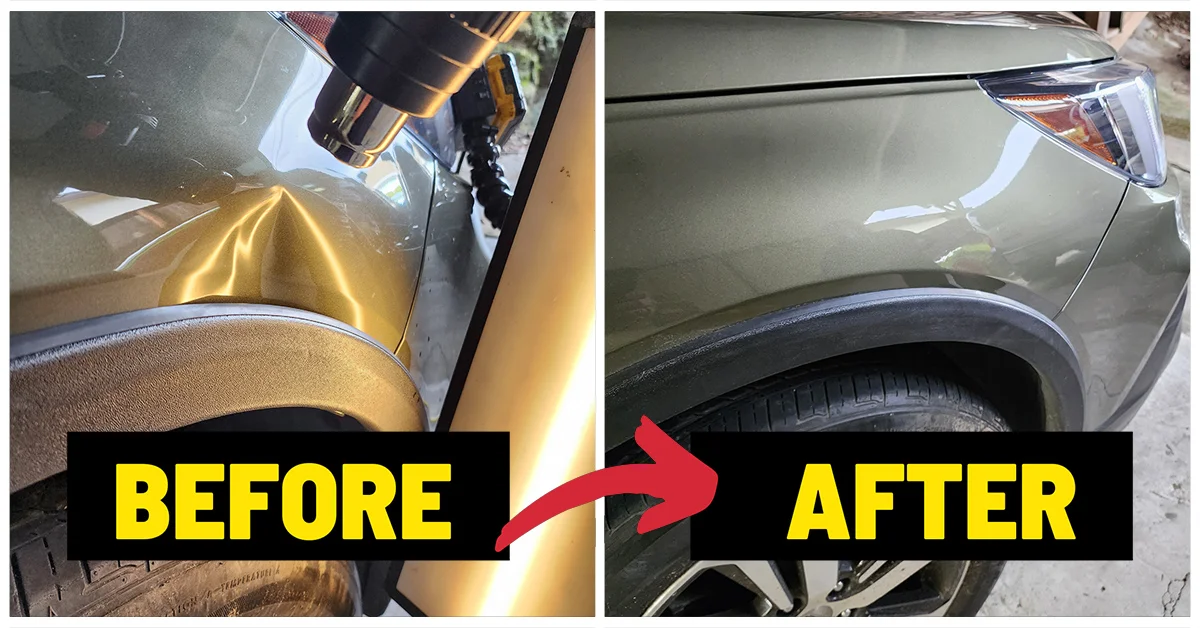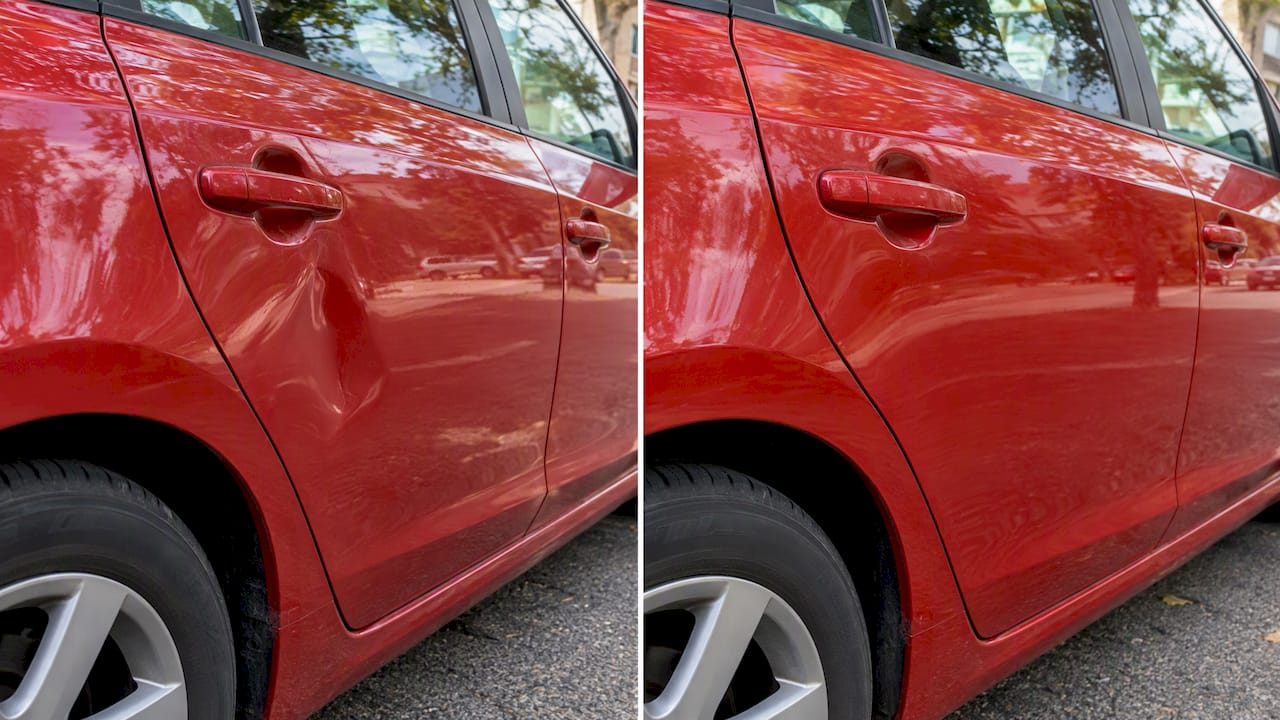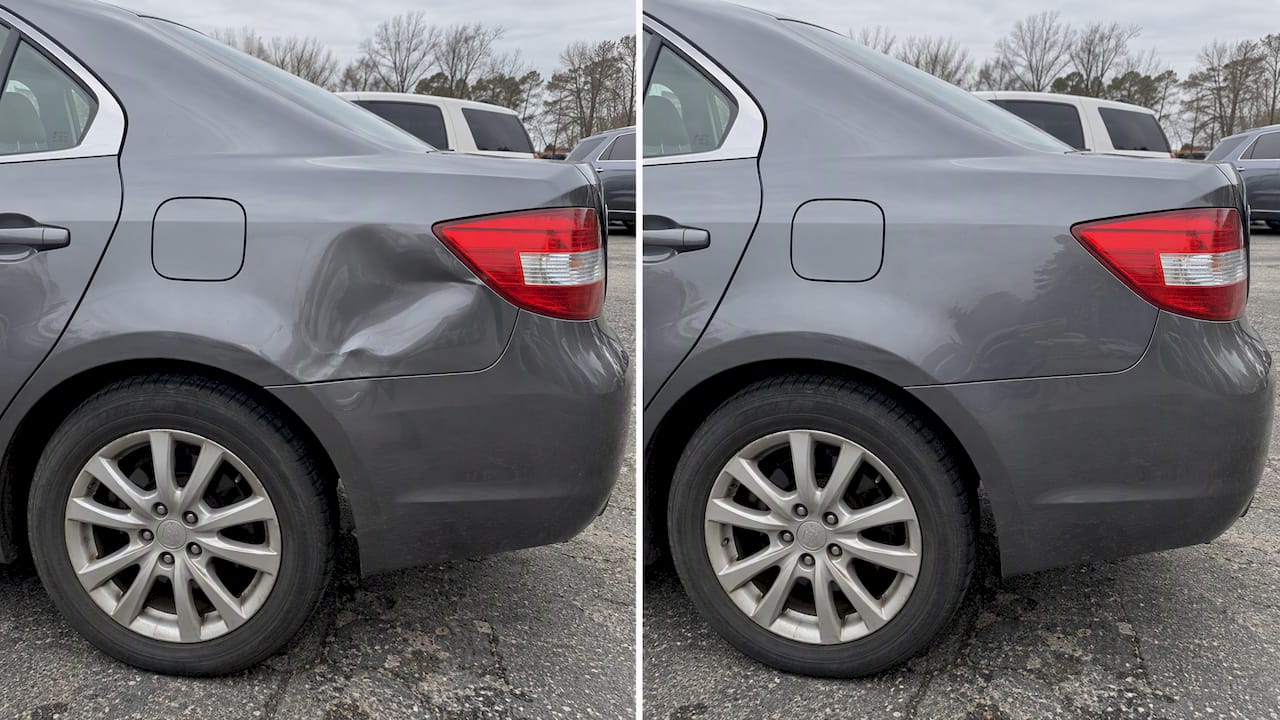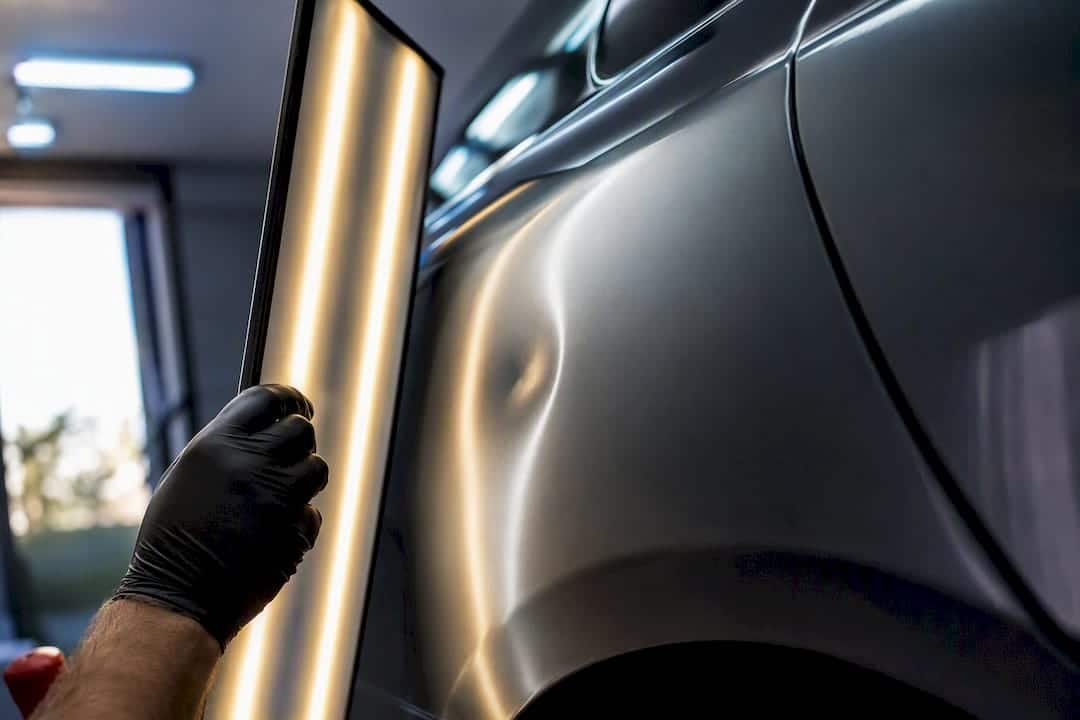
Yes, paintless dent repair fixes most quarter-panel dents when the paint is intact and the metal isn’t sharply creased or stretched. Exceptions matter: cracked paint, deep creases, rust, or a collapsed panel usually mean conventional bodywork instead. Which technique a technician uses, and what you’ll pay, depends on access, panel material, and whether your insurer treats the repair as a covered claim.
TL;DR:
- Paintless dent repair is suitable only for dents with intact paint, shallow shape, and accessible backside, while deep creases and rust rules out PDR.
- The process involves careful panel inspection, proper tool selection, and incremental pushing or glue pulling to restore the metal without damaging the finish.
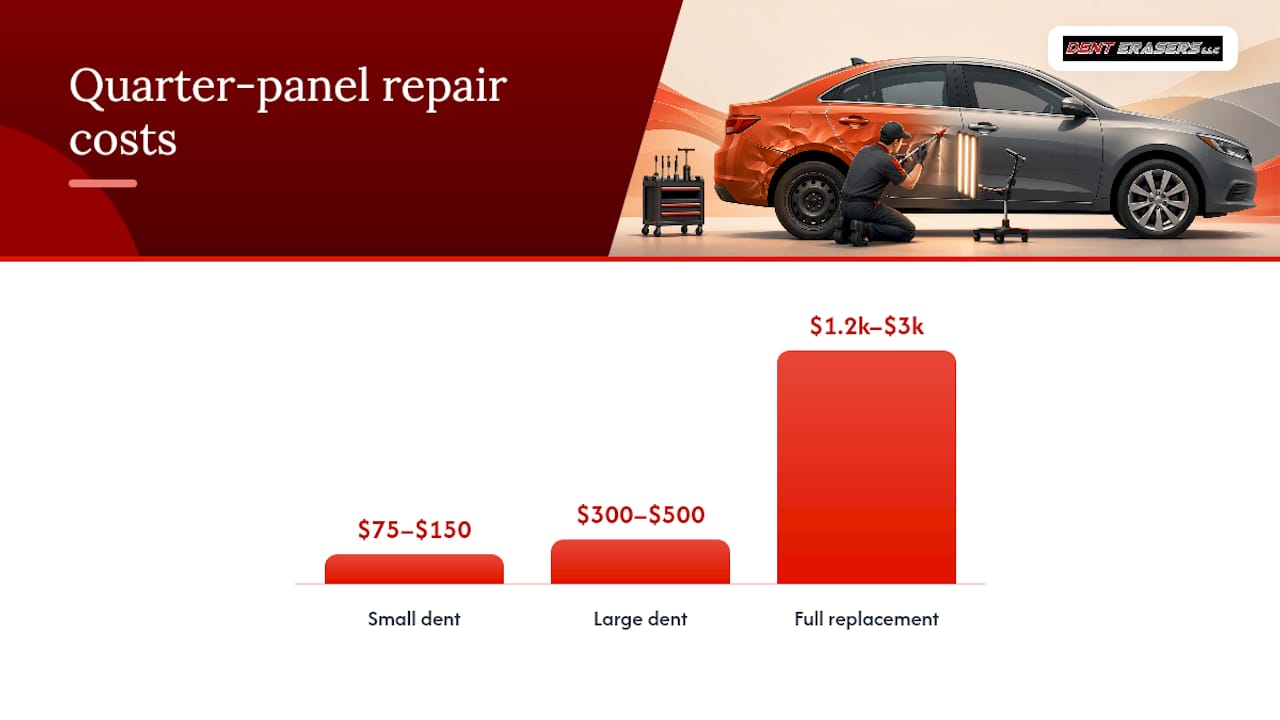
- A typical small dent costs between $75 and $150, with larger or hard-to-reach dents reaching $300 to $500, and full panel replacements costing over $1,200.
- PDR is usually covered by insurance if the damage results from hail, debris, or impact, but claims are less beneficial if the deductible exceeds the repair estimate.
- Precise tools like various push rods, glue tabs, and light boards enable almost invisible repairs when used correctly, emphasizing the importance of skilled technicians.
Table of Contents
- Is Your Quarter Panel Dent a Candidate for PDR?
- How Technicians Actually Fix a Quarter Panel Dent
- What Tools Turn Up on a Quarter Panel PDR Job
- What Does Quarter Panel PDR Cost, and Will Insurance Cover It?
- When PDR Won’t Work and Bodywork Takes Over
- What a Trained Eye Catches Before Touching a Panel
- Should You Try DIY or Call a Mobile PDR Technician?
- Book a Quarter Panel Inspection With Denterasersllc
- Sources
- FAQ
Is Your Quarter Panel Dent a Candidate for PDR?
Before anyone pulls out a rod or a glue tab, the panel gets inspected. This is the step most car owners skip when they’re watching a YouTube video and thinking they can knock out a dent over the weekend. A real inspection answers four questions, and getting any one of them wrong wastes hours.
Start with the paint. Run your fingers over the dent and look closely under good light for cracks, chips, or flaking. Paintless dent repair works only when the paint film is intact because the technique relies on manipulating metal from underneath without disturbing the finish above it. If the paint already has a crack line through the low point of the dent, pushing that metal back will only widen the crack.
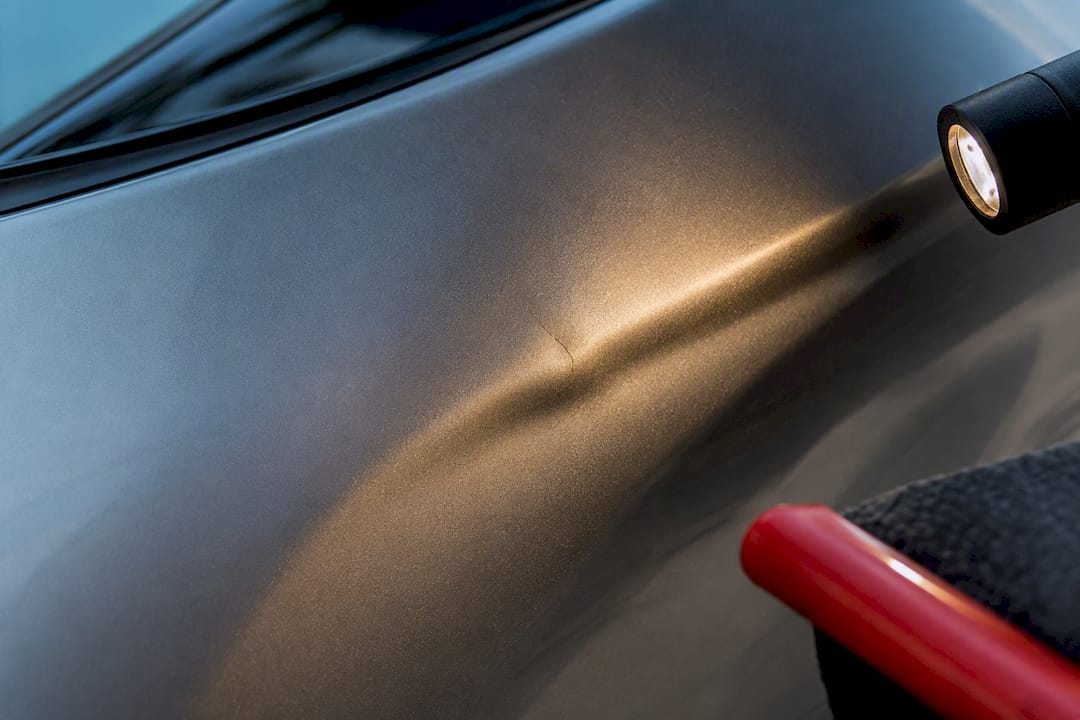
Next comes rust. Perforated rust means the metal has lost integrity in that spot, and no amount of gentle massaging brings weakened steel back to shape without tearing it further. A quick check with a magnet or a flashlight aimed at a low angle usually reveals surface bubbling before it becomes a hole.
Then assess the dent’s shape. Shallow, rounded dents with no sharp crease respond well to PDR. A sharp crease, sometimes called a “dead crease,” means the metal has folded on itself and work-hardened at that fold line. That hardened metal resists the kind of controlled push or pull that PDR depends on, and forcing it usually just relocates the stress somewhere else on the panel.
Finally, check access. Quarter panels are usually one continuous piece of sheet metal, so technicians reach the backside through the trunk interior, the taillight cavity, or by pulling interior trim panels. If none of those openings line up with the dent, glue-pull methods from the outside become the primary option instead of rod work.
- Paint condition: no cracks, chips, or signs of a prior repaint over the area
- Metal geometry: rounded and shallow, not a sharp crease or visible stretch
- Rust check: no perforation or active bubbling under the paint
- Access route: trunk liner, taillight opening, or removable trim lines up with the damage
- Material: aluminum panels and high-strength steel need different rod pressure and patience than mild steel
Pro Tip: Tap the center of the dent lightly with a fingernail. A dull, muted sound often signals stretched metal underneath, even when the surface still looks smooth. A sharper, more solid sound is a better sign for PDR.
Aluminum quarter panels, increasingly common on newer trucks and some sedans, spring back differently than steel and can crack instead of stretch under the wrong pressure. That’s one reason a shop quote for an aluminum panel often runs higher than the same size dent on a steel one.
How Technicians Actually Fix a Quarter Panel Dent
Watching someone do quarter-panel PDR well looks almost boring, which is the point. Good technique is patient and incremental, not dramatic. Here’s the sequence a trained technician follows on a typical job.
- Secure and prep the vehicle. The car gets parked in even light, ideally under an LED light board setup, since shadows hide the true shape of a dent. If trim removal near the taillight risks disturbing wiring or sensors, the technician disconnects the battery first as a precaution.
- Open access to the backside. This usually means removing the trunk liner panel, pulling back interior carpet, or taking out the taillight assembly. Clips break sometimes, wiring harnesses get in the way, and rear speaker mounts occasionally block a clean line to the dent. A patient technician works around these instead of forcing a shortcut.
- Select the right rod. Push rods come in dozens of profiles: straight, curved, whale-tail, and various tip widths. The technician picks a profile that reaches the exact low point of the dent without contacting surrounding metal, then applies steady, incremental pressure from underneath, checking progress against the light board after every push.
- Work the high spots down. As the dent’s low point rises, small high spots or ridges can appear at the edges. These get “peened” down with light taps rather than one big push, since Tapping down after glue-pull or push work is a standard finishing technique to remove those overcorrections without cracking paint, as detailed in how to remove swirl marks from your car’s paint.
- Switch to glue-pull where access is limited. When the backside can’t be reached, or the geometry favors pulling instead of pushing, the technician heats the surface slightly, attaches a sized glue tab, and uses a slide hammer or pull tab system to lift the metal in small increments. Pulling too far in one motion overcorrects the dent and creates a new high spot that then needs to be tapped back down.
- Remove the tab and glue residue. Once the contour reads correctly under the light board, the tab comes off and remaining glue gets removed with a specialized adhesive remover and gentle heat, never a scraper that could mark the clear coat.
- Final light board inspection. The panel gets checked from multiple angles, since a dent that looks perfect in overhead light can still show a shadow line when viewed from the side. This step catches maybe 90% of the small corrections that separate an average repair from an invisible one.
The push technique tends to work best when there’s real access behind the panel, since it lets a technician control pressure directly at the source of the dent. Glue-pull becomes the answer when the backside is boxed in by structural bracing or wiring, which happens often near the wheel well section of a quarter panel.
What Tools Turn Up on a Quarter Panel PDR Job
The gear a technician carries matters more than most car owners realize, because a repair is only as good as the rod, tab, or hammer that shaped it. If you’re evaluating a repair quote or considering a DIY attempt, knowing what these tools do helps you judge the difference between a careful job and a rushed one.
- Push rods and picks in varying lengths and tip profiles, since the correct curve and diameter for a deep quarter-panel reach is different from what works on a shallow door dent.
- Glue-pull kits with an assortment of tab sizes and hot-melt or specialty adhesive formulas rated for different temperatures, matched to panel curvature and dent size.
- Knockdown tools, usually nylon or rubber-tipped hammers, along with nylon shims used to tap down high spots without transferring marks into the clear coat.
- Light boards and inspection lamps that reveal contour irregularities invisible under standard shop lighting or daylight.
- Trim clips, panel fasteners, and protective film to reinstall interior liners cleanly and protect surrounding paint from tools and hands during the work.
- Heat guns, used carefully during glue-pull work and finish tapping, since controlled warmth makes paint more forgiving and reduces cracking risk during metal movement.
A shop or mobile technician with a wide rod selection and a proper light board setup is investing in the kind of precision that separates a smooth, invisible repair from one you can still spot at a certain angle in the sun.
What Does Quarter Panel PDR Cost, and Will Insurance Cover It?
A single, straightforward quarter-panel dent typically runs $75 to $500 in PDR pricing depending on size and location, while a full panel replacement with paint and labor can climb past $1,200 to $3,000. That gap is the entire financial argument for PDR whenever it’s an option.
Most shops price the job using what’s called a PDR matrix, a pricing table that factors in the panel type, how many dents are present, and the size of each dent measured against coin references like dime, nickel, quarter, and half-dollar. A quarter-sized dent on a quarter panel costs more than the same size on a door because quarter panels are larger, more structurally integrated, and often harder to access from behind. Aluminum panels or dents in double-layered, hard-to-reach areas commonly add a markup, sometimes around 25%, to account for the extra time and specialized handling required.
- Single small dent (dime to nickel size): often in the $75 to $150 range
- Larger single dent or awkward access point: can run $300 to $500 or more
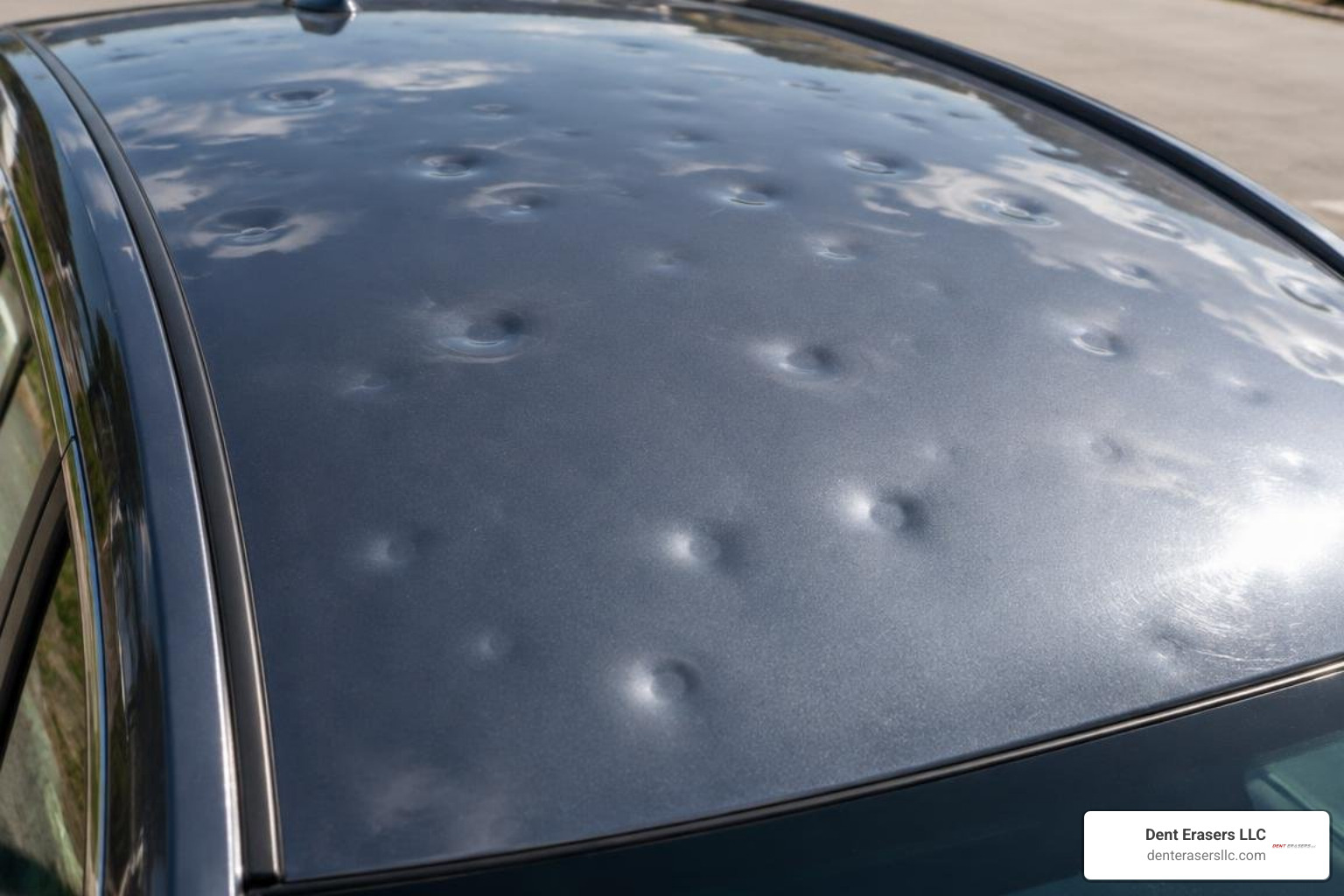
- Multiple dents from hail or a cluster impact: priced per dent on the matrix, adding up quickly on a large panel
- Full quarter panel replacement with paint: commonly $1,200 to $3,000 and up
On the insurance side, comprehensive coverage typically applies to hail, falling debris, or vandalism, while collision coverage applies to impact damage from an accident. Insurers often prefer PDR for eligible dents specifically because it costs less than conventional repair, which can work in your favor if a claim adjuster is deciding between a $300 PDR estimate and a $2,000 bodywork quote.
Before filing anything, run the numbers yourself. If your deductible is $500 and the PDR estimate comes in at $350, filing a claim costs you money and may still affect your premium at renewal. A detailed cost breakdown for quarter panel repairs can help you compare an out-of-pocket estimate against your policy’s deductible before you decide whether a claim is worth it.
When PDR Won’t Work and Bodywork Takes Over
PDR has real limits, and pretending otherwise wastes your time and money. Cracked paint over the dent, a sharp crease with visibly stretched metal, rust perforation, or a panel that’s collapsed inward at a body line all rule out paintless repair. Once metal has stretched past its elastic limit, no amount of careful pushing restores the original contour.
- Cracked or chipped paint directly over the damage
- A sharp, work-hardened crease rather than a smooth, rounded dent
- Visible rust or bubbling at the point of impact
- Metal that’s torn, folded, or collapsed rather than simply pushed in
Some repairs land in a middle ground. A technician might use PDR to push the bulk of the dent out, then hand the panel to a body shop for a small amount of filler and spot paint to address the last few percent that PDR can’t fully correct. This hybrid approach, sometimes called push-to-prep, often costs less than a full traditional repair since it reduces the amount of filler and paint work needed. If your dent has a crease running through it, our guide to car dent crease repair walks through exactly when that combination approach makes sense.
The time trade-off is worth knowing upfront. Straightforward PDR jobs often finish same-day, sometimes in a couple of hours. Bodywork involving filler, primer, paint, and clear coat curing typically stretches into multiple days once you factor in paint matching and cure time.
What a Trained Eye Catches Before Touching a Panel
A dent that looks identical to another one on the surface can behave completely differently underneath, and that’s what years of quarter-panel work teaches you to check first. My inspection routine always starts with photos in natural light, followed by a light-board pass to read the true contour, a check on whether the trunk or taillight gives clean access, and a fingernail tap test across the dent to gauge whether the metal has stretched.
I’ve worked jobs where a baseball-sized dent from a shopping cart pushed out clean in under an hour, paint fully intact. I’ve also turned away jobs where a similar-looking dent, on closer inspection, had a hairline paint crack invisible from three feet away, meaning bodywork was the only honest answer. If you’re scheduling a mobile visit, clear the area around the vehicle, make sure the trunk isn’t packed with cargo, and expect the appointment window to run anywhere from one to three hours depending on access.
Should You Try DIY or Call a Mobile PDR Technician?
If the dent is shallow, the paint’s untouched, and you can reach the backside easily, a basic DIY attempt carries low risk. Anything with a crease, tight access, or a body line nearby raises real odds of pulled paint or a new crease. Mobile pros bring the reach, rod selection, and light-board precision that quarter panels demand, and that convenience is worth paying for once your own dent stops being a five-minute fix.
— Brian Blanc
Book a Quarter Panel Inspection With Denterasersllc
Denterasersllc brings the shop to your driveway, which means no dropping the car off and rearranging your week around a bodyshop’s schedule. Our mobile technicians bring the same rod selection, glue-pull kits, and light-board setup described above directly to your home or office, and because PDR preserves your factory paint, there’s no repaint to wait on or color-match to worry about.

Before we arrive, clear enough space around the vehicle for a technician to work comfortably, make sure the trunk is accessible in case we need to reach the panel from inside, and snap a few photos of the dent in daylight if you’d like an early read on scope. Most quarter-panel visits wrap up in a single appointment window. If cracked paint or a sharp crease turns your case into a hybrid repair, we’ll walk you through that before any work starts, not after.
Ready to see if your dent qualifies? Visit Dent Erasers LLC to schedule an inspection and browse the repair gallery for a sense of what quarter-panel PDR actually looks like finished.
Sources
- Paintless dent repair – Wikipedia
- Does Insurance Cover Paintless Dent Repair? Claims and Costs – LegalClarity
- Car quarter panel repair: Costs, options & when to replace – The CarBuzz
- Can it be fixed with PDR? – Dented
FAQ
How much does PDR cost for one dent?
A single dent typically costs $75 to $500 depending on size and location, with larger or harder-to-access dents landing at the higher end of that range.
How much does it cost to get a dent out of a quarter panel?
Quarter-panel dents usually run $75 to $500 for PDR, while full panel replacement with paint can exceed $1,200 to $3,000 depending on damage severity and panel material.
How do you fix a dented quarter panel?
Technicians access the backside through the trunk liner or taillight cavity and use push rods or glue-pull tabs to reshape the metal, finishing with tap-down work and a light-board inspection to confirm the contour is correct.
Will insurance pay for PDR?
Comprehensive or collision coverage often applies if the damage stems from a covered event, and insurers frequently favor PDR for eligible dents since it costs less than traditional bodywork, though it rarely makes sense to file a claim below your deductible.