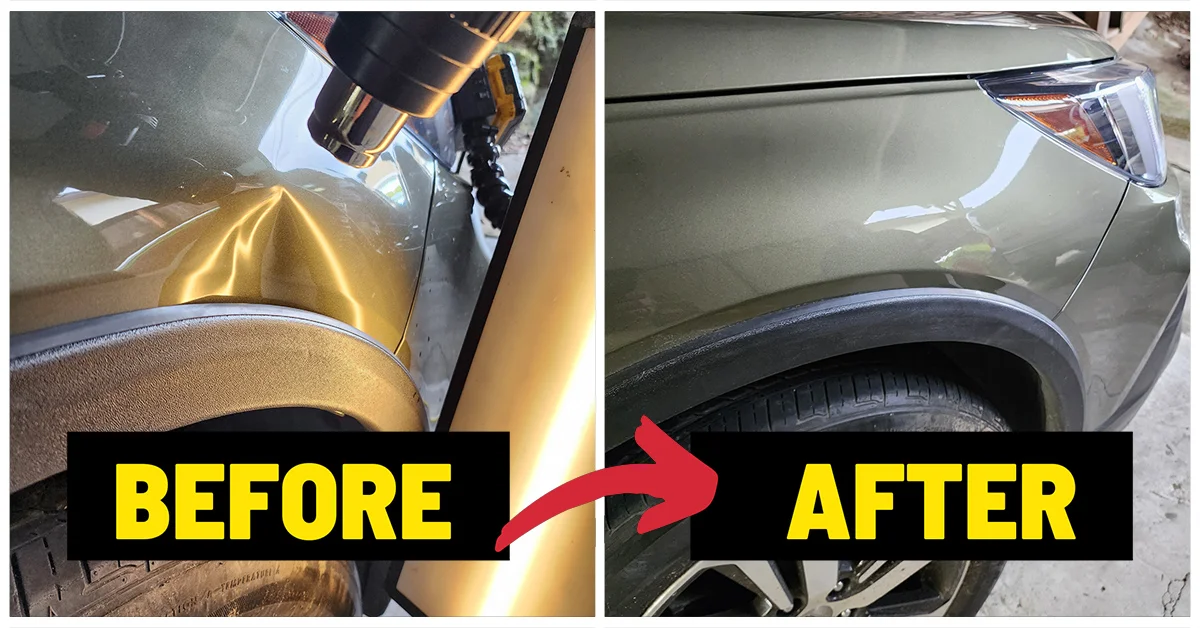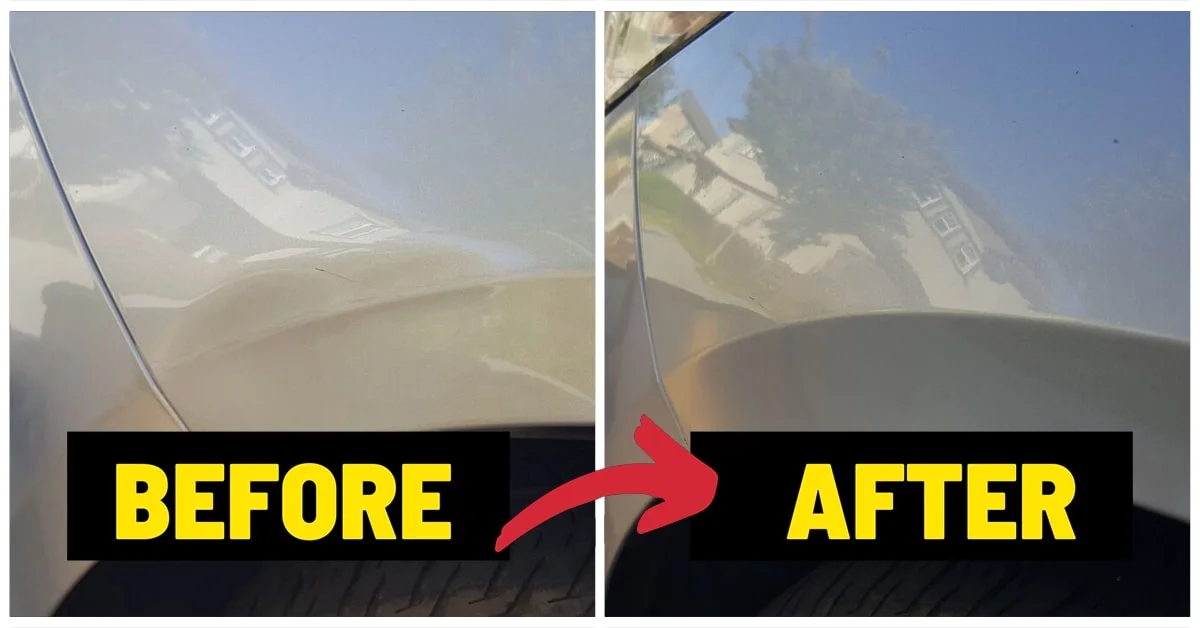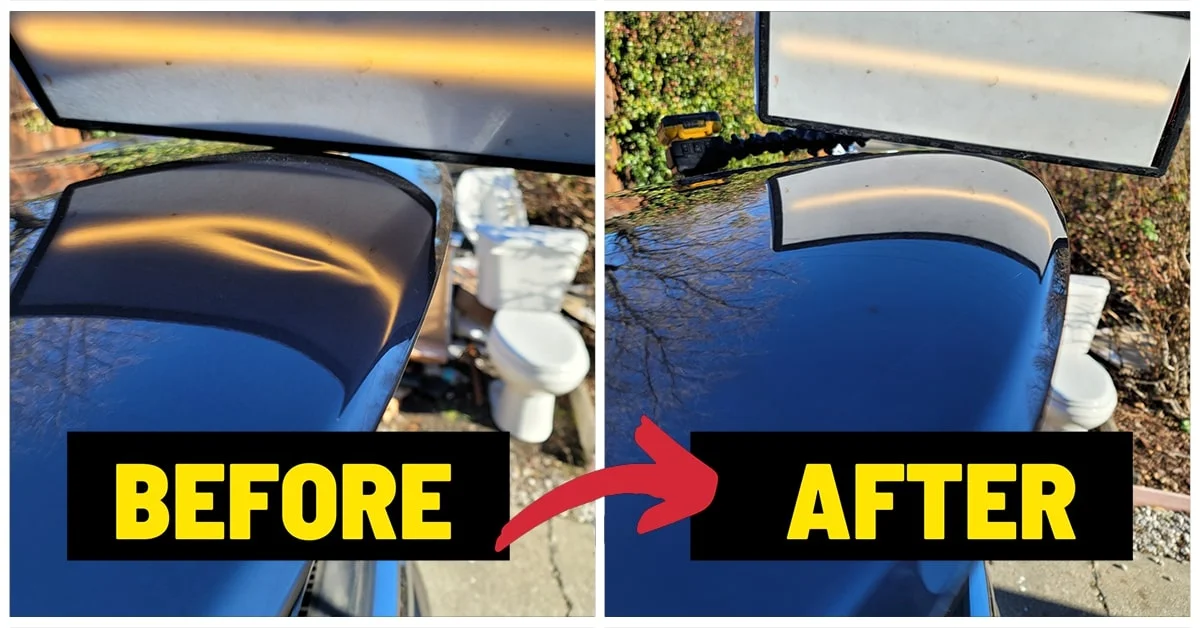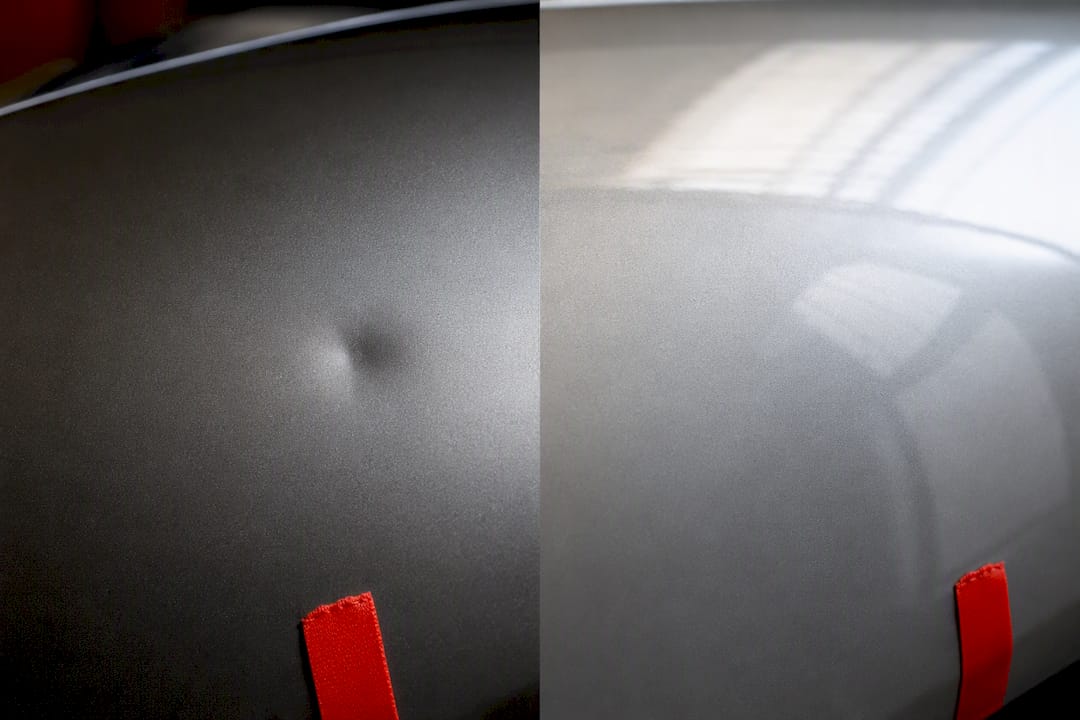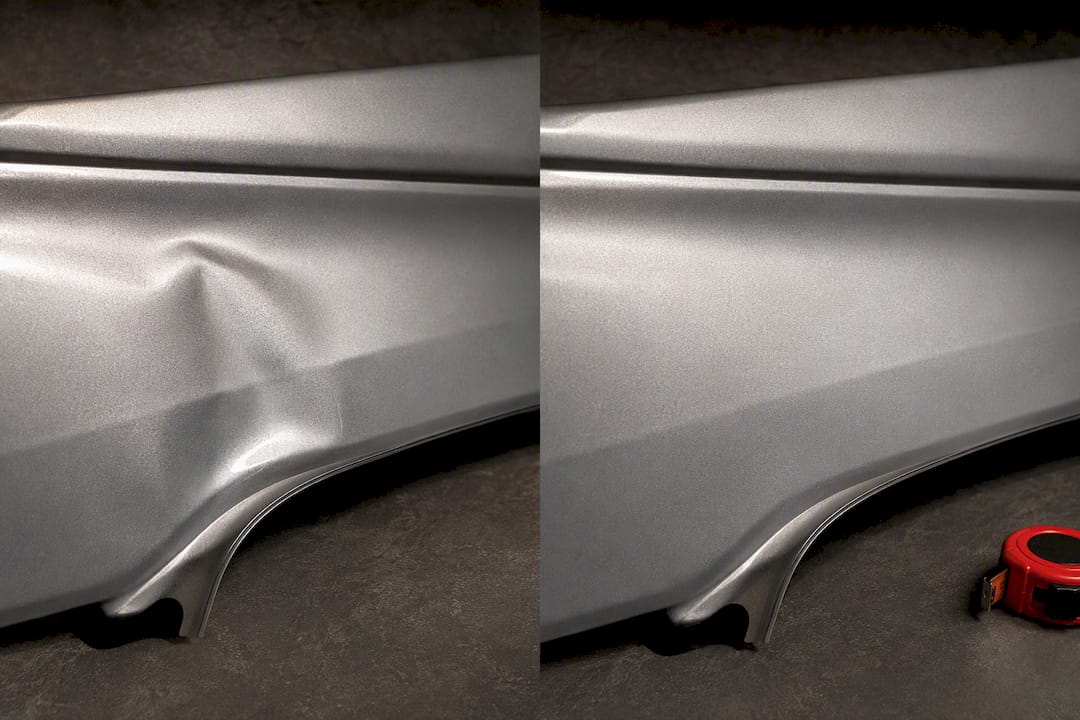
If the dent is small, shallow, and the paint is still intact, a cautious DIY attempt or professional paintless dent repair will usually work. If the paint is cracked, chipped, or the crease is sharp, skip the DIY tricks and get a professional estimate before it costs you more. Photograph the damage, write down what happened, and get an estimate in hand before you decide whether to file a claim or reach for a plunger.
TL;DR:
- Small, shallow dents with intact paint can often be fixed with DIY methods like suction cups or PDR, but creases and chipped paint require professional repairs.
- Photographing and documenting the damage thoroughly before any repair attempts is crucial for insurance claims, liability cases, and estimates.
- DIY fixes are effective only on broad, rounded dents on flat panels; sharp-edged, creased, or paint-damaged dents most often need a professional body shop.
- Paintless dent repair is ideal for small to moderate, non-cracked paint dents located away from body lines, often completed within an hour or two.
- Cost for small PDR typically ranges from $75 to $300, with more severe damage involving paint or complex panels costing over $2,000, depending on the extent.
Table of Contents
- How to inspect and document a shopping cart dent
- DIY methods that sometimes work, and when to stop
- What paintless dent repair actually does
- Costs, insurance, and a quick decision checklist
- Documenting damage and pursuing store or individual liability
- Choosing a repair path and what to ask a technician
- What to expect from a mobile PDR visit
- The honest take on shopping cart dents
- Book a Mobile Inspection With Denterasers LLC
- Sources
- FAQ
How to inspect and document a shopping cart dent
Grab a tape measure before you grab anything else. A dent’s size, depth, and location decide almost everything about which repair path makes sense, so measure it in inches, note how deep it runs, and mark exactly where it sits on the panel. A ding two inches from a door seam behaves differently than the same ding sitting dead center on a flat door skin, and a dent near a sensor or camera housing on a rear bumper needs extra caution.
Paint condition is the single biggest factor in whether paintless dent repair even applies. Run a fingernail lightly over the area (avoid anything sharp) and look closely under good light for hairline cracks or flaking. Intact paint over a rounded dent is a strong candidate for PDR. Cracked or chipped paint means the metal has likely stretched past what a technician can massage back into shape without filler and a repaint.
Before you touch the dent, build a photo record:
- Wide shot showing the dent’s position on the vehicle.
- Close-up shots from three or four angles, including one with the tape measure in frame.
- A shot of the surrounding area, showing whether nearby panels or trim took a hit too.
- Time-stamped photos (your phone does this automatically) noting the date and parking lot.
Pro Tip: Text yourself the photos immediately after taking them. Phones get lost, cracked, or wiped, and a text thread with timestamps is a simple backup that also shows when you first noticed the damage.
A 2024 FindLaw review of shopping cart liability cases notes that documented evidence, not the dent itself, is what actually moves a claim forward. This photo set becomes the backbone of any repair estimate and any conversation with a store or insurer.
DIY methods that sometimes work, and when to stop
A handful of DIY methods have real merit on the right kind of dent, but each one has a failure mode that can turn a $150 problem into a $1,500 one. Here’s how to try them safely and know when to walk away.
- Plunger or suction technique. Wet the plunger’s rim, center it over the dent, and pull straight out with steady pressure, not a yank. This works on broad, shallow, rounded dents on flat panels. It almost never works on a crease because there’s no even surface for the suction to grip, and repeated attempts on a crease just stretch the metal further.
- Hot water and cold air on plastic bumpers. Pour water just below boiling over the dent, then follow with compressed air or a cold pack. Plastic panels can relax and pop back into shape with this method more often than metal ones do. The risk is heat damage to paint, especially clear coat, if the water is too hot or held too long in one spot.
- Glue-pull kits and mini vacuum cups. These work by bonding a tab to the dent’s center and pulling with a slide hammer or leverage bar. They’re effective on small, isolated dings, but the most common mistake is overpulling, which creates a new high spot, or ripping paint off with the glue tab on a repair that was borderline to begin with.
Ice cube and vacuum-bag tricks circulating online promise dramatic before-and-afters, but they’re built for shallow, wide depressions on flat metal, not the sharp, localized dings a cart corner leaves behind. On a creased or sharp-edged dent, these tricks tend to fail outright and can worsen the damage by stressing paint that was otherwise fine. If a method isn’t producing visible improvement within a few gentle attempts, stop. Continued pulling or heating on metal that has work-hardened, meaning it has stiffened and resists reshaping after repeated stress, often costs more to undo than the original dent would have cost to fix professionally.
What paintless dent repair actually does
Paintless dent repair is exactly what it sounds like: a technician accesses the backside of the panel and massages the metal back to its original contour without cutting, filling, or repainting anything. Done right, it preserves the factory finish completely, which matters a lot on newer vehicles where color matching a repaint is notoriously tricky and on cars where original paint holds resale value.
PDR handles a specific category of damage well:
- Small to moderate dings, generally in the 1 to 6 inch range, where the paint hasn’t cracked.
- Shallow, rounded creases without sharp edges.
- Dents located away from body lines, edges, or areas where the metal has been stretched thin.
It does not handle everything. Cracked or chipped paint means filler and a color-matched repaint are required, since PDR can’t restore paint integrity once it’s broken. Severe creases, sharp-edged impacts, and dents that sit right on a body line often exceed what metal reshaping alone can fix, because the metal in those spots has already stretched beyond its “memory,” the point where it can return to its original shape.
A qualified mobile technician typically starts with a visual and tactile inspection, checking paint condition and access to the panel’s backside, then gives a written estimate on the spot. Because the process involves no paint booth or drying time, most PDR jobs finish in a single visit, often within an hour or two for a single panel. That speed, combined with not having to drop the car at a shop for days, is the main reason PDR is favored over other repair methods whenever the damage qualifies.
Costs, insurance, and a quick decision checklist
Prices vary by region, panel, and severity, but rough ranges give you a starting point for comparison. According to cost breakdowns from LegalClarity, a small 1 to 3 inch PDR repair commonly falls somewhere around $75 to $300. A medium dent, especially one requiring more access work or sitting near a body line, tends to run higher. Once paint is cracked and filler or a repaint enters the picture, costs can climb well past $2,000, particularly on panels with complex curves or metallic finishes that are harder to color match.
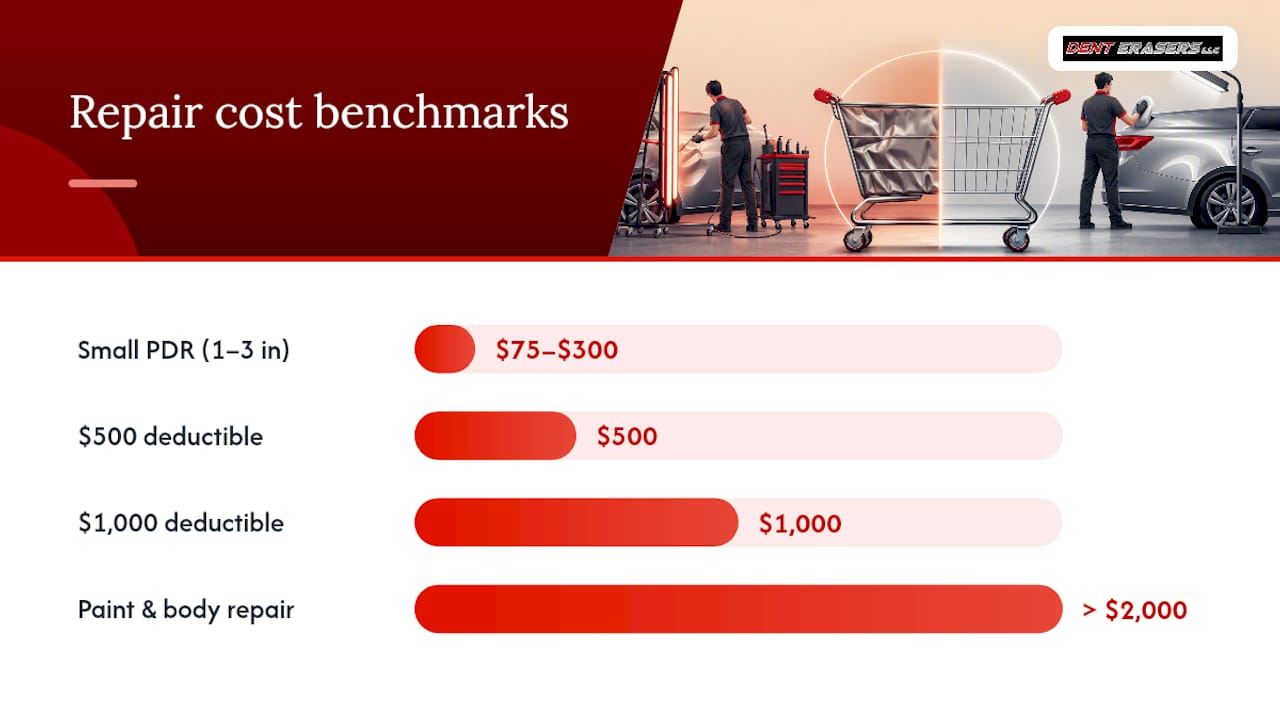
Deductibles usually decide the math. If your comprehensive coverage carries a $500 or $1,000 deductible and the repair estimate comes in at $200, filing a claim costs you more than paying out of pocket. PolicyPorch’s guidance on parking lot damage points out that most small cart dents are cheaper to fix directly than to run through insurance, once you factor in the deductible and the possibility of a premium increase following any claim.
Comprehensive coverage typically responds to shopping cart damage since it’s not a collision with another vehicle; liability-only policies won’t cover your own car at all. If an insurer does pay out and later identifies a negligent party, subrogation lets the insurer pursue that party to recover what it paid, which can sometimes offset your deductible.
Before deciding, run through this checklist:
- Compare the repair estimate against your deductible; if the gap is small, pay out of pocket.
- Check for hidden damage near sensors, cameras, or trim clips that could raise the real cost.
- Weigh a potential premium increase against the amount you’d save by filing.
- Confirm whether the dent even qualifies for PDR before assuming you need a full body shop.
For a deeper breakdown of what drives repair pricing, our guide to dent repair costs walks through panel type, paint condition, and labor factors in more detail.
Documenting damage and pursuing store or individual liability
Stores generally are not liable for shopping cart damage unless you can prove negligence, meaning an employee left carts unsecured in a way that caused foreseeable harm, or store video shows exactly what happened. A “not responsible for damage” sign posted in the lot doesn’t automatically kill a claim; evidence still decides it, according to FindLaw’s coverage of a New Jersey case where a customer recovered over $1,000 after footage showed an employee was at fault.
Here’s the practical sequence to follow right after you find the damage:
- Take photos immediately, including the cart’s position relative to your car.
- Ask the store manager for an incident report number and request in writing that they preserve surveillance footage before it’s overwritten.
- Collect names and contact info from any witnesses nearby.
- If the store is unresponsive, escalate to corporate customer service with your incident number.
- If a specific individual is identified as responsible, small claims court is a realistic option, provided you have photos, the estimate, and any witness statements ready.
Without identification of a responsible party, most cases end up going through your own insurance or getting paid out-of-pocket.
Choosing a repair path and what to ask a technician
Match the damage type to the method before you commit to either DIY or a shop visit. Round, shallow dents with intact paint point toward PDR or a careful DIY attempt. Anything with a crease, a sharp edge, or paint damage should skip DIY entirely and go straight to a professional estimate, since attempting to fix it yourself risks turning a PDR job into a filler-and-repaint job.
When you call a technician, ask these questions directly:
- “Is this dent eligible for paintless dent repair, or does it need filler and paint?”
- “Will you give me a written estimate before starting any work?”
- “Do you offer a warranty on the repair?”
- “Can you come to my home or office, or do I need to bring the car in?”
- “What happens if you find paint damage or a sensor issue once you start?”
Pro Tip: A technician who won’t give you a written estimate before starting, or who quotes a price well below others without explaining why, is a red flag. Legitimate mobile PDR pricing reflects the panel access and reshaping time involved, not a flat rate regardless of severity.
If you want a longer walkthrough on vetting technicians, our guide to choosing a PDR service covers credentials, warranty language, and pricing transparency in more depth. It’s also worth keeping your door jambs and trim clean during any repair process, since gentle jamb cleaning techniques that avoid harsh solvents protect the surrounding coating while a panel is being worked on.
What to expect from a mobile PDR visit
Mobile paintless dent repair and collision services come to you, whether that’s a driveway, an office lot, or a shopping center you’re already parked at. The point of onsite service is simple: you skip the drop-off, skip the loaner car hassle, and get your factory finish preserved without a repaint.
A legitimate mobile visit follows the same sequence outlined above: a technician inspects the dent, confirms whether paint is intact, and provides a written estimate before touching a panel. Turnaround on a single cart dent is often measured in an hour or two, not days. Look for before-and-after photo galleries and real customer feedback when evaluating any mobile PDR provider, since that visual record tells you more about actual results than a price quote alone.
The honest take on shopping cart dents
Most people either overreact to a cart dent, assuming it needs a full body shop visit, or underreact and grab a plunger on damage that clearly needed a professional’s eye. The truth sits in the middle, and it hinges entirely on paint condition. That single detail decides more than the dent’s size ever will.
Conventional advice online oversells DIY hacks. Hot water and suction cups get repeated across forums as universal fixes, but they only work on the gentlest, most forgiving damage. On anything with a crease or a sharp edge, they’re a good way to turn a $150 PDR job into a $1,500 paint-and-filler job.
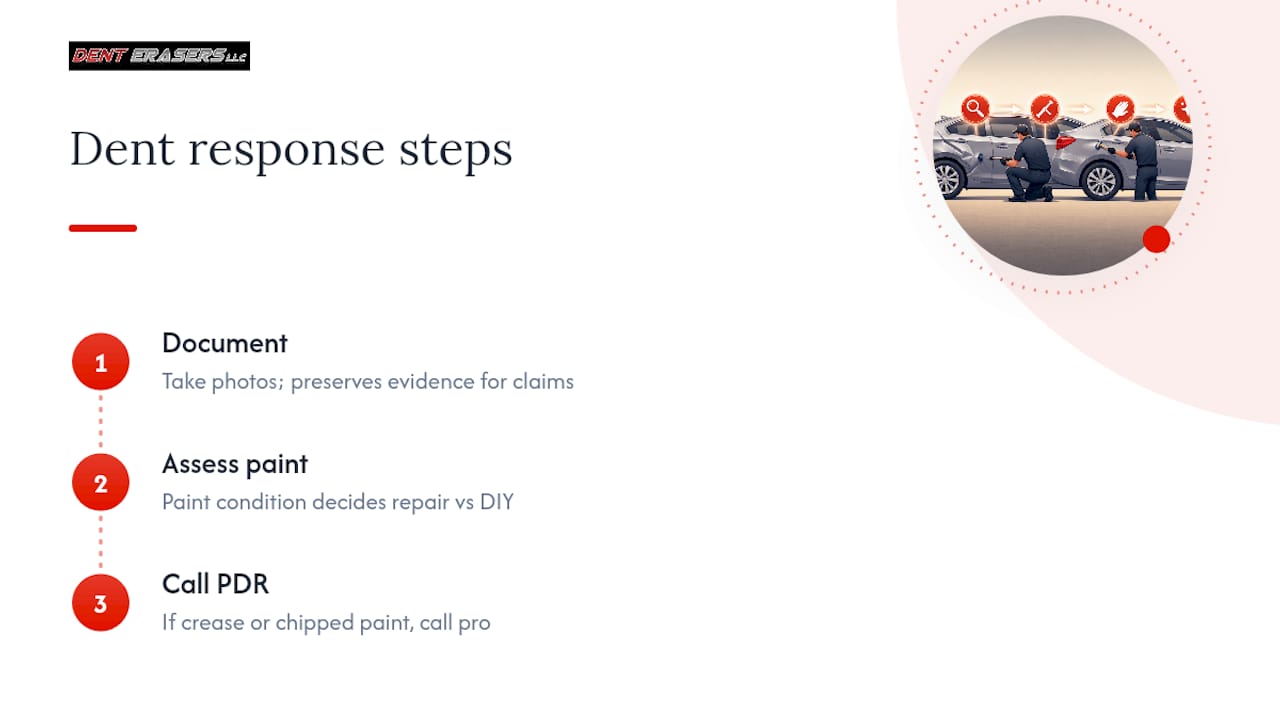
My honest priority order: document first, assess paint second, and call a mobile PDR technician the moment you see a crease or chipped paint. The photo record costs you nothing and protects you either way, whether you end up filing a claim, going after a store, or just paying out of pocket. Skipping that step is the actual mistake, not choosing DIY over professional repair.
— Brian Blanc
Book a Mobile Inspection With Denterasers LLC
We bring the estimate to your driveway instead of asking you to drop your car off and wait days for a shop slot. That’s the real difference for a cart dent: no loaner car, no missed workdays, just a technician who inspects the panel where your car already sits and tells you honestly whether paint is intact enough for PDR.

Before you book, gather your photo set, note the exact location of the dent, and have your vehicle’s year and model ready. On arrival, expect a hands-on inspection, a written estimate, and, if the damage qualifies, a same-visit repair that leaves your factory paint untouched. If the panel needs filler and a repaint instead, you’ll know that upfront rather than after paying for an attempt that couldn’t work. Ready to get a straight answer on your dent? Schedule your onsite estimate and find out exactly what it’ll take to get your panel back to smooth.
Sources
- Shopping Cart Dents, Dings: Is the Store Liable? – FindLaw
- Who Is Responsible if a Shopping Cart Hits My Car? – LegalClarity
- Shopping Cart Hit Your Car? Who Pays for Damage – PolicyPorch
FAQ
Are stores liable for shopping cart damage?
Only if negligence can be proven, such as an employee leaving carts unsecured or surveillance footage showing store fault; a posted disclaimer sign doesn’t automatically block a valid claim.
How do I get a shopping cart dent out of my car?
For small, shallow dents with intact paint, a suction plunger or a professional PDR technician can often reshape the metal without repainting; creased or paint-damaged dents need a body shop instead.
What dents cannot be fixed with DIY or PDR?
Dents with cracked or chipped paint, sharp creases, or damage sitting directly on a body line typically require filler and a repaint rather than reshaping alone.
How much will a dent cost to fix?
Small PDR repairs often run roughly $75 to $300, while dents with cracked paint requiring filler and a repaint can exceed $2,000 depending on the panel and finish.