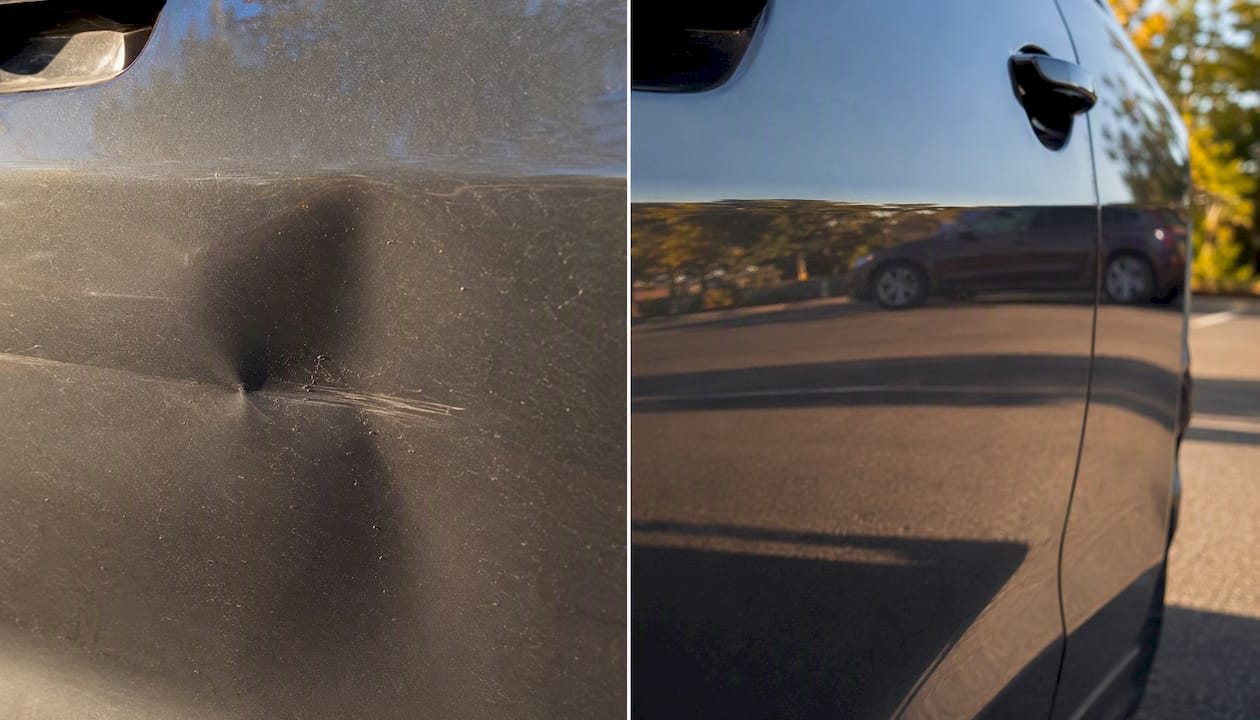
A surface scratch affects your vehicle’s paint layers while a dent deforms the metal panel itself. These are two completely different types of damage, and mixing them up leads to the wrong repair, wasted money, or a finish that never quite looks right again.
Here is your first check: run your fingernail across the damage. If it catches, the scratch has cut below the clear coat. If the panel feels sunken or pushed in, you are dealing with a dent. If you see bare metal or rust, stop and call a professional today.
Quick orientation before you read further:
- Surface scratch: damage confined to one or more paint layers (clear coat, base coat, primer)
- Dent: a change in the physical shape of the metal or plastic panel beneath the paint
- Paintless dent repair (PDR): the preferred first-call fix for dents with intact paint
- Rust risk: begins the moment primer or bare metal is exposed, by either a deep scratch or a paint-cracking dent
According to Guerrero Mobile Mechanics, any scratch or dent that exposes bare metal or shows rust should be repaired promptly to prevent corrosion and larger repair costs down the road.
Key Takeaways
A surface scratch damages paint layers while a dent deforms the panel itself; the fingernail test and angled light check identify which you have in under a minute.
| Point | Details |
|---|---|
| Scratches affect paint layers | Clear coat, base coat, or primer are damaged; the panel shape stays intact. |
| Dents deform the panel | Metal or plastic geometry changes; paint may still be fully intact. |
| Fingernail test guides depth | No catch means clear coat only; a catch or groove means paint or metal is exposed. |
| Rust risk is immediate | Any bare metal or primer exposure needs prompt repair to stop corrosion from spreading. |
| Denterasersllc mobile PDR | On-site repair for qualifying dents preserves factory finish with no sanding or repainting. |
Table of Contents
- How surface scratch vs. dent differences show up in your paint layers
- What a dent actually is, and the types you will encounter
- How to tell a surface scratch from a dent using light and touch
- Repair options for scratches, with realistic cost and time ranges
- Repair options for dents: PDR vs. traditional bodywork
- When to DIY and when to call a professional
- Why mobile PDR is often the smartest first call for small dents
- Denterasersllc brings the repair to you
- Sources
- FAQ
How surface scratch vs. dent differences show up in your paint layers
Your vehicle’s finish is a stack of four distinct layers, and understanding that stack is the fastest way to know what you are actually dealing with, as explained in this matte paint ceramic coating owner’s guide.
From the outside in: clear coat (the glossy protective top layer), base coat (the color layer), primer (adhesion and corrosion protection), and bare metal. A scratch is damage to one or more of those layers. A dent skips the paint conversation entirely and bends the panel underneath.
The three scratch depths and what they mean
Spinny’s car scratch guide maps scratch depth directly to repair method and cost:
| Scratch Type | Layer Affected | Likely Repair | Approximate Cost Tier |
|---|---|---|---|
| Clear-coat scratch | Clear coat only | Polish or compound | Low ($10–$50 DIY) |
| Paint-layer scratch | Base coat (color) | Touch-up paint or localized repaint | Moderate cost, typically requiring professional touch-up or localized repaint |
| Primer/bare-metal scratch | Primer or metal | Primer, full repaint, rust prevention | Higher cost due to primer application, full repaint, and rust prevention |
The fingernail test: drag your fingernail across the scratch at a slight angle.
- Nail glides over it with no catch: clear-coat scratch, polishable
- Nail catches slightly: paint layer is cut, touch-up needed
- Nail drops into a groove: primer or metal is exposed, rust clock is ticking
Rust risk begins the moment primer or bare metal is exposed. A scratch that looks minor on a cloudy day can be hiding a groove deep enough to corrode within weeks in wet conditions. When in doubt, check under direct sunlight or a flashlight held at a low angle to the panel.
What a dent actually is, and the types you will encounter
A dent is a geometric change to the panel. The metal (or plastic, on bumpers) has been pushed, pulled, or creased out of its original shape. The paint may still be perfectly intact, or it may be cracked, chipped, or missing entirely. That paint condition is the single biggest factor in choosing a repair path.
Common dent types
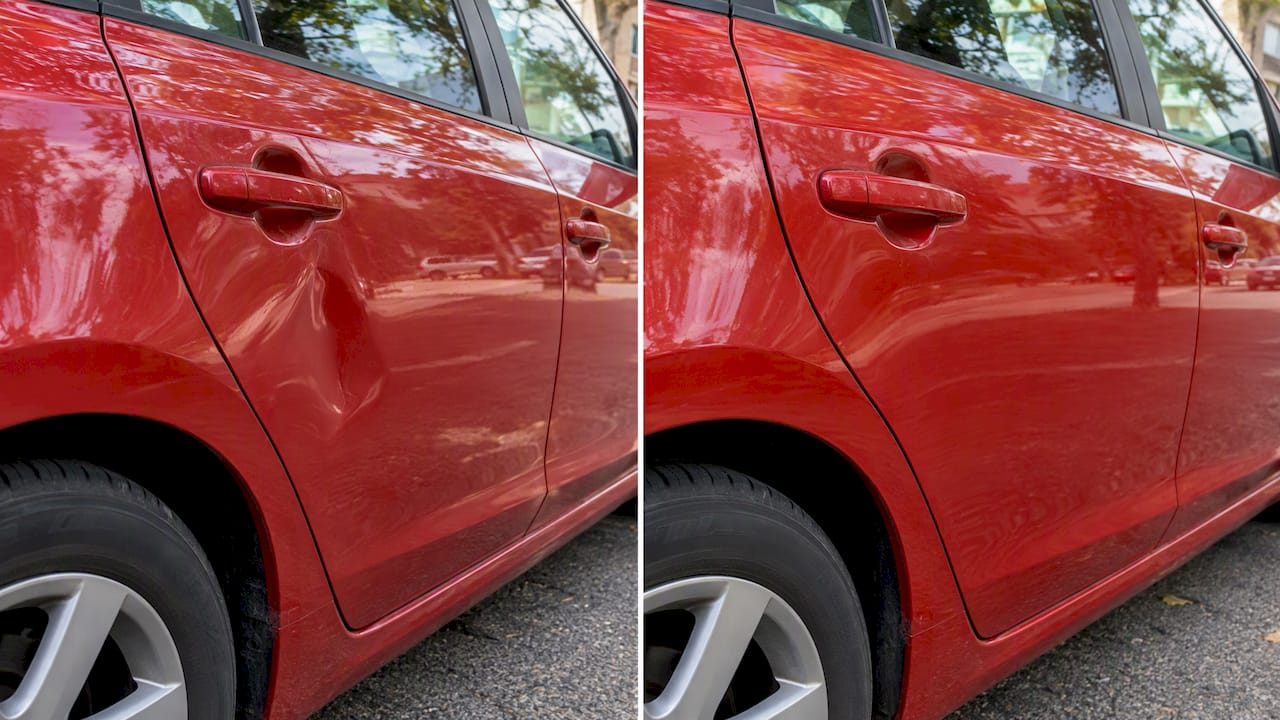
- Door ding: Small, round, shallow impact from another car door or shopping cart. Paint is usually intact. Classic PDR candidate.
- Round impact dent: Larger circular depression from a ball, post, or blunt object. Depth and paint condition vary.
- Crease dent: A sharp, linear fold in the panel from a sideswipe or edge impact. Harder to repair; often requires conventional bodywork.
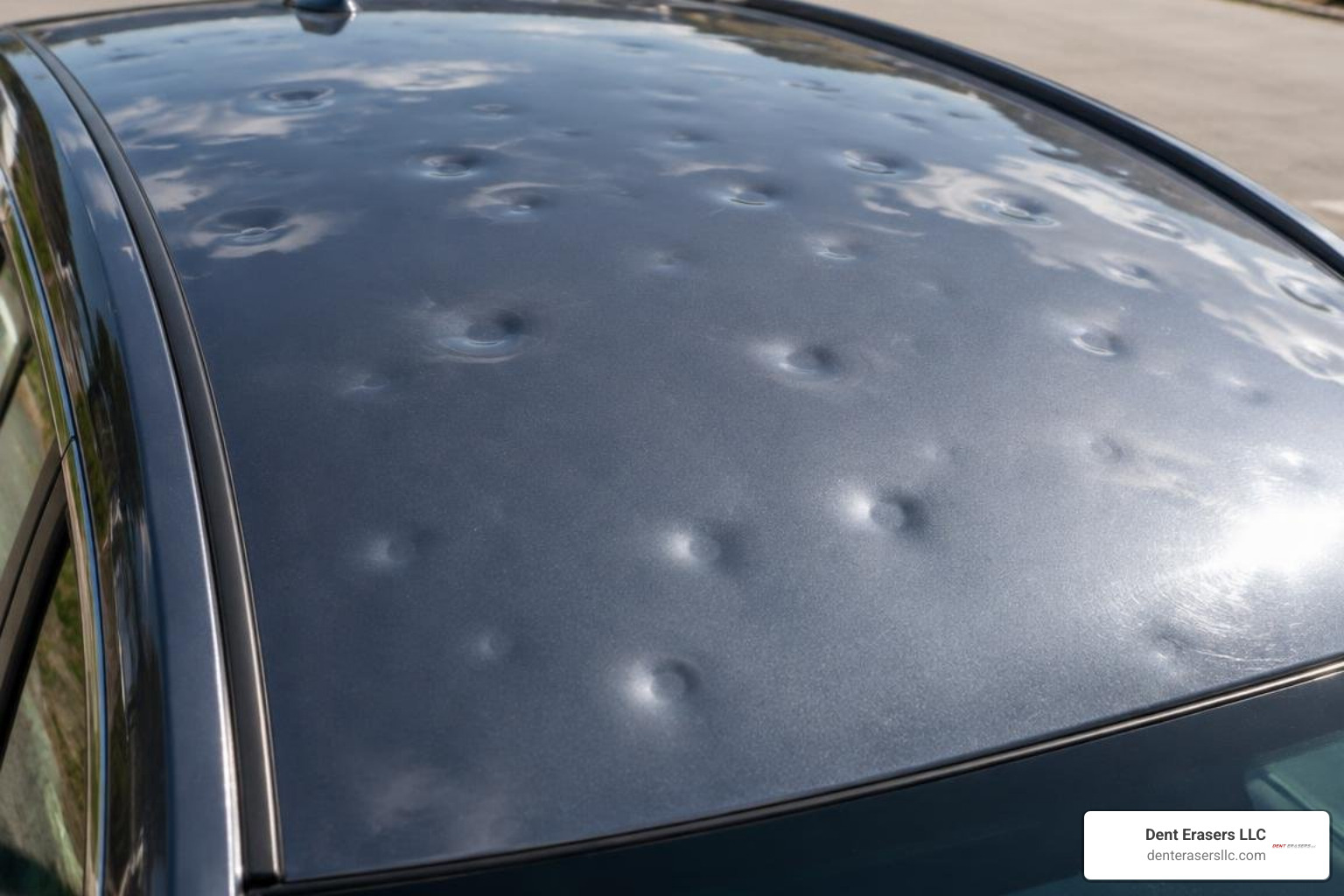
- Hail damage: Multiple small dents scattered across horizontal panels. Paint is usually intact, making this a strong PDR candidate when addressed early.
- Bumper dent: Plastic bumper covers dent and spring back differently than steel. Some pop back on their own with heat; others crack and need replacement or plastic repair.
How paint condition changes everything:
- Paint intact: PDR is on the table. A technician can massage the metal back without touching the painted surface.
- Paint micro-cracked: PDR may restore the shape, but the surface will still show cracking. Paint work follows.
- Paint chipped or missing: Conventional repair is required. PDR alone cannot replace missing paint, as Mudgett’s Auto Body explains.
Plastic bumper dents behave differently from steel panel dents. Plastic has memory and can sometimes be coaxed back with a heat gun, but cracked or torn plastic needs filler or panel replacement, not PDR.
How to tell a surface scratch from a dent using light and touch
You do not need a shop to make this call. Three quick tests will tell you what you are working with.
Step-by-step identification checklist:
- Angled light test: Crouch down and look across the panel with sunlight or a work light raking across the surface at a low angle. Scratches show as bright lines. Dents show as shadows or contour breaks.
- Touch test: Run your palm flat across the area. A scratch feels like a groove or rough line. A dent feels like a valley or raised edge.
- Fingernail test: As described above, drag your nail across the damage. A catch means depth; no catch means surface only.
- Press test (for suspected dents): On a plastic bumper, gently press the center of the depression. If it flexes and partially returns, the plastic has memory and may respond to heat. If it stays rigid and sunken, the panel is creased or the plastic is cracked.
What to look for in the light:
- A scratch reflects light uniformly along its length
- A dent creates a shadow on one side and a highlight on the other, because the contour has changed
- A crease dent shows a sharp shadow line, not a gradual curve
Pro Tip: When photographing damage for a remote estimate, take at least four shots: straight on, 45 degrees from each side, and one with a coin or card next to the damage for scale. Capture one photo with a light source raking across the panel to show the contour. Good photos can eliminate a follow-up visit entirely.
Repair options for scratches, with realistic cost and time ranges
The depth of the scratch determines the repair, not the length or location.
Common scratch treatments by depth:
- Polish or compound: Removes clear-coat scratches by leveling the surrounding clear coat. DIY cost: $10–$50. Time: 30–60 minutes.
- Scratch remover pen or touch-up paint: Fills paint-layer scratches with color-matched paint. DIY cost: $15–$80. Time: 1–2 hours including dry time.
- Localized repaint with clear coat: A body shop blends new paint into the surrounding panel. Professional cost: $150–$400+ per panel. Time: 1–3 days including prep and cure.
- Rust treatment and full repaint: Required when bare metal has begun to oxidize. Professional cost: $300–$1,000+ depending on spread. Time: 2–5 days.
| Repair Type | DIY or Pro | Approximate Cost | Typical Time |
|---|---|---|---|
| Polish/compound (clear coat) | DIY-friendly | $10–$50 | Under 1 hour |
| Touch-up paint (paint layer) | DIY with care | $15–$80 | 1–2 hours |
| Localized repaint (paint layer) | Pro recommended | $150–$400+ | 1–3 days |
| Primer + repaint (bare metal) | Pro required | $300–$1,000+ | 2–5 days |
For a full breakdown of common auto body repair costs, the range varies significantly by panel size and paint complexity.
When DIY makes sense: A clear-coat scratch with no color loss is a reasonable DIY job with a quality compound and a microfiber pad. Anything that has cut into the color layer carries real risk of making the repair more visible, not less, if the touch-up color does not match precisely. When in doubt, get a professional opinion before applying anything permanent.

Repair options for dents: PDR vs. traditional bodywork
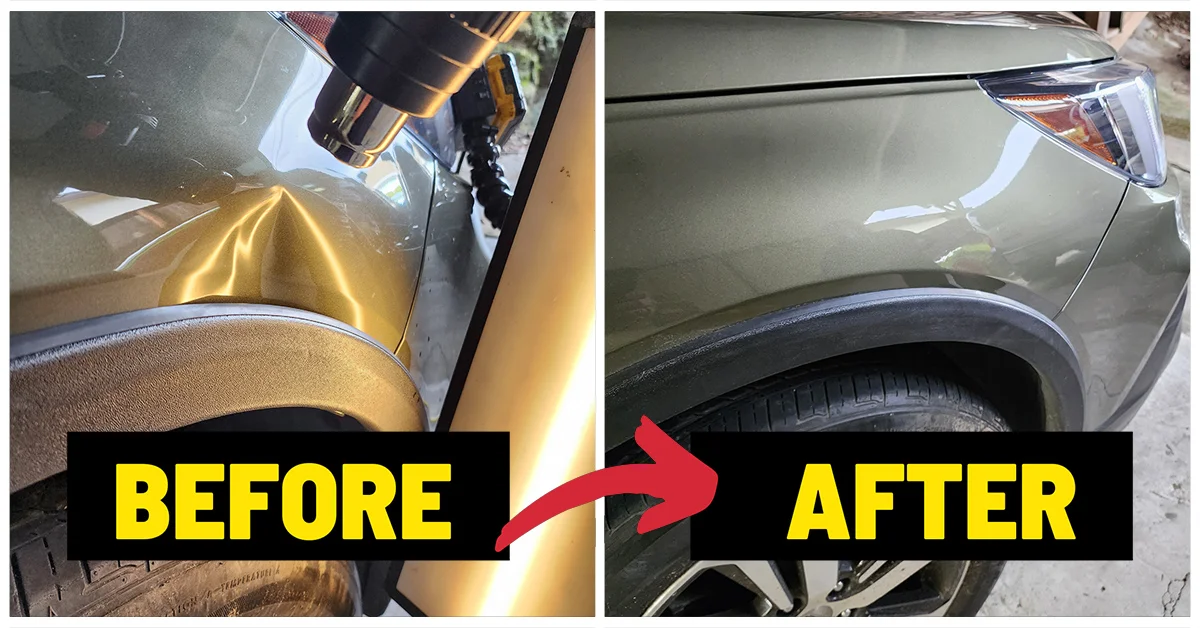
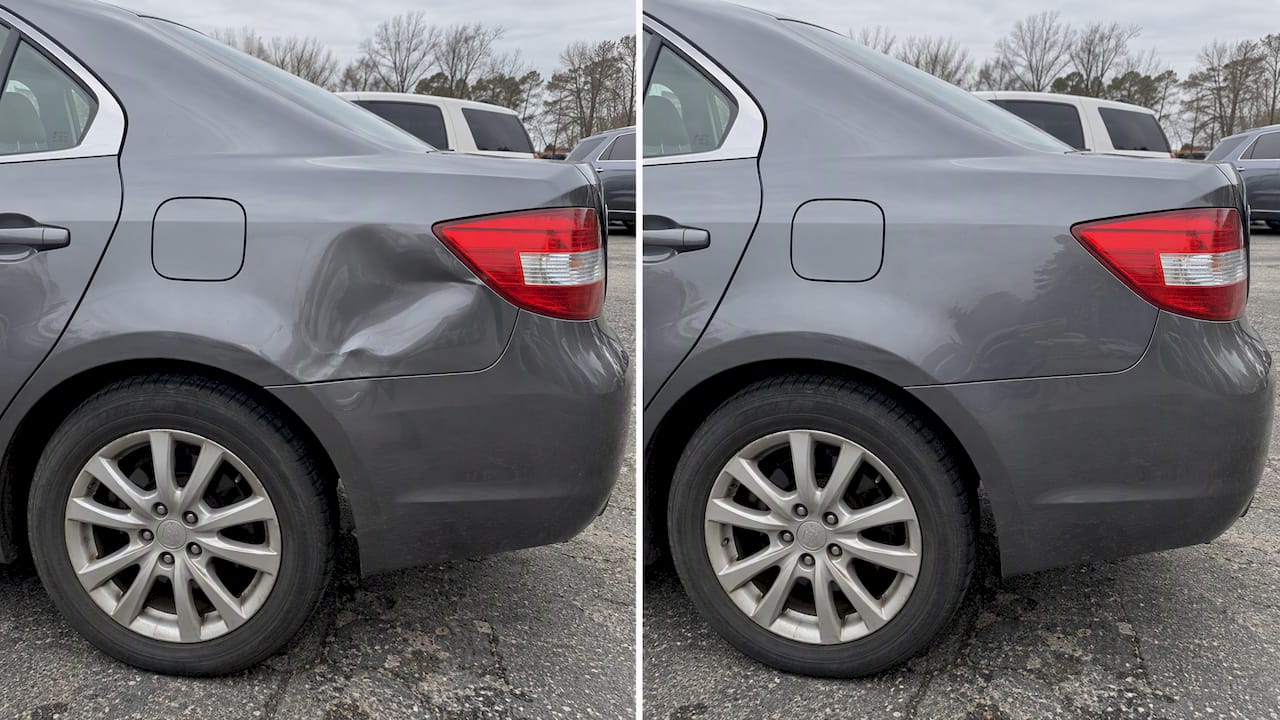
PDR is the bread and butter of modern dent repair, and for good reason. When paint is intact, PDR reshapes metal from behind without sanding or repainting, preserving the factory finish completely.
| Method | How It Works | Paint Work Required | Typical Cost | Typical Time |
|---|---|---|---|---|
| PDR (rods/picks) | Technician accesses panel backside, massages metal to original shape | None (paint intact) | $150–$400 | 1–3 hours |
| Glue-pull PDR | Glue tab applied to front of panel, pulled outward | None (paint intact) | $150–$400 | 1–4 hours |
| Conventional repair | Sand, fill (body filler/Bondo), prime, repaint, clear coat | Yes | $300–$1,000+ | 2–5 days |
PDR candidates commonly include door dings, round dents on flat panels, and hail damage. Dents with cracked paint, sharp creases, or stretched metal typically need conventional body repair.
Dent shape and paint condition are stronger predictors of repair path than dent size alone. A large, shallow hail dent on a flat hood is often easier to fix than a small sharp crease on a door edge. OEM guidance and PDR specialists confirm that access limitations, micro-cracking, and crease geometry are the decisive factors.
Pro Tip: Look at the dent under a straight-edge light (a fluorescent tube or a door-jamb reflection works well). If the shadow line is sharp and angular, the metal has creased. If the shadow curves gradually, the metal has stretched but not folded. Curved shadows are PDR-friendly; sharp angles usually are not.

For bumper scuffs and plastic damage, see the bumper scuff repair cost guide for a full breakdown of plastic repair paths.
When to DIY and when to call a professional
Try it yourself when:
- The scratch does not catch your fingernail (clear-coat only)
- The dent is a small, round door ding with fully intact paint
- You have the right product (compound, not sandpaper) and patience
Call a professional when:
- Bare metal or rust is visible in a scratch or at a dent edge
- Paint is cracking, chipping, or flaking around a dent
- A door, hood, or trunk lid is not closing or aligning properly
- The dent has a sharp crease or the metal feels stiff and work-hardened
- A DIY attempt has left swirl marks, mismatched color, or visible filler lines
On insurance: Filing a claim makes sense for hail events (multiple dents across multiple panels) or collision damage above your deductible. For a single door ding or a light scratch, paying out of pocket for PDR or touch-up is almost always cheaper than the deductible plus the rate impact.
Preparing for a shop visit:
- Photograph the damage at multiple angles with a scale object (coin or card)
- Note whether the panel is accessible from behind (no foam-filled pillars)
- Ask whether mobile repair is available so the tech comes to you
Why mobile PDR is often the smartest first call for small dents
From a technician’s perspective, the repair path for a qualifying dent is straightforward: inspect the paint, assess access, and work the metal back from behind. No sanding, no color matching, no waiting days for paint to cure.
What a mobile PDR visit looks like:
- Technician inspects paint condition and dent profile on-site
- Access point is identified (panel backside, glue-pull, or both)
- Metal is gradually massaged back to factory geometry using rods or picks
- Final inspection under a straight-edge light confirms the contour is restored
Questions to ask any PDR provider:
- Is the paint fully intact, or is there micro-cracking I should know about?
- Can you access the back of this panel, or will you use glue-pull?
- Do you offer a guarantee on the repair?
- Is the panel steel, aluminum, or plastic? (Aluminum requires different technique)
The advantages of PDR are real: factory finish preserved, no color-match risk, faster turnaround, and typically lower cost than conventional repair. For luxury, vintage, or specialty vehicles where original paint carries significant value, those advantages are even more pronounced.
Denterasersllc covers mobile PDR, plastic bumper repair, and large and small dent repairs on-site. For a deeper look at how dents and dings differ in repair complexity, the dent vs. ding explainer on the Denterasersllc blog is worth a read.
Pro Tip: If you are unsure whether your dent qualifies for PDR, send photos taken at a low light angle to a mobile tech before booking. Most will give you a straight answer on eligibility without a site visit.
The call I make every time
Every week I see vehicle owners who waited too long on a scratch because it looked minor, or who paid for a full repaint on a dent that was a clean PDR job. The fingernail test and the angled light check take thirty seconds. They tell you almost everything you need to know. When the paint is intact and the dent is round, mobile PDR is the call. When bare metal is showing, get it sealed before the rust spreads. The repair that costs $150 today can cost $800 next spring.
Denterasersllc brings the repair to you
When your diagnosis points to a dent with intact paint, you do not need to drop your car at a shop and wait. Denterasersllc performs mobile paintless dent repair and plastic bumper repair on-site, at your home or office, across Contra Costa County and surrounding areas. No color-match risk, no rental car, no multi-day wait.

The service covers door dings, hail damage, round impact dents, and plastic bumper repairs. For larger collision damage, the team handles conventional body repair as well. Send photos of your damage for a fast estimate and find out whether your dent qualifies for PDR before you book.
Sources
- Types of car scratches — Spinny blog
- Understanding Paintless Dent Repair: Benefits and Limitations | Mudgett’s Auto Body
- Paintless Dent Repair Limitations: When PDR Won’t Work | EZ Tech Paintless Dent Removal & Collision
- Dent vs Scratch: What Needs Immediate Repair and What Can Wait
FAQ
What is the difference between a scratch and a dent?
A scratch damages one or more paint layers (clear coat, base coat, or primer) without changing the panel’s shape. A dent physically deforms the metal or plastic panel beneath the paint.
What are the different types of scratches on a car?
Scratches fall into three depth categories: clear-coat scratches (polishable), paint-layer scratches (need touch-up or localized repaint), and primer or bare-metal scratches (require primer, full repaint, and rust prevention).
What is a surface-level scratch?
A surface-level scratch affects only the clear coat, the outermost protective layer. Your fingernail will glide over it without catching, and it can usually be removed with a polish or compound.
How can you tell if a car panel is dented?
Crouch down and look across the panel with a light source raking at a low angle. A dent creates a shadow on one side and a highlight on the other because the contour has changed. You can also run your palm flat across the area to feel for a valley or raised edge.
Are scratches worse than dents when it comes to rust?
Deep scratches that reach primer or bare metal carry a higher immediate rust risk than dents with intact paint. However, a dent that cracks or chips the paint exposes metal just as a deep scratch does, and both need prompt attention to prevent corrosion.