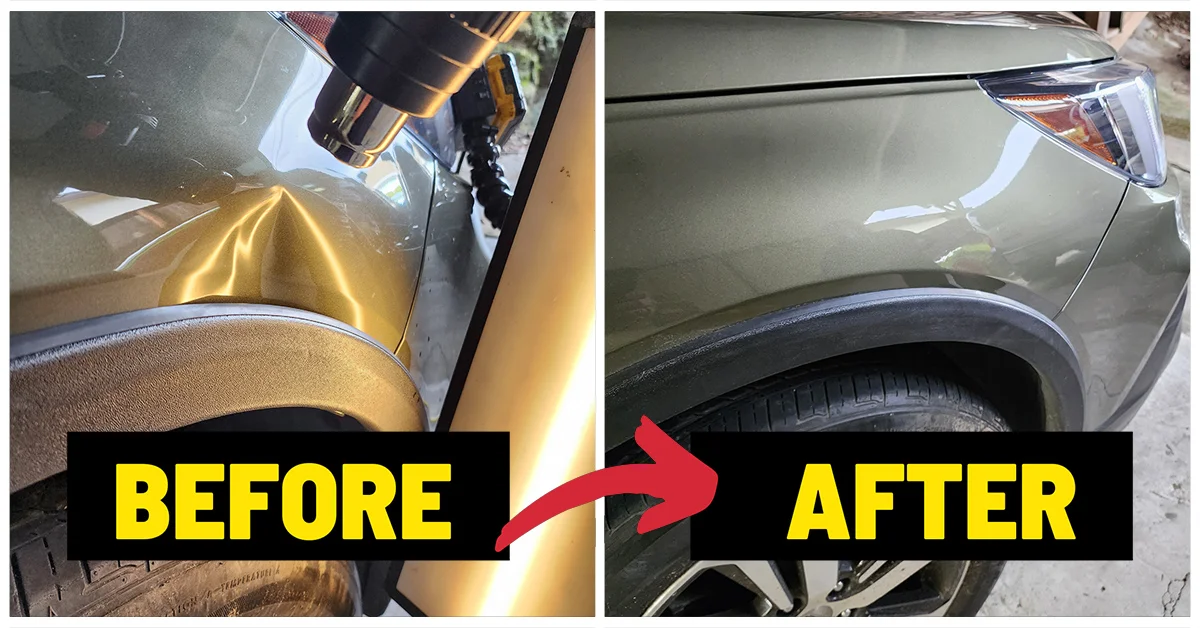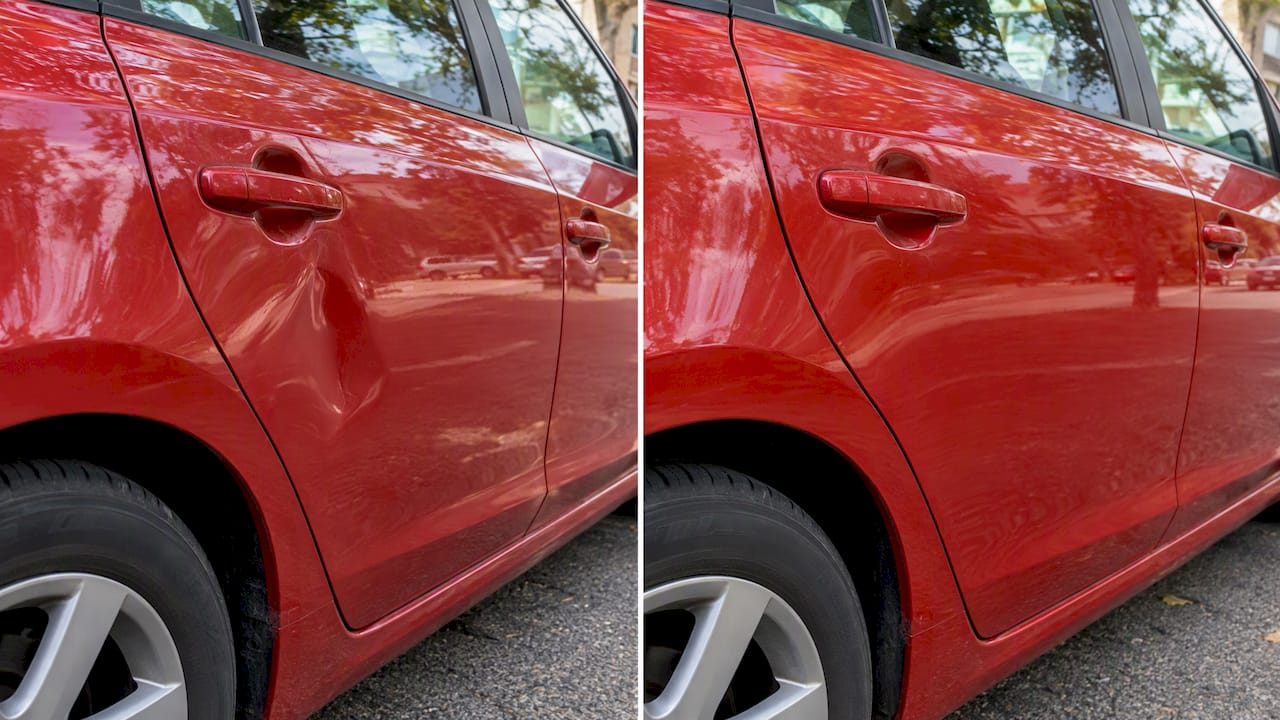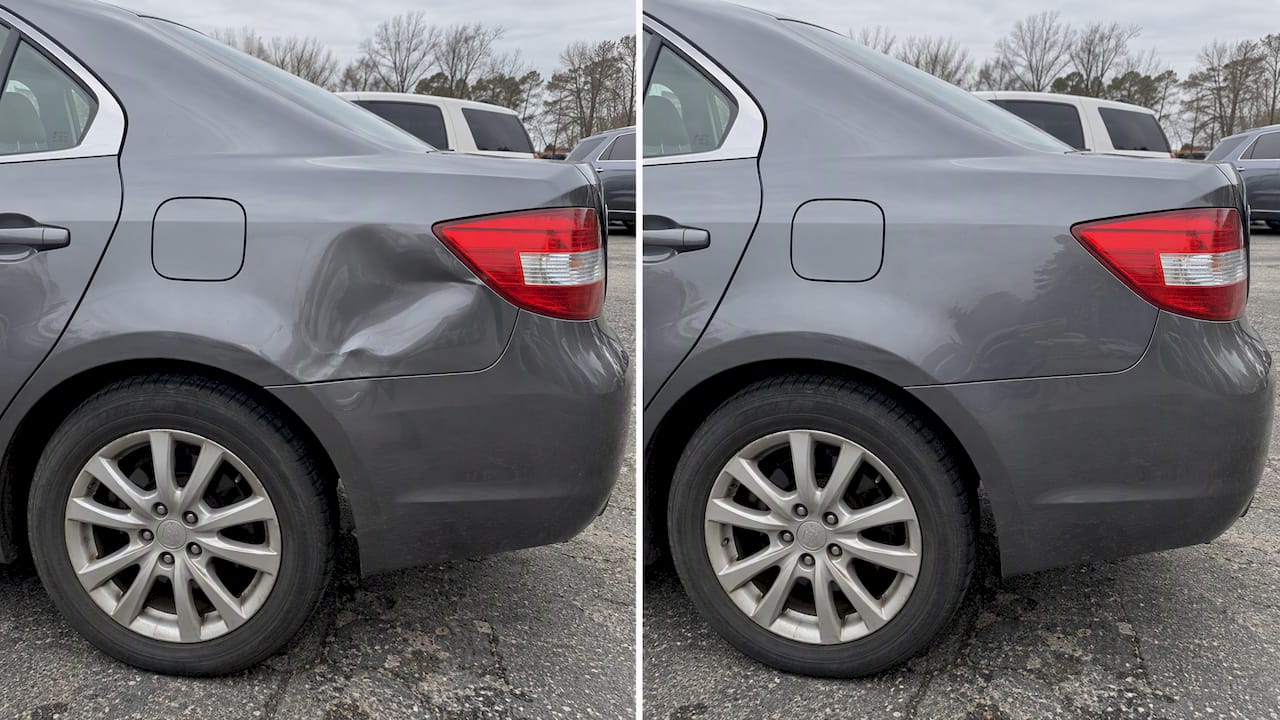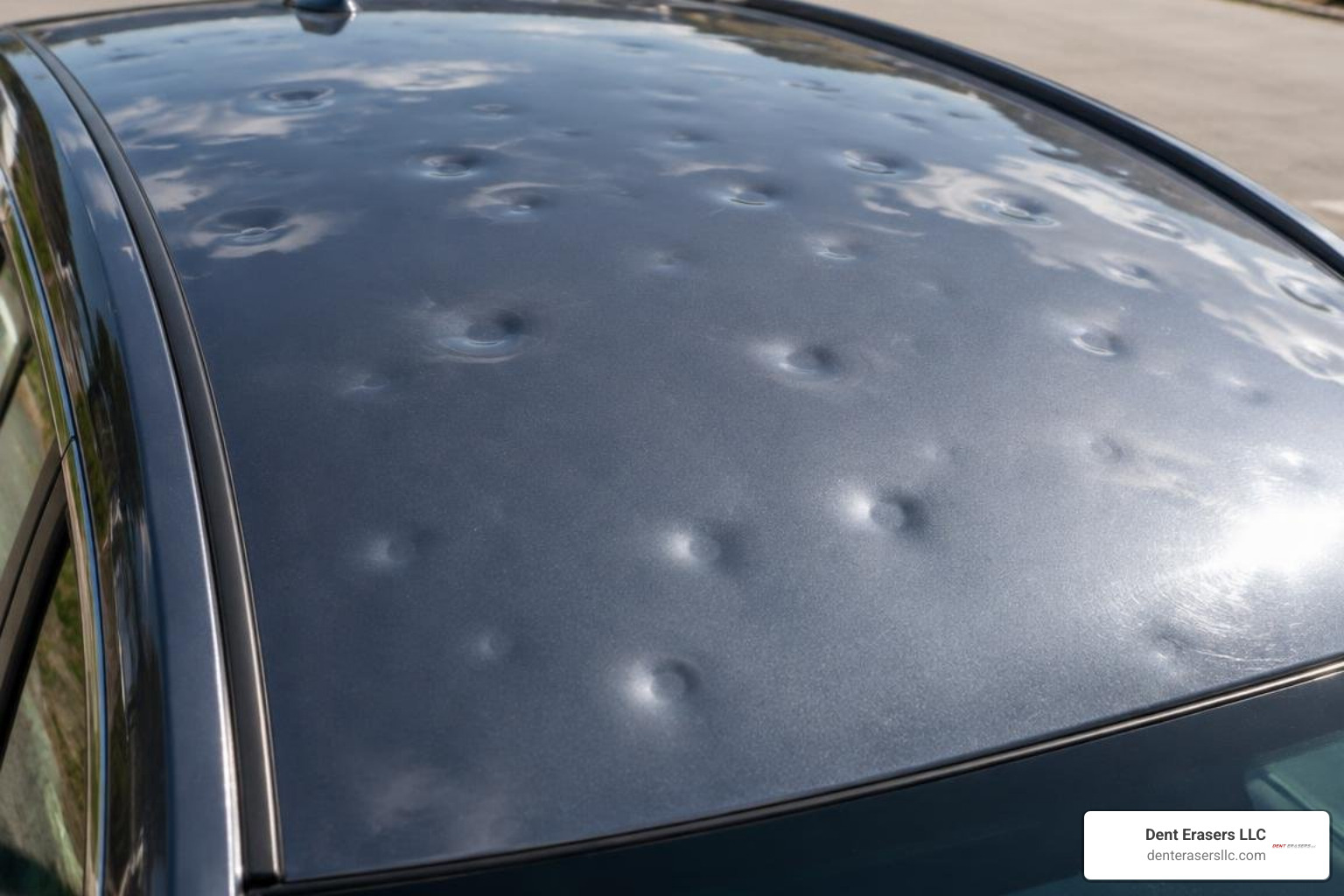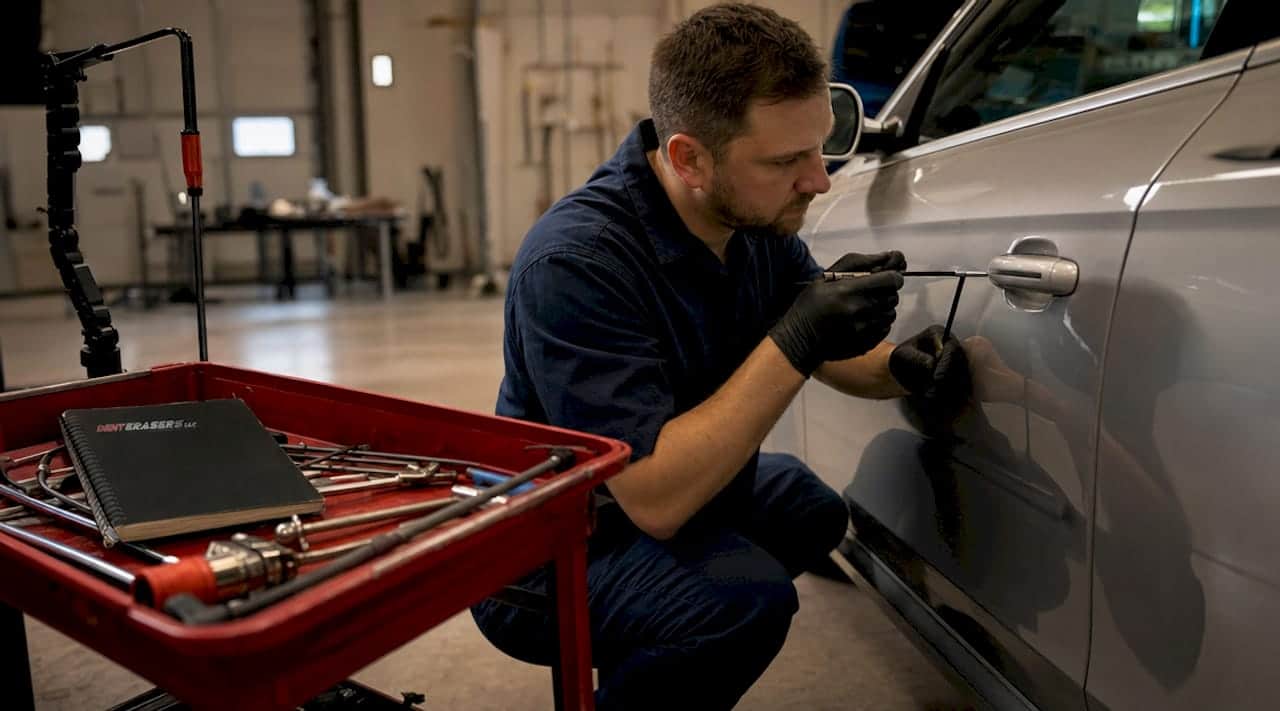
Quality in dent removal is defined as restoring a panel’s original shape while keeping the factory paint finish completely intact. The role of quality in dent removal goes far beyond cosmetics. It directly affects your vehicle’s resale value, structural integrity, and long-term appearance. Paintless dent repair (PDR) is the industry’s gold standard for achieving this, using skilled hand pressure to massage metal back to its original position without fillers or repainting. When quality slips, so does your car’s value and your peace of mind.
How does quality influence paintless dent repair outcomes?
PDR quality depends on three factors working together: intact factory paint, metal that has not been overstretched, and a technician with genuine skill. Quality PDR applies only when the paint is undamaged and the dent can be corrected without compromising the metal’s memory. If either condition is absent, repainting becomes necessary, and that permanently changes the paint-to-metal bond.
The technician’s ability to read metal shapes is the single biggest quality differentiator in PDR. Tools matter, but a skilled technician with basic equipment will consistently outperform an inexperienced one with premium gear. Technician skill in reading metal response separates a clean, invisible repair from one that leaves a ghost image or surface distortion.
Finish control is where quality becomes visible. A proper PDR finish requires:
- Balanced shape restoration with no high or low spots remaining
- Minimal distortion verified under consistent lighting at multiple angles
- Stable reflection that matches the surrounding panel lines
- Repeated micro-corrections checked after each step to avoid introducing new surface irregularities
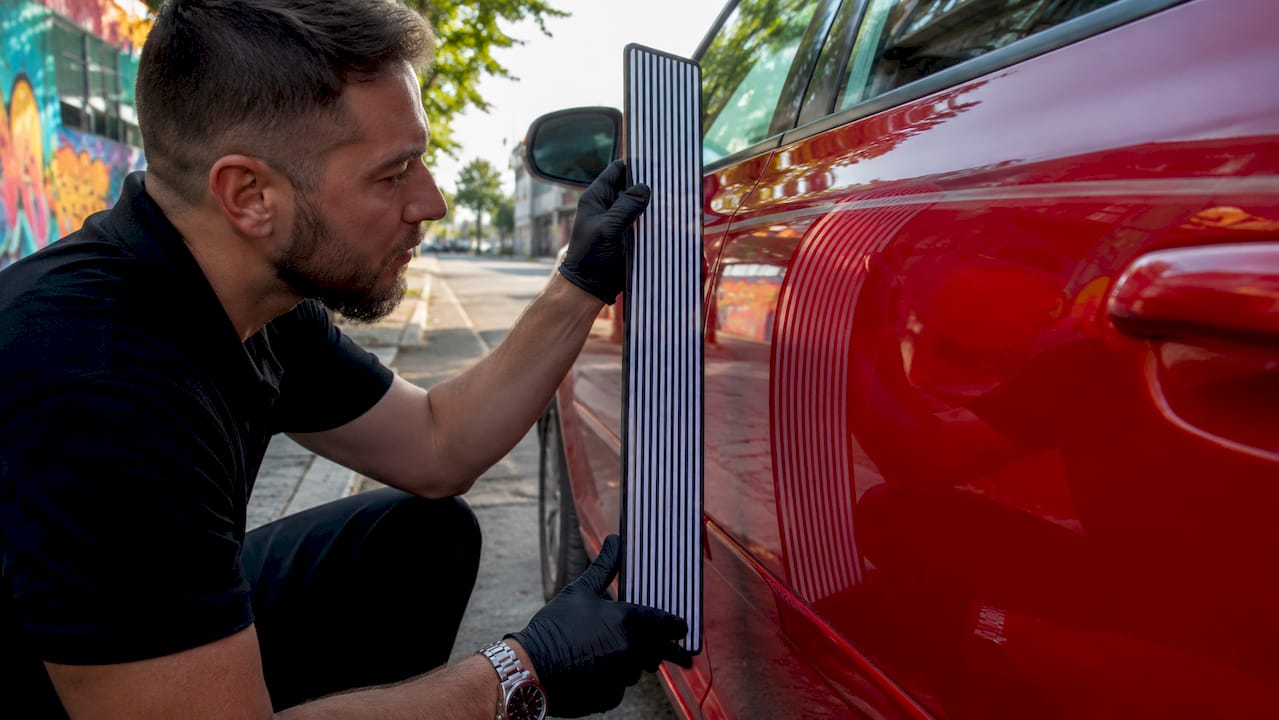
Finish control in PDR is not just about removing the dent. It means avoiding texture and distortion issues by using reflection lighting continuously throughout the repair. A repair that looks clean under shop lighting can reveal ripples and low spots in direct sunlight.
Pro Tip: Ask your technician to show you the repaired panel under a line board or LED light bar before you accept the job. This is the same tool professionals use to catch micro imperfections invisible to the naked eye.
What quality control steps ensure optimal dent removal results?
Structured quality control separates professional shops from operators who rely on a single technician’s judgment. The most reliable shops build verification into every stage of the repair, not just at the end.
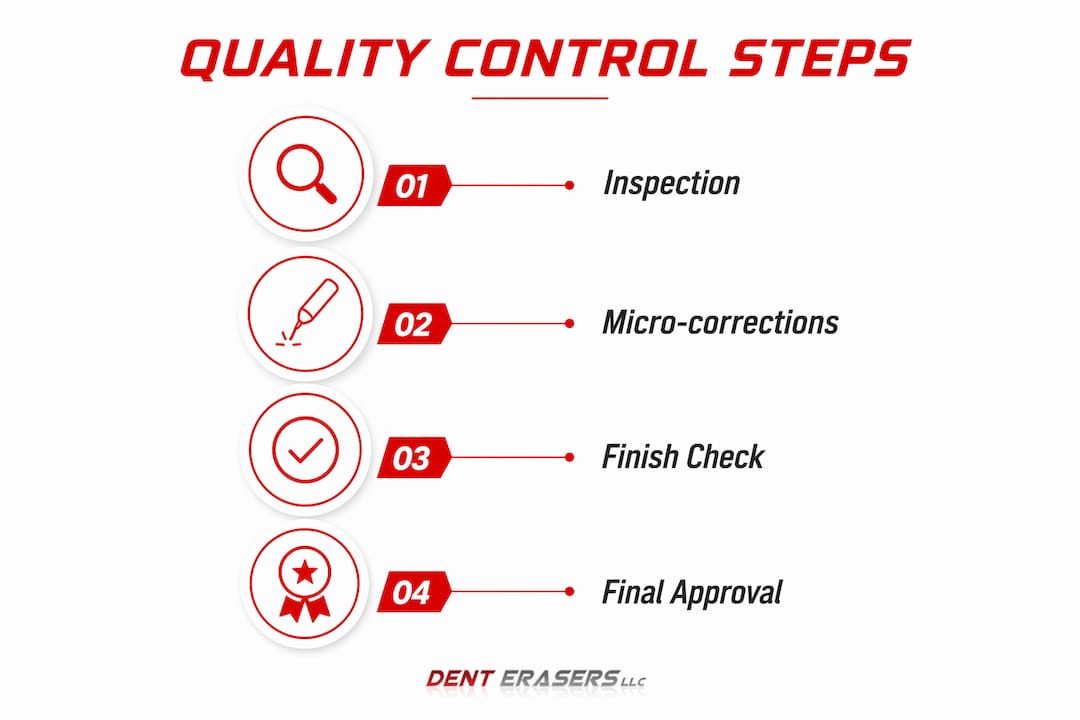
Here is the quality control sequence used by top PDR operations:
- Pre-repair inspection to confirm paint integrity and metal condition before any tools touch the panel
- Tool selection review matched to dent size, location, and metal thickness
- Mid-repair reflection checks under a line board after each correction pass
- Secondary technician inspection to catch flaws the original technician may have normalized
- Final verification under stable lighting from multiple angles before the vehicle is returned
A dedicated line-board inspection by a second technician takes roughly 30 minutes and catches subtle damage that is invisible on a casual look. That extra step is the difference between a repair you forget about and one that haunts you every time you wash the car.
| Quality Step | Mobile Repair | In-Shop Repair |
|---|---|---|
| Line board inspection | Portable board, natural light backup | Fixed board, controlled lighting |
| Secondary technician check | Less common, depends on crew size | Standard in quality shops |
| Final reflection verification | Possible with proper setup | Consistent and repeatable |
| Documented repair record | Varies by provider | Typically standard |
Repeated micro-corrections checked under controlled lighting prevent introducing new highs and line distortions. Separating the correction phase from the finish verification phase is what allows a technician to stay objective about the result.
Pro Tip: For mobile repairs, request that the technician set up a portable line board before final sign-off. A quality mobile provider will carry one as standard equipment.
How does dent removal quality impact vehicle value and resale?
Repair quality directly affects diminished value, which is the gap between what your car is worth before an accident and what it is worth after repair. Diminished value loss typically falls between 15% and 35% of pre-accident value, even with certified repairs. On a $45,000 vehicle, that translates to a loss of $6,750 to $15,750 depending on how well the repair was executed.
High-quality PDR narrows that gap significantly. Factory paint preservation through PDR leads to better resale outcomes compared to traditional body shop repairs, which can reduce value by 10–15% due to repaint records alone. Buyers and appraisers check for repaint history. A clean paint meter reading tells them the car has never been refinished, which is a strong selling point.
The factors that widen the resale value gap include:
- Aftermarket parts used instead of OEM components
- Failure to follow OEM repair procedures, which appraisers flag during inspections
- Structural involvement in the repair, which signals more serious prior damage
- Repaint records that show up on paint thickness gauges and vehicle history reports
“Repair quality either narrows or widens diminished value losses post-accident, affecting vehicle marketability significantly.” — Appraisal Engine
Choosing PDR when the paint and metal conditions allow it is one of the most effective ways to protect your car’s resale appeal. Learn more about the benefits of PDR for long-term value retention.
How do you verify technician credentials for quality dent repair?
Finding a high-quality dent removal provider starts with verifying the technician’s credentials before any work begins. I-CAR certification is the recognized industry standard for collision repair training, and it signals that a technician has met documented competency requirements.
Here is what to check before hiring any PDR technician:
- Verify I-CAR certification directly with the issuing body rather than accepting a verbal claim
- Review a portfolio of completed repairs, specifically looking for before-and-after photos under good lighting
- Assess communication quality during the estimate process. Evasive answers about technique or pricing are a red flag.
- Request a written estimate that specifies the repair method, expected outcome, and any limitations
- Ask whether technicians are in-house or subcontracted, since in-house staff are easier to hold accountable for quality
Verified credentials involve checking issuing body records, reviewing portfolios, and assessing communication and estimate transparency. A technician who cannot clearly explain their process likely cannot execute it consistently either.
Pro Tip: Use the PDR technician checklist to structure your vetting process before committing to any repair provider.
Essential Principles of Quality Dent Repair
High-quality dent removal preserves factory paint, protects resale value, and requires skilled technicians using structured inspection processes at every stage.
| Point | Details |
|---|---|
| PDR quality starts with paint integrity | PDR only works when factory paint is intact and metal has not been overstretched. |
| Technician skill drives outcomes | Reading metal response accurately matters more than the tools used. |
| Quality control requires multiple passes | A second technician’s line-board inspection catches flaws the original tech may miss. |
| Repair quality affects resale value | Poor repairs can cause 15%–35% diminished value loss on a vehicle’s pre-accident worth. |
| Credentials and transparency matter | Verify I-CAR certification, review portfolios, and always get a written estimate. |
Why i never cut corners on finish verification
After years of doing this work, I can tell you the most common mistake I see is rushing the finish verification step. A technician gets the dent out, takes a quick look, and hands the car back. The customer drives away happy. Then they wash the car on a sunny afternoon and see a ghost image where the dent used to be.
The repair itself was technically done. The quality was not there.
Finish control is the part of PDR that separates a good technician from a great one. I have seen shops with impressive equipment deliver mediocre results because they skipped the repeated reflection checks. I have also seen experienced technicians with a basic tool kit produce repairs that are genuinely invisible. The difference is always discipline in the verification process.
My honest advice: do not accept a repair until you have seen it under a line board or in direct sunlight. A quality technician will not hesitate to show you. One who gets defensive about that request is telling you something important.
The impact on vehicle value is real and measurable. Protecting your factory finish is not just about looks. It is about protecting the investment you made when you bought the car.
— Brian Blanc
How Denterasersllc delivers quality dent removal you can trust
Denterasersllc brings certified, in-house PDR technicians directly to you across Contra Costa County and surrounding areas. Every repair follows a structured quality control process, including line-board inspection and multi-angle reflection verification, so you never have to wonder whether the job was done right. From a seamless fender repair after a parking lot mishap to precision fender restoration on a new truck, Denterasersllc documents every step and stands behind the result. Your factory finish and your vehicle’s value deserve nothing less.
FAQ
What does quality mean in paintless dent repair?
Quality in PDR means restoring the panel’s original shape while keeping the factory paint finish fully intact, with no visible distortion, texture issues, or ghost images under any lighting condition.
How does repair quality affect my car’s resale value?
Poor repair quality can cause diminished value losses of 15%–35% of pre-accident value. High-quality PDR that preserves factory paint avoids repaint records and narrows that gap significantly.
What is a line-board inspection in dent removal?
A line-board inspection uses a flat board with parallel lines reflected onto the panel to reveal micro imperfections invisible to the naked eye. It takes about 30 minutes and is a standard step in professional quality control.
How do i know if a PDR technician is qualified?
Verify I-CAR certification with the issuing body, review a portfolio of completed repairs, and request a written estimate. Technicians who are evasive about their process or credentials are a red flag.
Does PDR preserve more value than traditional body repair?
Yes. PDR preserves the original factory paint, which avoids repaint records that reduce resale appeal. Traditional repairs that require repainting can reduce vehicle value by 10%–15% on their own.