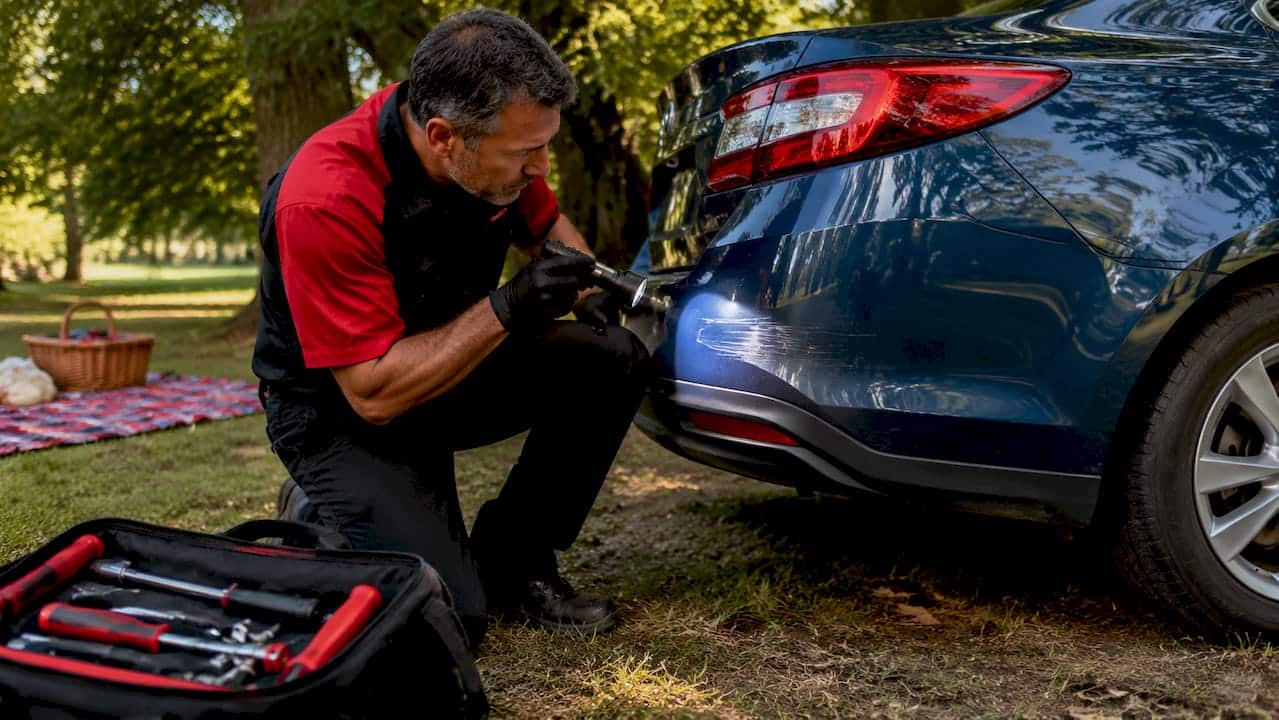
Bumper damage is defined as any physical or structural compromise to a vehicle’s front or rear bumper system, including the cover, energy absorber, reinforcement bar, and integrated sensors. The five core types of bumper damage are scratches and scuffs, dents and plastic deformation, cracks and punctures, sensor damage, and shock compression or structural damage behind the cover. Each type carries distinct repair requirements and cost implications ranging from $150 for minor scratches to over $4,000 for luxury vehicle replacements. Knowing which category your damage falls into is the fastest way to avoid overpaying or underrepairing.
1. Scratches and scuffs on bumpers
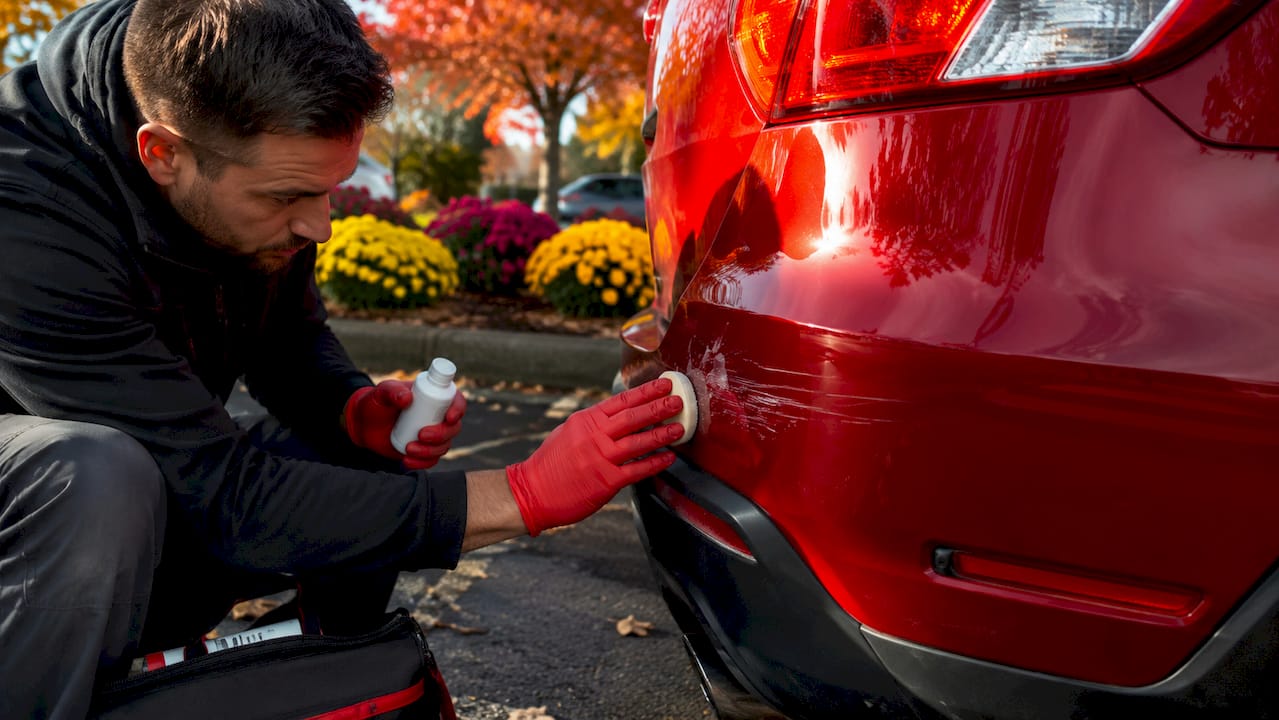
Scratches and scuffs are the most common bumper damage type, and they are almost always cosmetic. They occur when the paint layer or clear coat is abraded without breaking through to the plastic substrate beneath. Parking lot brushes, shopping carts, road debris, and low-speed contact with other vehicles are the usual culprits.
The repair approach depends on depth:
- Surface scuffs: Affect only the clear coat. Buffing compound and machine polishing typically restore the finish.
- Paint-level scratches: Cut through the color coat but not the primer. Touch-up paint or spot repainting handles these.
- Deep scratches with primer exposure: Require sanding, priming, color matching, and clear coat application.
- Minor paint chips: Small chips near edges or corners often respond well to touch-up pens or professional spot repairs.
Scratch repairs are viable when the plastic substrate is intact and the paint has not broken through to bare material. Repair costs for scratches and scuffs typically run between $150 and $400, depending on the size of the affected area and whether blending into adjacent panels is required.
Pro Tip: If you can feel the scratch with your fingernail and it catches, the damage has cut through the clear coat into the color layer. That means buffing alone will not fix it. A professional spot repaint is the right call.
2. Dents and minor plastic deformation
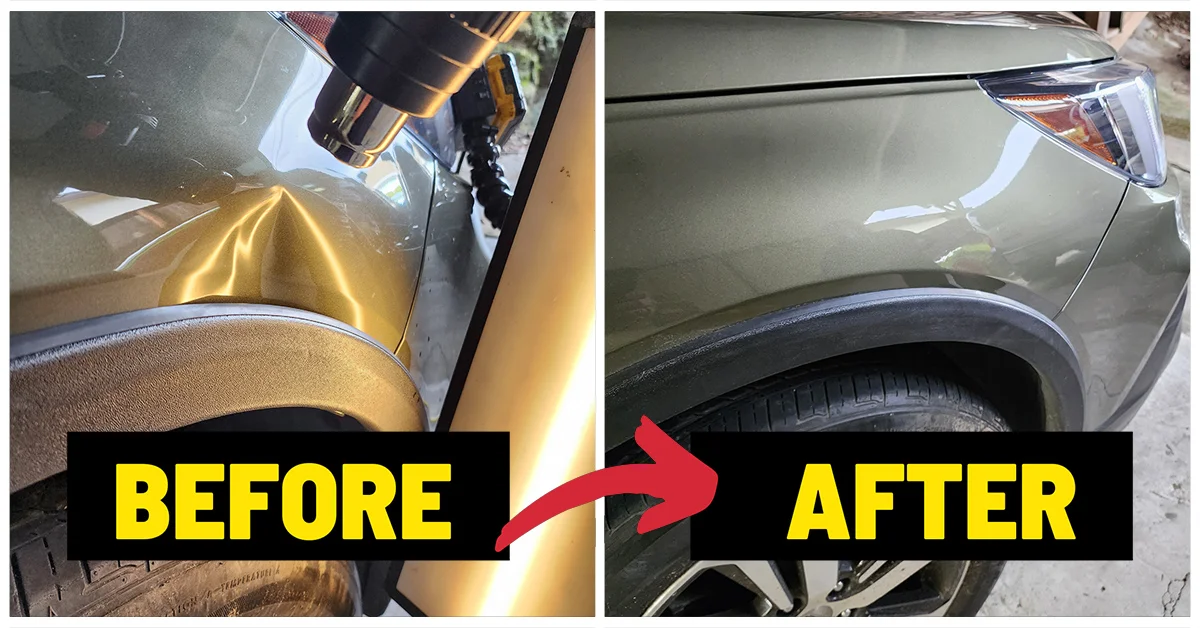
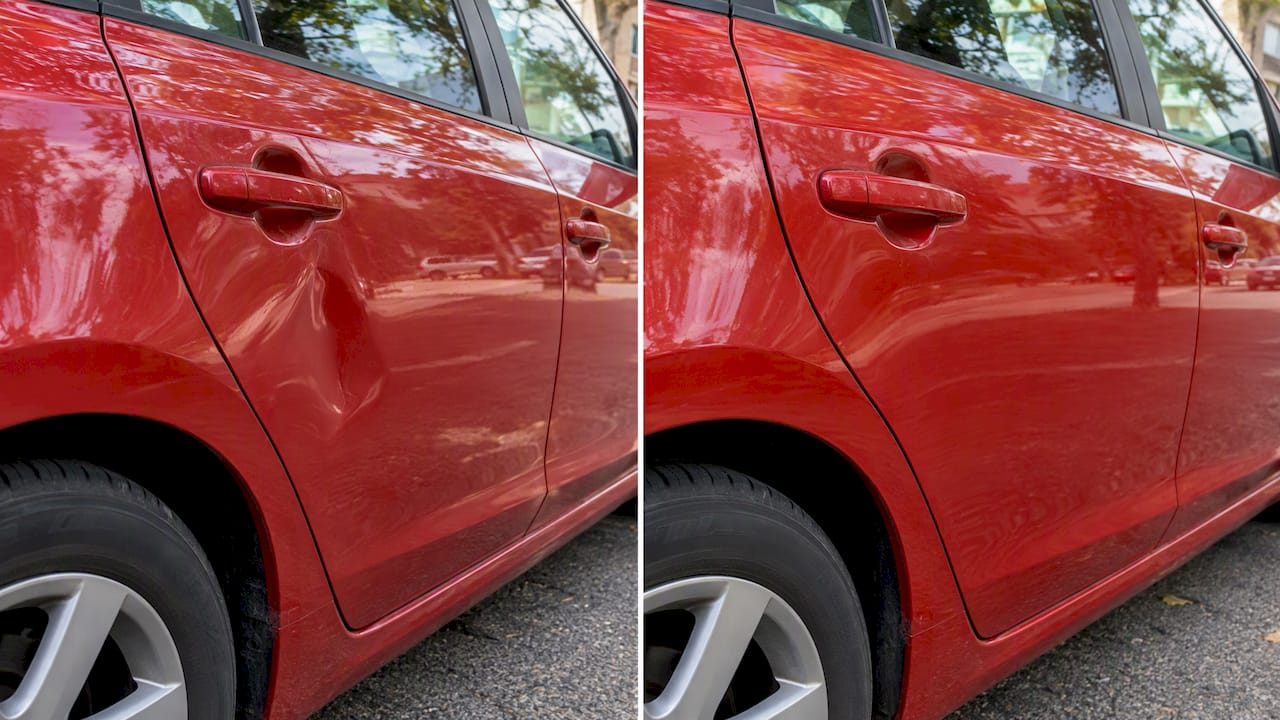
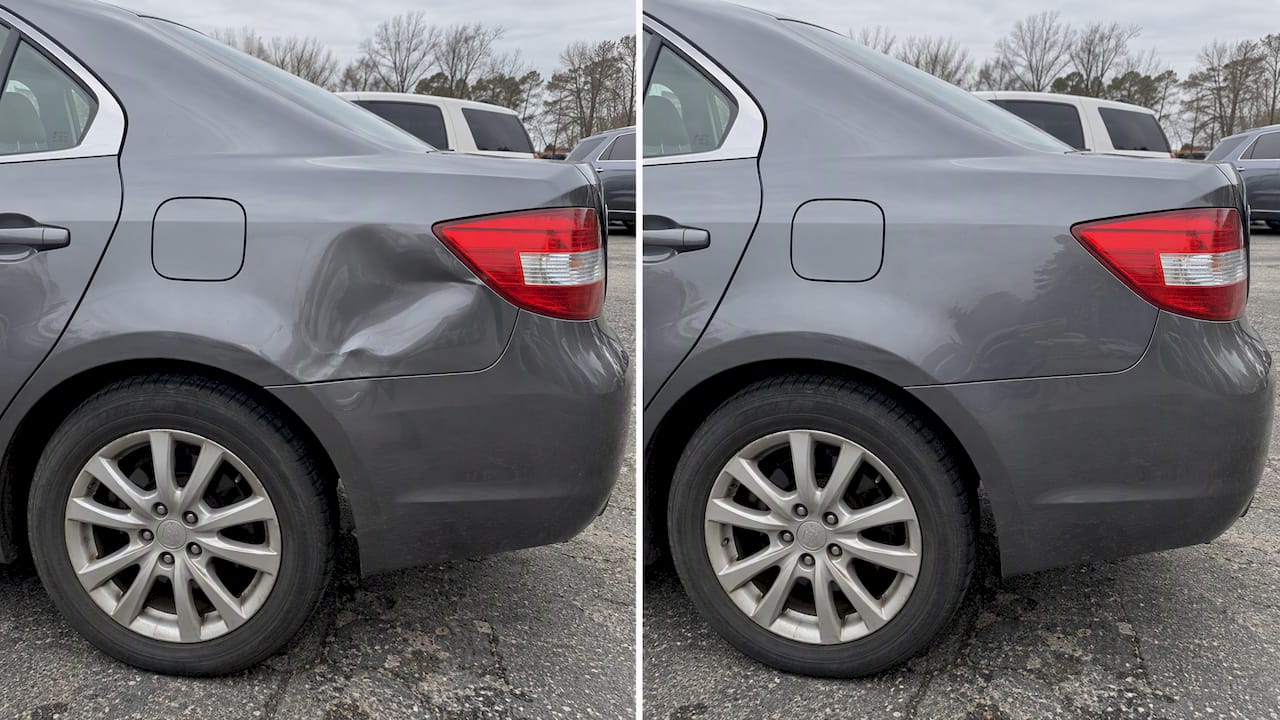
A dent is defined as a localized depression in the bumper cover caused by impact force that pushes the plastic inward without tearing or cracking it. Unlike metal panel dents, plastic bumper dents behave differently because thermoplastic materials have some memory. With the right technique, many can be reshaped without filler or repainting.
Here is how repair feasibility breaks down:
- Shallow dents without paint damage: Strong candidates for paintless dent repair (PDR) or heat reshaping using a heat gun to coax the plastic back to its original form.
- Dents with minor paint scuffing: May require light touch-up work after reshaping, but the substrate is still intact.
- Deep dents with stretched plastic: Plastic that has been pushed past its elastic limit will not fully return. These typically need filler, sanding, and repainting.
- Dents near mounting tabs or sensor housings: Require inspection behind the cover before repair proceeds, since the impact may have shifted internal components.
Dents without paint breakage or plastic stretching are the best candidates for repair rather than replacement. Repair costs vary based on dent depth and location, but most minor plastic dents fall within the $150 to $400 range when caught early.
Pro Tip: Apply a heat gun or even hot water to a shallow plastic dent and watch what happens. If the plastic starts to move back on its own, you have a good repair candidate. If it stays put or shows white stress marks, the material has been work-hardened and needs professional attention.
3. Cracks and punctures in bumper covers
Cracks and punctures represent a more serious category of bumper damage because they compromise the structural integrity of the cover itself. The industry recognizes several distinct crack types, each with different repair implications.
| Crack type | Description | Repair or replace? |
|---|---|---|
| Hairline crack | Thin surface fracture, no separation | Repair with adhesive and mesh |
| Through crack | Full separation of plastic layers | Repair if under 14 inches |
| Spider fracture | Multiple radiating cracks from impact point | Assess tab and sensor proximity |
| Puncture | Hole through the cover | Repair if small; replace if large |
Cracks under 14 inches with intact mounting tabs are typically repairable. Cracks longer than that, or those involving broken tabs or sensor housing damage, generally require full bumper replacement. This 14-inch threshold is a widely used industry standard among collision repair professionals.
Professional crack repair uses plastic welding with reinforcement mesh and substrate-specific adhesives. The process involves V-grooving the back of the bumper, applying adhesive, pressing in a mesh backing, and finishing the front surface. This method prevents re-cracking over time. Repair costs for cracks typically run $300 to $800. Full bumper replacement ranges from $500 to $2,000, and luxury vehicles can exceed $4,000.
Pro Tip: Never attempt to repair a crack that runs through or near a parking sensor housing without first removing the sensor. Adhesive and heat from welding can permanently damage sensor electronics, turning a $400 crack repair into a $1,200 sensor replacement job.
4. Sensor damage and ADAS impact
Modern bumpers are not just plastic covers. They house parking sensors, radar modules, backup cameras, and forward collision warning components that are part of the vehicle’s Advanced Driver Assistance Systems (ADAS). Damage to the bumper cover, even without visible cracking, can shift or crack these components internally.
Common signs of sensor damage include:
- Parking assist warning lights appearing on the dashboard after a collision
- False proximity alerts triggering without any obstacle present
- Backup camera image distortion or complete loss of feed
- Adaptive cruise control or forward collision warning malfunctions
Sensor damage causes ADAS malfunctions and requires professional diagnostic scanning and recalibration before the vehicle is safe to drive. Many vehicle owners assume a bumper that looks fine after a minor impact is fine overall. That assumption is wrong. A sensor pushed even a few millimeters out of alignment can render a safety system unreliable.
Recalibration costs vary by vehicle make and the number of affected systems, but sensor-related repairs add significant cost to what might otherwise appear to be a simple bumper fix. Always request a diagnostic scan as part of any bumper damage repair estimate.
5. Shock compression and structural damage behind bumpers
Structural bumper damage refers to compromise of the components behind the cover: the foam energy absorber, the steel or aluminum reinforcement bar, and the mounting brackets that connect the bumper system to the vehicle frame. This damage is invisible from the outside, which makes it the most dangerous type to overlook.
One in three vehicles involved in low-speed collisions has hidden structural damage behind an apparently intact bumper cover. That statistic means a parking lot tap at 10 mph can compress the foam absorber permanently without leaving a mark on the paint.
Signs that structural damage may be present include:
- Uneven gaps between the bumper cover and adjacent body panels
- Sagging or misaligned bumper corners
- Dashboard warning lights appearing after an impact
- A bumper that feels loose or flexes more than usual when pressed
Panel gaps and dashboard warnings are the most reliable indicators of underlying structural issues even when the bumper looks intact externally. A thorough bumper damage inspection requires removing the cover to examine the absorber, reinforcement bar, and sensor brackets directly.
Repair feasibility for structural damage depends on whether the reinforcement bar has bent, the absorber has compressed beyond recovery, or the mounting brackets have cracked. Compromised structural components must be replaced, not repaired, because they exist specifically to protect occupants in a subsequent collision.
Assessing and Addressing Bumper Damage Effectively
The most reliable way to assess bumper damage is to look beyond the surface: scratches and dents may be cosmetic, but cracks, sensor displacement, and hidden structural compression each require professional inspection and targeted repair methods.
| Point | Details |
|---|---|
| Scratches and scuffs | Cosmetic damage costing $150 to $400; repair feasibility depends on paint depth. |
| Cracks and repair thresholds | Cracks under 14 inches with intact tabs are repairable; longer cracks require replacement. |
| Sensor and ADAS risk | Even minor impacts can misalign sensors, requiring diagnostic scanning and recalibration. |
| Hidden structural damage | One in three low-speed collision vehicles has unseen damage behind the bumper cover. |
| Inspection standard | Removing the bumper cover for a full inspection is industry-standard practice, not optional. |
What I have learned after years of bumper repairs
Most vehicle owners come to me thinking their bumper damage is one thing when it is actually another. A scuff that looks like a simple buff-out turns out to have a hairline crack underneath. A dent that seems minor has shifted a parking sensor two millimeters off axis. I have seen it hundreds of times.
The biggest misconception I encounter is that bumper damage is purely cosmetic. That was true 20 years ago when bumpers were simple plastic covers over a foam block. Today’s bumpers are integrated safety systems. The cover, the absorber, the reinforcement bar, and the sensors all work together. When one component is compromised, the whole system is compromised.
My practical advice: never skip the inspection behind the cover after any impact, no matter how minor it looks. The hidden damage risk is real, and the cost of missing it is always higher than the cost of finding it early. I also strongly recommend getting a diagnostic scan on any vehicle with ADAS features after a bumper impact. A $75 scan can save you from driving around with a forward collision warning system that no longer works correctly.
Timely, quality repairs also protect your vehicle’s resale value. A properly repaired and blended bumper looks factory-correct. A poorly patched one tells every future buyer that the car has been hit and handled carelessly.
— Brian Blanc
Get expert bumper repair from Denterasersllc
If your bumper has taken a hit and you are not sure what you are dealing with, Denterasersllc is ready to help. We specialize in mobile paintless dent repair and plastic bumper repair across Contra Costa County, bringing professional-grade service directly to you. Our process covers everything from surface scratch correction to sensor-safe crack repairs and structural inspections.

Take a look at our seamless fender repair gallery to see the quality we deliver, or explore our precision truck fender work for a closer look at what factory-correct results actually look like. Contact Denterasersllc today for an honest assessment and a repair plan that fits your vehicle and your budget.
FAQ
What are the most common types of bumper damage?
The most common bumper damage types are scratches and scuffs, dents, cracks, sensor displacement, and structural compression behind the cover. Each type has different repair requirements and cost ranges.
How do I know if my bumper damage is repairable or needs replacement?
Cracks under 14 inches with intact mounting tabs are typically repairable, while longer cracks or broken tabs usually require full replacement. Dents and scuffs without paint breakage or plastic stretching are also strong repair candidates.
Can bumper damage affect my car’s safety systems?
Yes. Sensor damage from even minor impacts can cause ADAS malfunctions including false alerts, warning lights, and disabled parking assist. Professional diagnostic scanning and recalibration are required after any bumper impact on a vehicle with modern safety systems.
How much does bumper damage repair cost on average?
Scratch and scuff repairs typically cost $150 to $400, crack repairs run $300 to $800, and full bumper replacement ranges from $500 to $2,000. Luxury vehicles can exceed $4,000 for replacement.
Is there damage behind the bumper I cannot see?
Yes. One in three vehicles in low-speed collisions has hidden structural damage behind an intact cover. A professional inspection that includes removing the bumper cover is the only reliable way to rule it out.