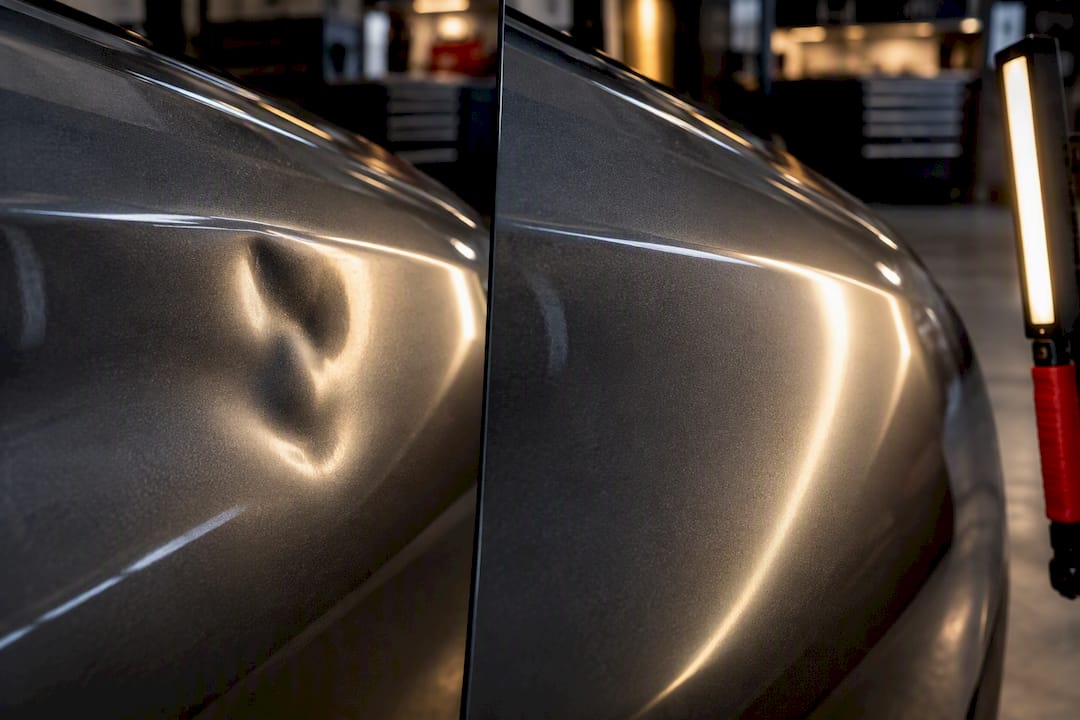
A vinyl wrap will not hide a dent. If a panel shows a low spot, crease, or crown you can feel by hand or spot from several feet away under good light, get paintless dent repair done before any vinyl goes on. Vinyl conforms to whatever is underneath it, so unfixed damage telegraphs straight through the film. Run your hand over every panel, check it under raking light, and call a PDR technician before you book the wrap.
TL;DR:
- Minor dents, creases, and body damage should be repaired with paintless dent repair before wrapping, as vinyl reveals underlying imperfections.
- A thorough prep process including washing, decontamination, clay barring, polishing, and isopropyl alcohol wiping is essential to prevent bubbles and lifting in the vinyl wrap.
- Skipping repair or prep increases the risk of visible flaws, reduces wrap longevity, and can lower the vehicle’s resale value.
- Dent repair costs are relatively low compared to the total wrap price, making pre-wrapping fixes a cost-effective investment.
- Repairing dents after wrapping is possible but risky; it requires experienced technicians, and sometimes removing the wrap is the safest choice.
Table of Contents
- Vinyl Wrap and PDR: What the Film Hides and What It Shows
- When Should You Get Paintless Dent Repair Before Wrapping?
- What’s the Right Prep Sequence Before a Wrap Goes On?
- How Much Does Prep Add to Your Wrap Budget?
- Can You Still Fix a Dent After the Car Is Already Wrapped?
- A Mobile PDR Practitioner’s View on Prepping for Wraps
- Get Your Dents Fixed Before the Wrap Goes On
- Sources
- FAQ
Vinyl Wrap and PDR: What the Film Hides and What It Shows
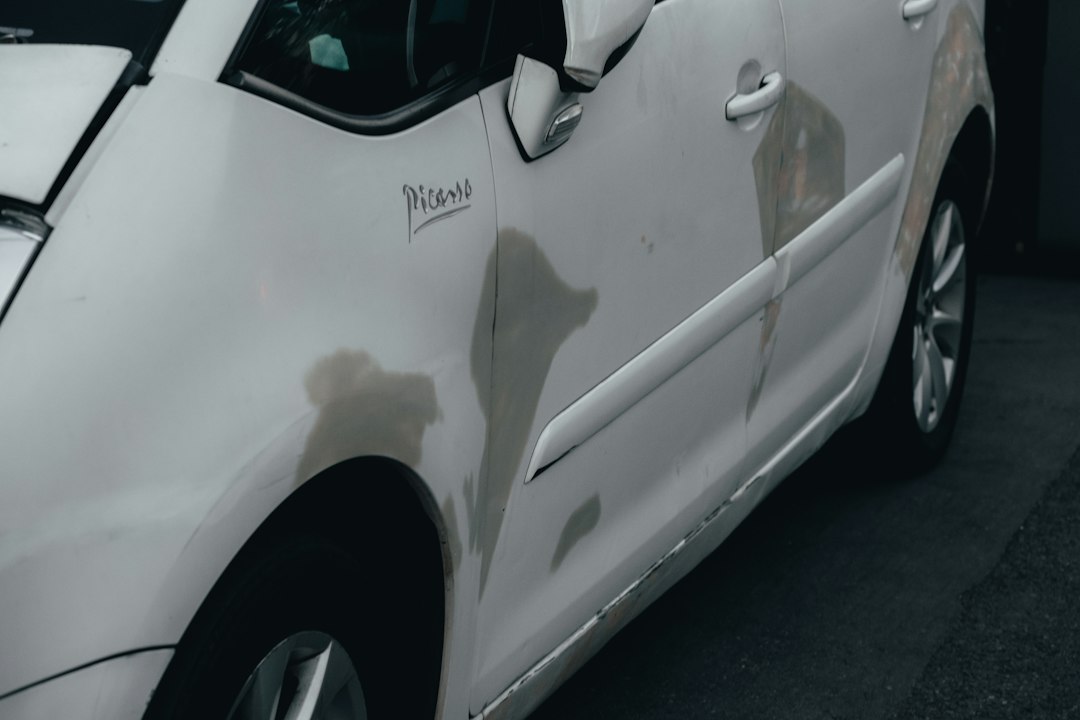
Wrap film is thin, usually in the range typical for vinyl wrap films, roughly the thickness of a sheet of paper. That thinness is exactly why it looks so good on a clean panel and exactly why it fails on a damaged one. The material presses down into whatever texture exists on the surface, conforming closely enough to reveal dents and creases that a coat of paint might have partially concealed.
Some flaws disappear under vinyl. Others do not. Here is the honest breakdown:
- Hidden by vinyl: faded clear coat, minor surface scratches, small paint chips, uneven factory color from sun exposure.
- Visible through vinyl: dents, creases, panel dings, peeling or failing clear coat, rust bubbling under the surface.
Finish choice matters too. Gloss vinyl reflects light evenly across a flat panel, which means any dip or ripple catches the eye immediately. Satin and matte finishes scatter light more, so they’re more forgiving of minor texture. Neither finish fills a depression, and neither turns a dent invisible. Installers who tell you otherwise are setting you up for a comeback complaint.
When Should You Get Paintless Dent Repair Before Wrapping?
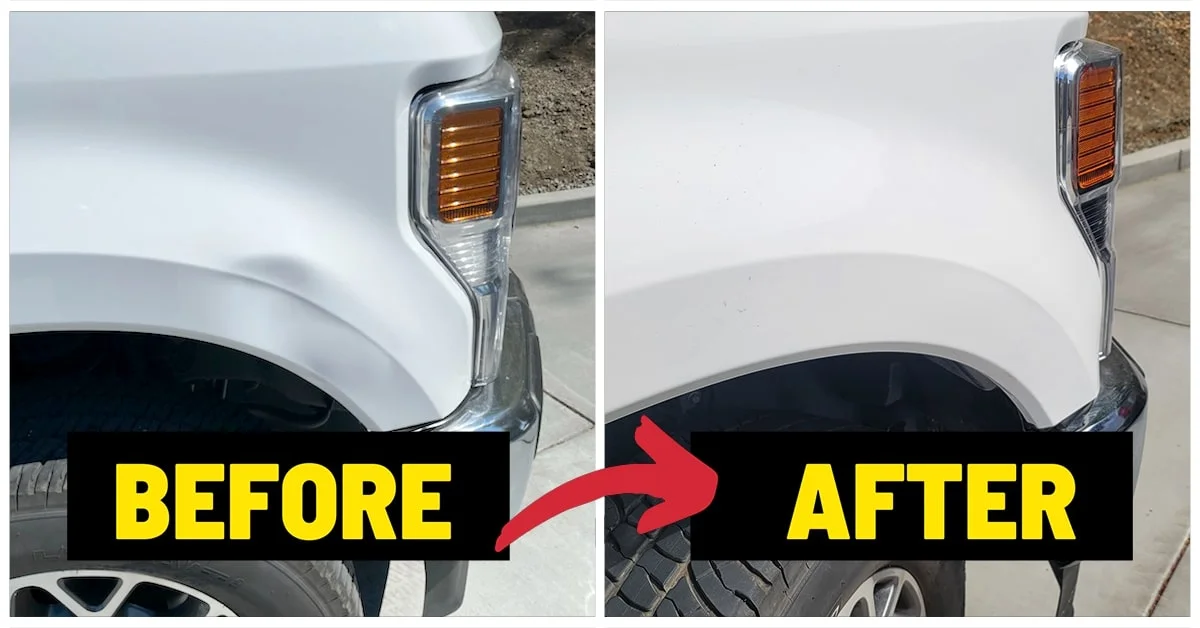
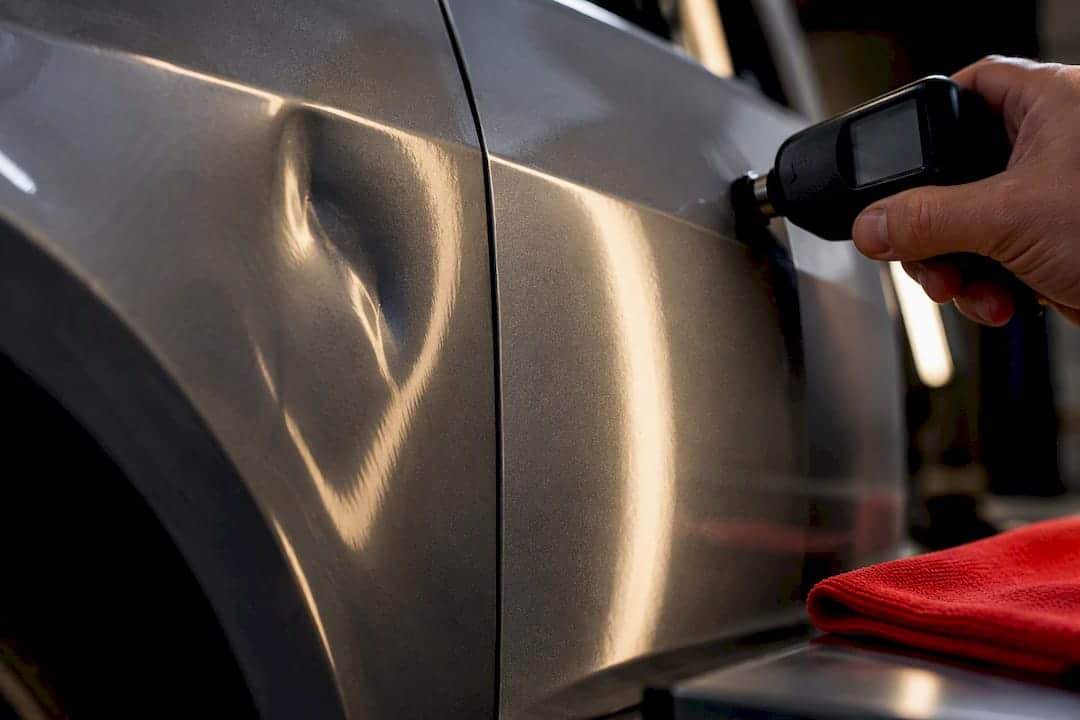
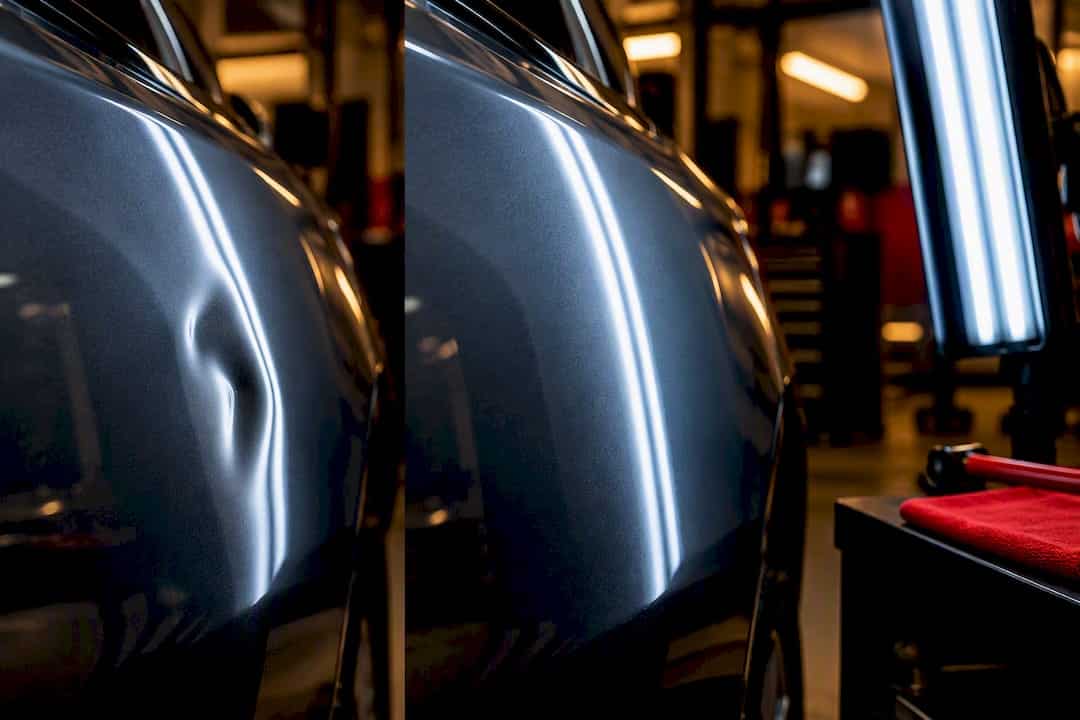
Paintless dent repair, or PDR, works by massaging the metal back into its original shape from behind the panel, using specialized rods and glue-pull tools instead of body filler or a spray gun. It’s the right call for door dings, hail dents, and creases where the paint itself is still intact and hasn’t cracked or stretched past the point of no return. PDR restores the panel’s shape without introducing new paint, which keeps the factory finish underneath the wrap consistent and gives the vinyl a stable, uniform surface to bond to.
Two quick tests tell you whether repair comes first:
- The nail test: run a finger or a plastic card over the spot. If you feel a dip, ridge, or sharp transition, it needs attention.
- The sightline test: step back five or six feet in daylight. If the dent shows itself from that distance, it will show through vinyl too.
Installers doing quality work already build an adhesion check and a raking-light inspection into their quoting process, because they’ve been burned before by wrapping over damage nobody flagged. Ask your wrap shop if they do the same, and don’t skip that conversation.
Pro Tip: Take photos of every panel under bright, angled light before you get quotes. It gives your PDR technician and your wrap installer the same starting point, and it protects you if there’s ever a dispute about pre-existing damage.
What’s the Right Prep Sequence Before a Wrap Goes On?
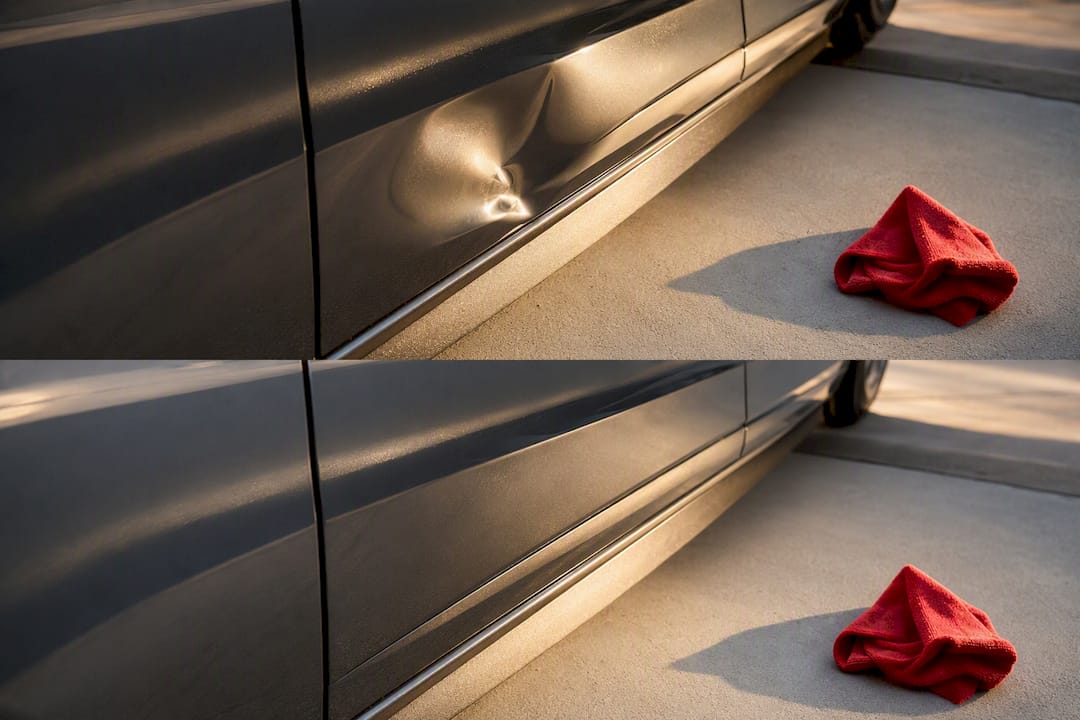
Getting the order right saves you money and saves your installer a headache. Follow this sequence and you’ll avoid the two most common wrap failures: bubbling from contamination and telegraphing from unrepaired dents.
- Inspect first. Wash the car, then check every panel under raking light and by hand. Mark anything tactile with painter’s tape so nothing gets missed.
- Book PDR for anything tactile or visible. Dents, dings, and creases with intact paint go to a PDR technician before anything else happens to the panel.
- Decontaminate the surface. Wash, then use an iron remover to pull embedded brake dust and road grime out of the clear coat.
- Clay bar the entire vehicle. This step lifts bonded contaminants that a wash alone can’t touch and that would otherwise trap air bubbles under the film.
- Polish where needed. If filler was required for damage beyond PDR’s reach, seal it, sand it to a high grit, and polish the repair flush with the surrounding panel.
- Wipe down with isopropyl alcohol (IPA). A panel-by-panel IPA wipe right before the vinyl goes on removes any last residue from polish or clay lubricant.
- Confirm cure time. Any fresh paint or filler needs its full cure window before vinyl gets applied, or you risk trapped solvents lifting the film later.
If a panel needs heavy filler work, has active rust, or shows clear coat that’s actively peeling, that’s your signal to postpone the wrap and handle bodywork first. Wrapping over an unstable surface just delays the real repair and adds cost later.
Pro Tip: If your installer skips the IPA wipe, ask why. It’s the last line of defense against bubbling, and a shop that cuts that corner is telling you something about how they’ll handle the rest of the job.
How Much Does Prep Add to Your Wrap Budget?
Prep costs less than most people assume relative to the wrap itself, and skipping it costs a lot more down the line. A single dent typically runs in the $75 to $150 range for PDR, while larger creases or panels needing bodywork climb higher. A full vehicle wrap commonly lands in the low thousands of dollars, so a few hundred dollars in dent repair is often a modest slice of the total project.
Here’s how to think about the trade-off:
- Minor cosmetic issues like faded paint or small chips: a wrap alone may be all you need.
- Tactile dents and creases: budget for PDR first. Skipping it risks a wrap that shows every flaw and needs to be redone.
- Rust, cracked clear coat, or deep body damage: this calls for bodywork or a body shop, not a wrap over the top of it.
One insight worth sitting with: pairing cost-effective PDR with a quality wrap often delivers better return on investment than skipping repair to save money upfront, because a failed wrap job means paying for labor and material twice. Insufficient prep doesn’t just look bad. It lowers resale value and can shorten the working life of the vinyl itself, since trapped air and unresolved edges accelerate lifting and peeling. Get quotes from a PDR technician and a wrap installer separately before committing to either.
Can You Still Fix a Dent After the Car Is Already Wrapped?
Yes, in many cases, but it takes a technician who knows what they’re doing. PDR is sometimes possible directly on a wrapped panel, though it carries more risk than working on bare paint, since aggressive tool pressure or heat can lift the adhesive or stretch the film near the repair site.
A few things to know before you attempt it:
- Glue-pull repair applied directly to vinyl can pull up the film along with the tab if the adhesive underneath isn’t handled carefully.
- Interior access repair (working from behind the panel without tools touching the wrap) carries less risk to the film but isn’t possible on every dent location.
- Wrap removal is sometimes the safer route for a clean repair, but removing vinyl can pull at marginal clear coat or expose paint that wasn’t in great shape to begin with.
Document the wrap’s condition with photos before any repair attempt, and lean on a mobile PDR service with experience working around vinyl rather than a general body shop guessing at it for the first time.
A Mobile PDR Practitioner’s View on Prepping for Wraps
Mobile paintless dent repair onsite, at the customer’s location, matters most in exactly this scenario. A wrap installer needs a panel free of dents before they start, and hauling a car to two different shops on two different days adds friction most owners don’t need.
The workflow is simple: assess every panel first, target the PDR work where the metal actually needs it, then check the finish before handoff to whoever’s doing the wrap. Preserving the factory paint through that process matters because a wrap bonds best to an intact, unaltered surface, not one patched with mismatched filler and repaint. For readers weighing whether a specific ding qualifies as a PDR job, our breakdown of minor dent repair walks through what typically qualifies.
— Brian Blanc
Get Your Dents Fixed Before the Wrap Goes On
Mobile paintless dent repair services provide an alternative to hauling your car between a body shop and a wrap installer, assessing every panel onsite and fixing dents that would otherwise telegraph through vinyl, without repainting the factory finish underneath.
If you’ve already spotted a dent under raking light, or your wrap installer flagged one during a quote, that’s the moment to act before vinyl goes on, not after. Minor dings typically run $100 to $500 and larger creases run $150 to $1,500, depending on size and panel access. Book a mobile dent repair appointment and get your panels wrap-ready without ever leaving your driveway.
Sources
- Engineerskill
- Can You Wrap a Car With Scratches, Dents or Faded Paint? – Car Wrappers
- Can You Wrap a Car Over Scratches, Dents, or Paint Damage? What Prep Is Required? – AutoDetailPedia
FAQ
Will a Vinyl Wrap Cover Up Dents?
No. Vinyl film is thin enough to conform to the panel underneath it, so dents and creases remain visible through the wrap. Faded paint and small chips can disappear under vinyl, but structural damage will not.
Should I Get PDR Before or After Wrapping My Car?
Get PDR before wrapping, every time damage is tactile or visible from several feet away. This preserves the factory paint and gives the vinyl a stable surface to bond to, which is why PDR is the preferred first step for most dents.
Can a Dent Be Fixed After the Car Is Already Wrapped?
Sometimes, but it requires an experienced technician because PDR on a wrapped panel risks lifting the film or adhesive if done carelessly. In some cases, partial wrap removal is the safer path to a clean repair.
What Prep Steps Does a Panel Need Before Vinyl Goes On?
A panel needs a full wash, iron remover treatment, clay bar decontamination, and a final isopropyl alcohol wipe immediately before the wrap is applied. Any tactile dent or crease should be repaired first so the installer starts with a smooth, contamination-free surface.