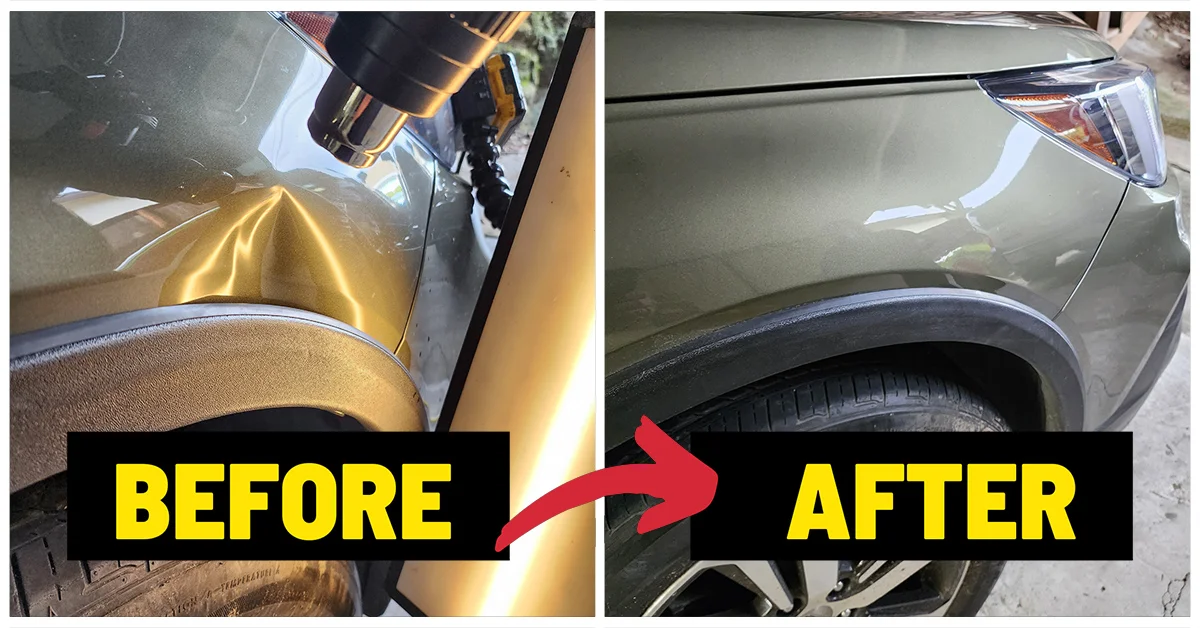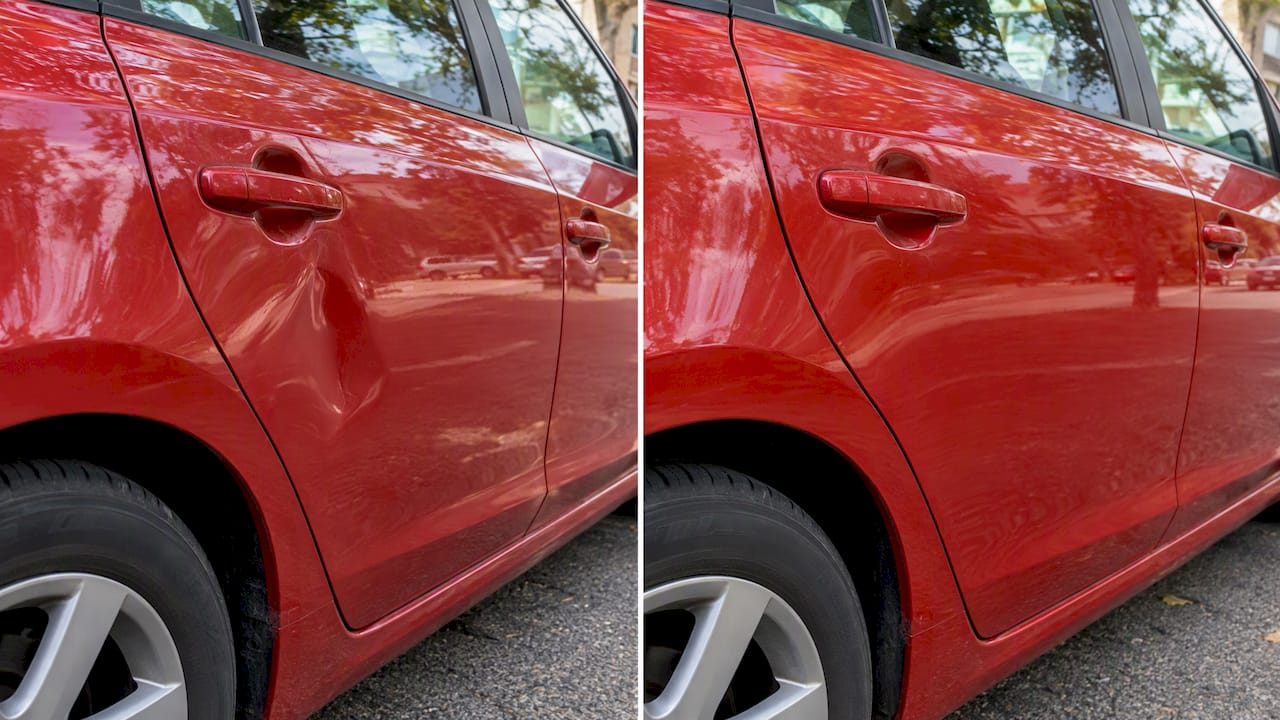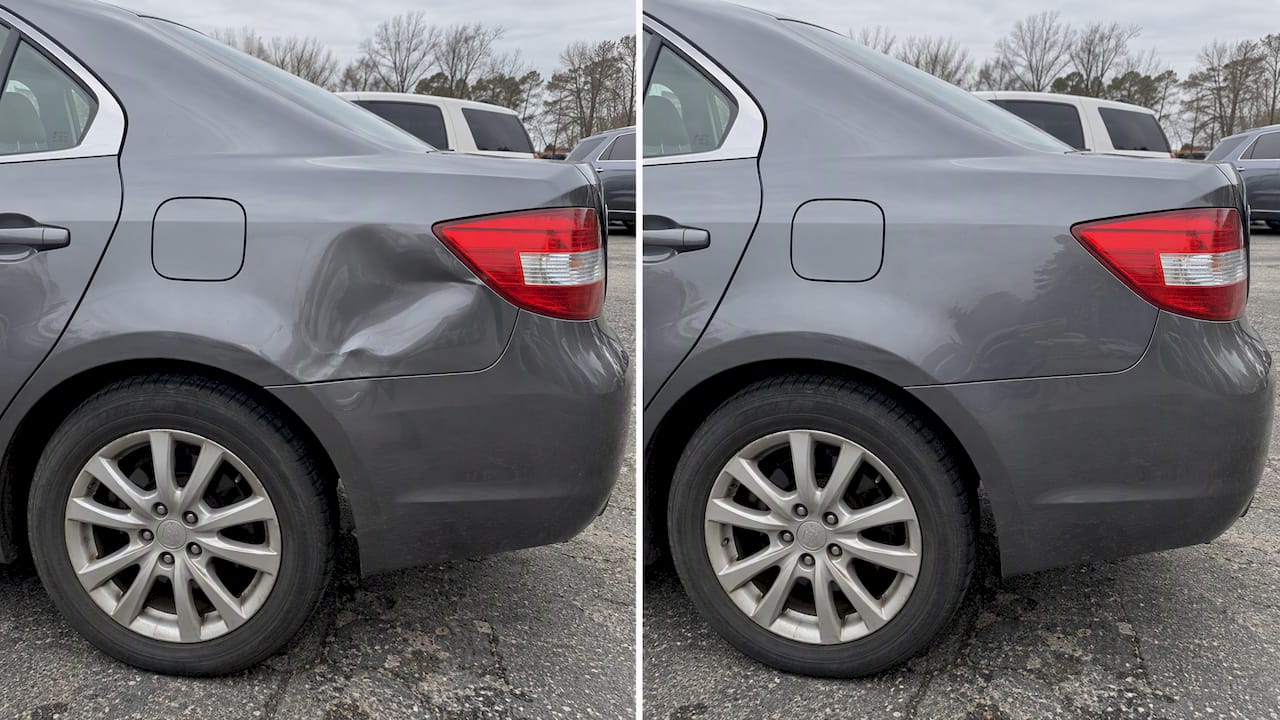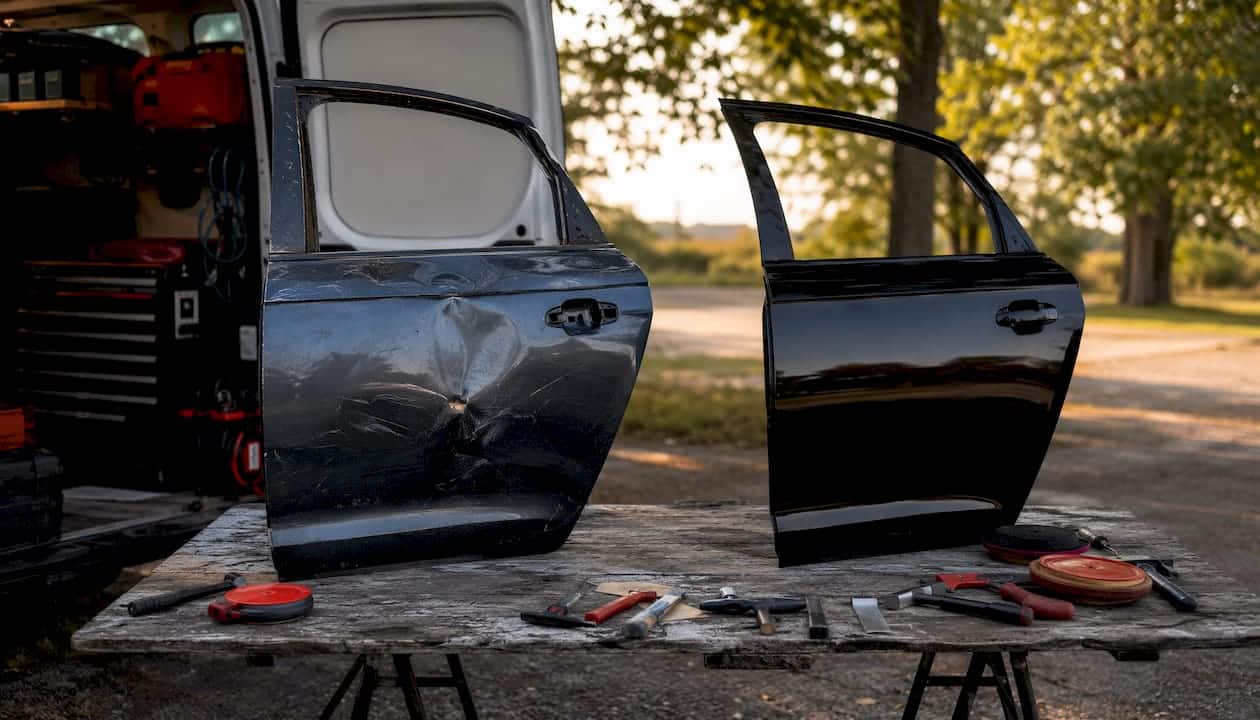
Mobile collision services are the clear choice for vehicle owners dealing with minor cosmetic damage who want professional results without the drop-off, the rental car, and the three-day wait. A certified technician comes to your driveway, your office parking lot, or wherever your car sits, and handles the repair on the spot. For the right type of damage, the quality rivals what you’d get inside a traditional body shop.
Here’s what makes mobile repair worth considering:
- Repairs come to you. No towing, no drop-off, no arranging a ride home.
- Lower cost. Mobile repair services cost 20–30% less than traditional body shops for cosmetic work, with paintless dent repair (PDR) running 50–70% cheaper due to reduced overhead and fewer labor steps.
- Fast turnaround. Most mobile repairs finish within a few hours, not days.
- Factory finish preserved. PDR massages the metal back without sanding, filler, or repainting, so your original paint stays intact.
- Indirect savings. You skip rental car fees, transportation costs, and lost work time that quietly inflate the true cost of a traditional shop visit.
What is mobile collision repair?
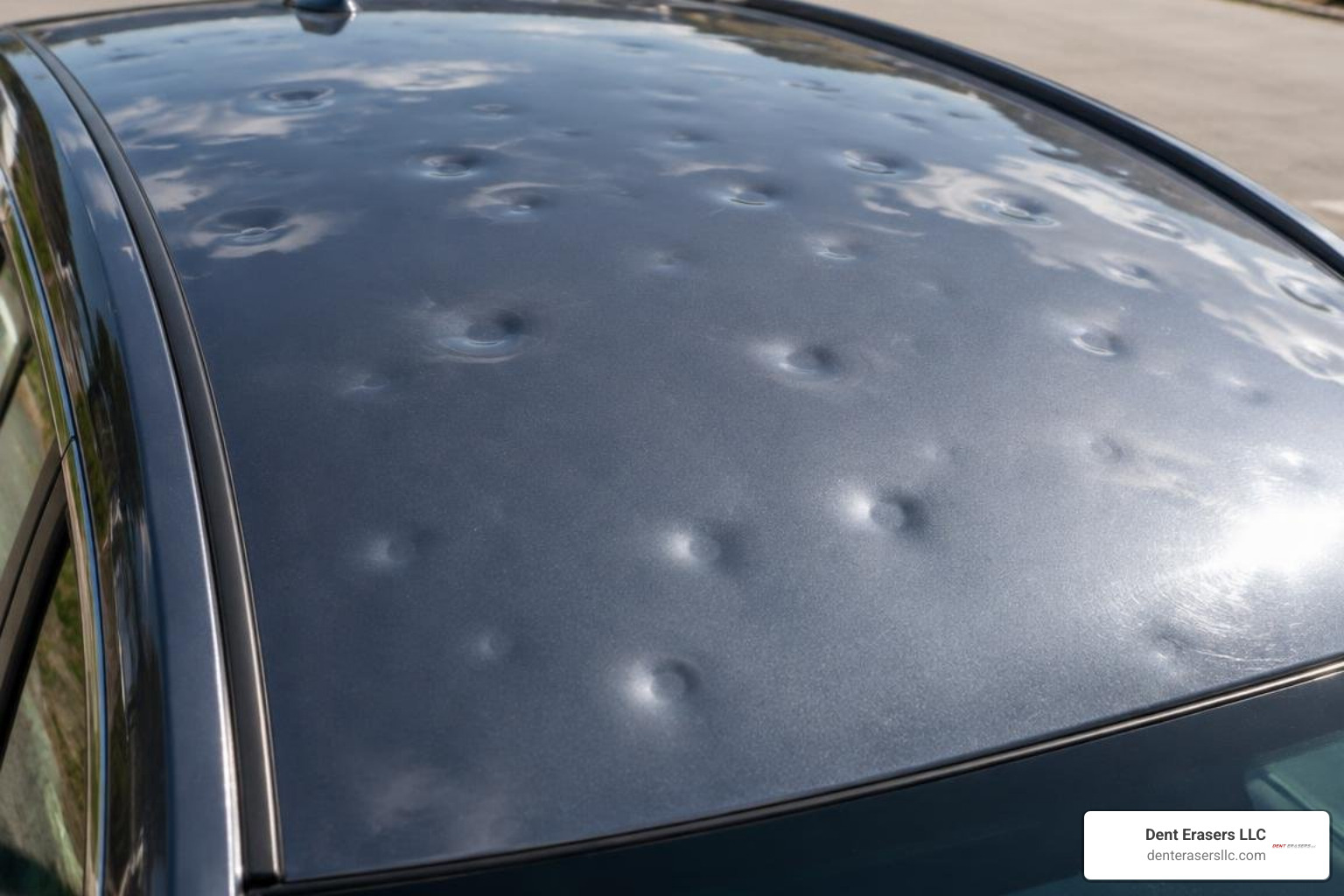
Mobile collision repair brings a certified technician and specialized portable equipment directly to your location to perform cosmetic vehicle repairs on-site. The focus is non-structural damage: the kind of ding you get from a shopping cart, a hailstorm, or a careless door in a parking garage.
Common services include:
- Paintless dent repair (PDR): The bread-and-butter of mobile repair. Technicians use metal rods and picks to gently massage dents out from behind the panel, leaving the factory paint untouched.
- Minor scratch touch-ups: Surface-level paint chips and light scratches can be color-matched and blended on-site.
- Bumper repairs: Scuffs, cracks, and minor dents in plastic bumpers are repairable without a full replacement.
- Small part replacements: Mirrors, trim pieces, and similar components can be swapped in the field.
Mobile repair is not a fit for structural frame damage, airbag or sensor system work, multi-panel resprays, or any repair requiring a paint booth. Those jobs belong in a traditional shop, full stop.
How mobile collision repair works
The process is straightforward, and knowing what to expect makes the whole experience easier — for a detailed walkthrough, see our Workflow de mantenimiento integral del coche: guía práctica.
- Submit photos. Send three or more well-lit images of the damage. Photo-based assessment lets the technician evaluate whether the damage suits mobile repair before anyone drives anywhere.
- Receive an estimate. The technician reviews the photos and provides a repair scope and price. If the damage is outside mobile capabilities, a reputable tech will tell you upfront.
- Confirm and schedule. Once you approve the estimate, you pick a time and location that works for you, whether that’s your home, your workplace, or a parking lot.
- On-site repair. The technician arrives with portable tools and performs the repair. PDR on a minor dent typically wraps up in a few hours.
- Quality check. The technician inspects the finished area against the surrounding paint before calling the job done.
- Environmental setup matters. Level ground, shade, and moderate temperatures are necessary for quality results. Heat and direct sunlight affect how metal responds to pressure and how well the technician can read panel reflections.
Benefits of mobile collision services compared to traditional auto body shops
The advantages go beyond simple convenience, though convenience is real.
- No logistical friction. You keep your car. No drop-off, no pickup coordination, no rental car to arrange. For busy professionals, that alone changes the calculus.
- Cost savings. The 20–30% cost reduction on cosmetic repairs comes from lower overhead: no paint booth, no large facility, fewer labor steps. PDR’s 50–70% savings over conventional bodywork is even more pronounced.
- Time efficiency. Most mobile repairs finish in hours. Traditional shops often hold vehicles for multiple days while waiting for paint to cure or parts to arrive.
- Factory finish preservation. PDR avoids the risks that come with repainting: color mismatch, blend lines, and unnecessary disturbance of the original paint system. Every repaint slightly increases the chance of future mismatch under certain lighting.
- Reduced indirect costs. Rental cars, rideshares, and time off work are real expenses that traditional shop visits generate. Mobile repair eliminates most of them.
- Personalized attention. The technician works on your vehicle exclusively during the appointment, with direct communication throughout.
- Eco-friendlier process. Mobile PDR uses no paint, no primer, and no chemical waste. Less material consumption means a smaller environmental footprint compared to a full shop repaint.
Pros and cons of mobile collision repair
Pros:
- Convenient on-site service at home, work, or any accessible location
- Lower cost for eligible cosmetic repairs
- Faster turnaround, often same-day
- Preserves factory paint and supports resale value
- Personalized, one-on-one technician interaction
Cons:
- Limited to cosmetic, non-structural damage. Frame issues, sensor repairs, and full resprays require a traditional shop.
- Weather-dependent. Rain, wind, dust, and extreme temperatures can delay or compromise the repair.
- Reduced toolset. Mobile rigs carry a subset of what a full shop stocks. Aluminum panels on vehicles like newer Ford F-150s or EVs often need specialized tooling that most mobile setups don’t carry.
- Dents on sharp body lines, edges, or braced panel areas are harder to address without controlled lighting and full access.
- Warranty coverage varies widely. Traditional shops typically offer more comprehensive guarantees.
- Insurance claim support is limited. Complex claims with documentation, parts sourcing, and certification requirements belong in a certified shop.
Pro Tip: If your paint is cracked or chipped at the dent site, mobile PDR alone won’t finish the job. A shop repair that combines reshaping and refinishing is often more efficient in that case.
Cost considerations: mobile vs. traditional auto body repair
| Factor | Mobile Repair | Traditional Shop |
|---|---|---|
| Average cost savings | 20–30% less for cosmetic work | Standard market rate |
| PDR cost vs. conventional | 50–70% cheaper | Full labor and materials |
| Typical repair duration | A few hours | 1–3+ days |
| Indirect costs (rental, transport) | Minimal to none | Often $50–$150+ per day |
| Warranty coverage | Varies by provider | Typically comprehensive |
| Insurance claim handling | Limited | Full support |
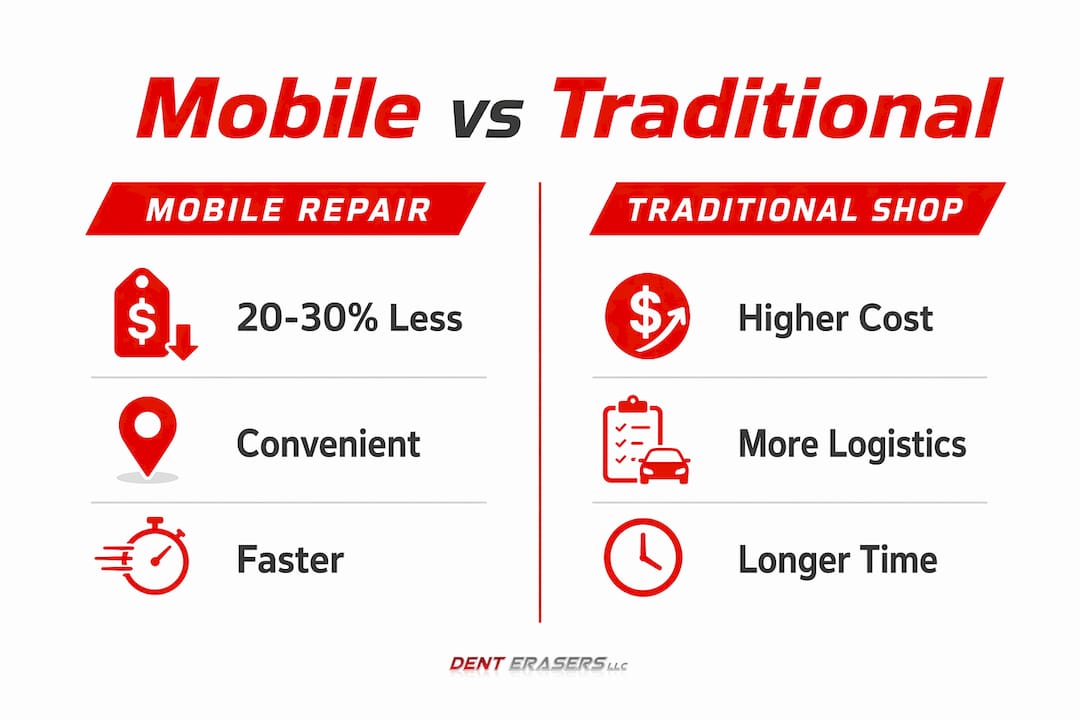
The sticker price is only part of the story. Hidden costs like rental cars, rideshares, and time off work add up fast with traditional shops. A two-day shop visit with a rental car can easily close the gap on any price difference. For minor cosmetic damage, mobile repair delivers more total value when you account for everything.
Complex dents, structural issues, or damage requiring a paint booth will always cost more regardless of where you go. The cost advantage of mobile repair applies specifically to the cosmetic work it’s designed to handle.
What experts say about mobile collision repair quality
Mobile collision repair is a specialized discipline, not a stripped-down version of shop work. That distinction shapes everything about how quality is achieved and where the limits are.
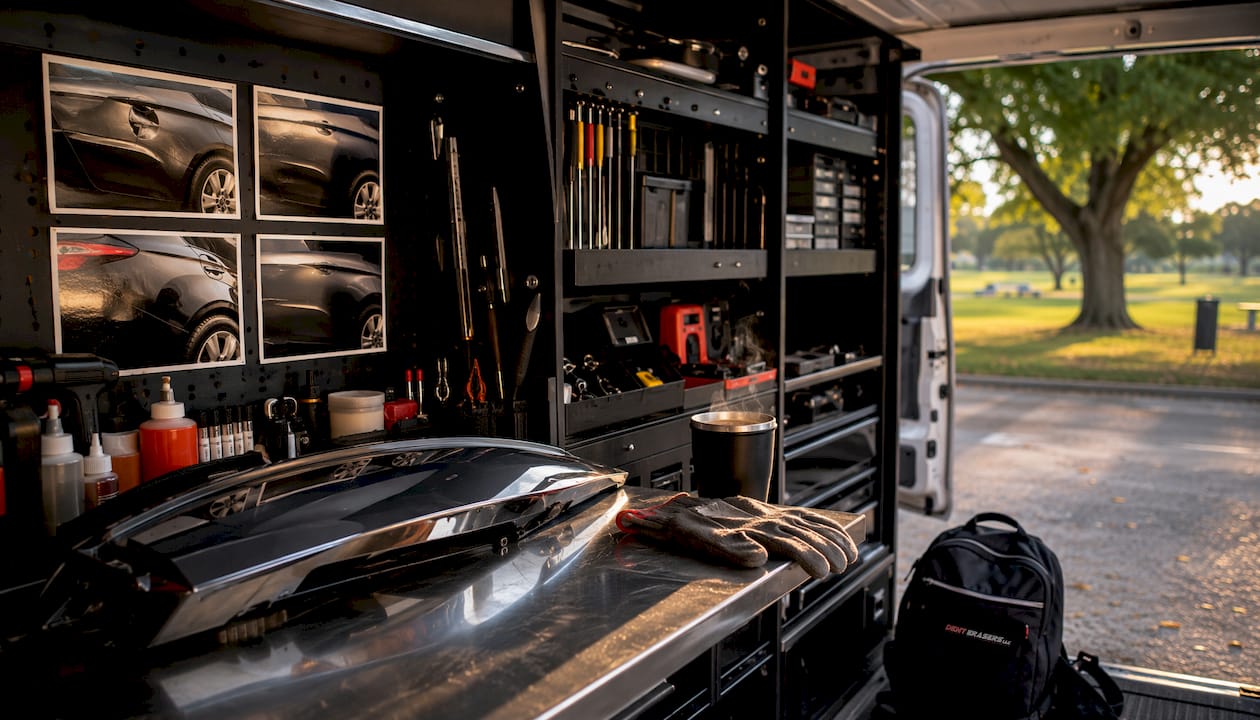
Environmental control is the central quality variable. Lighting, temperature, and cleanliness all affect a technician’s ability to read the panel accurately during PDR. A high spot caused by poor lighting looks fine in a parking lot and catches your eye the next time you wash the car in direct sunlight.
Reputable mobile technicians use photo-based triage to decline jobs that fall outside mobile capabilities. That’s a sign of integrity, not limitation. A tech who turns down a job they can’t do correctly is protecting both the vehicle and their reputation. For professional PDR services that match the right repair to the right method, that honesty is part of the value.
How insurance works with mobile collision services
Mobile repair and insurance claims can coexist, but the relationship has real limits. For minor cosmetic damage below your deductible, paying out of pocket for mobile repair often makes more financial sense than filing a claim that could affect your premium.
When a claim is involved, most insurance providers require documentation, certified repair facilities, and parts sourcing that mobile technicians typically cannot provide. Complex collision claims with structural damage, sensor involvement, or multi-panel resprays must go through a certified shop. Some insurers do work with mobile PDR providers for specific cosmetic repairs, so it’s worth calling your provider before booking. Always get a written estimate and ask whether the technician can provide documentation your insurer will accept.
How long mobile repairs take compared to traditional shops
Speed is one of the clearest advantages of mobile auto body services. Most minor dents and surface scratches are completed within a few hours on-site. Compare that to a traditional shop, where the same cosmetic repair might take one to three days once you factor in scheduling, prep work, paint curing, and the queue of other vehicles ahead of yours.
The time savings compound when you remove the logistics. No drop-off trip, no pickup trip, no waiting for a call that your car is ready. For fleet managers or anyone who can’t pull a vehicle out of service for half a day, a mobile technician who works in the lot handles the job without disrupting operations. The convenience of mobile dent repair is most visible in exactly these situations.
Qualifications and certifications of mobile collision repair technicians
Certification matters, and it’s worth asking about before you book. Reputable mobile technicians hold credentials from recognized industry bodies. The National Institute for Automotive Service Excellence (ASE) offers certifications relevant to collision and refinishing work. PDR-specific training programs, including those through the National Paintless Dent Repair Association (NPDRA), provide structured skill validation for technicians focused on dent repair.
Experience with specific vehicle types also counts. Aluminum-body vehicles, EVs, and luxury brands with premium paint systems require additional training and tooling. A qualified technician will tell you honestly whether a repair is within their skill set and equipment range. Ask for proof of certification, check for reviews that mention repair quality in direct sunlight, and confirm the technician carries liability insurance before any work begins.
Ready to skip the shop?
Denterasersllc brings certified mobile collision repair directly to you across Contra Costa County and surrounding areas. From paintless dent repair to plastic bumper repair, every job is handled on-site with the tools and technique the damage actually needs. Send photos of your damage and get a straight answer on what mobile repair can do for your vehicle.
Key Takeaways
Mobile collision services deliver real cost savings and genuine convenience for cosmetic vehicle damage, with PDR costing 50–70% less than conventional bodywork while preserving the factory paint finish.
| Point | Details |
|---|---|
| Cost advantage | Mobile repairs cost 20–30% less than traditional shops; PDR runs 50–70% cheaper than conventional methods. |
| Speed | Most mobile repairs finish within a few hours versus one to three days at a traditional shop. |
| Paint preservation | PDR restores dents without sanding or repainting, keeping the original factory finish intact. |
| Scope limits | Mobile repair covers cosmetic damage only; structural, frame, and sensor repairs require a certified shop. |
| Hidden savings | Skipping rental cars, transport, and lost work time adds meaningful value beyond the repair invoice. |
FAQ
What are the downsides of using a mobile mechanic for dent repair?
Mobile collision repair is limited to cosmetic damage and cannot address structural issues, frame misalignment, or complex paint work requiring a booth. Weather conditions, limited tooling, and variable lighting can also affect repair quality on more complex dents.
Is mobile collision repair reliable for everyday dents and dings?
Yes, for minor cosmetic damage with intact paint on flat panels, mobile PDR consistently produces quality results. Reputable technicians use photo-based triage to decline jobs outside their capabilities, which protects both the vehicle and the customer.
What are the signs of poor collision repair, mobile or otherwise?
Watch for high spots that catch light at an angle, color mismatch visible in direct sunlight, blend lines where new paint meets old, and paint texture that differs from the surrounding panel. These issues are more likely when lighting or temperature conditions during the repair were poor.
What repairs are too complex for mobile auto body services?
Frame and structural damage, airbag or sensor system repairs, multi-panel resprays, and dents on aluminum panels requiring specialized tooling all exceed what most mobile setups can handle. A certified auto body shop is the appropriate choice for any of those situations.
How much can I save choosing mobile repair over a traditional body shop?
Mobile repair costs 20–30% less on average for cosmetic work, with PDR running 50–70% cheaper than conventional bodywork. Factor in avoided rental car and transportation costs, and the total savings are often higher than the invoice difference alone.