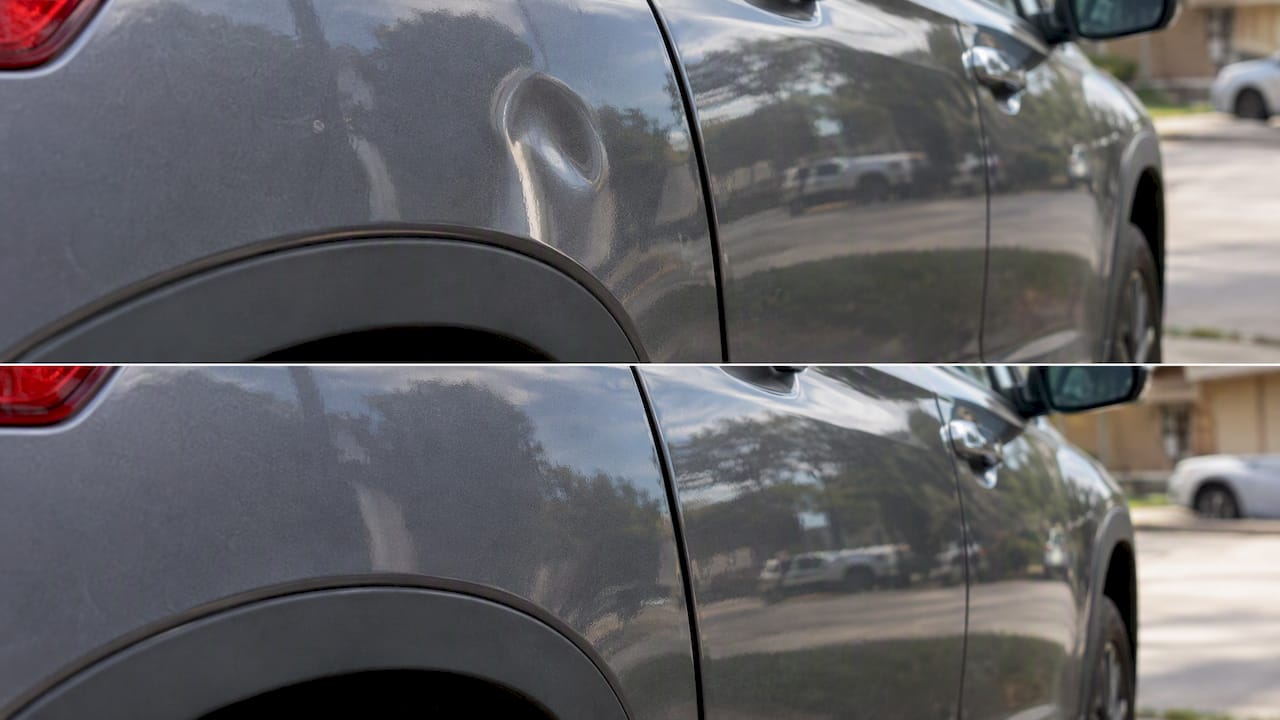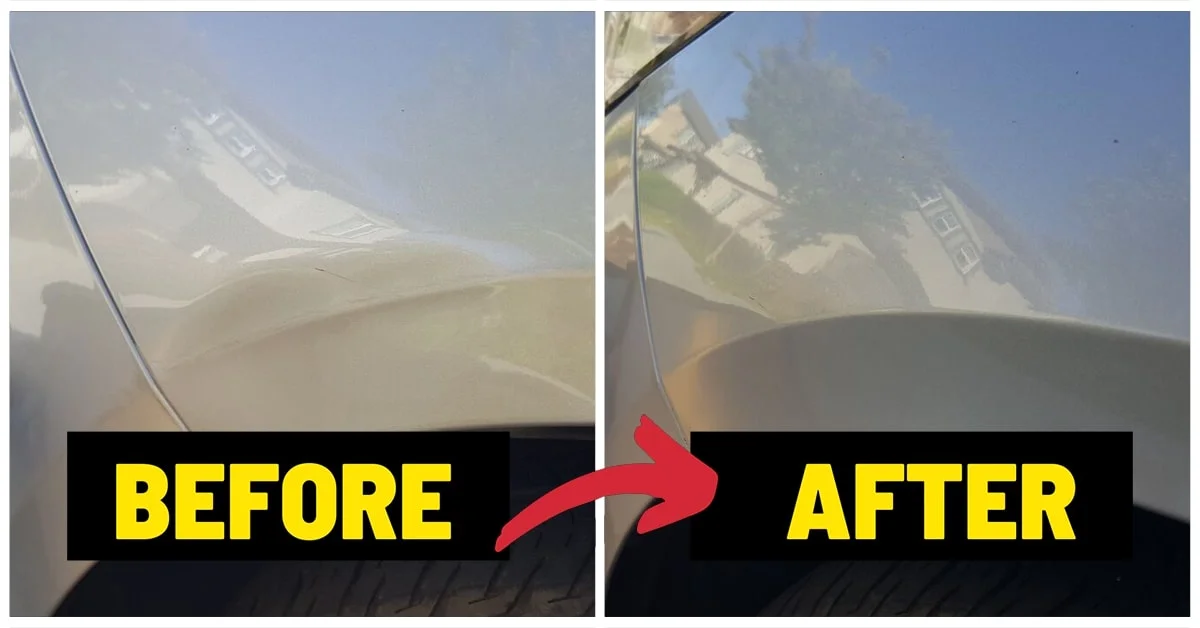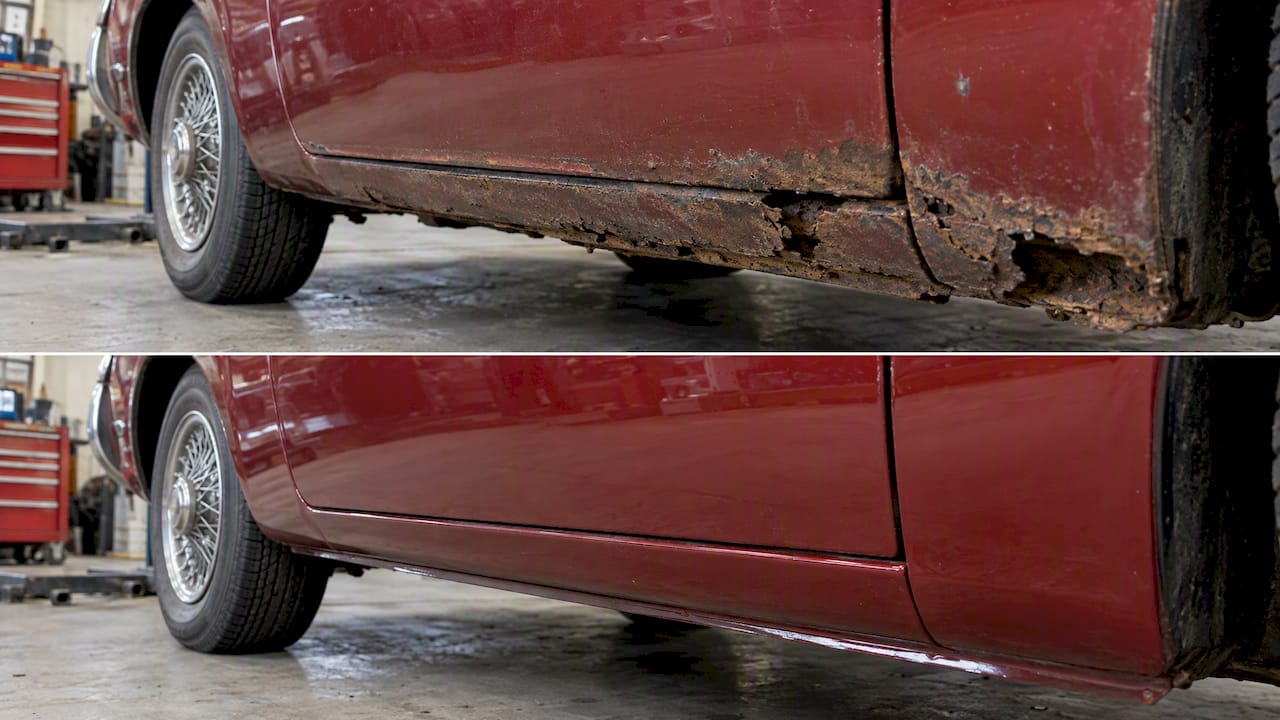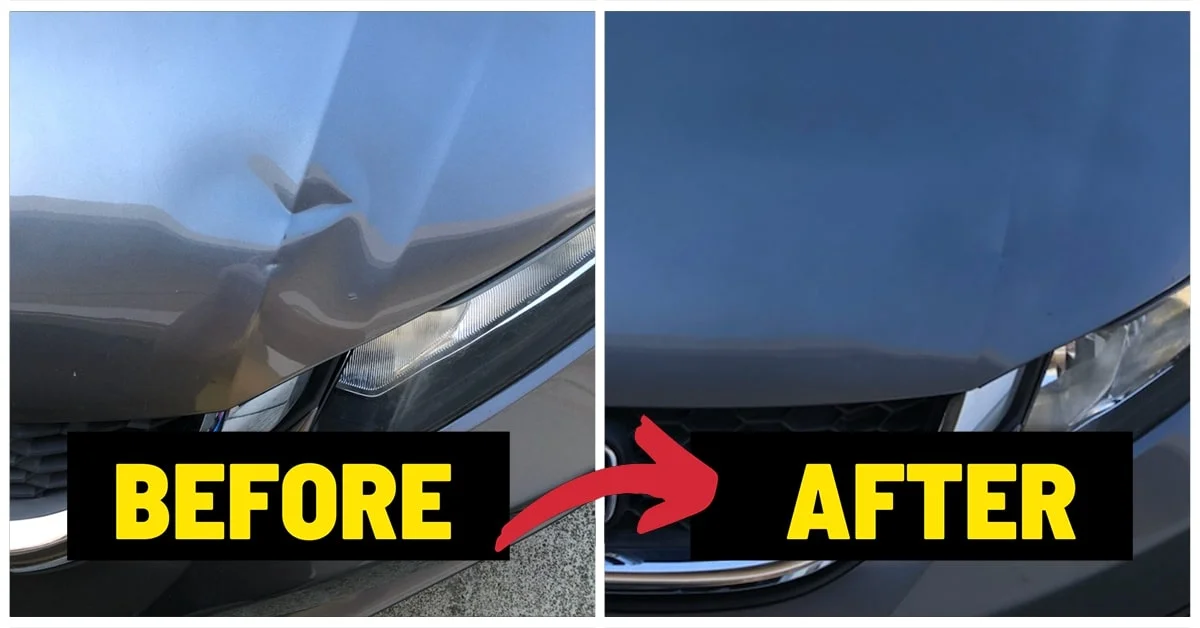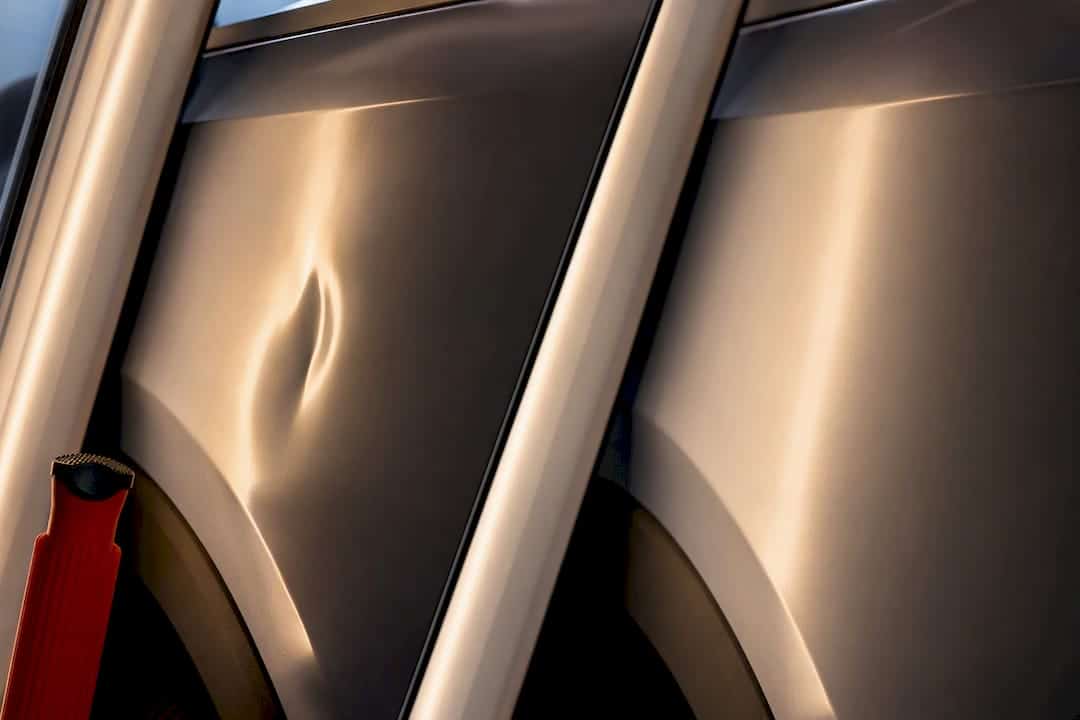
Paintless dent repair can fix a sharp dent when the paint hasn’t cracked and a technician can reach the back of the panel with the right tools. That’s the whole answer, but it hides a lot of nuance. Deep V-shaped creases, stretched metal, and dents tucked against a seam or door edge often push past what PDR can safely correct. The rest of this guide walks through which sharp dents respond well, why creases fight back, what a real repair sequence looks like, and how to tell the difference before you pay for anything.
TL;DR:
- Paintless dent repair can fix small sharp dents when the metal is not work-hardened or folded into a crease, especially if the paint remains intact.
- Creases and dents near edges or seams often cannot be fully repaired with PDR due to limited access and the metal’s work-hardened condition.
- Surface texture, stress lines, and proximity to panel edges are key factors in determining repair success, with deep creases often requiring traditional bodywork.
- Applying controlled heat during repair can help prevent paint cracking and improve metal reshaping on sharp dents.
- Metal stretching, work-hardening, and cracked paint are major limits of PDR, and technicians will advise against attempting repair in such cases.
Table of Contents
- Can PDR Fix Sharp Dents? Sorting What Responds From What Doesn’t
- Why Sharp Creases Resist Paintless Repair
- How Does PDR Work on Sharp Dents? Inside a Technician’s Process
- When Paintless Dent Repair Won’t Get You All the Way There
- What Does PDR Cost for a Sharp Dent, and How Long Does It Take?
- Deciding Whether to Try PDR or Go With Conventional Repair
- Denterasers LLC’s Approach to Sharp Dents and Creases
- The Honest Take on Sharp Dent Repairs
- Get an Onsite Inspection Before You Decide
- Sources
- FAQ
Can PDR Fix Sharp Dents? Sorting What Responds From What Doesn’t
Not every dent behaves the same way under a metal rod or glue tab, and the shape of the damage tells you almost everything about your odds. Round dents, the kind you get from a stray shopping cart or a hailstone, are paintless dent repair’s bread and butter. The metal folded in evenly, without a hard crease, so it tends to want to spring back close to its original shape.
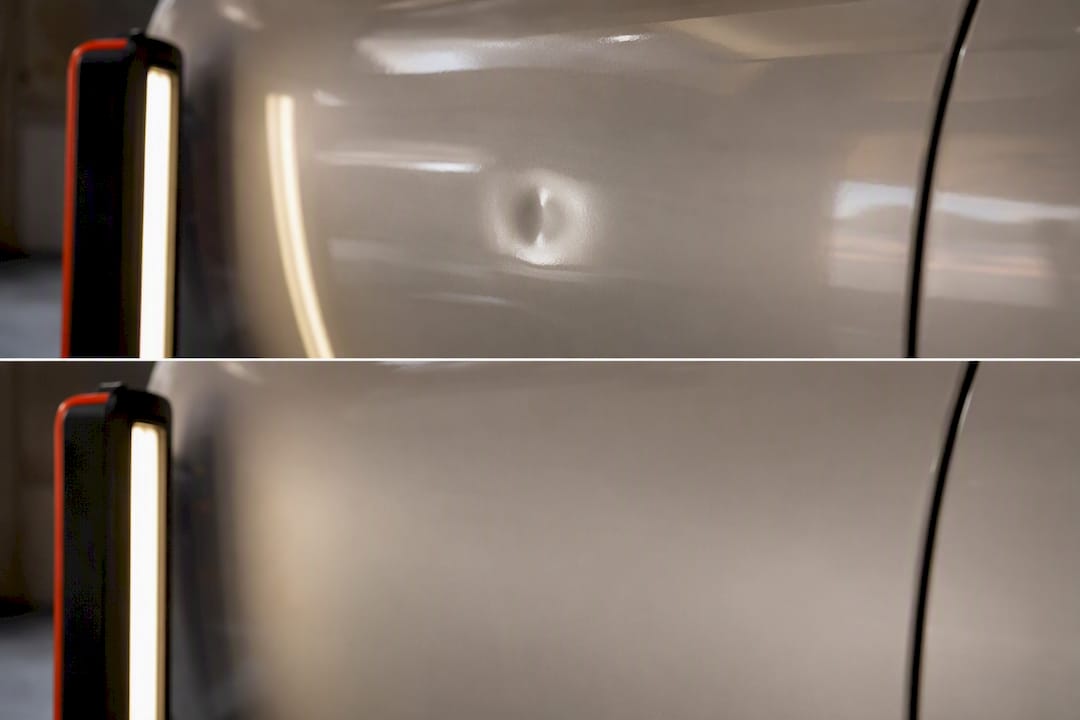
Sharp dents are a different animal. A sharp dent has a defined point of impact, often with a crisp edge, but the metal around it hasn’t necessarily work-hardened into a permanent fold. Small sharp dents, especially ones an inch or two across with shallow depth, are frequently repairable with the right access and a patient technician. Creases are the toughest category. A crease runs along a body line or across a flat panel where the metal has actually folded, not just flexed, and that fold changes the way the steel or aluminum behaves permanently.
Before you assume the worst, run a few simple checks yourself:
- Run your fingers over the paint at the dent’s lowest point. If the texture feels smooth and unbroken, that’s a good sign. Rough or slightly gritty texture usually means the clear coat has already fractured.
- Look at the dent from a low angle in direct sunlight and check for stress lines radiating outward. Faint lines around the impact point suggest stretch; deep, sharply defined lines suggest a work-hardened crease.
- Measure roughly how far the dent sits from a panel edge, wheel well, or body line. Dents within an inch or two of an edge limit how a technician can position tools behind the panel.
- Note whether the deepest point looks like a shallow bowl or a tight fold. A bowl shape usually means the metal stretched; a fold means it creased.
A small sharp dent in the middle of a hood or door skin, away from edges, often responds well to PDR. A deep, narrow crease running along a fender’s body line is the case where paintless dent repair effectiveness drops sharply, and conventional repair starts to make more sense.
Why Sharp Creases Resist Paintless Repair
Bend a paperclip once and it springs back. Bend it sharply back and forth a few times at the same spot, and the metal at that fold gets stiff, brittle, and resistant to moving again. That’s work-hardening, and it’s exactly what happens to a body panel when a sharp impact folds the metal instead of just flexing it.
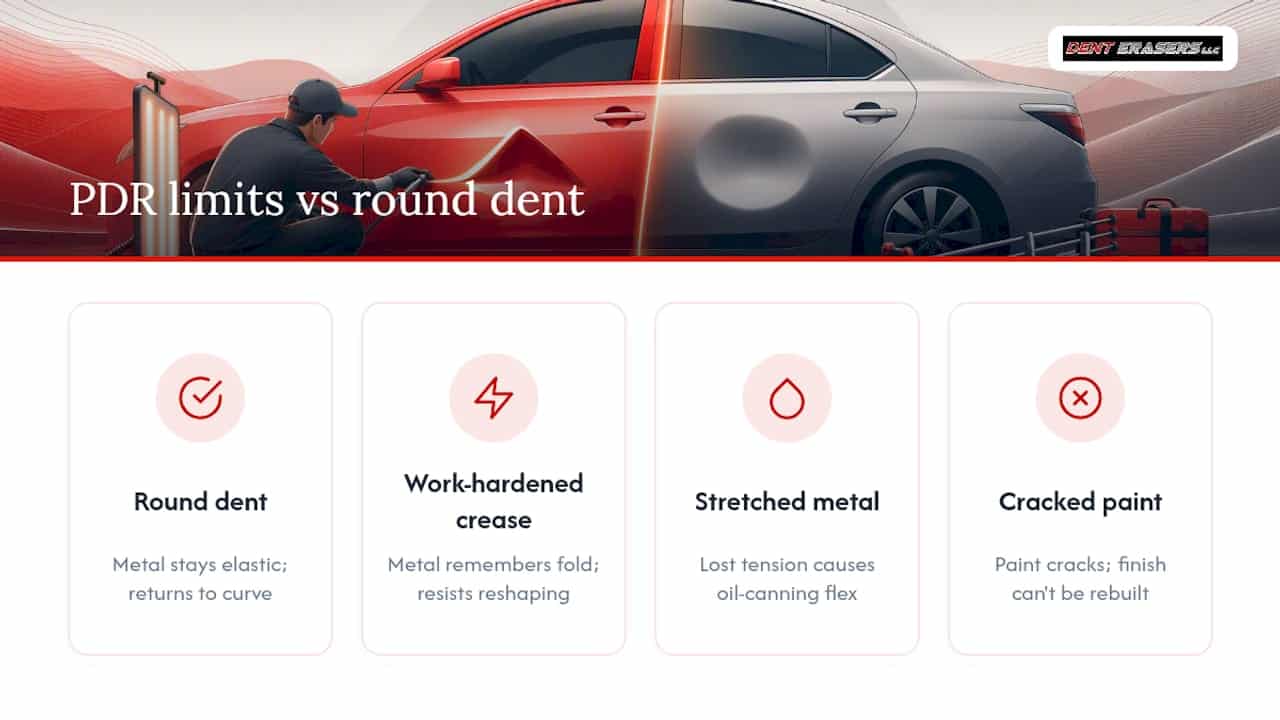
A round dent stretches the metal gently across a wide area, so the material stays within its elastic range and wants to return to its original curve. A crease forces the metal past that point. The molecules along the fold line get compressed and rearranged, and the steel or aluminum essentially “remembers” the new shape more than the old one. Pushing or pulling a crease back out means fighting that hardened metal memory, not just coaxing flexible steel into place.
Stretch adds a second complication. When metal gets pulled thin during the initial impact, it can lose the tension that normally keeps a panel flat and rigid. Push that stretched area back into position and you sometimes get oil-canning, a soft, wavy flex in the metal that pops in and out like the bottom of a tin can. Oil-canning is a sign the metal has lost its structural memory, and no amount of tapping fixes that on its own.
Paint adds a hard ceiling on top of the metal problem. Automotive clear coat and base coat have some flexibility, but they crack under the kind of sharp, localized stress a crease creates. Once paint fractures, a technician can still reshape the metal underneath, but the crack itself stays visible. That’s the ceiling on paintless dent repair effectiveness: it’s a metal-shaping process, not a paint-repair process, and it can’t rebuild a factory finish once that finish has already broken.
How Does PDR Work on Sharp Dents? Inside a Technician’s Process
A real PDR job starts before anyone touches a tool. A technician sets up bright, angled lighting often paired with a reflective line board so every ripple and stress line in the panel becomes visible. That inspection step determines the entire plan: where access is possible, whether interior panels or trim need to come off, and which technique fits the specific fold pattern.
The typical sequence for a sharp dent looks something like this:
- Map access and plan the approach. The technician checks whether the dent can be reached from behind through an existing gap, or whether panel removal is needed first.
- Apply glue pulling for crowns and hard-to-reach highs. Large tabs anchor to the dent’s raised points, letting the technician pull metal outward without ever touching the backside.
- Push from behind with rods and interchangeable tips. Different tip shapes handle different curves, and the technician alternates pushing and pulling to slowly walk the metal back toward its original contour.
- Tap down remaining highs. As low spots rise, small high spots often appear nearby. Careful tapping knocks those down without overcorrecting.
- Apply controlled heat where needed. Warming the panel keeps paint more flexible and reduces the odds of cracking during aggressive push-pull work, particularly on sharper folds.
- Recheck against the line board and repeat. The technician cycles through pushing, pulling, and tapping, checking reflections in the line board after each pass, working the panel to roughly 90% of its final shape before slowing down for fine finishing.
That last step matters more than it sounds. Rushing straight to a perfect finish on the first pass tends to overstretch metal that’s already under stress, which is how a repairable dent turns into an oil-canning problem.
Pro Tip: Ask your technician whether they plan to use heat during your repair. Controlled heat isn’t a shortcut. It’s often the difference between a clean pull and a hairline paint crack on a sharp crease.
When Paintless Dent Repair Won’t Get You All the Way There
Even a skilled technician runs into dents that PDR simply can’t finish cleanly, and knowing the warning signs ahead of time saves you a wasted appointment.
- Cracked paint or visible stress marks. If the clear coat or base coat has already fractured, reshaping the metal underneath won’t erase the crack. The metal work is possible; the paint work is a body shop job at that point.
- Deep V-shaped creases in work-hardened metal. Once a fold has stiffened the steel, forcing it back can require so much pressure that the risk of paint cracking or further stretching outweighs the benefit.
- Dents too close to an edge, seam, or door handle. Tool access from behind is non-negotiable for traditional PDR. A dent tucked against a wheel well lip or a door’s inner structure sometimes physically can’t be reached without disassembly that isn’t practical.
- Large stretched dents causing oil-canning. When a wide area of metal has lost its tension, pushing it back into place can leave a soft, flexing panel that never sits quite right, sometimes requiring body filler or panel replacement instead.
None of this means paintless dent repair failed as a method. It means the damage crossed a line where the metal or the paint physically limits what reshaping alone can accomplish. A honest technician will tell you this during inspection rather than after taking your money.
What Does PDR Cost for a Sharp Dent, and How Long Does It Take?
Job setup, not the dent itself, usually drives the bill. Positioning lights, removing trim, and getting tool access to a single panel takes real time regardless of whether you’re fixing one dent or five in the same spot. That’s why additional dents on the same panel often add relatively little extra cost once that initial setup is done. If you’ve got a cluster of dents on one door or fender, batching the repair into a single visit is usually more efficient than spreading it across separate appointments.
Several factors push a quote up or down:
- Number and location of dents, since scattered damage across multiple panels multiplies setup time.
- Panel type, since aluminum and high-strength steel panels used on many newer vehicles behave differently under pressure than older mild steel.
- Paint condition, since existing chips or prior touch-up work raises the risk of complications during heat and push-pull work.
- Access difficulty, since a dent requiring interior panel removal takes longer than one reachable through an existing gap.
- Technician experience, since sharp creases specifically reward years of practiced push-pull sequencing over a rushed attempt.
For time expectations, a simple inspection typically runs under 30 minutes. A single small sharp dent with good access might take an hour or two. A complex crease attempt, especially one requiring heat cycling and repeated line board checks, can stretch into a half-day or more, and there’s no guarantee it fully resolves. For a broader breakdown of how repair costs scale with damage type, our dent and paint repair cost guide walks through the numbers in more detail.
Deciding Whether to Try PDR or Go With Conventional Repair
You don’t need to be a technician to walk into an inspection prepared. A little homework upfront makes the whole process faster and more honest.
Before your appointment, photograph the dent from multiple angles in natural light, and note anything you remember about the impact, like whether the paint chipped at the time. Our paintless dent removal checklist covers the exact details worth capturing before a technician ever shows up.
Once you’re talking to a technician, five questions cut through most of the guesswork:
- “What’s your access plan for this specific dent?” A vague answer here is a red flag; a specific one tells you whether trim removal is needed.
- “Is there a real risk the paint splits during this repair?” Any honest technician will tell you if a crease is borderline.
- “What finish should I realistically expect?” Ask them to be specific about whether they expect a full correction or a visible improvement.
- “Do you warranty the result?” This tells you how confident they are before they even start.
- “If PDR only gets partway there, what’s the next step?” A good technician has an answer ready, whether that’s paint correction or traditional filler and paint work.
If the answers are confident and specific, that’s a strong sign you’re dealing with someone who’s evaluated the dent honestly rather than just quoting a price. For more on picking the right person for the job, see our guide to choosing a paintless dent repair service.
Denterasers LLC’s Approach to Sharp Dents and Creases
This guide was written by Brian Blanc, founder of Denterasers LLC, drawing on years of hands on mobile paintless dent repair work across Contra Costa County and the surrounding area.
Mobile inspections using line boards and directional lighting on site can provide an honest read on whether a sharp dent or crease is a good PDR candidate before any work begins. That inspection covers paint condition, panel access, and how far the metal has stretched, the same checklist points covered above. What we won’t do is promise a full correction on a dent that’s already cracked the paint or work-hardened into a deep crease. When that’s the case, we say so during the inspection, not after the fact.
(Before-and-after gallery and customer testimonials available on request during your inspection.)
The Honest Take on Sharp Dent Repairs
Most of the confusion around PDR and sharp dents comes from marketing that treats paintless repair as a universal fix. It isn’t, and pretending otherwise sets customers up for disappointment. The metal work-hardening and paint-cracking limits described above aren’t edge cases. They’re the actual boundary of what the technique can do, and any technician who skips past that boundary in a sales pitch isn’t doing you any favors.
What gets underestimated is how much the access question matters compared to the dent’s severity. I’ve seen small, seemingly simple dents turn into longer jobs purely because of a seam or trim panel in the way, while a larger dent in open panel space went faster than expected. Don’t judge difficulty by size alone.
My advice: prioritize the inspection over the price quote. A technician who walks you through paint condition and access before naming a number is worth more than one who quotes fast and explains later.
— Brian Blanc
Get an Onsite Inspection Before You Decide
Skip the tow to a body shop and the days without your car. Mobile inspection services bring the inspection, lighting, and tools to your driveway or office parking lot, so you can get a real answer about your sharp dent without rearranging your week. At booking, we walk through what the dent looks like, what access looks like, and what result you can realistically expect, the same questions covered in the checklist above.

If your paint has already taken damage beyond what reshaping can fix, a paint correction specialist may be the right next step alongside PDR, and we’ll tell you plainly if that’s the case. For everything else, an onsite look tells you more in ten minutes than any photo you send us. Request your inspection through our booking page and get a straight answer on your specific dent before you commit to anything.
Sources
For readers who want to go deeper on the technical side, the metal memory explainer breaks down exactly what PDR can and can’t undo after impact damage. The step-by-step PDR tutorial walks through technician-level sequencing for sharp dents. Our own crease repair guide covers body-line creases specifically, and the paint correction cost breakdown explains what to budget when paint work is unavoidable.
- The Metal Memory: What Paintless Dent Repair Can and Cannot Fix After a Hailstorm
- Best step-by-step method to repair sharp dents — Learn PDR Online
- Automotive paint correction: restore & protect your car’s shine
FAQ
What kind of dents can PDR fix?
PDR works best on round dents and small sharp dents where the paint hasn’t cracked and a technician can access the back of the panel. Deep creases and dents near edges or seams are much harder to fully correct.
How much does PDR cost for a large dent?
Cost depends mainly on panel access and setup time rather than dent size alone, since multiple dents on one panel often cost less per dent once access is established. A complex crease attempt takes longer than a simple round dent, which affects the final price.
What are the downsides of paintless dent repair?
PDR can’t fix paint that’s already cracked or restore metal that’s severely work-hardened into a sharp crease, and tight access near edges or seams sometimes rules it out entirely. In those cases, conventional body repair with filler and repainting becomes the more realistic option.
How can I remove a sharp crease dent?
Technicians typically alternate glue pulling, pushing from behind with varied tips, tap-downs, and controlled heat, working the panel to roughly 90% of its shape before fine finishing. Deep, work-hardened creases sometimes resist this process entirely and may need traditional bodywork instead, so a professional inspection before attempting repair is the safest first step.