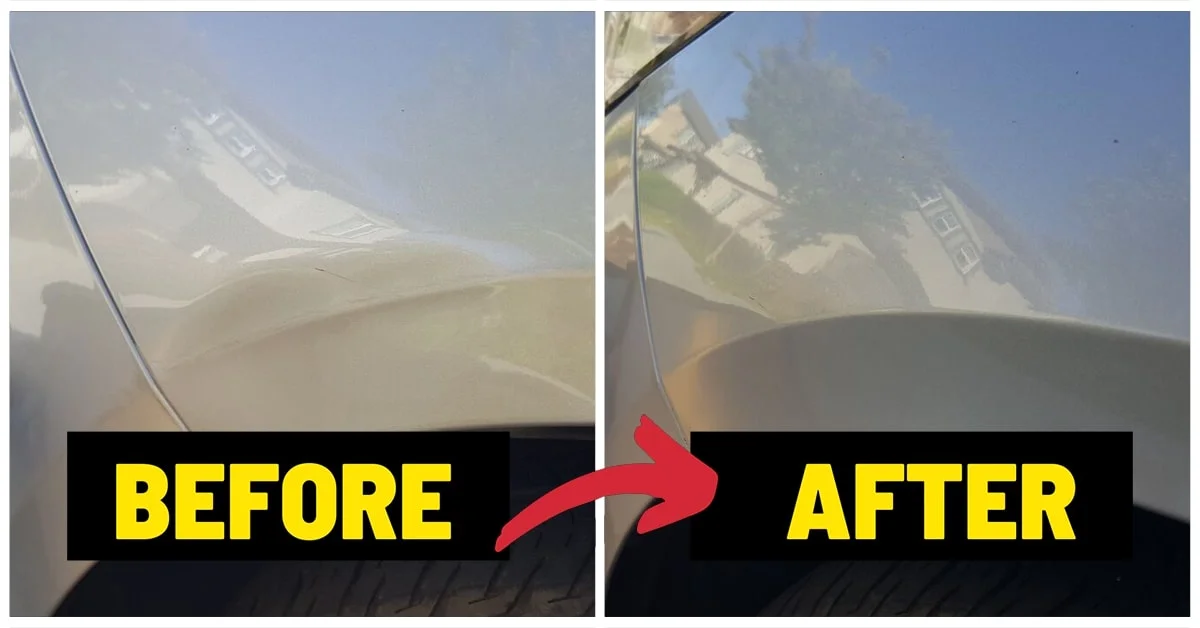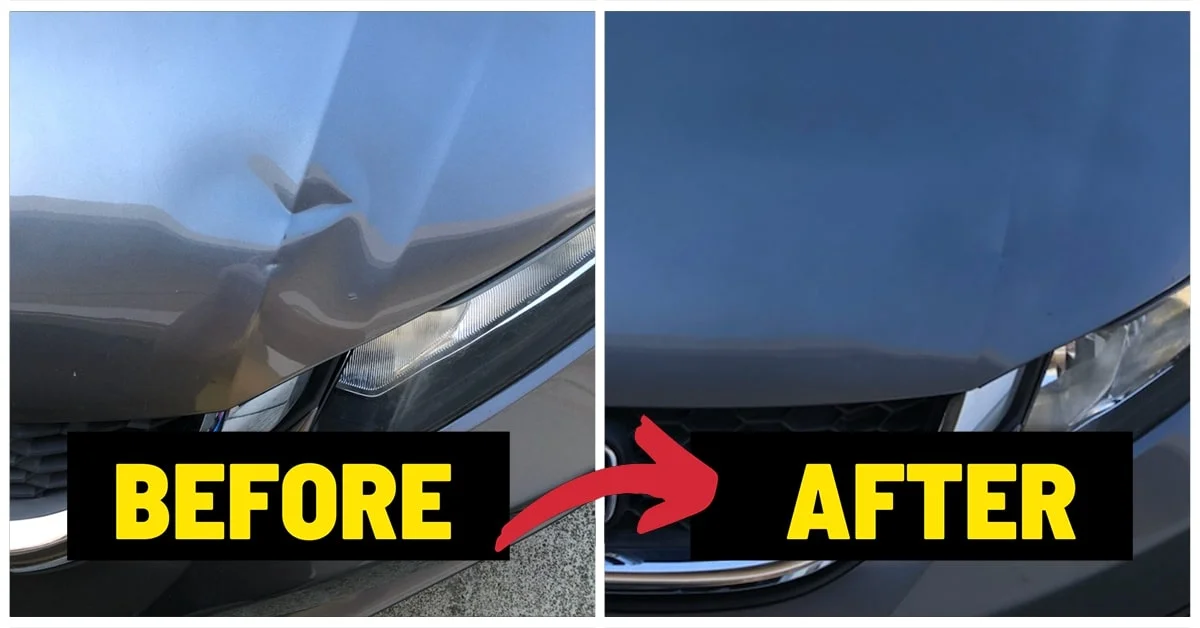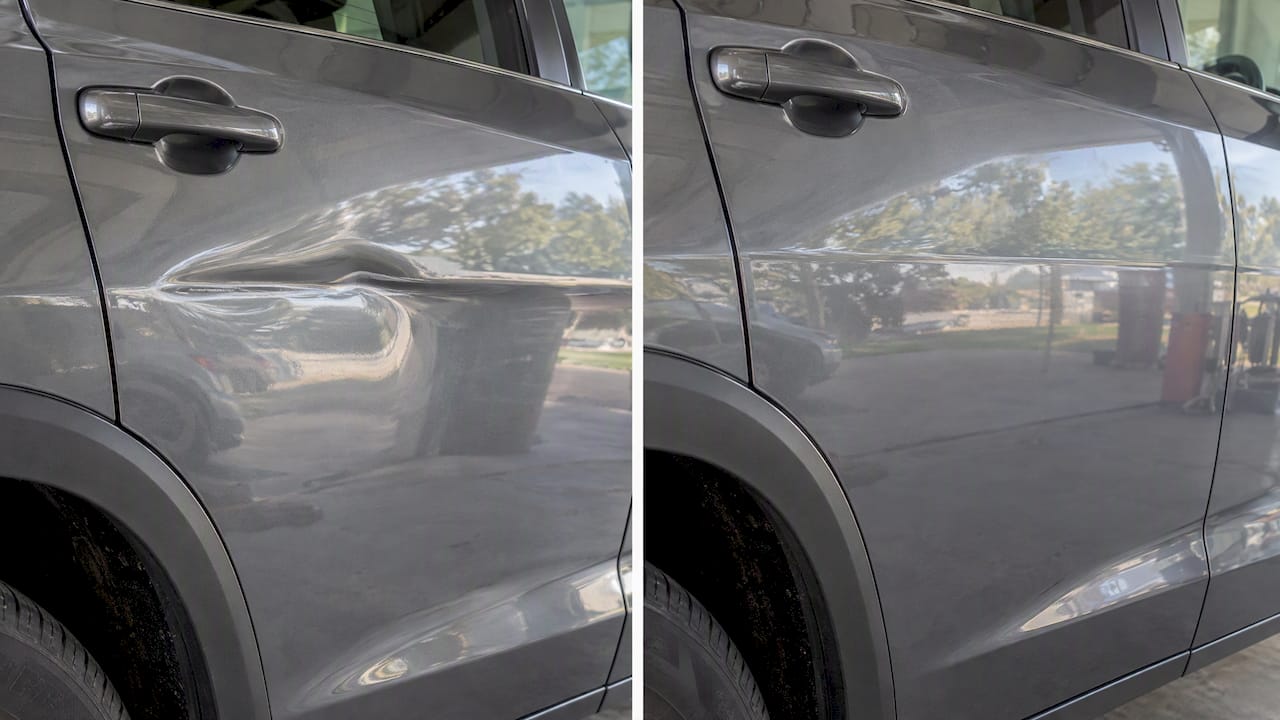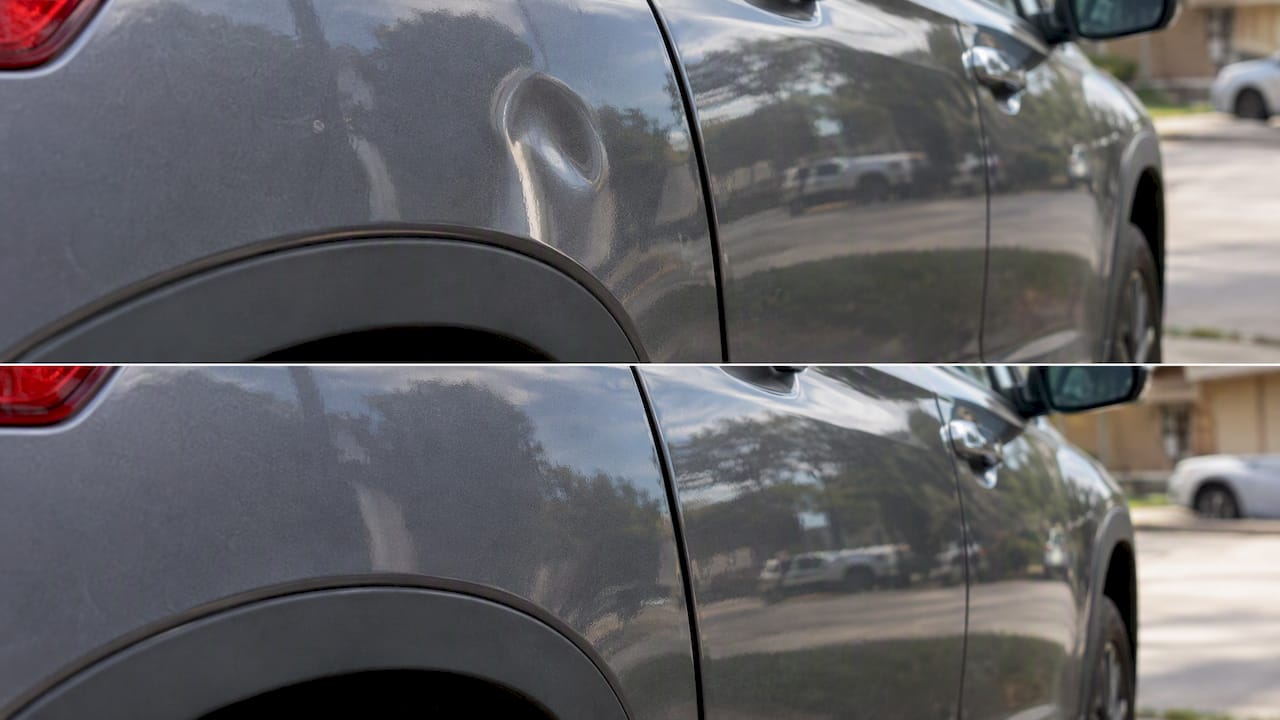
For a golf-ball-sized dent, paintless dent repair typically runs $150–$400, while traditional body and paint work runs $350–$1,000, depending on the panel and paint damage. If the paint is intact, paintless dent repair (PDR) is usually the best first option. If the paint is cracked, you’ll need standard body and paint work. Your final price depends on an inspection and, if you file a claim, your deductible.
TL;DR:
- Aluminum panels can raise repair costs by 30–50% over steel, while restricted access, body lines, and creases can add labor.
- With a $500 deductible, a $250 PDR quote leaves you paying out of pocket; a $1,000 conventional repair may yield about $500 in coverage.
- Get an indoor inspection under PDR lighting, then compare written quotes that list trim removal, paint, materials, extra charges, warranty, and turnaround.
- Cracked or flaking paint, severe creases, or inaccessible panels can rule out PDR, while aluminum requires a shop experienced with that metal.
- Comprehensive coverage may pay for noncollision damage after your deductible, but verify your policy and weigh possible premium effects before filing.
Table of Contents
- What does golf ball dent repair cost with PDR versus a body shop?
- Which details raise or lower your repair price?
- Should you pay out of pocket or file an insurance claim?
- How do you get an estimate you can actually compare?
- How long does the repair take?
- Why we recommend mobile PDR for most golf-ball dents
- Get a free mobile PDR quote from us
- FAQ
- Sources
What does golf ball dent repair cost with PDR versus a body shop?
Here is the straight answer for a medium, golf-ball-sized dent. PDR runs $150–$400 and a traditional body shop repair runs $350–$1,000. Smaller dime-to-quarter dings sit lower, at $75–$150 for PDR, and large or creased dents climb higher, so a golf-ball dent lands in the middle of the range.
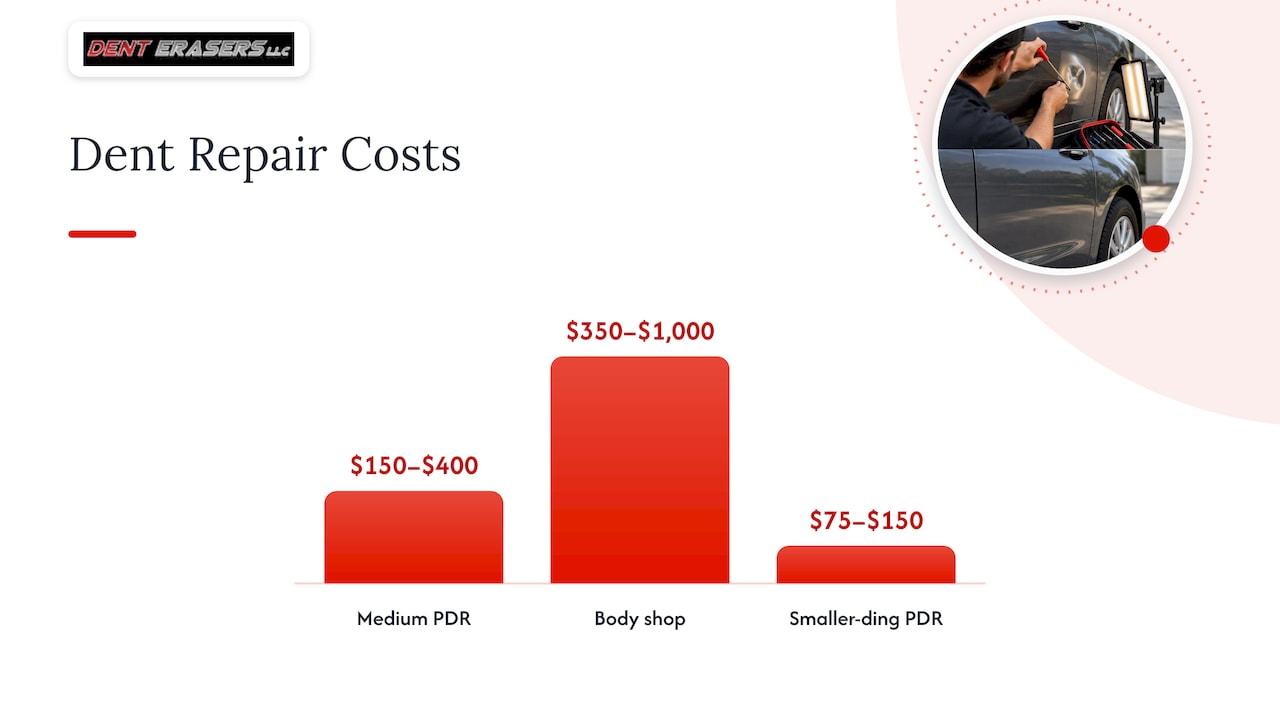
PDR costs less because the technician never touches your paint. We massage the metal back to its original shape from behind the panel, so there is no filler, no primer, no color matching and no booth time. You’re mostly paying for skilled labor.
A conventional repair stacks up several line items:
- Labor: sanding, shaping and finishing the panel, which takes far longer than a PDR pull.
- Materials: filler, primer, sandpaper and masking supplies.
- Paint and clearcoat: mixing a color match and blending it into the surrounding panel so the repair doesn’t show.
- Booth time and curing: the panel has to be sprayed in a controlled booth, then cured before it’s safe to touch.
Here is how that plays out in common situations, using the ranges above:
- Best case: a shallow, round dome with intact paint on an easy-to-reach door skin. PDR in the $150–$400 range handles it, and most of these land in the lower half.
- Borderline case: the same dent with a tiny paint chip at the center. Depending on the chip, you may be looking at touch-up work on top of the pull, or a small conventional repair near the lower end of the $350–$1,000 range.
- Worst case: cracked paint on a body line or a hard-to-reach panel. This needs filler, paint and often blending into the neighboring panel, which pushes you toward the top of the conventional range.
For a deeper look at the paint-and-body side of the budget, our guide to dent and paint repair costs walks through how those line items add up.
Which details raise or lower your repair price?
Two golf-ball dents can get very different quotes. The dent’s size matters, but location, accessibility and panel construction are equally critical, and an experienced technician can often tell in under two minutes whether PDR will work by checking those factors.
These are the details that move the price most:
- Panel location and access: if a technician has to remove an interior trim piece, a headliner section or a light to reach behind the dent, the removal and reinstallation (R&I) adds labor time. A door skin with open access costs less than a roof rail with a brace behind it.
- Paint condition: PDR needs intact clearcoat. A dent with cracked or flaking paint can’t be pulled cleanly without refinishing, so the job moves into body and paint pricing.
- Panel material: aluminum panels add roughly 30–50 percent to repair costs compared with steel, because the metal is less forgiving and takes more skill. Always confirm a shop actually works on aluminum before you book.
- Dent shape: a shallow dome is the easiest case. Creases and dents on a body line cost more because the metal is stretched and work-hardened, and it resists going back to shape.
- Line-item upcharges: common upcharges include exotic metals, large panels, double-panel work and body-line dents. If one quote has extras the others don’t, ask what each one covers.
Vehicle type matters too. Luxury, vintage and specialty vehicles often involve more delicate panels and tighter finish standards, and motorcycle tanks and fenders have their own access challenges. We handle all of these, but expect the quote to reflect that extra care.
Pro Tip: Take three photos before you call anyone: straight on, from a low angle, and from a high angle with a light reflecting across the dent. Those shots show the depth and any paint damage, which lets a shop give you a much tighter estimate.
Should you pay out of pocket or file an insurance claim?
Comprehensive auto insurance usually covers hail and other non-collision damage, minus your deductible. Comprehensive is optional in many states, so check your policy for both the coverage and the deductible amount before you decide anything.
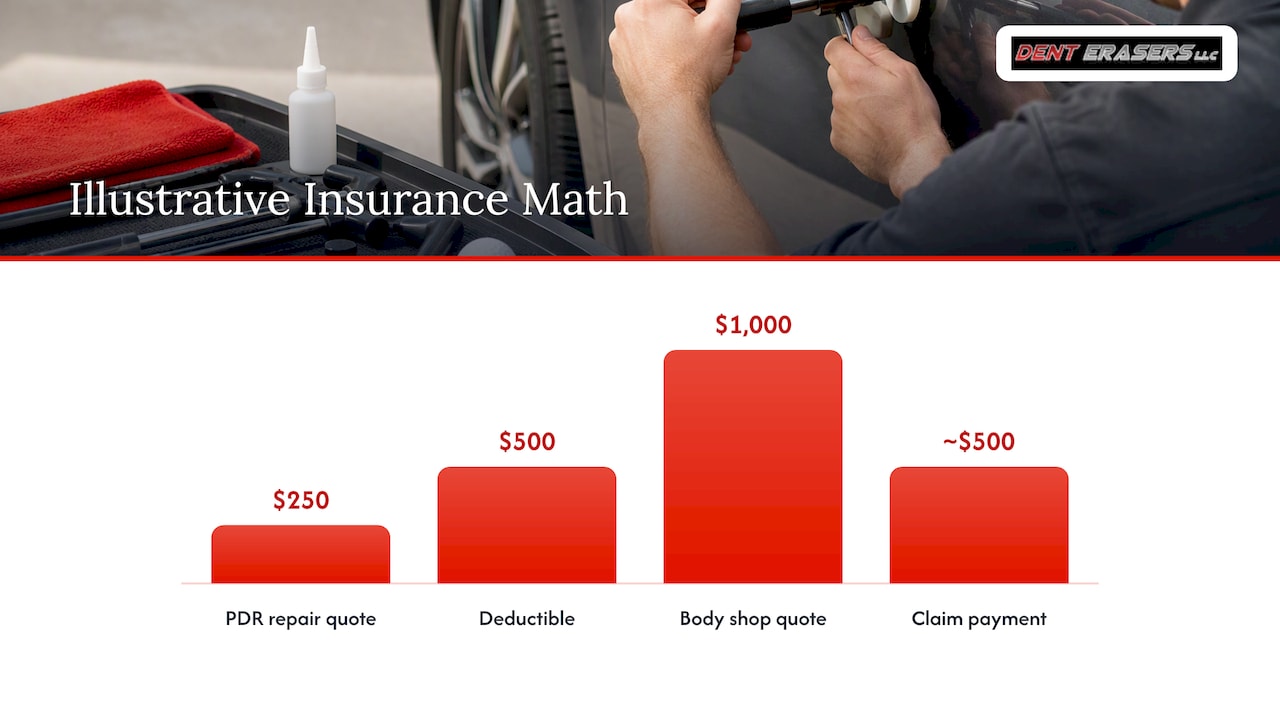
The math is usually simple. Say your deductible is $500 and a PDR repair is quoted at $250. Filing would pay you nothing, so you pay the shop directly. If instead a conventional repair were quoted at $1,000, a claim would cover about $500 after the deductible. These figures are illustrative, not market data, but the logic holds: when the repair cost is below or close to your deductible, paying yourself is almost always smarter.
A few more points to weigh:
- Premium impact: filing a comprehensive claim can affect your premiums, and small cosmetic repairs often fall below many deductibles anyway. Weigh the near-term savings against what a claim might cost you over the next few renewals.
- Documentation: insurers like GEICO may offer photo appraisals or mobile claims service, so you may not need an adjuster visit for a single dent.
- Repair choice: you generally get a say in who fixes your car, so ask your insurer whether PDR is an accepted option for your claim.
If you do file, we’re happy to help you work through the paperwork and provide the repair documentation your insurer asks for.
How do you get an estimate you can actually compare?
Quotes vary a lot, and the fix is to make them apples to apples. Pricing can differ by hundreds of dollars for identical damage, so a little preparation pays off. Follow these steps:
- Insist on an inspection under proper PDR lighting. An accurate PDR estimate requires an indoor inspection under PDR lights, where the technician can read the dent’s true size and depth. Our PDR checklist explains what that inspection looks like.
- Ask about your panel material. Confirm the shop handles aluminum if your dent is on an aluminum hood, door or fender.
- Ask whether R&I is included. A quote that skips trim removal can grow once work starts.
- Collect multiple quotes and compare line items: PDR labor, R&I, paint and materials, and any upcharges.
- Confirm warranty and turnaround in writing before you approve the work.
Mobile PDR deserves a spot on your list, since mobile services are frequently more cost-effective than dealership-based body shops. Our tips for choosing a PDR service cover what else to ask.
How long does the repair take?
PDR is fast. A medium dent may be finished in a relatively short time, and a mobile service can do that in your driveway or at your workplace, so you aren’t without your car for an extended period.
Conventional repairs generally take longer. The reason is the process: the panel is filled, sanded, primed, painted and clearcoated, and each coat needs time to cure before the next step. Rushing that sequence is how paint failures happen months later.
A mobile PDR visit follows a simple flow. We assess the dent on-site, complete the pull, check the finish under reflected light, and walk you through the result before we leave. Ask about any follow-up policy at booking so you know what to expect afterward.
If you’ve had paint work done and want to keep it looking sharp, a spray-and-rinse coating can help protect the finish between washes.
Why we recommend mobile PDR for most golf-ball dents
When the paint is intact, I send most owners toward paintless repair first. It keeps your factory finish, which no refinish can perfectly match, and it saves you the downtime of dropping the car at a shop for days. Mobile service takes the logistics off your plate as well.
An honest quote also takes eyes on the dent under PDR lighting. A photo can tell us a lot, but only an on-site look shows whether a faint crease or paint stress is hiding in the panel. That is why we insist on the inspection before promising a number. If you’d like a local, on-site estimate, we’re glad to come to you.
— Brian Blanc
Get a free mobile PDR quote from us
Ready for a real number? We offer mobile paintless dent repair, plus minor dent repair, large dent repair and specialty work, with free quotes. Our experienced team serves Contra Costa County and the surrounding region, and we’ll come to your home or office. Send us photos through our free dent quote page or book a mobile visit.
FAQ
Are dents expensive to fix?
Not usually, when the paint is intact. PDR for a golf-ball-sized dent typically runs $150–$400, while conventional body and paint repair costs more because of materials, paint and booth time.
What dents cannot be removed?
Dents with cracked or flaking paint, severely creased metal or no workable access behind the panel usually can’t be fixed with PDR alone. I-CAR guidance warns against drilling access holes or removing factory foam to reach a dent, since that can compromise structural integrity. A technician can often judge suitability in minutes.
How much will it cost to get a small dent out of a car?
Very small dime-to-quarter dings typically run $75–$150 with PDR. Location, access and panel material can move that number, so get a written estimate after an inspection.
Can I pull a dent out myself?
You can try, but results vary and a mistake can crack paint or stretch the metal, turning a PDR candidate into a body-shop job. Pulling a dent well takes tools and practice. A professional inspection costs little and tells you whether the dent is worth attempting.
Sources
- How Much Does Dent Repair Cost? 2026 Calculator + Real Data
- Car Dent Repair Cost in 2026: Real Ranges by Size, Panel, and Method | Dent Repair Cost Calculator
- Profit Center: Proper PDR Estimating
- Does insurance cover hail damage to cars? | American Family Insurance