The High Cost of Traditional Body Shop Dent and Paint Repair
When your car suffers a dent that breaks the paint barrier, a traditional auto body shop is usually your default destination. However, the average cost of traditional body shop repairs in 2026 can be a major source of sticker shock. According to recent data from the Car Dent Repair Cost: 2026 Averages, conventional bodywork is significantly more expensive because of the intensive multi-step process required to restore the panel.
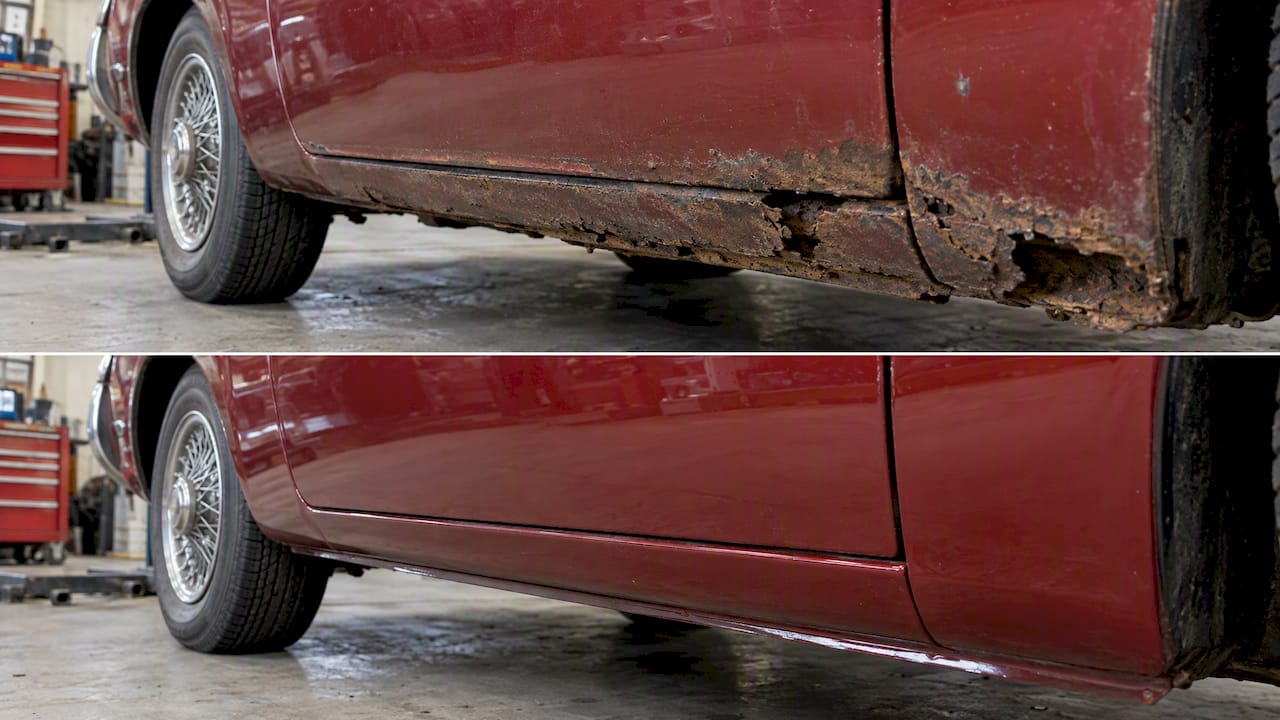
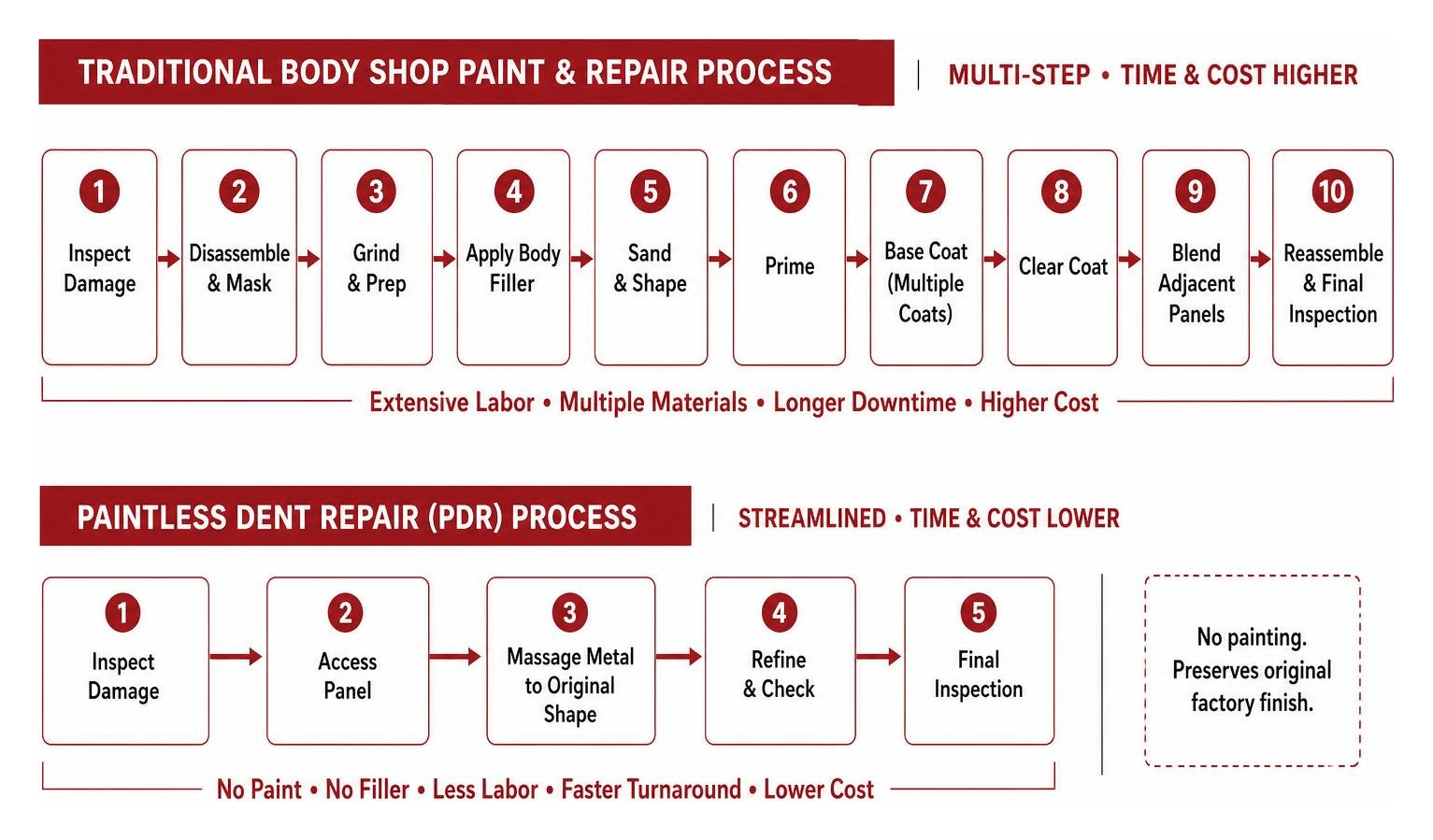
Traditional repair is not just about popping the metal back into place. A conventional body shop must grind down the area, apply heavy body filler (Bondo), sand it flat, apply primer, spray multiple coats of base paint, and finish with a protective clear coat. This process is incredibly labor-intensive, often requiring 8 to 20 hours of labor billed at rates ranging from $80 to $150 per hour.
Furthermore, to make the repair look seamless, painters cannot simply paint the small spot where the dent occurred. They must perform “paint blending,” which involves spraying the color onto adjacent undamaged panels to trick the eye into seeing an unbroken, uniform finish. This means a simple dent on a door can easily turn into a multi-panel respray project, rapidly escalating your final bill.
Why Traditional Body Shops Overcharge for Small Door Dings
It is incredibly frustrating to walk out to a parking lot in Concord or Walnut Creek and find a fresh door ding. If the paint is chipped, taking it to a traditional body shop often results in an inflated estimate.
Traditional shops have massive overhead costs, including expensive paint booths, heavy frame-pulling machinery, and administrative staff. Because of this, they rarely write estimates for small jobs that reflect the actual physical size of the damage. For a tiny door ding with broken paint, a traditional shop will still insist on stripping, priming, painting, and clear-coating the entire panel.
This is why a simple door ding that could have been a candidate for minor touch-up work can cost between $500 and $1,000 at a conventional collision center. When budgeting, understanding these small dent costs can prevent you from falling into the trap of paying for unnecessary, full-panel resprays.
The Steep Price of Traditional Repairs for Large Creased Dents
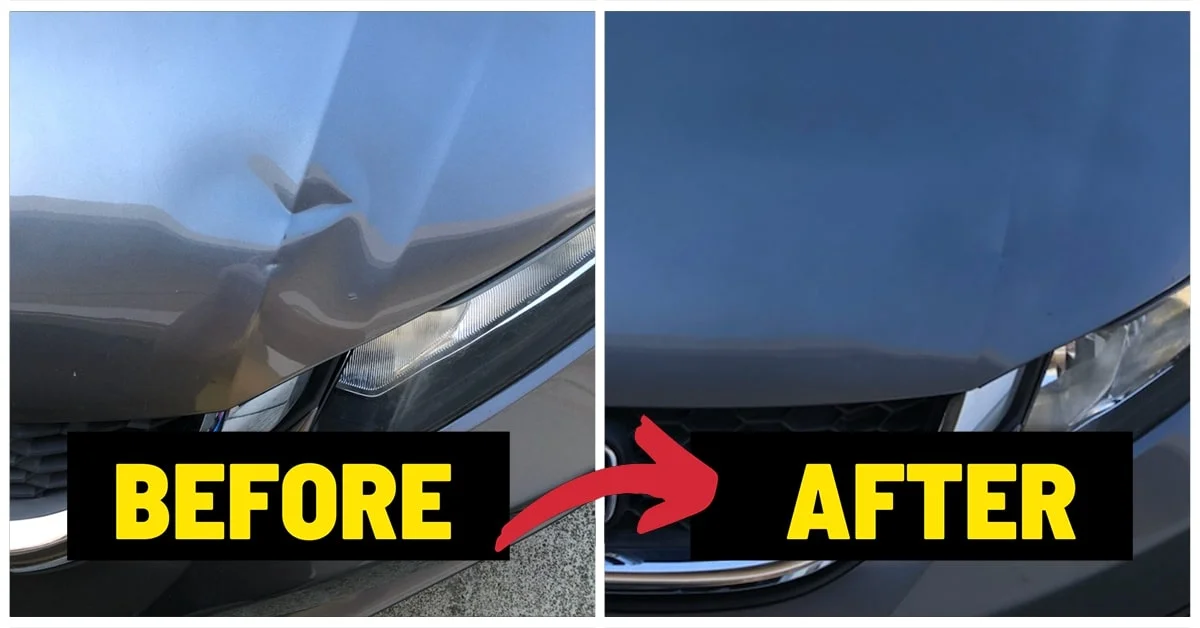
If your vehicle has a large, deep, or creased dent—perhaps from backing into a garbage can or a minor fender bender—the cost of traditional repair climbs even higher. Creased dents are notoriously difficult to repair because the metal has been stretched along a sharp line, losing its structural memory.
At a traditional body shop, repairing a large creased dent with paint damage typically runs between $1,200 and $2,500. The process requires extensive metal pulling, thick layers of body filler, and meticulous block sanding to recreate the vehicle’s original body lines. Once the metal is prepped, the shop must paint and blend multiple contiguous panels to ensure there are no visible paint lines.
This level of reconstruction takes days, leaving you without your vehicle and racking up hundreds of dollars in labor fees.
Why Paintless Dent Repair (PDR) is the Smarter Choice Over Traditional Paint Repair
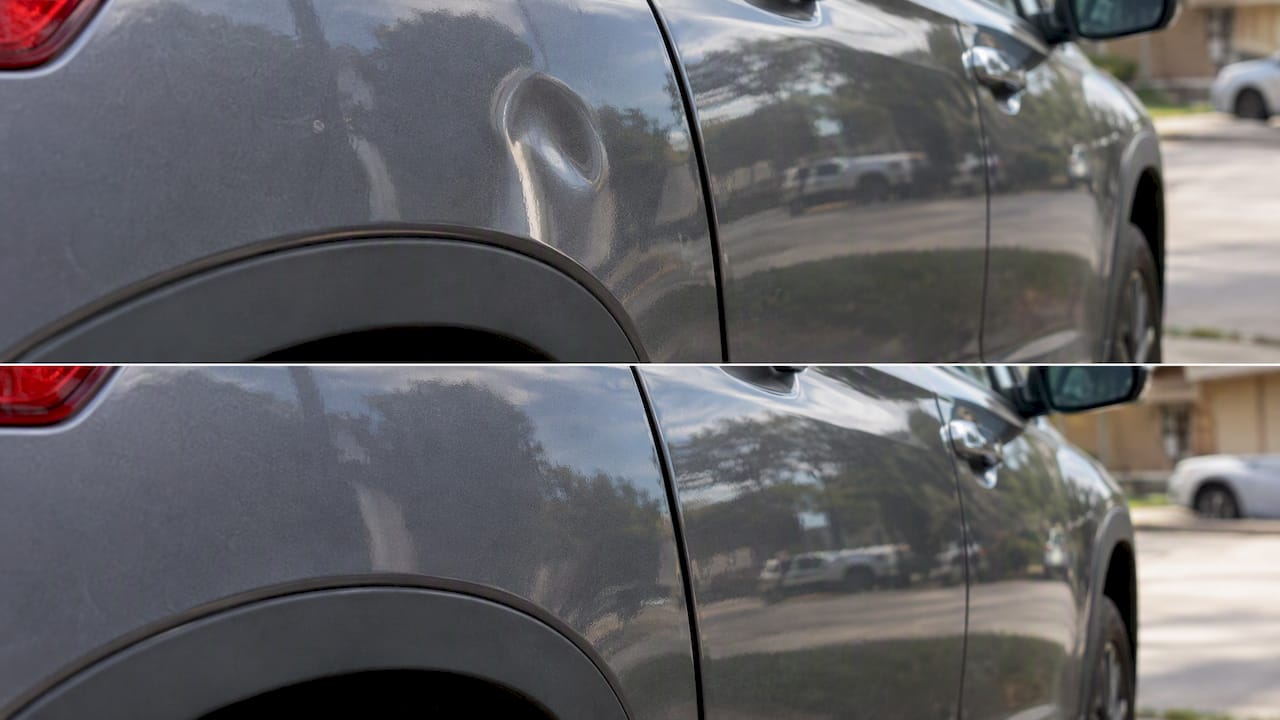
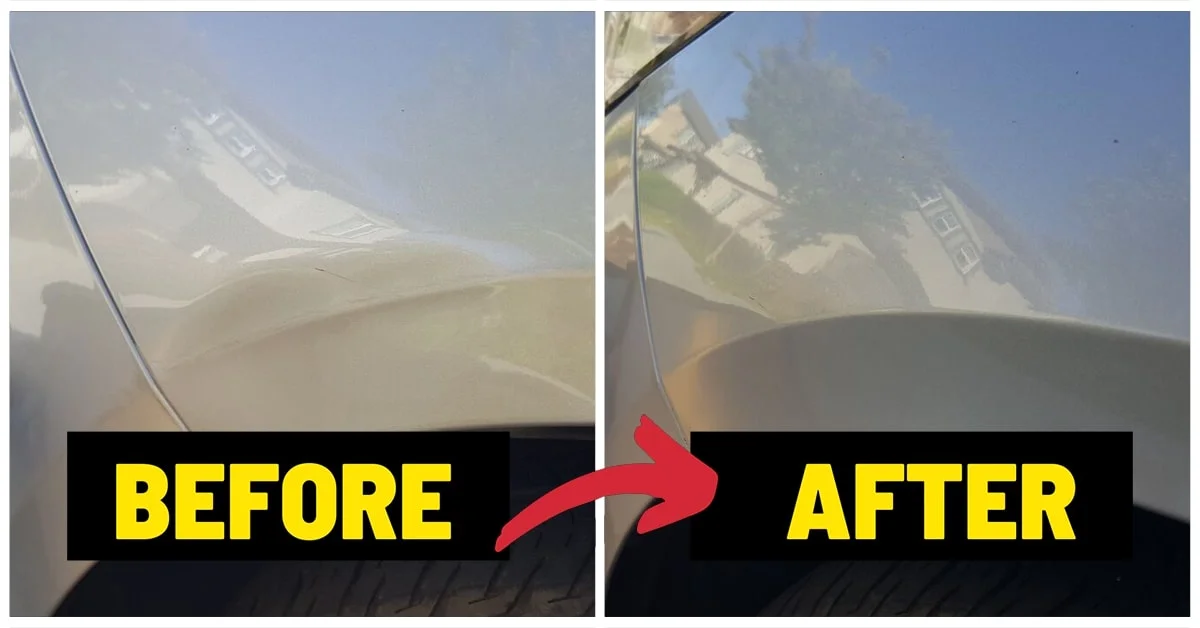
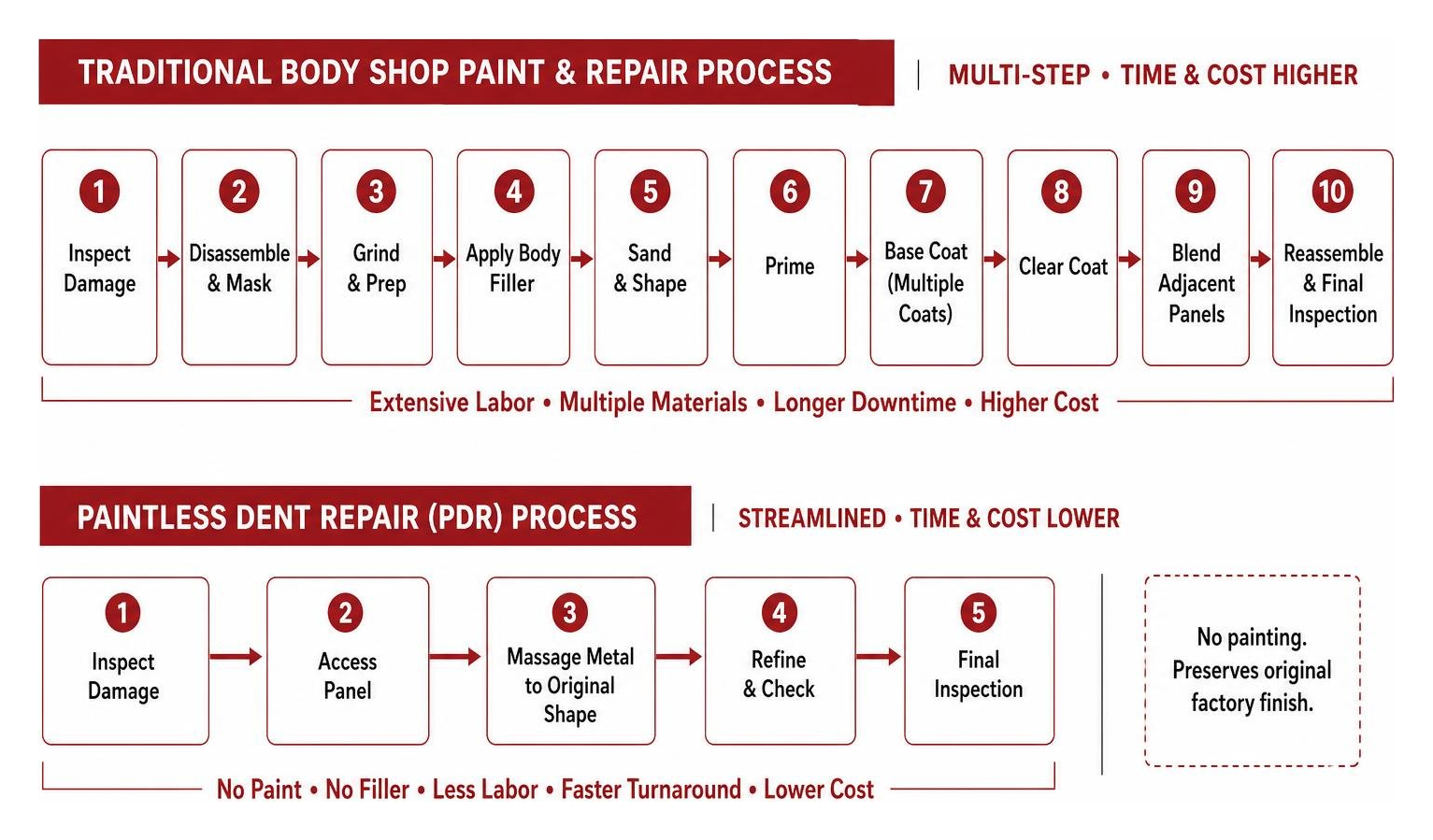
If the paint on your vehicle is still fully intact, traditional bodywork is rarely the best path forward. Paintless Dent Repair (PDR) is a highly specialized craft where technicians use custom-designed metal rods and LED reflection boards to access the backside of the damaged panel. By applying precise, microscopic pressure, we meticulously massage the metal back to its original factory shape without using a single drop of body filler or aftermarket paint.

When we compare PDR to traditional body shops, the choice is clear for any paint-intact dent:
| Feature | Paintless Dent Repair (PDR) | Traditional Body Shop |
|---|---|---|
| Average Cost | $150 – $500 (50-70% cheaper) | $500 – $2,500+ |
| Turnaround Time | 1 to 3 hours (often mobile) | 3 to 10 business days |
| Vehicle Paint | Preserves 100% original factory paint | Shaved, filled, and repainted |
| Carfax Impact | None (no insurance report required) | Permanent entry (lowers resale value) |
| Materials Used | None (eco-friendly) | Fillers, primers, waterborne paints, solvents |
Choosing PDR is one of the cheapest ways to fix a car dent while maintaining the highest possible quality. Because we do not need to purchase expensive OEM paints or spend hours sanding and curing clear coats, we pass those massive savings directly onto you.
Key Factors That Influence Your Repair Bill
When estimating the cost to fix dent and paint damage, several variables can push your quote up or down. Understanding how these factors work will help you anticipate the final price before you even contact a technician:
- Dent Size and Depth: A shallow, round dent is much easier to massage out than a deep, sharp impact. Deep dents stretch the metal, requiring significantly more time and precision to correct.
- Proximity to Body Lines: Dents that cross a sharp body line or style curve are structurally complex. Because the metal is stiffer along these creases, repairing a dent on a body line typically carries a 25% to 40% price premium.
- Access and Location: To perform PDR, we must get behind the dent. If a dent is located on a double-walled roof panel, inside a door with restricted window glass access, or behind thick structural bracing, we must use specialized glue-pulling methods. Glue pulling involves bonding specialized tabs to the exterior paint and pulling the dent outward, which adds roughly 30% to the labor cost due to the complexity of the process.
- Paint Type: If you do require traditional paint work, the type of paint on your vehicle matters. Standard single-stage colors are the most affordable, while modern tri-coat pearlescent finishes, metallic flakes, and matte paints require specialized blending and can add thousands to a repaint bill.
For a deeper dive into how these elements interact, check out our comprehensive guide on auto body repair costs.
Panel Material: Aluminum vs. Steel
Many modern vehicles—including newer Ford F-150s, Teslas, and European luxury cars—feature aluminum body panels instead of traditional steel. While aluminum is lighter and rust-resistant, it is a much harder metal to repair.
Unlike steel, aluminum does not have “metal memory” and work-hardens rapidly when deformed. This means that when aluminum gets dented, it becomes incredibly stiff and resistant to reshaping. Repairing an aluminum panel requires specialized heat-assist tools, high-strength glue pulling setups, and a highly experienced technician. Because of these technical challenges, aluminum panel repairs carry a 30% to 50% cost premium over standard steel panels.
Insurance Claims vs. Out-of-Pocket and Resale Value
When faced with a hefty repair bill, many drivers immediately think of filing an insurance claim. However, the math behind insurance deductibles and long-term premium hikes requires careful consideration.
If your repair estimate is under $1,000, paying out of pocket is almost always the smarter financial decision. Most drivers carry a $500 or $1,000 deductible. If you file a collision claim for an $800 repair with a $500 deductible, your insurance company only pays $300. In exchange for that small payout, you risk a permanent entry on your vehicle’s Carfax report and an average insurance premium hike of $200 to $400 per year for three to five years.
Furthermore, any traditional paint repair at a body shop is logged on vehicle history databases. When you go to sell or trade in your car, dealers use paint depth gauges to detect aftermarket paint. A body-shop repaint typically lowers the trade-in or private-sale value of a mainstream car by 5% to 15%, and a luxury or sports car by 10% to 25%.
To calculate your exact repair scenarios, you can use the Body Shop Repair Cost Calculator to compare traditional collision costs against out-of-pocket rates. For more tips on navigating the shop experience, read our guide on car dent scratch repair cost.
The Hidden Risks of DIY Dent Repair Kits
It is incredibly tempting to jump online and buy a $30 DIY suction cup or hot-glue dent puller kit to save a buck. However, these retail kits carry massive risks that frequently turn a minor fix into an expensive nightmare.
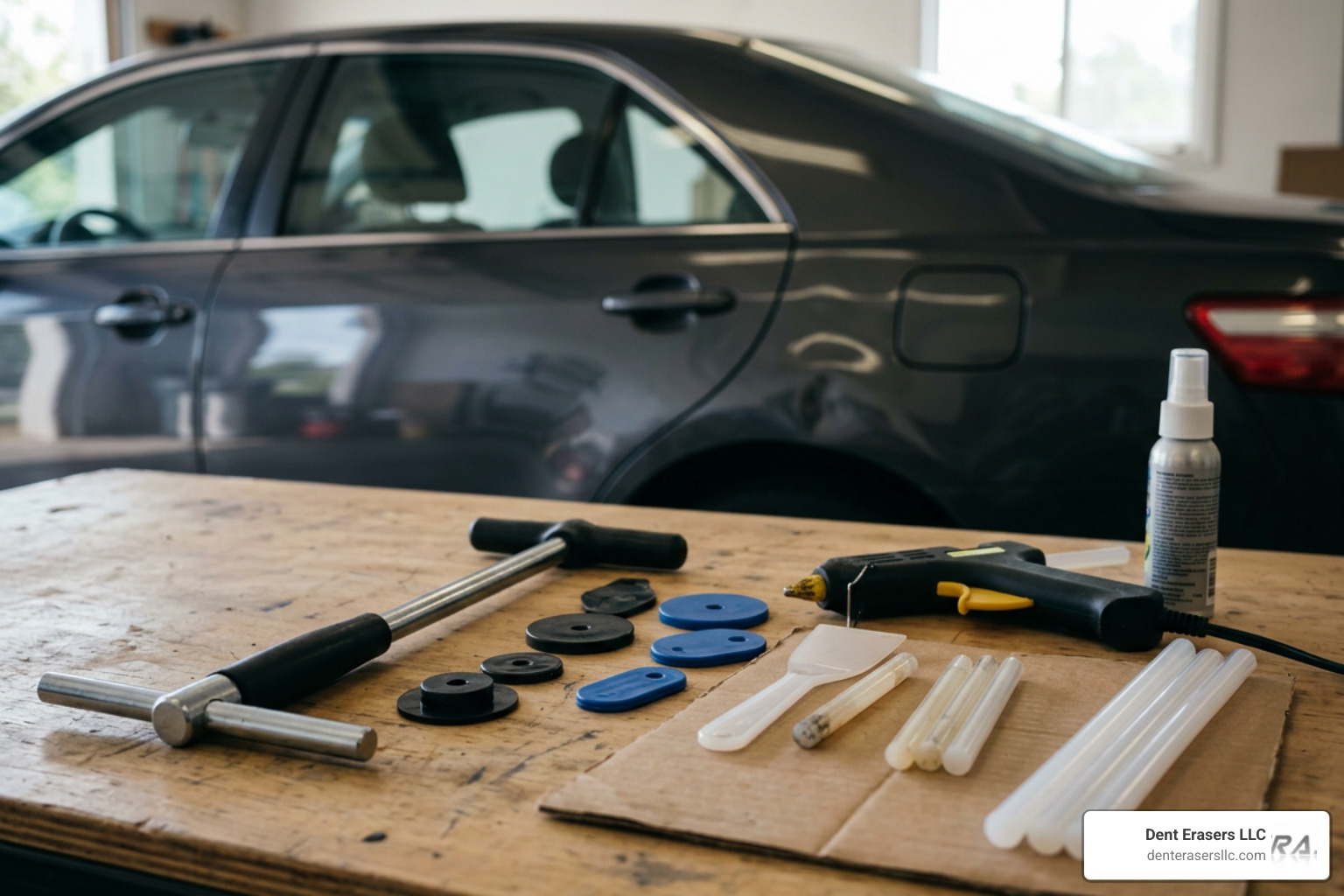
Professional PDR is a precision craft that requires years of daily practice to master. When an untrained driver attempts to use a DIY slide hammer or glue gun, they almost always make one of two critical mistakes:
- Over-pulling (Creating “Highs”): Without professional LED reflection lights to read the metal, DIYers often pull the metal too far outward, creating sharp “high spots” or pimples. Stretched metal cannot easily be pushed back down, making subsequent professional PDR nearly impossible.
- Cracking the Paint: Cheap DIY glues and aggressive pulling can easily rip the clear coat and paint right off the metal. The moment your paint cracks, a simple $150 PDR job instantly escalates into a $700 traditional body shop repaint.
In our experience across Contra Costa County, we regularly receive calls from frustrated car owners who tried a DIY kit, failed, and ended up paying double to have us correct the stretched metal and damaged paint.
Frequently Asked Questions about Dent and Paint Repair
Can a dent with chipped paint be fixed with PDR?
If the paint inside your dent is cracked, chipped, or peeling, PDR cannot restore the paint itself. However, we often perform what the industry calls a “hybrid repair” or “push-to-paint.”
In this process, we use PDR to massage the metal 95% of the way back to flat, minimizing the need for thick, unstable body fillers. Afterward, the minor paint chip can be carefully touched up or blended. Addressing paint chips quickly is crucial, as exposed bare metal will rapidly begin to rust when exposed to the elements, leading to bubbling and widespread paint failure.
How can I get an accurate estimate for dent repair with paint without visiting a shop?
You don’t need to waste your afternoon driving to a brick-and-mortar shop in Concord or Richmond just to get a quote. You can easily get an accurate remote estimate by taking high-quality photos on your phone.
For the best results, wash the vehicle first. Take your photos outdoors in indirect daylight (avoid harsh direct sunlight or dark parking garages). Stand at a 45-degree angle to the dent rather than looking straight at it, allowing the natural light reflection to reveal the true depth and shape of the damage. For scale, hold a coin or your finger next to the dent.
Does repairing a dent with paint affect my vehicle’s Carfax report?
If you pay for a paint-intact PDR repair out of pocket, it will never show up on a Carfax report. Because no insurance claim is filed and no paint is sprayed, your vehicle’s history remains completely clean, preserving its maximum resale value.
On the other hand, if a traditional body shop repaints a panel and bills it through your insurance, a permanent “damage reported” entry will be added to your Carfax, which can cost you thousands in diminished value when it’s time to trade the vehicle in.
Conclusion
Navigating the cost to fix dent and paint damage doesn’t have to be a stressful or overpriced experience. By understanding the critical difference between paint-intact damage and cracked paint, you can make the smartest financial decision for your vehicle and your wallet.
At Dent Erasers LLC, we specialize in high-quality, mobile paintless dent repair across Concord, Antioch, Walnut Creek, San Ramon, and the surrounding East Bay communities. Our expert mobile technicians come directly to your home or office, restoring your car, motorcycle, or luxury vehicle to its original factory finish in just a few hours—all while preserving your original paint and keeping costs highly affordable ($150 to $500).
Before you commit to a multi-day stay and a massive bill at a traditional collision center, contact us to see if your vehicle is a candidate for our expert mobile paintless dent repair services. Send us a photo of your dent today, and let’s get your car looking brand new again!