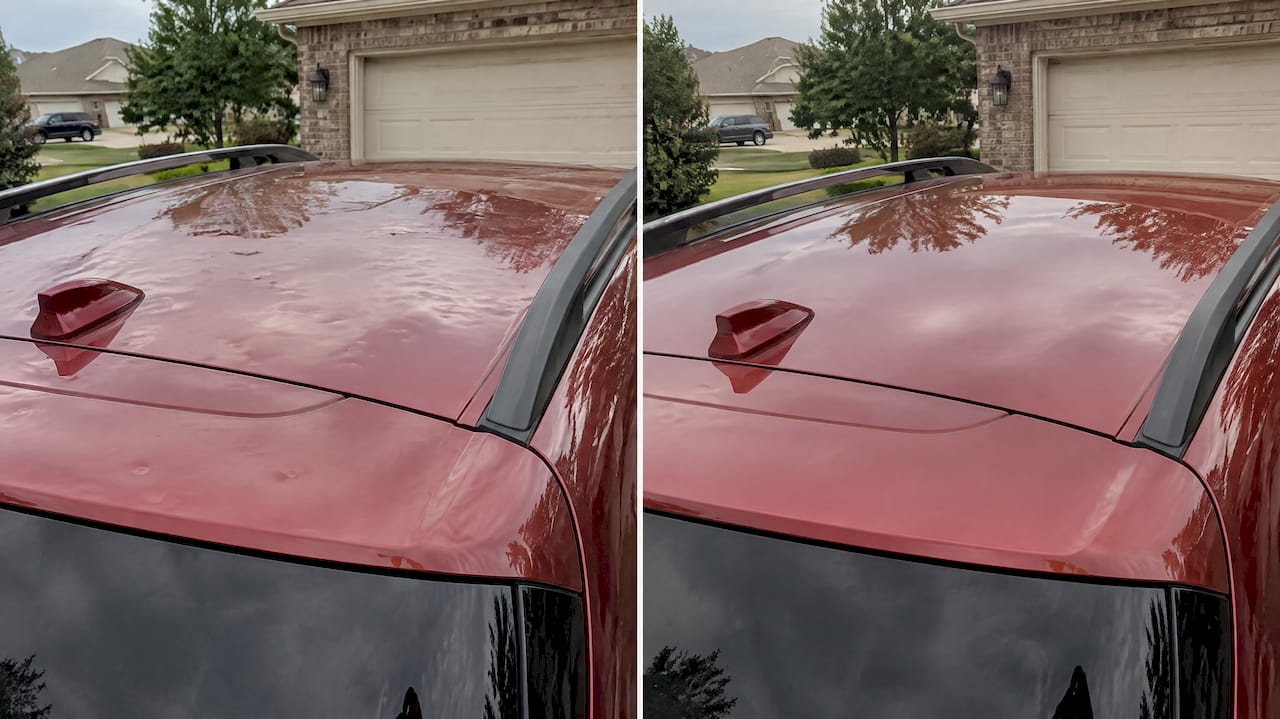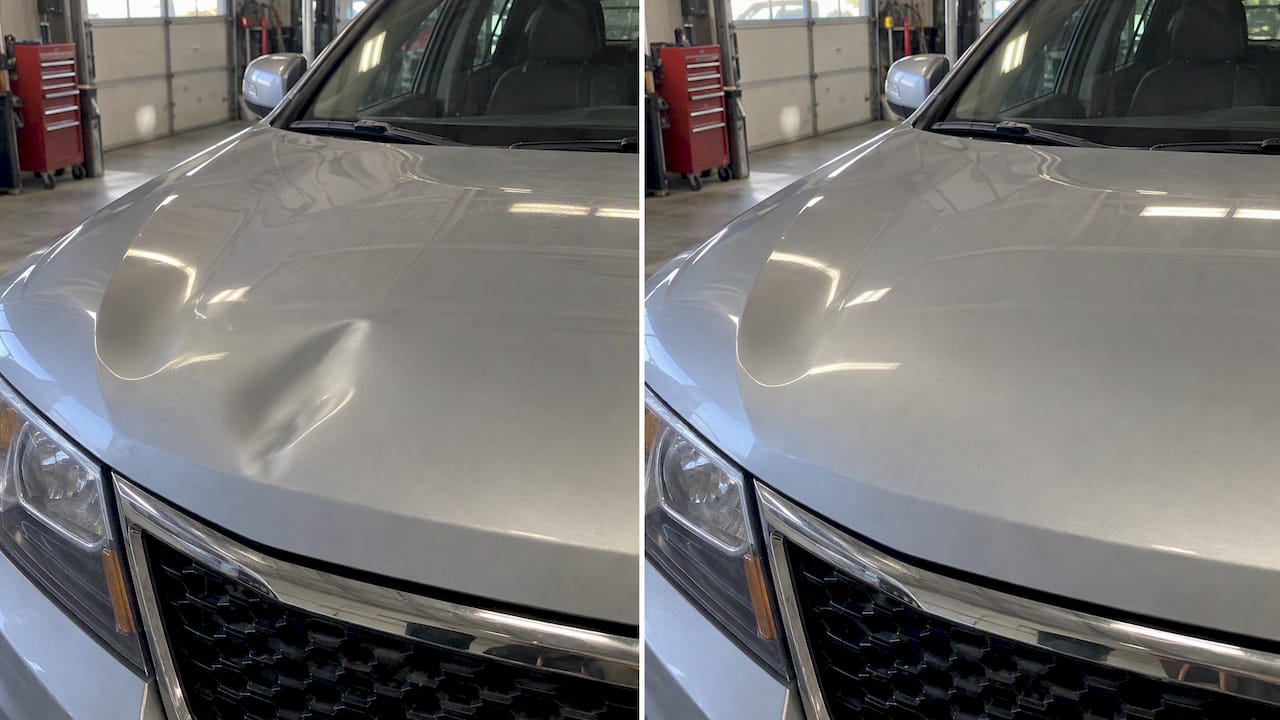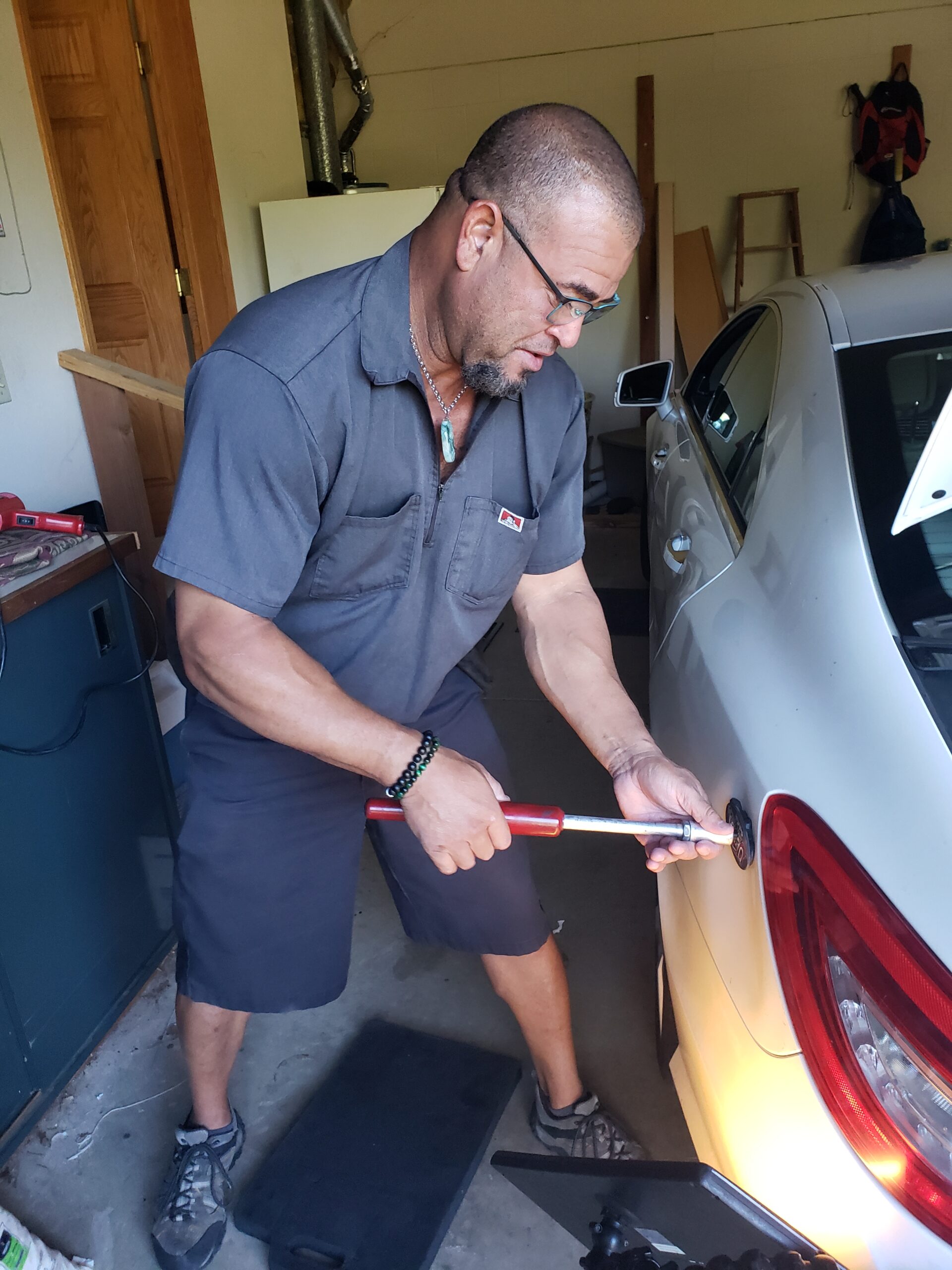
A hotel parking dent repair service is an on-site or mobile solution that restores minor dents and door dings caused in hotel parking lots using paintless dent repair (PDR), the industry’s standard method for preserving factory paint while removing shallow dents without fillers or repainting. PDR technicians use specialized metal rods and body picks to gently massage the steel back to its original shape from behind the panel. The result is a repair that preserves your factory finish and costs a fraction of traditional body shop work. For busy car owners, this means getting a professional fix in a hotel parking lot, airport garage, or workplace lot without losing a day to a repair shop.
What types of dents qualify for hotel parking dent repair?
Not every dent is a PDR candidate, and knowing the difference before you book saves time and money. The Hendrick Autoguard PDR program defines eligibility clearly: covered dents are minor, located on vertical painted panels, and measure under 4 inches in diameter. That standard reflects what the PDR method can physically accomplish.
Dents that typically qualify:
- Door dings from neighboring car doors
- Small round or oval dents under 4 inches
- Shallow creases with no paint cracking
- Minor parking garage contact dents on doors or fenders
Dents that do not qualify:
- Sharp creases where the metal is work-hardened
- Any dent with chipped, cracked, or missing paint
- Large dents exceeding 4 inches
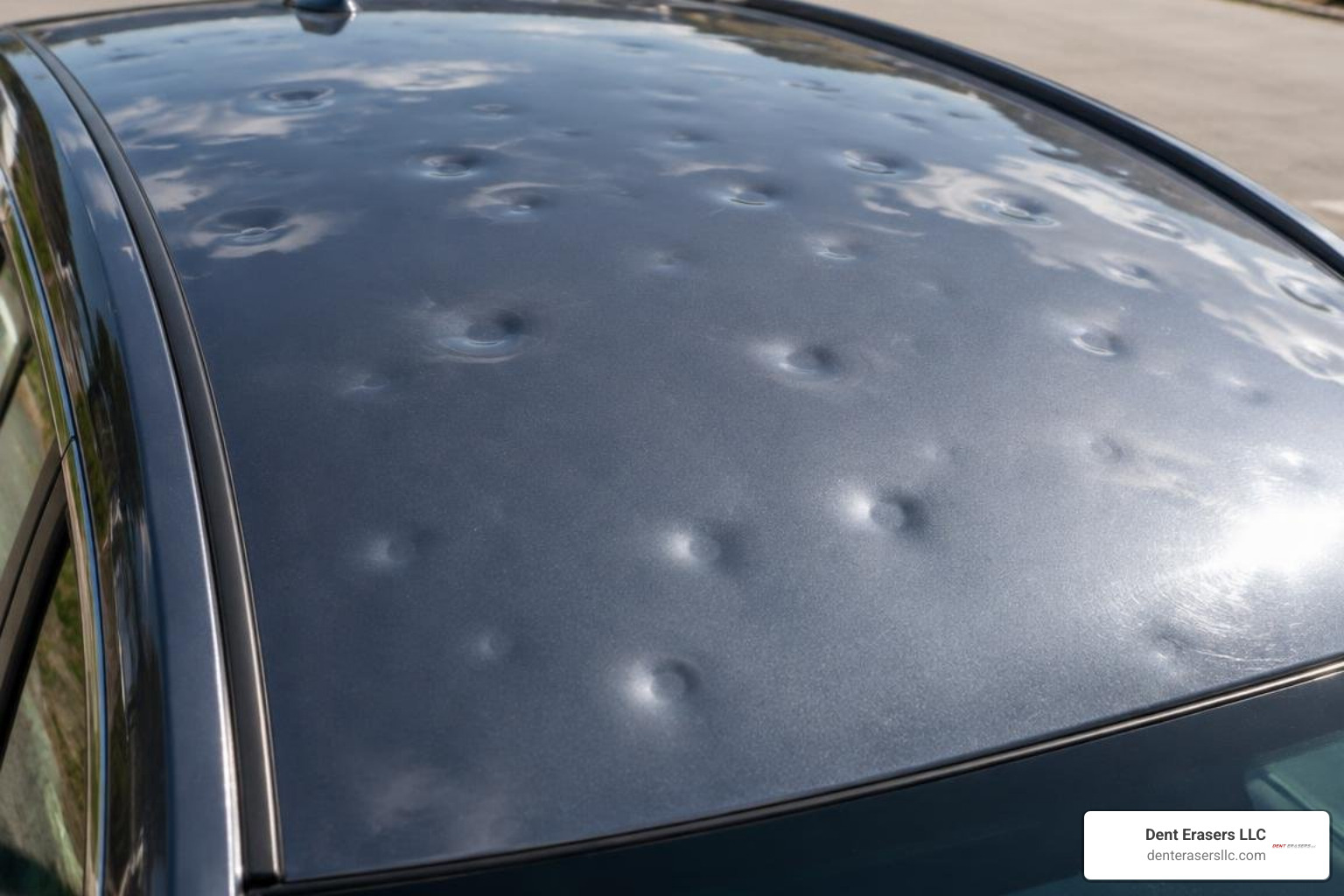
- Hail damage clusters (which require a separate hail repair program)
PDR works because steel has metal memory. When a dent is shallow and the paint is intact, a technician can coax the metal back without breaking the paint bond. Once paint cracks or the metal is severely creased, that memory is gone and traditional body filler becomes necessary.
Pro Tip: Before calling a technician, run your fingernail lightly across the dent. If you feel a sharp ridge or the paint flakes, PDR likely will not work. If the surface feels smooth and the paint is intact, you are probably a good candidate.
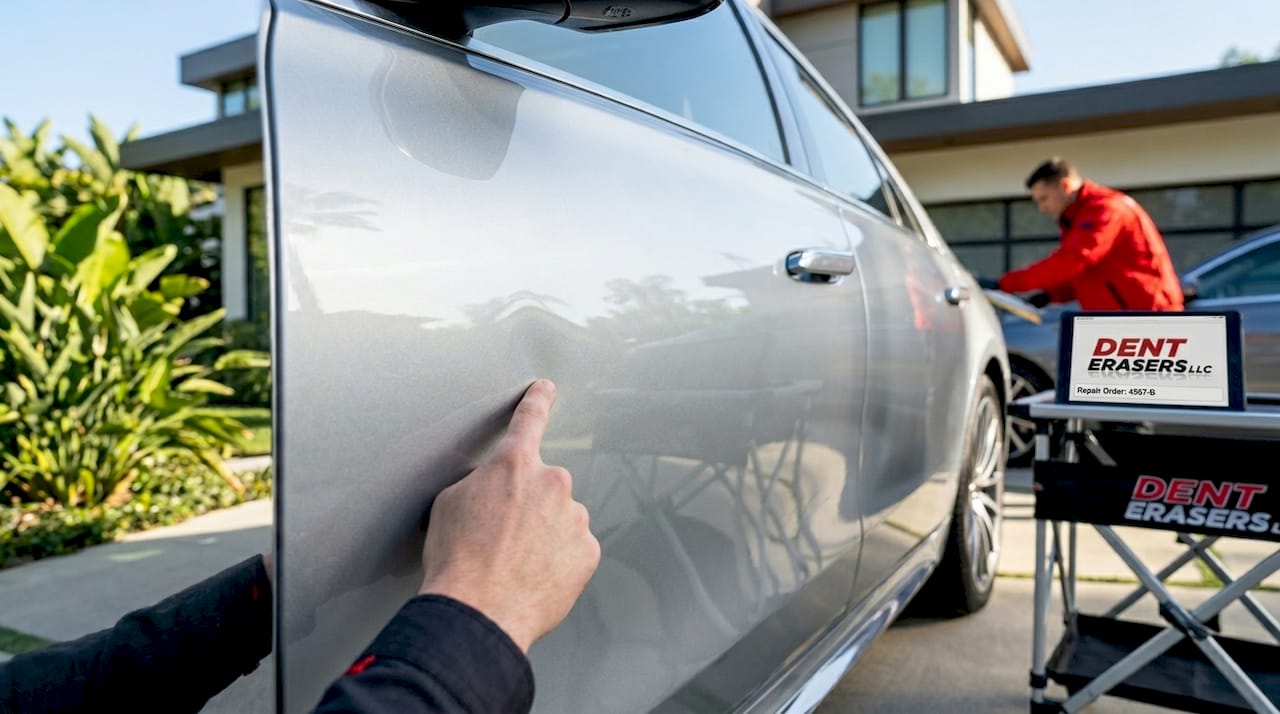
How to document a dent you find in hotel parking
Speed matters when you discover damage. The first 15 minutes after finding a dent in a hotel parking lot are your most valuable window for collecting evidence that protects your insurance claim.
- Photograph immediately. Take photos from at least four angles, including a wide shot showing the car’s location in the lot and close-ups of the dent itself. Capture any paint transfer from the other vehicle.
- Record a short video. A 30-second walkthrough video establishes context that photos alone cannot.
- Note the time, date, and parking spot number. Write it down or type it into your phone’s notes app right away.
- Look for witnesses. Hotel staff, valets, or other guests nearby may have seen the incident. Collect names and contact numbers.
- Locate the responsible vehicle. If the other car is still parked nearby, photograph its license plate, make, model, and any visible damage on its door edge.
- Report to hotel management. Ask whether the lot has security cameras and request that footage be preserved before it is overwritten.
- File a police report if the driver left. For hit-and-run situations, a police report is often required by insurers to process a claim without penalizing you.
“Identifying and reporting the other driver’s insurance can make the claim not-at-fault, which likely waives your deductible entirely.” — Insurance Bureau of Canada
Pro Tip: Apps like Evernote or Google Keep let you create a timestamped incident note with photos attached. That single file becomes your complete record if an insurer or attorney asks for documentation later.
How to choose and schedule a parking lot dent repair provider
The PDR industry has no universal licensing requirement, which means quality varies widely. Choosing the wrong technician can leave you with a repair that looks worse than the original dent.
| Factor | What to look for |
|---|---|
| Certification | PDR technicians trained through recognized programs like NAPDRT or manufacturer-certified courses |
| Reviews | Consistent 4.5-star or higher ratings with specific mentions of clean, paint-safe repairs |
| Mobile availability | Confirmed ability to come to your hotel, airport garage, or workplace parking lot |
| Warranty | Written guarantee covering the specific repair, not just a verbal promise |
| Estimate process | Photo-based or in-person estimate before any work begins |
Certified PDR technicians apply manufacturer standards to safely work on external sheet metal, which matters especially on aluminum-intensive vehicles like late-model Ford F-150s or BMW 5 Series models. Aluminum behaves differently than steel under PDR tools, and an inexperienced technician can crack the panel.
Mobile dent repair services have become the preferred choice for busy professionals because the technician comes to you. Most repairs are completed within a few hours at your location, which means no rental car, no shop drop-off, and no disruption to your schedule. For airport parking dent repair booking or workplace parking lot dent service, this model is particularly practical.
DIY dent repair kits sold online are tempting but risky. Pulling tools and glue tabs can stretch the metal unevenly, creating a high spot that is harder to fix than the original dent. Professional PDR is almost always the better investment.
What happens during an onsite paintless dent repair visit
Understanding the repair sequence helps you set realistic expectations and prepare your vehicle properly.
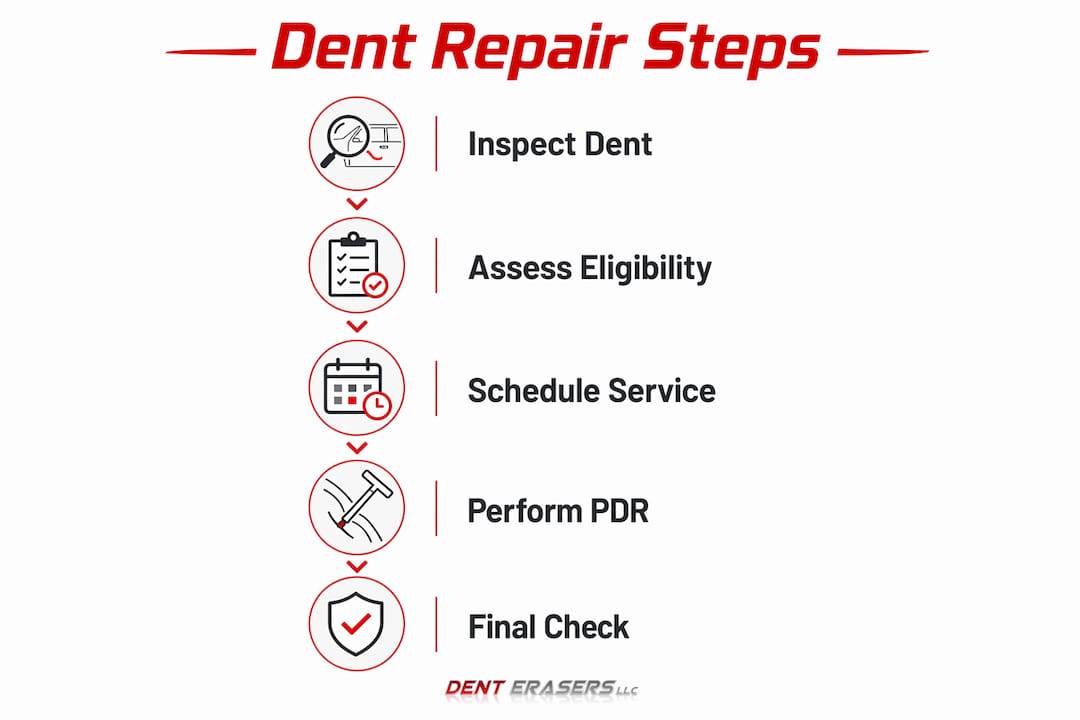
- Initial assessment. The technician examines the dent under a specialized light board or reflection panel to map its exact depth and edges.
- Access point identification. The technician determines the best entry point behind the panel, which may require removing a door panel, tail light, or inner trim piece.
- Tool application. Using body picks and metal rods, the technician applies gradual pressure from behind the dent, working from the outer edges inward to avoid overpushing the center.
- Tap-down finishing. A small knock-down tool taps any high spots on the paint surface to level the repair.
- Final inspection. The technician re-examines the panel under the light board to confirm the surface is flat and the paint is undisturbed.
PDR repair times typically range from 30 minutes to a few hours depending on dent size and panel access. A traditional body shop doing the same repair with filler and paint could take two to three days. That time difference is the core reason PDR dominates parking garage dent repair access situations.
Pro Tip: Clean the dented panel before the technician arrives. Dirt and wax residue can interfere with the light board reflection the technician uses to guide the repair. A quick wipe-down with a microfiber cloth takes two minutes and helps the tech work faster.
How insurance and repair costs work for hotel parking dents
Insurance decisions around minor parking lot dents are more nuanced than most car owners realize. The right move depends on the repair cost relative to your deductible.
- If the repair cost is below your deductible, paying out of pocket is almost always smarter. Filing a claim for a $200 repair against a $500 deductible gains you nothing and may affect your premium.
- If the other driver is identified, reporting their insurance to your insurer can result in a not-at-fault claim, which typically waives your deductible entirely.
- For hit-and-run damage, file a police report first. Many insurers require this documentation before processing a comprehensive claim without a deductible penalty.
“If damage is below your deductible, a formal claim may be unnecessary. Report damage when the responsible party is identified to protect your not-at-fault status.” — Insurance Bureau of Canada
PDR pricing is significantly lower than traditional auto body repair because there is no repainting, no filler material, and no multi-day labor involved. Even small unrepaired dents can reduce a vehicle’s resale value, making timely PDR a sound financial decision beyond just aesthetics.
| Repair scenario | Typical cost range | Insurance relevance |
|---|---|---|
| Small door ding, PDR | $75 to $150 | Often below deductible; pay out of pocket |
| Medium dent under 4 inches, PDR | $150 to $300 | Compare to deductible before filing |
| Dent with paint damage, traditional | $400 to $900 | File claim if other driver identified |
Benefits of Choosing Mobile PDR for Hotel Parking Dents
A hotel parking dent repair service using PDR is the fastest, most cost-effective way to restore minor parking lot dents while keeping your factory paint intact.
| Point | Details |
|---|---|
| PDR eligibility is specific | Dents must be under 4 inches, paint-intact, and on vertical panels to qualify for paintless repair. |
| Document immediately | Photos, video, and witness info collected within minutes of discovery protect your insurance claim. |
| Mobile PDR saves time | On-site technicians complete most repairs in under a few hours, eliminating shop drop-offs. |
| Insurance math matters | Compare repair cost to your deductible before filing; identified drivers can waive your deductible. |
| Certified technicians reduce risk | Manufacturer-trained PDR techs protect your paint and panel integrity on all vehicle types. |
Why mobile PDR changed how I think about hotel parking damage
I have been doing paintless dent repair in Contra Costa County for years, and the calls I get most often follow a familiar pattern. Someone returns to their car after a hotel stay or a work trip, finds a fresh door ding, and immediately assumes they are looking at a $600 body shop bill. That assumption costs people money they do not need to spend.
The truth is that the bread and butter of hotel parking damage, those round door dings and shallow contact dents, are exactly what PDR was designed for. A good technician can massage that metal back in under an hour and leave the panel looking factory-fresh. What surprises most people is how affordable it is compared to what they feared.
The one thing I always tell people: do not wait. A small dent left unrepaired gets worse over time as moisture works into any micro-cracks in the paint. Fixing it the week it happens is almost always cheaper and easier than fixing it six months later. If you are unsure whether your dent qualifies, send a photo to a reputable PDR provider before assuming the worst.
— Brian
Get your hotel parking dent fixed by Denterasersllc
If you returned to your car and found a fresh dent in a hotel lot, airport garage, or workplace parking area, Denterasersllc is ready to help. We specialize in mobile paintless dent repair across Contra Costa County and surrounding regions, bringing professional-grade tools directly to your location so you never have to leave your car at a shop.
Our technicians are certified, our repairs carry a written warranty, and most jobs are finished the same day. Take a look at our fender repair gallery to see the quality of work we deliver, then contact us to schedule a free photo estimate. Getting your vehicle back to factory condition is simpler than you think.
FAQ
What is a hotel parking dent repair service?
A hotel parking dent repair service uses paintless dent repair (PDR) to fix minor dents and door dings caused in hotel parking lots, typically performed on-site or via a mobile technician without repainting the vehicle.
How long does an on-site PDR repair take?
Most PDR repairs at a hotel or parking garage take between 30 minutes and a few hours, depending on dent size and panel access, making it practical to schedule during a hotel stay or work day.
Will my insurance cover a parking lot dent?
Coverage depends on your policy and deductible. If the responsible driver is identified, reporting their insurance can result in a not-at-fault claim that waives your deductible entirely.
Can PDR fix any dent from hotel valet parking damage?
PDR works on dents under 4 inches with intact paint on vertical panels. Dents with cracked paint, sharp creases, or damage exceeding 4 inches require traditional body shop repair instead.
Is mobile dent repair as good as a body shop?
For eligible dents, mobile PDR delivers results equal to or better than a body shop because it preserves the original factory paint rather than repainting over filler material.