How to Fix Hail Dents on Your Car Roof
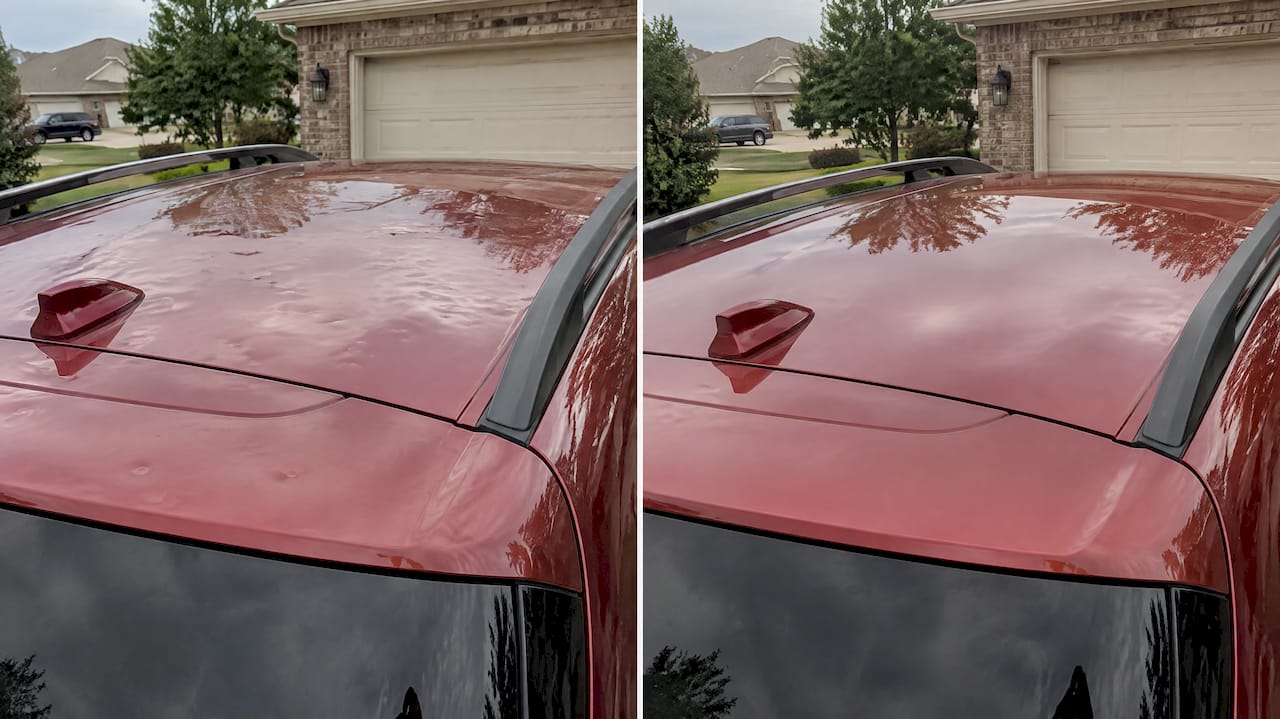
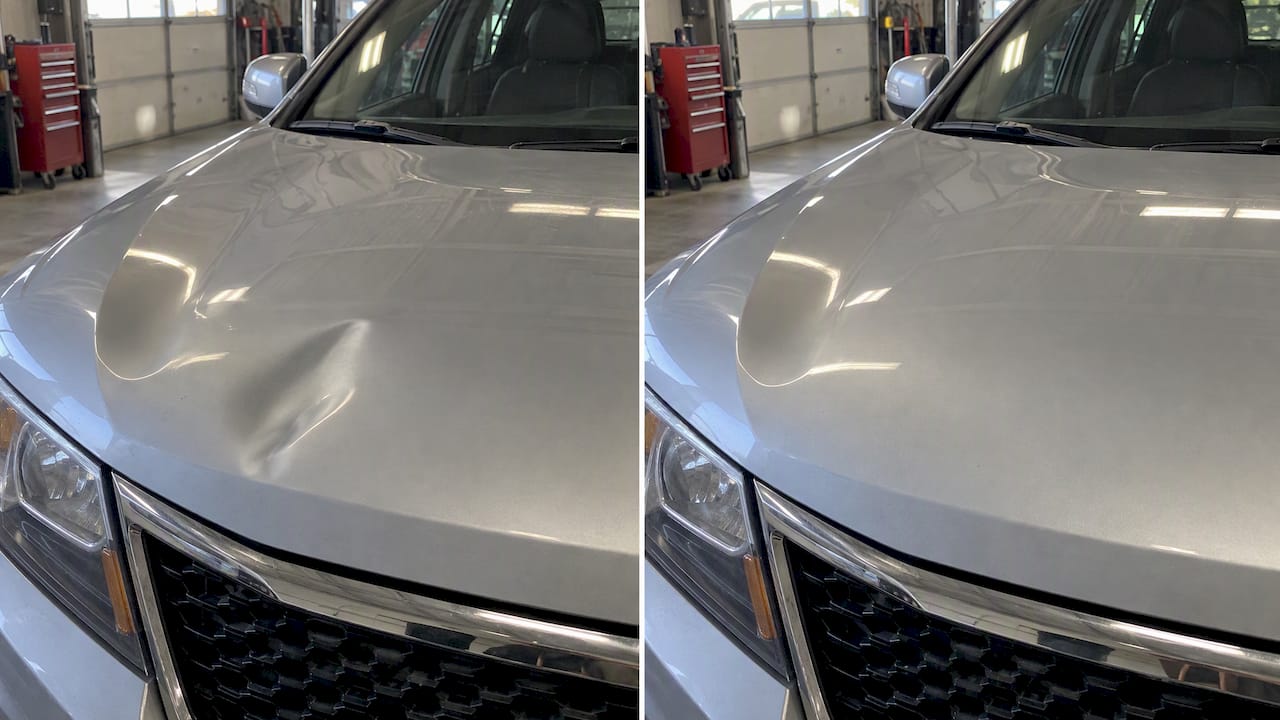
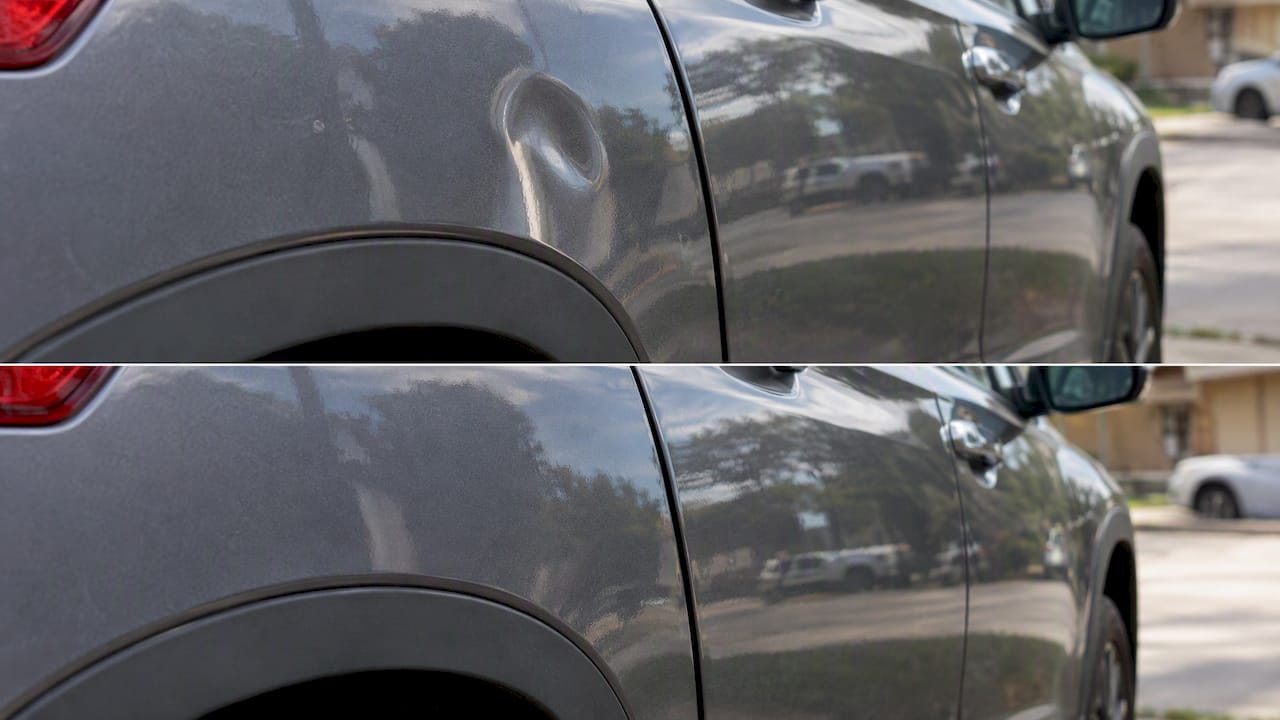
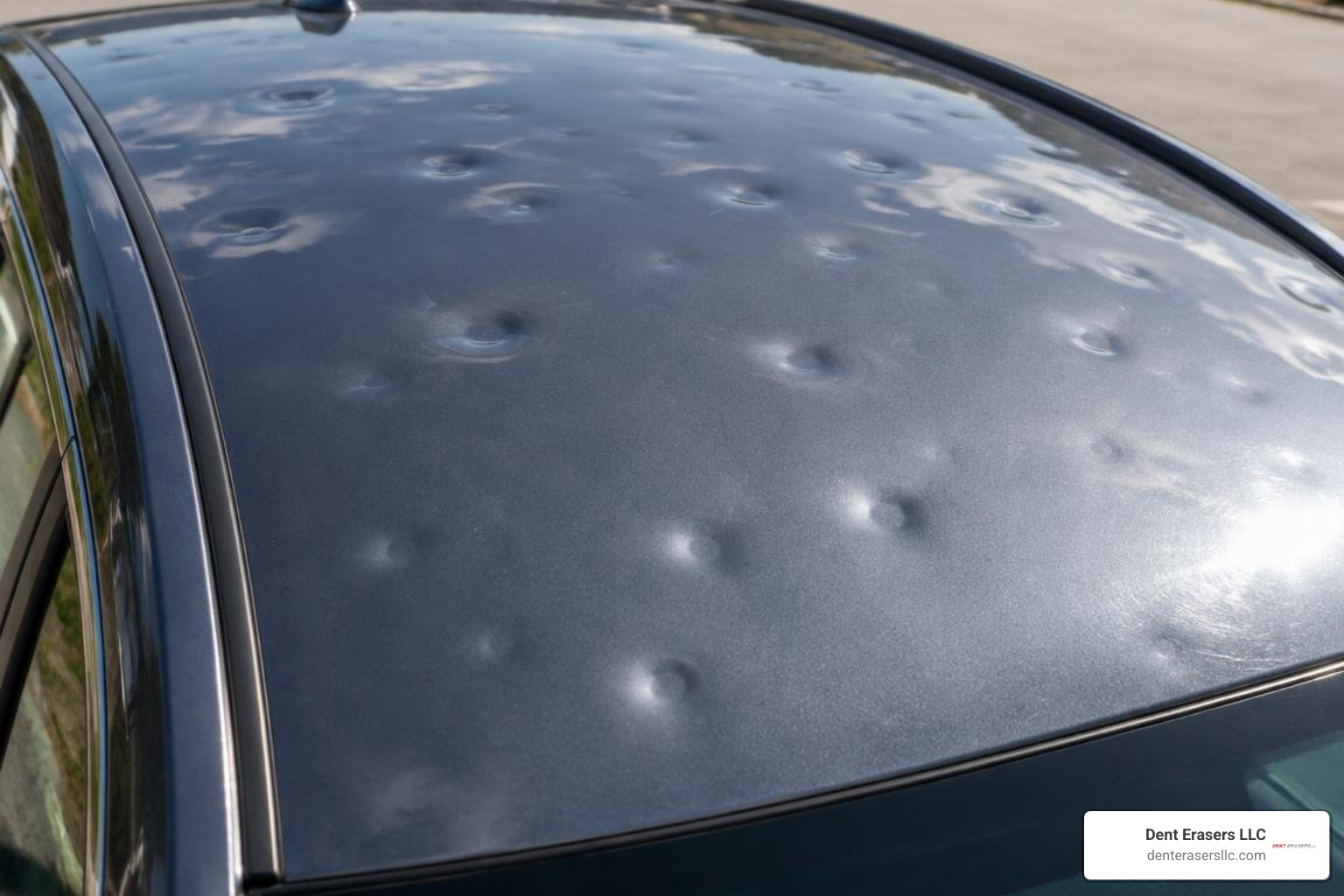
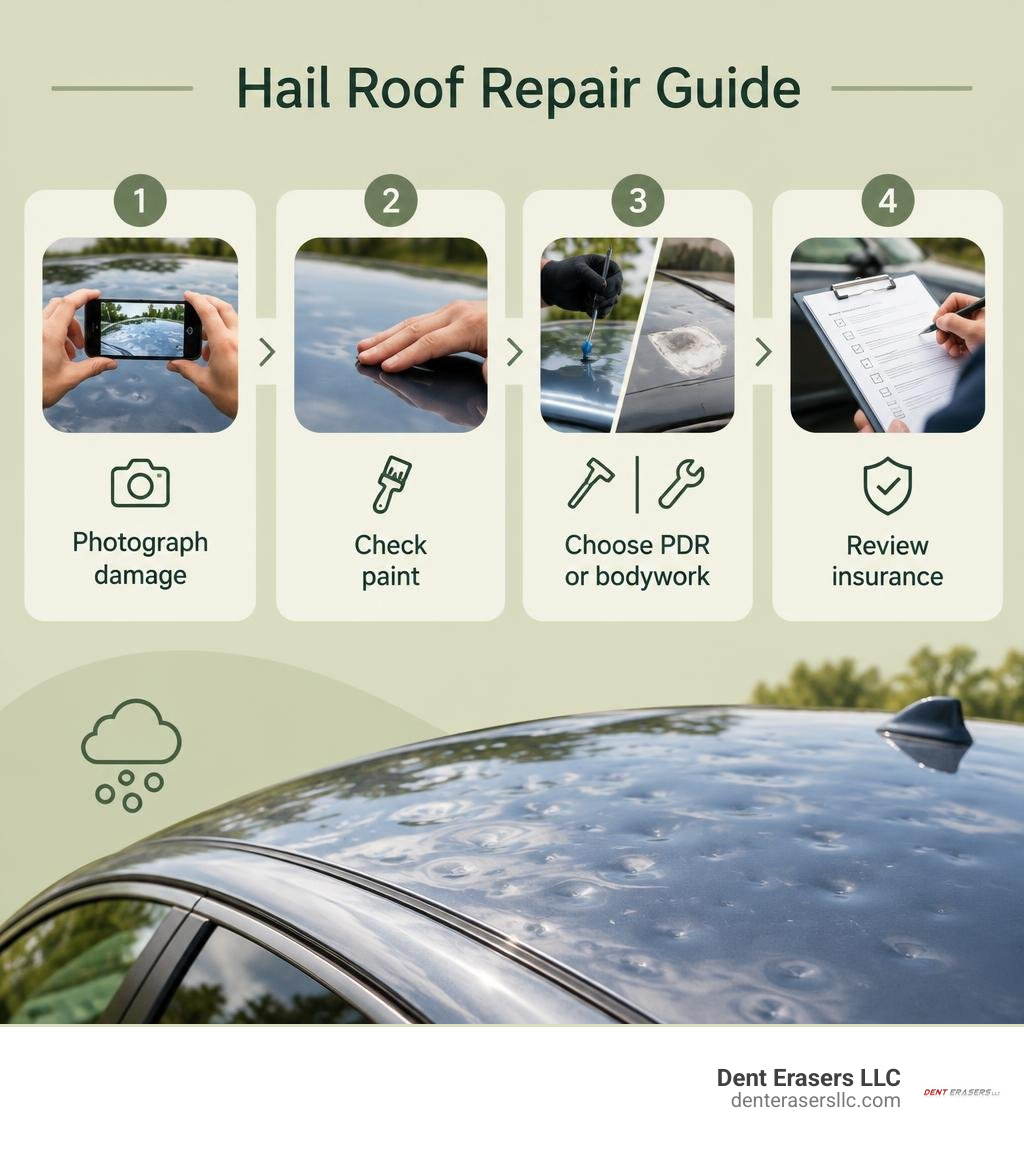
After a hailstorm, photograph your car roof before making repairs. If the paint is intact, ask a paintless dent repair (PDR) technician to inspect the dents. PDR can remove many hail dents without repainting. If the paint is cracked or the metal is badly stretched, conventional body shop repair may be required instead.
Check your comprehensive insurance coverage and deductible before filing a claim. Even small roof dents can be hard to spot, so inspect the car in good light. A hail-dented car can often be restored without a full repaint when the damage is caught early.
I’m Brian Blanc, owner of Dent Erasers LLC, and I’ve spent 28 years handling paintless hail repair and dent removal across the East Bay. My mobile service helps drivers find a practical fix without an unnecessary trip to a body shop.
Helpful guides on hail damage restoration:
Understanding Hail Storms: What Size Hail Causes Roof Damage?
When a storm rolls through Northern California, frozen precipitation can turn your prized vehicle into what looks like a dimpled golf ball in a matter of seconds. Across the United States, annual hail losses average $10 billion in insured damages, with severe seasons exceeding $15 billion. Between 2017 and 2019 alone, roughly 735,000 personal auto and 26,000 commercial auto hail insurance claims were filed each year nationwide.
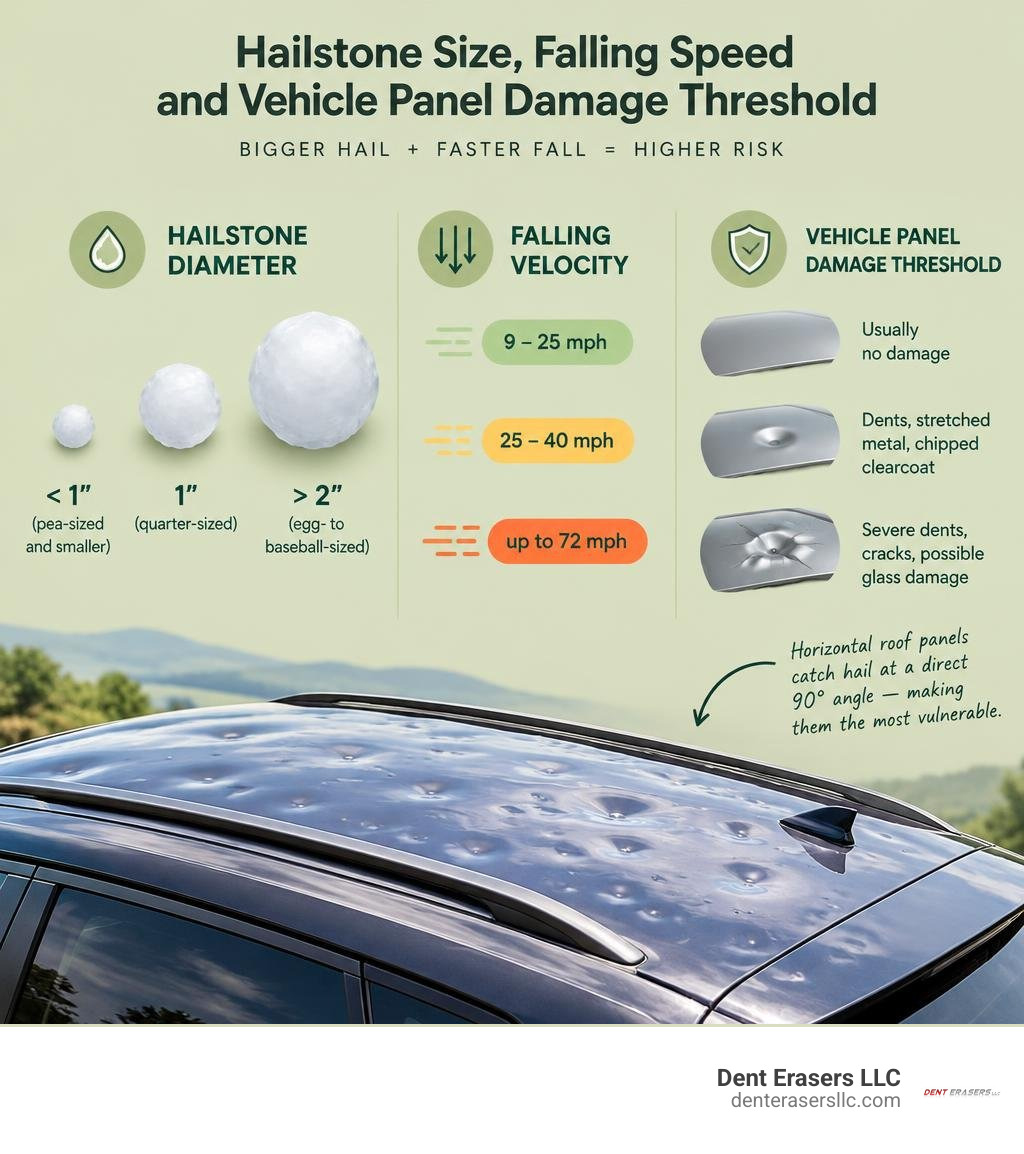
Vehicle roofs absorb the brunt of this airborne assault. Unlike vertical door panels that take glancing blows, horizontal roof panels catch hailstones at direct, ninety-degree impact angles. Understanding how frozen ice pellets deform sheet metal helps car owners make smart decisions about repairs and protective measures.
Hail Size, Terminal Velocity, and Impact Physics
The threshold for vehicle damage comes down to stone diameter, density, and falling speed. Small hailstones measuring less than 1 inch in diameter fall at speeds between 9 and 25 mph. While pea-sized stones (around 0.25 inches) rarely cause damage, high-density stones pushed by heavy downdrafts can occasionally leave faint dings.
Once hail reaches 1 inch in diameter—roughly the size of a quarter—it reaches a terminal velocity of 25 to 40 mph. At this size, the ice packs enough kinetic energy to exceed the natural elasticity of automotive sheet metal. This creates visible dimples, stretched contours, and chipped clearcoat.
The largest hailstones, exceeding 2 inches in diameter (egg- to baseball-sized), can fall at blistering speeds up to 72 mph. To put atmospheric extremes into perspective, the largest hailstone recorded fell in Vivian, South Dakota, on July 23, 2010, measuring a staggering 8.0 inches in diameter, 18.625 inches in circumference, and weighing nearly two pounds. You can read more about storm metrics and how freezing atmospheric conditions influence stone velocity at How Big Does Hail Have To Be To Damage Your Car? [2026].
Structural Vulnerabilities of Roof Panels
Your car roof is one of the largest unsupported expanses of metal on the vehicle. While supported underneath by structural roof bows, the broad expanses of steel or aluminum between those braces flex easily under impact.
Modern vehicle engineering introduces specific vulnerabilities:
- Aluminum Panels: Many modern trucks, SUVs, and luxury sedans utilize aluminum roofs to save weight. Aluminum has less “metal memory” than high-strength steel and is more prone to stretching under severe impact, carrying roughly a 25% repair labor premium.
- Roof Rails and Arches: The reinforced steel arches along the roofline feature thicker, multi-layered metal that requires specialized glue-pulling tools when dented by high-velocity impacts.
How to Identify and Assess Hail Damage on Your Vehicle Roof
Identifying hail damage is not always as simple as glancing at your car in the driveway. Natural outdoor lighting can wash out subtle dings, hiding dozens of shallow indentations across the roof and hood.
To get a true assessment, inspect your car when the panels are clean and dry. Dirt, dust, and water droplets camouflage shallow depressions. Park the vehicle out of direct midday sun—early morning light, late afternoon shadows, or indoor fluorescent lighting make panel distortions much easier to spot. Major carriers like State Farm outline essential initial inspection steps in their guide on car hail damage.
Visual Inspection Checklist for a Hail-Dented Car Roof
When evaluating your vehicle after a storm, follow this step-by-step checklist:
- Wash and Dry the Surface: Remove all debris, dirt, and water spots from the roof panel.
- Sight Down the Panel Profile: Crouch down near the corners of the vehicle and look horizontally across the roofline. Move your head slowly to see where straight reflection lines warp or bend.
- Check the Roof Rails and A-Pillars: Inspect the reinforced steel arches above the doors. Dents here indicate high-velocity impacts, as this metal is thicker than the center roof skin.
- Inspect Clearcoat Integrity: Look closely at the center of each dimple to ensure the factory clearcoat hasn’t fractured or flaked away.
- Mark Indentations Lightly: Use water-soluble wax pencils or painter’s tape beside each spot to map out the dent count.
For detailed steps on identifying and handling storm-related imperfections, review our guide on removing hail dents.
Hidden Damage: Water Intrusion, Moldings, and Glass Seals
Hail damage often goes beyond sheet metal. Roof racks, satellite radio antennas, windshield moldings, and sunroof seals absorb direct hits. If hailstones compress or crack rubber weatherstripping, water can seep into the cabin during subsequent rainfall.
Check your interior headliner after a hailstorm. Feel along the edges of the roof pillars, grab handles, and sunroof housing for dampness. Undetected water leaks quickly cause electrical shorts, mildew, and headliner sagging.
Best Repair Methods: Paintless Dent Repair (PDR) vs. Traditional Body Filler
When it comes to restoring a hail-damaged roof, car owners generally face two distinct options: modern Paintless Dent Repair or traditional body shop repairs involving sanding, body filler (Bondo), and full-panel repainting.
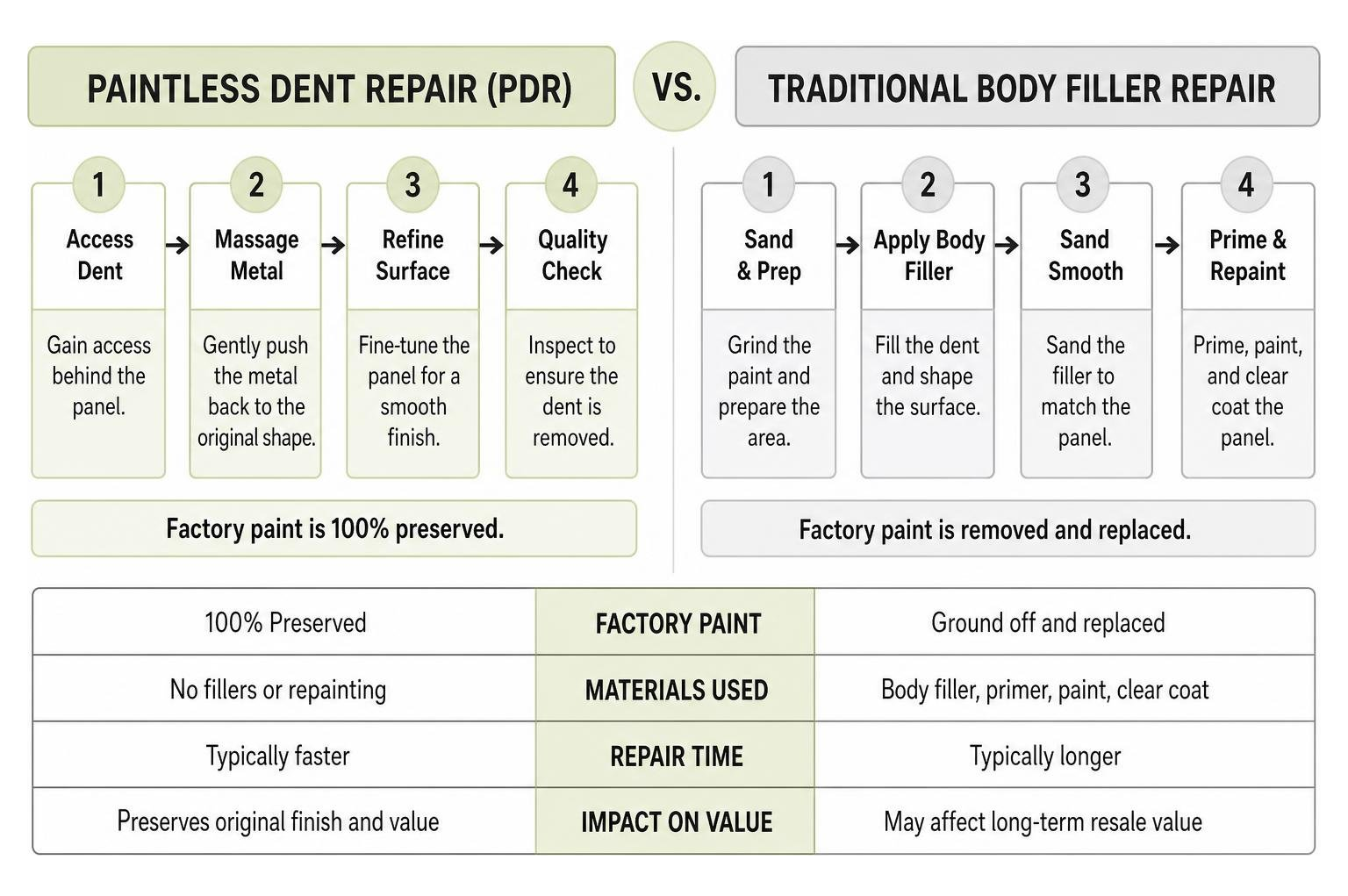
Preserving your vehicle’s factory paint finish is always the best choice whenever possible. Original factory paint undergoes high-temperature baking processes during vehicle assembly that aftermarket paint booths cannot replicate. As we explain when weathering the storm with paintless hail repair, preserving that factory clearcoat prevents future paint peeling and protects your car’s long-term resale value.
| Feature | Paintless Dent Repair (PDR) | Traditional Body Filler & Repainting |
|---|---|---|
| Factory Paint | 100% Preserved | Ground off and replaced |
| Turnaround Time | Same-day to 48 hours | 1 to 3 weeks at a body shop |
| Eco-Friendliness | Clean, zero chemicals/solvents | High VOC emissions, fillers, sanding dust |
| Average Cost | Lower ($50–$150 per dent) | Higher ($4,000–$10,000+ total repair) |
| Carfax Impact | Minimal to none | Documented paint and structural bodywork |
| Suitability | Intact paint, metal not over-stretched | Cracked paint, punctured or creased metal |
Professional Paintless Dent Repair for Hail Damage
Professional PDR is an exacting trade that combines metallurgy, optics, and fine hand-eye coordination. As a master technician or “dent doctor,” our job is to massage the dented sheet metal back to its original factory contour without stressing the paint.
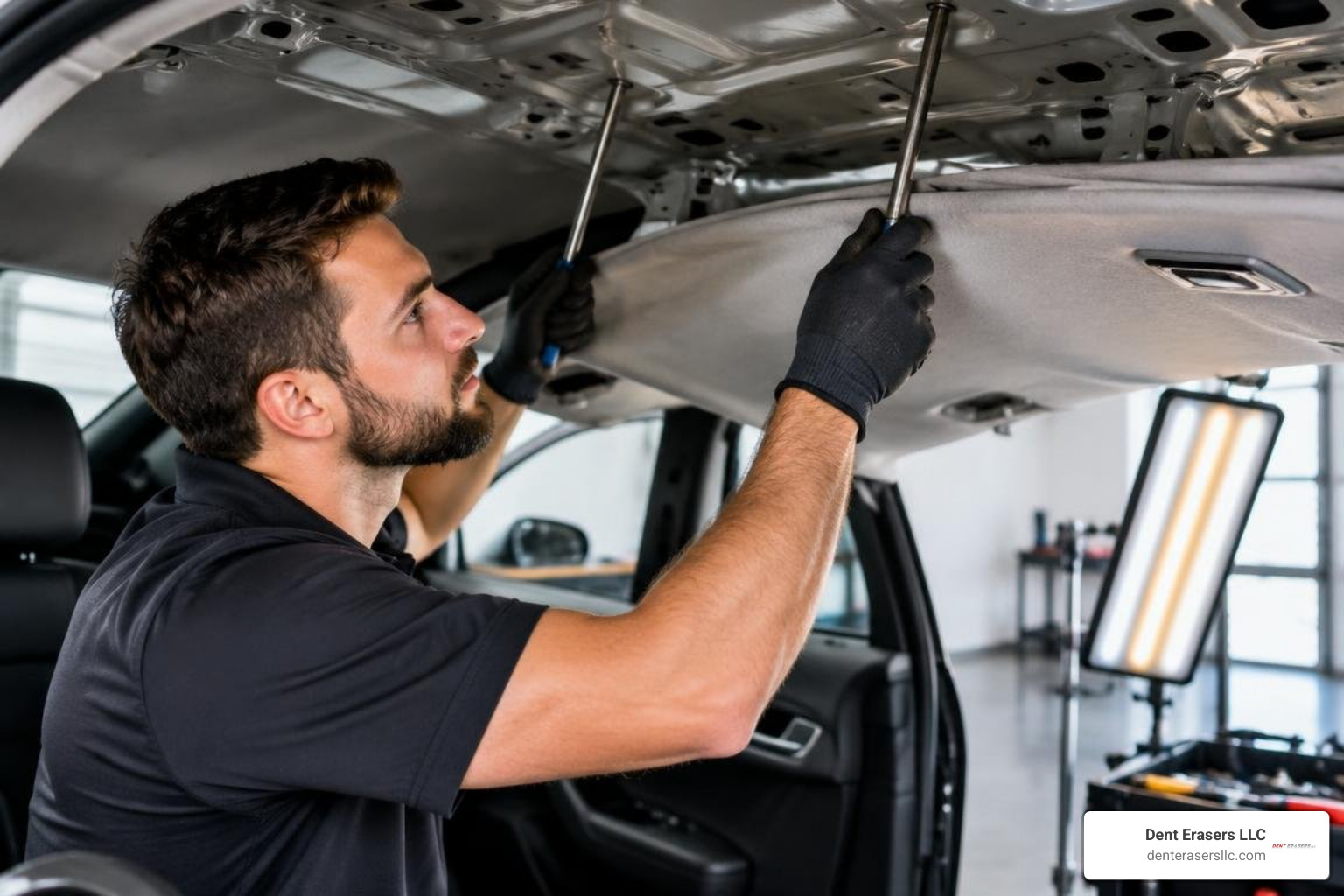
To repair roof damage:
- Interior Access: We carefully lower the interior headliner to gain direct access to the bare underside of the roof skin.
- Precision Tooling: Using custom-tempered steel rods, we apply micro-pressure points to the backside of each dent.
- Glue Pulling: On reinforced areas like roof rails and structural roof bows where backside access is blocked, we use specialized tabs, cold-melt adhesives, and slide hammers to lift the metal outward safely from the top.
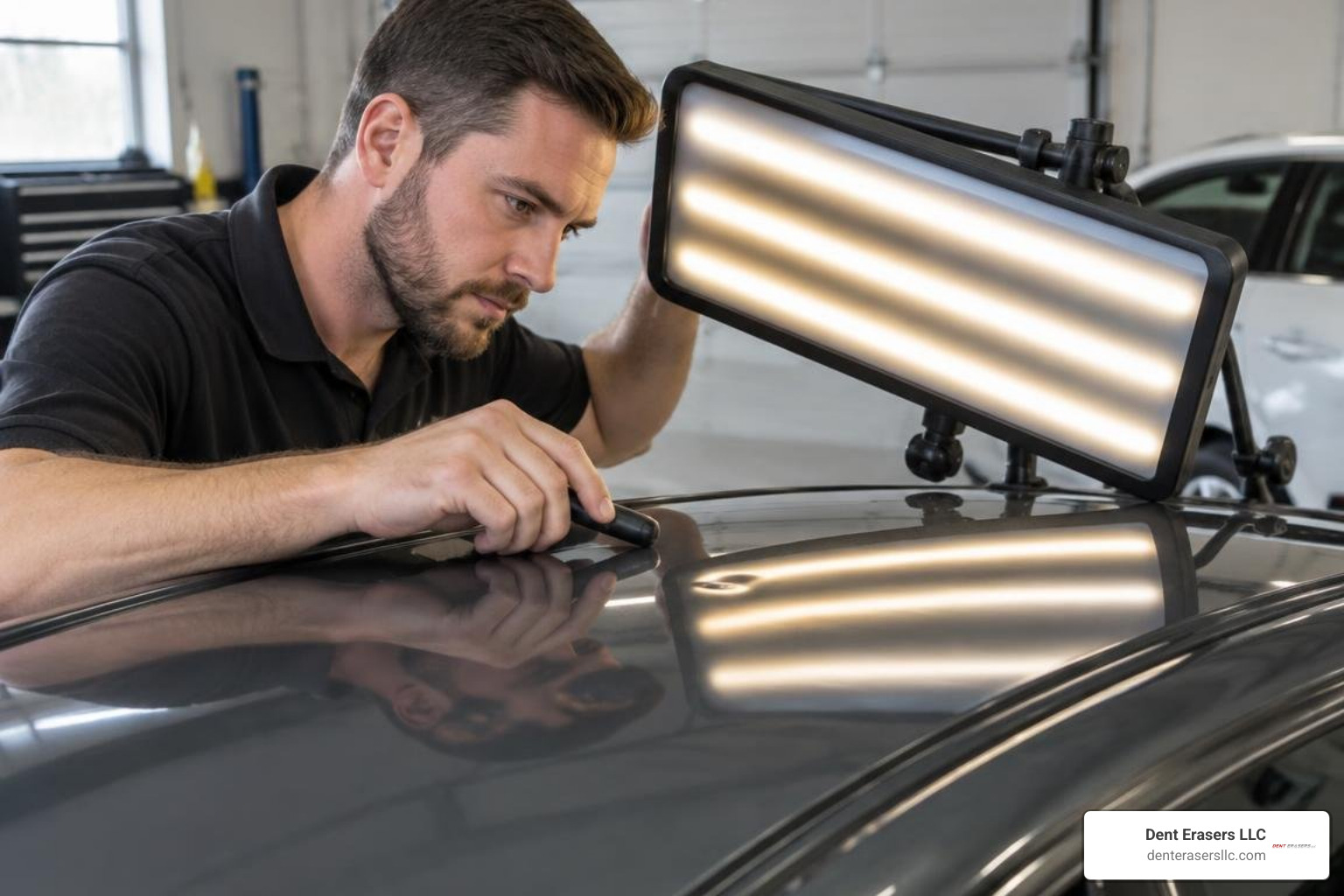
- Optic Alignment: LED shadow boards cast fine, parallel reflection lines across the panel. We manipulate the metal until those reflection lines run perfectly straight again.
Discover why choosing Dent Erasers LLC paintless dent repair is the smartest fix for minor hail damage on vehicles throughout Concord and neighboring East Bay communities.
DIY Techniques vs. Professional Solutions for a Hail-Dented Car
After a storm, drivers often look for quick fixes online. DIY suggestions like dry ice, heat guns, and cheap suction-cup pullers promise miraculous, zero-cost repairs.
In practice, these DIY methods frequently cause more damage than the hailstorm itself:
- Heat Guns & Rapid Cooling: Trying to pop out dents using extreme temperature swings can shock and burn your clearcoat, leading to surface cracking and paint failure.
- Hardware Store Pullers: Inexpensive glue kits often use aggressive adhesives that can pull factory paint clean off the panel.
- Metal Stretching: Pushing too hard from underneath creates “high spots” (pimples in the metal) that are far more difficult and expensive to fix.
Before attempting a home repair, check our breakdown on using a dent puller for hail damage to understand the technical risks involved.
Hail Repair Costs, Insurance Claims, and Total Loss Thresholds
Hail repairs vary widely depending on storm severity, panel accessibility, and the total dent count. Across the industry, the average cost to repair hail damage sits around $4,300, with minor cosmetic work starting at $2,000 and extensive multi-panel claims climbing well past $8,000 to $10,000.
For standalone dings, minor cosmetic hail repair typically costs between $150 and $500, while specialized PDR pricing ranges from $50 to $150 per dent depending on size and depth. For a thorough breakdown of standard estimating matrices, read our complete guide to PDR pricing and estimates.
Factors Driving Hail Damage Repair Costs
Professional estimators calculate hail damage using a standardized matrix based on dent size (dime, nickel, quarter, or half-dollar) and total dent density per panel.
Key cost drivers include:
- Panel Material: Aluminum roofs and hoods carry a ~25% labor surcharge due to the extra force and precision required to work with aluminum alloys.
- R&I Labor (Remove and Install): Dropping a luxury headliner with integrated panoramic sunroof wiring, side-curtain airbags, and dome light consoles requires several hours of careful disassembly and reinstallation.
- Depth and Sharpness: Deep, sharp impacts stretch metal molecules at the center of the ding, requiring significantly more time to level cleanly.
To understand how individual panel factors influence final estimates, see our detailed guide on paintless hail repair costs.
Navigating Insurance Claims and Totaled Vehicle Criteria
Hail damage is covered exclusively under the Comprehensive (Other Than Collision) section of your auto insurance policy. Comprehensive claims are classified as “Acts of Nature” or “Acts of God,” meaning they are non-fault claims and generally do not raise your base insurance premium rates.
If your comprehensive deductible is $500 and the repair estimate is $3,500, your carrier pays the remaining $3,000 balance. If the total repair cost approaches 70% to 80% of your vehicle’s Actual Cash Value (ACV)—a common occurrence on older vehicles with extensive roof, hood, and trunk damage—the insurance company may declare the car a total loss.
To learn more about calculating out-of-pocket costs versus insurance payouts, review our guide to paintless dent repair pricing.
How to Prevent Hail Damage to Your Car Roof
While we can’t control the weather, taking proactive steps when storm warnings appear can save you from thousands of dollars in repairs:
- Monitor Local Radar Alerts: Keep weather apps configured to send real-time push alerts for severe thunderstorm and hail warnings in your immediate area.
- Seek Sturdy Covered Shelter: If you are driving when hail starts, head toward parking garages, gas station canopies, or carports. Avoid parking directly under large trees, as falling branches cause severe structural crushing.
- Use Padded Hail Blankets: Keep an inflatable hail car cover or heavy moving blankets secured in your trunk. Layering moving blankets over your roof, hood, and trunk and securing them with bungee cords provides an effective buffer against stones up to 1 inch in diameter.
Frequently Asked Questions About Hail Damage Repair
How long do I have to file an auto insurance claim after a hailstorm?
Most insurance policies require you to report storm damage within one year of the weather event. However, it is best to file within a few days of the storm. Waiting months makes it harder for adjusters to verify which specific storm caused the damage, and any moisture entering cracked seals could cause secondary interior damage that your insurer might dispute.
Can paintless dent repair fix all types of hail dents on a roof?
PDR can successfully repair roughly 80% to 90% of hail dents, provided the factory paint remains unbroken and the sheet metal has not been stretched past its elastic limit. If hailstones have punctured the metal, created sharp knife-edge creases, or cracked the clearcoat, traditional body filler, panel replacement, or repainting will be necessary. For more details on what PDR can resolve, see how you can stop dents from driving you crazy with PDR.
When does hail damage cause an insurance company to total a car?
An insurance provider totals a vehicle when the cost of repairs plus salvage value exceeds a set percentage of the car’s pre-storm market value (typically 70% to 80%, depending on state guidelines). Because hail can strike every horizontal panel on a car simultaneously, cosmetic repair costs can quickly eclipse the market value of older or higher-mileage vehicles.
Conclusion
A sudden hailstorm can leave your car roof looking damaged and neglected, but acting quickly preserves both your vehicle’s appearance and its long-term resale value. Leaving dents untreated risks moisture intrusion, clearcoat breakdown, and steep trade-in depreciation down the road.
At Dent Erasers LLC, we bring 28 years of master-level craftsmanship directly to your doorstep. As a fully mobile service, we repair cars, motorcycles, luxury models, and classic vehicles across Concord, Antioch, Richmond, San Ramon, Pittsburg, Walnut Creek, Brentwood, Martinez, and surrounding Contra Costa County communities.
Don’t let hail damage diminish your vehicle’s value. Schedule your fast, reliable on-site repair today through our mobile paintless dent repair services, and let Brian Blanc restore your vehicle back to pristine condition!