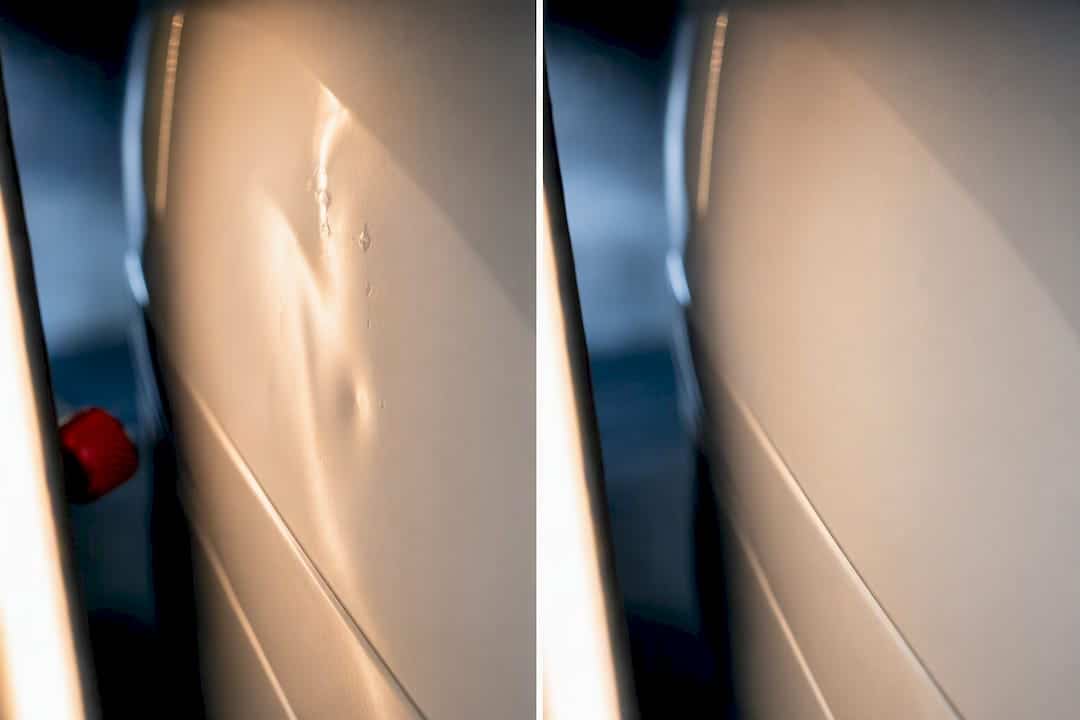
PDR fails when three things show up together or alone: broken paint, a sharp crease or stretched metal, or a dent sitting somewhere a technician can’t safely reach it. If your dent has cracked paint, a hard fold instead of a smooth bowl shape, or sits on a hem flange, structural rail, or ADAS sensor zone, paintless dent repair is probably off the table. Get a technician inspection before you assume anything, since that hands on evaluation is the only test that actually settles it.
TL;DR:
- Paintless dent repair cannot be used on dents with cracked paint, sharp creases, or damage near structural elements and sensors.
- Good candidates for PDR have smooth, wide, shallow shapes, and are located away from panel edges, seams, or damaged areas with rust or filler.
- Modern materials like ultra-high-strength steel and aluminum pose additional challenges, limiting PDR due to their brittleness and behavior under stress.
- If damage is too close to structural components, beyond access points, or shows signs of micro-cracking, PDR is unlikely to succeed, and other repairs are needed.
- A thorough onsite inspection, including checking paint condition and panel access, is essential to determine if PDR is feasible before proceeding with any repair.
Table of Contents
- Quick Indicators: A 60-Second Screening Check for Owners
- Detailed Limits: Paint, Metal Stretch, Access, and Modern Materials
- How Does a Technician Decide If a Dent Is Repairable?
- If PDR Isn’t Possible: What Are the Realistic Repair Options?
- Why an Honest “No” Protects You More Than a Risky “Yes”
- How Denterasers LLC Handles Dents That Fall Outside PDR
- Sources
- FAQ
Quick Indicators: A 60-Second Screening Check for Owners
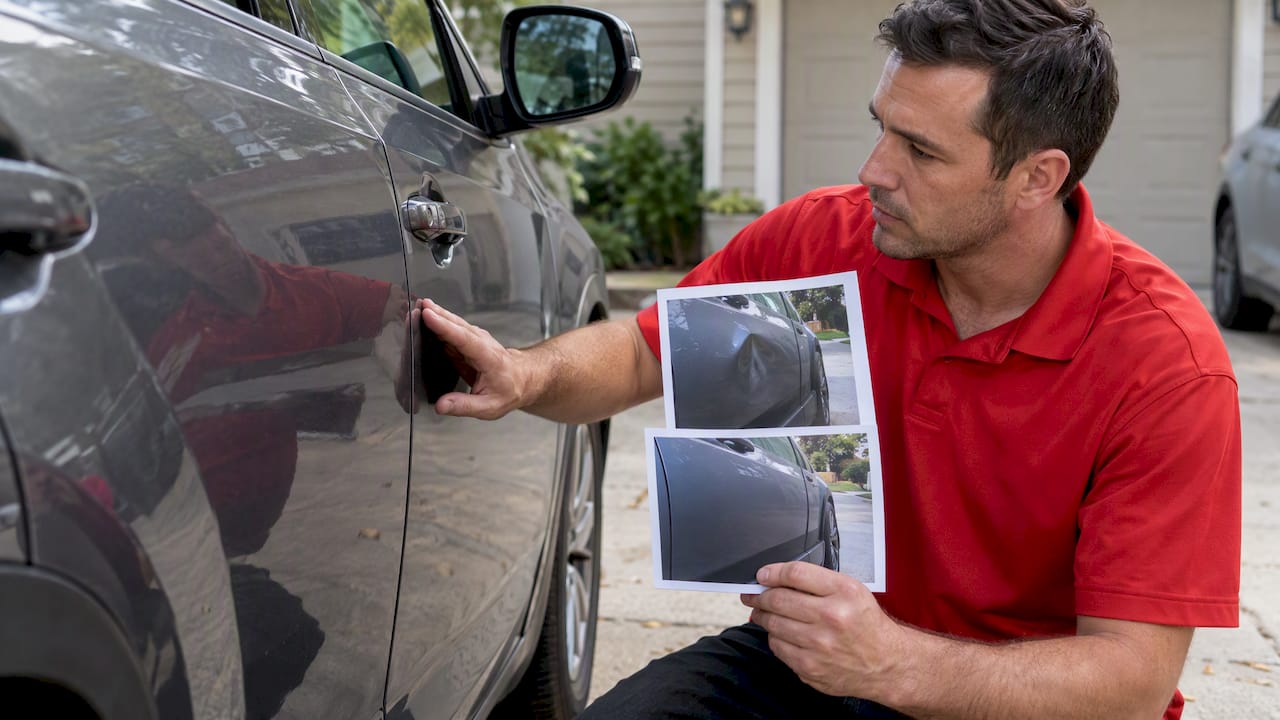
Before you call anyone, you can rule out a lot of guesswork standing in your driveway with a flashlight. Grab a shop light or even your phone’s flashlight, hold it at a low angle across the damaged panel, and look for how the reflected line bends. A clean, continuous bend usually means the metal moved without breaking anything on top of it. A jagged, broken, or spidered reflection means the paint or clear coat already failed, and that changes everything.
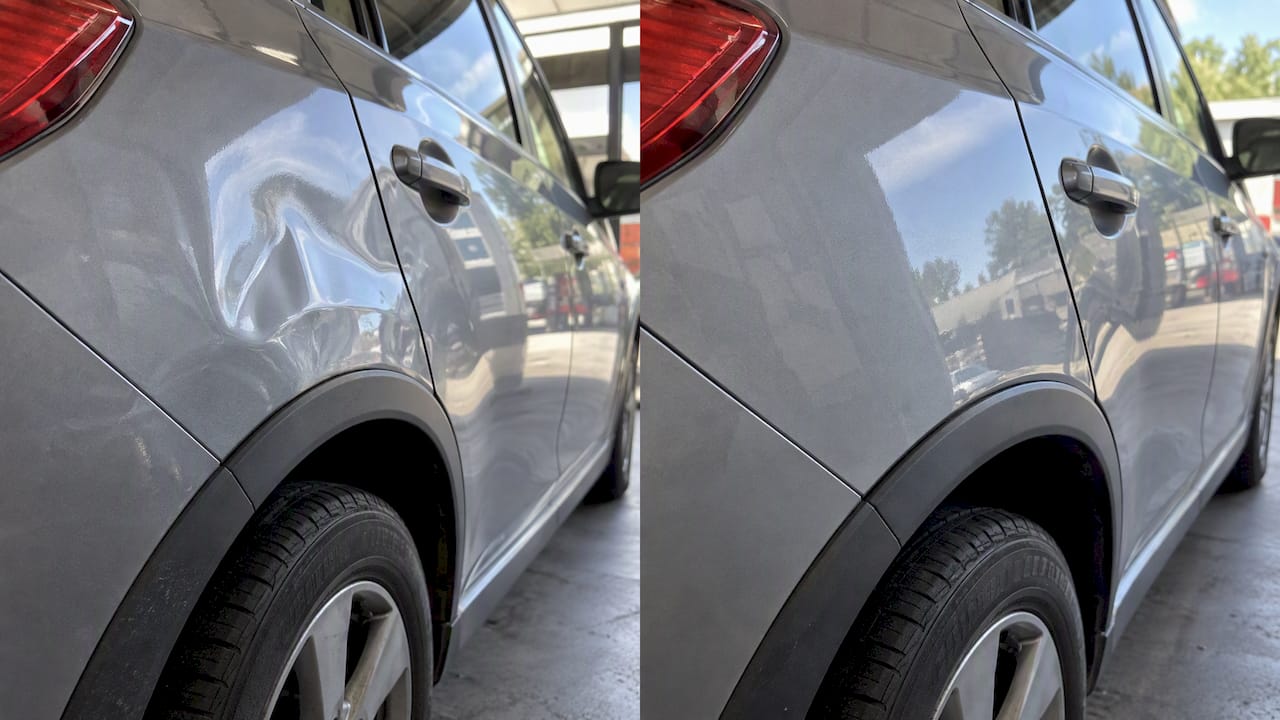
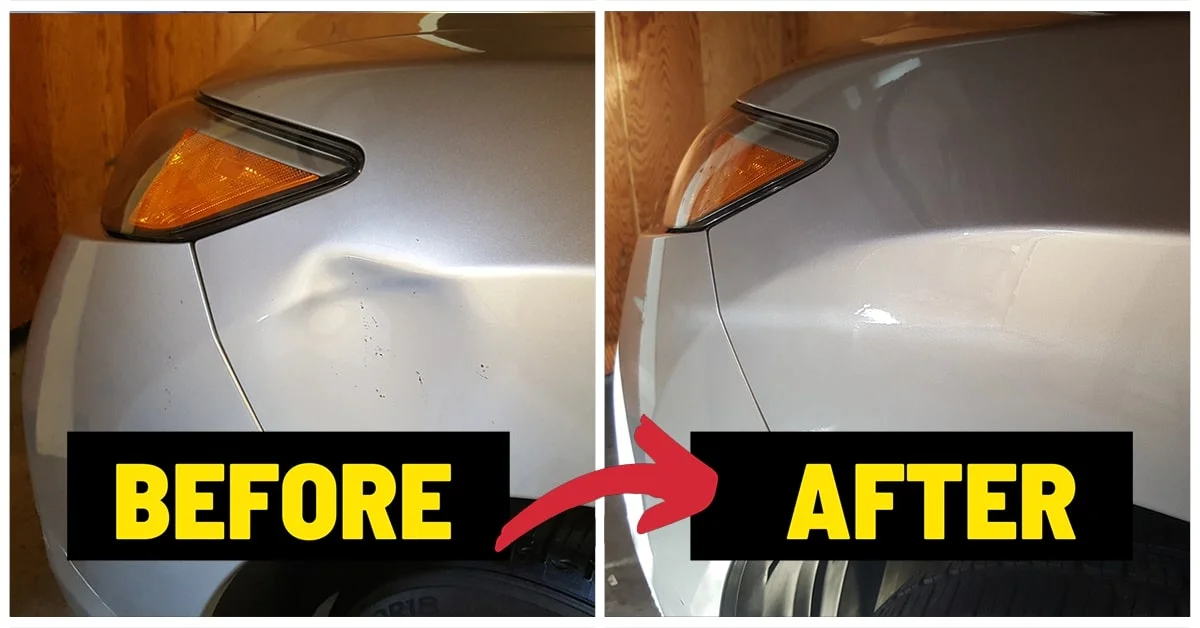
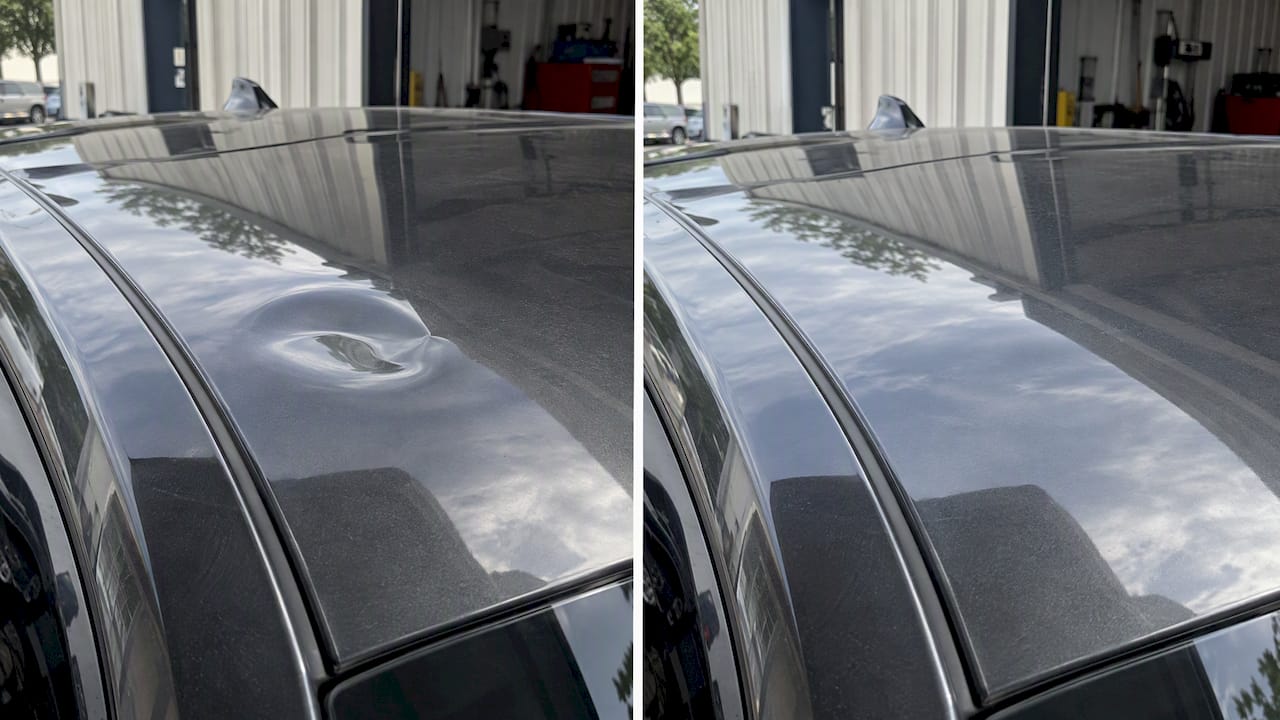
Shape matters more than size here. A wide, shallow dent that looks like a shallow bowl is often an easier fix than a small, tight crease, because creases and sharp folds resist the pulling and pushing techniques that PDR depends on. A dent the size of a dinner plate with soft, rounded edges can be a better candidate than a dent the size of a golf ball with a hard fold at its center.
Location is the next filter. Watch for these red flags:
- Damage very close to a body seam, hem flange, or panel edge
- Dents that straddle a body line, roof rail, or door pillar
- Impacts near bumper sensor housings or camera mounts
- Any dent close to a door jamb or trim edge where reach is already tight
If you spot visible filler, rust bubbling through the paint, torn metal, or any separation between panels, stop right there. Those are not PDR candidates under any circumstance, and pushing forward risks turning a cosmetic fix into a bigger repair bill.
Pro Tip: Before you inspect anything, clean the door jambs and surrounding trim so grime doesn’t hide hairline paint cracks. A ten-minute wipe down can save you a wasted trip to the shop.
Detailed Limits: Paint, Metal Stretch, Access, and Modern Materials
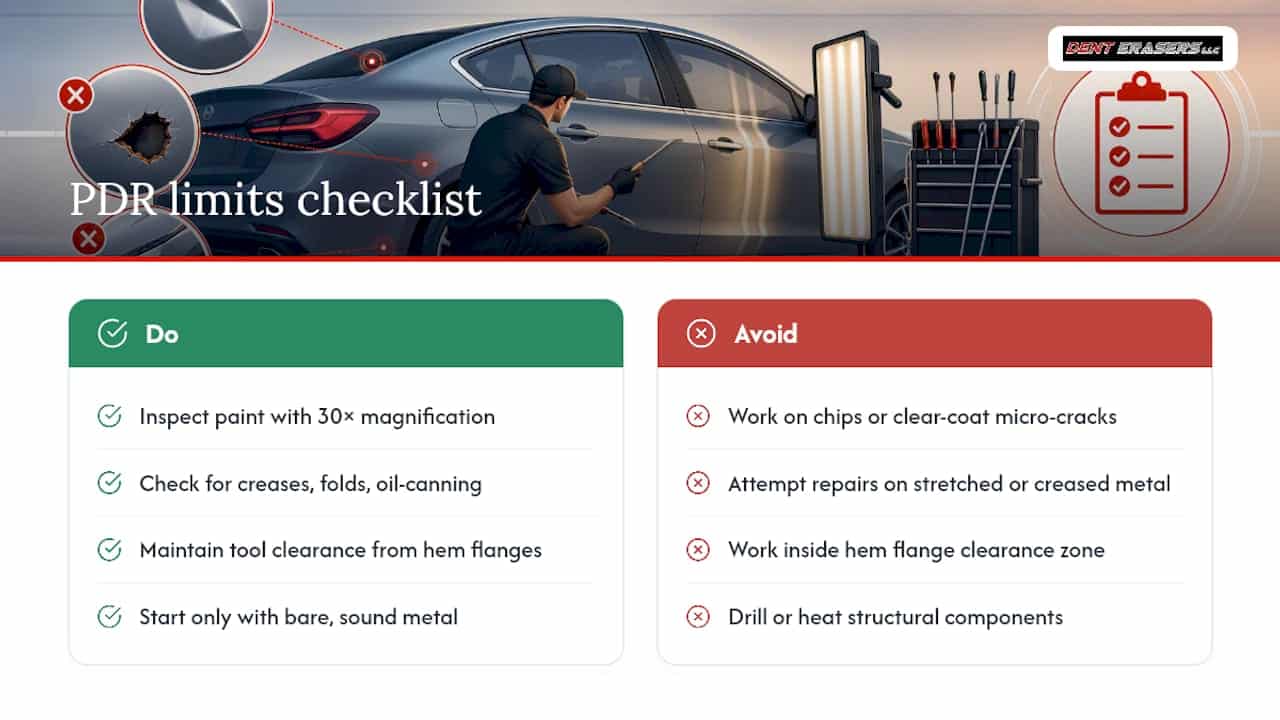
Paint condition is where most PDR jobs live or die. Chips are an obvious disqualifier, but clear-coat spidering and micro-cracking are the sneakier problem. These fractures often sit below what your eye picks up at a glance, and some manufacturers treat them as an automatic stop. Rivian’s own guidance calls for magnified inspection at 30x before any dent gets worked, because flexing paint that’s already compromised at the microscopic level just finishes the crack.
Metal geometry is the second wall. PDR technicians rely on the metal’s natural memory, gently massaging it back toward its original shape. A smooth dent still has that memory intact. A sharp crease, a fold, or a dent with visible oil-canning has already stretched the metal past where it wants to spring back, and no amount of careful tapping recovers that.
Panel edges carry their own hard rule. Technicians generally avoid working very close to a hem flange, as there is insufficient room to seat a tool without risking the seam itself. This clearance acts as a physical limit on where leverage can be applied safely.
Modern materials tighten things further. Ultra-high-strength steel, common in today’s crash structures, can run past 600 to 700 megapascals, with some boron steels closer to 1,500 MPa. That steel is intentionally brittle under stress, and pushing it can crack coatings or compromise the very strength it’s designed to provide. Aluminum panels bring a different problem. Aluminum work-hardens fast and doesn’t spring back the way steel does, so it demands dedicated tools and strict contamination control to avoid galvanic corrosion between dissimilar metals.
Structural components are simply off-limits for drilling or heat under most OEM procedures, whether that’s an A-pillar, B-pillar, frame rail, or reinforcement bracket. Bumpers carry a modern complication too: sensor and camera keep-out zones tied to ADAS mean some repairs require recalibration afterward, adding cost even when the physical fix is straightforward. And any panel with a history of prior bodywork, filler, or corrosion underneath starts the evaluation from a worse position, since PDR needs bare, sound metal to work with.
How Does a Technician Decide If a Dent Is Repairable?
A credible inspection follows a structure, not a guess. Most experienced technicians run through a five-factor repairability check before quoting anything:
- Paint and coating condition — is the surface intact, or is there cracking, chipping, or suspected micro-fracturing?
- Metal geometry and stretch — is this a smooth push or a hard crease that’s already past its elastic limit?
- Material and construction — is the panel mild steel, UHSS, or aluminum, and does that change which tools are safe to use?
- Location and access — can a tool reach the backside without drilling, cutting, or disturbing trim that shouldn’t move?
- A safe tool route — once access is confirmed, is there a path that avoids sensors, wiring, and structural members?
The actual inspection usually starts with a checking light held at a raking angle across the panel, sometimes followed by a magnified look at the paint if anything looks questionable. Trim and liner removal often happens right there in the driveway so the tech can confirm what’s actually reachable from behind the panel, not just what looks reachable from the front.
Escalation happens the moment any of those five factors fails hard: drilling becomes necessary, a structural member sits in the path, or micro-cracking shows up under closer inspection. A shop worth trusting documents that decision with photos and written notes, not just a verbal “it won’t work.” When you’re asking questions, push on specifics: whether a glue-pull setup or a rod-access route was considered, and whether any post-repair sensor calibration would be needed. Our guide on questions to ask your dent technician breaks down exactly what those answers should sound like.
If PDR Isn’t Possible: What Are the Realistic Repair Options?
Once PDR is off the table, a few paths remain, and which one fits depends on how far past PDR’s limits the damage actually sits.
- Push-to-paint or hybrid repair blends PDR technique with a small amount of filler and repaint, used when the metal is mostly recoverable but the paint needs to be redone anyway.
- Full conventional repair and repaint comes in when paint damage is widespread or the panel needs bodywork beyond gentle reshaping.
- Panel replacement gets triggered by structural damage, UHSS or aluminum limitations that make reshaping unsafe, or cracked castings that can’t be pulled back into spec.
- Plastic bumper repair or replacement depends on crack severity, and any bumper with sensors may need recalibration afterward, which adds to both cost and timeline.
Cost swings on a few consistent factors: labor hours, calibration fees when electronics are involved, replacement part pricing, and how tricky the color match turns out to be. A shop should walk you through which of those apply before work starts, not after the invoice lands.
Why an Honest “No” Protects You More Than a Risky “Yes”
A technician who tells you PDR won’t work is doing you a favor, even when it’s not the answer you wanted. Forcing a repair method past its limits doesn’t just risk a bad cosmetic result. It can crack paint that was still intact, or push a panel’s metal past the point where any repair looks clean. Documented honesty about why a job was declined is one of the clearest signs you’re dealing with a shop that knows its craft. Keep your pre-repair photos regardless of which way the assessment goes. They’re useful for insurance, for a second opinion, and for your own record of what the vehicle looked like before anyone touched it.
— Brian Blanc
How Denterasers LLC Handles Dents That Fall Outside PDR
Denterasers LLC is the alternative to hauling your car into a shop and waiting days for a diagnosis. We come to you, inspect the panel onsite with a checking light and a trained eye, and tell you straight whether it’s a PDR job or something else, without a guessing game or a return trip.

That mobile inspection includes a photo review, a hands-on look at the paint and metal, and a documented recommendation you can actually act on. If the dent qualifies, our Minor Dent Repair service runs $100 to $500, and Large Dent Repair runs $150 to $1,500, both quoted onsite based on what we actually find. If PDR isn’t the right call, we also handle plastic bumper repair and can point you toward the right next step for conventional bodywork. Request a mobile dent inspection and we’ll get you a straight answer before we ever pick up a tool.
Sources
For deeper technical detail on the limits covered here, DentAdvisor’s analysis covers UHSS thresholds and ADAS keep-out zones, EZTechPDR breaks down five common failure modes, and SuperPDR’s repairability matrix outlines technician decision criteria in more depth.
- PDR Limitations: Technical Analysis of When Paintless Dent Repair Won’t Work | DentAdvisor
- 5 Times Paintless Dent Repair Won’t Work | EZTechPDR
- Does Paintless Dent Repair Ruin Paint? The Real Answer – Dent Evo
FAQ
What Are the Limitations of Paintless Dent Repair?
PDR is limited by paint condition, metal stretch, and access. Cracked or chipped paint, sharp creases instead of smooth bowls, and damage near hem flanges, structural members, or ADAS sensor zones all rule it out.
What Can PDR Not Fix?
PDR can’t fix dents with broken paint, torn or rusted metal, or damage on ultra-high-strength steel and structural components where OEM rules prohibit drilling or heat. It also can’t safely reach damage within about an inch of a panel edge or hem flange.
Why Is PDR So Difficult?
PDR relies entirely on the metal’s natural memory and a technician’s ability to access the backside of a panel without cutting or drilling. Modern materials like UHSS and aluminum add extra difficulty, since they behave differently under stress than older mild steel panels.
How Long Does PDR Usually Take?
Timing depends on dent size, location, and access, ranging from under an hour for a small door ding to a full day for larger, more complex damage. A technician can give you a realistic timeframe once they’ve completed an onsite inspection, which you can request through Denterasers LLC’s mobile dent repair service.
Does Denterasers LLC Repair Dents That Aren’t PDR Candidates?
Yes, alongside paintless dent repair, Denterasers LLC handles plastic bumper repair and can guide you toward the right conventional repair path when PDR isn’t suitable for the damage.