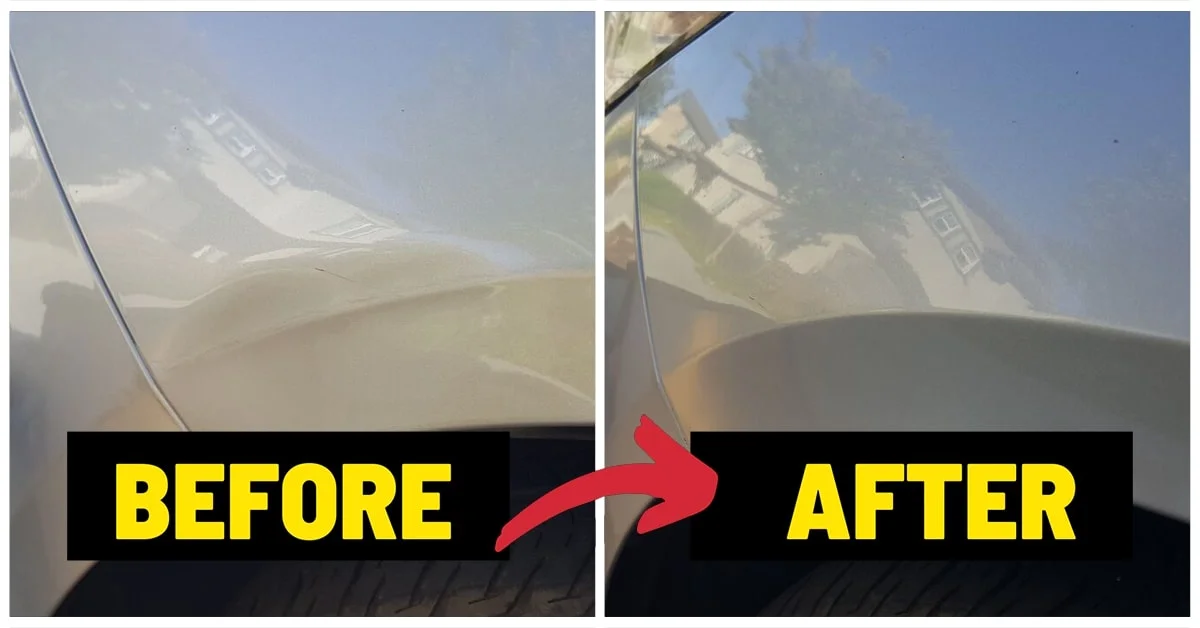
Why a Tiny Ding Can Change Your Dent Repair Quote
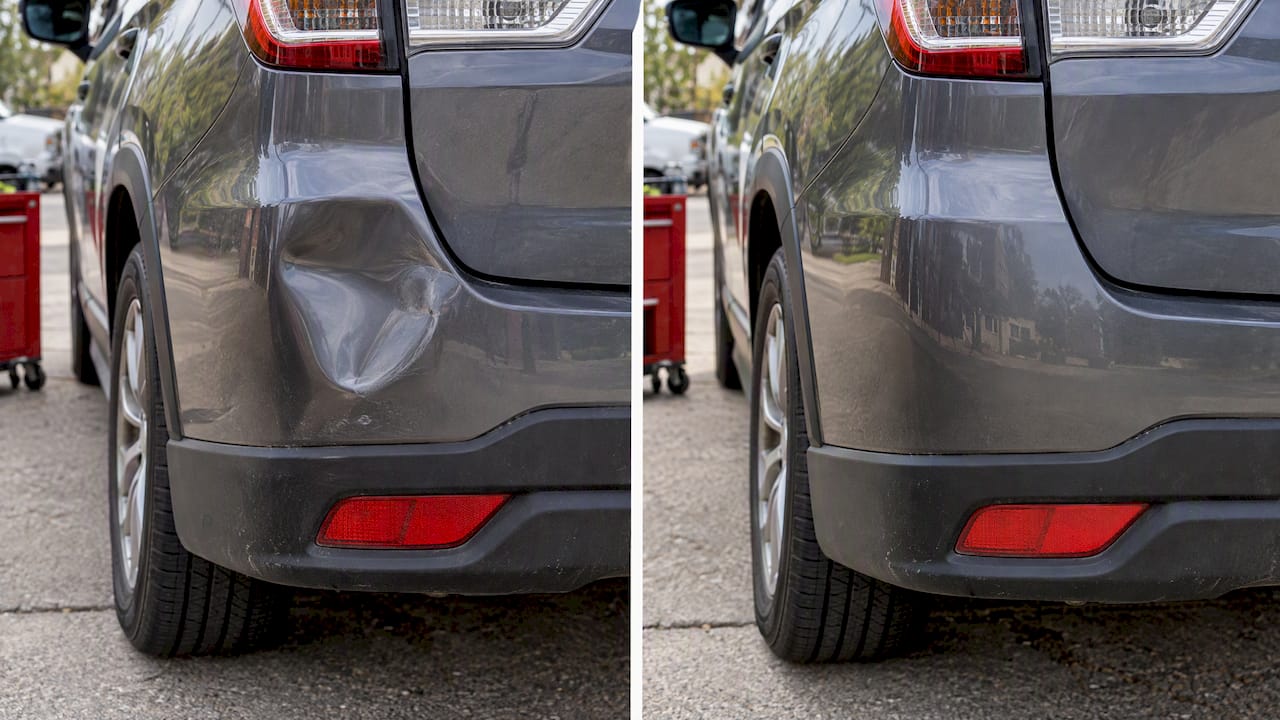
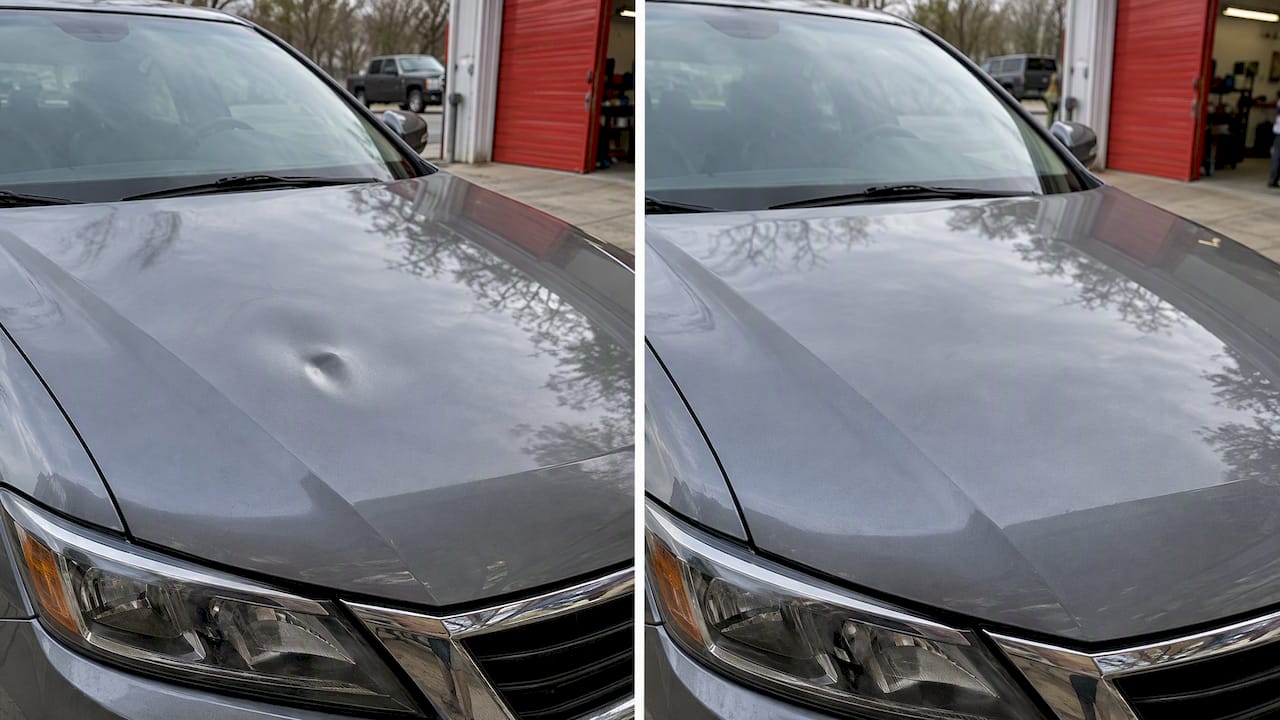
A minor dent with intact paint may cost $75 to $250 to repair with paintless dent repair (PDR) in the US. If the paint is cracked or chipped, repairs often run $300 to $700. To get a useful dent repair quote, send clear photos of the whole panel and a close-up of the damage. The final price may change after a technician checks the dent in person.
A tiny ding can cost more than a larger one if it sits on a sharp body line or in a spot that’s hard to reach from behind. That is why size alone rarely tells you what you’ll pay.
I’m Brian Blanc, and I’ve spent nearly three decades working in paintless dent repair, including building Dent Erasers LLC’s mobile service in the East Bay. I’ve seen how panel access and paint condition can change a dent repair quote, so let’s look at what an estimate should include.
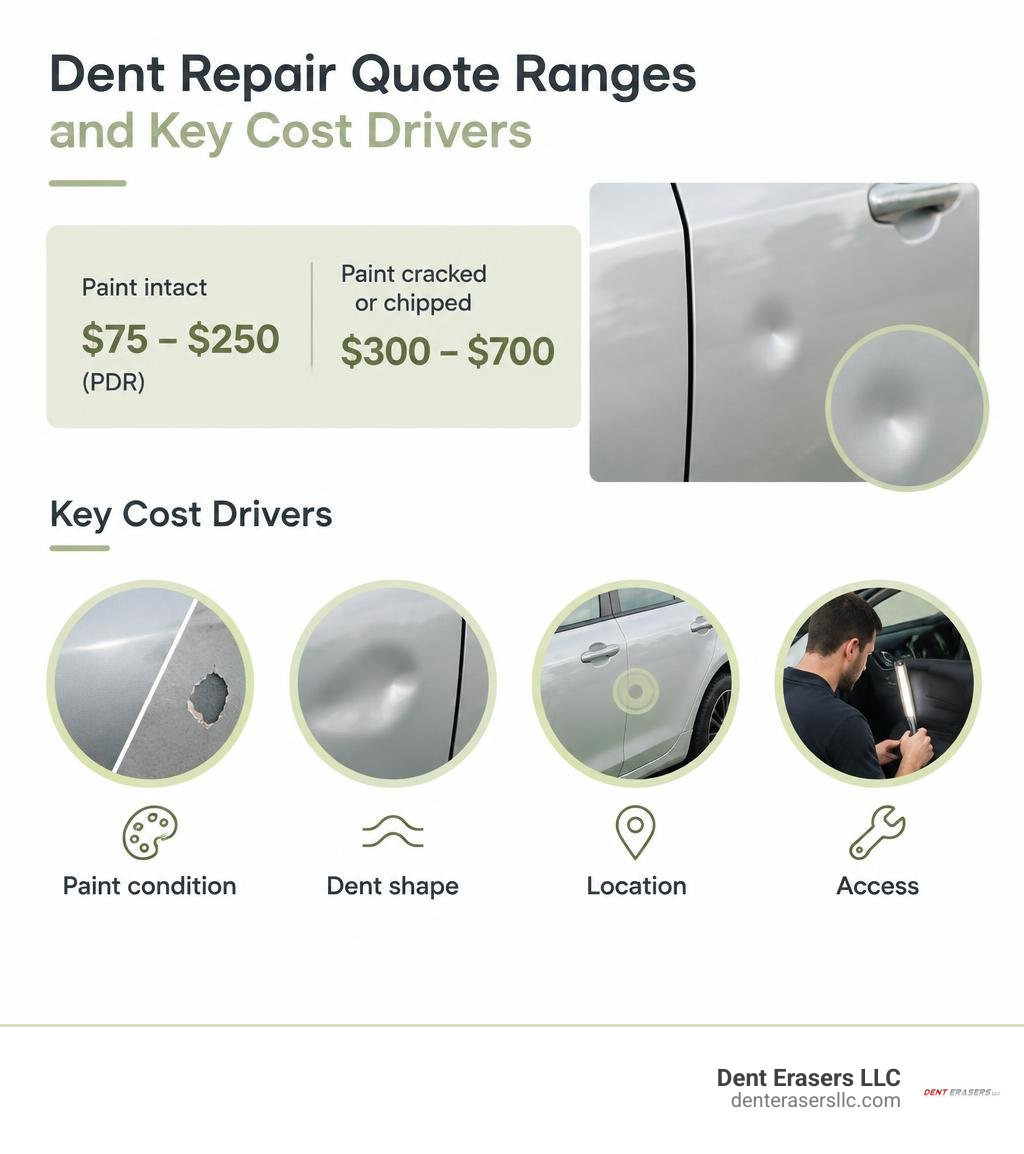
Understanding What Goes Into a Dent Repair Quote

When drivers walk out to their vehicle in a parking lot and spot a fresh dent, the natural reaction is to gauge the repair price by its surface diameter. A dime-sized ding feels like it should cost pocket change, while a basketball-sized crease looks like a financial catastrophe. In the auto body world, however, geometry and physics matter far more than surface area alone.
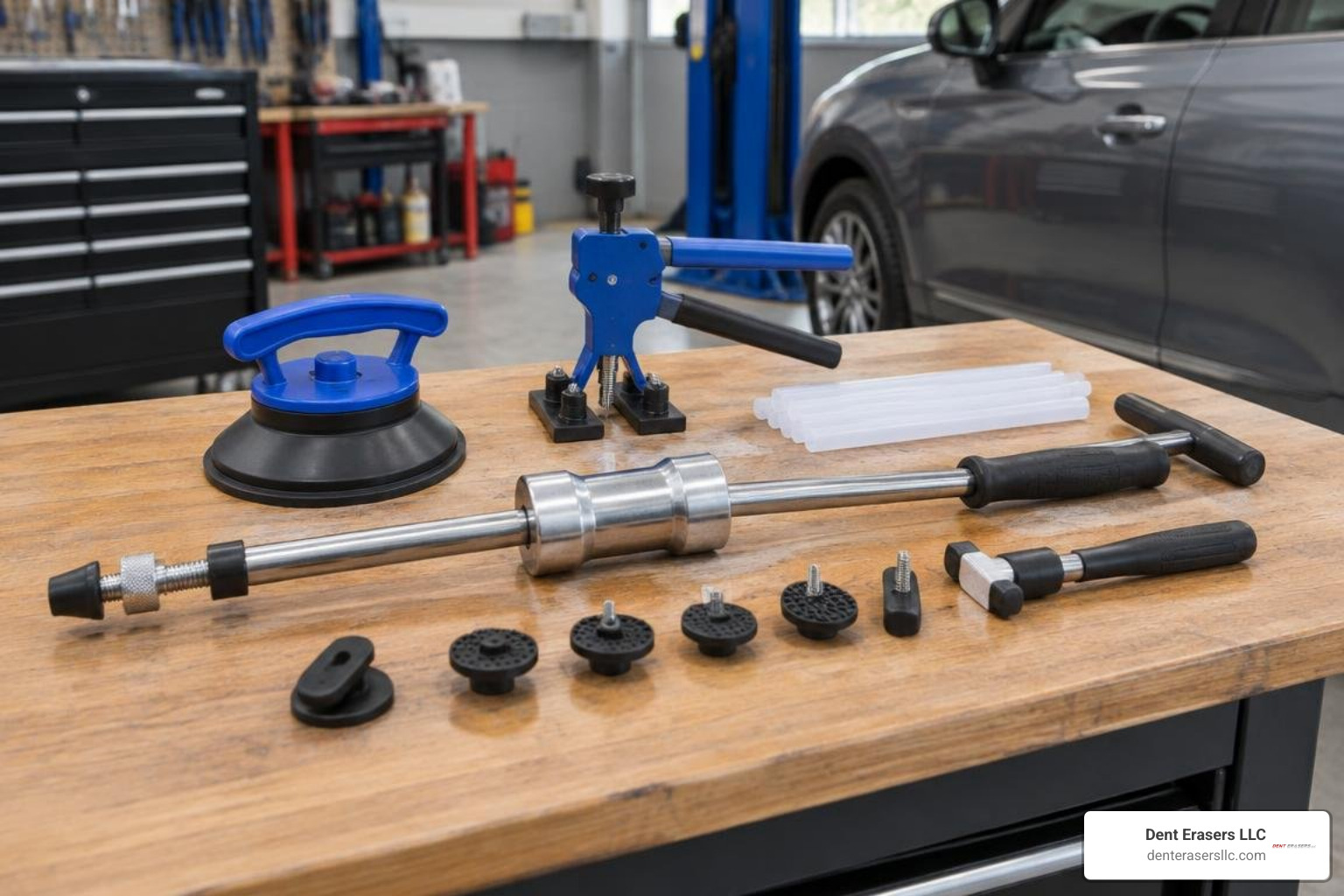
To understand how professional technicians calculate pricing, we have to look behind the sheet metal. Paintless dent repair (PDR) is an intricate craft. We gently massage the stretched metal back into its original factory contour using specialized rods, leverage tools, and reflective light boards—all without disturbing your vehicle’s original factory paint.
When you request an estimate, technicians evaluate several technical variables:
- Panel Material: Modern vehicles use a blend of standard mild steel, ultra-high-strength steel, and lightweight aluminum alloys. Aluminum is increasingly common on hoods, tailgates, and luxury vehicles across Contra Costa County. However, aluminum has zero “metal memory,” requires significantly more force, specialized heat treatment, and precise manipulation to reshape, making it more labor-intensive than flexible mild steel.
- Metal Depth and Stretch: A shallow, palm-sized soft dent might take thirty minutes to release. In contrast, a tiny, pinpoint ding caused by a high-impact rock or sharp object stretches the molecular structure of the metal. If the metal is overstretched, shrinking it back flat demands extreme patience and micro-tool precision.
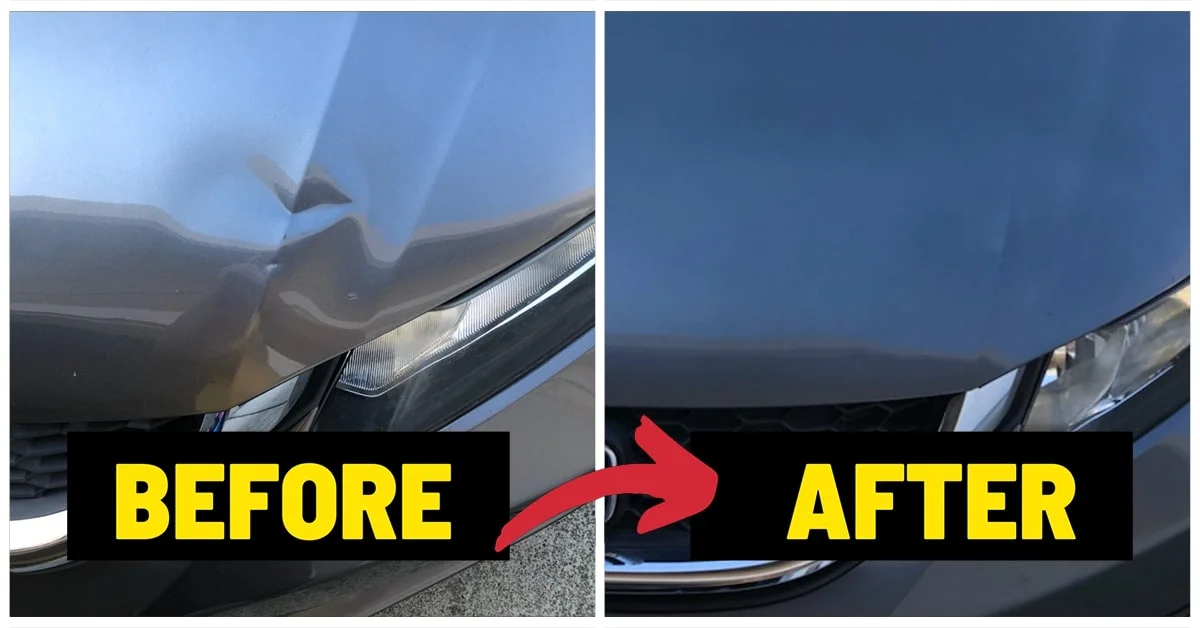
- Body Lines and Contours: The stylish creases, sweeping curves, and aerodynamic ridges stamped into modern vehicle doors and fenders give panels their structural strength. When an impact lands squarely on a body line, we must rebuild that stamped ridge millimeter by millimeter, which requires advanced technique.
- Access Constraints: PDR relies on reaching the backside of the dented panel. Open areas like the center of a hood or front fender offer straightforward access. But if the ding is tucked behind an interior side-impact crash beam, double-walled roof rail, or window regulator assembly, accessing the area takes substantially longer.
| Dent Size & Type | Panel Location | Backside Access | Typical PDR Cost Range |
|---|---|---|---|
| Small Shallow Ding (Dime to Quarter) | Open Door Panel / Fender | Direct (Open Cavity) | $75 – $150 |
| Sharp Pinpoint Ding | Hood / Trunk Lid | Moderate (Soundproofing Removal) | $125 – $250 |
| Medium Dent (Golf Ball to Baseball) | Rear Quarter Panel | Limited (Interior Trim Removal) | $200 – $400 |
| Body Line Crease / Complex Dent | Door Edge / Body Crease | Obstructed (Double-Walled Steel) | $300 – $500+ |
Why Two Similar Dings Receive a Different Dent Repair Quote
It is common for two car owners with nearly identical quarter-sized door dings to receive entirely different estimates. You might wonder why one repair costs $100 while the other sits at $250.
The primary culprit is internal panel construction. Every vehicle make and model features unique internal bracing. If a dent lands on an open outer door skin, our specialized tools can slip through the window seal in seconds. If that exact same ding lands two inches higher—resting directly over a welded internal crash reinforcement bar—we must either use precision glue-pulling techniques from the exterior or carefully navigate ultra-thin blades through tight structural gaps.
Another critical factor is factory clear coat integrity. If the impact stretched the paint past its elastic limit or created micro-fractures, traditional paintless techniques might compromise the finish. For a deeper look at how access challenges, metal elasticity, and depth dictate repair costs, explore our comprehensive dents and dollars pricing breakdown.
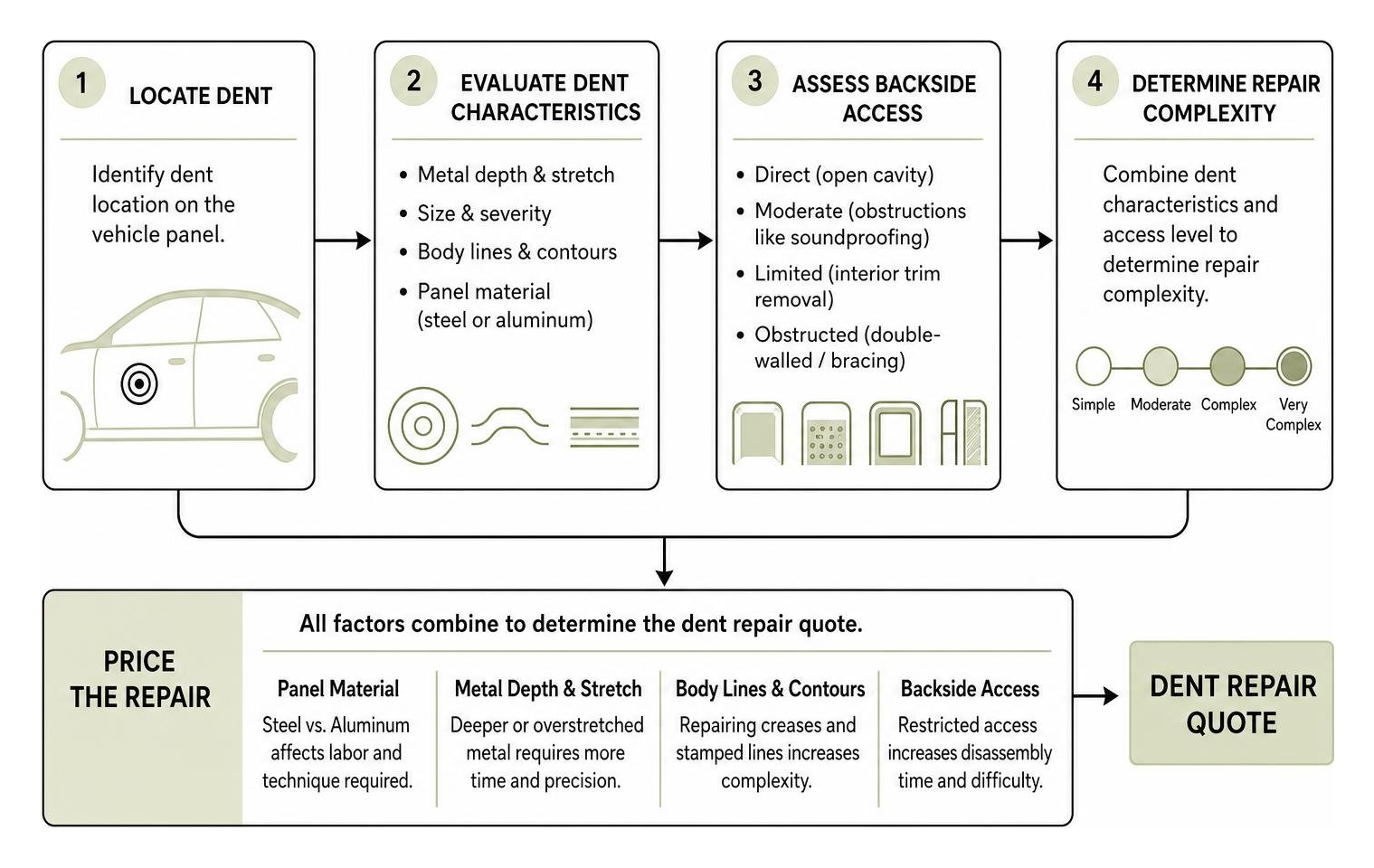
How Dent Characteristics Affect Paintless Dent Repair Costs
Minor dent pricing for straightforward, accessible damage in the US typically ranges from $75 to $250. However, when you factor in severe depths, complex creases, and restricted access points, high-end repairs naturally adjust to reflect the added labor.
Why did the dent go to therapy? It needed a little “pop” motivation! But in reality, popping a dent out safely requires careful pressure modulation. If a technician rushes a deep crease, the metal can crown, crack the paint, or create high spots that ruin the panel’s reflection.
Traditional auto body shops often require leaving your car on their lot for three to five business days because they sand, fill with Bondo, and repaint the entire panel. With mobile paintless dent repair, we complete the entire restoration right in your driveway in Concord, Walnut Creek, or San Ramon in under two hours, preserving your factory warranty and original paint.
How to Get an Accurate Photo Estimate Before Visiting a Shop
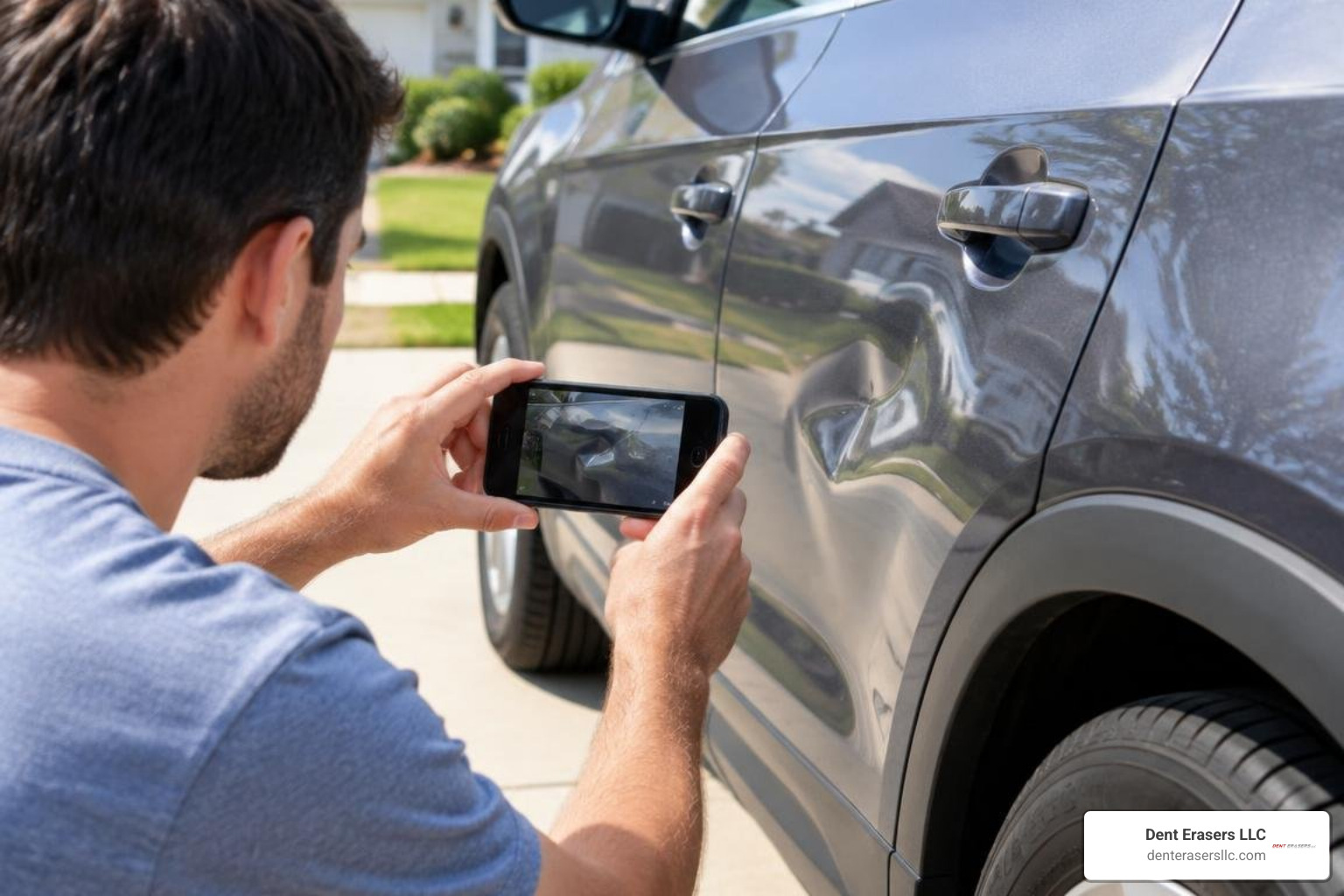
In 2026, you no longer have to waste your lunch break driving from body shop to body shop just to find out what a dent will cost. Digital estimating tools allow you to snap a few quick photos on your smartphone and receive an upfront ballpark figure within minutes.
When preparing photos for mobile auto body repair estimates, how you capture the image directly dictates the accuracy of your quote. Cameras naturally flatten three-dimensional curves, making deep dents appear shallow and soft dings disappear entirely.
Step-by-Step Guide to Photographing Vehicle Damage
To ensure your digital dent repair quote reflects the true scope of work without unexpected surprises, follow these photography best practices:
- Wipe Down the Panel First: Dust, road grime, water spots, and pollen hide shallow metal low spots and confuse camera sensors. Give the damaged area a quick wipe with a microfiber cloth and detail spray.
- Shoot in Indirect Daylight: Direct midday California sun creates harsh glares and blinding highlights that wash out metal reflections. The best lighting occurs during early morning, late afternoon, or under light overcast skies.
- Capture the 45-Degree Angle: Never shoot only straight-on at a 90-degree angle. Position your camera at a 45-degree angle to the panel so the reflection of straight background lines (like a garage door, fence, or building edge) runs across the dent. Distortions in those reflected lines reveal exact depth and shape.
- Provide Wide Context and Tight Close-Ups: Take one picture standing 6 to 8 feet back showing the entire body panel (fender, door, or quarter panel) so we can identify panel access and adjacent trim. Then take two close-up shots from 12 to 18 inches away.
What Digital Estimates Miss and When In-Person Inspection Is Essential
While digital estimates provide fantastic initial cost ranges, they are a starting baseline—not a binding ceiling. A digital photograph captures visible surface defects, but it cannot see behind the sheet metal.
A digital photo cannot detect:
- Hidden Sub-Structure Damage: Broken plastic bumper mounting clips, crumpled internal impact absorbers, or bent inner wheelhouse liners.
- Paint Micro-Fractures: Hairline clear-coat fracturing that only becomes visible under high-lumen LED reflection boards.
- Sensor and ADAS Calibration Needs: Radar units, parking sensors, and blind-spot cameras mounted inside modern bumpers that require recalibration if the panel shifts.
- Metal Stretching at the Apex: Severe stretching where the metal has thinned at the deepest point of impact.
When extensive structural damage is suspected, getting a hands-on evaluation ensures full transparency. You can read more about evaluating shop estimates in our guide on professional dent removal service cost.
Evaluating Your Options: Insurance, Out-of-Pocket, and Policy Coverage
Finding fresh damage on your vehicle always brings a dilemma: Should you pay out of pocket or file an insurance claim?
If your vehicle suffers severe impact damage requiring traditional body shop repainting, conventional collision repairs typically run $300 to $700 or more per panel due to labor, sanding, and paint booth fees.
However, because mobile paintless dent repair for minor to moderate dings typically costs between $150 and $500 with Dent Erasers LLC, filing a formal insurance claim is rarely the most economical move.
To weigh your financial options between traditional body shops, comprehensive policies, and mobile PDR, check out our guide on evaluating your repair cost breakdown.
Should You File an Insurance Claim for Minor Dings?
Before picking up the phone to call your insurance adjuster, check your policy’s deductible amount. Standard comprehensive and collision deductibles range from $500 to $1,000.
If a mobile PDR technician can remove your door ding or shopping cart crease for $200, filing a claim makes little sense:
- You Pay Out of Pocket Anyway: If the repair cost is lower than your $500 deductible, your insurer pays $0.
- Risk of Rate Hikes: Even minor claims can count against your claims history, potentially raising your annual insurance premiums upon renewal.
- Vehicle History Reports: Many insurance claims are logged into public vehicle history databases, which can flag minor cosmetic repairs as collision events and ding your vehicle’s resale value.
Paying out of pocket for mobile paintless dent repair protects your clean driving record, keeps your rates steady, and preserves your car’s original factory finish.
How to Verify if Your Dent Repair Quote Is Fair
Transparency is critical when hiring any auto reconditioning professional. A reputable technician will gladly explain their pricing structure before touching your vehicle.
To confirm that your repair estimate is accurate:
- Request Itemized Details: Ask whether the estimate covers standard PDR, panel removal/access fees (R&I), or conventional bodywork requiring repainting.
- Verify Paintless Feasibility: If a shop insists on traditional filler and repainting for a dent where the paint is completely unbroken, get a second opinion from a dedicated PDR specialist. Preserving original paint is always superior to aftermarket blending.
- Understand Regional Labor: Quality mobile specialists in the San Francisco Bay Area and Contra Costa County use standardized pricing models based on dent diameter, depth, and material complexity. For additional details on how body shops itemize labor, explore our step-by-step car body repair pricing overview.
Frequently Asked Questions About Dent Repair
How much does paintless dent repair cost?
In the United States, minor paintless dent repair for small, accessible dings typically ranges from $75 to $250. For medium to large dents, sharp creases along body lines, or repairs on aluminum panels, pricing generally falls between $200 and $500+. Because PDR eliminates the need for expensive paint supplies, sanding, and body fillers, it is significantly more affordable than traditional auto body shop repairs, which routinely exceed $500 to $1,500 for the same panel.
How long does paintless dent repair take?
Most mobile paintless dent repairs take between 45 minutes and two hours to complete right at your location. In contrast to conventional body shops that keep your vehicle for several days while paint primers cure and clear coats dry in a spray booth, PDR restores the metal immediately. Even complex, multi-ding hail repairs or deep body line creases are almost always finished on the same day.
Is dent removal a legal requirement for road safety?
In general, minor cosmetic dents on doors, hoods, fenders, and quarter panels are not a legal violation, and your vehicle remains fully road-legal. However, dent removal becomes a legal and safety concern if the damage affects vehicle roadworthiness. This includes sharp jagged metal edges that pose pedestrian hazards, crushed bumper covers that compromise structural crash bars or blind-spot sensors, or hood damage that prevents safety latches from locking securely. Furthermore, leaving dents untreated on steel panels can allow exposed metal to oxidize, eventually causing structural rust holes.
Conclusion
A tiny ding might seem deceptively simple, but factors like metal type, depth, body line placement, and internal access all influence the final estimate. By understanding how these variables work, taking clear damage photos, and choosing the right repair method, you can make informed decisions that save both time and money.
At Dent Erasers LLC, we provide high-precision, mobile paintless dent repair for daily drivers, motorcycles, luxury cars, and classic vehicles across Contra Costa County—including Concord, Walnut Creek, Antioch, San Ramon, Martinez, Brentwood, and surrounding communities. We bring the repair shop directly to your home or office, restoring your car’s flawless bodylines while preserving its factory paint.
Ready to restore your vehicle without the body shop hassle? Contact us today to experience our expert paintless dent repair service and get your fast, transparent quote.