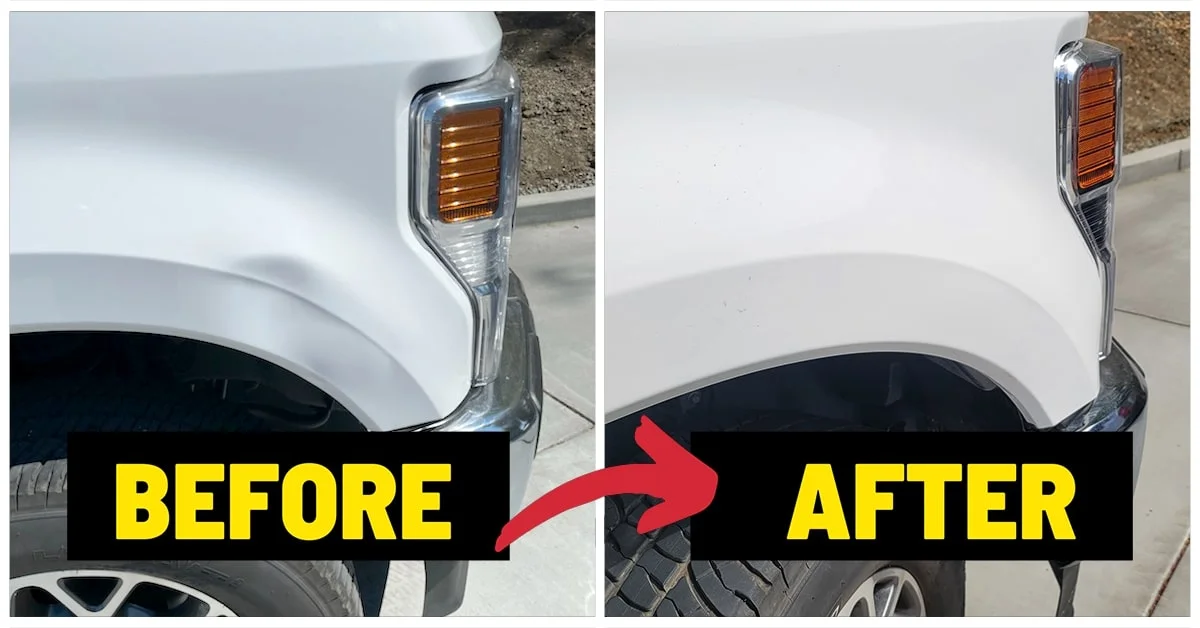
How to Remove a Dent From a Car Fender Without Making It Worse
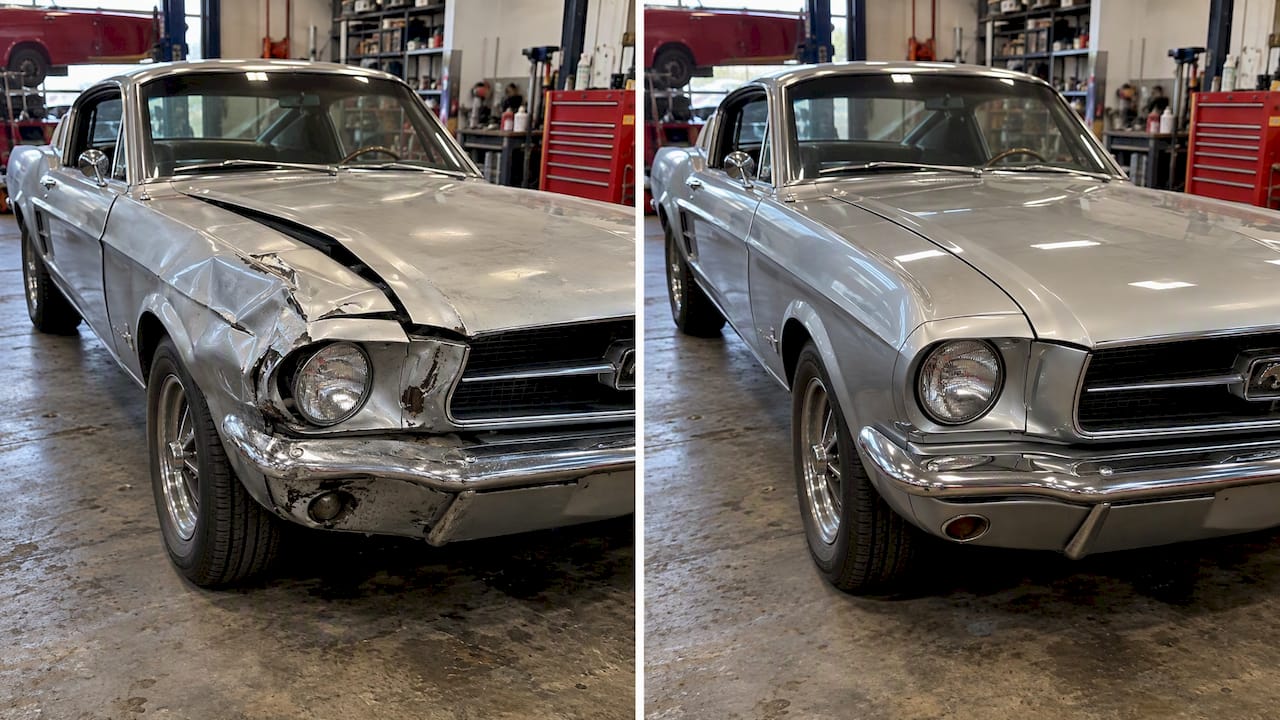
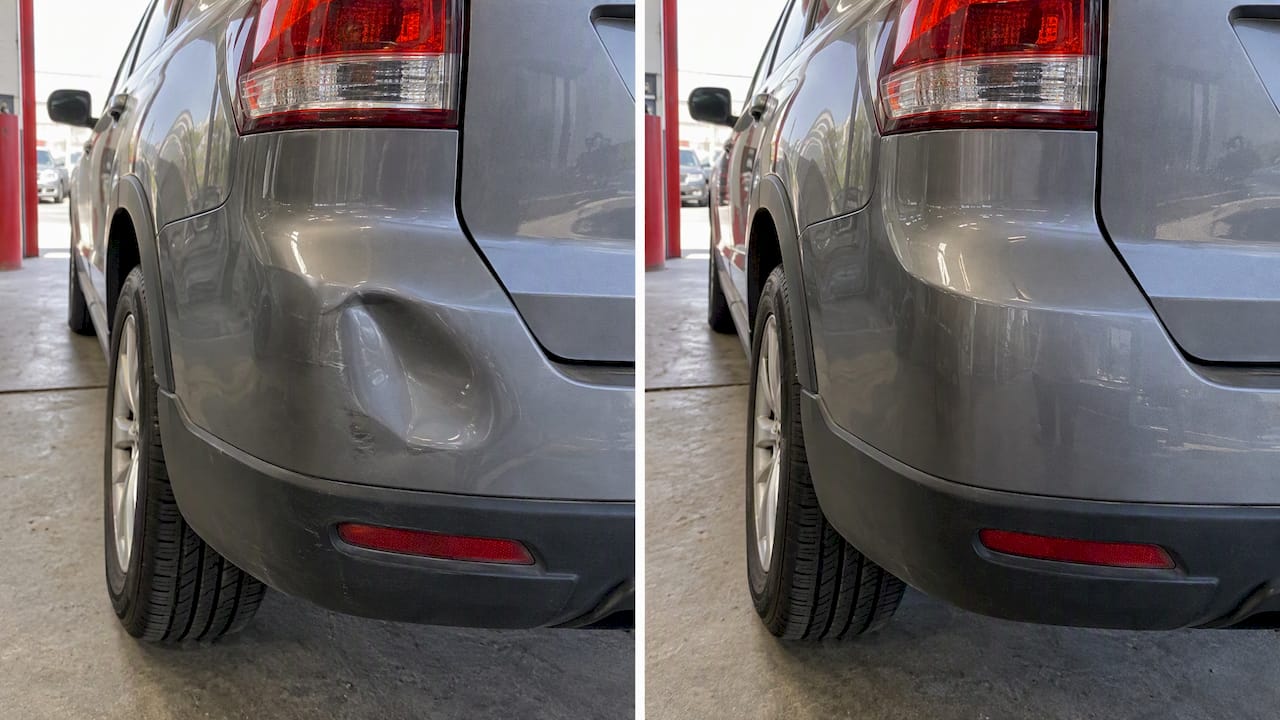
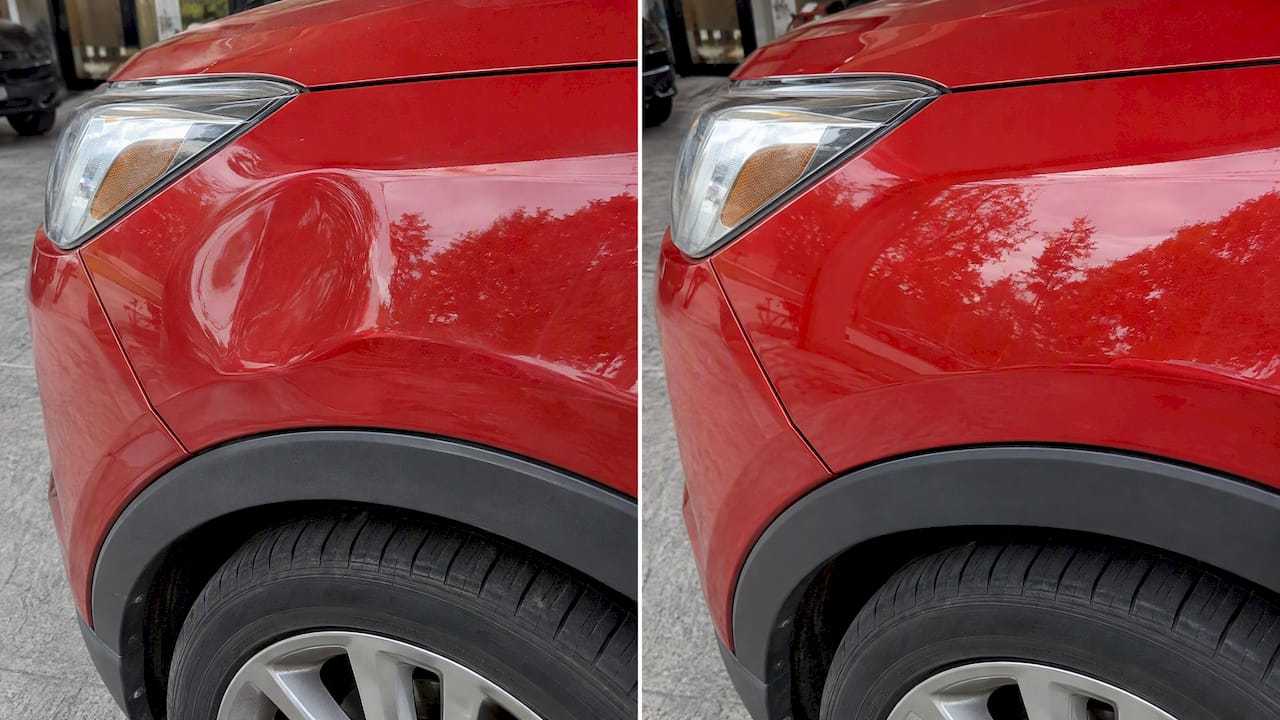
To remove a dent from a car fender, clean the area and check the paint and metal first. If the paint is intact and the dent is shallow, a professional PDR assessment can determine whether it can be restored without repainting. Avoid forcing the metal or attempting techniques that create raised spots. A sharp crease, stretched metal, or cracked paint needs a professional assessment. Paintless dent repair (PDR) can reshape suitable dents without repainting the fender.
I’m Brian Blanc of Dent Erasers LLC. For 28 years, I’ve helped East Bay drivers searching for “remove dent from car fender” find a paint-safe solution through mobile PDR.
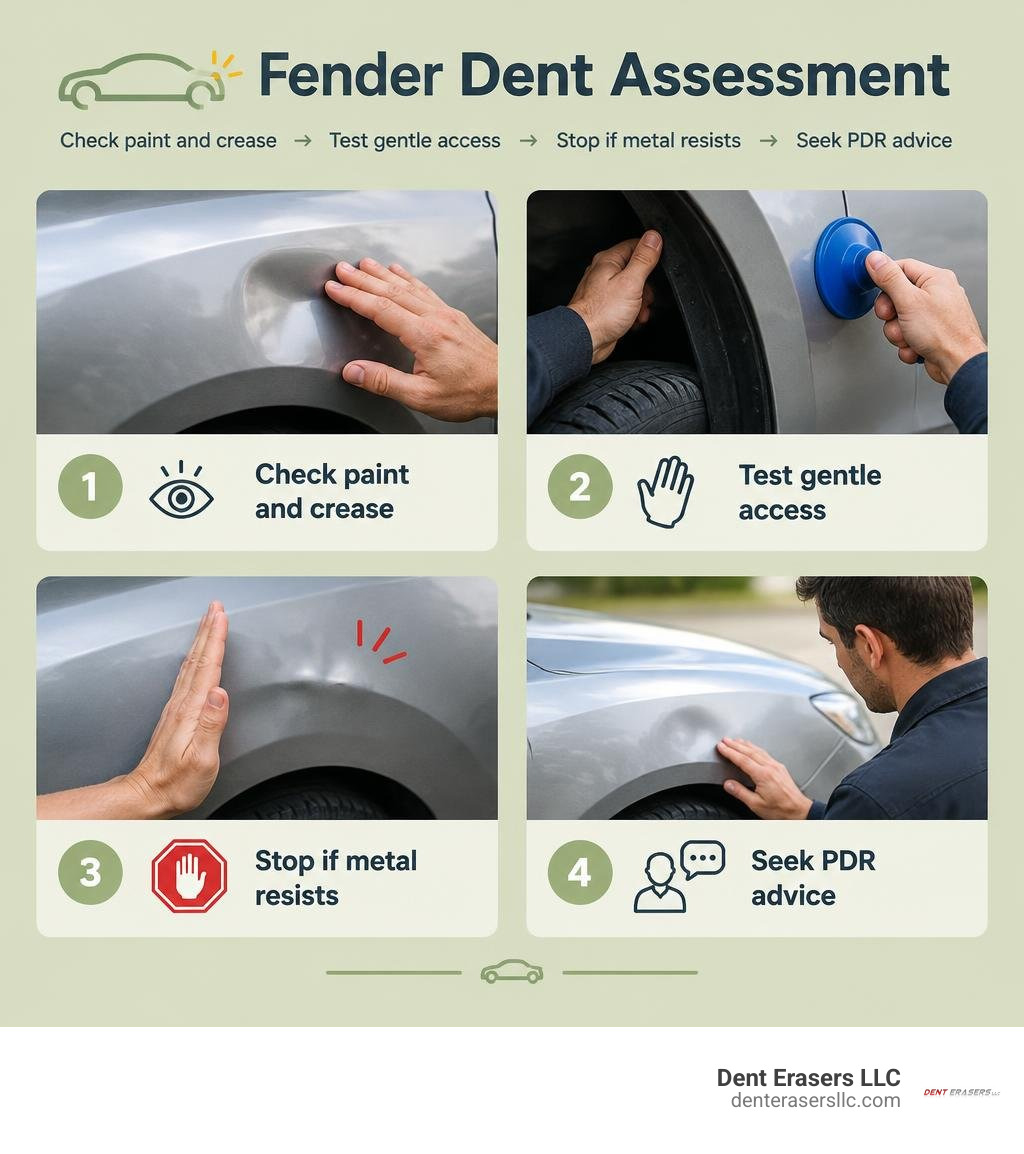
Learn more about remove dent from car fender:
Assessing Damage: When to Call a PDR Professional
Before grabbing a tool from your garage, take a close look at the anatomy of the damage. A fender is rarely a flat sheet of metal; it is a sculpted panel designed with structural contours, body lines, and wheel arches that give your car its sleek profile. When an impact happens, the metal displaces inward, creating tension along the outer rim of the impact zone.
To decide whether the dent is a good candidate for professional PDR, evaluate these key factors:
- Paint Condition: Run your fingernail gently across the damage. If the clear coat or base paint is cracked, flaking, or gouged down to the primer, simple mechanical pulling will not solve the problem. Cracked paint exposes raw metal to moisture and road salt, leading to oxidation if left unsealed.
- Metal Stretching: When sheet metal bends beyond its natural elastic limit, it stretches. Stretched metal creates excess surface area that cannot simply “pop” back into place without specialized shrinking techniques.
- Dent Depth and Diameter: Shallow, round dings with soft edges are often stronger candidates for PDR. Deep, sharp impressions have high internal stress and may require a more limited result or a different repair approach.
- Backside Panel Access: Can you easily access the reverse side of the fender by unfastening a few plastic clips on the inner splash guard? If access is blocked by double-walled structural framing, access limitations can make professional evaluation especially important.
Review this quick comparison to see where your vehicle’s damage stands before starting any repairs:
| Damage Characteristic | PDR Suitability | Professional PDR Requirement |
|---|---|---|
| Paint Status | Intact, glossy, flexible | Chipped, heavily scratched, or cracked |
| Dent Profile | Smooth, shallow, rounded | Sharp crease, folded body line, or pinched metal |
| Panel Material | Standard mild steel or thermoplastic | High-strength steel, aluminum, or composite |
| Location | Open, flat center of the panel | Stiff wheel-arch lip or inner structural brace |
| Repair Approach | Professional PDR assessment may be appropriate | A different repair approach may be needed |
Understanding these small dent repair cost factors helps you budget wisely and prevents you from spending money on tools that might damage your car’s finish.
Evaluating Creased Metal and Stretched Body Lines
Crease dents are among the trickiest types of panel damage. Unlike round parking-lot dings that distribute stress evenly, a crease concentrates energy along a narrow, sharp line. This sharp impact locks the metal under intense mechanical tension.
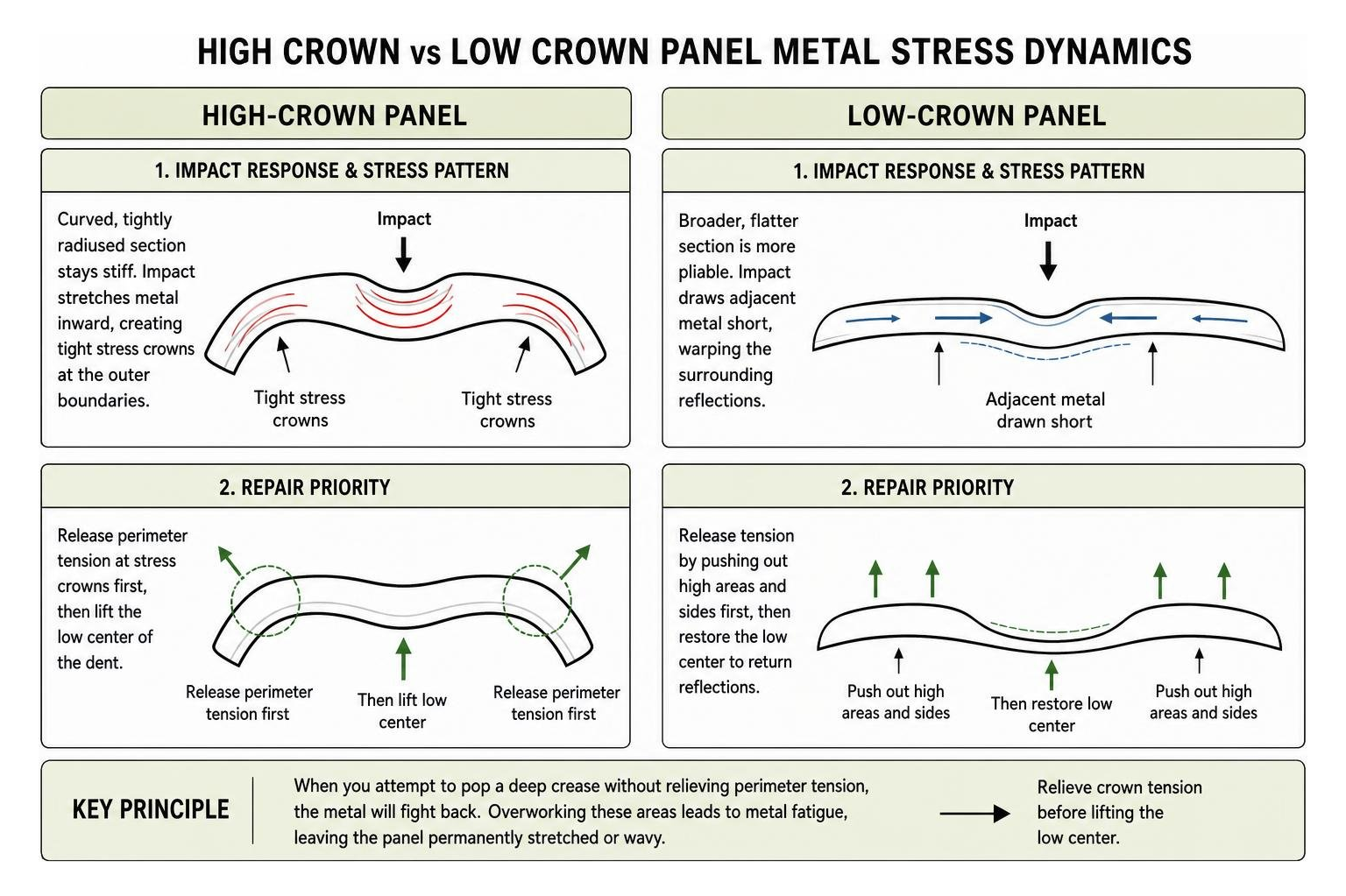
When examining a fender, you must also understand crown behavior:
- High-Crown Panels: These are curved, tightly radiused sections such as the flare directly above your wheel well. High-crown metal is stiff and naturally holds its shape. When hit, it tends to stretch inward, creating tight stress crowns at the outer boundaries.
- Low-Crown Panels: These are broader, flatter sections of the upper fender. Low-crown metal is more pliable, but an impact here easily draws adjacent metal short, warping the surrounding reflections.
When you attempt to pop a deep crease without systematically relieving the perimeter tension, the metal will fight back. Overworking these areas leads to metal fatigue, leaving the panel permanently stretched or wavy. Reviewing dedicated crease repair techniques shows why releasing crown tension is essential before lifting the low center of any fold.
Metal Fenders vs. Thermoplastic Panels
Modern automotive engineering uses a mix of materials to reduce weight and improve safety. Identifying what your fender is made of dictates your entire repair approach:
- Sheet Steel: Found on most domestic and foreign vehicles, steel has natural mechanical memory. If the impact has not severely stretched the material, steel can often be manipulated back to factory shape using controlled leverage or suction.
- Aluminum: Found frequently on luxury sports cars and modern trucks, aluminum is lightweight and rigid. However, it lacks the elastic memory of steel. It requires up to 50% more force to manipulate, work-hardens rapidly, and demands careful heat management to prevent cracking.
- Thermoplastics (Polypropylene and Polyurethane): Modern front and rear bumper covers, and some front fender flares, are molded from automotive plastics. These panels do not deform like metal; instead, they flex inward and lock under thermal stress. Thermoplastics soften at elevated temperatures, making them prime candidates for heat-assisted reshaping. You can review specialized plastic fender and bumper restoration steps to learn how these flexible covers respond to controlled warming.
When a Fender Dent Is a Good Candidate for PDR
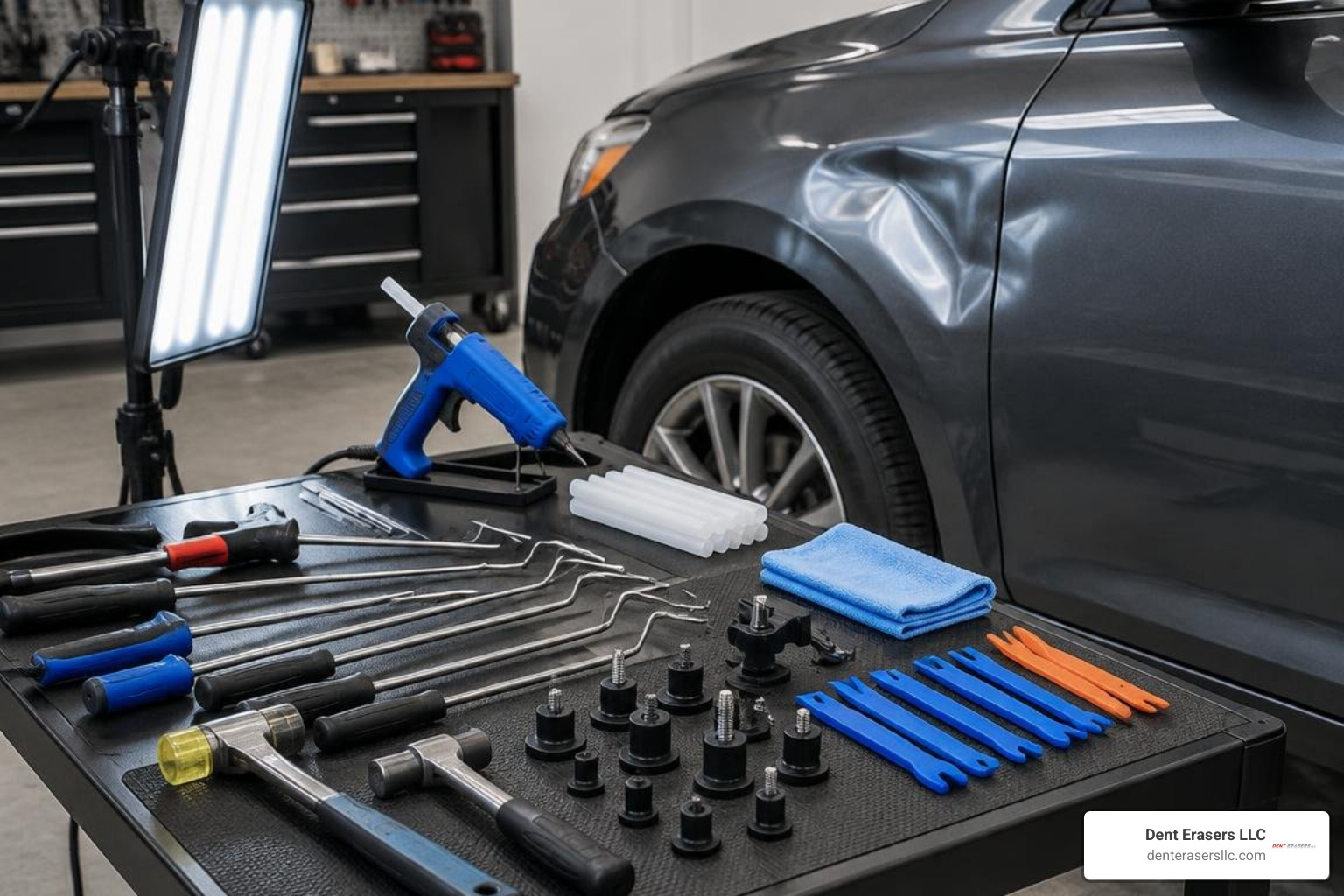
A professional assessment helps determine whether paintless dent repair can restore a fender without refinishing it. The most promising candidates usually have intact paint, a shallow dent profile, and workable access behind the panel. A technician also checks for stretched metal, sharp creases, aluminum construction, and interference from braces or wheel-arch structure.
What a PDR Assessment Covers
During an inspection, a PDR technician evaluates the panel’s condition and whether a paint-preserving result is realistic. For background on common minor-dent scenarios, see our dent evaluation guide:
- Paint flexibility: Intact factory paint is important because PDR aims to preserve the original finish.
- Dent shape and location: Broad, smooth dents in accessible areas are often more suitable than sharp folds on body lines or wheel-arch edges.
- Metal tension: A severe impact can stretch metal or create high spots that limit how closely the panel can return to its original contour.
- Panel access: Inner braces, liners, and structural components may determine whether controlled access is possible.
For a closer look at what affects suitability and pricing, see our small dent repair cost factors and complete PDR pricing guide.
When to Seek a Different Type of Repair
PDR may not be the right solution when paint has cracked, the fender has severe collision damage, corrosion is present, or the panel material and access prevent a paint-preserving repair. In those cases, Dent Erasers can explain the PDR limitations and help set realistic expectations before work begins.
Why a Professional Inspection Protects the Finish
A careful inspection avoids unnecessary pressure on the panel and helps protect the factory finish. Dent Erasers uses mobile PDR for suitable automotive dents, focusing on controlled adjustments that preserve the vehicle’s original paint whenever possible. For additional background, review our minor dent repair overview and this independent dent-repair overview.
Advanced Restoration: Why Paintless Dent Repair (PDR) Is the Superior Solution
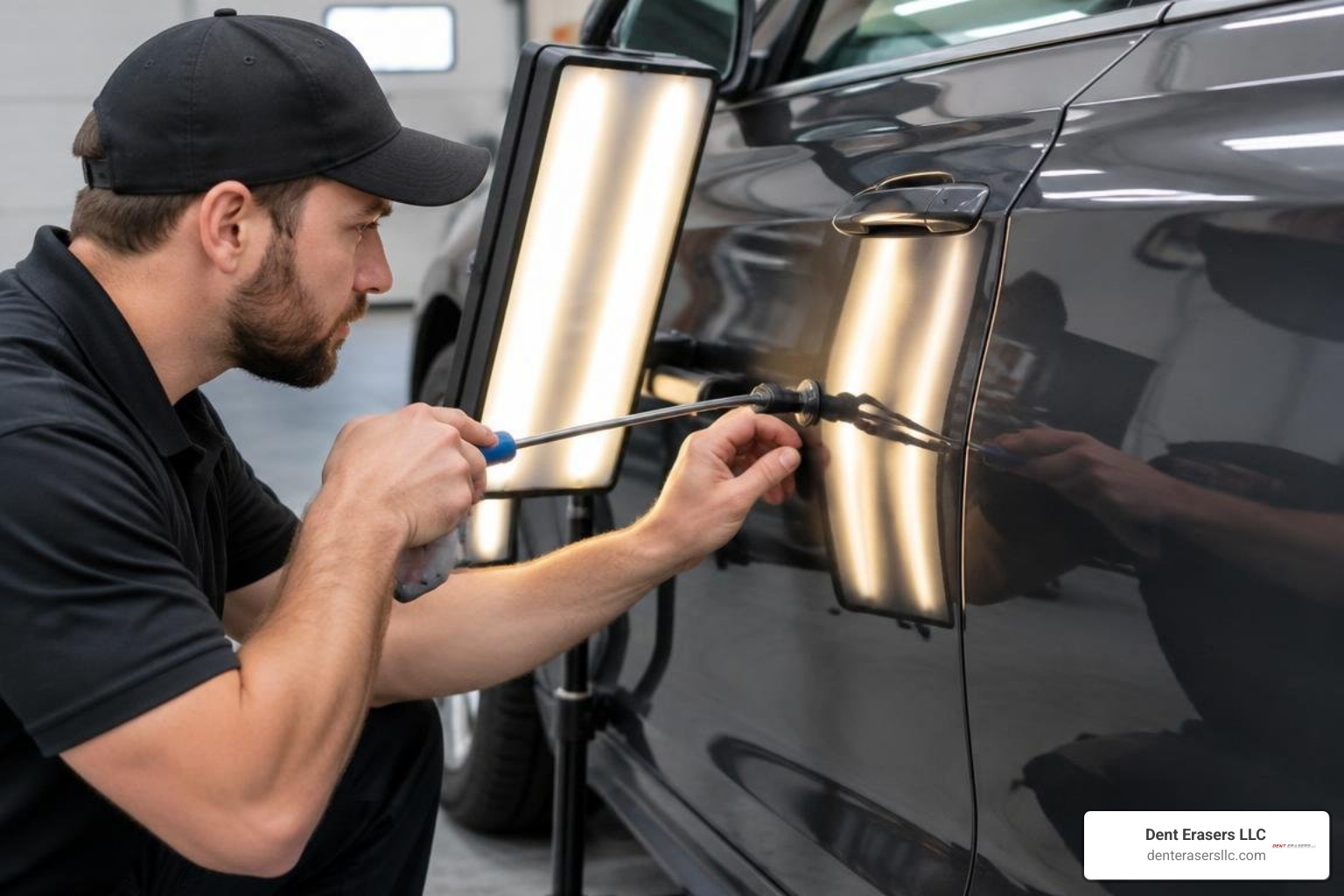
Mobile Paintless Dent Repair (PDR) is a paint-preserving method for restoring suitable dents without sanding, fillers, or color matching. A trained technician evaluates access, paint condition, and metal tension before making controlled adjustments from behind the panel or with approved exterior techniques.
Preserving your factory paint is the single best way to protect your vehicle’s long-term resale value. Factory-applied e-coatings and baked-on clear coats are far more durable and corrosion-resistant than standard aftermarket spray finishes. In fact, professional PDR can resolve fender and wheel arch repair challenges in just a couple of hours for a fraction of conventional body shop estimates.
Our work meets the strict quality metrics established by the NAPDRT consumer standards, ensuring that your car’s panels are manipulated with surgical precision rather than brute force.
How to Remove Dent from Car Fender with Paintless Dent Repair (PDR)
Professional PDR technicians rely on fine motor control, hand-eye coordination, and specialized equipment:
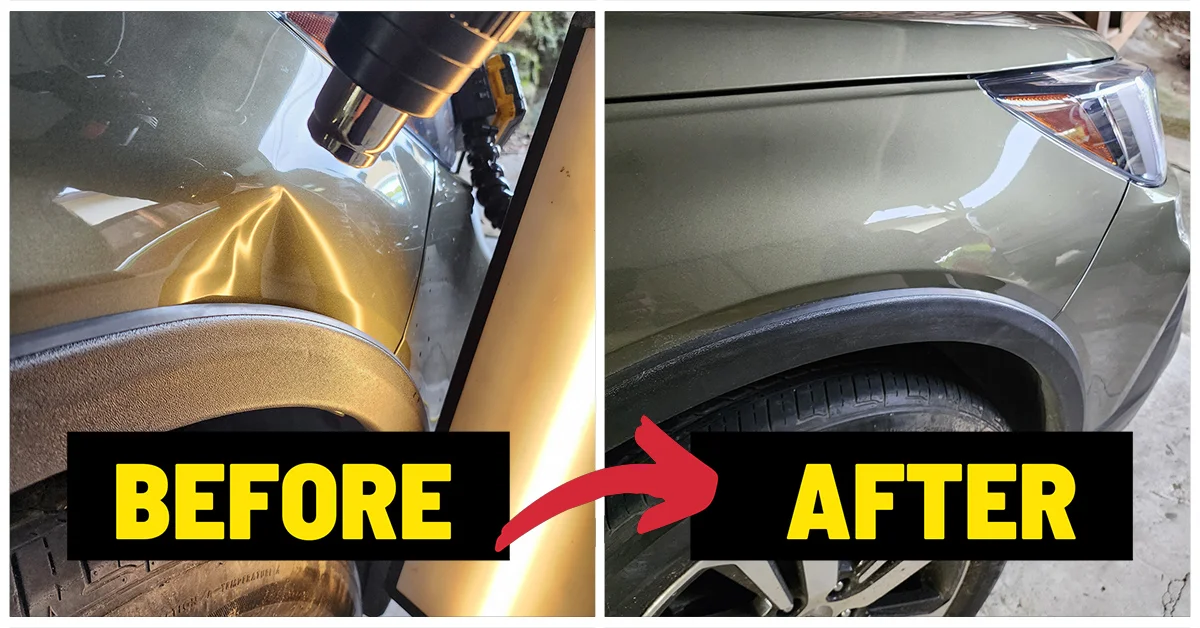
- Optical LED Reflection Boards: Technicians place high-intensity LED light boards against the fender. These boards cast parallel shadow lines across the paint. Where a dent exists, the lines warp and distort. By reading these lines, the technician can see microscopic high and low spots across the metal.
- Custom PDR Rods and Picks: Crafted from high-carbon spring steel, these long, curved rods are snaked behind the inner fender liner or through factory access holes. Using controlled leverage, the technician applies micro-pushes—often hundreds of tiny, deliberate touches—to raise the low metal fraction by fraction.
- Glue-Pulling Systems: When inner structural bracing blocks backside access, glue-pulling is used. Specially formulated hot-melt glue bonds plastic pulling tabs directly to the clear coat. A controlled pulling tool lifts the tab outward, after which isopropyl alcohol releases the glue cleanly without leaving a mark.
To learn more about the mechanics behind this process, read the PDR process explained by HowStuffWorks.
Risks of Amateur Dent Removal and How to Avoid Panel Warping
It is easy to watch an online video and assume that sheet metal behaves like simple clay, but amateur dent removal carries real risks:
- Creating High Spots: Pushing too hard in one spot from behind creates tiny “pimples” or high spots on the outside. These high spots stretch the metal upward and are much harder to tap down flat than the original low dent was to push out.
- Clear Coat Fracturing (Crazing): If you bend cold metal too fast without checking panel temperature, the brittle clear coat can spider-web and crack, turning a paintless fix into an expensive repainting job.
- Metal Thinning and Over-Massaging: Repeatedly pushing and hammering back and forth fatigues the steel. This leaves a weak, flabby area that buckles under slight temperature changes.
Avoiding these common small dent repair mistakes will save you time, stress, and unneeded repair bills.
Frequently Asked Questions About Fender Dent Removal
Can PDR fix a dent on a plastic fender?
PDR is designed for metal panels, so plastic fender flares and bumper covers require a separate evaluation. Dent Erasers can assess the damaged area and advise whether a paint-preserving repair is appropriate or whether another repair provider is needed.
How much does professional fender dent repair cost?
Professional mobile paintless dent repair for a car fender typically ranges from $150 to $500, depending on the dent’s size, depth, and whether it crosses a sharp body crease. If the paint is cracked, the metal is sharply creased, or the panel is inaccessible, a repair may require a different service and pricing structure. For a detailed breakdown of pricing factors, consult our complete PDR pricing guide.
Will fixing a fender dent with PDR damage my factory paint?
No. Modern automotive clear coats are formulated to be remarkably flexible and resilient. Because PDR does not use harsh chemicals, body fillers, or grinding discs, your factory paint and corrosion warranties remain 100% intact.
Conclusion
Minor fender dings don’t have to ruin your car’s curb appeal or drain your wallet. Complex body creases, tight wheel arches, and dents with limited access benefit from an experienced technician’s evaluation.
At Dent Erasers LLC, we bring decades of hands-on experience directly to your home or office across Contra Costa County—including Concord, Walnut Creek, Antioch, Brentwood, San Ramon, and surrounding East Bay communities. We restore your vehicle to factory-fresh condition in just a few hours while preserving your original paint.
Ready to see that dent disappear for good? Contact Brian Blanc today to schedule mobile paintless dent repair and get your car looking showroom-ready again.