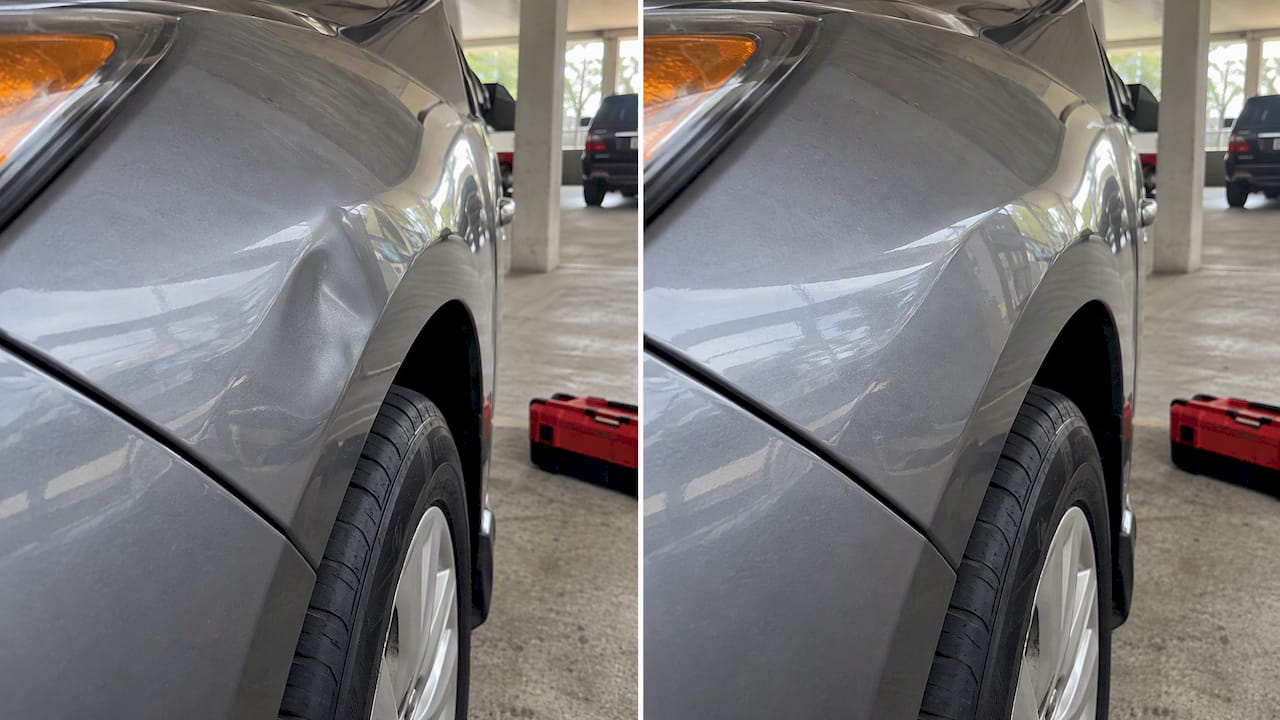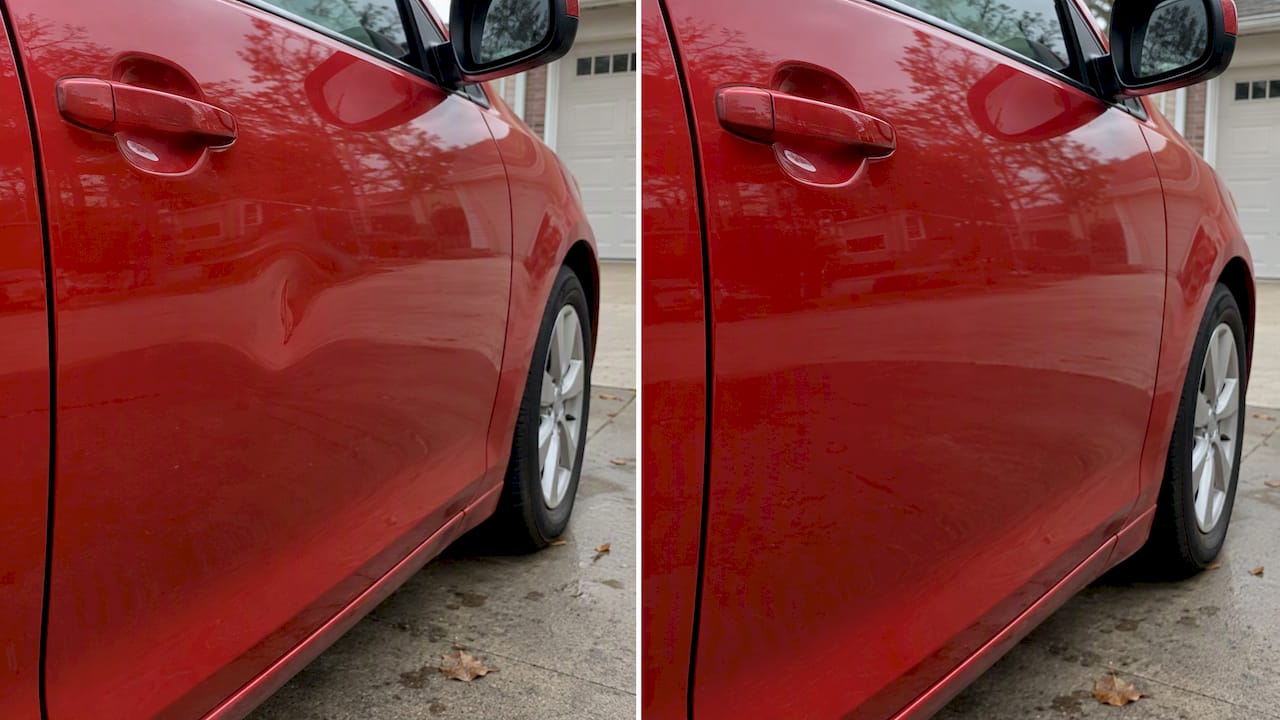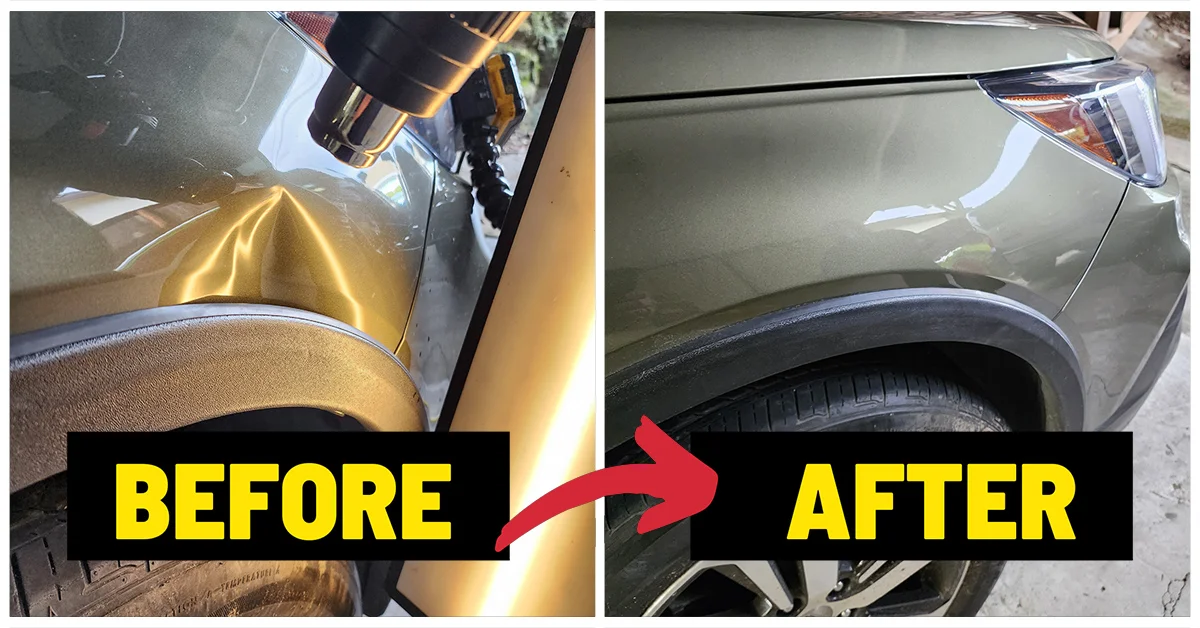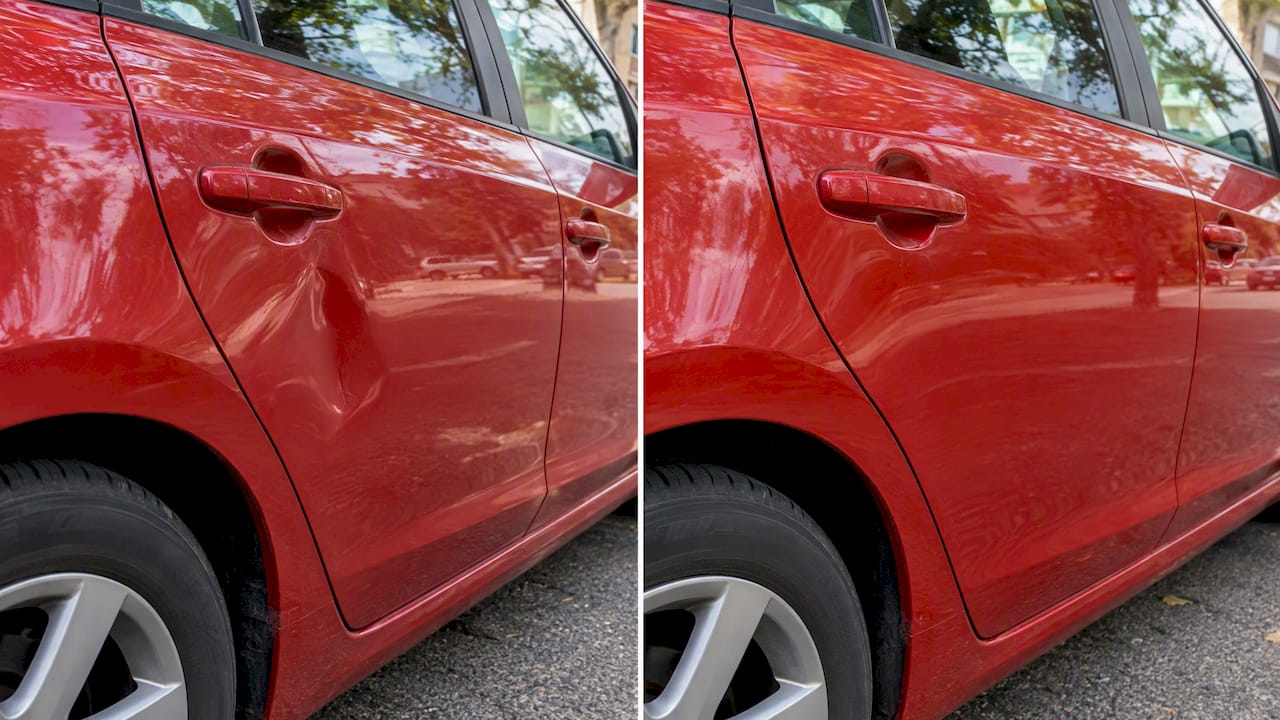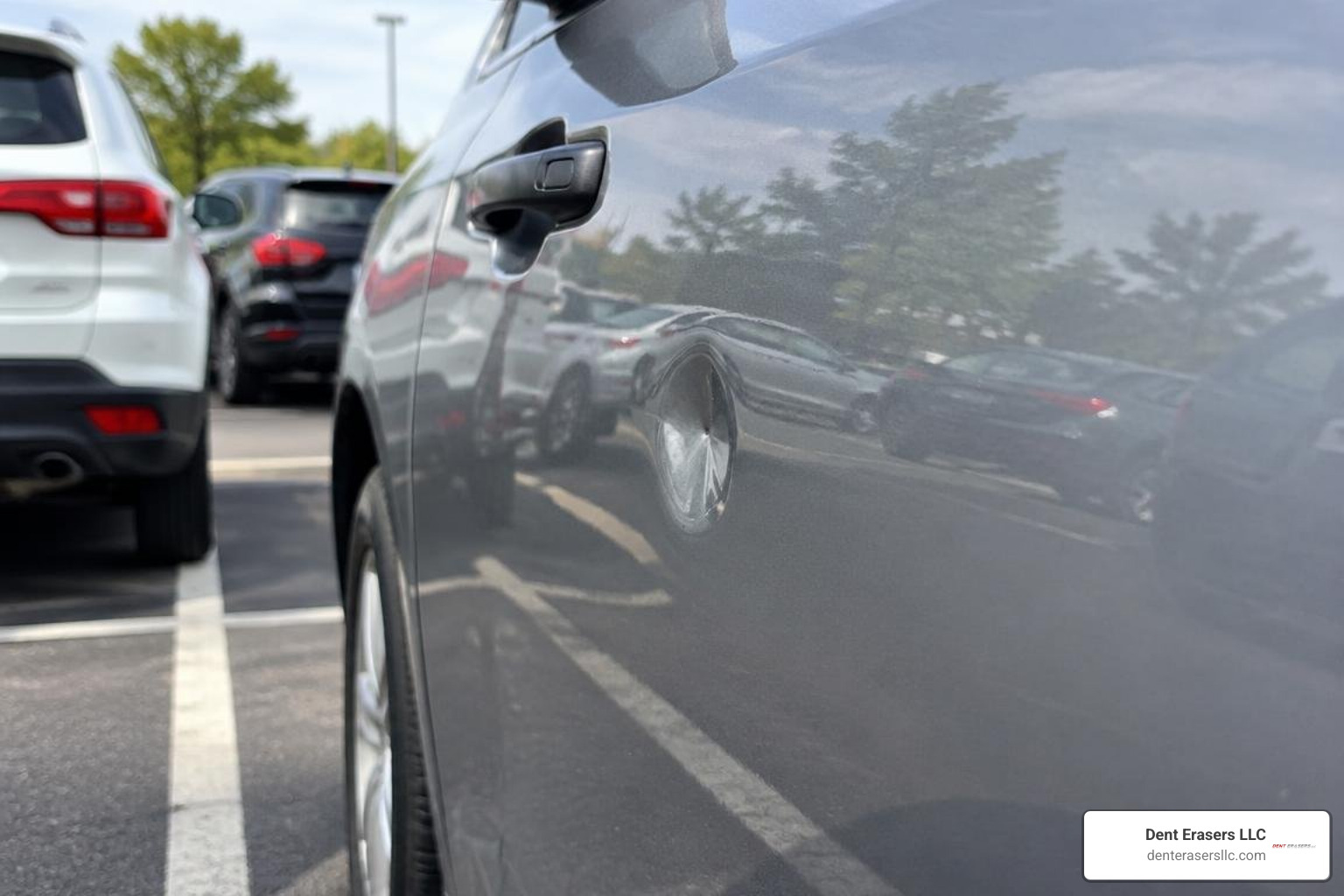
How to Remove a Small Ding From Your Car
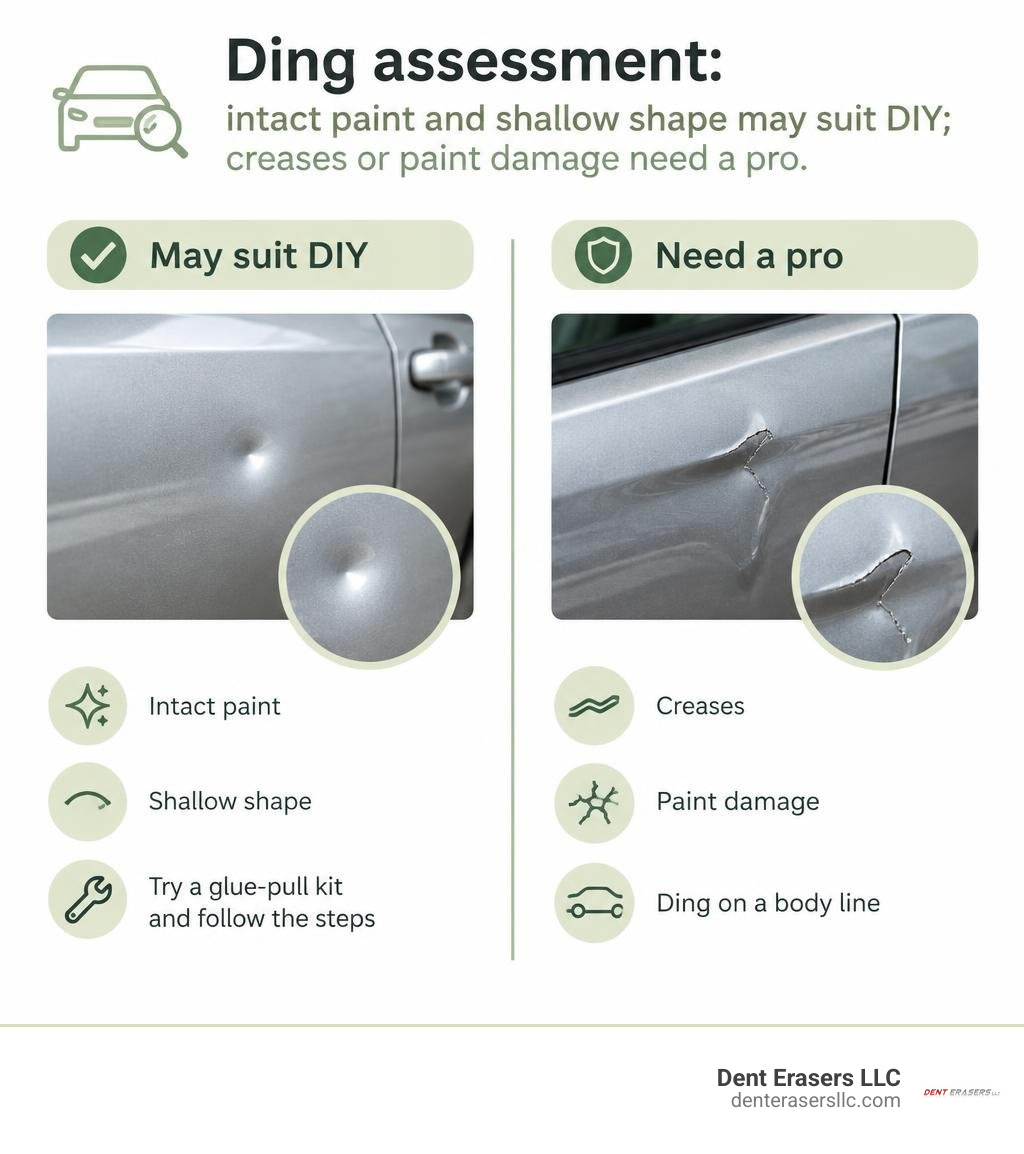
Start with the paint. If the ding is shallow, smooth, and the paint is intact, clean the area and try a small glue-pull kit. Let the glue set as directed, then pull gently and check your progress. Stop if the paint lifts or the metal forms a high spot. A sharp crease, cracked paint, or a ding on a body line is better left to a professional.
Brian Blanc has spent 28 years helping East Bay drivers decide whether they can remove a small ding from a car themselves or should call a mobile paintless dent repair professional. Start by determining whether the damage is a good DIY candidate.
Related DIY dent repair guides:
How to Assess and Remove Small Ding from Car at Home
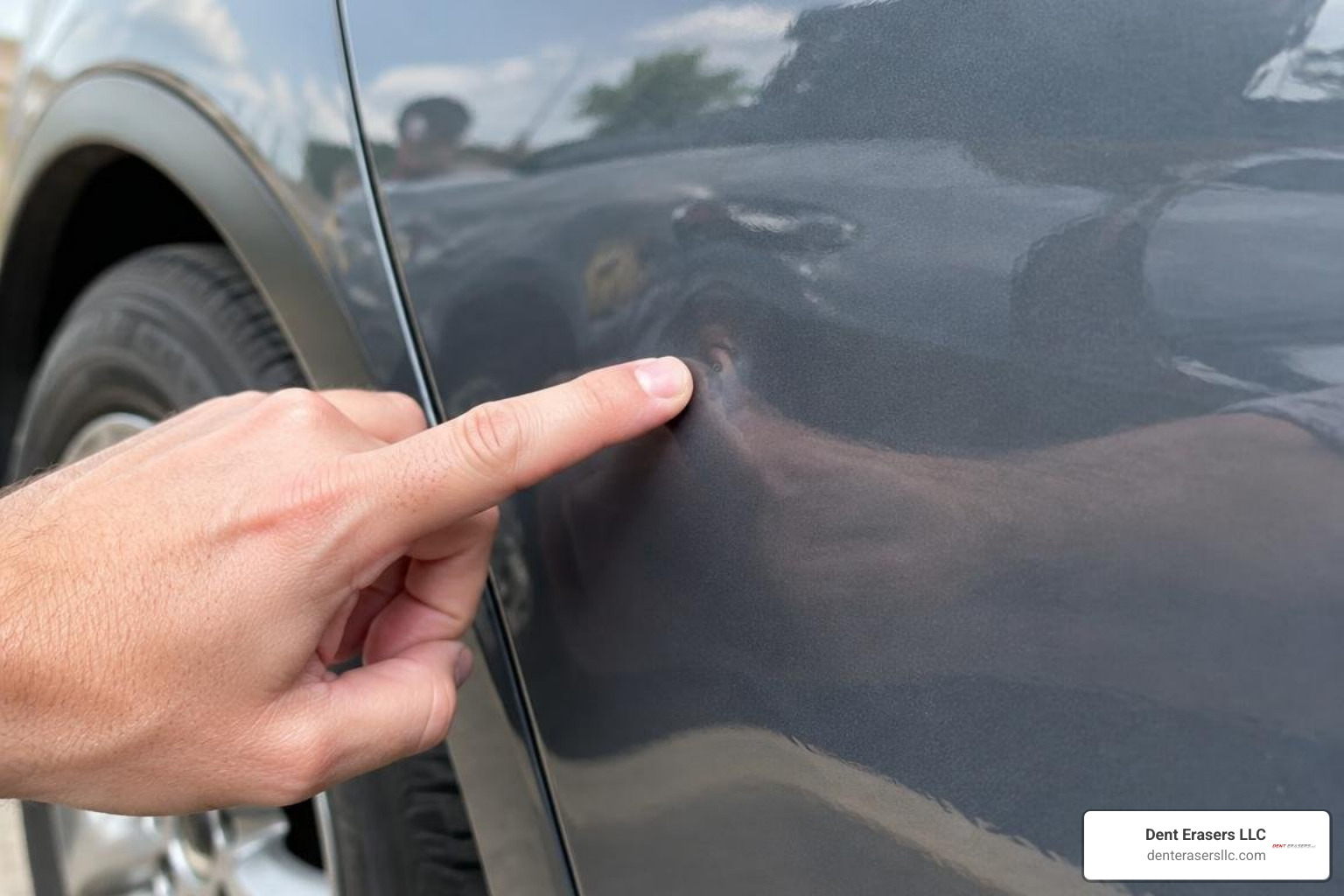
Before reaching into your toolbox, it helps to understand what you are dealing with under the surface. A ding is generally a small, coin-sized impression (often under one inch) that leaves the metal structurally stable. A dent, on the other hand, covers a wider area, sinks deeper, and often introduces complex tension along panel edges.
Vehicles are constructed with specific sheet metal memory, but modern manufacturing trends lean heavily toward thin-gauge, high-strength steel and lightweight aluminum. These metals absorb energy differently. Steel panels retain a fair amount of elasticity, while aluminum resists manipulation and can stretch permanently if mishandled. Mastering the fundamentals of small dent removal requires matching your repair strategy to the depth and curvature of the damage.
Assess the Damage Before You Remove Small Ding from Car Surfaces
To decide if your vehicle is ready for a home fix, run through a quick hands-on inspection:
- The Fingernail Test: Run your clean fingernail across the indentation. If your nail catches in a scratch or groove, the damage has penetrated the clear coat and reached the primer or bare metal. In that scenario, pulling the metal alone will not restore the panel; the panel needs additional repair work, so stop the DIY pull attempt and arrange an in-person evaluation.
- Clear Coat Integrity: Examine the perimeter under bright, angled light. If you notice spiderwebbing or micro-fractures, pulling will cause the clear coat to delaminate.
- Panel Access and Construction: Determine whether the ding sits over an open cavity (like the middle of a door skin or quarter panel) or directly above an internal structural brace or double-walled reinforcement.
- Substrate Material: Check whether your panel is steel or aluminum. Aluminum requires significantly more pulling force and specialized heat regulation, making standard consumer pullers far less effective.
Essential Tools for DIY Dent Repair
If the panel passes inspection, gather the proper tools before starting. Having the right gear prevents accidental damage and ensures clean glue adhesion:
- Glue-Pull Bridge Kit: A rigid bridge with adjustable footings and a central tension knob.
- Specialized Hot Glue Gun & PDR Glue Sticks: Standard craft glue will not work; professional-grade PDR glue offers high tensile strength and clean release.
- Plastic Pull Tabs: Various sizes (curved, flat, circular, and oval) to match the ding’s profile.
- Tap-Down Knockdown Pen & Rubber Mallet: Made of dense nylon or POM material to flatten minor high spots.
- 91%+ Isopropyl Alcohol (or Wax/Grease Remover): Essential for breaking the bond of the hot glue without damaging the clear coat.
- Microfiber Cloths: Clean, lint-free towels to clean the surface before and after pulls.
- Safety Glasses and Work Gloves: Essential protective gear when handling hot adhesive and tensioned tools.
Selecting the right equipment is critical, so check our breakdown of dent pullers for small dents to see which kits perform reliably on automotive finishes.
Step-by-Step Guide: Using a Glue-Pull Bridge Kit
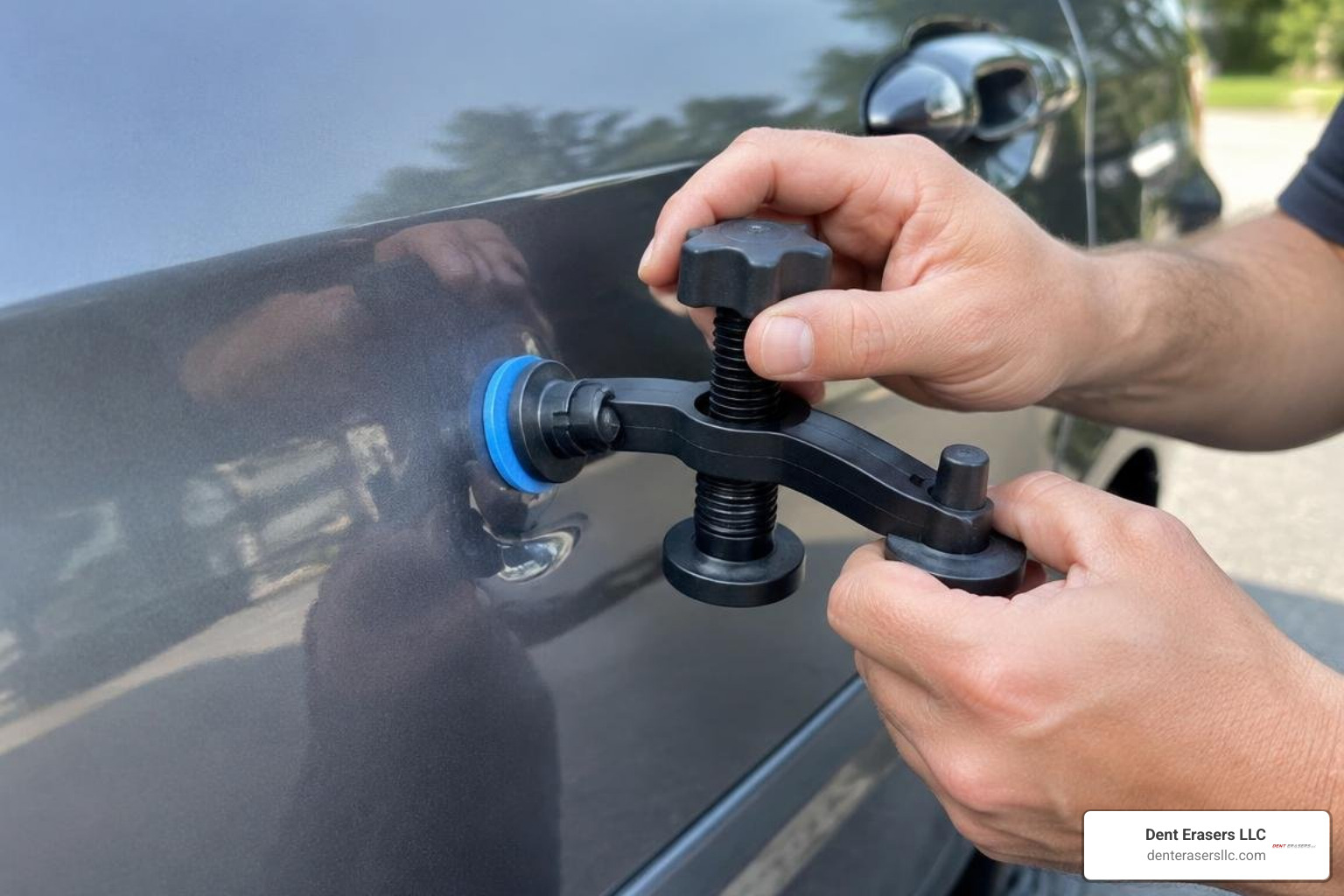
Glue-pulling is the most reliable DIY method because it lifts the depression from the outside without requiring interior door disassembly. Follow this detailed sequence to achieve the best contour:
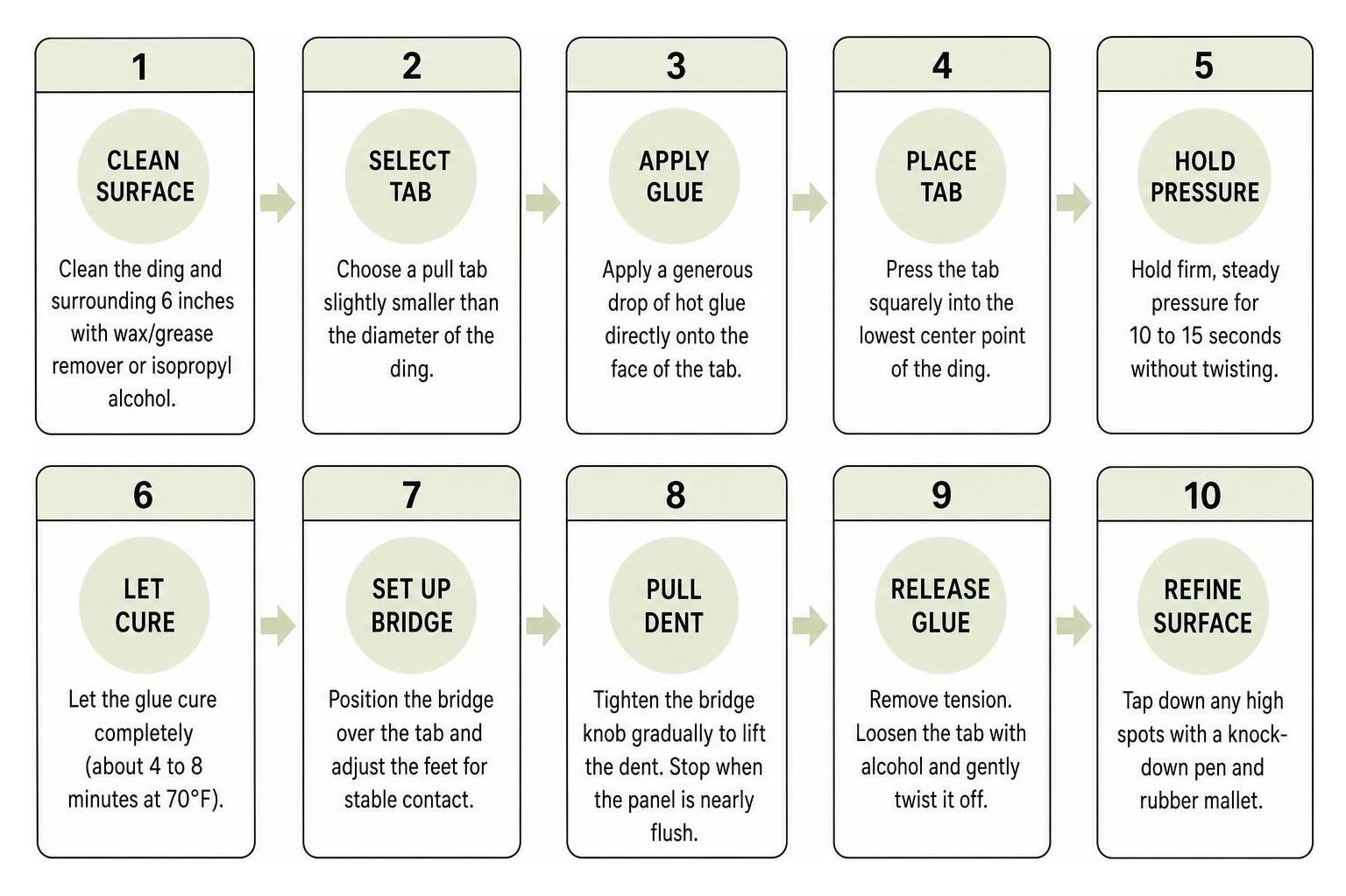
- Surface Prep: Clean the ding and surrounding 6 inches with wax/grease remover or isopropyl alcohol. Any road grime, wax, or ceramic coating will prevent the hot glue from anchoring to the paint.
- Tab Selection: Choose a pull tab whose contact pad is slightly smaller than the diameter of the ding. A tab that extends beyond the ding’s rim will lift the surrounding flat panel, creating an unsightly raised crown.
- Glue Application: Apply a generous drop of hot glue directly onto the face of the plastic tab.
- Placement: Immediately press the tab squarely into the lowest center point of the ding. Hold firm, steady pressure for 10 to 15 seconds without twisting.
- Cure Time: Let the glue cure completely. In a warm garage (around 70°F), this takes roughly 4 to 8 minutes. If the panel is cold, warm it slightly with a hair dryer first; applying hot glue to cold metal leads to premature detachment.
- Bridge Alignment: Slip the bridge puller over the tab stem and adjust the padded feet so they rest on flat, undamaged metal outside the dent zone.
- Controlled Pulling: Thread the tension wingnut or knob onto the tab stem. Slowly turn the knob clockwise, applying smooth, gradual upward tension. You will hear a mild pop when the metal releases and returns flush.
- Glue Release: Spray isopropyl alcohol generously around the base of the glue pad. Let it soak for 60 seconds; the alcohol will break the adhesive bond, allowing the tab to lift off cleanly without scraping.
- Knockdown High Spots: If the pull created a slight high spot (“volcano” effect), place the nylon tap-down tool against the peak and deliver light, deliberate taps with a rubber mallet.
For an in-depth visual comparison of mechanical pulling techniques, see this guide to the dent puller technique.
When a DIY Ding Repair Is Not a Good Fit
A careful glue-pull attempt may help with a shallow ding on a flat panel when the paint is intact. Stop the repair if the panel develops a high spot, the paint begins to lift, or the dent does not respond to gentle, controlled pulls.
Signs It Is Time for Mobile Paintless Dent Repair
Dent Erasers LLC can evaluate dings that need more precision than a DIY kit can provide:
- Sharp Creases: A hard crease compresses and stretches the metal in ways that are difficult to correct with a consumer pull tab.
- Body Lines and Edges: Damage near a character line, panel seam, or reinforcement often needs specialized access and controlled reshaping.
- Compromised Clear Coat: Cracked, lifting, or previously repaired paint can pull away during a glue-pull attempt.
- Stretched Metal: A broad or deep impact can leave permanent distortion without professional paintless dent repair techniques.
DIY vs. Professional Paintless Dent Repair: Cost and Results
When deciding whether to tackle a ding in your driveway or call a specialist, it helps to weigh total costs, turnaround times, and the level of cosmetic finish you want to achieve.
| Factor | DIY Dent Puller Kit | Dent Erasers Mobile PDR |
|---|---|---|
| Typical Cost | $10 – $40 | $150 – $500 |
| Best Fit | Shallow dings with intact paint | Dings near body lines, braces, or difficult-access areas |
| Turnaround Time | One to three hours, with possible repeat attempts | Often completed on-site in under an hour |
| Paint Risk | Moderate if the pull is too aggressive | Designed to preserve the original factory finish |
| Tools and Technique | Consumer tabs and glue | Professional PDR tools, lighting, and controlled metal shaping |
DIY kits are budget-friendly, but a botched repair that stretches the metal or chips your clear coat can quickly escalate your expenses. For deeper insights into estimating body damage, explore Synchrony’s analysis on cost factors for dent repairs, along with our breakdown of small dent repair costs.
For mobile paintless dent repair in Contra Costa County, Dent Erasers LLC serves Concord, Antioch, San Ramon, Pittsburg, Walnut Creek, Brentwood, and Martinez.
Frequently Asked Questions About Car Ding Removal
Will a DIY dent puller damage my car paint?
If your vehicle still wears its durable factory clear coat, high-strength PDR glue generally releases cleanly when treated with 91%+ isopropyl alcohol. However, if the panel has previously undergone aftermarket bodywork, has rock chips near the ding, or is pulled aggressively without alcohol, the glue can tear away clear coat and base paint.
How much does professional paintless dent repair cost?
A single shallow door ding typically costs between $75 and $300, depending on panel access, whether the panel is steel or aluminum, and its proximity to internal braces. Because mobile PDR technicians work on-site at your home or workplace, repairs are usually completed in under an hour without shop storage fees.
Conclusion
Minor parking lot mishaps are an inevitable part of driving, but they do not have to diminish your vehicle’s value or curb appeal. While a DIY glue-pull kit can provide an acceptable fix for shallow, simple dings on flat panels, complex body contours and high-strength metals demand precision tools, specialized optics, and seasoned metal-shaping expertise.
At Dent Erasers LLC, our master technicians deliver seamless, five-star results right to your driveway across Concord, Walnut Creek, Antioch, Richmond, and surrounding East Bay communities. We preserve your vehicle’s factory finish, eliminate rental car hassles, and restore your car’s exterior to showroom condition in under an hour.
Ready for a flawless finish without the guesswork? Contact Brian Blanc and our expert team at Dent Erasers LLC for convenient mobile paintless dent repair today.