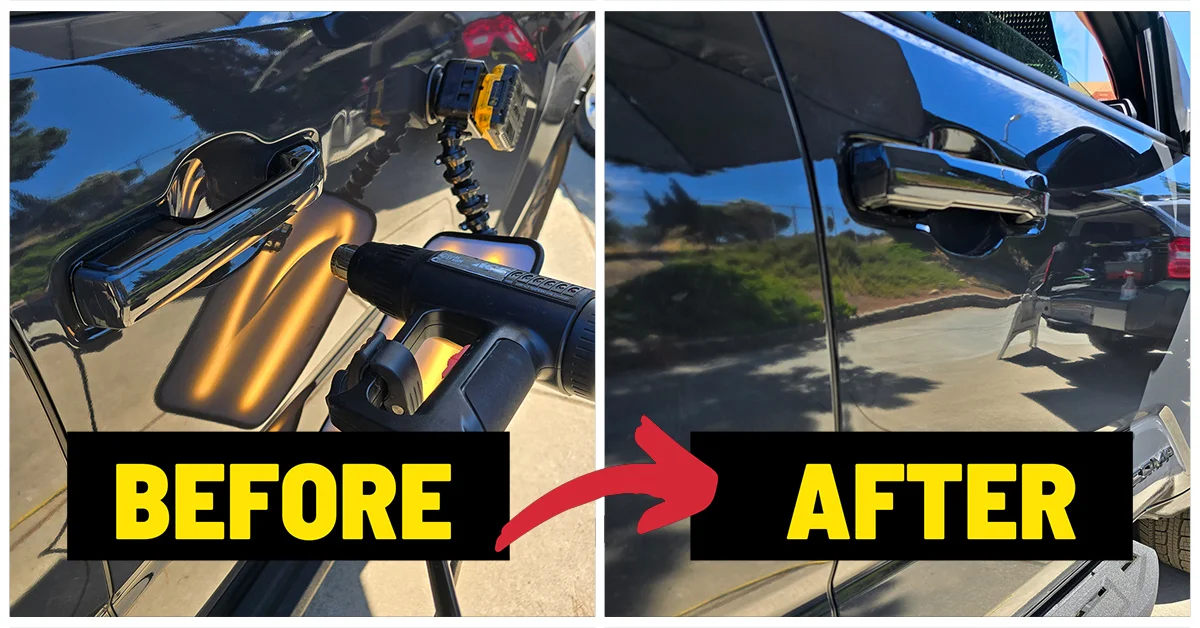
Choose the Right Dent Puller for Small Dents
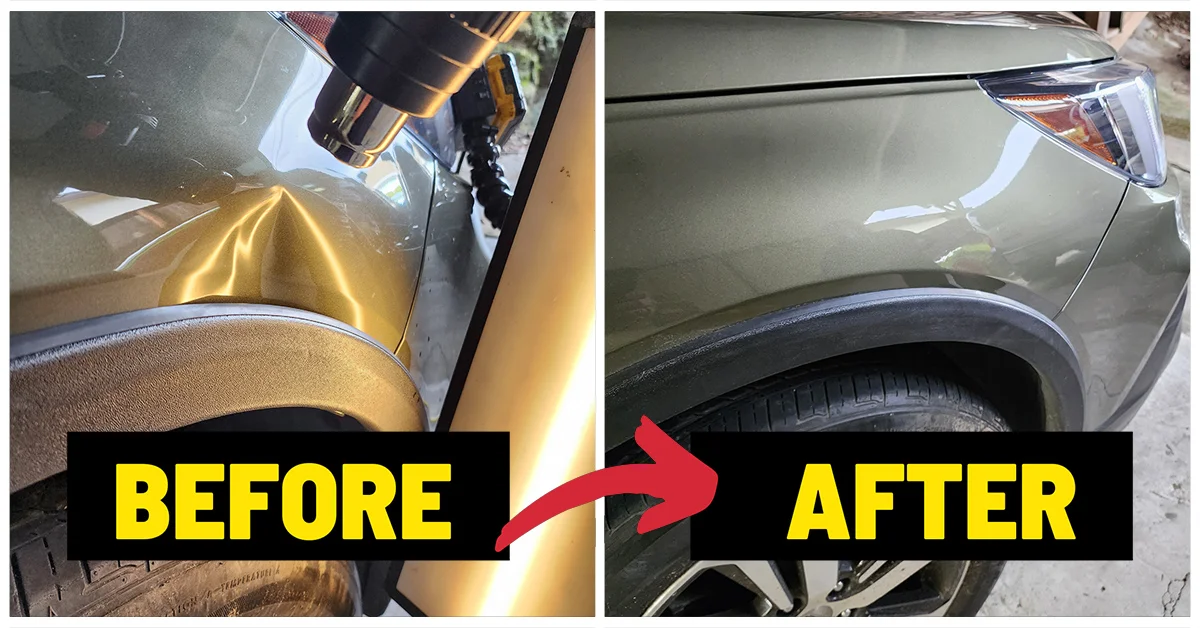
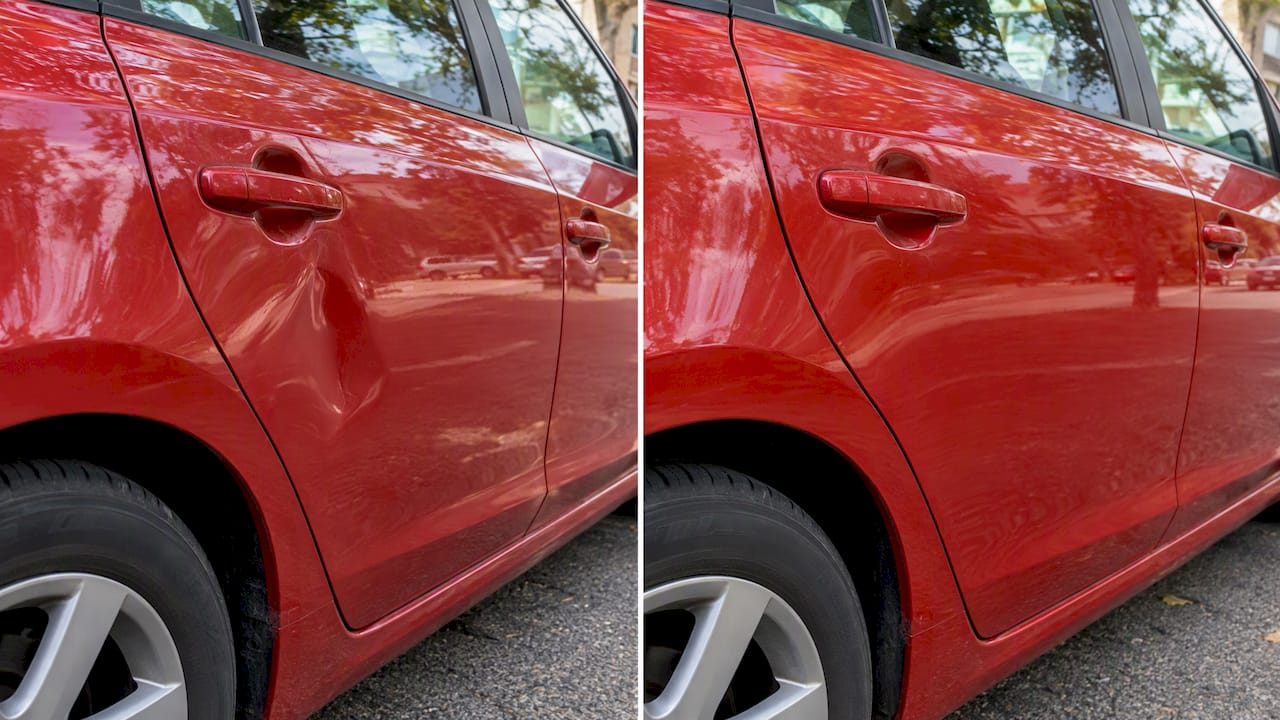
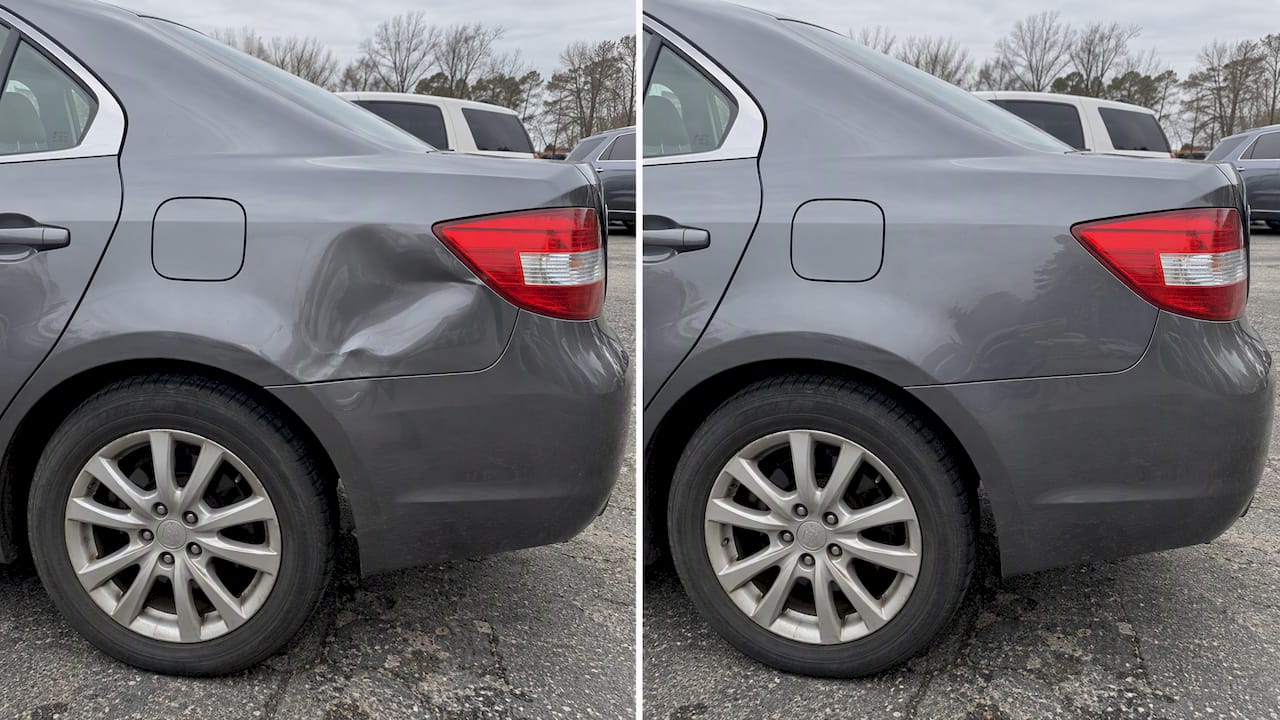
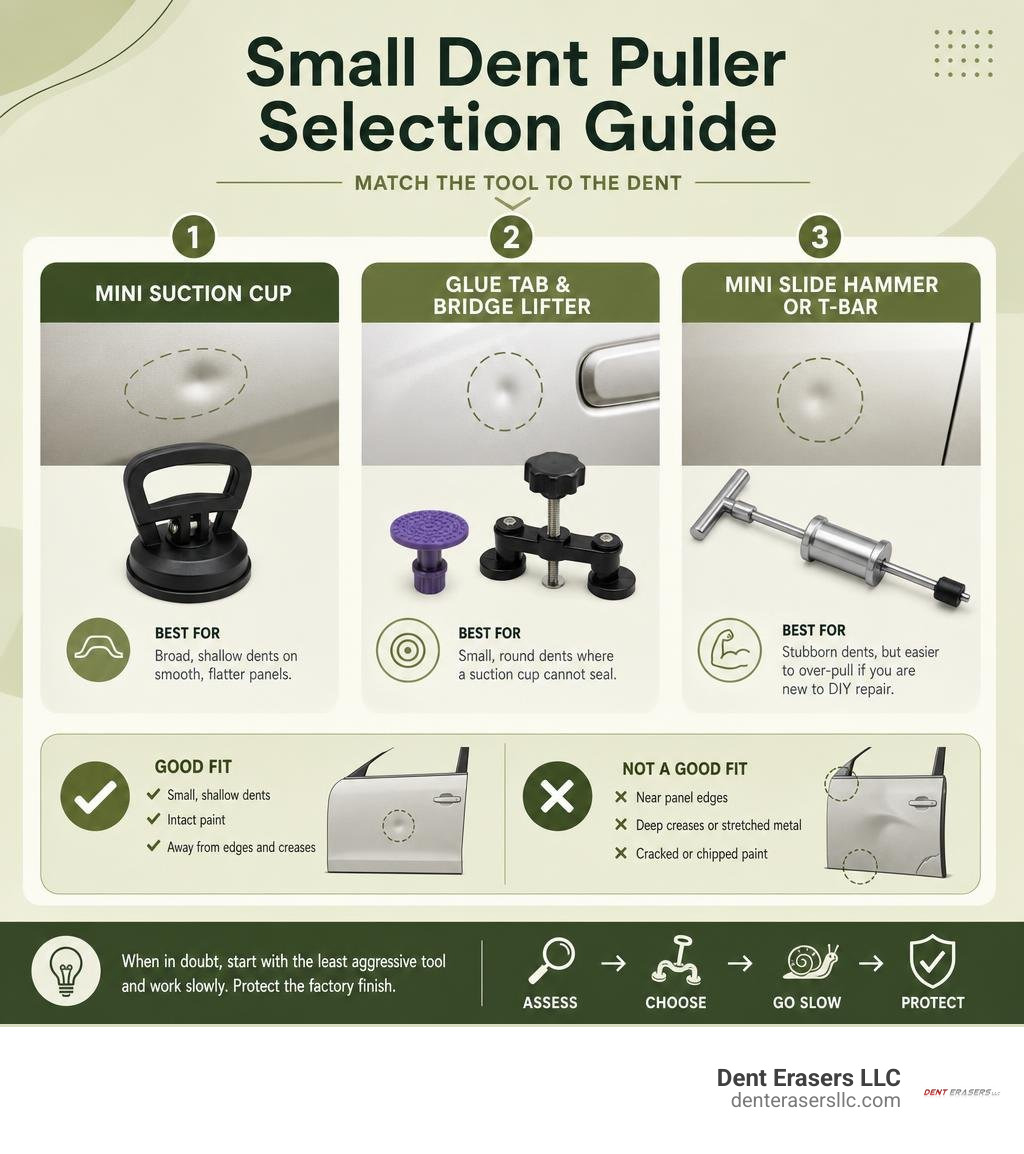
For a small, shallow door ding or hail dent with intact paint, choose a puller that matches the dent’s shape and location:
- Mini suction cup: Best for broad, shallow dents on smooth, flatter panels.
- Glue tab and bridge lifter: Better for small, round dents where a suction cup cannot seal.
- Mini slide hammer or T-bar: Useful for stubborn dents, but easier to over-pull if you are new to DIY repair.
A dent puller for small dents can save money when the metal is not sharply creased and the clear coat is not cracked. It is not a good fit for damage near panel edges, deep creases, stretched metal, or chipped paint. Those repairs often need a paintless dent repair technician to avoid making the panel look worse.
I am Brian Blanc, and I have spent nearly three decades repairing vehicle dents through mobile paintless dent repair work. That experience has taught me where a dent puller for small dents can help at home – and when protecting the factory finish means calling a specialist instead.
Discover more about dent puller for small dents:
How to Choose the Best Dent Puller for Small Dents
Navigating paintless dent repair (PDR) tools can feel overwhelming. With hundreds of kits online, finding the right tool comes down to understanding the mechanics of how different pullers exert force on vehicle sheet metal. The three primary mechanisms are suction cups, glue pullers, and slide hammers.
| Tool Type | Best Dent Size & Type | Panel Placement | Risk of Paint Damage | Skill Level Required |
|---|---|---|---|---|
| Mini Suction Cup | 1″ to 3″ shallow, round dings | Flat center panels (doors, hoods) | Extremely Low | Beginner |
| Glue Tab & Bridge Lifter | 0.5″ to 2″ defined dents, minor dings | Flat to gently curved panels | Low (requires proper glue release) | Intermediate |
| Mini Slide Hammer / T-Bar | 1″ to 2″ stubborn dings, thick metal | Flat surfaces, rigid access points | Moderate (risk of over-pulling metal) | Intermediate / Advanced |
Mini Suction Cup Pullers
Mini suction cups rely on atmospheric pressure to create a strong vacuum seal against the automotive clear coat. Compact 2-inch to 2.4-inch suction tools, such as the Milex Mini Portable Dent Puller or a 2 inch Dent Puller suitable for small dents, work well on shallow, soft impressions where the metal has not deformed past its elastic limit.
For enhanced leverage, a locking suction cup tool uses dual-handle mechanical clamping to generate hundreds of times more vacuum hold than non-locking models. These tools are completely non-invasive and leave zero adhesive residue. However, they require a completely smooth, non-porous surface. If you want to understand how basic suction principles scale across automotive panels, check out our guide to plunger techniques for car panels.
Glue Tab and Bridge Lifter Kits
When a dent is too small, sharp, or contoured for a suction cup to seal, hot-melt adhesive glue pulling is the industry standard approach. These kits feature molded polymer glue tabs in varying diameters, a dedicated high-temp glue gun, specialty PDR adhesive sticks, and an adjustable bridge lifter (often called a golden dent lifter).
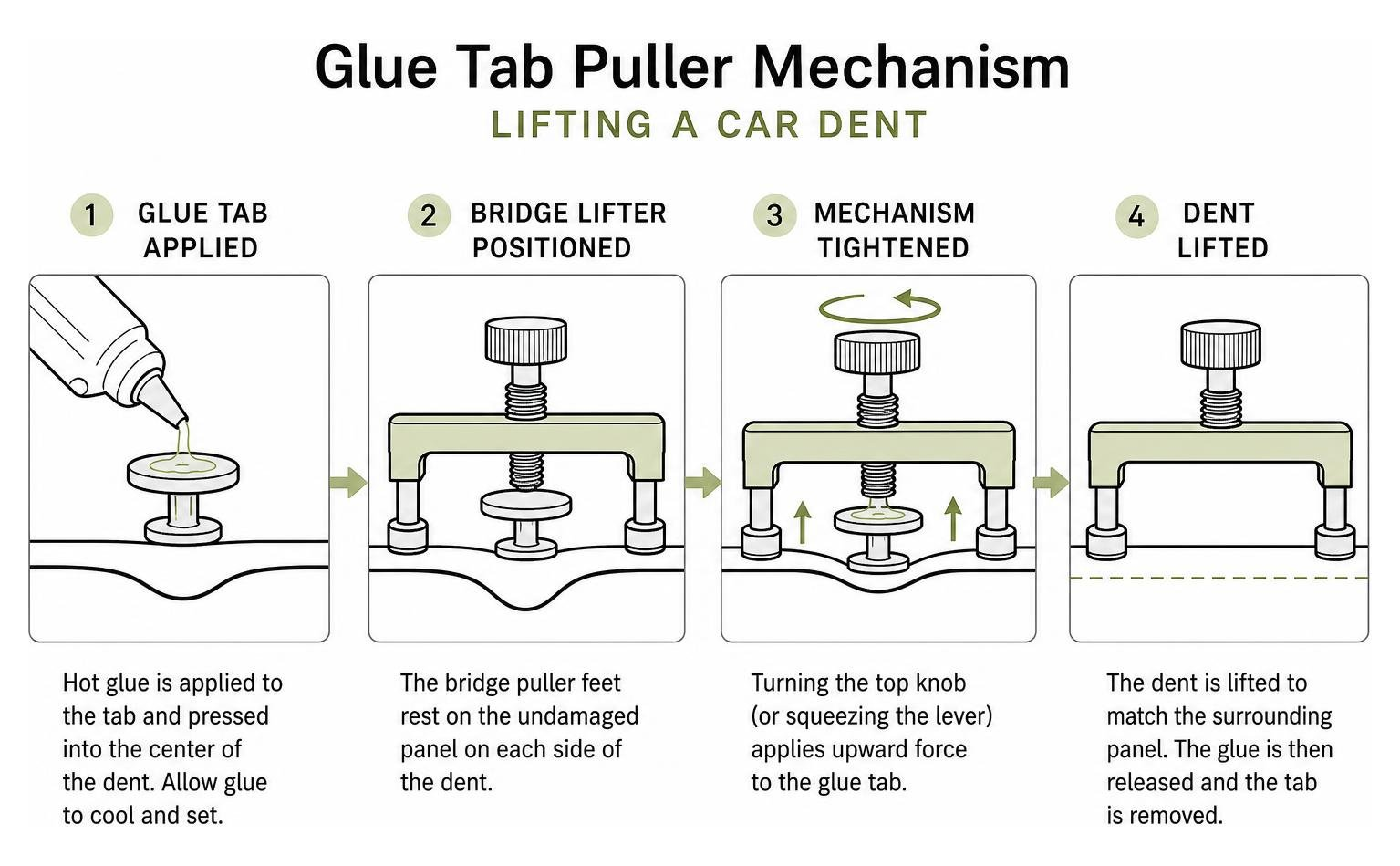
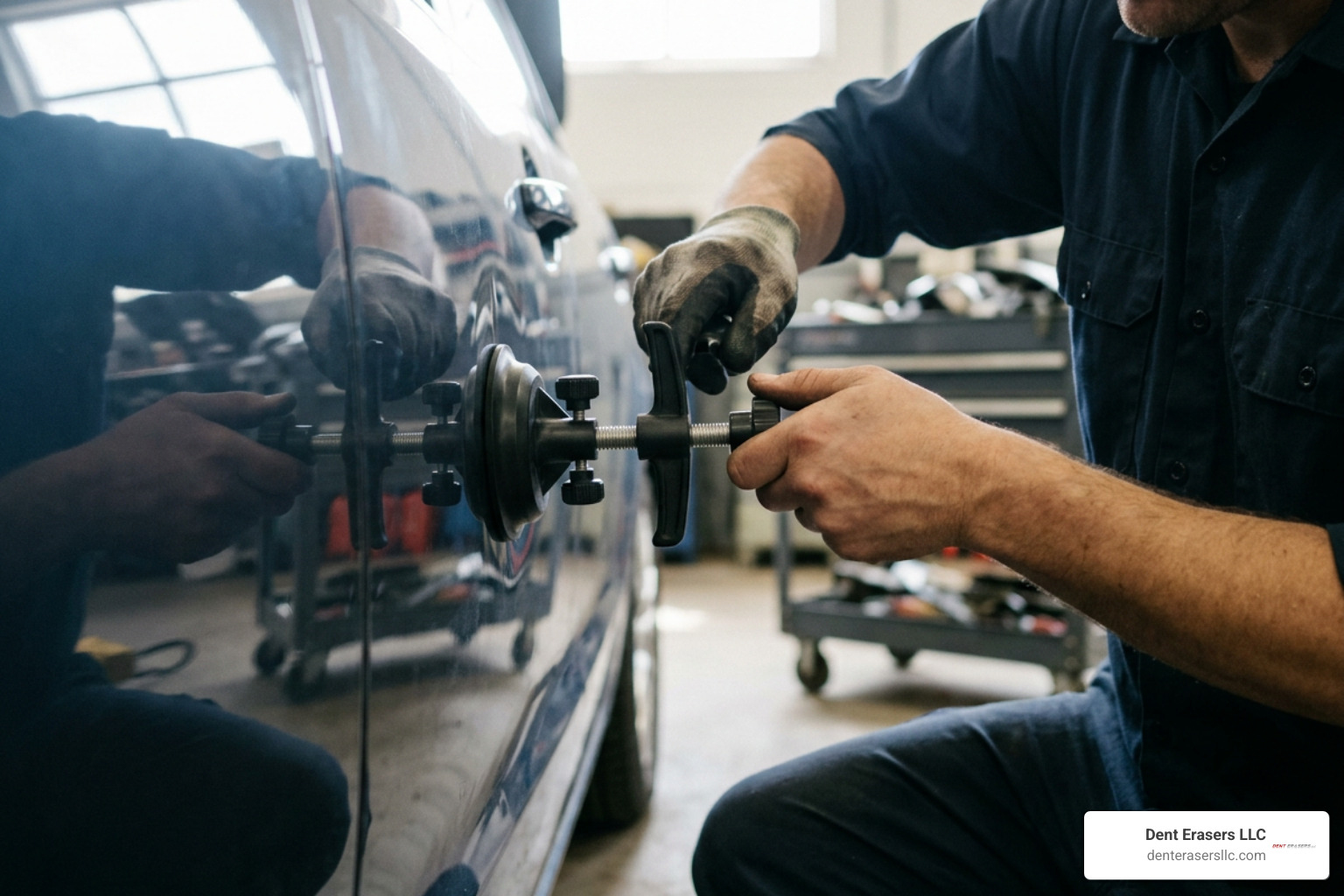
The technician applies hot glue to the textured face of the tab, presses it firmly into the center of the ding, and lets the adhesive cool. The feet of the bridge puller rest on the undamaged sheet metal flanking the ding, and turning the top mechanical knob or squeezing the hand lever lifts the center of the dent upward. High-grade kits include padded feet and non-marring components to prevent secondary damage, much like the hardware found in professional car dent repair kits.
Mini Slide Hammers and T-Bar Tools
Mini slide hammers and compact T-bar tools utilize dynamic kinetic energy rather than slow, static mechanical leverage. The tool couples directly to a hot-melt glue tab via a notched adapter head. Sliding the weighted cylinder along the shaft delivers an outward impulse to release tension in stiffer metal areas.
Specialized tools like the No.1881 – Mini Dent Remover Puller allow the operator to feel mechanical resistance during extraction, providing critical tactile feedback. While slide hammers pop out stubborn dents quickly, beginner DIYers must exercise caution: snapping the slide weight too aggressively can stretch the metal into an outward crown that is difficult to correct.
Essential Features in Small Dent Removal Kits
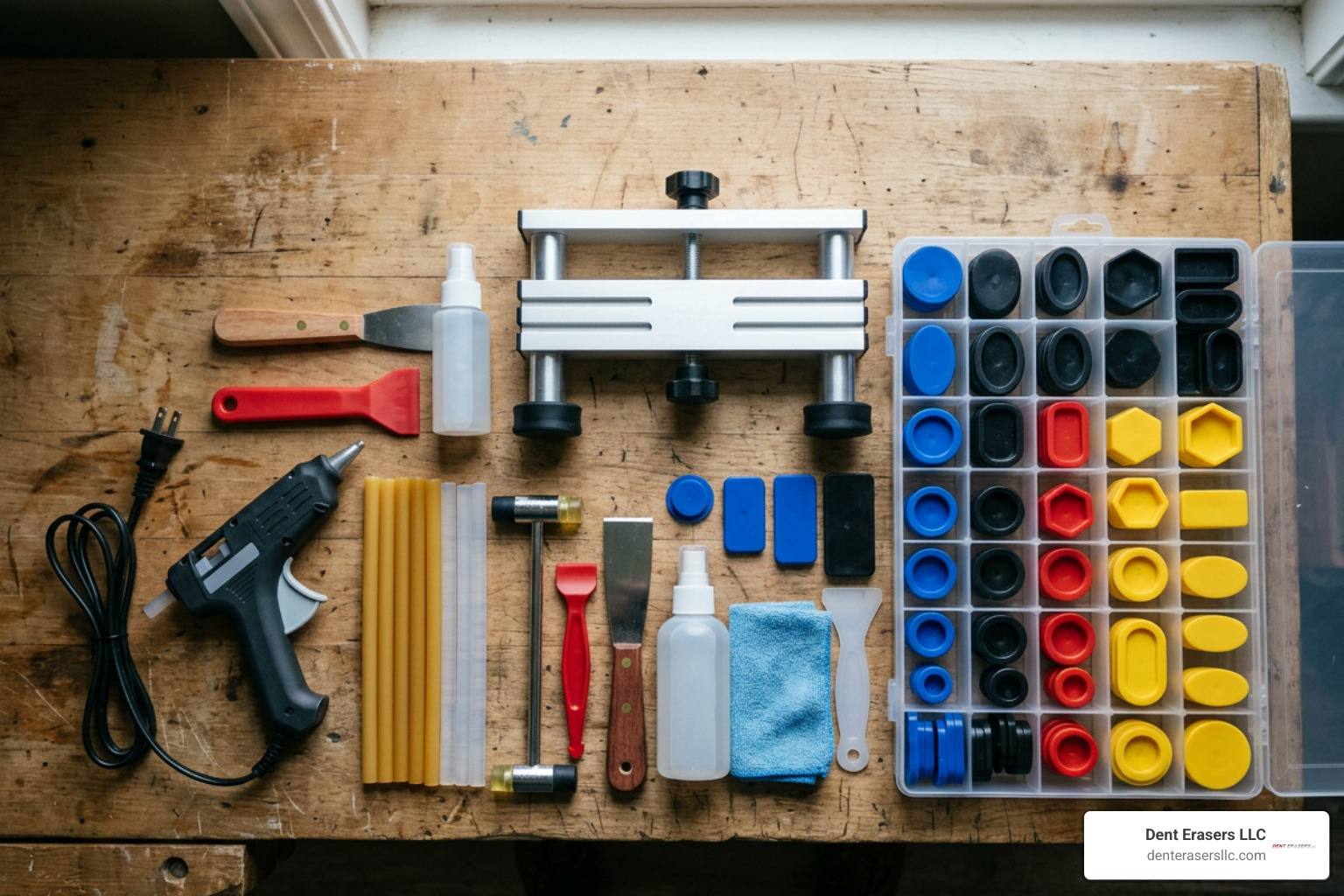
Comprehensive DIY dent repair kits generally range from $10 to $50 on popular retail platforms. While budget-friendly options can deliver surprising results, evaluating key kit components ensures you don’t damage your vehicle’s clear coat. When looking for the cheapest ways to fix minor car dents, make sure the kit includes these essentials:
- Assorted Glue Tab Profiles: Look for sets offering 15 to 30+ interchangeable pulling tabs. You need dimpled circular tabs for round door dings and elliptical tabs for linear creases. Polyformaldehyde or reinforced nylon tabs offer higher tensile strength without snapping under load.
- Solid Metal Bridge Construction: Inexpensive plastic bridge lifters flex under tension, dissipating the lifting force. Opt for aluminum alloy bridge frameworks with pivoting rubberized feet that conform to slight body curves without scratching paint.
- Specialized High-Tack Glue Sticks: Standard craft glue will not grip automotive clear coats effectively. High-performance PDR glue sticks (often yellow, black, or translucent amber) offer superior shear strength and release cleanly when exposed to alcohol.
- Proper Glue Gun Wattage: A 60W to 100W hot-melt glue gun reaches the 350°F to 390°F operating temperature necessary for PDR adhesives to bond correctly. Low-wattage craft guns can cause premature adhesive separation.
- Polymer Tap-Down Tools: Even experienced hands occasionally pull a fraction of a millimeter too far. A quality kit must provide a hard polymer or Delrin knock-down punch and a lightweight rubber mallet to tap down high spots without marring paint.
Step-by-Step Guide: How to Use Dent Pulling Tools at Home
Proper technique makes the difference between an invisible repair and an expensive paint failure. For detailed methods across various vehicle zones, reference our complete small dent repair manual.
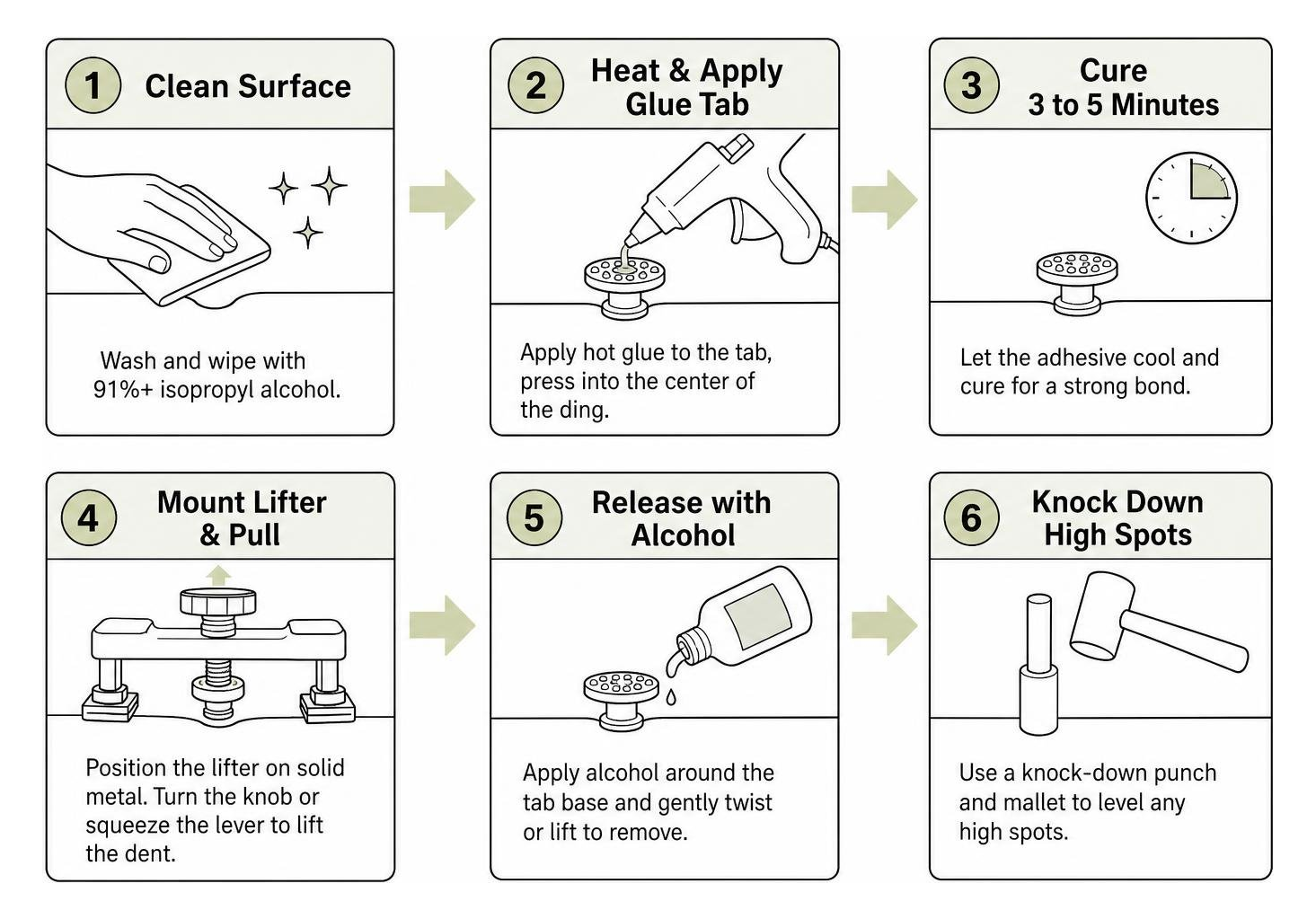
Surface Preparation and Panel Cleaning
- Wash the panel thoroughly with car wash soap and water to remove road grime, dirt, and grit.
- Wipe the dented area with a 91% (or higher) isopropyl alcohol solution on a clean microfiber towel to eliminate road films, ceramic coatings, and wax.
- Ensure ambient panel temperatures are between 65°F and 85°F. Cold metal prevents hot glue from establishing a proper bond, while hot panels prevent the adhesive from hardening.
Using a Glue Tab Dent Puller for Small Dents
- Select Tab Size: Choose a glue tab whose outer perimeter is roughly 20% smaller than the overall diameter of the dent basin.
- Apply Adhesive: Dispense a generous bead of hot glue onto the center face of the clean tab.
- Set the Tab: Press the tab straight into the lowest center point of the dent with moderate, even finger pressure. Do not push so hard that you squeeze all the glue out; keep a 1mm glue cushion between tab and paint.
- Allow Curing: Let the adhesive cool for 3 to 5 minutes. The tab should feel firm and room temperature to the touch.
- Attach the Pulling Bridge: Slide the bridge lifter adapter onto the tab stem. Adjust the bridge feet so they sit on solid, flat metal on opposite sides of the ding.
- Apply Controlled Tension: Slowly tighten the tension knob or squeeze the lifter handle until you hear a clean release pop, or until the dented area rises level with the surrounding body line.
- Release Glue Residue: Spray 91% isopropyl alcohol around the base of the glue pad. Allow the alcohol to penetrate the edges for 30 seconds, then peel the glue cleanly off the paint with a plastic scraper.
Avoiding Over-Pulling with a Dent Puller for Small Dents
One of the most common DIY mistakes is pulling metal past its original plane, creating a raised high spot or “volcano.” When this happens, follow these corrective steps:
- Evaluate Under Angled Light: Use a reflection board or direct sunlight at an oblique angle to inspect the panel texture.
- Apply the Knock-Down Tool: Place the rounded tip of a Delrin knock-down punch directly on the peak of the high spot.
- Tap Lightly with a Rubber Mallet: Deliver light, repetitive downward taps. The goal is to relax the crowned metal back into place without driving it into a reverse dent.
- Protect Your Eyes and Hands: Always wear safety glasses and heat-resistant gloves when handling hot-melt glue guns and slide hammers under high spring tension.
Ignoring high spots can cause localized paint tension, leading to micro-cracking in the clear coat. Learn more about managing these risks in our breakdown of small dents and big problems.
Limitations of DIY Repair: When to Call a Specialist
While DIY tools can effectively remove shallow dings on flat panels, certain types of vehicle damage require specialized equipment, specialized metallurgy training, and controlled panel access.
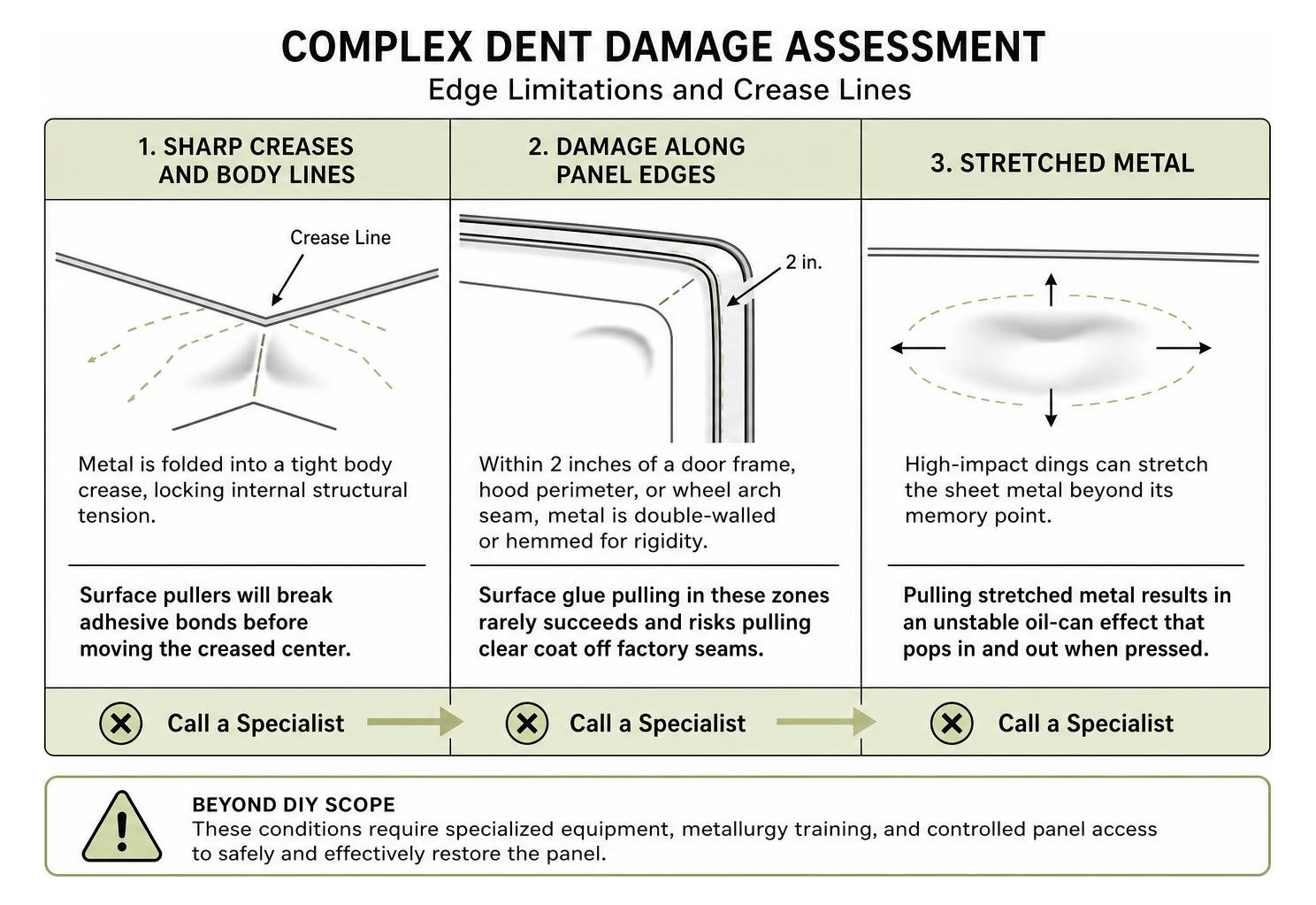
Before attempting a repair, consider these key limitations:
- Sharp Creases and Body Lines: When metal is folded into a tight body crease, it locks internal structural tension. Standard surface pullers will break adhesive bonds before moving the creased center.
- Damage Along Panel Edges: Within 2 inches of a door frame, hood perimeter, or wheel arch seam, metal is double-walled or hemmed for rigidity. Surface glue pulling in these zones rarely succeeds and risks pulling clear coat off factory seams.
- Stretched Metal: High-impact dings can stretch the sheet metal beyond its memory point. Pulling stretched metal results in an unstable oil-can effect that pops in and out when pressed.
- Cracked Clear Coat or Chipped Paint: Glue pulling relies entirely on paint adhesion. Applying high-strength PDR glue to fractured paint will pull clear coat and base paint off the primer, turning a minor dent into an expensive repaint job.
- Aluminum Panels: Many modern hoods, fenders, and tailgates are formed from aluminum alloy. Aluminum lacks the molecular “memory” of mild steel and requires significantly more pulling force and controlled induction heat to manipulate safely.
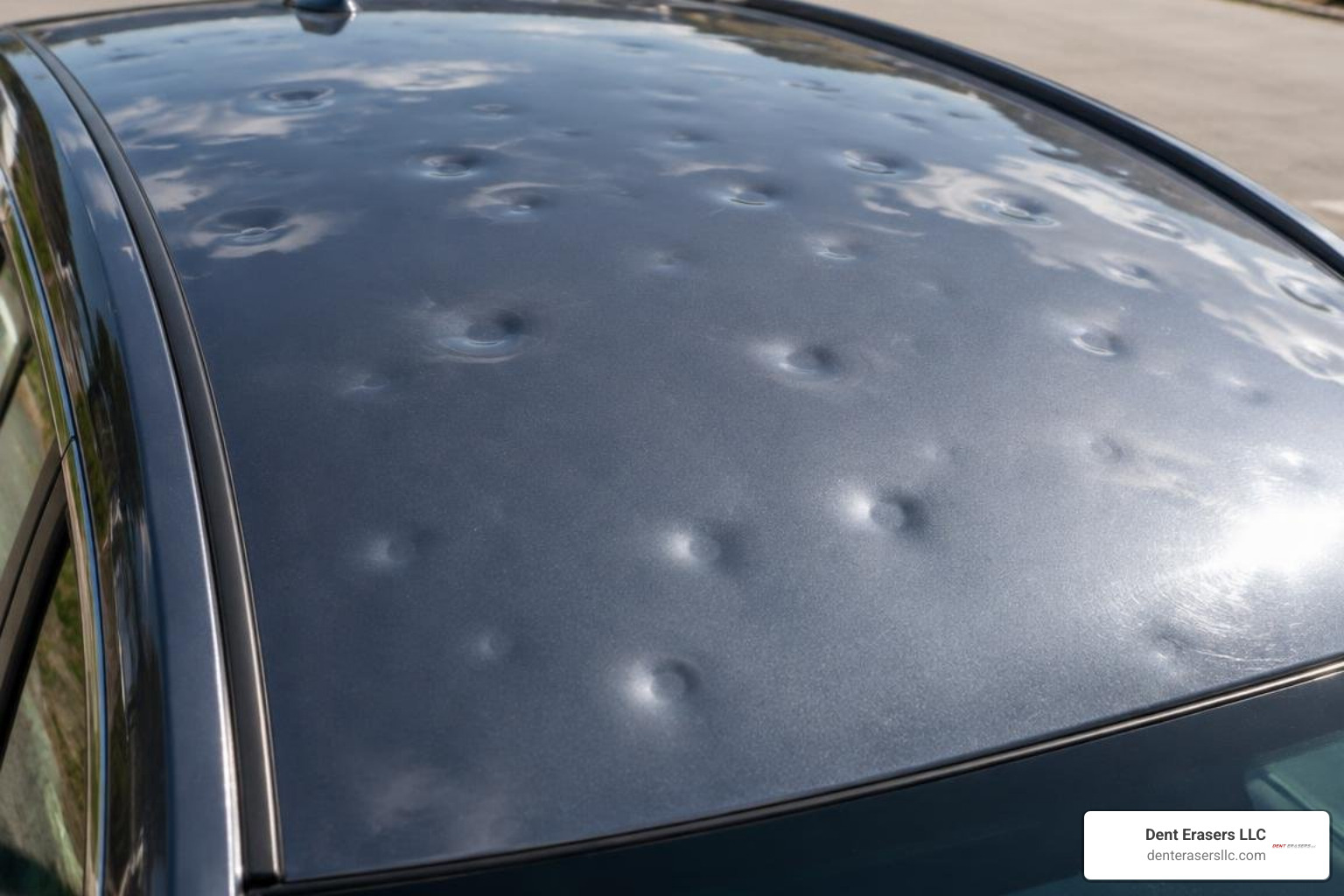
- Widespread Storm Hail Damage: Fixing fifty to a hundred tiny hail dings across a roof and hood with a DIY puller is exhausting and often leaves uneven micro-crowns across the panels. Specialized methods are required, as detailed in our guide on dent pullers for hail damage.
If your DIY attempt doesn’t fully remove the dent, traditional body fillers like Bondo Body Filler (which cures and is sandable in 20 minutes) can level the surface before repainting, though this permanently removes the factory paint finish.
If you are located in Contra Costa County, CA—including Concord, Antioch, Richmond, San Ramon, Walnut Creek, Brentwood, Pittsburg, Martinez, Pleasant Hill, or Danville—mobile paintless dent repair technicians can come directly to your home or office to inspect challenging damage.
Frequently Asked Questions About Small Dent Removal
Can a suction cup puller fix sharp creases or body lines?
No. Suction cup pullers require a uniform, airtight vacuum seal against a flat or gently curved surface. Sharp creases prevent the rubber lip from sealing. Additionally, creased metal has high localized work-hardening, requiring significantly more focused mechanical leverage than atmospheric suction can produce.
How do you safely remove hot glue residue from factory paint?
Spray 91% to 99% isopropyl alcohol directly around the edges of the adhesive residue. Isopropyl alcohol does not dissolve the glue; instead, it breaks the chemical surface tension between the thermoplastic adhesive and the clear coat. After 30 to 60 seconds, use a flexible plastic scraper or your thumb to peel the glue patch away in one piece without marring the paint.
What size dents are best suited for DIY dent pullers?
DIY dent pullers perform best on round, shallow dings between 1 and 3 inches in diameter (about the size of a quarter up to a baseball) that feature intact factory clear coat. Dents smaller than half an inch are difficult to target with consumer glue tabs, while broad dents larger than 4 inches often require push rods and specialized inner-panel access.
Conclusion
A well-chosen dent puller kit can save vehicle owners hundreds of dollars on minor parking lot dings, door taps, and minor hail damage. By matching the right tool—whether a mini suction cup, bridge lifter, or slide hammer—to your specific dent type, preparing the panel thoroughly, and lifting with patience, you can achieve clean results in your own garage.
However, recognizing when damage exceeds DIY limits is key to protecting your vehicle’s value. Attempting to pull sharp creases, damaged clear coats, or rigid panel edges often turns a minor ding into costly body shop repairs.
When you want a repair that preserves your vehicle’s factory finish, our team at Dent Erasers LLC provides expert mobile on-site service with quick turnaround times and affordable pricing throughout Concord, Contra Costa County, and surrounding communities. Contact us today for professional paintless dent repair services.