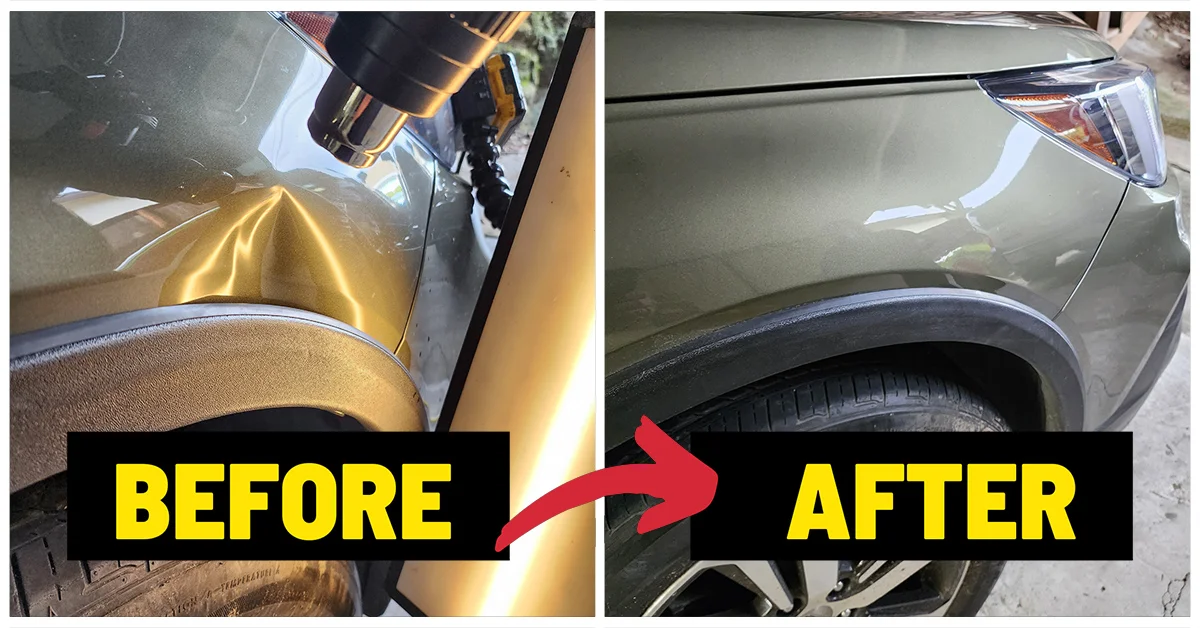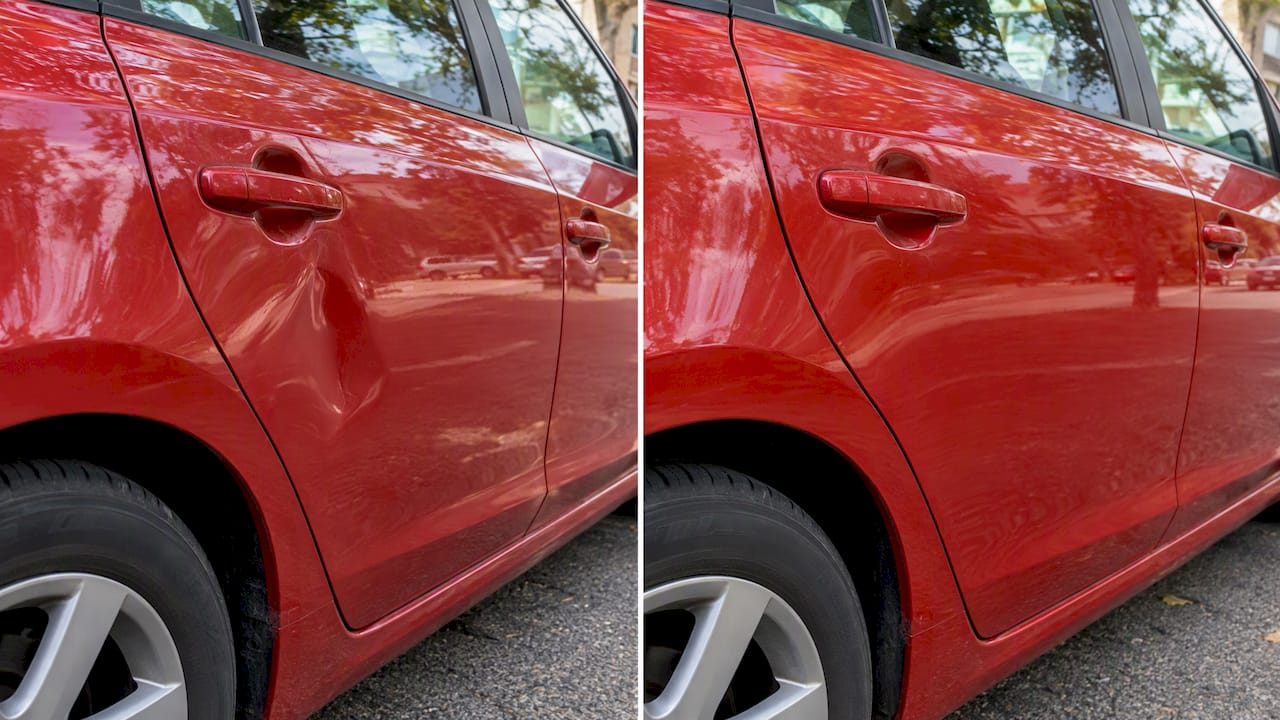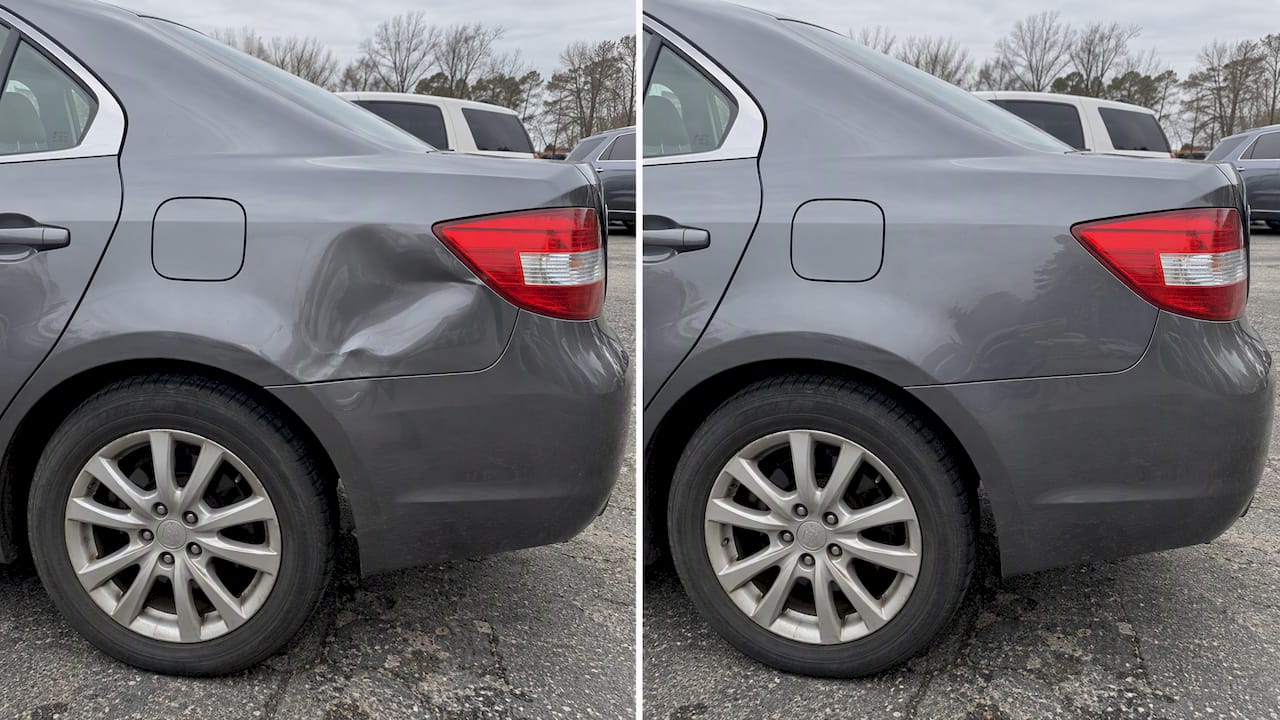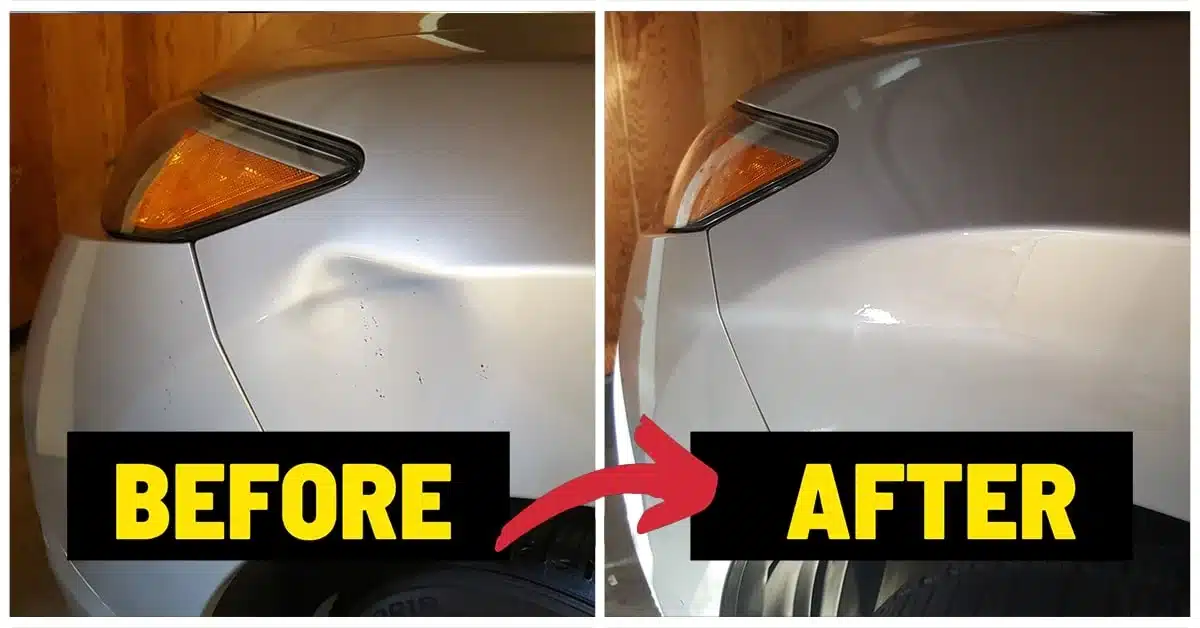
Does Dry Ice Dent Repair Actually Work? Here’s the Quick Answer
Dry ice dent repair is a DIY method that uses extreme cold to rapidly contract a warmed metal panel, attempting to pop shallow dents back into shape.
Here’s what you need to know upfront:
- It can work — but only on small, shallow, smooth dents on flat metal panels (like a hood or roof)
- It often fails on creased dents, deep dings, hail damage, and aluminum panels
- There are real risks — extreme cold can crack or blister your car’s paint (clear coat)
- Professional PDR is faster, safer, and more reliable for most dents
- Dry ice costs under $20 at most grocery stores; professional PDR typically runs $100–$300
One forum user summed it up well after spending two hours on a DIY attempt: a professional fixed the same dent in 10 minutes.
If you want the full breakdown — the science, the step-by-step process, the risks, and when to call a pro — keep reading.
I’m Brian Blanc, founder of Dent Erasers LLC and a mobile paintless dent repair specialist with nearly three decades of hands-on experience in the Bay Area. Over the years, I’ve seen countless vehicles come in after failed dry ice dent repair attempts that ended up costing more to fix than a simple professional repair would have. I’ll walk you through exactly how this method works, where it falls short, and how to protect your car’s finish.
Dry ice dent repair definitions:
The Science Behind Dry Ice Dent Repair
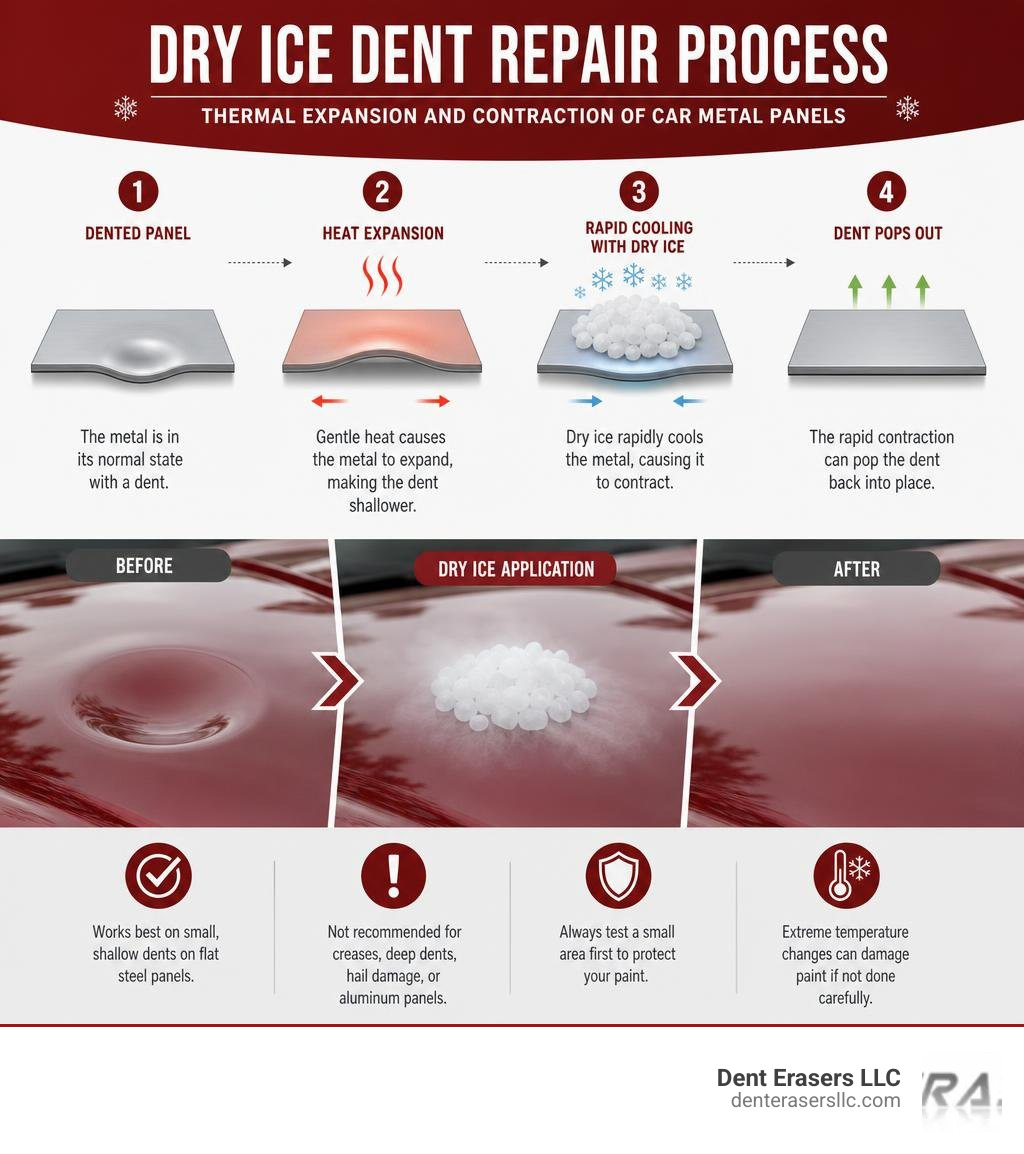
To understand how dry ice dent repair works, we have to look at thermodynamics. The core principle of this DIY method is “thermal shock.”
Metal expands when it is heated and contracts when it is cooled. Dry ice is solid carbon dioxide, and it is exceptionally cold, sitting at a freezing -109.3°F (-78.5°C). In comparison, the ice in your home freezer is usually around 0°F. When you introduce this extreme temperature differential to a car panel, the physics are straightforward:
- Warming the Metal: First, you warm up the metal panel, which causes the molecules to expand and makes the metal slightly more malleable.
- Applying the Frigid Cold: Next, you apply dry ice. As the solid carbon dioxide touches the warm panel, it undergoes sublimation—meaning it transitions directly from a solid to a gas without turning into a liquid.
- Rapid Contraction: This sudden, extreme drop in temperature causes the warmed metal to contract rapidly.
- The “Pop”: If the dent is shallow and has no sharp creases, this sudden physical contraction can cause the metal to snap back into its original, stamped shape.
You can read more about this exact phase change and temperature dynamic in the guide on Repairing Vehicle Dents with Dry Ice – Dry Ice Corp. “Largest Regional Supplier of Dry Ice Products”.
However, while the physics are solid in a controlled laboratory setting, real-world car panels present a host of complications. Modern automotive sheet metal is stamped under immense pressure, and when a panel gets dented, the metal doesn’t just bend—it stretches. Thermal contraction alone cannot compress stretched metal back into place if it has exceeded its elastic limit.
DIY Thermal Dent Removal: Process and Risks
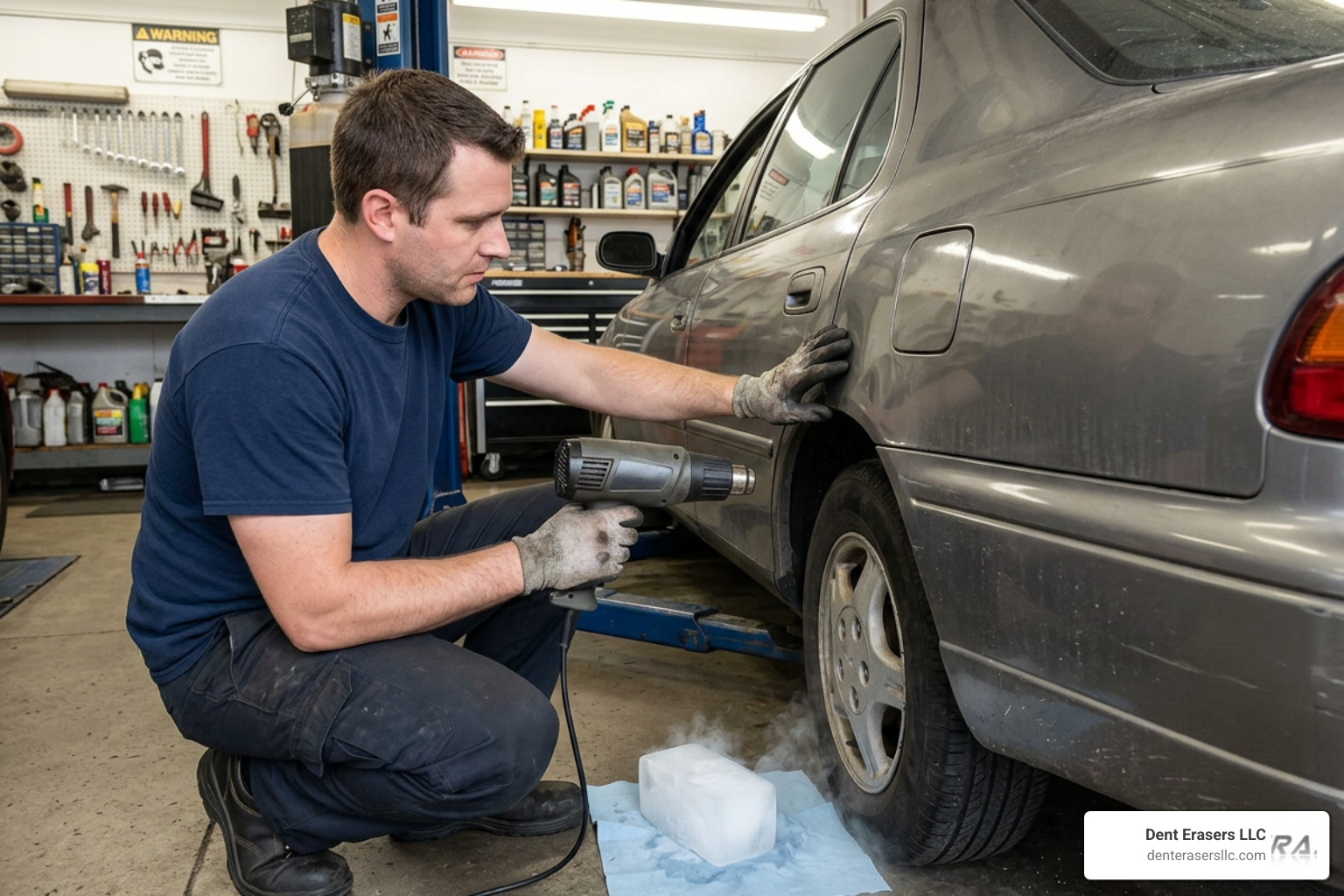
Before you run out to buy a block of dry ice, we need to talk about “metal memory.” When car panels are manufactured, they are stamped into a specific shape. This shape becomes the metal’s natural state, or its “memory.”
If your vehicle has a large, shallow, non-creased dent (often called an “oilcan” dent) on a flat panel like the hood, roof, or trunk, the metal still wants to return to its original shape. In these specific cases, a DIY thermal shock attempt might work. However, if the dent is small, sharp, or located along a body line, the metal’s structure has been permanently altered.
If you are looking for other budget-friendly ways to tackle minor dings, check out our guide on The Cheapest Ways to Fix a Car Dent.
If you still want to attempt the dry ice method at home, you must follow strict safety protocols and step-by-step instructions to minimize the risk of permanent damage.
Step-by-Step Guide to DIY Dry Ice Dent Repair
If you decide to try this at home, preparation and safety are key. Make sure you are working in a well-ventilated area (such as an open driveway in Concord CA or Richmond CA) because sublimating carbon dioxide can quickly displace oxygen in a closed garage.
For a deeper look into how metal behaves during repairs, you can refer to our guide on Small Dent Removal from Car: A Step-by-Step Guide to Metal Morphing.
What You Need:
- A small block of dry ice (typically costs less than $20 at a local grocery store)
- Heavy-duty, insulated protective gloves (never touch dry ice with bare skin—it causes instant frostbite!)
- A household hair dryer
- A sheet of aluminum foil
- A soft microfiber cloth
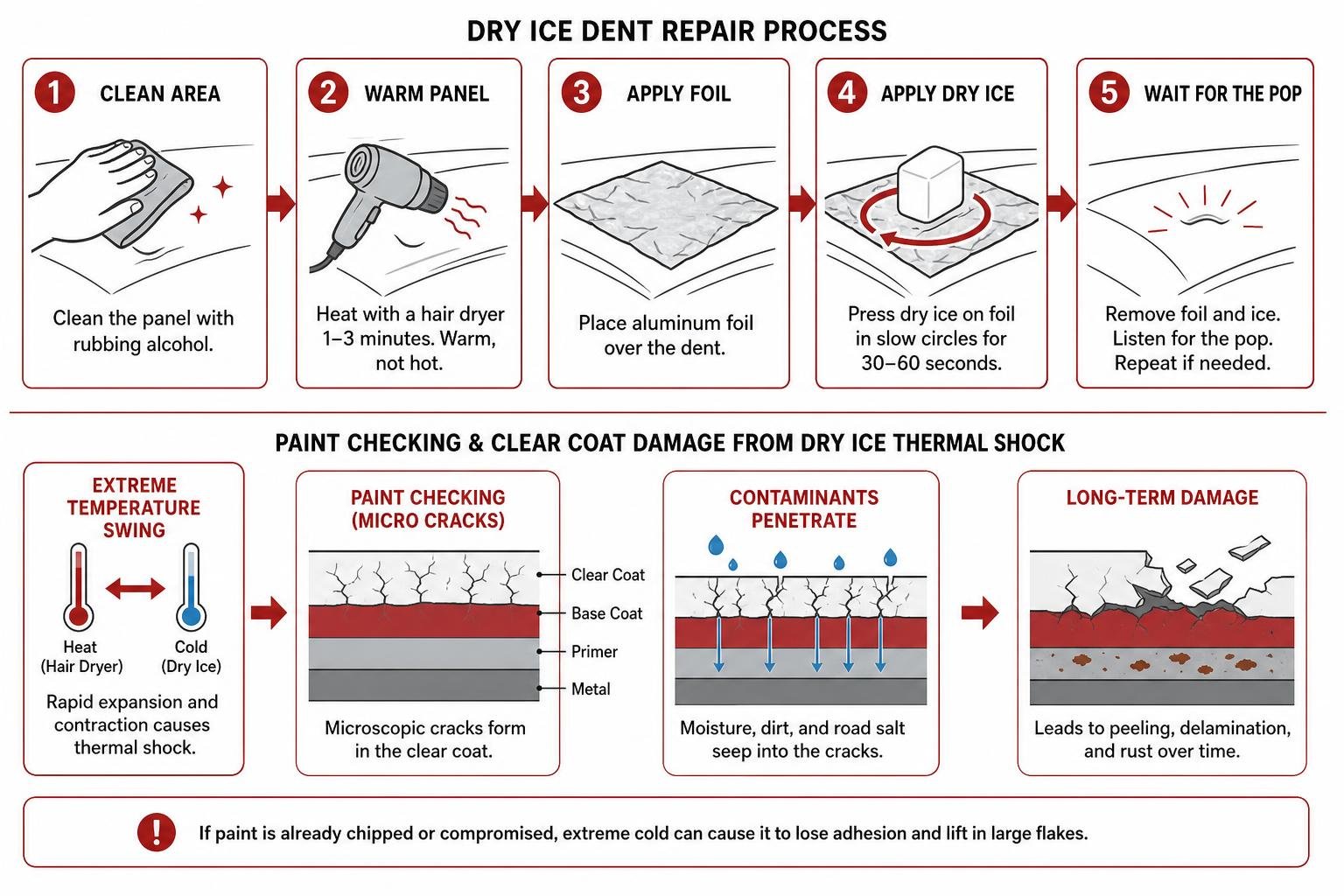
Step 1: Clean the Area
Thoroughly clean the dented panel with rubbing alcohol to remove any dirt, wax, or road debris. Any grit left on the paint can act like sandpaper under the dry ice block.
Step 2: Warm the Panel
Hold your hair dryer 5 to 7 inches away from the panel. Keep it moving constantly in a circular motion over and around the dent for 1 to 3 minutes. The metal should be warm to the touch, but not so hot that you cannot comfortably hold your hand on it. Overheating can blister your clear coat.
Step 3: Apply the Protective Barrier
Lay a sheet of aluminum foil flat over the warmed dent. This acts as an insulator, protecting your car’s paint from direct, harsh contact with the dry ice block while still allowing the extreme cold to transfer through.
Step 4: Apply the Dry Ice
Put on your heavy-duty protective gloves. Take the block of dry ice and gently press it against the foil in the center of the dent. Move the ice in a slow, circular motion for 30 to 60 seconds.
Step 5: Wait for the Pop
Remove the dry ice and the foil. If the method is going to work, you will often hear a distinct popping sound as the rapid cooling forces the metal to contract and snap back. If it doesn’t pop immediately, let the metal warm back up naturally and repeat the process. Do not attempt this more than 2 or 3 times, as repeated thermal shock can ruin your paint.
For an alternative take on this process, you can read How To Remove Hail Dents With Dry Ice – Mixed Kreations.
The Risks of Dry Ice Dent Repair on Car Paint
While the idea of a $20 fix is incredibly tempting, the risks of DIY dry ice dent repair are substantial. The primary hazard is to your vehicle’s paint finish.
Modern automotive paint consists of a primer, a base color coat, and a protective clear coat. When you subject this multi-layered paint system to an immediate 200-degree temperature swing (from the hot hair dryer to the -109.3°F dry ice), you cause extreme thermal shock.
This rapid expansion and contraction can lead to “paint checking”—microscopic cracks in the clear coat. While these cracks might not be visible immediately, they will expand over time. Moisture, dirt, and road salt will seep into these micro-cracks, eventually leading to paint peeling, clear coat delamination, and rust.
If the paint is already chipped or compromised by a rock ding, the extreme cold can cause the paint to lose adhesion entirely and lift off the bare metal in large flakes. You can read more about these paint hazards in the article Does dry ice for hail damage actually work? | Dry Ice For Hail Damage.
Alternative Household Suction Methods
If the thermal shock method sounds too risky, many car owners turn to household suction tools.
Using a plunger is a classic garage hack. However, there is a trick to it: a sink plunger (which has a flat, cup-shaped rim) works significantly better for car panels than a toilet plunger (which has an extended flange on the bottom).
To attempt this:
- Clean the panel and the plunger cup.
- Wet both the plunger rim and the dented area to create a tight suction seal.
- Apply the plunger directly to the center of the shallow dent.
- Push in gently, then give a sharp, straight-backward yank.
For large, shallow dents on flat doors or quarter panels, this suction method is much safer for your paint than dry ice. For a complete walkthrough on how to use suction safely, see our guide on Plunger Power: The Ultimate Guide to DIY Car Dent Removal.
Dry Ice vs. Professional Paintless Dent Repair (PDR)
To understand why professional Paintless Dent Repair (PDR) is the industry gold standard, we have to look at how vehicle manufacturing has changed over the last few decades.
In the mid-20th century, cars were built with thick, heavy “Detroit steel.” This metal was incredibly rigid and had strong shape memory. If you dented a 1970 Cadillac, the metal was thick enough that a massive temperature swing (like dry ice) or a strong pull could occasionally pop it back into place. This is where the “dry ice dent removal” myth originated.
Modern vehicles, however, are engineered with high-strength, thin-gauge steel and lightweight aluminum. These modern metals are designed to crumple during an accident to protect passengers. When a modern panel gets dented, the metal stretches instantly. It does not have the same rigid “memory” as old Detroit steel.
Because of this, professional PDR technicians do not rely on unpredictable thermal hacks. Instead, PDR is a highly skilled art form. Technicians use specialized, highly polished metal rods inserted behind the damaged panel to meticulously massage the dent back into place.
If the backside of the panel is completely inaccessible (such as on a double-walled roof pillar), we use advanced glue pulling systems. This involves adhering specialized tabs to the front of the dent with a proprietary hot-melt glue, then using a slide hammer or mini-lifter to pull the metal back to level before tapping down any high spots with a blending hammer.
This mechanical manipulation relieves the internal stress of the stretched metal, permanently resetting it without ever risking your factory paint. You can read more about how this process works in our article, Stop the Dents from Driving You Crazy with PDR.
To help you decide between a DIY attempt and calling a professional, let’s look at how they compare side-by-side:
| Feature | DIY Dry Ice Method | Professional Paintless Dent Repair (PDR) |
|---|---|---|
| Average Cost | Under $20 | $150 – $500 (Depending on dent size/access) |
| Success Rate | Very Low (Under 10% on modern cars) | Extremely High (99% on intact paint) |
| Risk of Paint Damage | High (Paint checking, clear coat cracking) | None (Preserves original factory paint) |
| Time Required | 1 to 2 hours of frustration | 10 to 30 minutes for single dings |
| Applicable Dents | Only large, shallow, non-creased dents | Deep dings, creases, hail damage, body lines |
| Metal Compatibility | Steel only (Fails completely on aluminum) | Steel, high-strength steel, and aluminum |
For more real-world discussions on why the DIY method is highly inconsistent compared to professional tools, check out the Dry Ice Dent Removal?| Grassroots Motorsports forum | or read dry ice dent remover ? | Diesel Place.
Frequently Asked Questions about DIY Dent Removal
Does dry ice actually work on hail damage?
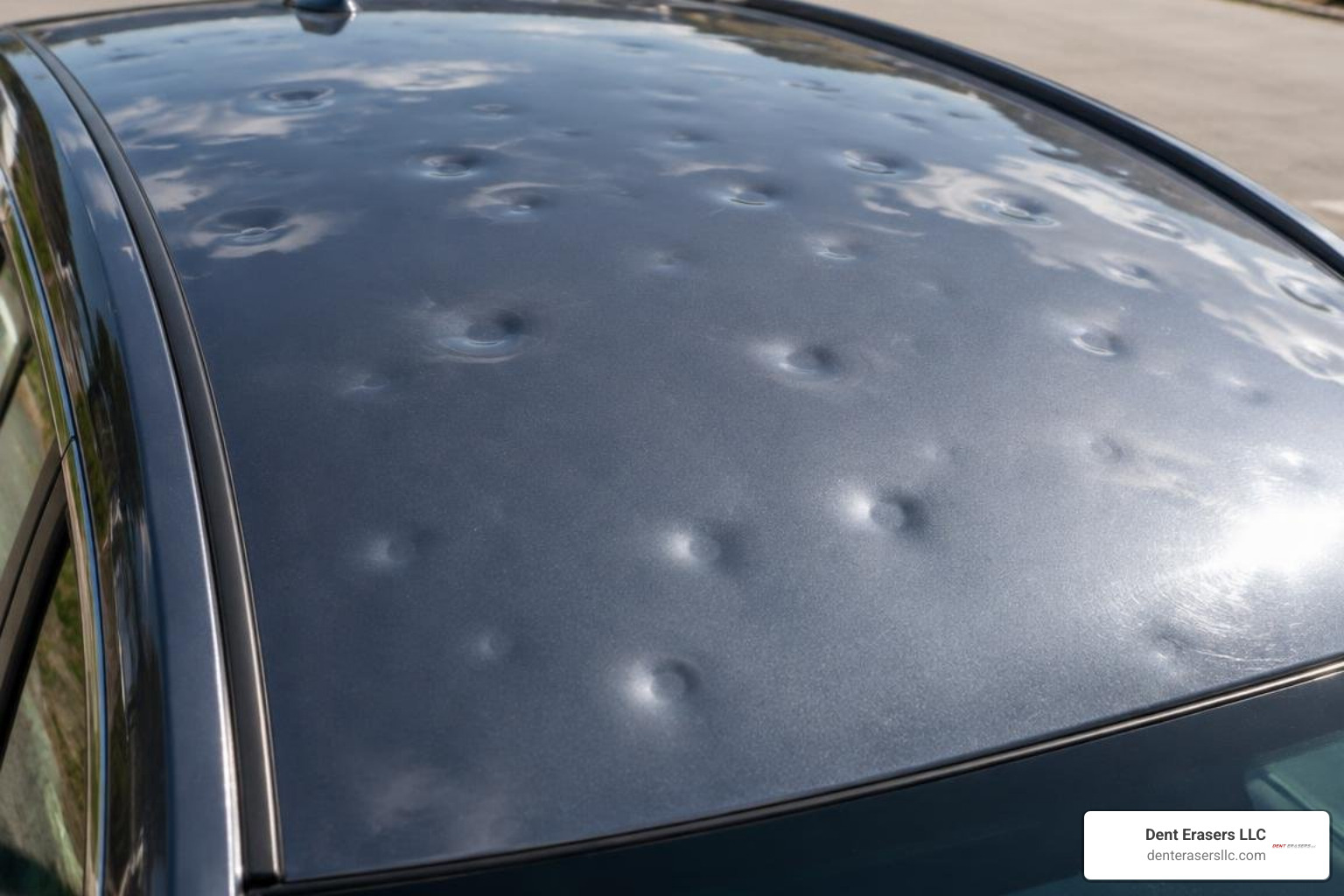
Generally, no. While it sounds like an easy fix to rub a block of dry ice over a hood covered in hail dings, the results are highly inconsistent and incredibly time-consuming.
Hail stones strike a vehicle with high velocity, creating small, deep, and concentrated pockets of stretched metal. These dings are too small and too deep for thermal contraction to pull out. Furthermore, if your car has dozens of hail dents, trying to heat and freeze every single ding individually will take all weekend and likely leave you with ruined, cracked clear coat.
If you are dealing with storm damage, read our comprehensive guide, Weathering the Storm: A Guide to Removing Hail Dents, or learn about professional insurance restoration in Weathering the Storm with Paintless Hail Repair.
Can you use dry ice on aluminum panels?
No, dry ice does not work on aluminum panels.
Aluminum has completely different metallurgical properties than steel. It is much stiffer, lighter, and has virtually no “metal memory.” When aluminum is dented, it requires up to three times more force to manipulate than steel, and it does not react to the rapid temperature changes of dry ice in the same way.
Attempting thermal shock on an aluminum hood or door is a waste of time and only increases the likelihood of damaging your paint. Professional PDR technicians must use completely different, specialized techniques and high-heat monitoring to slowly massage aluminum panels back into shape.
How much does professional PDR cost compared to dry ice?
A block of dry ice from a local store in Concord CA will run you about $15 to $20.
In contrast, professional mobile PDR services from Dent Erasers LLC typically cost between $150 and $500, depending on the size, depth, and location of the dent. While the DIY option is cheaper upfront, you have to factor in the cost of failure.
If you crack your clear coat or warp the metal panel using dry ice, a traditional body shop will have to sand down the panel, apply body filler, and repaint it. This can easily cost $500 to $1,500 and will destroy your vehicle’s original factory finish.
To get a clear idea of what to expect for professional pricing, check out The Complete Guide to PDR Pricing and Estimates. You can also read about general pricing discussions on Dry Ice Dent Removal – AskWise.
Conclusion
At the end of the day, dry ice dent repair is largely an internet myth. While it makes for a fun science demonstration on old, thick metal panels, it is highly ineffective on modern vehicles and carries a massive risk of permanently ruining your car’s paint.
Why risk a DIY headache when you can have a flawless, professional repair done right in your own driveway?
At Dent Erasers LLC, we provide expert mobile paintless dent repair services across Contra Costa County, including Concord CA, Richmond CA, Pittsburg CA, Antioch CA, Walnut Creek CA, and Brentwood CA. We bring specialized tools directly to your home or office, restoring your car, motorcycle, classic, or luxury vehicle to pristine condition in a fraction of the time. Best of all, our process preserves your vehicle’s original factory paint and resale value.
Before you risk your paint with dry ice, let us give you a fast, affordable, and flawless fix.
Explore our Paintless Dent Repair services today and get a free quote!
If you want to read more about local Bay Area options and reviews, you can check out resources like THE BEST 10 MOBILE DENT REPAIR IN CONCORD, CA, THE BEST 10 MOBILE DENT REPAIR IN RICHMOND, CA, or THE BEST 10 MOBILE DENT REPAIR NEAR BRENTWOOD, CA ….