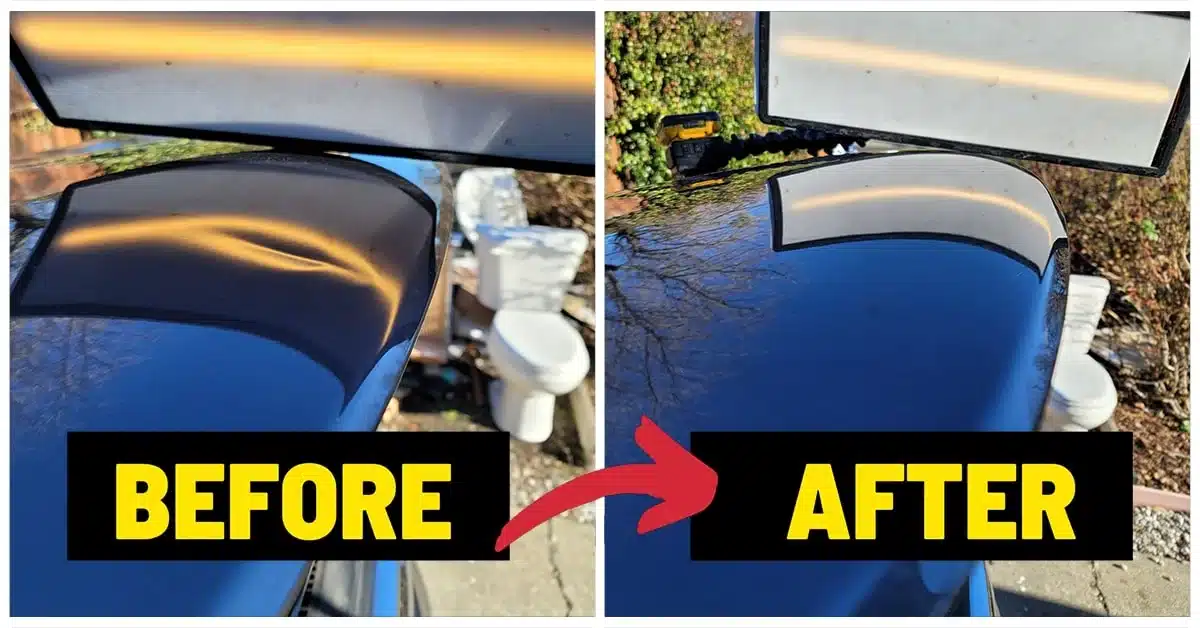
That Frustrating Ding in Your Door Doesn’t Have to Stay There
Auto car dent repair doesn’t have to mean a week without your vehicle, a hefty body shop bill, or a repaint that chips the resale value.
Here’s the quick answer most people need:
- Small dents with intact paint → Paintless Dent Repair (PDR) is your best option. Fast, affordable, no repainting.
- Dents with cracked or missing paint → Traditional body repair (filler, sand, repaint) is required.
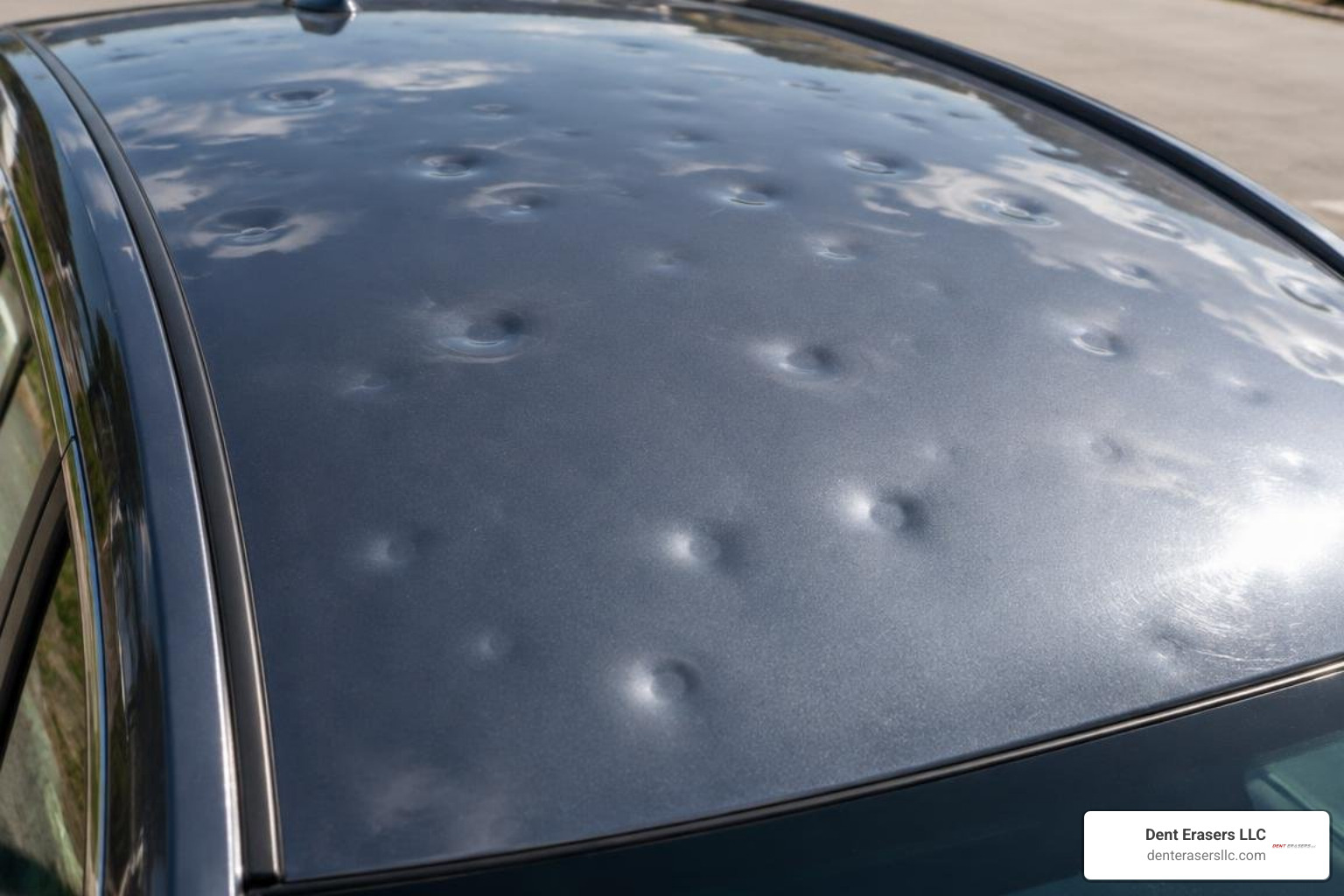
- Hail damage → Almost always a strong PDR candidate.
- Deep creases or edge damage → Depends on severity; a professional assessment is needed.
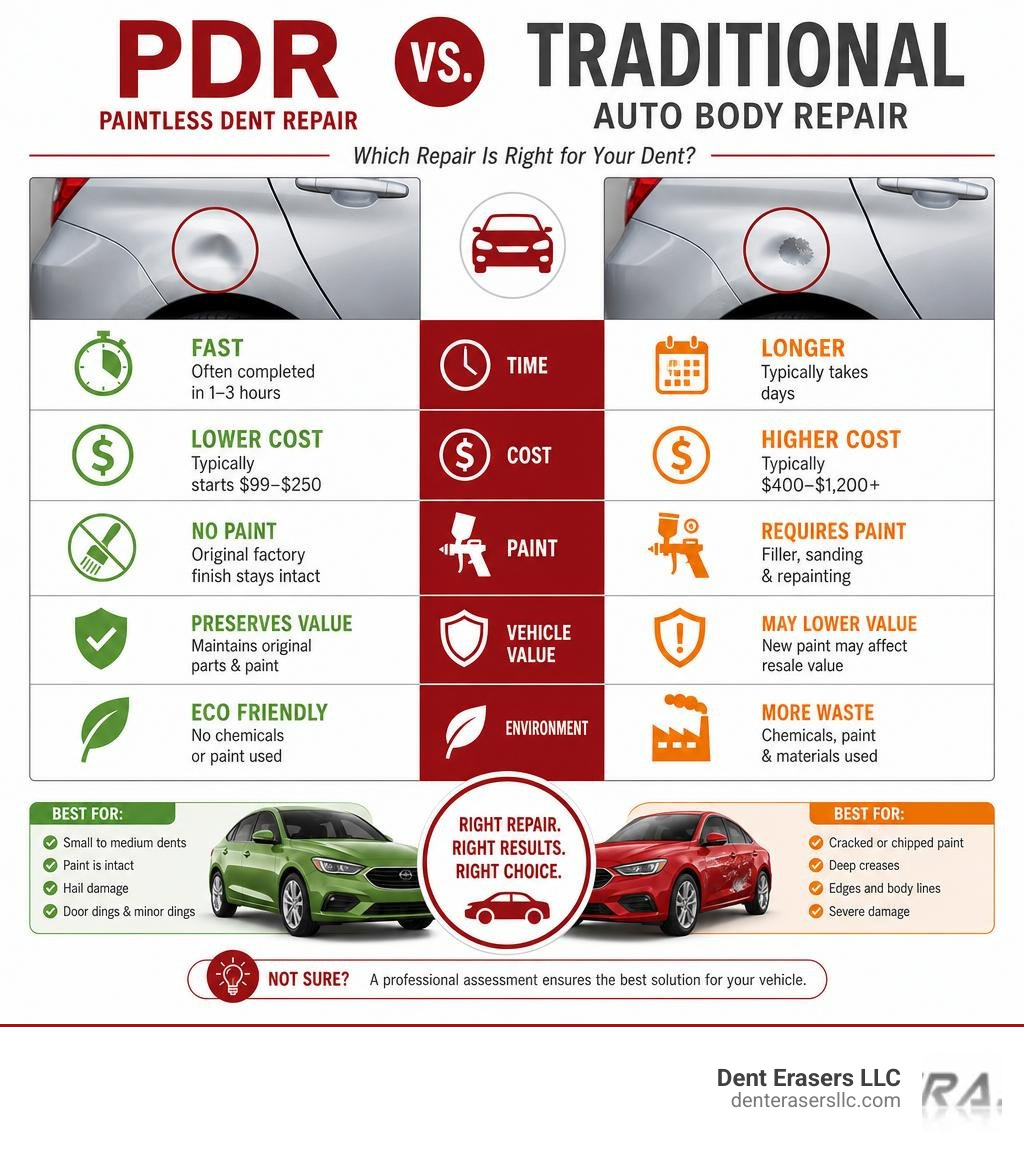
- Cost → PDR typically starts around $99–$250. Traditional repair can run $400–$1,200+.
Minor dents are one of the most common complaints among vehicle owners. A shopping cart at the grocery store. A careless driver in a parking lot. A hailstorm that leaves your hood looking like a golf ball. The damage is small, but the annoyance — and the anxiety about what it costs to fix — is real.
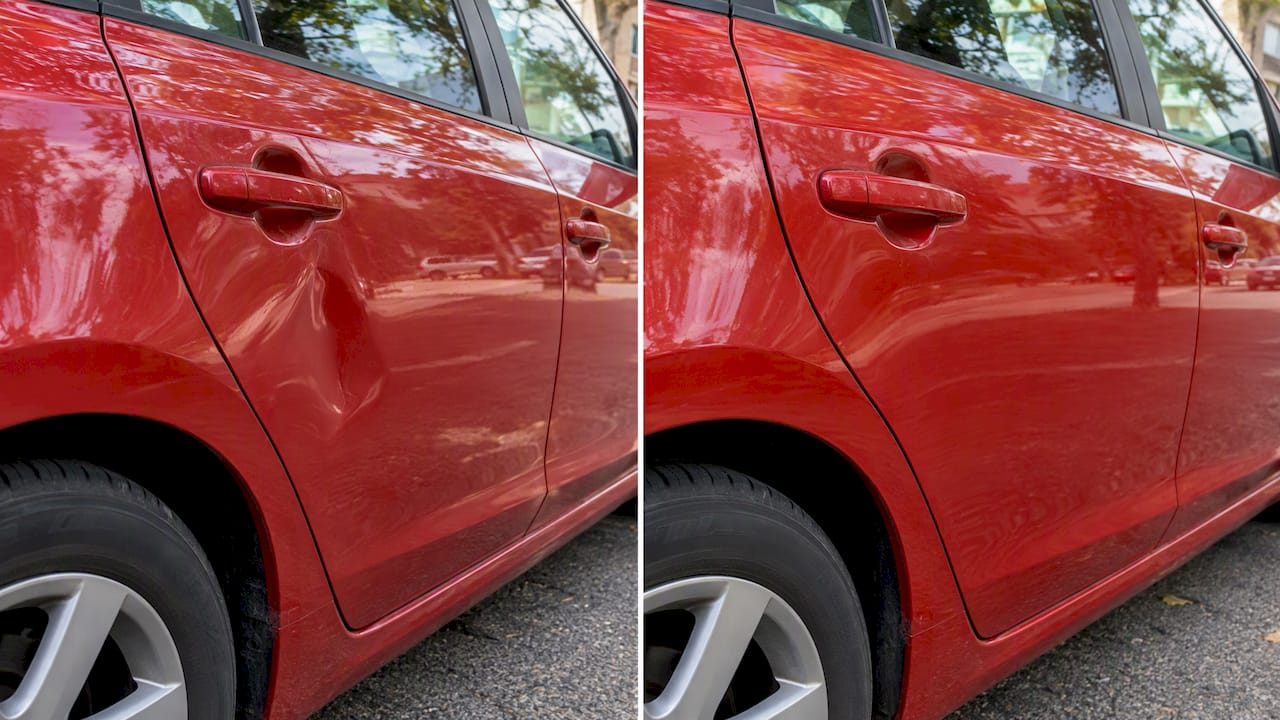
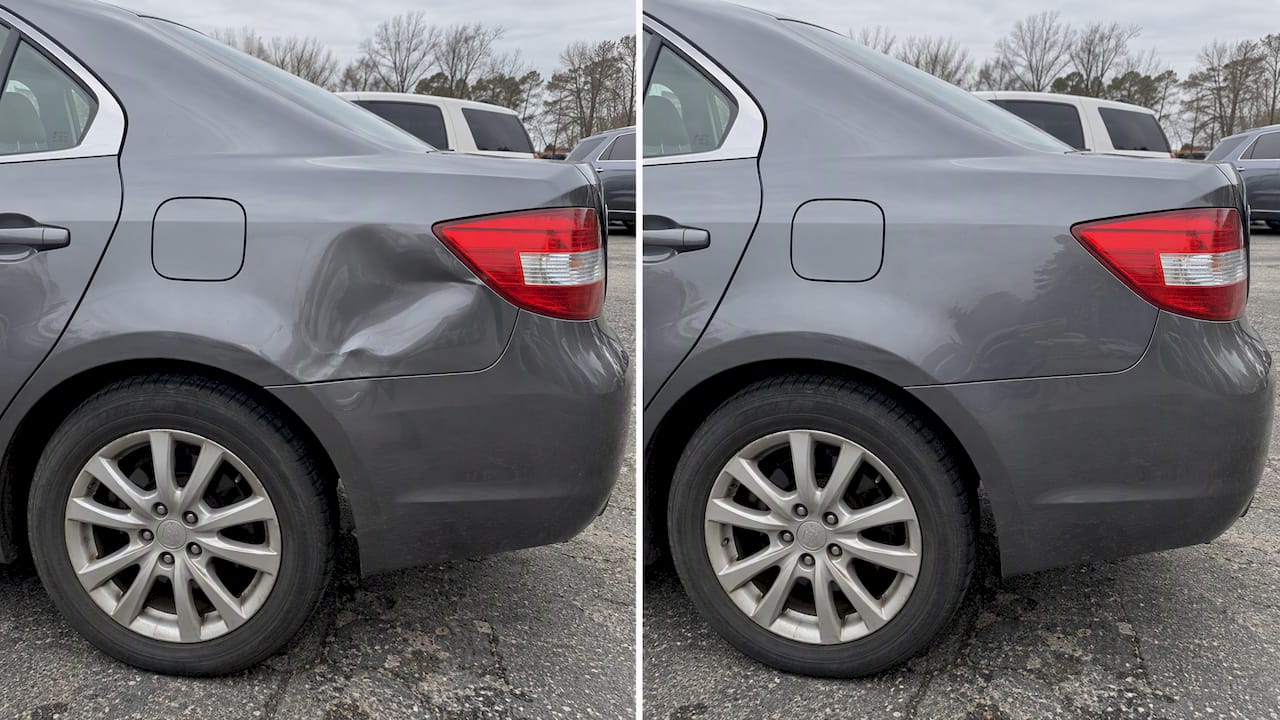
The good news: most everyday dings and dents don’t require a full body shop repair. With the right method and the right technician, your car can look factory-fresh again, often the same day, without any paint, filler, or drama.
I’m Brian Blanc, founder of Dent Erasers LLC, and I’ve spent nearly three decades specializing in auto car dent repair across the East Bay — restoring everything from everyday commuters to high-end vehicles using mobile paintless dent removal that comes directly to you. In this guide, I’ll walk you through exactly how to assess your damage, understand your options, and decide when to DIY versus call a pro.
Easy auto car dent repair glossary:
Understanding Auto Car Dent Repair: PDR vs. Traditional Methods
When your vehicle gets dented, you generally face a choice between two entirely different repair philosophies: Paintless Dent Repair (PDR) and traditional auto body repair. Understanding how these two processes work is the key to saving time, preserving your car’s value, and keeping your hard-earned money in your wallet.
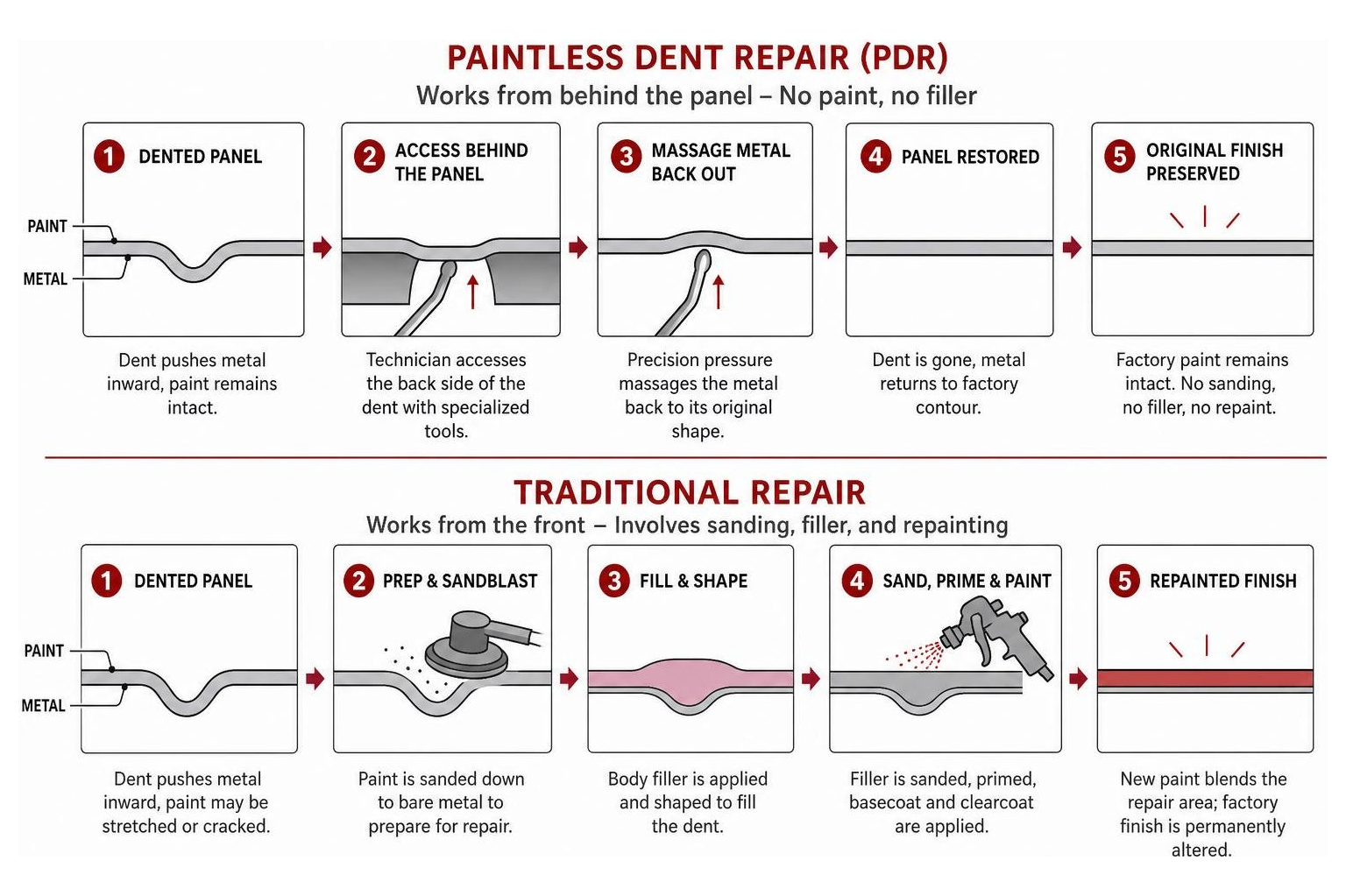
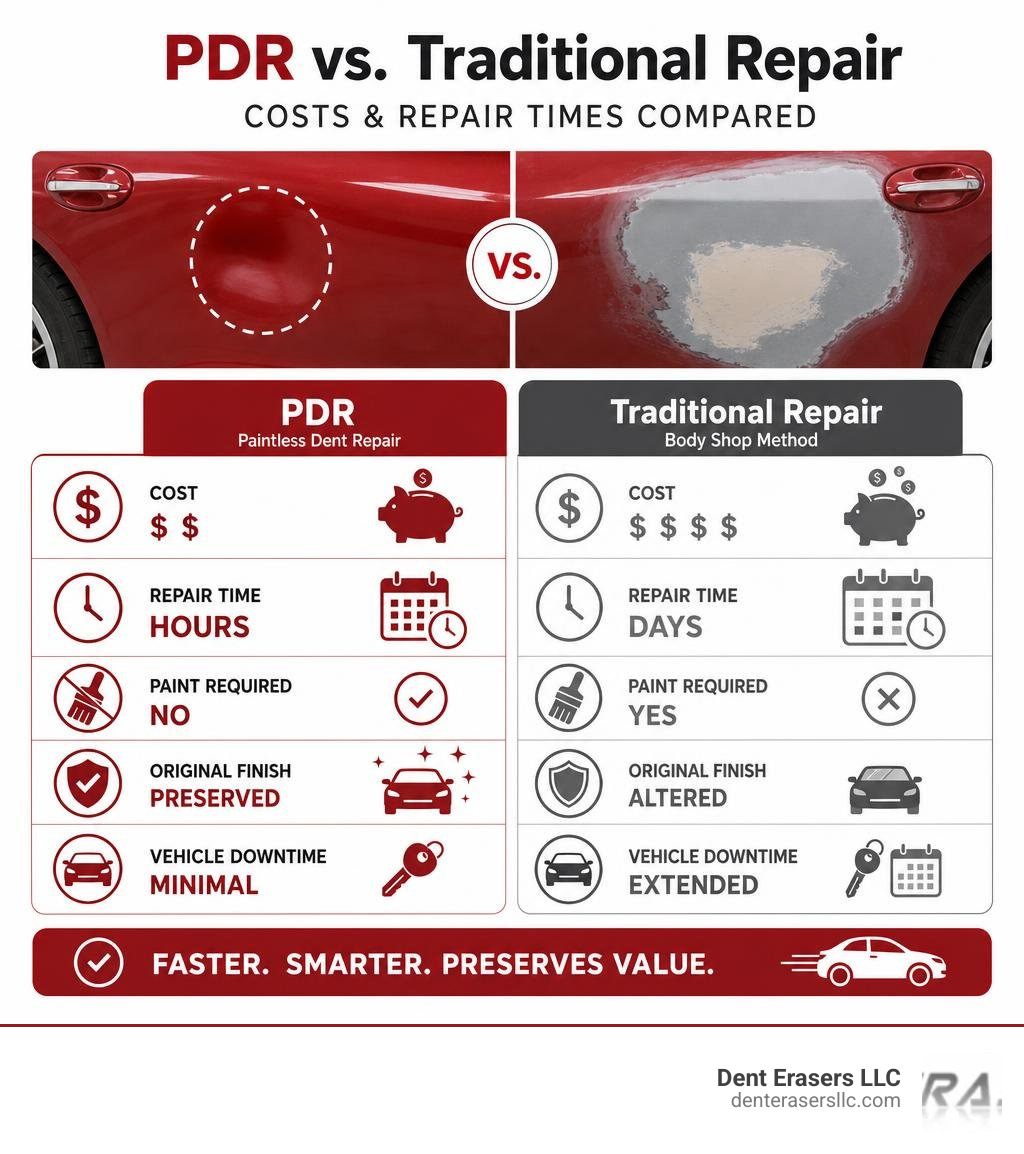
Traditional auto body repair is a destructive and additive process. To fix a dent, a conventional shop will typically grind down the factory paint to bare metal, pull the metal out using welded studs, slather the area with plastic body filler (often referred to as Bondo), sand it flat, apply primer, and then spray new basecoat and clearcoat. While this is necessary for severe collision damage where the metal is torn or the paint is completely ruined, it is often overkill for minor dings.
Traditional repair permanently alters your vehicle’s factory finish. No matter how skilled the painter is, aftermarket paint rarely matches the exact durability and chemical resistance of the original factory-baked paint.
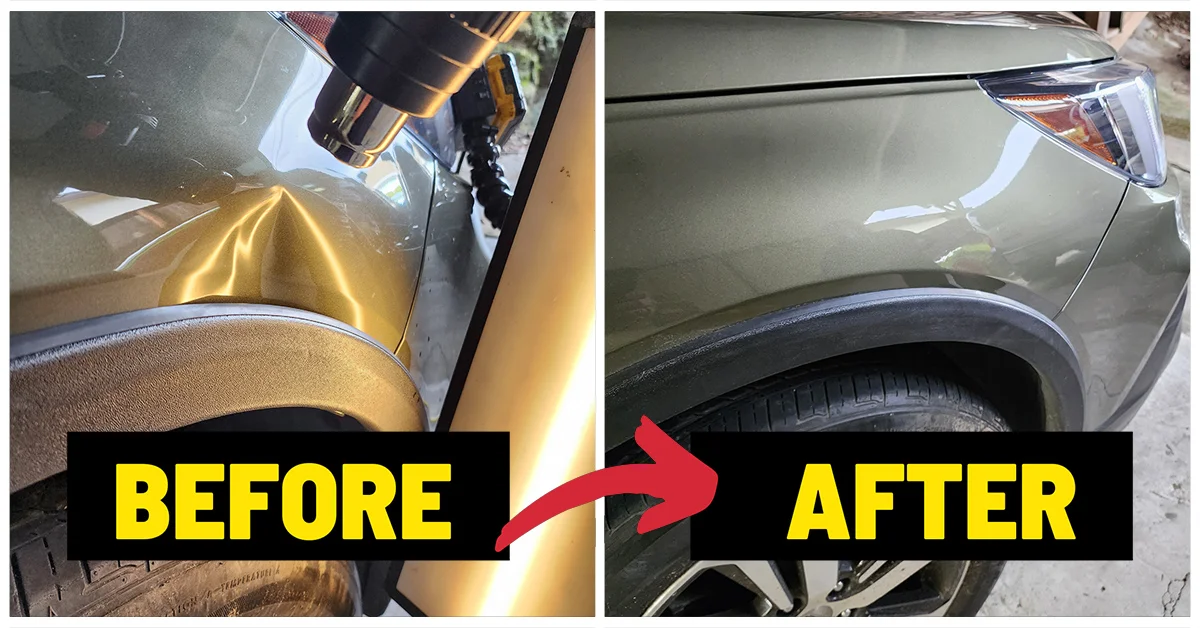
PDR, on the other hand, is a non-invasive, subtractive process. We do not use sandpaper, body fillers, or auto paint. Instead, we use highly specialized tools to gently massage the metal back into its original shape from behind the panel. Because the factory paint remains completely undisturbed, your car retains its original finish and structural integrity.
What is Paintless Dent Repair?
Paintless Dent Repair is the fine art of removing dents, dings, creases, and hail damage from a vehicle without altering the factory paint. Think of it as metal origami in reverse. Modern automotive paint is incredibly flexible and resilient, designed to bend and stretch along with the underlying metal. PDR takes advantage of this flexibility.
During a PDR service, we use specialized metal rods, picks, and reflection boards to gain access to the underside of the damaged panel. By applying precise, micro-controlled pressure to the backside of the dent, we slowly massage the metal back to its original factory shape.
This process requires an extraordinary level of hand-eye coordination and spatial awareness. PDR technicians must undergo extensive specialized training to learn how to read the reflection of light off the vehicle’s surface and manipulate the metal without over-stretching it or cracking the clear coat. To learn more about how this technique keeps your car looking pristine, check out our guide on how to Stop the Dents from Driving You Crazy with PDR.
The Benefits of Choosing PDR for Auto Car Dent Repair
The advantages of choosing PDR over traditional collision repair are overwhelming for minor mishaps. Here is why we almost always recommend PDR whenever the paint is intact:
- Cost-Effective: Because PDR does not require expensive paint materials, primers, clear coats, or hours of labor-intensive sanding and masking, it costs a fraction of traditional body shop repairs. Most of our professional PDR repairs range from $150 to $500, whereas a traditional body shop would easily charge $400 to $1,200+ for the same damage.
- Time-Saving: Traditional body shop repairs can take several days or even weeks, leaving you stranded without a vehicle or dealing with the hassle of a rental car. PDR is incredibly fast. Most minor repairs are completed within a single day—often in less than an hour or two right in your driveway.
- Preserves Vehicle Value: Your car only has its factory paint once. Repainted panels can lead to mismatched colors, overspray on trim pieces, and texture differences (orange peel). PDR preserves the factory paint, which keeps your vehicle’s resale value intact and keeps your vehicle history report clean.
- Eco-Friendly: Traditional auto body repair involves toxic chemical solvents, paint fumes, primers, and plastic fillers that release volatile organic compounds (VOCs) into the atmosphere. PDR uses no chemicals, no fillers, and no paint, making it a 100% green, environmentally friendly repair method.
If you are curious about how these savings translate to real-world budgets, take a look at The Complete Guide to Auto Body Repair Costs.
Assessing the Damage: Is Your Dent a Candidate for PDR?
Not every dent can be saved by PDR, but a surprising number of them can. When we perform a damage assessment, we look at several key physical factors to determine if your car is a candidate for paintless repair or if it needs to go to a traditional collision center.
First and foremost is paint integrity. If the paint inside the dent is chipped, deeply scratched, cracked, or peeling, PDR alone will not solve the problem. While we can sometimes massage the metal flat to make a touch-up paint job look better, any broken paint generally rules out a pure PDR fix.
The second major factor is crease presence and sharpness. A smooth, shallow ding is incredibly easy to repair. A sharp, deep crease where the metal has been folded tightly is much more difficult because the metal has been “stretched” beyond its elastic limit. If the metal is severely stretched or work-hardened, it may not want to return to its original shape without cracking the paint. For a deeper dive into how we evaluate these tricky situations, read about Small Dents, Big Problems, and How to Fix Them.
Metal Matters: Steel vs. Aluminum Panels
The type of metal your car is made of plays a massive role in how we approach the repair. Most vehicles on the road today use a mix of steel and aluminum panels.
Steel panels have excellent “shape memory.” When steel is dented, it retains a natural tendency to want to return to its original, stamped factory shape. It is highly malleable, forgiving, and relatively easy to manipulate with standard PDR rods.
Aluminum panels are a completely different conversation. Aluminum is much lighter than steel, but it is also far less forgiving. It does not have the same shape memory as steel, meaning it deforms plastically rather than elastically. Furthermore, aluminum “work-hardens” rapidly. As we massage and manipulate an aluminum panel, the metal becomes stiffer and more brittle with every push.
Because of this, repairing an aluminum dent requires specialized tools, low-friction tips, twice the patience, and often localized heat application to relax the metal and prevent it from cracking. An aluminum repair typically takes 60 to 90 minutes compared to just 30 minutes for a similar dent in steel, which is why aluminum repairs are quoted individually and require a higher level of professional skill.
Dent Size, Location, and Paint Condition
Size is rarely the limiting factor for PDR; depth and location are much more important. We regularly repair dents ranging from tiny door dings to massive, basketball-sized cave-ins, provided the paint is intact and the metal isn’t severely stretched. However, nature has its own way of testing our limits. For example, the National Weather Service notes that golf ball size hail, typically 1.75 inches in diameter, or larger is usually required to dent car panels, and this type of storm damage is a prime candidate for extensive PDR.
Location, however, can present physical obstacles:
- Double Panels and Braces: If a dent is located directly over a structural roof brace, inside a double-walled door beam, or behind a tight inner fender lip, direct access from behind may be blocked. In these cases, we must use alternative techniques like glue pulling.
- Panel Edges: Dents located within an inch of a panel’s edge, such as the edge of a hood, trunk, or door seam, are incredibly difficult to repair. The metal at the edges is folded over and reinforced, making it extremely rigid and leaving almost no room to get tools behind it.
- Paint Scratches: If a dent has a minor surface scuff or clearcoat scratch, we can often polish it out after performing the PDR. But if the scratch goes down to the primer or bare metal, a traditional touch-up or paint blend will be required.
To understand how we manipulate metal at a microscopic level to overcome these obstacles, read Small Dent Removal from Car: A Step-by-Step Guide to Metal Morphing.
Step-by-Step Guide to DIY Dent Repair and Its Risks
If you spend five minutes on YouTube, you will find hundreds of videos claiming you can fix any car dent using a hot glue gun, a toilet plunger, boiling water, or dry ice. It looks incredibly easy on camera. However, there is a massive gulf between a highly edited video and the reality of metal shop physics.
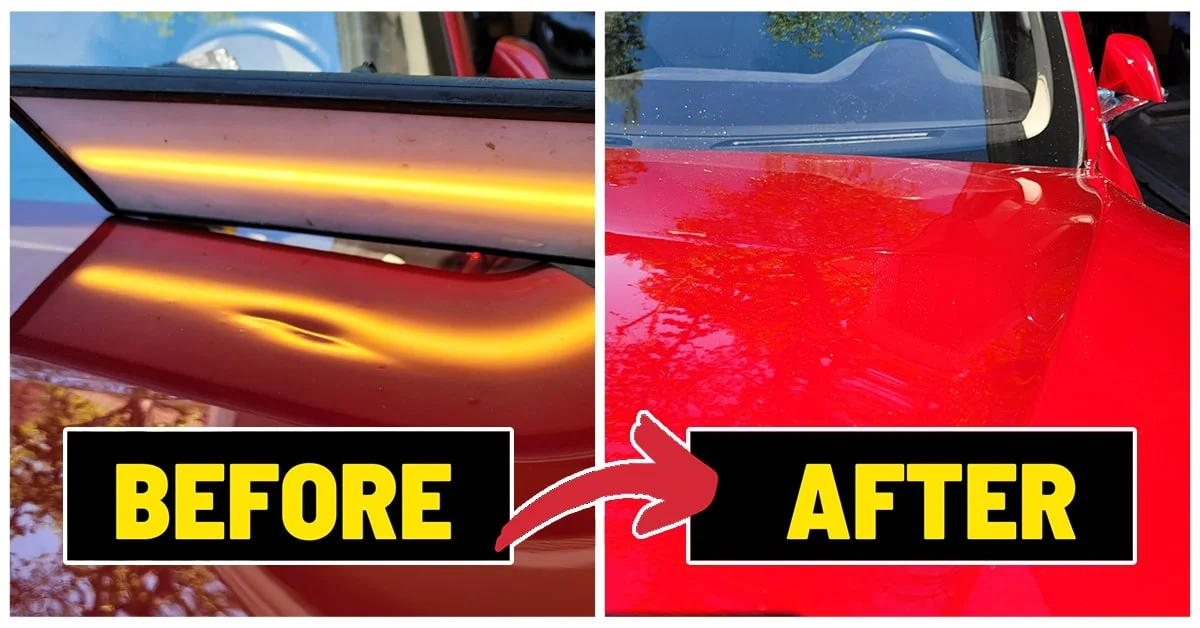
While attempting a DIY repair on an old beater might seem like a fun weekend project, trying it on your daily driver or a luxury vehicle carries serious risks. Let’s look at the actual tools professionals use, and why DIY kits often end in disaster. If you are looking for budget-friendly options, we outline them in The Cheapest Ways to Fix a Car Dent.
Common Tools and Techniques for Auto Car Dent Repair
Professional PDR is built on consistency, specialized tools, and precise lighting. Here are the primary tools and methods we use to restore panels:
- LED Line Boards: This is the most important tool in a technician’s arsenal. An LED line board projects a series of perfectly straight, parallel black and yellow lines onto the car’s painted surface. When a dent is present, the lines bend and distort. By reading these distortions, we can see exactly where the high and low spots are, down to a fraction of a millimeter.
- Dent Removal Rods: These are long, high-strength steel rods of various shapes, curves, and tip configurations. We slide these rods into door windows, behind fender liners, or under hood insulation to gently massage the backside of the metal.
- Glue Pulling and Slide Hammers: When there is no access to the back of a panel (such as on a roof pillar or rocker panel), we glue specialized plastic tabs to the front of the dent using a high-strength hot adhesive. We then use a slide hammer or mini-lifter to pull the tab—and the dent—outward.
- Knock-Down Punches: PDR is a constant dance between pushing low spots up and tapping high spots down. We use plastic or wood-tipped knock-down punches and lightweight hammers to gently tap down high spots, crowns, and pressure ridges around the dent.
- Induction Heating: For large dents or stubborn aluminum panels, we sometimes use magnetic induction heaters. These tools apply localized, high-frequency heat to the metal, relaxing its molecular structure and making it much easier to reshape without damaging the paint.
To see how these professional tools come together to create flawless results, check out Get Your Car Looking New Again with Expert Dent Removal.
The Hidden Dangers of DIY Dent Repair Kits
Cheap DIY dent repair kits sold online usually consist of a plastic bridge puller, some low-quality glue sticks, and a few plastic tabs. While they promise professional results, they often leave vehicle owners with worse damage than they started with. Here are the most common DIY pitfalls:
- Paint Peeling: Professional glue pulling requires precise control over adhesive temperature, pull force, and paint condition. Cheap DIY glue can easily bond too strongly to weak or aftermarket clear coats, pulling the paint right off the metal when you tug on the slide hammer.
- Over-Stretching the Metal (High Spots): Without an LED line board to read the metal, DIYers almost always pull too hard or push too aggressively. This creates sharp “high spots” or “pimples” in the metal. Over-stretched metal cannot easily be pushed back down; it becomes permanently deformed and requires professional bodywork to fix.
- Cracked Clear Coat: If you attempt to pull or push cold metal without understanding its elastic limits, you can easily crack the clear coat. Once the clear coat is cracked, moisture will seep in, eventually leading to peeling paint and rust.
- Wasted Money: More than half of the DIY repairs we see end up costing more to fix professionally because we have to correct the amateur mistakes, over-stretched crowns, and chipped paint before we can even begin repairing the original dent.
Before you buy a cheap kit online, read our guide on How to Find Affordable Dent Removal for Your Car to see how we keep professional repairs highly accessible.
Frequently Asked Questions About Auto Dent Repair
To help you make the most informed decision for your vehicle, we have compiled some of the most common questions we receive from car owners across Contra Costa County.
For a detailed look at pricing structures and what goes into a professional quote, refer to our article on Car Dent & Scratch Repair Cost: What to Expect at the Shop.
How long does a typical PDR repair take?
One of the greatest benefits of PDR is its incredible speed. While a traditional collision center might require you to drop off your vehicle for three to five business days, most PDR repairs are completed in a single day.
In fact, a standard door ding or shopping cart dent can often be fully massaged out in 30 to 60 minutes right on site. Because we operate as a fully mobile service, we come directly to your home or office in Concord, CA, Walnut Creek, Antioch, or Richmond, saving you the hassle of rental cars and shop visits. For severe collision damage where panels are torn or structural integrity is compromised, a traditional auto body shop is necessary to safely restore your vehicle.
Does insurance cover paintless dent repair?
Yes! PDR is fully approved and preferred by all major insurance companies. Because PDR is faster and less expensive than traditional bodywork, insurance adjusters love it.
If your car has sustained extensive hail damage, the repair cost will easily exceed your deductible, making an insurance claim highly beneficial. We can work directly with your insurance provider, handle all the documentation and digital photo estimates, and get the repair approved quickly.
However, for minor door dings and single dents, the total cost of our professional PDR service ($150–$500) is often lower than your insurance deductible (which is typically $500 or $1,000). In these cases, it makes more sense to pay out of pocket to keep your insurance premiums from rising. For more details on budgeting for these repairs, see Dent Removal Service Cost: A Guide to Professional Estimates.
How does PDR affect my vehicle’s resale value and Carfax report?
PDR is the absolute best way to protect your vehicle’s financial value. Because PDR is a cosmetic repair that does not involve structural cutting, welding, or repainting, it does not generate a Carfax or AutoCheck entry. Your vehicle’s history report remains completely clean, which is a massive advantage when it comes time to sell or trade in your car.
Furthermore, if you are driving a leased vehicle that is due for return in a few weeks, returning it with door dings or bumper scrapes can result in hefty wear-and-tear penalties billed at expensive dealership rates. Getting those minor mishaps repaired with PDR before your lease return inspection is a smart financial move that almost always saves you hundreds of dollars. To learn more about protecting your investment, read The Complete Guide to PDR Pricing and Estimates.
Conclusion

At the end of the day, minor vehicle dings and dents are an inevitable part of driving. But they don’t have to be a source of ongoing frustration or a drain on your savings. By choosing professional Paintless Dent Repair, you can restore your vehicle to its original factory beauty quickly, affordably, and without compromising its original paint or resale value.
At Dent Erasers LLC, we bring nearly 30 years of specialized PDR expertise directly to your doorstep. Whether you are located in Concord, Walnut Creek, Antioch, Richmond, San Ramon, or anywhere else in the East Bay, our fully equipped mobile service is ready to make your car’s minor mishaps disappear. We service all makes and models, including luxury vehicles, classic cars, motorcycles, and modern electric vehicles.
Don’t let those annoying dings drive you crazy any longer. Schedule your professional paintless dent repair today or send us a quick photo of your damage for a fast, free estimate!