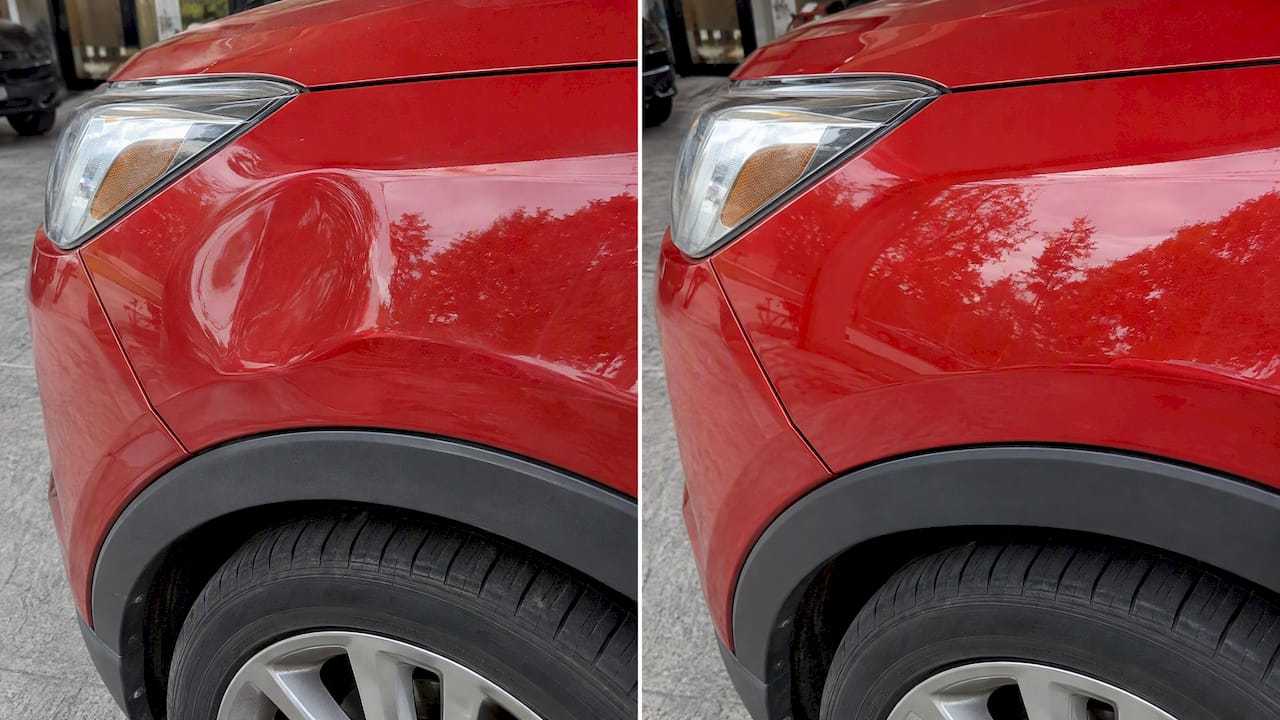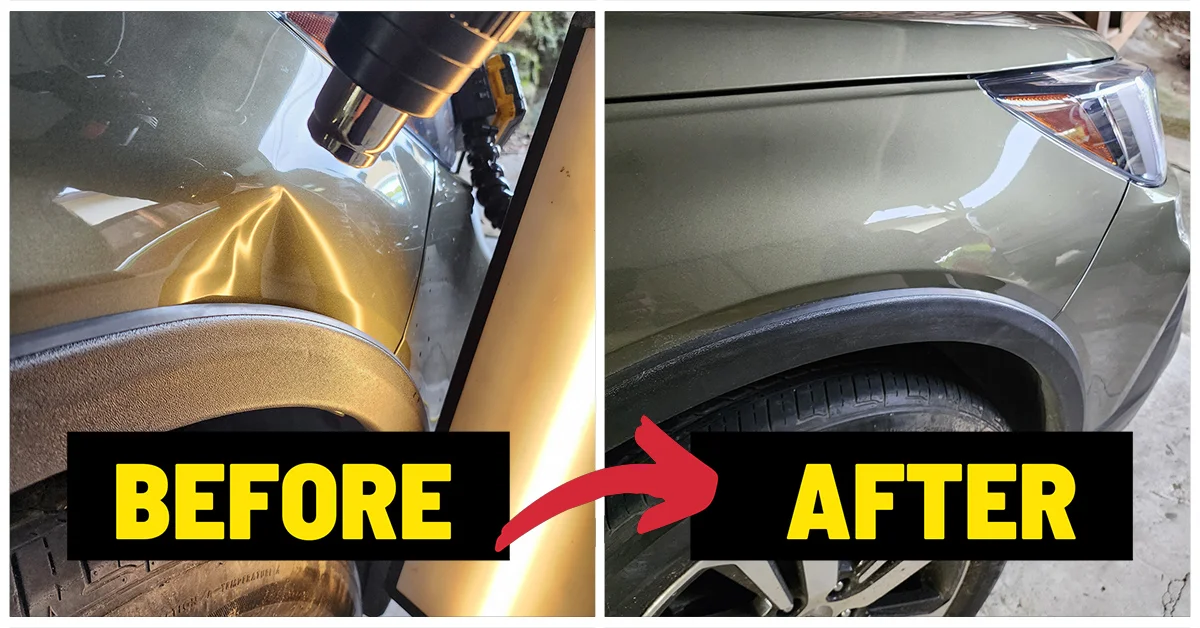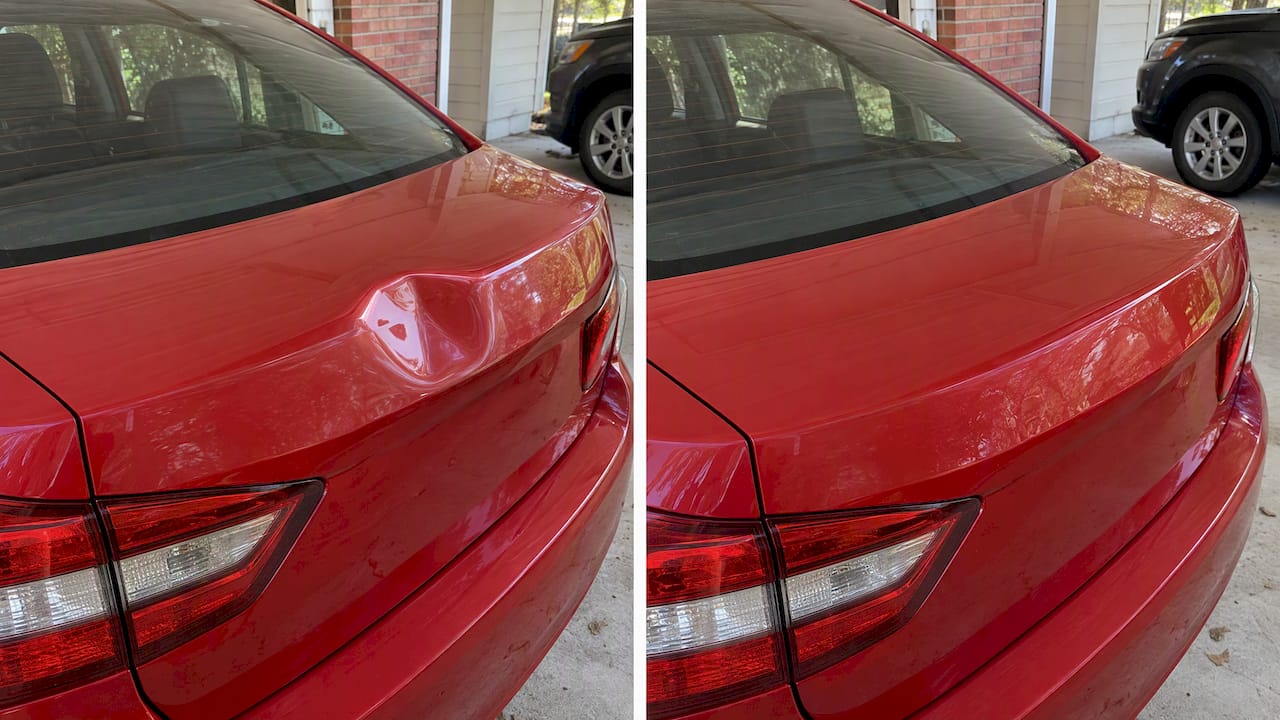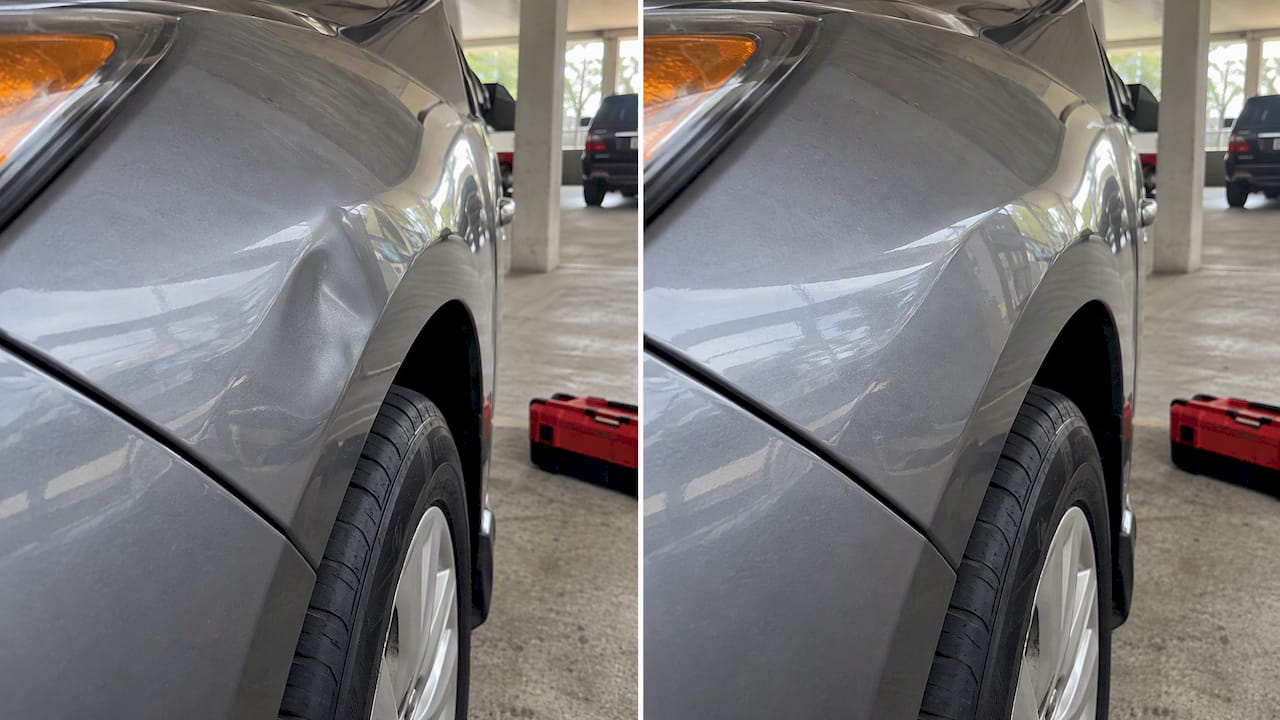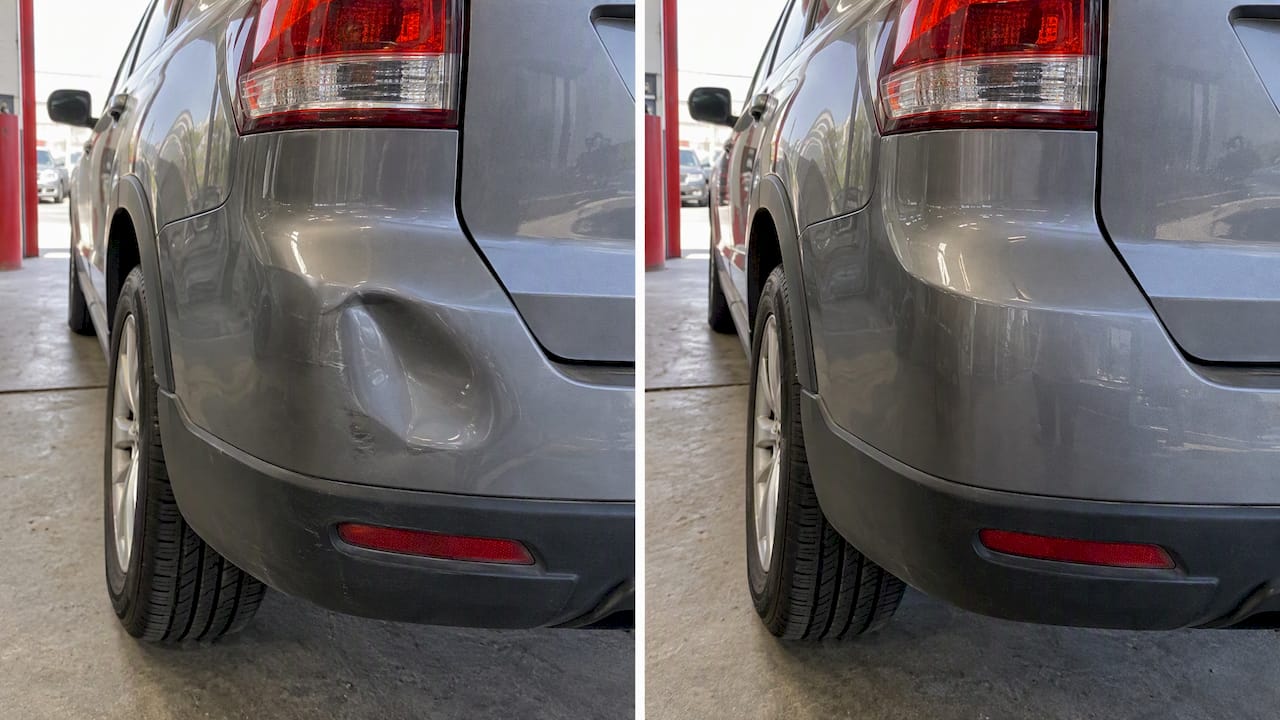
Lease return dent charges depend on your lease’s wear standards. Most lessors treat small dings as normal wear. They bill for larger dents, for several dents on one panel, and for poor repairs. The charge is often higher than a repair would have cost, so the best time to deal with a dent is before the inspector sees it.
TL;DR
- Dent rules vary by lessor. Common cutoffs are about 2 inches for a single dent and four or more dings on one panel.
- Excess wear means wear beyond the standards written in your lease, and those standards must be reasonable.
- Lessors can bill you based on an estimate, so you may be charged even if they never fix the car.
- A pre-return inspection and a quote for mobile paintless dent repair let you compare the repair cost with the likely charge.
- Keep your repair receipts, and challenge any charge that doesn’t match your lease.
Table of Contents
- What counts as a chargeable dent
- How the charge is calculated
- Should you fix dents before you return the lease?
- What lease return dent repair costs with us
- Our perspective: fix the dents that cost you, skip the rest
- If you get a charge you think is wrong
- FAQ
- Sources
What counts as a chargeable dent
There is no single national definition. The New York Attorney General notes that no universal definition of excess wear and damage exists, and your lease’s written standards and your state’s protections are what matter. The lessors below show the range.
| Lessor | What it says about dents |
|---|---|
| Ally | Body, bumper and molding damage over 2 inches is excess wear if it can’t be repaired for $100 or less. Punctures and missing or broken exterior parts count too. |
| GM Financial | Fewer than four dings per panel under 2 inches, and one dent no larger than 4 inches per panel, are fine. Four or more dings, or one dent over 4 inches, needs repair. |
| Nissan | Any dent over 2 inches, any panel with four or more dents, and dents on previously repainted panels are chargeable. |
| Toyota Financial Services | A single dent larger than a credit card, poor prior repairs, or unrepaired collision damage is chargeable exterior damage. |
Size is not the only factor. Nissan’s guide also lists hail damage, tears, cracks, punctures, poor-quality repairs and unrepaired structural or frame damage as possible sources of charges.
The Federal Reserve Board lists dented or damaged body panels or trim, broken or missing parts, cracked glass, excessively worn tires and permanent interior damage as examples of excessive wear.
Normal wear versus excess wear
Ally’s guide says a few small door dings, paint scratches and stone chips can be normal wear. Damage of 2 inches or less is normal, except hail damage and punctures. Damage over 2 inches can still be normal if it is repairable for $100 or less. Body or molding damage over 2 inches, or bumper damage over 6 inches, becomes excess wear when it can’t be fixed for $100 or less.
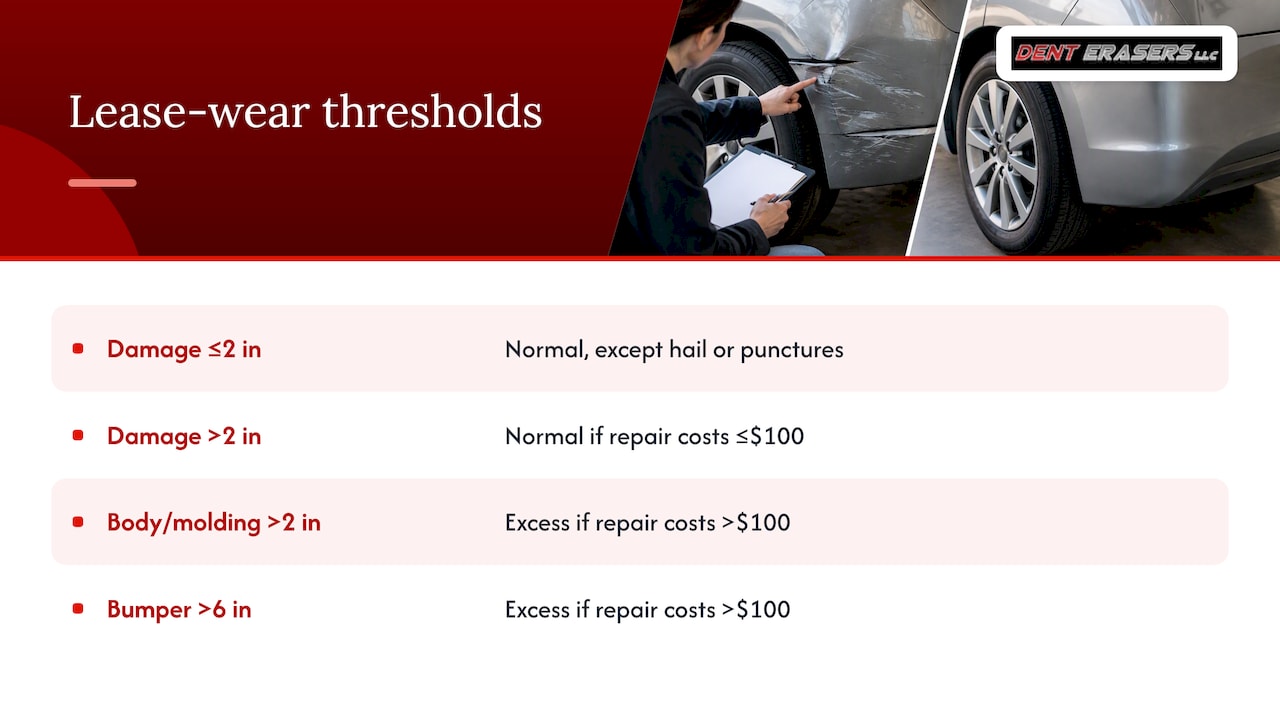
That last test explains why paintless repair matters here. Whether a dent can be fixed cheaply, without repainting, often decides which side of the line it lands on. Neglect, abuse and inferior repairs are all treated as excess wear.
How the charge is calculated
A closed-end lease lets you walk away at the end with no further payment, unless the vehicle has been damaged or has abnormal wear. The Federal Reserve explains that the lessor may charge you to restore the car to lease condition. The lease’s residual value assumes you return it in the condition the lease specifies.
The amount can depend on where you live:
- Actual repair cost or estimate. Where state law applies, the Federal Reserve says charges may be limited to actual repair costs or reasonable estimates.
- No repair required. In New York, a lessor doesn’t have to repair the car first. An itemized estimate from a licensed appraiser can be used.
- Connecticut. The law limits excess-wear charges to an itemized estimate of reasonable repair costs from a licensed appraiser or repair shop selected by the lessor.
The practical point: the lessor’s figure can reflect a body-shop estimate for conventional repair, often with sanding, filling and paint. A paintless repair on the same dent may cost far less. For a closer look at how lessors set their limits, see our guide to lease excess wear standards.
Should you fix dents before you return the lease?
Often yes, when the dent is near or above your lessor’s limit, and when the repair costs less than the likely charge. Run this check:
- Find your limit. Read the wear section of your lease or your lessor’s wear-and-use guide.
- Measure every dent. Use a ruler or a credit card. Count dings per panel, since some lessors cap the number as well as the size.
- Get a repair quote. Compare it with what the lessor’s standards suggest you would be billed.
- Repair only what is chargeable. A few small dings inside the limit don’t need fixing.
- Keep receipts. Toyota Financial Services recommends keeping receipts for repairs made before turn-in.
Be careful with the method. Poor-quality repairs are listed as chargeable by the lessors above, and Nissan treats dents on previously repainted panels as chargeable too. Paintless dent repair keeps the factory finish, so there is no repaint for an inspector to flag. It doesn’t suit every dent. Cracked paint, sharp creases and damage near a panel edge may need a different approach, and a technician can tell you after seeing the car.
What lease return dent repair costs with us
Dent Erasers LLC publishes these ranges for its paintless work:
| Service | Published price |
|---|---|
| Minor dent repair | $100 to $500 |
| Paintless dent repair | $150 to $500 |
| Large dent repair | $150 to $1,500 |
Final pricing depends on the dent’s size, depth and location. Plastic bumper work and body repair are quoted individually.
Our approach to lease returns
We come to your home or workplace, so you don’t lose a day at a shop. Our lease return dent repair service targets the dents that cause charges, and we keep your original paint intact. Request a free dent quote with photos of each dent, and we’ll tell you what is worth fixing before turn-in. Before the appointment, read how to prepare your car for mobile dent repair.
Our perspective: fix the dents that cost you, skip the rest
We have spent more than 27 years removing dents, and lease returns follow a familiar pattern. Someone gets a bill for a door ding or a bumper dent that looked minor to them. The inspector measured it, and the charge came from a body-shop estimate rather than from a paintless fix.
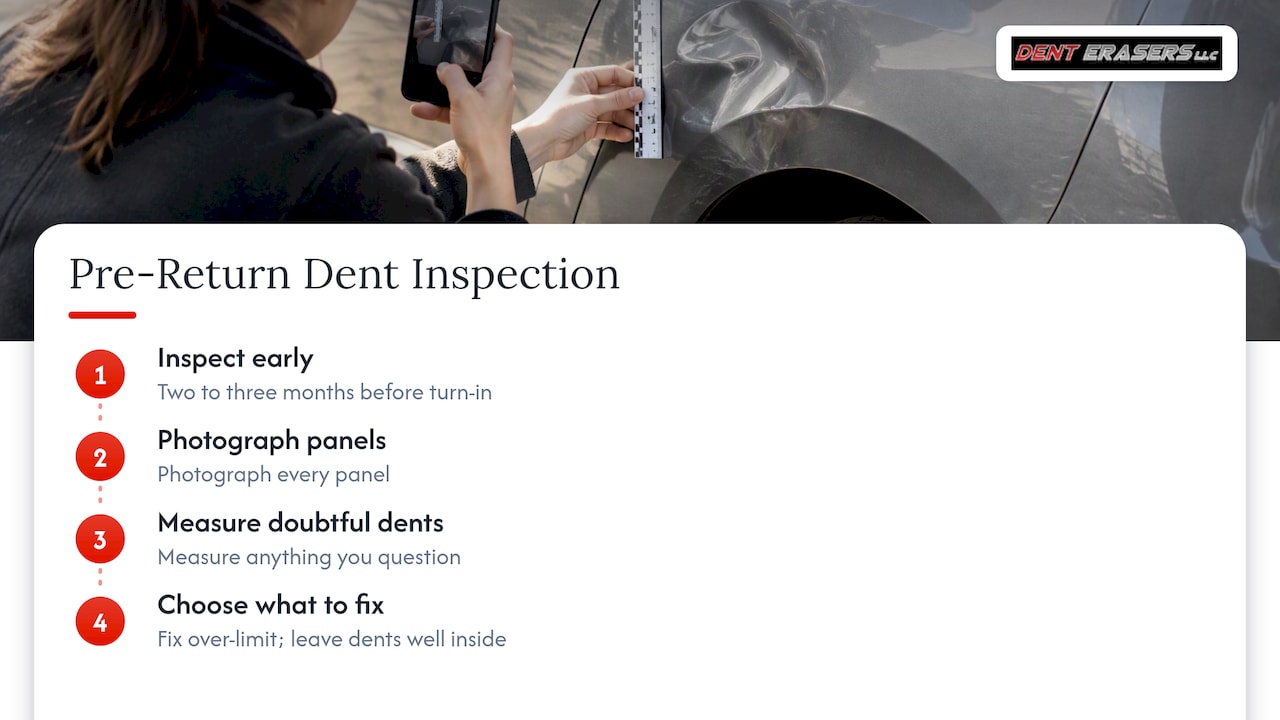
Our advice is simple. Inspect the car yourself two to three months before turn-in, photograph every panel, and measure anything doubtful. Fix the dents that clearly exceed your lessor’s limit, and leave the ones that sit well inside it. Don’t repaint a panel to hide a dent. A visible respray can read as a poor-quality repair and turn a small problem into a larger one. Our lease vehicle inspection checklist walks you through the walk-around.
— Brian Blanc
If you get a charge you think is wrong
Don’t pay right away. Start with the paperwork.
- Get the inspection report. Ally says you can view it and pay for an independent inspection. Ally also says a third-party company typically inspects the car within five days after return, then sends a letter listing amounts owed.
- Raise it early with the dealer. Toyota Financial Services suggests discussing its courtesy pre-inspection report with the dealer immediately.
- Check your state’s rules. Connecticut requires the lessor to send notice within 45 days of return, with the amount, an itemized estimate and at least three unaffiliated appraisers or shops. A late notice waives the lessor’s right to recover. You then have 14 days to object in writing and may get a competing estimate at your own expense.
- Use arbitration where it exists. For qualifying New York leases, the state’s arbitration program can handle excess-wear disputes, subject to eligibility conditions.
The New York guide also says the lease must describe the damage you are liable for. A charge for something your lease doesn’t list deserves a challenge. These rules differ by state, so check yours, and ask a consumer-protection office or an attorney if the dispute is large.
FAQ
How much are lease return dent charges?
It depends on your lessor and your state. Charges are meant to restore the car to lease condition, and where state law applies they may be limited to actual repair costs or reasonable estimates. Check your lease for the per-item rules.
Are small door dings charged at lease end?
Usually not when they stay within limits. Ally, for example, treats a few small door dings as normal wear. Lessors that count dings per panel can still charge when several pile up on one door.
Is paintless dent repair accepted for lease returns?
Lessors judge the result, not the method. They flag poor-quality repairs, and Nissan treats dents on repainted panels as chargeable. Because paintless repair keeps the original finish, nothing looks repaired when done well. Ask us whether your dent suits it.
Can I fix the dents myself?
You can try, but a poor DIY fix may be called a poor-quality repair, which lessors charge for. Our door ding DIY guide shows what is realistic for small dings. For anything near your lessor’s limit, a professional repair is safer.
Sources
- Return a Leased Car: Checklist, Mileage, Excess Wear (Ally)
- Auto Dings and Dents (Ally)
- Wear and Use Guidelines (GM Financial)
- Guide to Chargeable Wear and Use (Nissan)
- Wear & Use (Toyota Financial Services)
- Vehicle Leasing: End-of-Lease (Federal Reserve Board)
- Consumer Leasing Examination Handbook (CFPB)
- Leasing arbitration program guide (New York Attorney General)
- Chapter 743k, Long-Term Leasing of Motor Vehicles (Connecticut General Assembly)