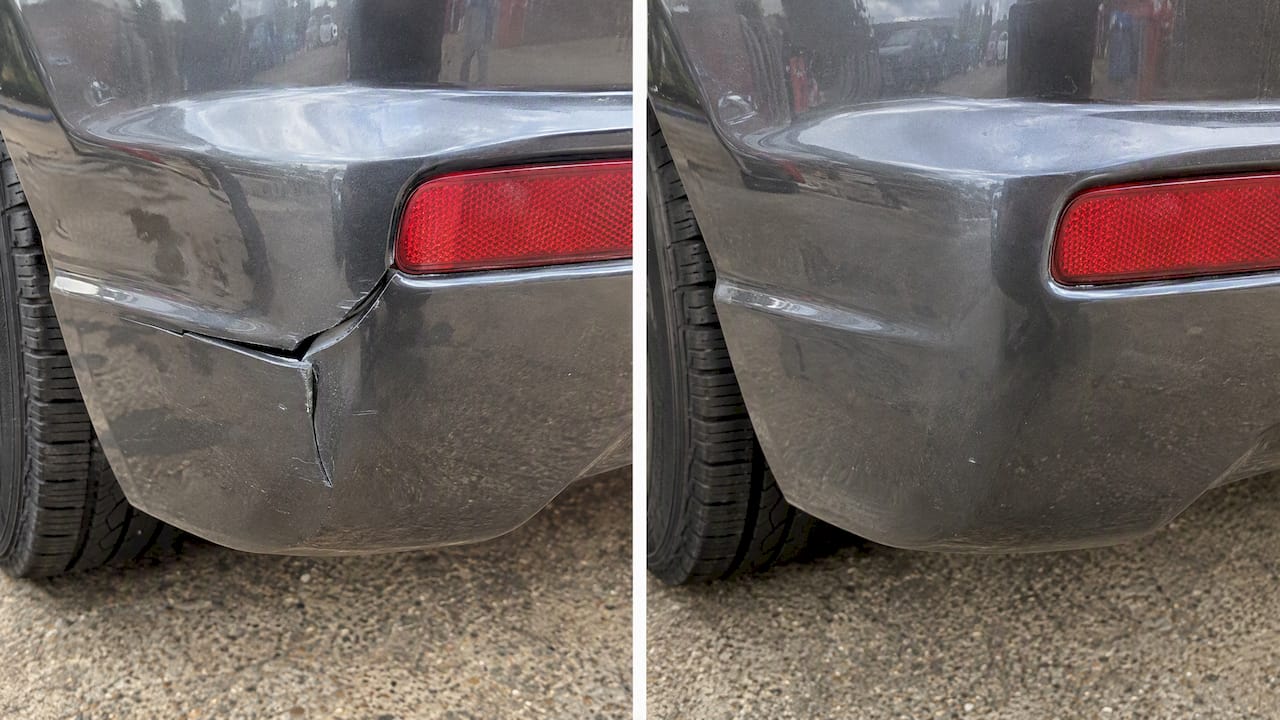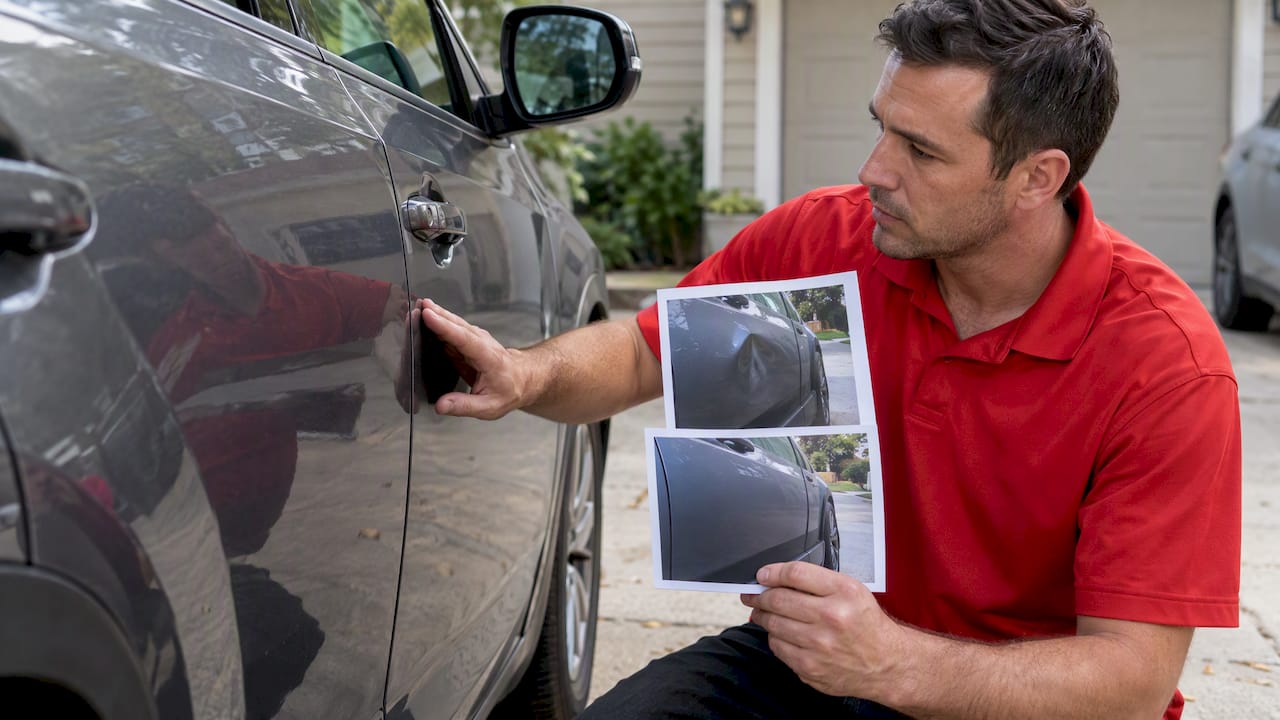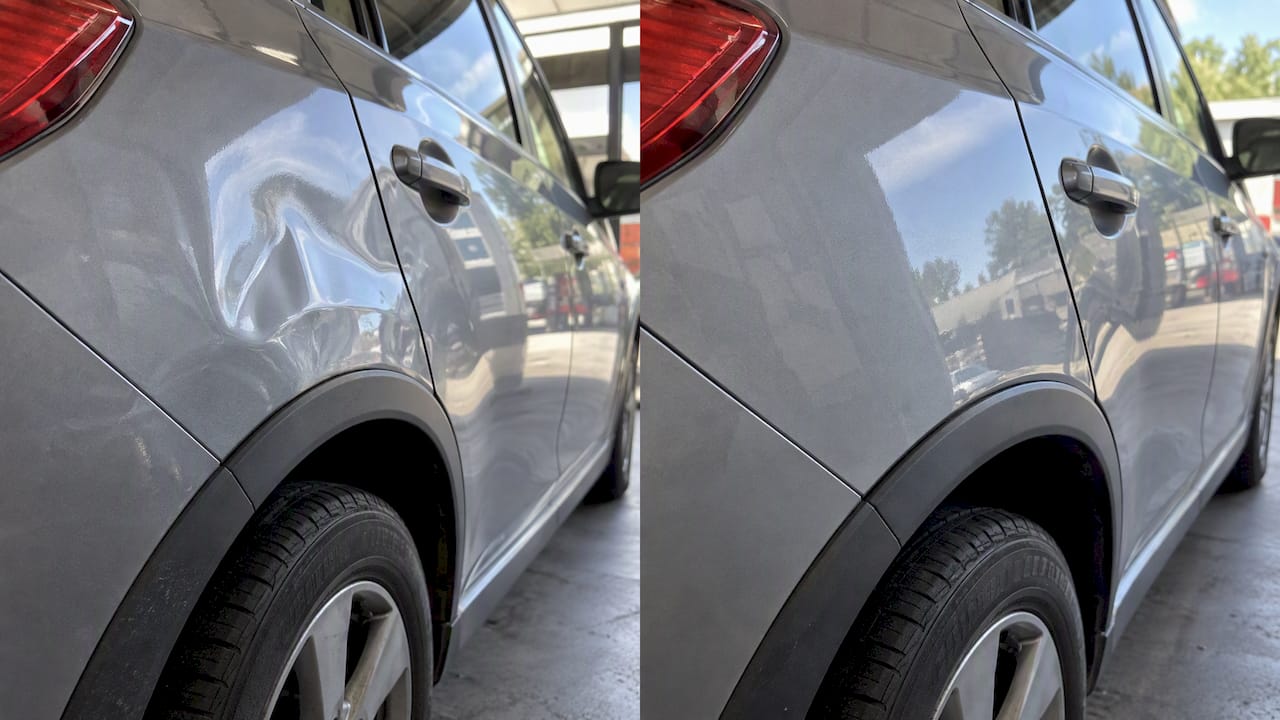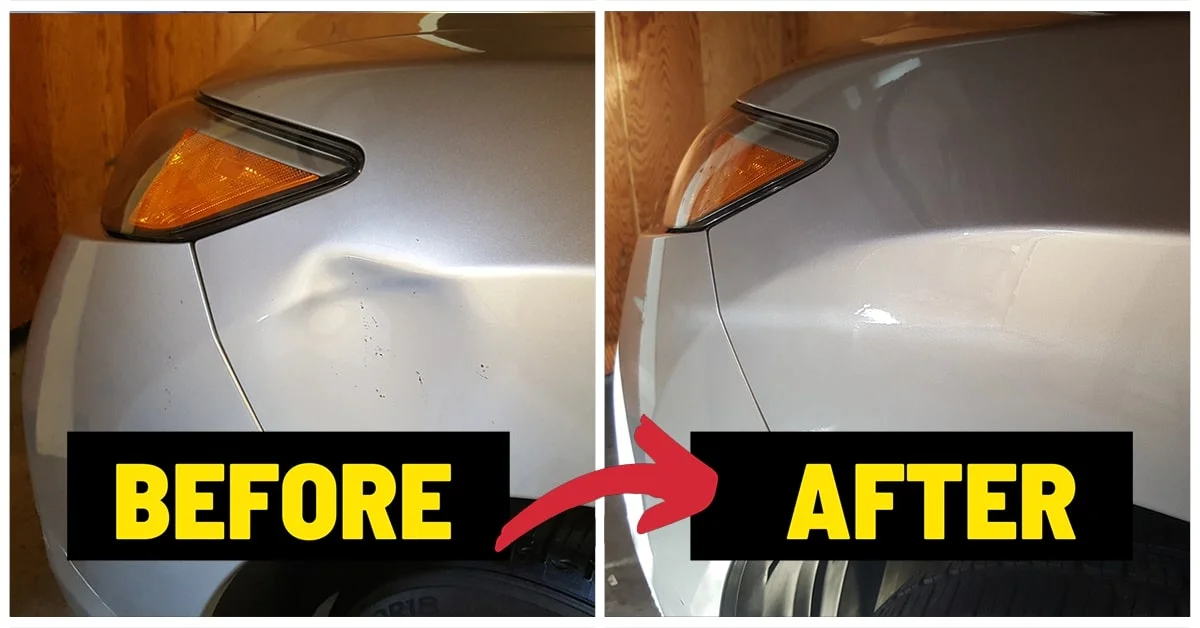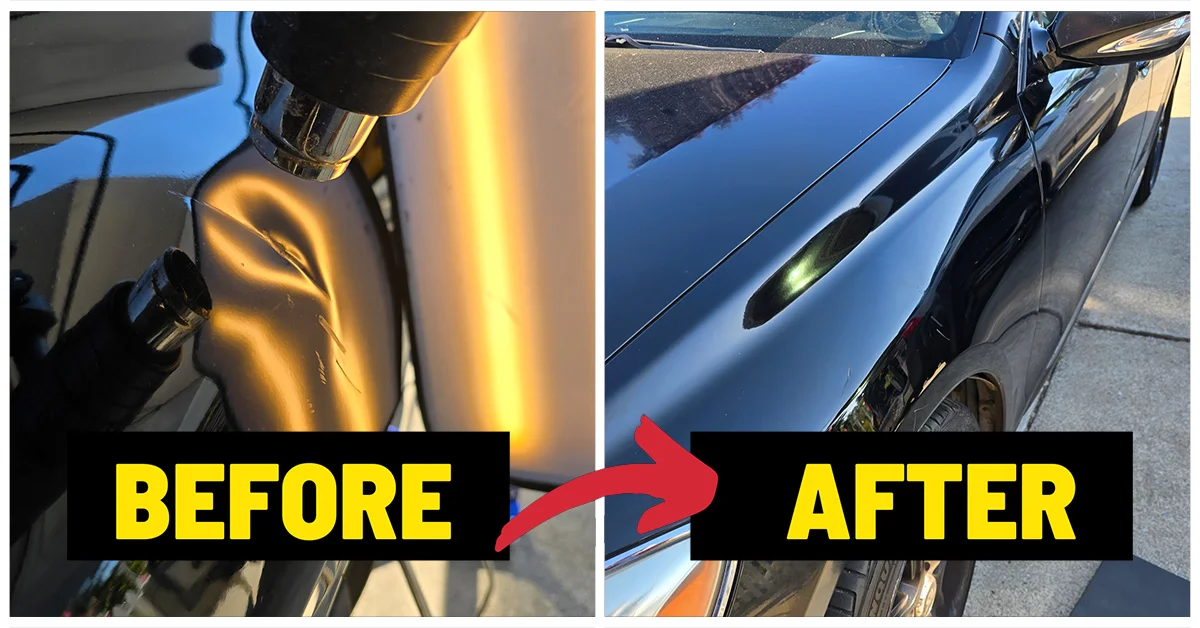
That Parking Lot Ding Is More Serious Than It Looks
Learning how to fix a door ding on a car is something most vehicle owners will need at some point. That small dent from a runaway shopping cart or a careless car door swing might look minor — but left alone, it can chip your clear coat, let moisture in, and quietly turn into rust.
Here’s how to fix a door ding on your car (quick overview):
- Clean the area with soap and water, then wipe with isopropyl alcohol.
- Assess the damage — check if the paint is cracked, chipped, or just dented.
- Choose your method based on dent size and paint condition:
- Paint intact, shallow ding: Use a suction cup puller or hot glue pull tab kit.
- Plastic bumper dent: Try the boiling water or hair dryer method.
- Paint chipped or cracked: Use an OEM-matched touch-up paint kit.
- Deep, sharp, or complex dent: Call a professional PDR technician.
- Pull gently using light, gradual pressure — never yank.
- Remove glue residue with isopropyl alcohol.
- Polish the area with a microfiber cloth and polishing compound.
Door dings are incredibly common. Any time your car sits in a public parking lot, it’s at risk. And while they seem harmless, even a tiny, invisible crack in the paint can let moisture creep in over time — leading to hidden rust beneath the surface. Beyond the rust risk, visible dings can quietly chip away at your car’s resale value, since potential buyers often read minor damage as a sign of overall neglect.
The good news? Many door dings can be fixed — either at home with an affordable kit, or quickly and invisibly by a professional using paintless dent repair (PDR).
I’m Brian Blanc, owner of Dent Erasers LLC and a master PDR technician with 28 years of hands-on experience helping East Bay Area drivers fix door dings on their cars — from minor shopping cart dings to complex hail damage. In the sections below, I’ll walk you through everything you need to know to make the right call for your situation.
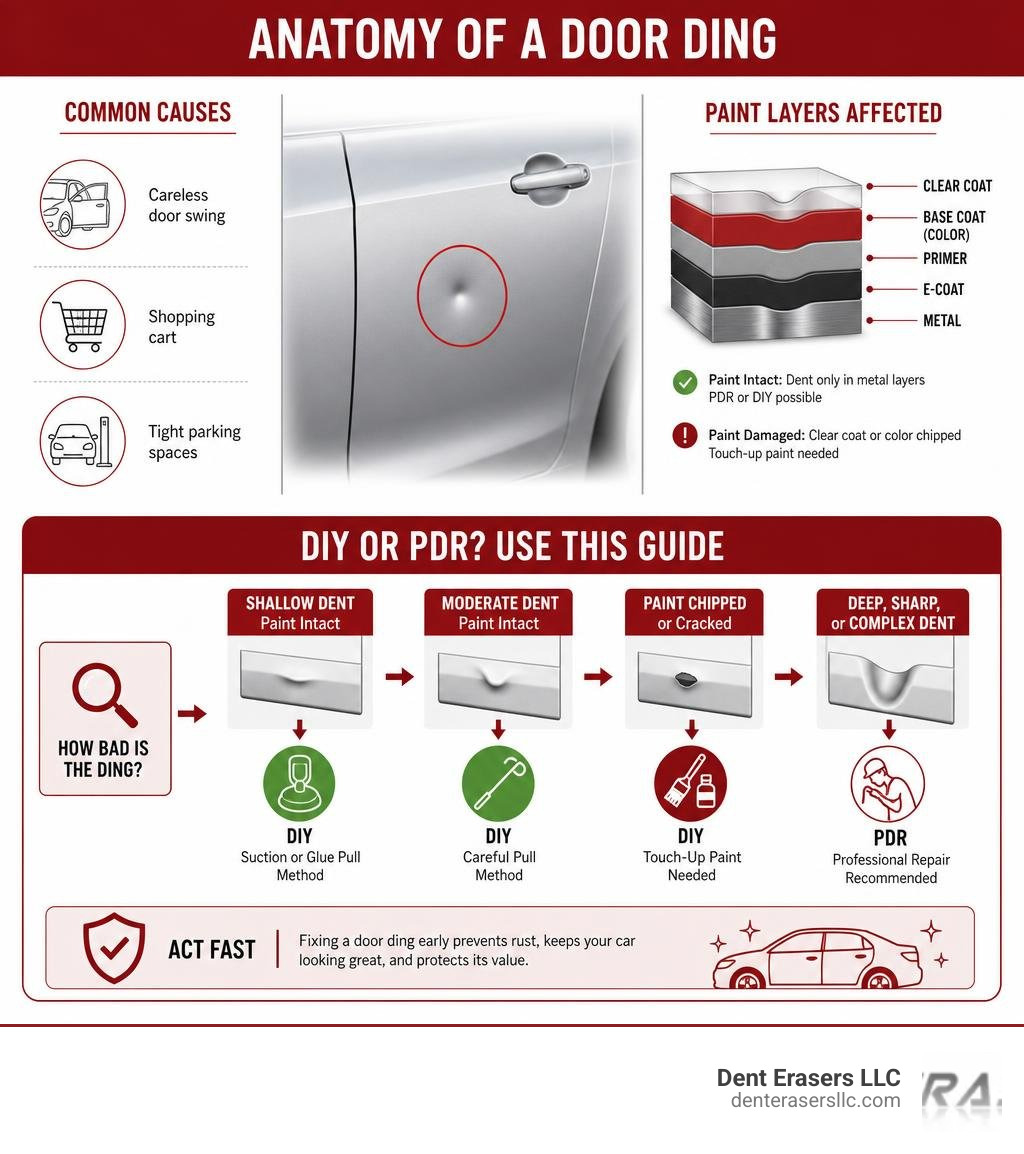
Fix door ding on car helpful reading:
- paintless dent removal estimate
- cost of repairing small dent in car door
- automotive paintless dent removal
Understanding Door Dings and Why Prompt Repair Matters
When a swinging car door collides with yours, the physics of the impact create a very specific type of damage. Unlike a broad, soft dent from a stray basketball, a door ding is typically asymmetrical and egg-shaped. Because doors swing on a hinge, they make contact with a shallow entry point and roll into a deeper, concentrated center of impact.
This sharp impact often leaves behind “paint transfer” — residue from the offending vehicle’s clear coat. While paint transfer looks like a deep scratch, it can usually be polished away. However, if the impact was hard enough, it can cause micro-fractures in your car’s factory clear coat.
Leaving these dings unrepaired is a gamble. Once the clear coat or paint layer is compromised, moisture, road salt, and dirt gain direct access to the bare metal underneath. Modern cars are protected by an E-coat (electro-deposition coating) applied at the factory to prevent corrosion. When a sharp ding deforms the metal, it can scrape off or crack this E-coat on the backside of the door skin. Over time, this results in bubbling paint and structural rust that eats the door from the inside out.
By taking action quickly, you preserve the factory finish and protect your vehicle’s long-term resale value. To learn more about how minor surface blemishes can escalate into costly bodywork, read our guide on Small Dents, Big Problems, and How to Fix Them.
Assessing the Damage: DIY vs. Professional PDR
Before you head online to buy a cheap repair kit, you need to conduct a thorough damage assessment. Modern automotive engineering has made vehicles incredibly advanced, but it has also made DIY bodywork much more complicated.
In July 2026, many vehicles on the road in Contra Costa County feature complex body lines, high-strength steels, and aluminum panels. Aluminum behaves very differently than steel; it does not possess the same “metal memory” and requires a highly controlled, patient technique to massage back into shape without tearing.
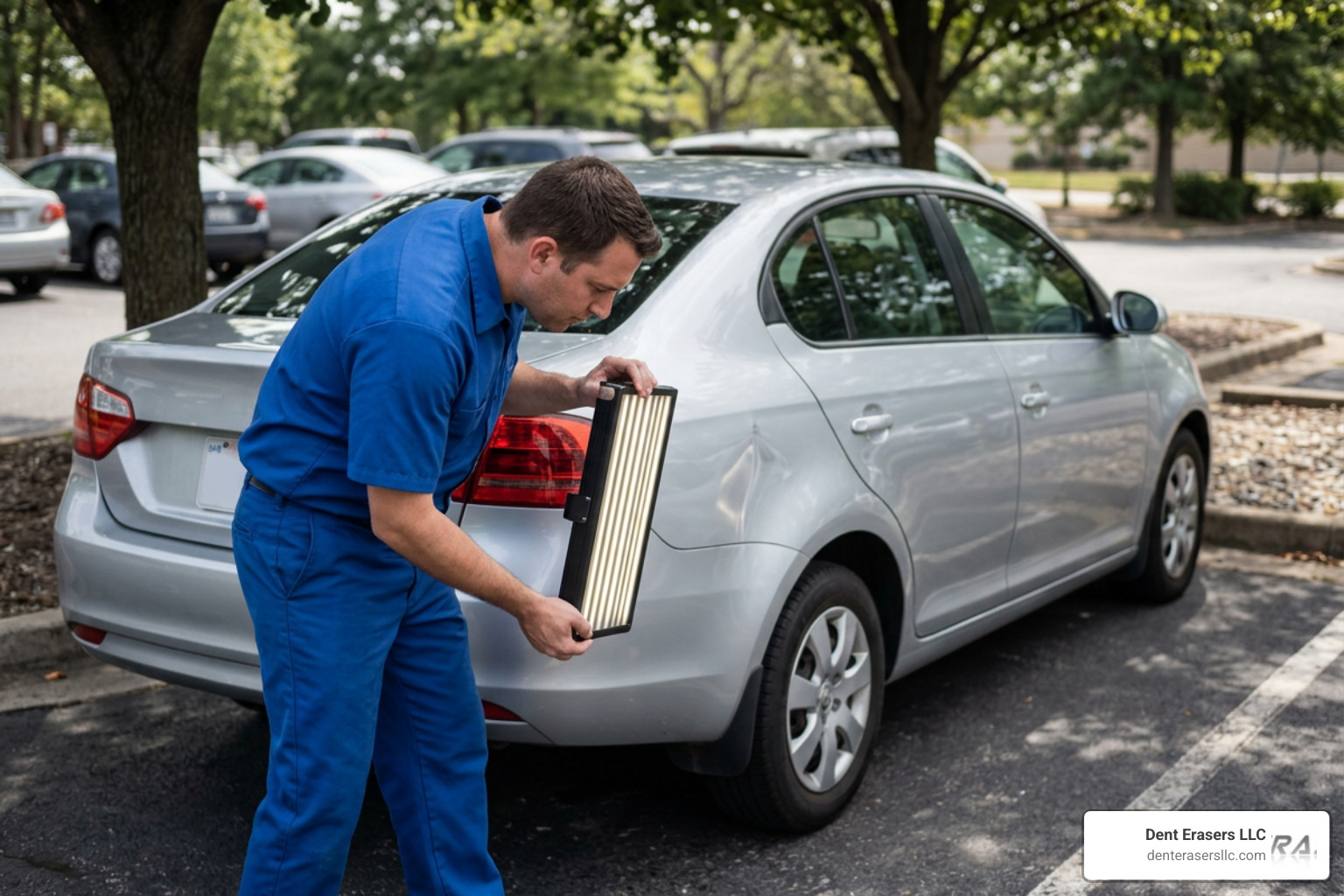
To properly assess your door ding, park your vehicle in a shaded area and look at the reflection of a straight line (like a window frame or a specialized LED line board) across the dent. If the paint is completely intact, smooth, and the dent is away from the edges of the door panel, it is a prime candidate for Paintless Dent Repair (PDR).
When to DIY vs. Hire a Pro to Fix Door Ding on Car Doors
Deciding whether to tackle this project in your garage or call in a professional comes down to a few critical factors:
- Paint Integrity: If the paint is cracked, chipped, or peeling, DIY pulling tools will likely pull the remaining paint right off the metal.
- Metal Stretch: If the dent has a sharp, pin-like center, the metal has been stretched. Trying to pull this out at home often results in an ugly “high spot” or oil-canning (where the metal pops back and forth loosely).
- Panel Material: Is your door steel or aluminum? Aluminum requires specialized heat application and high-tonnage pulling systems that standard DIY kits simply cannot provide.
- Double-Walled Panels and Braces: Many dings occur near the top of the door or behind the door handle, where internal safety braces, window tracks, and side-impact airbags block access to the backside of the metal.
Under strict I-CAR guidelines, technicians must never drill access holes or cut away internal foam reinforcements to reach a dent. Doing so compromises the vehicle’s structural integrity and safety systems. If you cannot safely access the back of the dent or pull it from the outside without risking your paint, it is time to put down the DIY tools. For a deeper look at how professional PDR works safely, check out Stop the Dents From Driving You Crazy with PDR.
Evaluating Dents for Paintless Dent Repair (PDR)
Professional PDR is the gold standard for door ding repair because it preserves the original factory paint. This maintains your vehicle’s original equipment manufacturer (OEM) warranty and prevents the need for body fillers or mismatched paint.
However, not every dent is suitable for PDR. If a dent has a sharp crease, crosses a major body line, or is located within an inch of the door’s outer hem (edge), the repair becomes highly technical. In these scenarios, a professional technician must use a delicate balance of crown reduction (tapping down the high pressure ridges surrounding the dent) and micro-pushes from behind to restore the panel. For more details on what makes a dent PDR-repairable, refer to How to Remove Door Dings From Car: A Genius, Essential Fix.
The Best DIY Methods to Fix Door Ding on Car Panels
If you have assessed the damage and determined that your door ding is shallow, round, and has perfectly intact paint, you might want to try fixing it yourself.
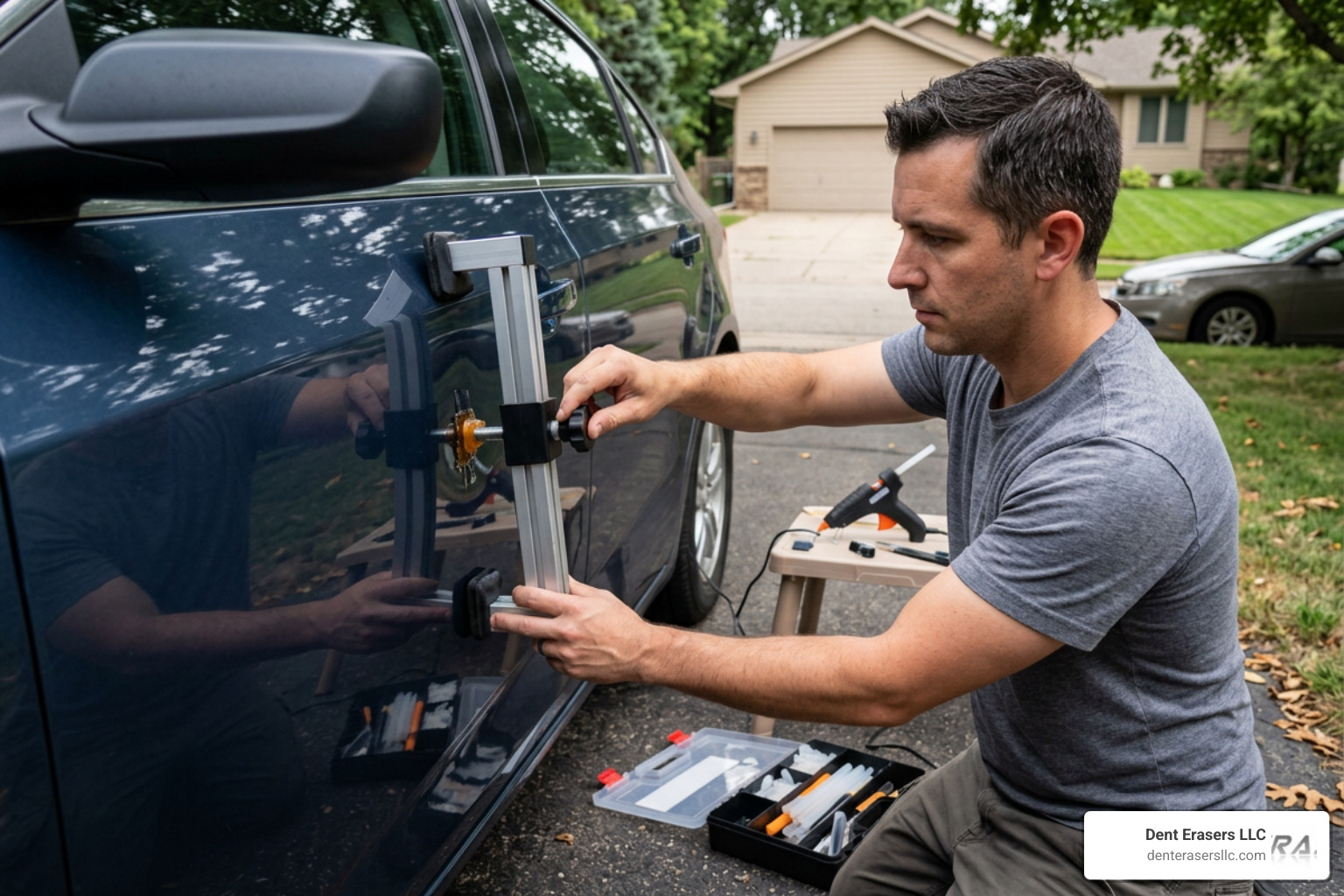
When attempting any DIY dent removal, metal has memory. Your goal is to gently guide the metal back to its original flat state using gradual, controlled pressure. Never work in direct sunlight or extreme cold. A shaded, temperature-controlled environment (around 70°F) ensures that your car’s paint remains flexible and that any adhesives cure at the correct rate.
Essential Tools and Materials for DIY Repair
If you want to try a home repair, skip the old-school household plunger. Stiff household plungers are not designed for thin automotive sheet metal and can easily cave in a larger section of your door. Instead, gather these specific tools:
- Automotive Suction Cup Puller: Designed with soft, high-grip rubber that creates a secure seal on car panels.
- Hot Glue Pull Tab Kit: This includes a bridge puller or golden lifter, plastic pulling tabs of various shapes, and high-strength hot glue.
- 91% Isopropyl Rubbing Alcohol: Essential for releasing the hot glue from your clear coat without damaging the finish.
- Hair Dryer: Used to gently warm the metal panel to increase its pliability and protect the paint from cracking.
- Microfiber Cloths and Polishing Compound: To clean up any residue and restore the shine.
For an entertaining look at what household tools can and cannot do, read Plunger Power: The Ultimate Guide to DIY Car Dent Removal.
Step-by-Step DIY Methods: Suction, Glue Pulling, and Thermal Shock
Here are the three most reliable DIY methods to remove a minor door ding:
Method 1: The Automotive Suction Cup (Best for Soft, Shallow Dings)
- Clean the dent and the suction cup thoroughly with rubbing alcohol to remove all wax and dirt.
- Use a hair dryer to warm the panel for 30 to 45 seconds from about 6 inches away.
- Press the suction cup firmly over the center of the ding and engage the locking lever.
- Pull straight outward with smooth, steady pressure. Repeat if necessary.
Method 2: The Hot Glue Pull Tab Kit (Best for Small, Defined Dings)
- Clean the area with isopropyl alcohol.
- Select a plastic pulling tab that is slightly smaller than the diameter of the ding.
- Apply a generous amount of specialized hot glue to the face of the tab and press it firmly into the center of the dent.
- Let the glue cool and set for 5 to 10 minutes. It should be firm but slightly rubbery.
- Attach the bridge puller or golden lifter to the tab. Slowly turn the knob or squeeze the lever to apply gradual outward tension.
- Once the dent pops or the tab releases, spray the remaining glue residue with isopropyl alcohol. Let it sit for 30 seconds, then gently peel it off with a plastic scraper.
Method 3: Thermal Shock (Best for Soft Dents on Metal Panels)
- Heat the dented area with a hair dryer on high for 60 to 90 seconds.
- Immediately spray the heated area with a can of compressed air held completely upside down. Holding the can upside down releases super-cold liquid carbon dioxide.
- Spray for 10 to 15 seconds. The rapid temperature change causes the metal to contract quickly, which can cause the dent to pop back out.
- Wipe away the frost and dry the panel immediately.
For a detailed breakdown of these and other home repair options, see How to remove dents from your car: a detailed DIY guide.
Common DIY Mistakes to Avoid
The biggest mistake amateur DIYers make is working too fast. Applying sudden, aggressive force can permanently stretch the metal, making it impossible to repair without traditional body filler and paint.
Another common error is “over-pulling,” which creates a high spot. High spots are incredibly difficult to tap back down without creating micro-cracks in the clear coat. Lastly, never use a heavy-duty construction heat gun instead of a hair dryer; heat guns can easily blister and ruin your factory paint in seconds.
Cost and Time Comparison: DIY vs. Professional Repair
To help you decide which route makes the most financial sense, let’s look at a quick comparison of the costs, tools, and times involved in fixing a typical one-inch door ding:
| Repair Method | Average Cost | Time Required | Risk Level | Final Quality |
|---|---|---|---|---|
| DIY Suction Cup | $10 – $25 | 15 – 30 minutes | Low | Removes 70-80% of soft dings; ineffective on sharp dents |
| DIY Glue Pulling Kit | $15 – $40 | 30 mins – 1 hour | Medium | Can fix shallow dings; risk of paint peeling or high spots |
| Professional PDR | $150 – $500 | 1 – 2 hours | None (Guaranteed) | 100% invisible restoration; preserves factory paint |
| Traditional Body Shop | $250 – $650 | 2 – 3 days | Low | Excellent, but requires body filler and non-factory repaint |
While DIY options are inexpensive, they carry the risk of making the damage worse. If you stretch the metal or pull off your paint, a simple door ding repair can quickly escalate into a multi-hundred-dollar traditional body shop bill. If you want to dive deeper into small dent repair costs, read Don’t Get Dented by the Bill: A Guide to Small Dent Costs.
How Much Does It Cost to Fix Door Ding on Car Panels?
When evaluating costs, consider the impact on your vehicle’s overall value. A professional paintless dent repair keeps your original factory paint intact, which is highly preferred by appraisers and lease return inspectors.
At Dent Erasers LLC, our mobile professional PDR services range from $150 to $500 depending on the size, location, and material of the dent. Because we come directly to your home or office in Concord, CA, or surrounding Contra Costa County cities, you don’t have to lose your car to a body shop for days. To understand the breakdown of professional shop rates and what goes into pricing, read Car Dent Scratch Repair Cost: What to Expect at the Shop.
Frequently Asked Questions about Door Ding Repair
Can I fix a door ding if the paint is scratched or chipped?
If the paint inside the ding is chipped or scratched down to the primer or bare metal, standard PDR alone will not prevent rust. However, you can still use a hybrid approach.
First, locate your vehicle’s OEM paint code (usually found on a sticker on the driver’s door jamb or under the hood). Purchase a high-quality touch-up paint kit (typically costing $39 to $69) that matches your code. Clean the chip, smooth the edges with fine 2000-grit sandpaper, apply the base coat in thin layers, seal it with a clear coat, and blend it. Once the paint is sealed, the metal is protected from rust.
Will DIY hot glue dent pullers damage my car’s factory paint?
If your car has its original factory-baked paint, high-quality hot glue kits are highly unlikely to cause damage, provided you use isopropyl alcohol to release the glue. Factory finishes are incredibly durable.
However, if your car has had aftermarket bodywork or a cheap respray, the bond between the paint and the panel is much weaker. In these cases, using a hot glue puller can easily pull the paint and clear coat right off the metal.
Is it safe to drill access holes to reach a door ding from behind?
Absolutely not. You should never drill access holes in any part of your vehicle’s door frame or panels. Drilling holes destroys the factory corrosion protection, leaves raw metal edges exposed to moisture, and can compromise the structural safety of the door in a side-impact collision. Professional PDR technicians use existing factory access points, such as the window cavity (using a protective window guard) or wiring harness grommets, to reach the backside of the panel safely.
Conclusion
At the end of the day, learning how to fix a door ding on a car can save you money and keep your ride looking sharp. While minor, shallow dings on flat steel panels are fun and rewarding DIY projects, more complex damage—like dings on aluminum panels, creases near body lines, or dents with compromised paint—requires professional expertise.
If you live in Concord, CA, or anywhere in Contra Costa County (including Walnut Creek, Antioch, Richmond, Pittsburg, or San Ramon), you don’t have to risk damaging your paint with trial-and-error DIY methods.
At Dent Erasers LLC, we bring our expert, mobile paintless dent repair shop directly to your driveway or office. We specialize in pristine, on-site door ding removal for everyday commuters, classic cars, motorcycles, and luxury vehicles—all while preserving your original factory paint at an affordable price.
Skip the DIY headache and let us handle it. Schedule Your Paintless Dent Repair Today and get a free, no-obligation estimate!