Choose the Safest Vintage Car Dent Repair Method First
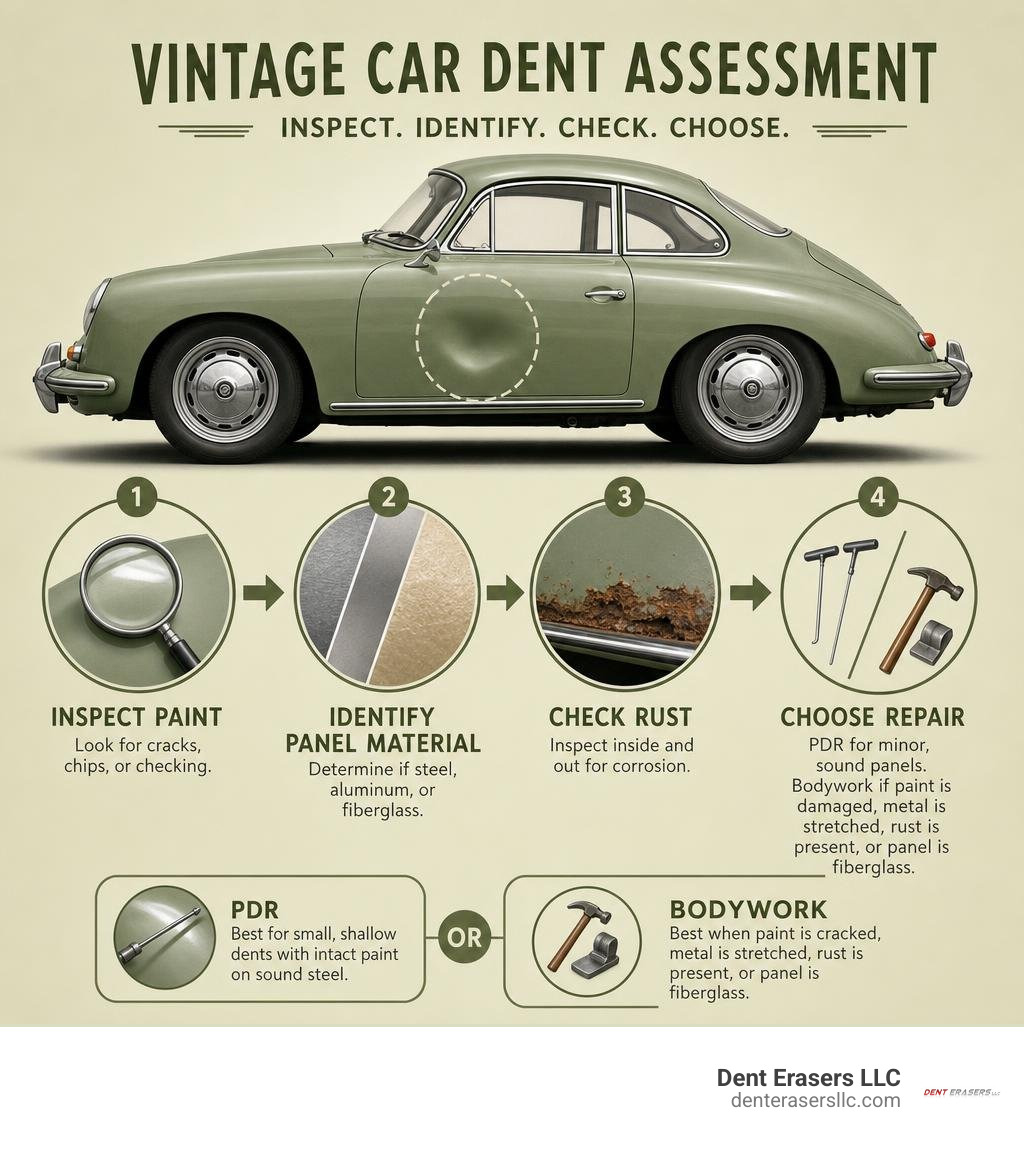
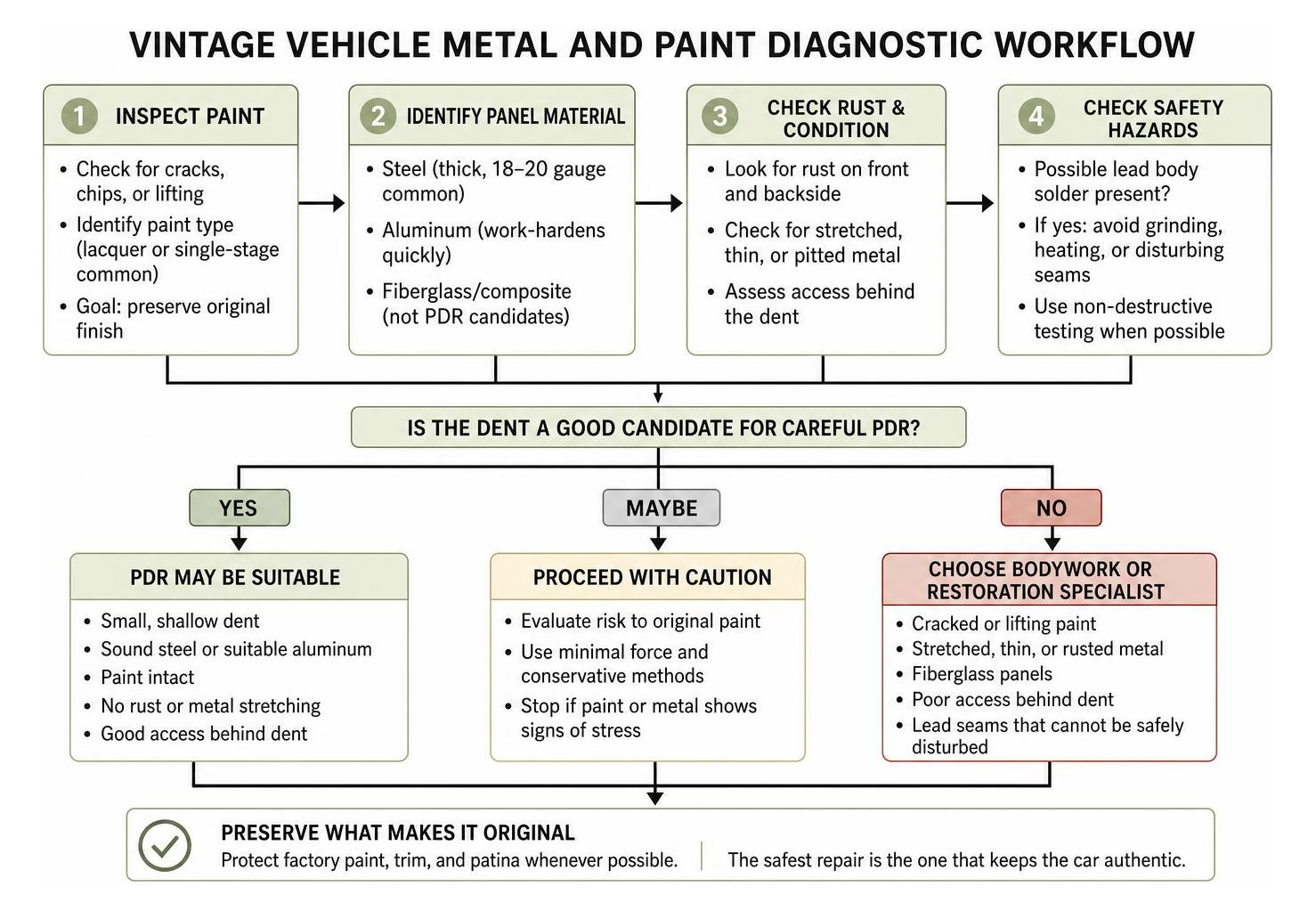
For vintage car dent repair, start by inspecting the paint, panel material, rust, and access behind the dent before any tool touches the car. Small, shallow dents in sound steel with intact paint may be good candidates for careful paintless dent repair (PDR). If paint is cracked, metal is stretched, rust is present, or the panel is fiberglass, traditional bodywork or a restoration specialist may be the safer choice.
The goal is not always a flawless-looking panel. On an original survivor car, preserving factory paint, trim, and honest patina can protect more value than a risky repair that causes cracking or requires repainting. Older cars often use thicker steel, brittle single-stage paint or lacquer, and sometimes lead body filler, so slow, conservative work matters.
I am Brian Blanc, and I have spent nearly three decades in paintless dent repair, restoring everything from daily drivers to high-end vehicles while protecting original finishes. That experience guides a careful approach to vintage car dent repair: assess first, repair only what can be repaired safely, and preserve what makes the vehicle authentic.
Must-know vintage car dent repair terms:
Understanding Classic Body Metal, Paint Systems, and Safety Hazards
Working on classic vehicles is a completely different craft than working on modern consumer cars. Automotive metallurgy throughout the mid-20th century relied heavily on cold-rolled, heavy-gauge sheet metal. These structural skins were significantly thicker—often 18- to 20-gauge steel—compared to the ultra-thin, high-strength steels and lightweight alloys found on today’s assembly lines.
Because classic sheet metal is heavier, it holds a distinct “metal memory,” but it also requires substantially more calculated force and patience to manipulate. Rushing the process can easily result in high spots, work hardening, or surface distortion.
Furthermore, safety hazards lurk beneath the surface of older restorations and factory builds. Up until the 1970s, manufacturers and coachbuilders regularly used molten lead body solder to smooth out welded body seams and roof joints. Grinding, heating, or aggressively disturbing lead seams generates toxic airborne dust and fumes.
Before starting any repair, technicians must conduct non-destructive testing to verify the panel’s underlying condition. Hidden rust degradation is another major risk; if the backside of an exterior panel is severely oxidized or pitted, applying mechanical pressure from behind can cause the compromised metal to push through or crumble.
Evaluating Substrates and Original Finishes in Vintage Car Dent Repair
Understanding the specific substrate and paint chemistry is critical before selecting your repair path. Many European sports cars and custom post-war builds feature hand-formed aluminum panels. Unlike steel, aluminum has virtually no natural metal memory, work-hardens rapidly when manipulated, and can stretch permanently if pushed too aggressively. Conversely, bodies constructed with composite fiberglass—such as early Corvettes—cannot undergo paintless manipulation at all and require specialized resin and glass repair.
When it comes to paint, vintage finishes demand extreme caution:
- Nitrocellulose and Acrylic Lacquer: Common through the 1950s and 1960s, these finishes are notorious for drying out over decades. Lacquers become exceptionally brittle and can shatter or micro-crack if the metal underneath flexes abruptly.
- Single-Stage Acrylic Enamel: Popular from the 1960s through the 1980s, single-stage systems lack a protective modern clear coat. While slightly more pliable than lacquer, they are prone to oxidation, surface chalking, and edge-chipping during tool movement.
- Modern Base/Clear Systems: Often found on older vehicles that have been previously restored, offering greater elasticity under heat.
To learn more about how older body structures interact with metal manipulation tools, review Vintage Vehicle PDR: Special Challenges and Solutions for an in-depth breakdown of vintage metallurgical behavior.
Paintless Dent Removal vs. Traditional Bodywork: Choosing the Right Approach
When a vintage vehicle suffers a ding or crease, classic car collectors face a crucial decision: preserve the original finish using Paintless Dent Removal (PDR) or send the car to a conventional body shop.
Traditional auto body repair typically involves grinding down the factory paint to bare metal, welding pulling studs or using slide hammers, applying polyester body filler (Bondo), spraying primer, and applying a multi-stage repaint. While traditional bodywork is necessary for severe structural collisions or torn metal, it permanently strips away the vehicle’s factory-applied finish and historic patina.
In contrast, PDR uses specialized rods to massage the metal back into its factory contour from the inner cavity without disturbing the paint. When weighing your options, comparing auto body repair costs and methods reveals that non-invasive techniques preserve both the vehicle’s provenance and your restoration budget. Choosing the right path comes down to evaluating the pros and cons:
| Feature / Factor | Paintless Dent Repair (PDR) | Traditional Auto Body Repair |
|---|---|---|
| Original Paint Retention | 100% Preserved (Keeps factory finish & patina) | 0% Preserved (Requires grinding & respraying) |
| Use of Body Fillers (Bondo) | None used | Commonly applied over low spots |
| Turnaround Time | Typically 1 to 4 hours per panel | Days to weeks in a body shop |
| Impact on Survivor Value | Maximizes value by retaining original panels | Can reduce valuation on untouched survivor cars |
| Panel Integrity | Retains original metal thickness and hardness | Heat and sanding can thin the original steel |
| Typical Cost Range | Affordable ($150 – $600 for vintage panels) | Substantial ($1,000 – $3,500+ with paint blending) |
For classic car owners, restoring original panels with paintless dent removal prevents the dreaded “paint mismatch” where modern polyurethane clear coats look artificially glossy next to 50-year-old enamel.
How to Perform Vintage Car Dent Repair Without Harming Original Paint
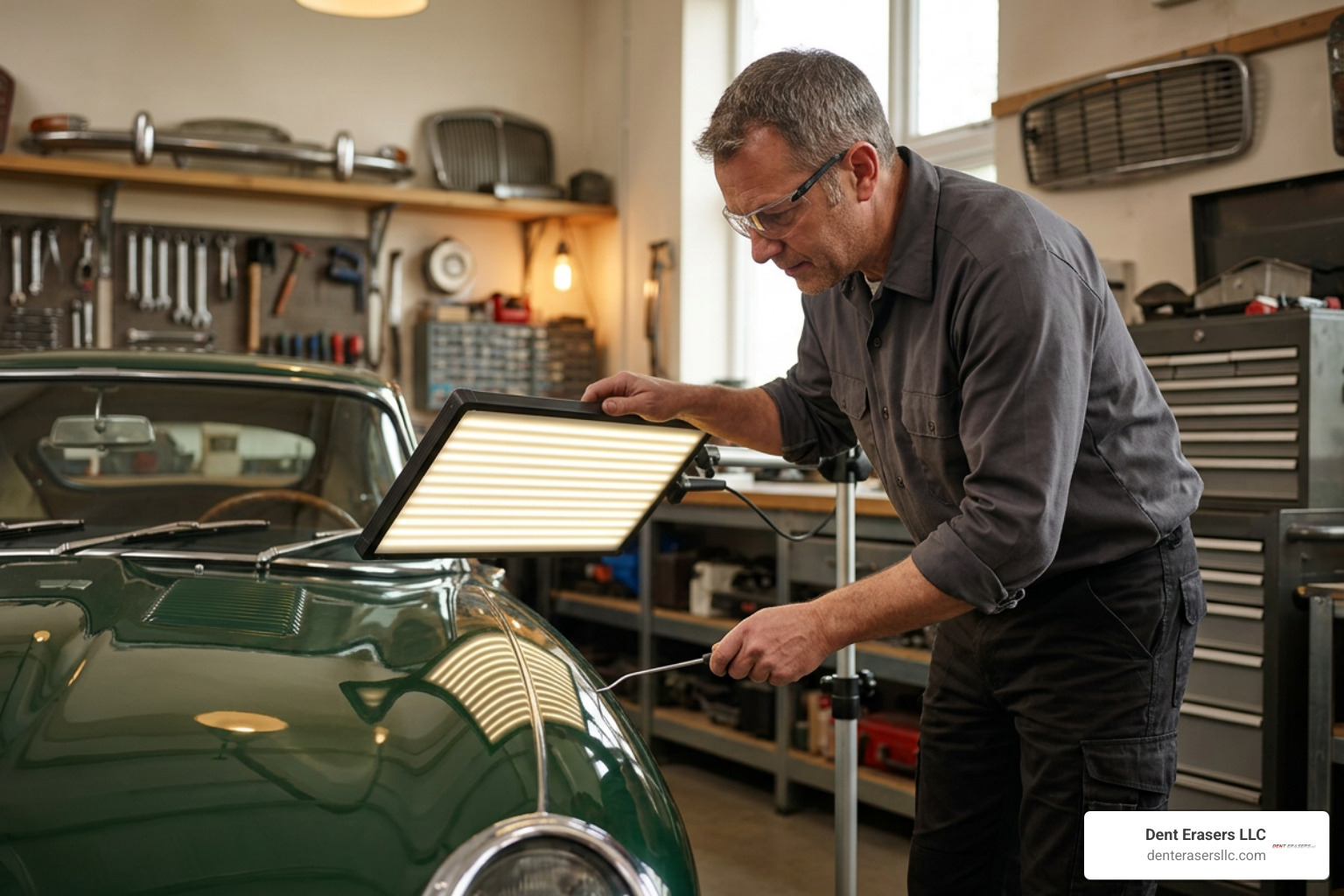
Executing dent repair on a vintage car without damaging the aged finish requires specialized tools and disciplined technique. Standard modern PDR tools often lack the leverage needed to push heavy-gauge vintage steel. Technicians use heavy-duty, tempered stainless steel rods with custom blunt tips, paired with adjustable LED line and reflection boards to track metal movement with sub-millimeter precision.
Accessing the rear of a vintage panel also requires delicate mechanical care. Modern vehicles often feature easily unclippable plastic liners, whereas vintage vehicles utilize welded inner structures, heavy sound-deadening tar boards, and mechanical window regulators secured by fragile, aged fasteners. Technicians must methodically remove vintage chrome trim, emblems, and interior cards using non-marring tools to avoid bending rare, irreplaceable moldings.
Step-by-Step Process for Safe Vintage Car Dent Repair
- Panel Cleaning and Surface Decontamination: Carefully clean the exterior panel using a high-lubricity detailing spray to remove grit and wax without scratching the clear or single-stage finish.
- Thermal Conditioning (Controlled Warming): Apply gentle, indirect heat to the dented area using a digital heat gun or infrared lamp, bringing the metal and paint surface to roughly 100°F–120°F (38°C–49°C). This crucial step softens aged lacquer or enamel, improving elasticity to prevent micro-cracking during metal movement.
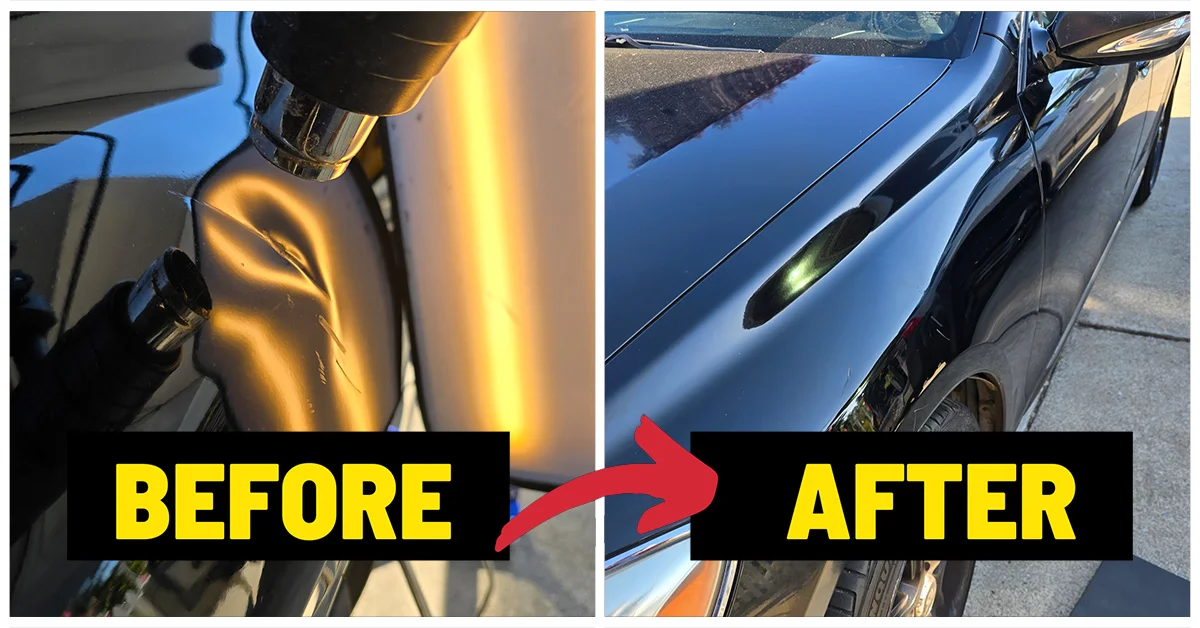
- Line Board Alignment: Position a high-contrast LED reflection board at an oblique angle to the panel. The reflected lines reveal the exact apex of the dent, crown stresses, and subtle low areas.
- Accessing the Cavity: Access the backside of the dent through factory access holes, window sweeps, or behind unbolted interior cards. Never drill new access holes into a vintage frame or door shell.
- Slow, Incremental Metal Displacement: Position a wide-profile, soft-tipped rod behind the lowest point of the dent. Apply steady, micro-pressure pushes, working systematically from the outer edges of the dent inward toward the center.
- Stress-Relief Tapping (Knock-Down): As metal moves upward, high-tension crowns can form around the perimeter. Use a polished, soft-tipped synthetic blending hammer and tap-down tool to gently relieve tension along the ridges.
- Cross-Checking and Final Blending: Adjust the line board 90 degrees to inspect the repair from multiple sightlines. Make final micro-pushes until the metal reflection is completely true and flat across the vintage panel.
Technicians skilled in advanced luxury and vintage dent removal techniques understand that patience is paramount—forcing metal too quickly can result in paint delamination or permanent stretching.
Handling Complex Scenarios: Paint Matching, Rust, and Replacement Panels
When a dent is accompanied by paint fracturing, severe oxidation, or deep metal gouges, PDR alone may not suffice. In these scenarios, hybrid repairs are necessary. If painting is unavoidable, matching period-correct single-stage colors requires blending pigments by eye to account for decades of UV fading and natural patina, rather than relying solely on modern computerized paint codes.
If rust is present inside the panel cavity, all mechanical pushing must stop immediately. Pushing against rusty sheet metal will puncture the panel. If structural rust has weakened the panel, the damaged section must be cut out and repaired with a fresh steel patch before bodywork can proceed.
When weighing whether to repair an original damaged panel versus buying New Old Stock (NOS) or reproduction replacement panels, consider originality first. Reproduction sheet metal often fits poorly, requiring extensive cutting and shimming, while original factory panels maintain the authentic lines of the car. When budgeting for dent repairs requiring paint work, keeping the original panel almost always delivers a higher return on investment (ROI) by protecting the vehicle’s factory build sheet integrity. To plan your repair budget accurately, review our guide on understanding classic vehicle repair pricing factors.
Evaluating Costs, Common Mistakes, and Collector Value Impact
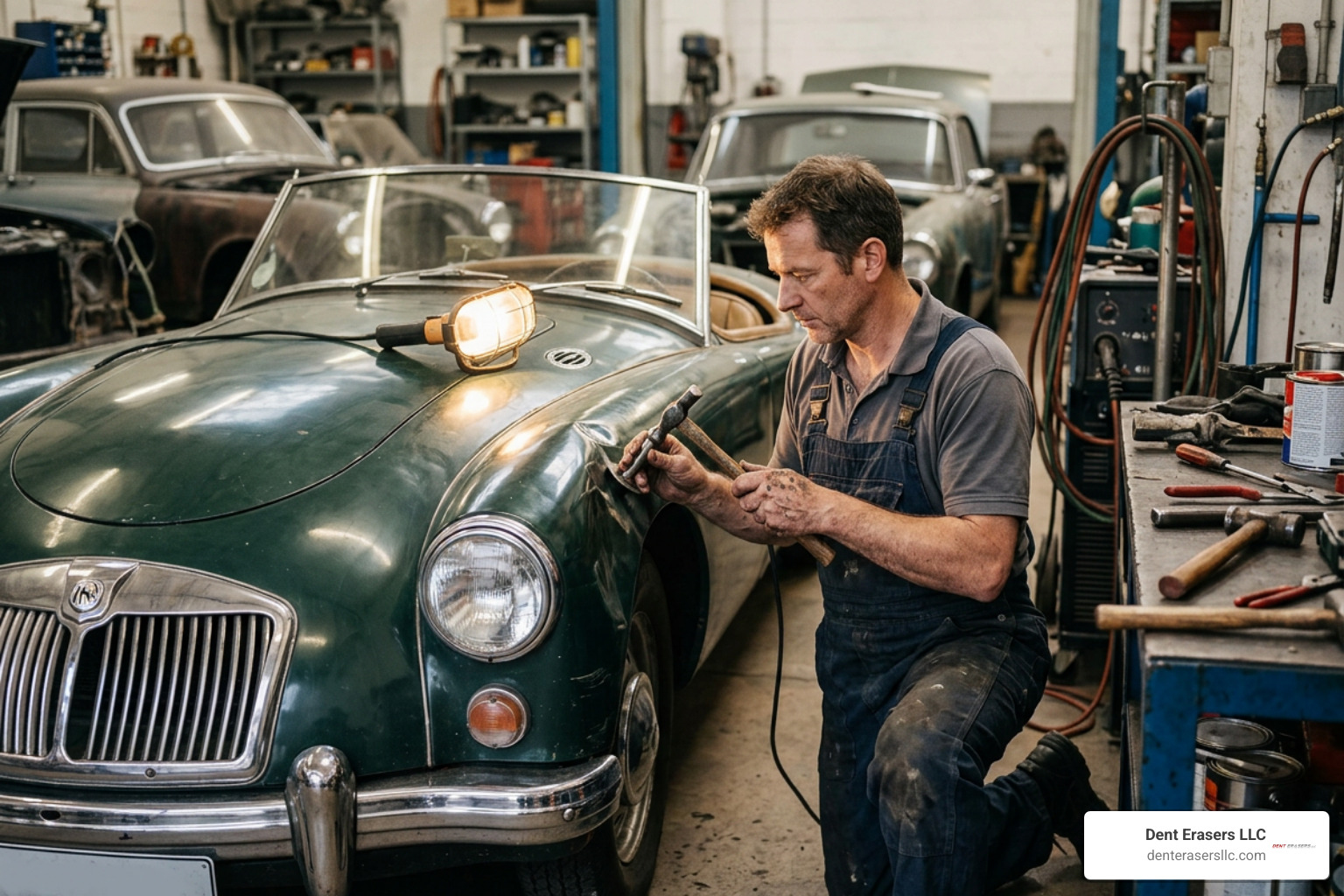
In the classic car world, an authentic, unrestored “survivor” vehicle often commands higher auction prices than an over-restored counterpart. Because of this, improper dent repair can significantly reduce a vehicle’s market value.
Common mistakes amateur shops make on classic cars include:
- Metal Overstretching: Applying sharp, localized pressure pushes the metal past its yield point, creating an unfixable high spot known as an “oil can” or loose panel.
- Excessive Heat Application: Overheating aged paint to make it pliable can scorch original lacquers, causing discoloration or clear delamination.
- Drilling Unauthorized Access Holes: Some modern PDR technicians drill holes in door jambs to gain quick access. On a vintage or classic car, drilling holes ruins originality, voids survivor status, and invites rust.
- Ignoring Brittle Trim Clips: Forcing old pot-metal badges or plastic clips without proper release tools often breaks irreplaceable trim pieces.
From an investment perspective, professional vintage PDR is exceptionally cost-effective. While typical base PDR on modern panels costs $100 to $300, the extra care, thicker steel, and setup required for a classic car generally brings the investment to between $150 and $600. When compared to a $2,500+ repaint that permanently destroys original factory paint depth readings, PDR delivers exceptional value. Before committing to work, ensure you are getting an accurate paintless dent repair estimate from a technician experienced with vintage restorations.
Frequently Asked Questions About Vintage Car Dent Repair
Can paintless dent repair be performed on vintage lacquer finishes without cracking?
Yes, PDR can be performed safely on vintage lacquer finishes, provided the finish is not already flaking or severely checked. The technician must warm the panel to improve paint elasticity and work in very small, gradual increments using soft-tipped tools to avoid stressing the brittle paint film.
How does repairing a dent affect the collector market value of an unrestored classic?
Repairing a dent using non-invasive paintless methods generally enhances or preserves collector value. Because PDR does not add body filler or modern repainted sections, paint gauge meters will still show consistent factory thickness readings across all panels, preserving the car’s prized survivor classification.
What should I do if a dented panel contains factory lead filler or hidden rust?
If a dent is located directly over a factory leaded seam, traditional PDR pushing can crack the lead-to-steel bond. Similarly, backside rust eliminates the structural support needed for tool leverage. In these cases, stop mechanical pushing and consult a dedicated vintage restoration specialist who can chemically neutralize rust or reshape lead seams using period-correct methods.
Conclusion
Preserving the authenticity, metal structure, and original finish of a classic vehicle requires specialized techniques and an appreciation for automotive history. Choosing non-invasive repair methods whenever possible prevents unnecessary repainting, avoids heavy body fillers, and protects your vehicle’s long-term collector value.
At Dent Erasers LLC, our mobile repair specialists bring nearly three decades of precision dent removal expertise directly to your garage. We safely massage classic steel and aluminum back into showroom shape while safeguarding original lacquer and enamel finishes throughout Contra Costa County. When your classic deserves master-level care, schedule an assessment with our expert classic car dent repair services in Concord and keep your vintage investment looking pristine.