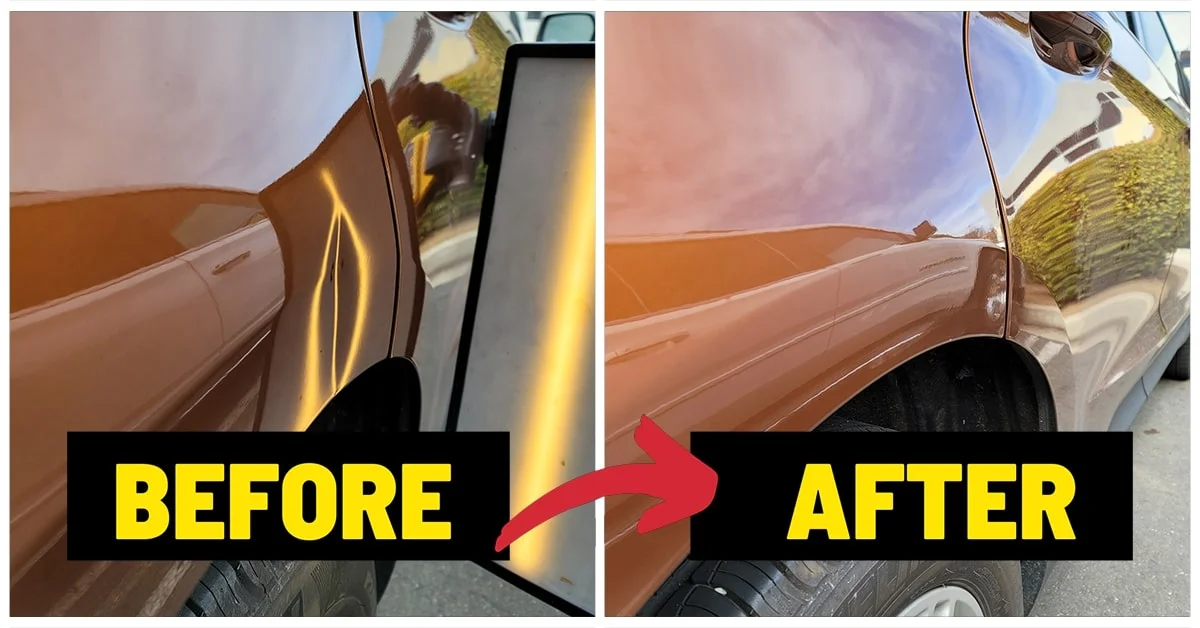
When a Big Dent Hits: What You Need to Know About Large Car Dent Repair
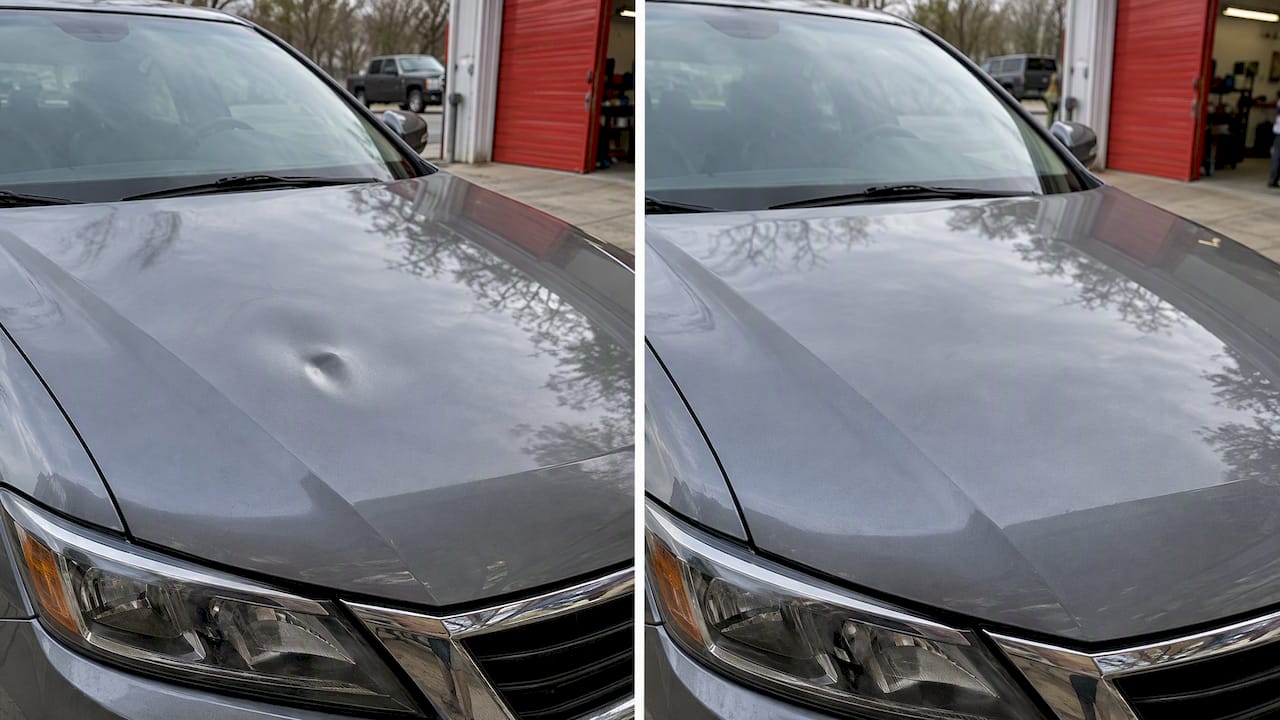
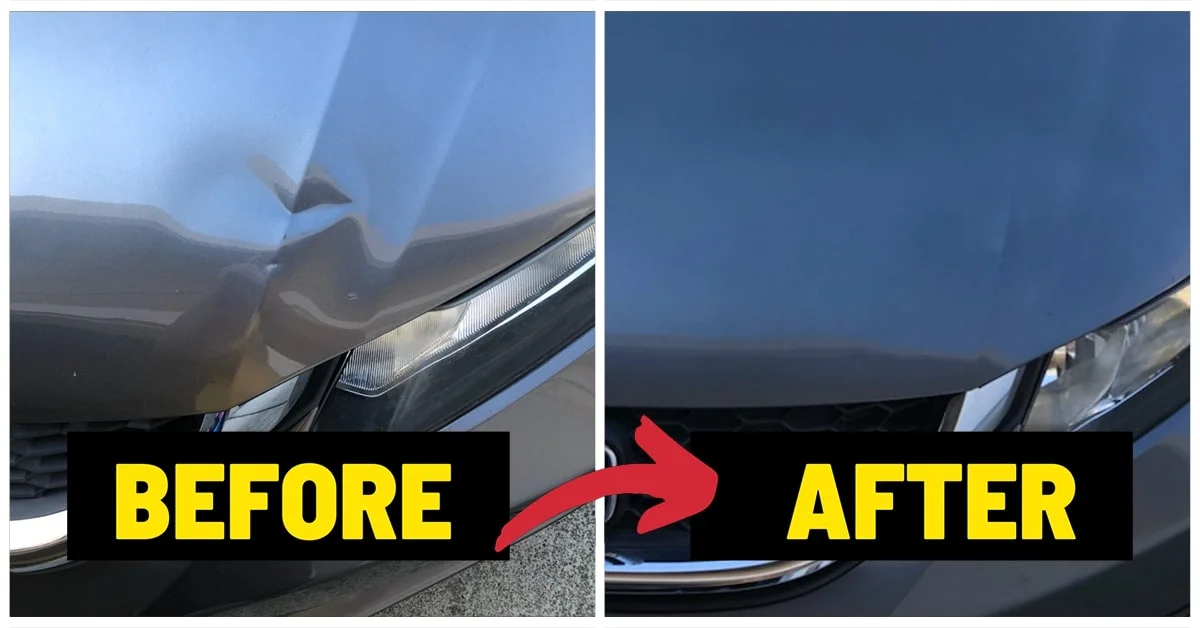
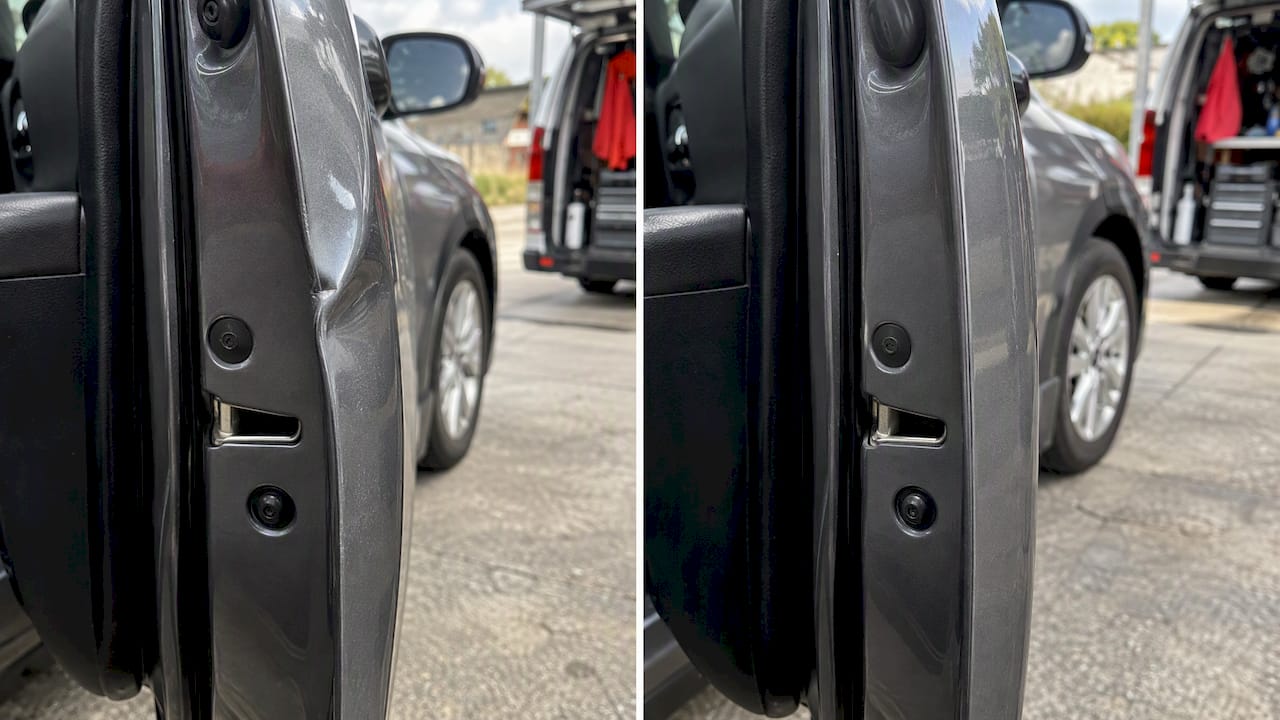
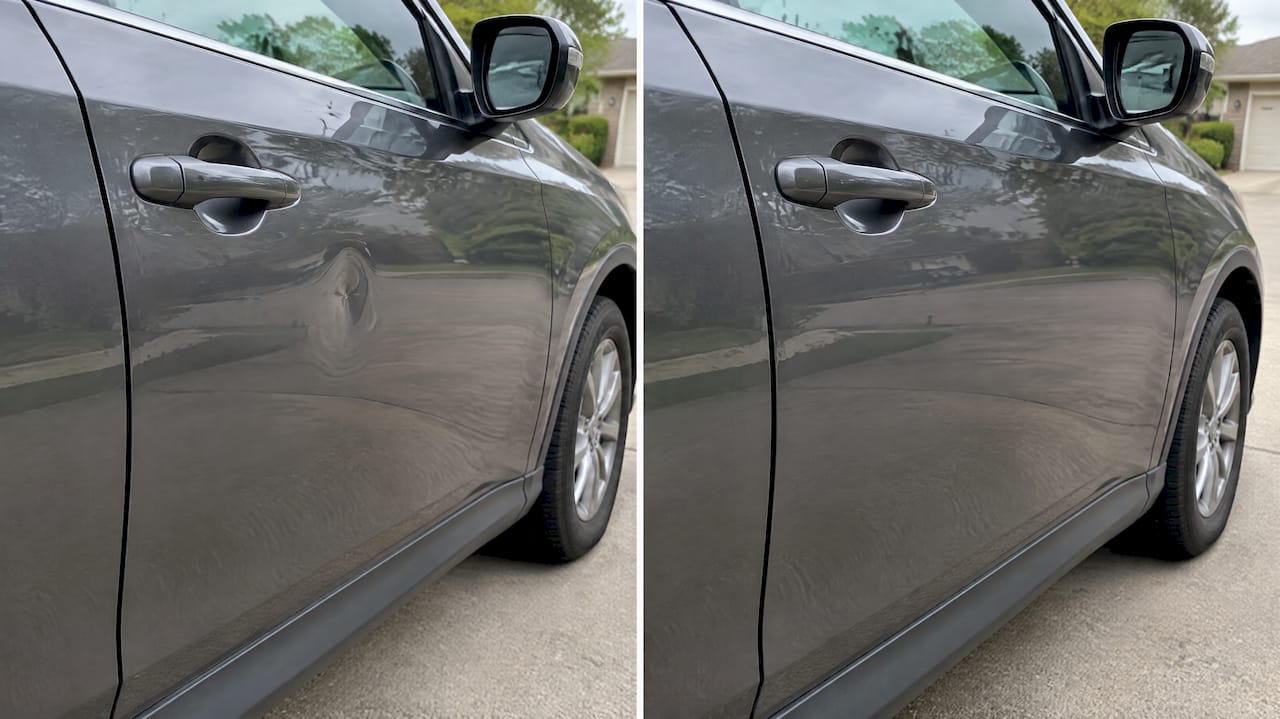
Large car dent repair doesn’t always mean a week in the body shop and a bill that rivals a car payment. In many cases, even major dents can be fully restored — without repainting — using a technique called Paintless Dent Repair (PDR). For a neutral overview of the method, you can also review Wikipedia’s explanation of paintless dent repair.
Here’s a quick answer based on your situation:
| Your Dent | Best Option |
|---|---|
| Large but shallow, paint intact | Professional PDR — fast, affordable, no repaint |
| Deep crease, paint still intact | Professional PDR (expert level required) |
| Paint cracked, chipped, or scratched | Traditional body shop repair |
| Structural or frame damage | Collision center — PDR is not sufficient |
| DIY kit from Amazon | Not recommended for large dents — high risk of paint damage |
The key factors are paint condition, dent depth, and whether the metal is creased or stretched — not simply how wide the dent is. A shallow dent the size of a dinner plate can actually be easier to fix than a sharp quarter-sized crease.
Leaving a large dent unrepaired isn’t just an appearance issue. Exposed or stressed metal can trap moisture, lead to rust, disrupt your vehicle’s aerodynamics, and reduce resale value — all problems that get more expensive the longer you wait.
I’m Brian Blanc, owner of Dent Erasers LLC and a master PDR technician with 28 years of hands-on experience in large car dent repair across the East Bay Area. In this guide, I’ll walk you through everything you need to know — from how professional tools work to when DIY kits do more harm than good.
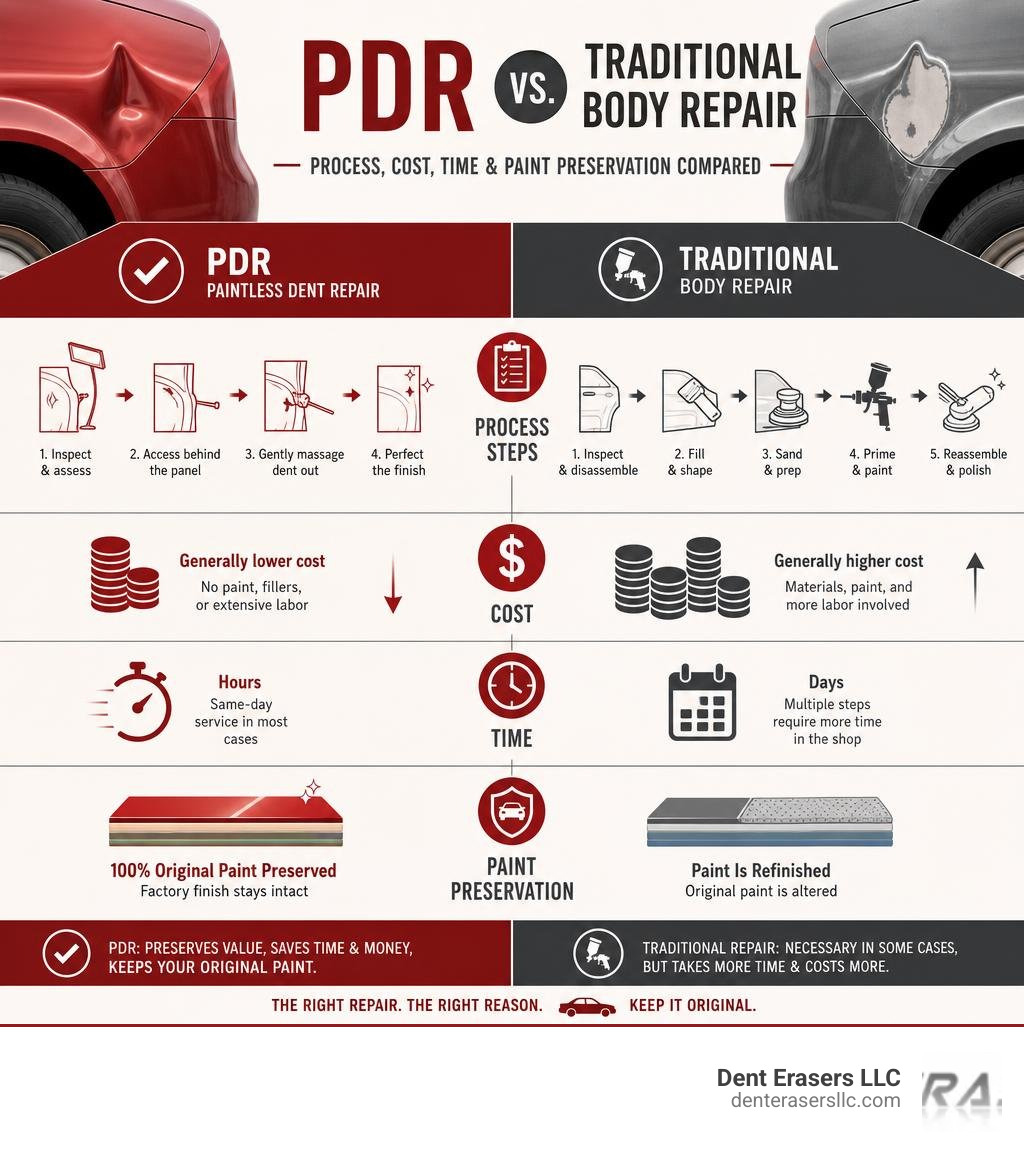
Large car dent repair terms to remember:
Understanding Large Car Dent Repair: DIY vs. Professional PDR
When a major dent blemishes your vehicle’s exterior, your first instinct might be to search for a quick fix online or consider a traditional body shop. However, understanding the physical properties of your car’s panels can help you make a much smarter, more cost-effective decision.
Unlike older vehicles, modern cars are engineered with highly elastic paint finishes and panels designed with “metal memory.” This means the metal naturally wants to return to its original, factory-stamped shape. When we perform professional Paintless Dent Repair (PDR), we manipulate this memory to restore the panel without resorting to aggressive measures like grinding, sanding, or painting.
Traditional bodywork, on the other hand, often ignores this natural memory. A conventional shop will typically grind down your factory clear coat and paint, pull the dent roughly using stud welders, slather the area with polyester body filler (Bondo), and respray the panel. This process is not only invasive but can also lead to long-term issues.
For instance, body filler expands and contracts at a different rate than the underlying metal. Over time, especially with the seasonal temperature swings we experience here in Contra Costa County, CA, this mismatch can cause the filler to develop hairline cracks.
Choosing PDR avoids these risks entirely by keeping your vehicle’s structural integrity and factory finish intact. You can read more about these differences in The Complete Guide to Auto Body Repair Costs.
The Physics of Large Car Dent Repair
To successfully execute a large car dent repair, we have to work with the physics of the metal rather than against it. When an object impacts a car panel, it creates a deep depression, but it also creates high-tension areas around the outer boundaries of the dent. The metal surrounding the impact zone is pulled tightly toward the center, locking the dent in place.
If you attempt to simply pull or push the exact center of a large dent first, you run a high risk of overstretching the metal or cracking the paint. Professional PDR is a game of tension relief. We must carefully massage and release the pressure from the outer edges of the dent, working inward in stages.
The molecular structure of the panel also dictates our approach:
- Steel Panels: Steel has excellent molecular memory, making it highly responsive to PDR. However, if it is creased too sharply, the metal stretches past its elastic limit), which can prevent a flawless recovery.
- Aluminum Panels: Aluminum is increasingly common on modern vehicles to reduce weight. It is much stiffer than steel, has less molecular memory, and requires specialized high-carbon tools, higher pressure, and precise thermal control. We use controlled heat to relax the aluminum and paint molecules, allowing us to massage the metal back into shape without cracking the finish.
When to Choose Paintless Dent Repair for Large Dents
How do you know if your vehicle is a candidate for Paintless Dent Repair? The decision comes down to a few critical factors:
- Paint Integrity: If your factory clear coat and paint are fully intact — meaning there are no deep scratches, chips, or spider-webbing cracks — PDR is almost always the superior option.
- Crease Severity: A large, soft, shallow dent (such as one caused by a stray basketball or a soft parking lot bump) is highly repairable. However, if the dent features a sharp, folded crease where the metal has been severely stretched, the metal may have exceeded its elastic limit.
- Depth vs. Diameter: Do not let the physical size of a dent scare you. A shallow, 12-inch dent on a flat door panel is often much easier for us to repair than a sharp, deep, 1-inch puncture on a body line.
By prioritizing PDR, you preserve your vehicle’s original factory paint, which is baked at nearly 400°F during manufacturing. No local body shop can truly replicate the durability and color match of that original factory finish.
To learn more about how we evaluate these damages, explore our guide on how to Get Your Car Looking New Again with Expert Dent Removal.
Professional Tools Used for Large Car Dent Repair
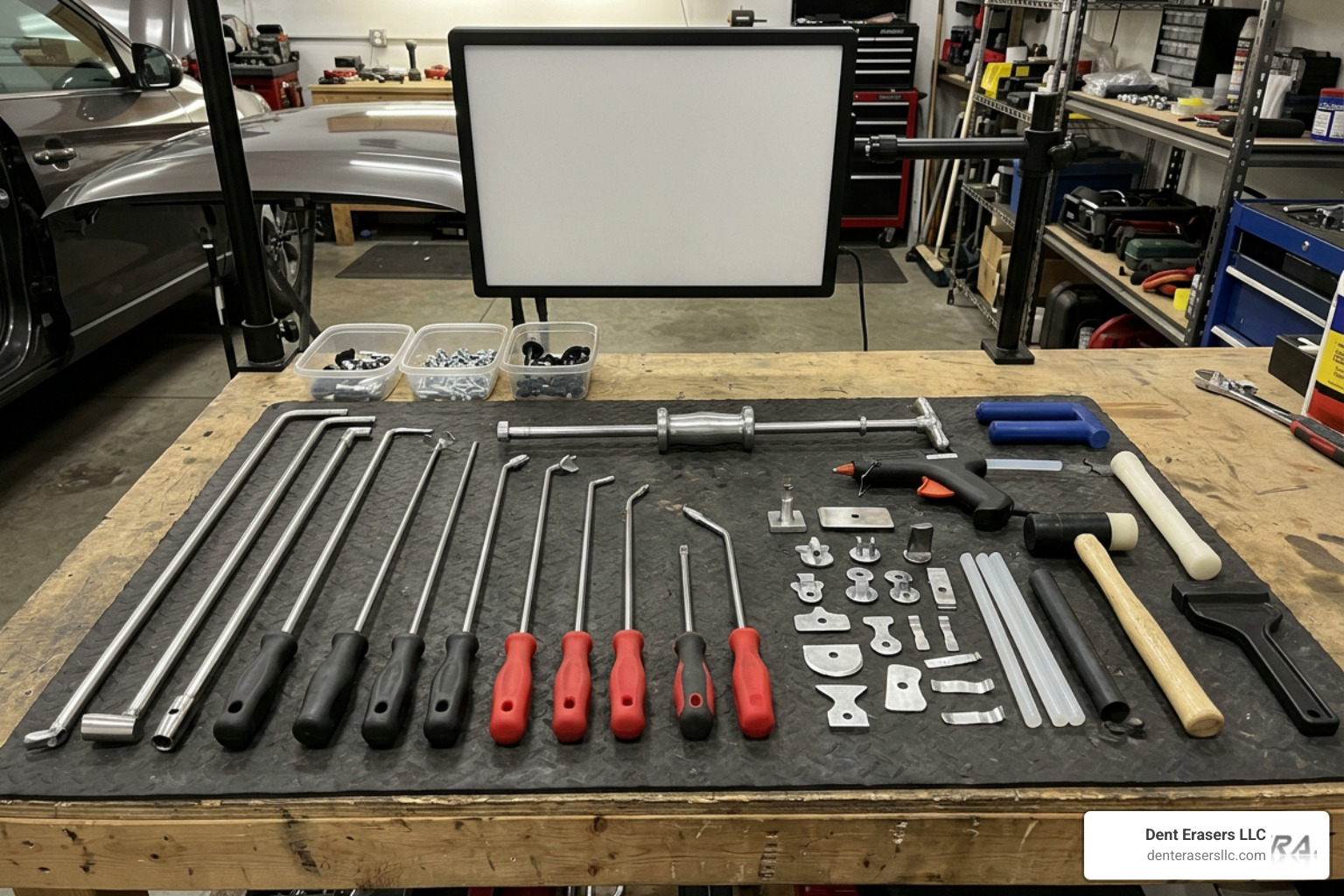
Achieving a flawless finish on a large dent requires specialized, professional-grade equipment. Unlike the basic tools found in retail kits, professional PDR tools are engineered to deliver precise, controlled force to safely manipulate metal.
How Professional Glue Pulling Systems and Slide Hammers Work
When we cannot access the backside of a damaged panel, we rely on advanced glue pulling systems. This technique is highly effective for large, shallow damage on double-walled panels, rooflines, and quarter panels.
The process begins with selecting the correct size and shape of pulling tab. We apply a specialized, high-strength hot glue formulated specifically for PDR. This glue is designed to provide incredible adhesion to the clear coat without causing any chemical damage or lifting the paint.
Once the tab is bonded to the center of tension, we connect a slide hammer or a mini-lifter. The slide hammer allows us to apply a controlled, upward pulling force. Rather than trying to pop the entire dent out in one massive pull, we perform multiple, incremental pulls using different tabs. To release the high-strength glue safely, we spray the area with isopropyl alcohol, which neutralizes the adhesive bond, allowing us to peel the tab off cleanly.
The Role of Specialized Suction Tools on Large, Shallow Damage
For exceptionally large, shallow depressions — like those found on hoods, roofs, or wide door panels — we often use heavy-duty vacuum suction cups.
Unlike cheap retail suction cups, professional vacuum suction tools feature hand-pumped vacuum plungers that secure a massive, uniform grip on flat or slightly curved panels. By pulling with controlled air pressure, we can lift large sections of displaced metal simultaneously, relieving the bulk of the panel’s negative tension before moving in with precision hand tools for the fine detailing.
How Professional Technicians Select Tools for Large Car Dent Repair
Every dent is unique, and selecting the right tool is an art form that requires years of experience. When we assess a vehicle, we look closely at the panel material, the location of the damage, and any structural obstacles. For a deeper look at panel-specific challenges, check out The Price of a Panel and What Fixing Your Hood Really Costs.
Assessing Vehicle Material and Location for Large Car Dent Repair
The location of the dent dictates whether we push the metal from behind or pull it from the outside:
- Backside Access (Pushing): If we can gain access to the backside of the panel — such as by removing an inner wheel well liner to reach a fender, or removing interior trim on a door — we use high-carbon steel rods. These rods allow us to apply micro-pressure to the exact center of the dent, slowly massaging the metal back to its original height.
- No Backside Access (Pulling): On double-walled areas like hoods, trunk lids, or structural A-pillars, rear access is completely blocked. In these areas, we must use our advanced exterior glue-pulling systems.
- Material Constraints: If we are working on aluminum, we must account for its stiff nature by using specialized wide-diameter tips and applying heat to keep the metal pliable. High-strength steel panels require immense leverage and precision to avoid creating high spots.
Why Professional-Grade Equipment Surpasses Retail DIY Kits
It is common to see cheap DIY dent repair kits advertised online for $15 to $50. While these kits claim to offer a quick fix, they lack the engineering and quality necessary for safe, effective repairs:
- Glue Strength and Temperature Control: Retail kits often include cheap craft glue guns and brittle glue sticks. If the glue is too weak, the tab slips off without moving the metal. If the glue is too aggressive or applied at the wrong temperature, it can pull the clear coat right off your car.
- Adjustable Width and Leverage: Professional bridge pullers feature highly adjustable feet and fine-threaded tension dials, allowing us to distribute pressure evenly across the panel’s strong points. Cheap plastic bridge pullers bend, slip, and often dent the surrounding metal further.
- Topography and Visualization: The secret weapon of any professional PDR technician is specialized LED line boards. These boards project perfectly parallel lines across the panel. By watching how the lines curve or distort, we can see microscopic high and low spots in the metal. Without these lights, a DIYer is essentially working blind, leading to a wavy, ruined finish.
The Risks of DIY Large Dent Removal
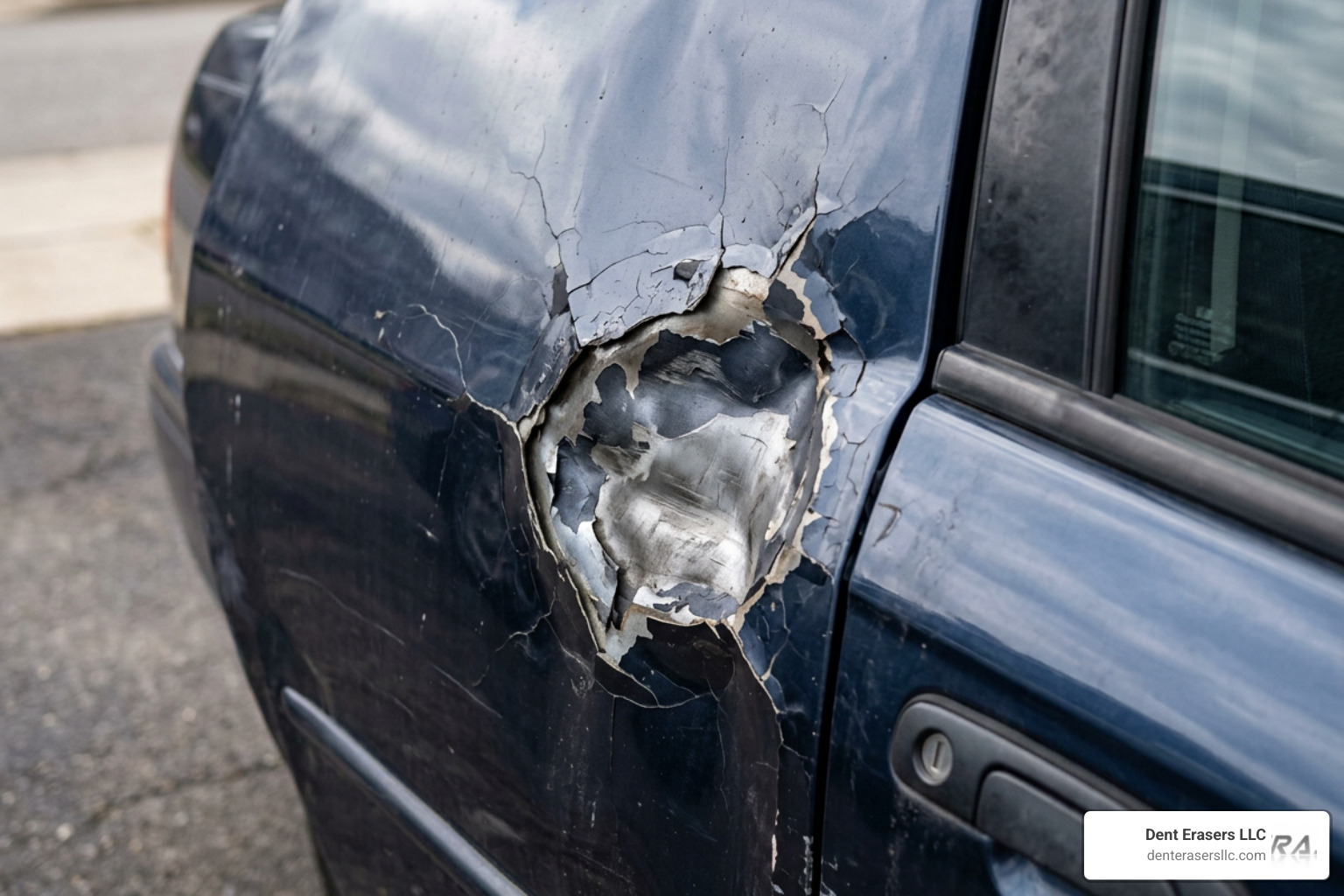
Attempting a DIY repair on a large car dent is a high-stakes gamble. While it may look easy in online videos, an untrained hand can quickly transform a simple, paintless-eligible dent into an expensive paint and body shop nightmare. To understand how these mistakes impact your wallet, take a look at our Step-by-Step Guide to Car Body Repair Price.
Why DIY Attempts Often Cause Secondary Damage
When DIYers attempt to pull large dents at home, they frequently make critical errors that cause permanent damage:
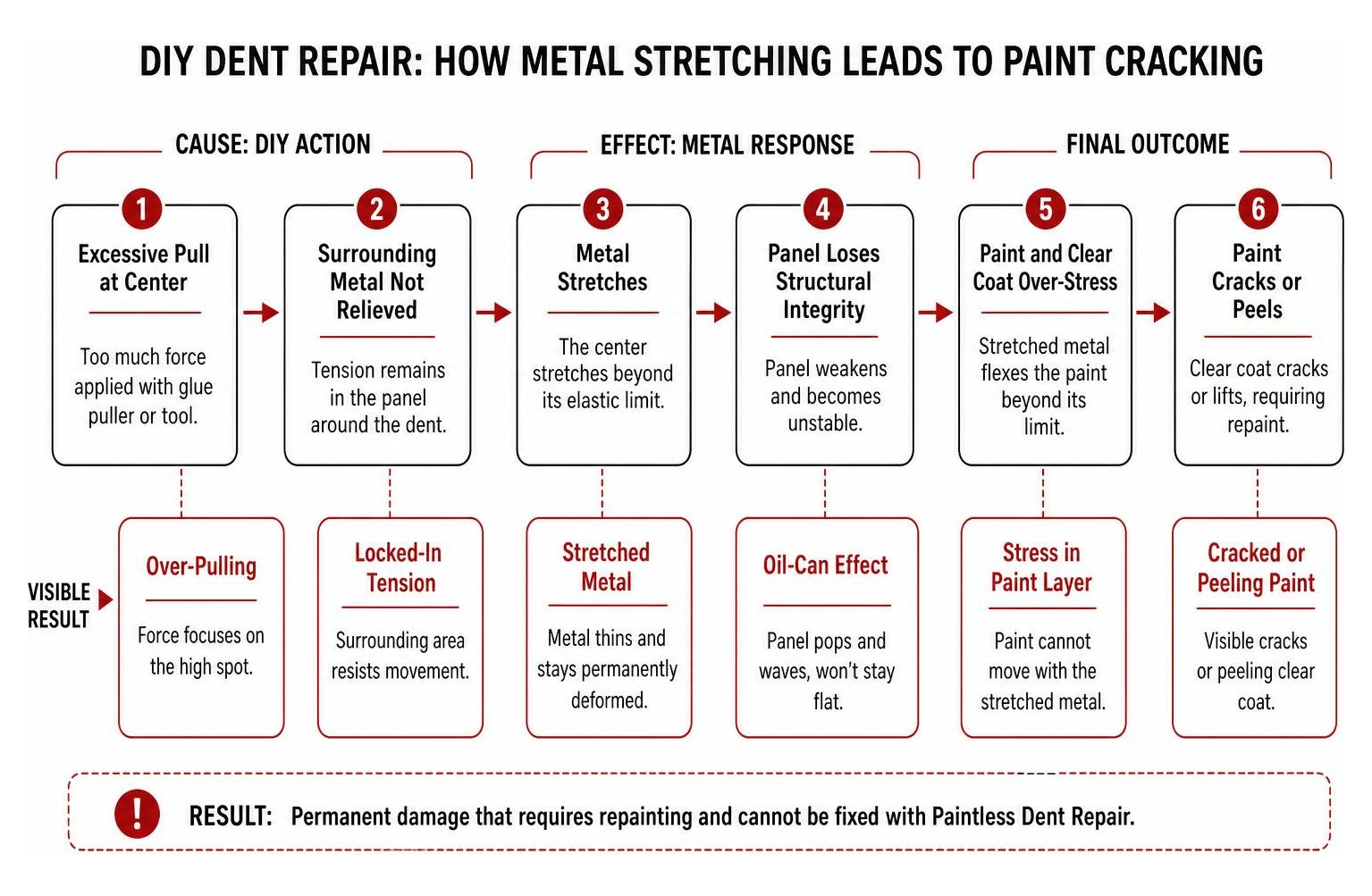
- Metal Stretching and the “Oil-Can” Effect: If you apply too much force to the center of a dent without relieving the surrounding tension, you will permanently stretch the metal. Once stretched, the panel loses its structural integrity. It will exhibit a wavy, distorted “oil-can” effect, popping back and forth and refusing to hold its flat shape.
- Paint Chipping and Peeling: Using incorrect glue, failing to prepare the surface, or over-pulling can rip the factory clear coat and paint off the metal. Once the paint is broken, PDR is no longer an option, and the panel must be repainted.
- High Spots and Low Spots: Without professional LED line boards, DIYers often over-pull, creating sharp, unsightly “high spots.” Trying to tap these down with a standard hammer usually results in chipped paint and a dimpled, uneven surface.
When Paint Damage and Structural Issues Require Traditional Bodywork
While PDR is incredibly versatile, there are clear boundaries where traditional bodywork is required. If the impact was severe enough to crack, chip, or deeply scratch the paint down to the primer or bare metal, PDR alone cannot restore the vehicle. The metal may still be massaged flat, but traditional sanding, priming, and painting will be necessary to prevent rust and seal the panel.
Furthermore, if the damage involves structural frame components, crushed bumper reinforcements, or deeply buckled inner safety structures, the vehicle must be sent to a dedicated collision center to ensure the vehicle is structurally safe to drive.
Cost Comparison: DIY Kits vs. Professional PDR
To help you make the best financial choice for your vehicle, let’s look at how the real-world costs and outcomes compare across different repair methods:
| Repair Method | Average Cost | Time Required | Risk Level | Resale Value Impact |
|---|---|---|---|---|
| DIY Amazon/Retail Kit | $15 – $50 | Several hours (with high frustration) | Extremely High (Risk of paint damage & metal stretching) | Often lowers value due to wavy, damaged finish |
| Professional PDR (Dent Erasers LLC) | $150 – $500 | 1 – 3 hours (same-day, on-site) | None (Fully insured, master-certified work) | Preserves 100% of factory value |
| Traditional Auto Body Shop | $1,000 – $3,000+ | 3 – 5+ days (requires car rental) | Low (But involves invasive fillers & aftermarket paint) | Can lower value due to repainted panels on Carfax |
As you can see, while a DIY kit seems cheap upfront, the high risk of causing secondary damage can quickly force you into an expensive body shop respray. Professional PDR offers the perfect middle ground: affordable, fast, and completely safe for your vehicle. For more details on estimating these costs, read our Dent Removal Service Cost: A Guide to Professional Estimates.
The Real Cost of Traditional Body Shop Repairs
Many drivers assume that a traditional body shop is the only way to fix a major dent. However, the true cost of a body shop goes far beyond the initial estimate:
- Sanding and Body Fillers: Traditional shops must grind away your factory paint to apply body filler. Over time, this filler can shrink, crack, or show map-marking through the paint.
- Color Mismatching: Matching automotive paint is incredibly difficult. Even with modern computerized paint mixing, aftermarket paint often fades at a different rate than your original factory paint, leading to highly visible color mismatches under sunlight.
- Diminished Resale Value: When a body shop repairs a panel, they often report the work to vehicle history databases like Carfax. Dealerships routinely use paint-depth gauges during trade-in evaluations. If they detect non-factory paint thickness, they will drop your vehicle’s trade-in value significantly.
You can read more about what to expect from a traditional shop in our article on Car Dent Scratch Repair Cost: What to Expect at the Shop.
Finding Affordable and Reliable Local PDR Services
At Dent Erasers LLC, we believe that restoring your car should be completely stress-free. As a fully mobile service based in Concord, CA, we bring our master-level PDR shop directly to your home, office, or driveway.
We proudly serve communities throughout Contra Costa County, including Concord, Antioch, Walnut Creek, Brentwood, Martinez, Richmond, San Ramon, Pittsburg, and the surrounding East Bay areas. By operating as a mobile service, we keep our overhead low, allowing us to pass those savings directly to you with highly competitive pricing ranging from $150 to $500 for most repairs.
If you are located in the Richmond area, our mobile team is fully equipped to handle your repair needs right at your location, ensuring you receive top-tier service without the hassle of visiting a shop. You can also explore our guides on How to Find Affordable Dent Removal for Your Car and The Best Places to Get Your Dings and Dents Fixed Nearby.
Frequently Asked Questions About Large Car Dent Repair
Can PDR fix a dent the size of a basketball?
Yes! In many cases, we can completely restore basketball-sized dents using advanced Paintless Dent Repair. The physical diameter of the dent is not the limiting factor. As long as the factory paint is flexible and completely intact, the metal is not sharply creased, and we can safely relieve the surrounding tension, we can massage the panel back to its original shape.
Will a large dent pop back in after being repaired?
No. Once a large dent is professionally restored using PDR, the repair is permanent. By carefully releasing the tension and guiding the metal molecules back to their original, factory-stamped coordinates, the metal regains its natural structural tension and molecular memory. It will never randomly pop back in or warp.
Why shouldn’t I use a retail suction cup or plunger on a large car dent?
Using a household toilet plunger or a cheap retail suction cup on a large dent is highly risky. These tools apply sudden, uncontrolled, and uneven pulling force to the center of the damage. Because they do not relieve the high-tension areas around the edges of the dent, they often pull the metal past its elastic limit, creating sharp, permanent creases and overstretched metal that cannot be fixed without traditional body filler and paint.
Conclusion
A large dent on your vehicle doesn’t have to mean a stressful, expensive, and time-consuming ordeal at a traditional collision center. With professional Paintless Dent Repair, you can restore your car’s beauty, protect its original factory paint, and preserve its resale value — all in a single afternoon.
At Dent Erasers LLC, we are dedicated to providing the highest level of mobile PDR craftsmanship to our neighbors throughout Concord, CA, and the wider Contra Costa County area. Why lose your car to a body shop for a week when we can deliver flawless, guaranteed results right to your doorstep?
Before you commit to an expensive body shop estimate or risk damaging your car with a DIY kit, let our experts show you what master-level PDR can do.
Restore your vehicle’s value with expert Paintless Dent Repair