Car Dent Remover Spray: What It Can and Cannot Fix
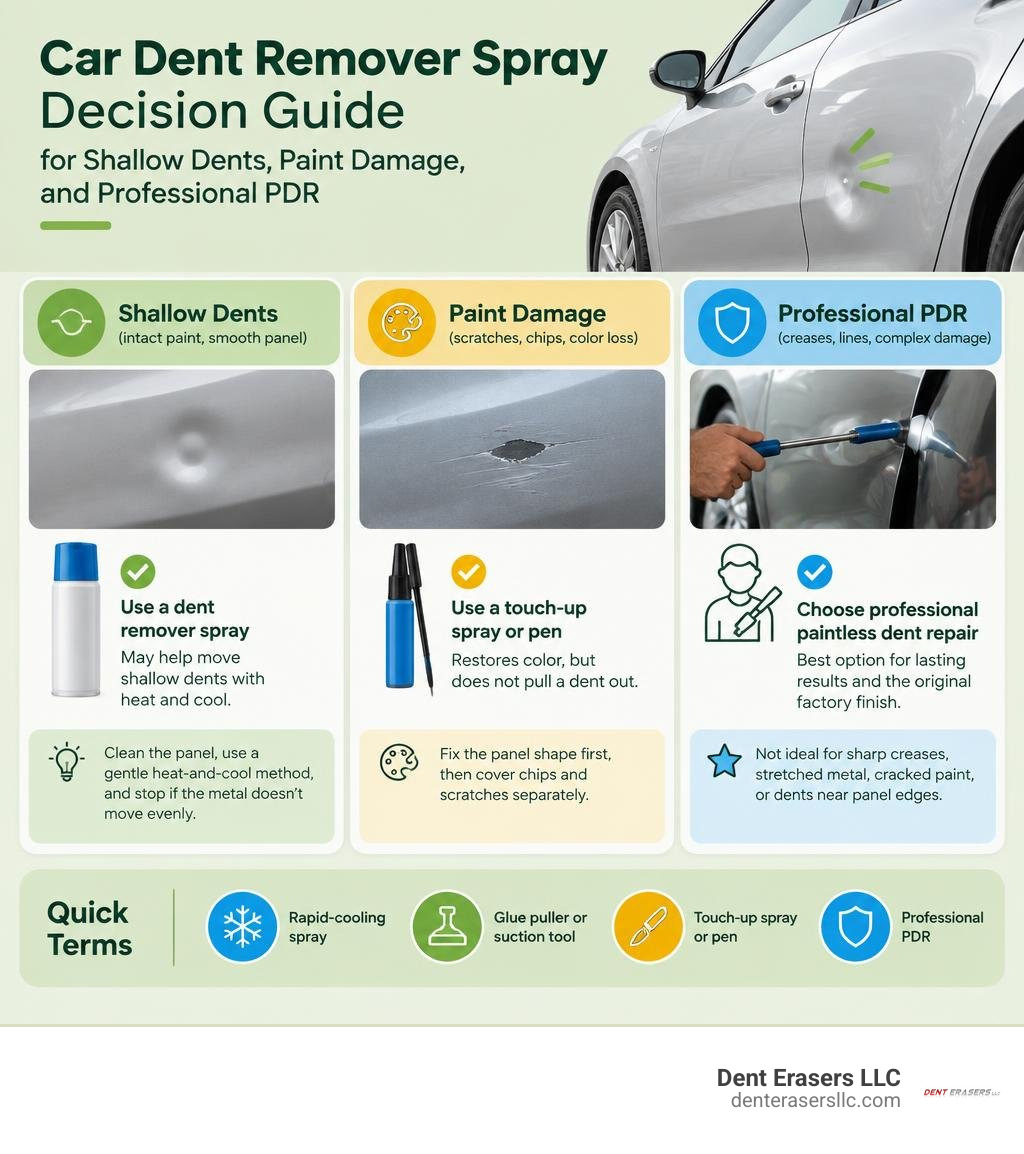
A car dent remover spray can sometimes help with a very shallow dent on an intact metal panel, but it is not a stand-alone miracle fix. For the best DIY result, clean the panel, use a gentle heat-and-cool method only on a small smooth dent, then stop if the metal does not move evenly. If the paint is scratched, use an OEM color-matched touch-up product separately; spray paint can restore color, but it does not pull a dent out.
DIY sprays and low-cost puller kits can make sense for minor door dings and hail-like dimples. They are far less suitable for sharp creases, stretched metal, body lines, cracked paint, and dents near panel edges. A simple kit may cost far less than a body-shop repair, but the wrong technique can crack clear coat or leave the panel looking worse.
The key is to match the product to the damage:
- Rapid-cooling spray: May help a shallow metal dent move, with limited and unpredictable results.
- Glue puller or suction tool: Provides mechanical pulling for small, smooth dents with sound paint.
- Touch-up spray or pen: Covers chips and scratches after the panel shape is corrected.
- Professional paintless dent repair: The best option when preserving the factory finish matters.
I am Brian Blanc, owner of Dent Erasers LLC, and I have spent 28 years repairing everything from small door dings to hail damage through mobile paintless dent repair. I have seen where a car dent remover spray may help with minor cosmetic work – and where skilled PDR is the safer path to restoring the original factory finish.
Quick car dent remover spray terms:
The Truth About Car Dent Remover Spray: How It Really Works
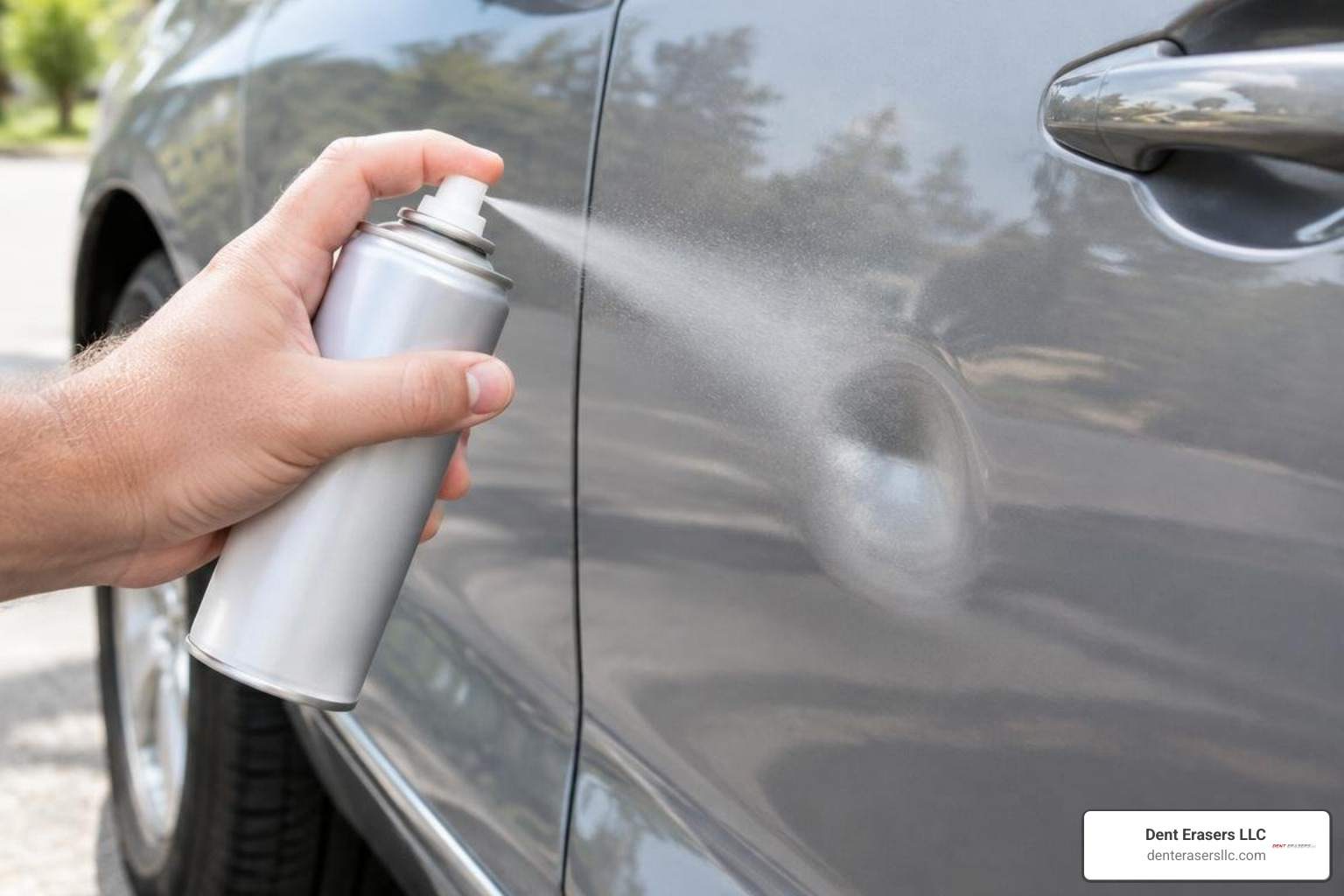
The internet is full of viral clips showing someone spraying an aerosol can onto a dented car door and watching the metal magically pop back into place. While the visual is satisfying, the physics behind it requires careful management. Understanding what is actually happening beneath the paint surface helps set realistic expectations.
When an aerosol freeze spray is used on a vehicle panel, it relies on extreme thermal expansion and contraction. Vehicle sheet metal has structural “memory”—it was stamped into shape at the factory under high pressure. When a minor, rounded impact creates a shallow dent without stretching the underlying metal fibers beyond their elastic limit, rapid temperature drops can trigger the panel to flex back toward its original stamped curvature.
Using Compressed Air or Rapid-Cooling Car Dent Remover Spray
The most common DIY approach involves using inverted cans of compressed air (duster spray) or dedicated freezing sprays containing liquefied gases like carbon dioxide or tetrafluoroethane.
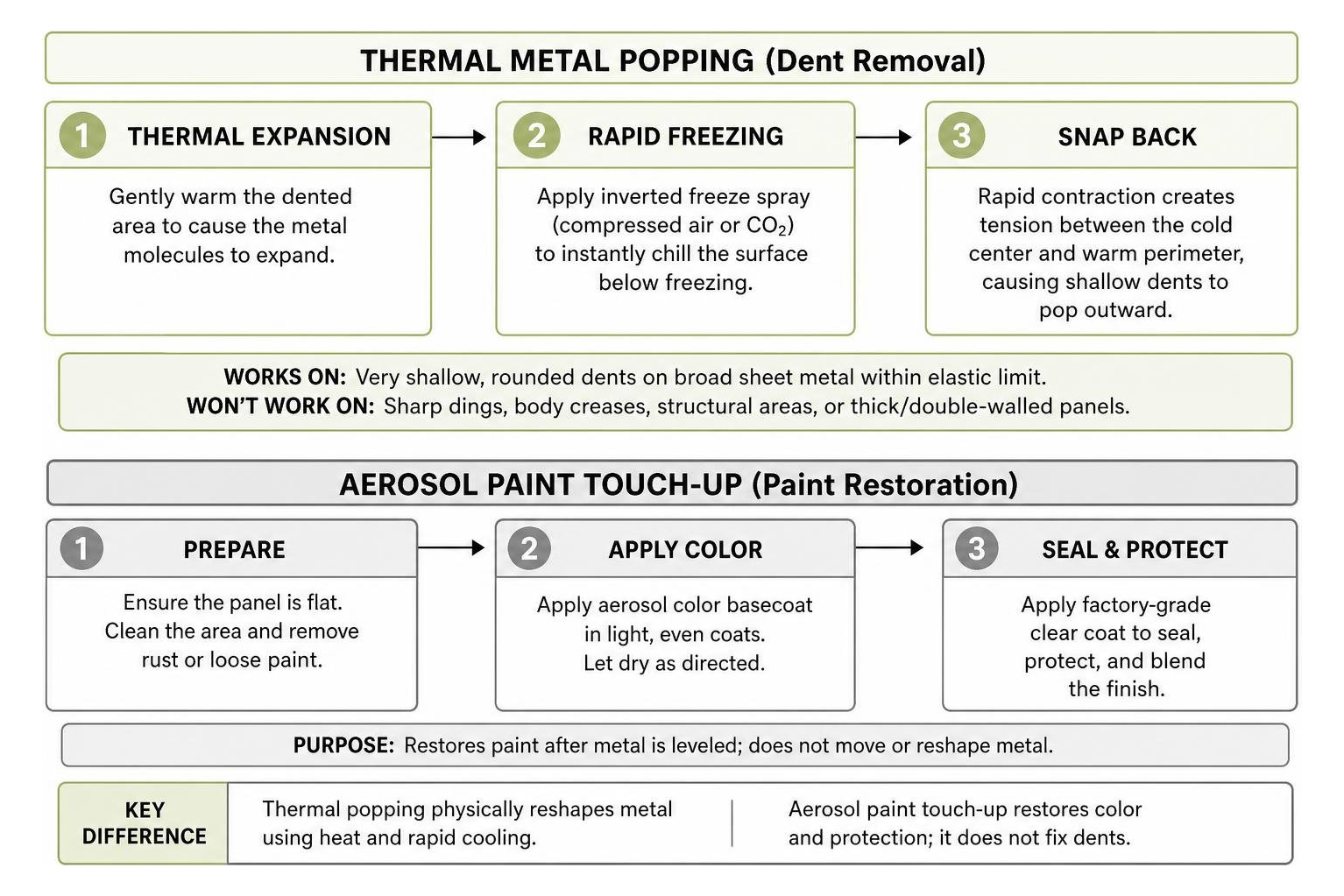
When you spray compressed air upside down, it expels liquid propellant at temperatures well below freezing (often reaching -60°F or colder). If the dented area has been gently warmed beforehand, this creates thermal shock:
- Thermal Expansion: Gentle heat causes the metal molecules to expand outward slightly.
- Rapid Freezing: The freezing spray instantly chills the surface, causing the metal molecules to contract rapidly.
- Snap Back: The sudden tension between the warm outer perimeter and the freezing center can cause shallow dings or soft hail dimples to pop outward.
While this thermal contraction can work on very shallow, rounded depressions in broad sheet metal, it will not work on sharp dings, structural body creases, or thick double-walled panels. In some mechanical PDR setups, technicians also use penetrating lubricants like Kroil® Original Penetrant to help clean and loosen seized hardware or mounting brackets when accessing the backside of a panel.
Aerosol Touch-Up Paint vs. Mechanical Dent Repair
There is often confusion between sprays that physically shift metal and aerosol touch-up products designed to restore paint. A can of paint or clear coat will never reshape metal, and a freezing spray will never fix a chip or scratch.
When an impact leaves both a physical dent and scratched paint, you must address the repair in two distinct phases:
- Mechanical/Thermal Leveling: Reshaping the panel using physical tools or controlled thermal cycling. You can explore proven DIY car dent removal methods that actually hold up to see how suction and leverage compare.
- Paint Restoration: Once the panel is flat, applying aerosol color basecoat and factory-grade clear coat to seal bare metal and blend the finish.
Products like the Scratch Fix All-in-1 Touch Up Paint | Duplicolor or the Universal Touch Up Pen | Duplicolor offer an abrasive prep tip, exact-match automotive basecoat, and a protective clear coat in a single tool for smaller scratch repairs.
Comparing DIY Sprays, PDR Kits, and Professional PDR Services
Before diving into a repair in your garage, it helps to understand how different repair paths stack up in terms of cost, time, and potential risks. An auto body shop might quote upwards of $1,800 to fix minor dents and scratches on an SUV like an Acura RDX because standard body shops typically sand down the entire panel, apply heavy body fillers, and repaint the whole section.
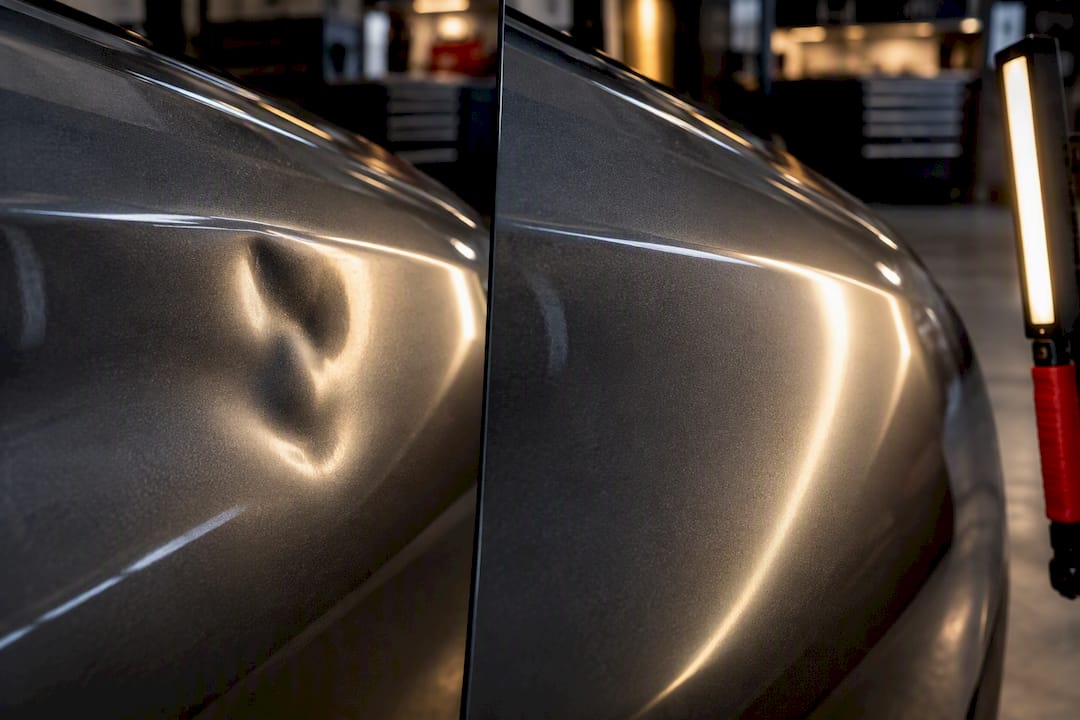
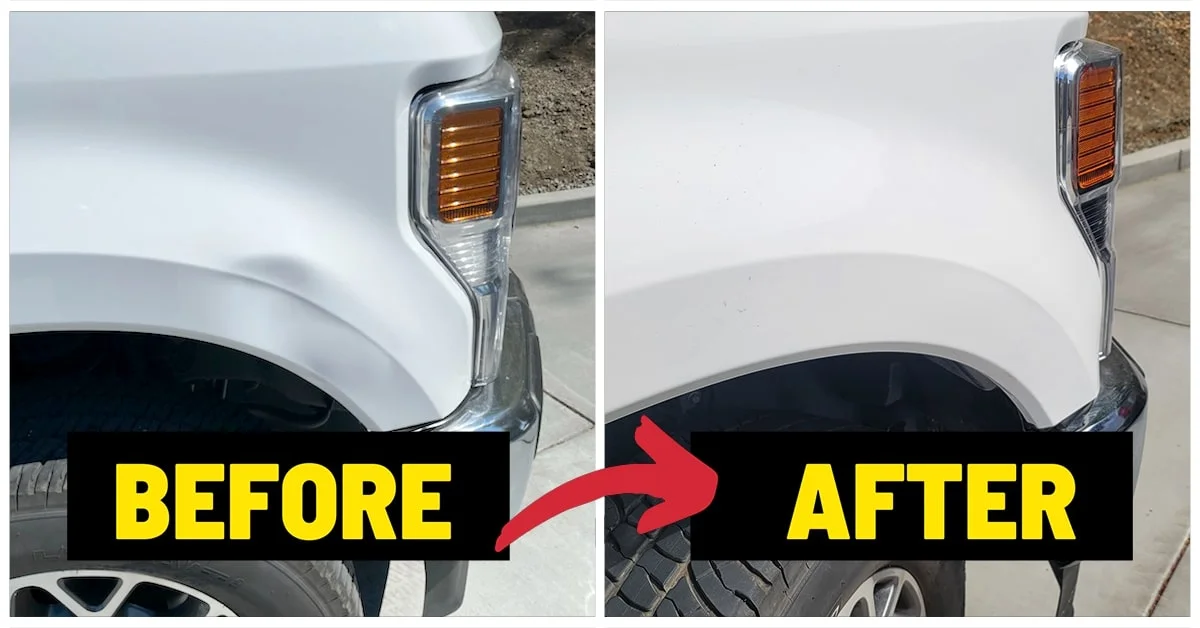
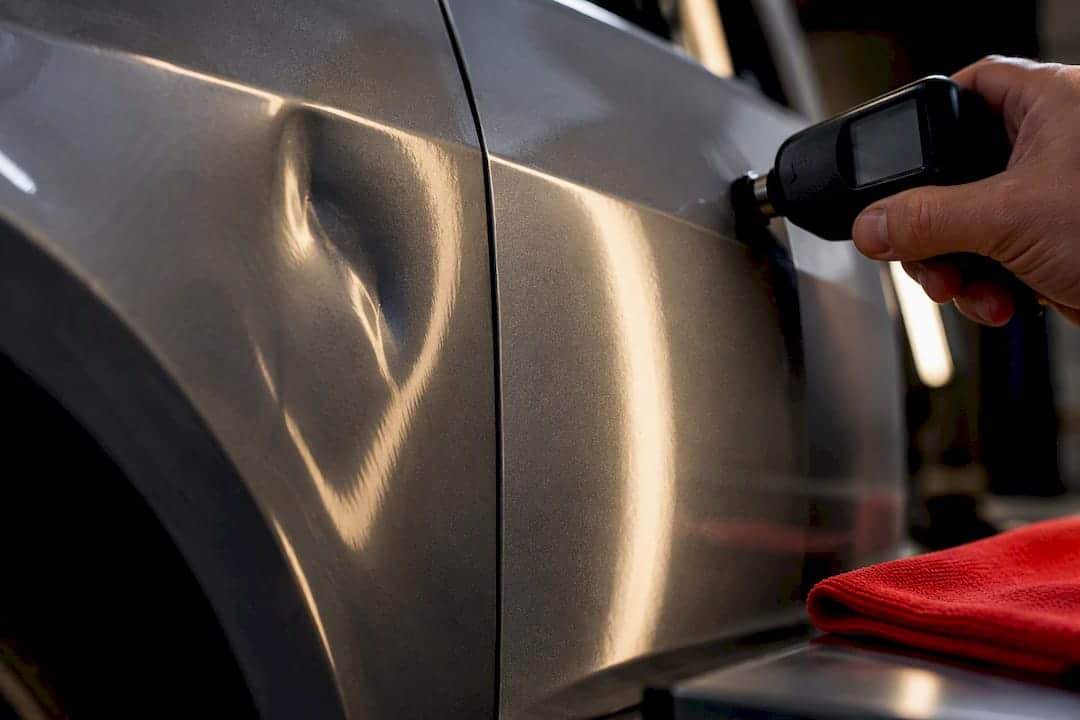
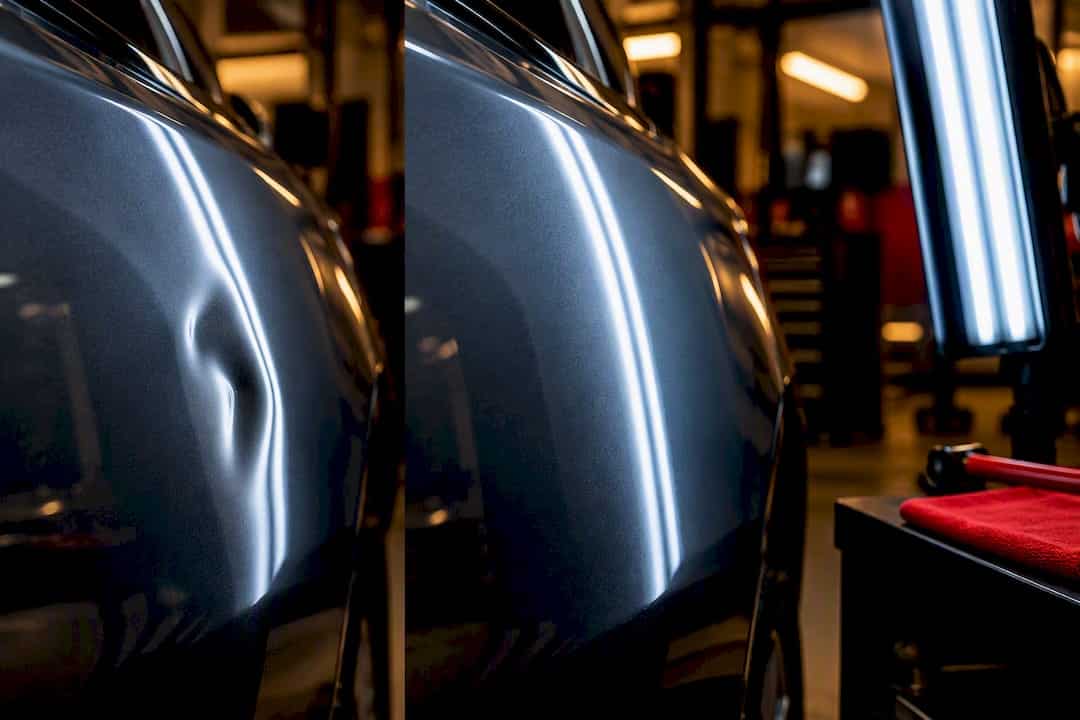
In contrast, Paintless Dent Repair (PDR) focuses on massaging the metal back into place from behind or pulling it from the front without disturbing the original factory paint.
| Feature / Method | Thermal / Freeze Spray DIY | DIY Puller Kits (Suction/Glue) | Professional Mobile PDR | Traditional Body Shop |
|---|---|---|---|---|
| Typical Cost | $10 – $25 | $15 – $40 | $150 – $500 | $1,000 – $2,500+ |
| Best Used For | Large, shallow, round dings | Small to medium smooth dents | Door dings, hail, body creases | Crushed metal, severe collisions |
| Paint Risk | Moderate (thermal shock) | Low to moderate (glue pull) | Zero (retains factory finish) | N/A (repaints panel) |
| Success Rate | Low (15% – 30%) | Moderate (50% – 70%) | High (95%+) | High (100%) |
| Turnaround | 30 minutes | 1 to 2 hours | 1 to 3 hours on-site | 3 to 7 days in shop |
For a deeper look into professional pricing breakdowns, check out our step-by-step guide to car body repair price to help determine the best value for your vehicle.
Step-by-Step Guide: How to Fix Dents and Restore Paint at Home
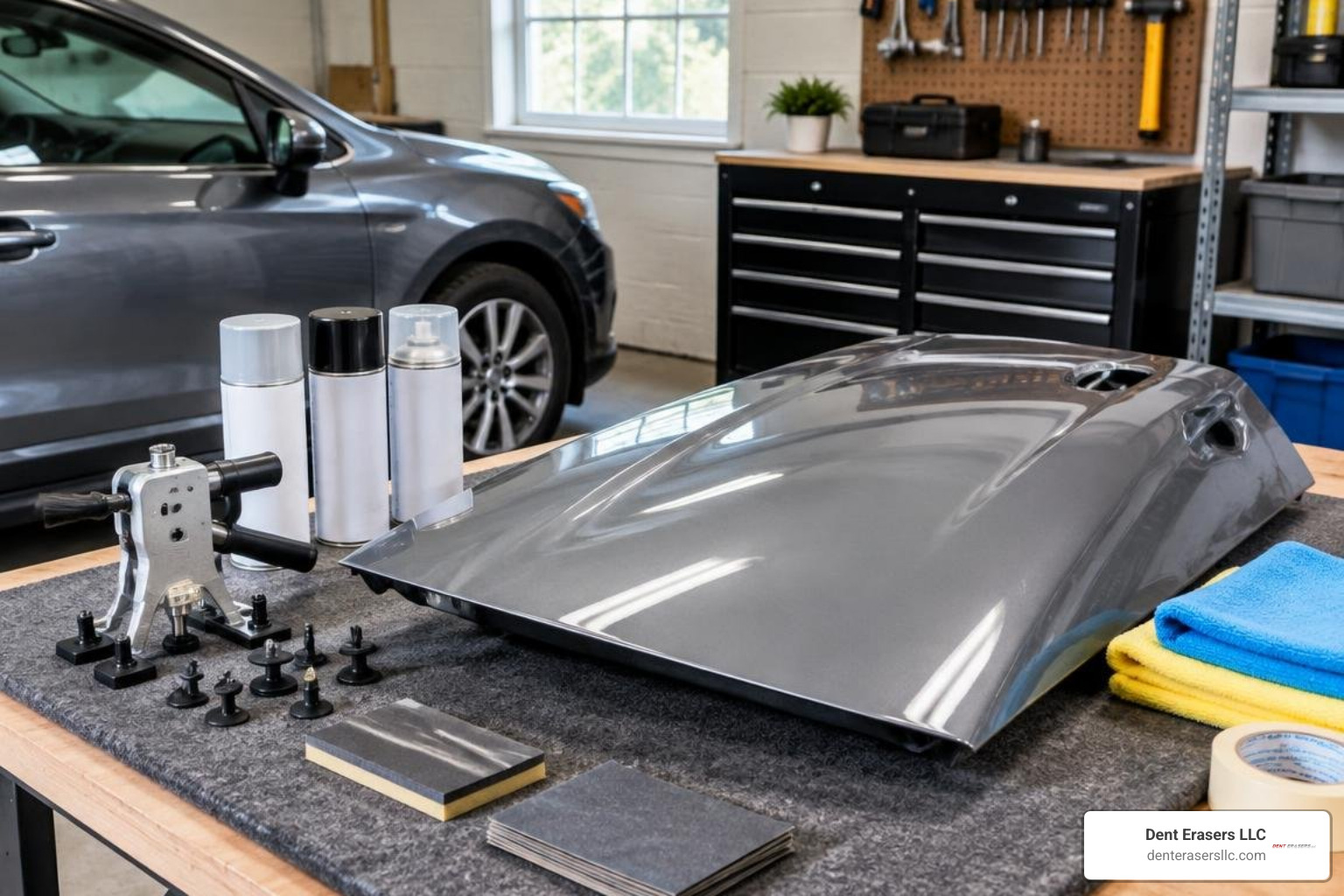
If you have a shallow, smooth dent on a flat metal panel (like the center of a hood or door) and want to attempt a DIY repair, following a structured process is essential to avoid damaging your clear coat.
Preparing the Vehicle Surface and Protecting Surrounding Clear Coat
Proper surface preparation ensures you can clearly see the dent contours and prevents road grime from scratching the paint during the repair process.
- Clean the Area: Wash the damaged panel thoroughly using automotive shampoo and dry it with a plush microfiber towel.
- Decontaminate: Wipe down the immediate dent area using 91% or 99% isopropyl alcohol to remove lingering waxes, silicones, and road oils.
- Quick Detailer Wipe: Use a high-lubricity detailing spray such as Speed Wipe Quick Detailer & High Shine Spray Gloss | Chemical Guys around the wider panel to keep it clean and dust-free while you work.
- Create a Wax Barrier: If you plan on doing paint touch-up spraying later, apply a thick layer of automotive paste wax around the perimeter of the damage. This prevents overspray from sticking to your surrounding clear coat.
- Safety First: Put on safety goggles and nitrile gloves. Rapid freezing sprays can cause cold burns if they contact bare skin.
Applying the Heat-and-Freeze Technique for Metal Panels
Work in a sheltered garage where the ambient room temperature is between 60°F and 95°F with low humidity.
- Step 1: Gentle Heating. Hold a household hair dryer (or a variable heat gun set to low) approximately 5 to 7 inches away from the dent. Move the heat source continuously in a circular motion around the dent for 60 to 90 seconds. The panel should be warm to the touch (around 120°F to 140°F), never boiling hot. Overheating will bubble or blister your clear coat.
- Step 2: Instant Chilling. Shake your aerosol freeze spray can, hold it completely inverted, and spray directly into the center of the warm dent for 15 to 25 seconds until a thick layer of white frost forms.
- Step 3: Thermal Contraction. Allow the thermal shock to work. Listen for a popping sound as the metal contracts.
- Step 4: Wipe and Inspect. Once the frost begins to melt, gently wipe the moisture away with a microfiber cloth and inspect the panel from multiple angles under good lighting. If the metal hasn’t popped after two gentle cycles, stop—repeated thermal cycling can weaken paint adhesion.
When to Pair a Car Dent Remover Spray with Mechanical Pullers
If thermal spray alone does not fully pop the dent, combining it with mechanical tools can provide the necessary lifting force. Many budget-friendly options like the NASCAR Car Dent Puller 3 Pack ($10.99) or the Alilang Car Dent Repair Suction Cup Tool ($19.60) offer simple leverage for DIYers. Alternatively, comprehensive options like the VEVOR Dent Puller 60-piece kit ($32.99) utilize hot-melt glue tabs. You can also explore our guide on plunger power: the ultimate guide to DIY car dent removal for simple mechanical suction techniques.
- Attach a glue tab with automotive-formulated hot glue to the lowest point of the dent.
- Use a bridge puller or mini lifter to apply slow, outward tension.
- Release the glue tab using 91% isopropyl alcohol spray (which breaks the adhesive bond cleanly without damaging clear coat).
- If high spots occur around the rim, use a soft rubber hammer or tap-down tool with a delrin tip to tap the crowns level gently.
For higher-grade tool options, review our breakdown of professional car dent repair kits that actually work.
Blending Scratches with OEM Color-Matched Aerosol Touch-Up
If your dent left behind rock chips or paint scrapes, complete the repair with touch-up paint after the metal is level:
- Level Deep Scratches: If a gouge reaches bare metal or primer, smooth it with a tiny amount of 3M™ Dent Finishing Glaze 05857, 276 mL DMS Cartridge 6/Case | 3M United States or automotive spot putty.
- Smooth the Repair: Wet-sand the repaired spot lightly with ultra-fine 2000-grit sandpaper wrapped around a firm sanding block.
- Apply Basecoat: Locate your car’s OEM paint code (found on the driver’s door jamb sticker). Spray 1 to 2 thin, even coats of color-matched paint, allowing 30 minutes of drying time between coats.
- Apply Clear Coat: Spray 2 light coats of automotive clear coat to protect the pigment and restore UV resistance.
- Seal the Finish: Once fully cured, polish the repair and apply a protective product like Crowne Spray Sealant – Polymer Paint Sealant | Alchemist Car Care to lock in hydrophobic protection and deep gloss.
Crucial Limitations and Risks of DIY Chemical and Thermal Methods
While DIY dent removal is appealing, home methods carry genuine risks if applied to the wrong type of damage.
- Paint Spidering and Cracking: Modern factory paint uses flexible urethane clear coats. However, subjecting paint to rapid temperature swings from 130°F down to -50°F in seconds can make the clear coat brittle, causing microscopic spiderweb fractures.
- Metal Stretching (Oil-Canning): If a dent has sharp edges or severe depth, the metal has been stretched past its original footprint. Forcing it to pop with thermal shock or aggressive pulling often creates an “oil-can” effect—a loose, floppy area of metal that pops in and out when touched.
- Paint Lift from Glue Pullers: If your car has had prior aftermarket bodywork or low-quality repainting, hot glue pullers can rip the paint right off the primer.
- Color Mismatch: Touching up metallic or pearl finishes with rattle-can spray paint rarely results in a seamless match under natural sunlight.
Frequently Asked Questions About Dent and Paint Repair
Can a dent remover spray fix plastic bumpers?
No, rapid-cooling sprays do not work on plastic bumper covers. Polypropylene and polyurethane plastics react differently to heat and cold than sheet metal. Plastic bumper covers do not have stamped metal memory.
To repair a dented plastic bumper, technicians usually remove the bumper cover, apply controlled radiant heat from a heat gun to soften the plastic polymers, and push the dent out manually from behind while the material is pliable.
What should beginners look for in an automotive touch-up spray kit?
When buying touch-up supplies, avoid “universal” color sprays whenever possible. Look for complete kits that provide:
- Exact OEM color code matching verified by your vehicle identification number (VIN) or door jamb plate.
- An abrasive prep tool to scrape away loose paint flakes and surface rust.
- Both basecoat color and a dedicated UV-blocking clear coat.
- Ergonomic spray nozzles that produce an even fan pattern rather than a heavy circular stream.
Will rapid freeze sprays crack my clear coat?
They can if used excessively. Factory automotive paint is formulated to withstand weather fluctuations, but direct application of liquid propellant creates extreme localized thermal shock. To minimize risks, never hold the freeze spray on a single spot for longer than 20 to 25 seconds, and avoid attempting thermal repairs in cold winter weather below 50°F.
Conclusion
A DIY car dent remover spray or low-cost pulling kit can be a fun, budget-friendly weekend project for minor, shallow dings on flat panels. However, when you are dealing with sharp body lines, stretched metal, door edges, or valuable factory paint jobs, DIY techniques often fall short or risk causing expensive panel distortion.
At Dent Erasers LLC, we provide professional, mobile paintless dent repair throughout Contra Costa County, CA—including Concord, Antioch, Walnut Creek, Brentwood, San Ramon, Richmond, and surrounding communities. Our specialized PDR tools gently massage metal back to its original factory contour from behind the panel—requiring zero body fillers, no sanding, and no paint color mismatch. Most repairs take under two hours and cost between $150 and $500, saving you thousands compared to traditional body shops.
Ready to restore your car or motorcycle to pristine condition without risking your paint? Contact our team today to schedule your on-site paintless dent repair and get a fast, free estimate!