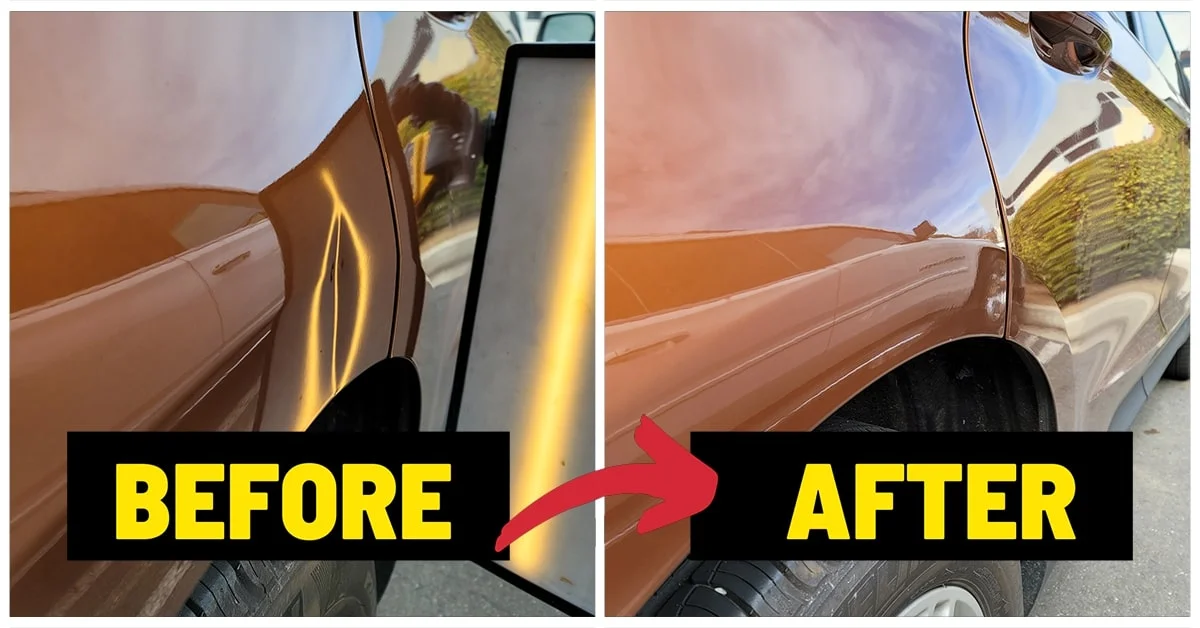
Dented Sill Repair Starts With the Right Damage Check
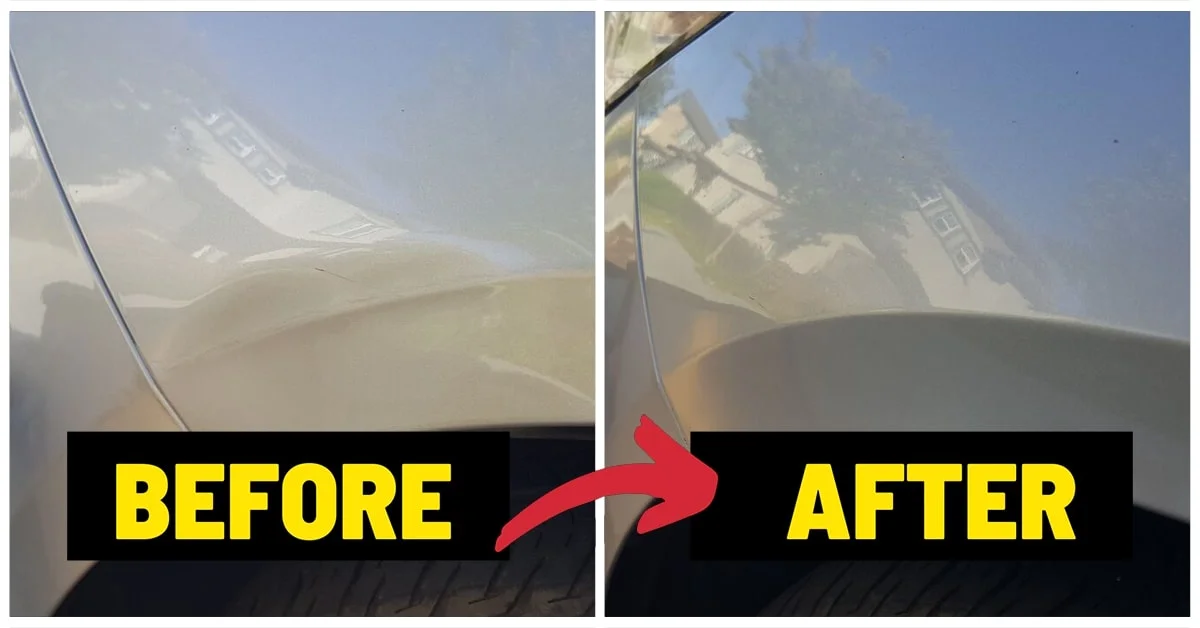
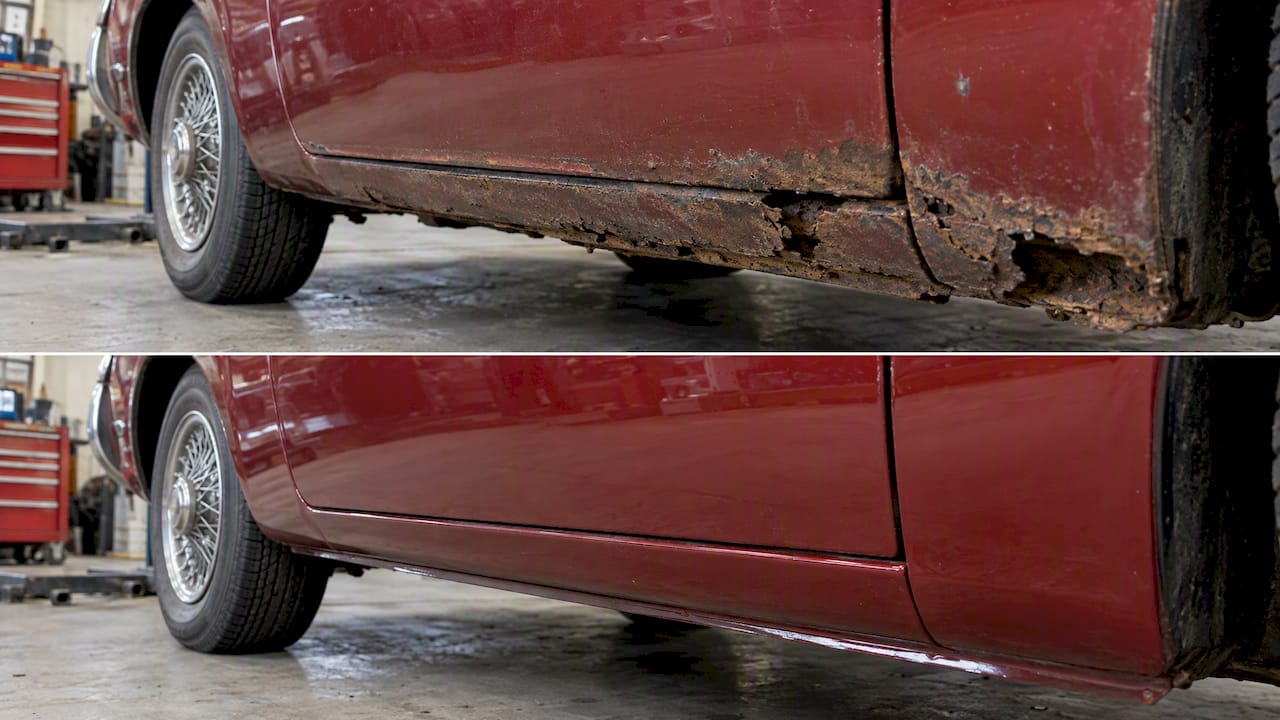
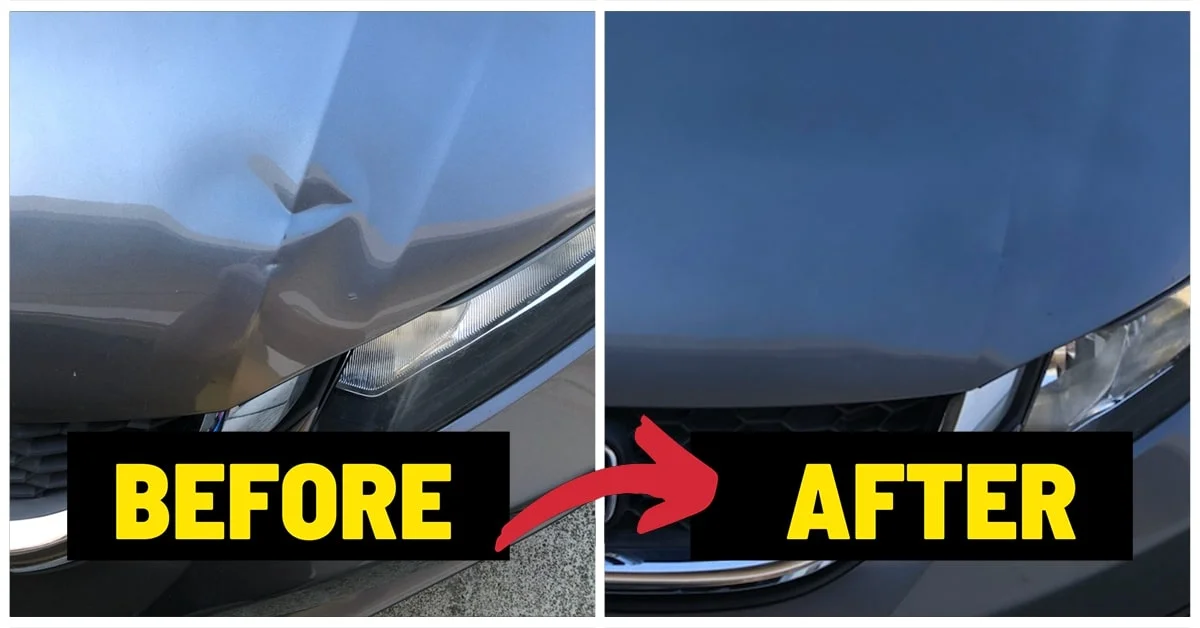
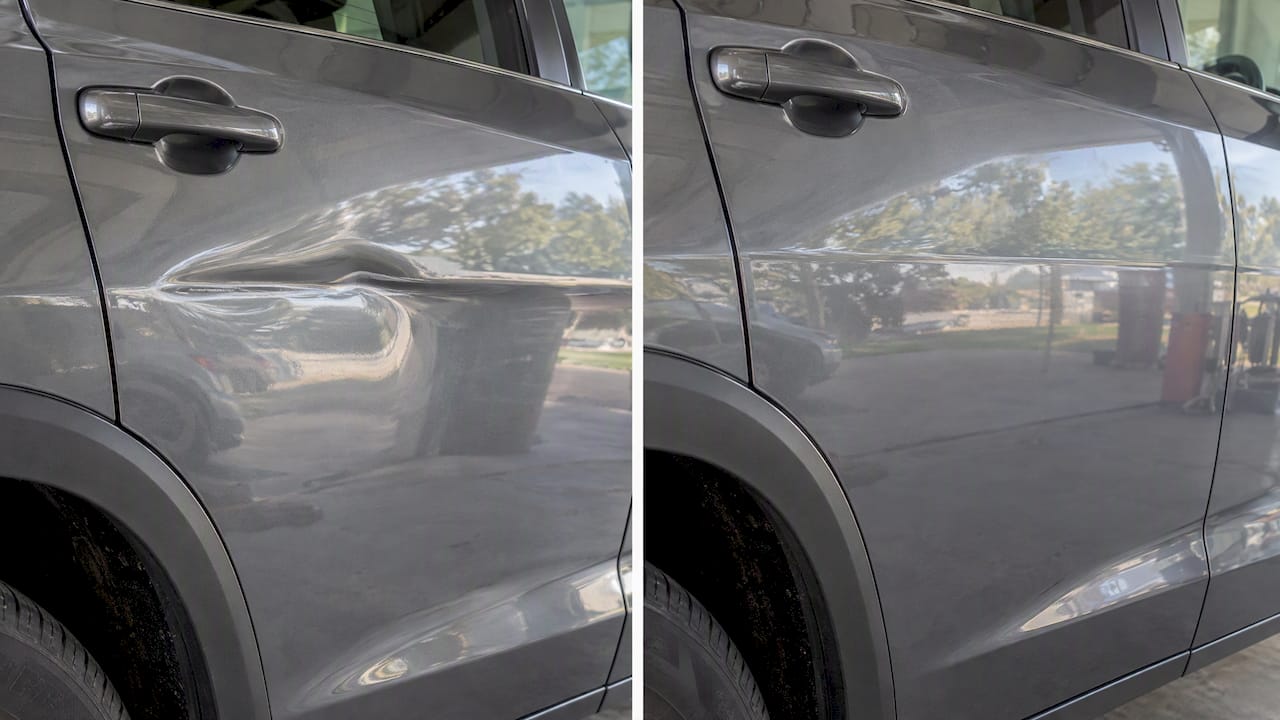
A dented sill can often be repaired without replacing the whole rocker panel, but the right method depends on the paint, crease depth, metal stretch, rust, and whether the sill is structurally distorted. For a small dent with intact paint, a skilled paintless dent repair approach or heavy-duty glue pull may work. For a deeper crease or chipped paint, a body technician may need to pull the metal with welded studs, apply a thin skim of filler, seal it with epoxy primer, and refinish the area.
Before attempting a dented sill repair:
- Check for cracked paint, exposed metal, rust, sharp folds, and a door that no longer lines up.
- Avoid plungers and light suction cups. Sills are often stiff, boxed sections with limited access behind them.
- Get professional help if the sill is crushed, cracked, rusted through, or affecting door fitment. Rocker panels can support cabin strength and side-impact protection.
- Treat exposed metal quickly. A proper repair needs sealed bare metal and cavity wax inside the sill to prevent hidden corrosion.
A shallow parking-lot scrape may be cosmetic. But a deep curb strike can stretch the steel or damage the panel’s shape, making a quick pull-and-paint shortcut a poor long-term fix.
I’m Brian Blanc, and I have spent nearly three decades restoring vehicle panels through mobile paintless dent repair at Dent Erasers LLC. In this guide, I will explain when dented sill repair can preserve the factory finish, when conventional panel pulling is needed, and when a body shop inspection is the safer choice.
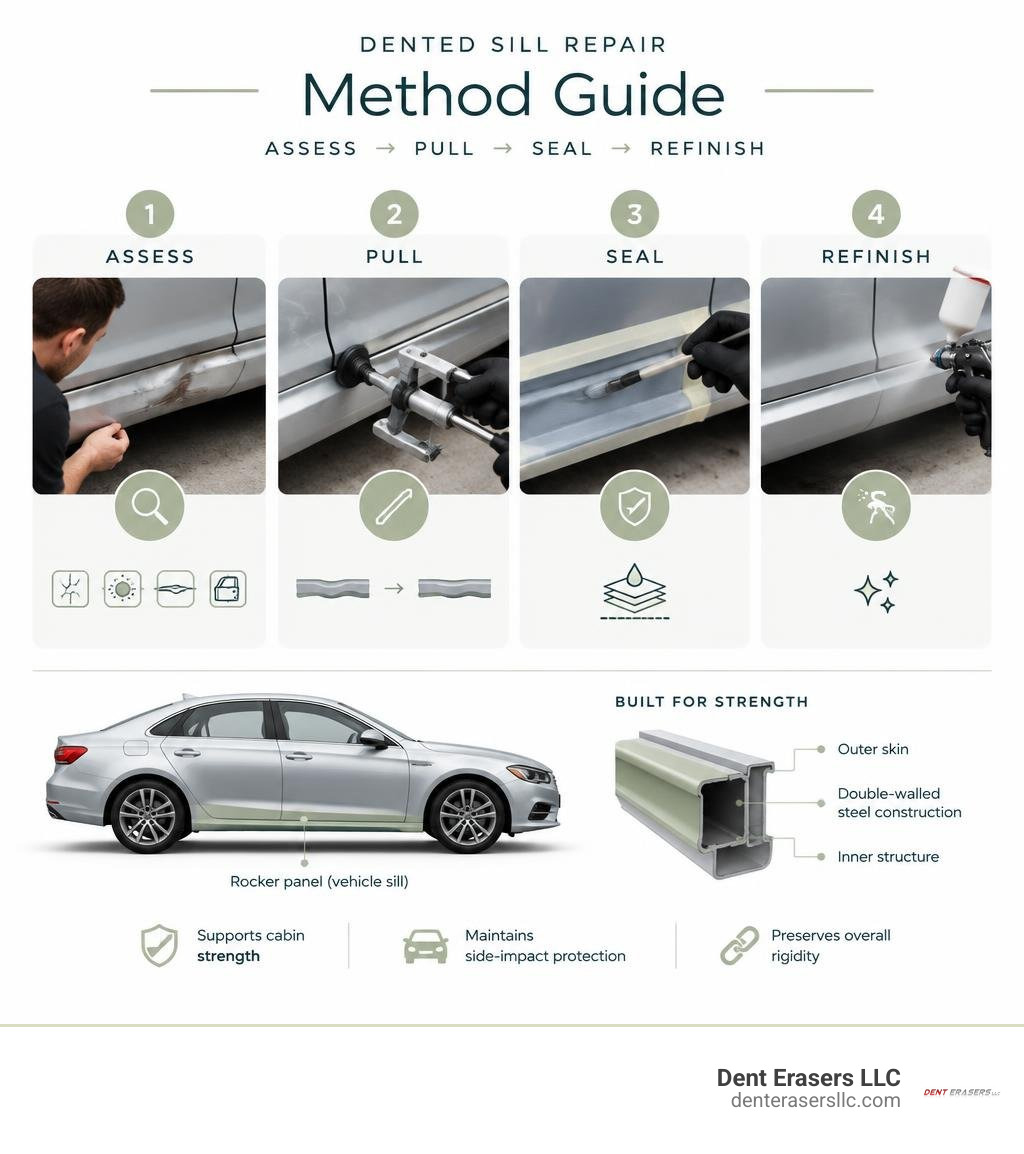
Evaluating Rocker Panel Damage and Structural Safety
Vehicle sills, also referred to as rocker panels, run beneath the doors along both sides of your car. Unlike flexible outer door skins or plastic bumper covers, rocker panels are foundational structural components of a modern unibody chassis. They are engineered from thick, double-walled, high-strength steel (often around 1.5 mm gauge) designed to preserve cabin survival space during a collision and maintain overall torsional rigidity.
When you cut a tight corner around a decorative parking boundary rock or scrape over a tall curb in Walnut Creek or Antioch, the impact forces act directly on this boxed section. Evaluating damage requires separating simple outer-skin crushing from foundational chassis displacement.
Safety Implications of Compromised Sills
Your vehicle’s sills act as the primary load paths in a side-impact collision, redirecting force away from the passenger compartment and into the subframe. When a rocker panel suffers a severe crease, that localized buckling acts as a structural weak point. In the event of a subsequent impact, the crumpled section can fold prematurely rather than dissipating energy outward.
Furthermore, severe upward impacts can compromise suspension mounting points and alter wheel alignment geometry. When assessing substantial structural impact, technicians must determine whether restoring deep damage with large car dent repair methods is viable or if the unibody requires bench realignment.
When to Pull Metal vs. Full Panel Replacement
Determining whether to reshape the metal or cut away the damaged rocker panel involves clear technical thresholds:
- Repair via Pulling/Straightening: Suitable when the damage consists of localized depressions, shallow creases, or minor scrapes where the inner reinforcement webbing remains intact. Cold mechanical pulling or stud welding allows technicians to draw the metal back to factory contour without compromising unibody integrity.
- Replacement via Sectioning: Necessary when the steel has ripped, rust perforation has hollowed the metal, or the damage exceeds critical safety limits (such as web tears greater than 50 mm or structural cracks exceeding 30 mm).
Homeowners often reference This Old House’s guide on metal damage assessment when learning how metal deformation behaves under mechanical strain, and automotive sheet metal follows similar principles of metal memory and yield limits. If structural cracks do not exceed 30 mm, specialized reinforcement plates bonded with structural adhesives may sometimes be used under strict manufacturer guidelines. Beyond that threshold, full section replacement is mandatory.
Methods and Techniques for Dented Sill Repair
Repairing a vehicle sill presents distinct challenges because sills are fully enclosed boxed-steel structures. Because there is rarely direct backside access to swing a body hammer, traditional hammer-and-dolly bodywork is off the table. Technicians rely on specialized external pulling systems, including stud welders, glue pulling rigs, or targeted access-hole drifts.
Managing high-strength boxed steel requires working with the metal’s natural properties. Understanding how creases lock stress into sheet metal—a topic explored in depth when ironing out the details of car dent crease repair—is critical for relieving crown pressure before attempting to lift the low trough of the dent.
Essential Tools for Dented Sill Repair
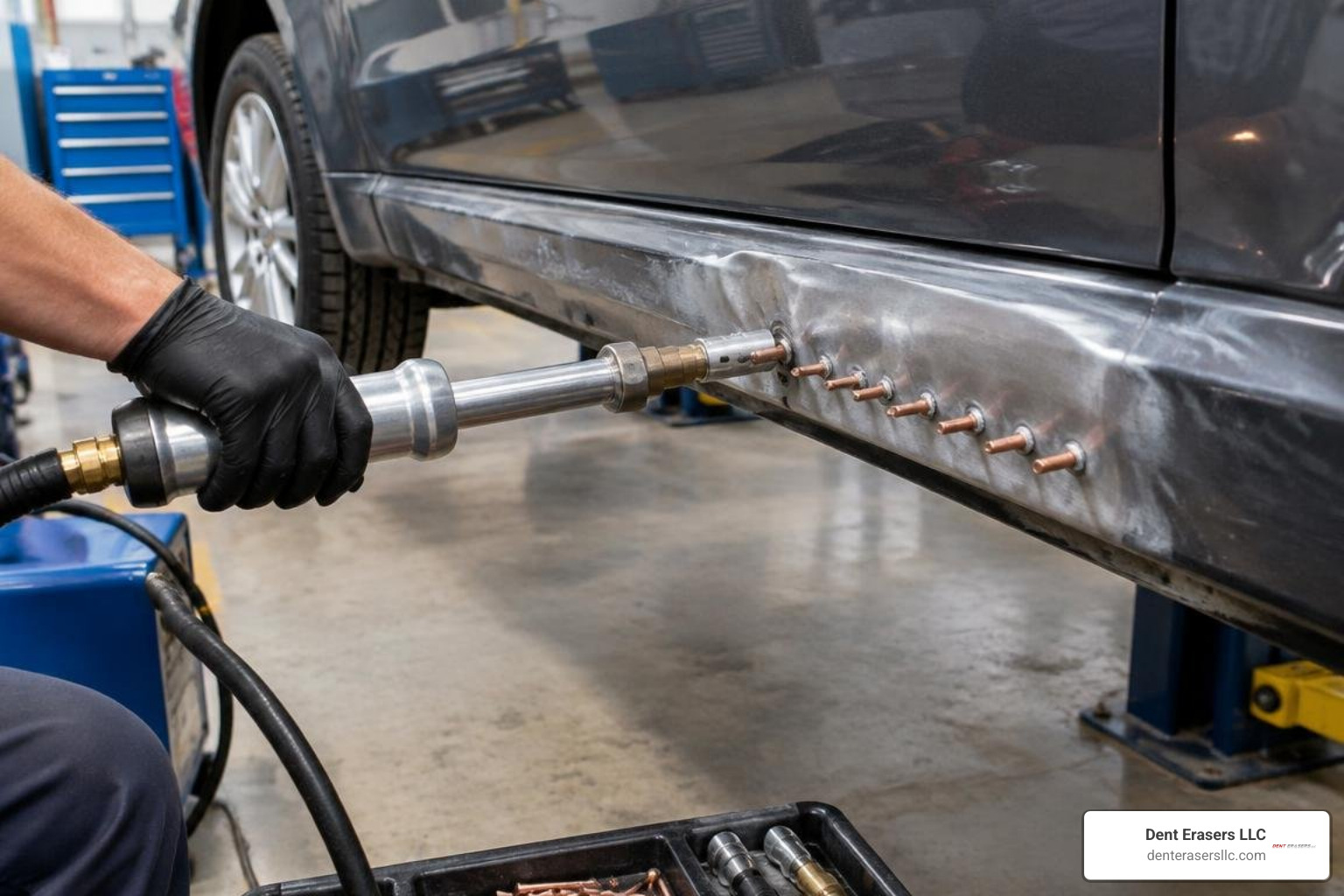
Executing a clean, lasting sill repair demands dedicated metalworking and refinishing equipment:
- Stud Welder Gun & Copper-Coated Pins: Electrically bonds sacrificial pulling studs or wavy wire directly to the steel.
- Slide Hammer & Multi-Hook Claws: Applies controlled, directional leverage to extract crushed body lines.
- Angle Grinder with 80-Grit Flap Disc: Safely removes paint, e-coat, and undercoating down to bare steel without gouging the substrate.
- Long-Board Sanding Block: Essential for maintaining long, arrow-straight horizontal body contours across the rocker length.
- Two-Part (2K) Epoxy Primer & Cavity Wax Applicator: Creates an airtight barrier against moisture externally and internally.
Cold Pulling and Heavy-Duty Glue Systems
For minor to moderate dents where the factory paint remains flexible and intact, cold pulling via specialized Paintless Dent Repair (PDR) systems offers an ideal solution. Instead of burning away the factory e-coat with a welder, technicians use rigid, heavy-duty glue tabs bonded to the panel with specialized high-tensile hot melt adhesive.
A mechanical bridge puller or pneumatic slide hammer is then attached to the tab to draw out the low spot incrementally. This non-invasive restoration method preserves the factory corrosion coatings. Mastering the dynamics of cold manipulation—as detailed in our guide on small dent removal step-by-step techniques—protects your vehicle’s factory paint and preserves long-term resale value.
Step-by-Step Metal Pulling and Finishing Workflow
When sill damage is deep, sharply creased, or accompanied by broken paint, a full mechanical pull and refinish workflow is required. The following step-by-step workflow aligns with industry repair procedures outlined in RapidRepair’s rocker panel restoration guide to deliver factory-grade structural restoration.
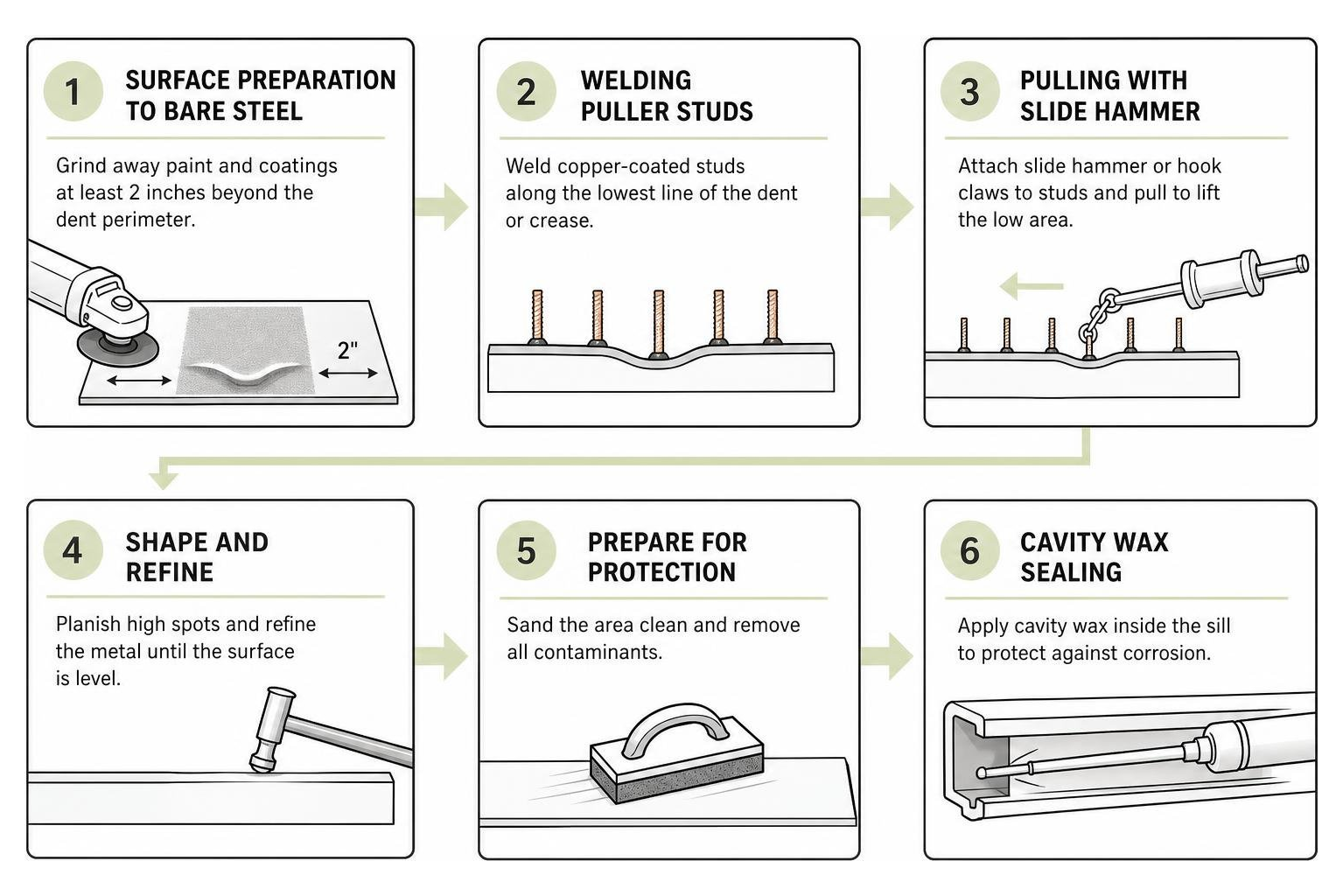
Step 1: Surface Preparation to Bare Steel
Using an angle grinder equipped with an 80-grit flap disc, grind away all clear coat, base coat, and protective stone-chip coatings across the damaged zone. Clear the metal at least 2 inches beyond the perimeter of the dent. The bare steel must be completely free of paint residue and oxidation to ensure low electrical resistance for pin welding.
Step 2: Welding Puller Studs
Position copper-coated steel studs roughly 0.5 inches apart directly along the lowest line of the dent or crease. For elongated scrapes, run a line of wavy pull wire tacked at every valley point.
Step 3: Incremental Slide Hammer Pulling
Attach your slide hammer or multi-hook leveling claw to the studs. Deliver rhythmic, controlled outward pulls. Rather than trying to pop the entire dent out in a single heavy strike, apply progressive tension across adjacent pins. Work the dent back until the steel rests within 1 to 2 millimeters of its original factory profile.
Step 4: Stud Removal and Metal Dressing
Snip off the welded pins using side-cutting pliers. Grind down the remaining copper weld nubs using a 120-grit sanding disc until the surface is completely flush with the surrounding sheet metal. Avoid overheating the panel during grinding to prevent metal warping.
Correcting Creased and Stretched Metal
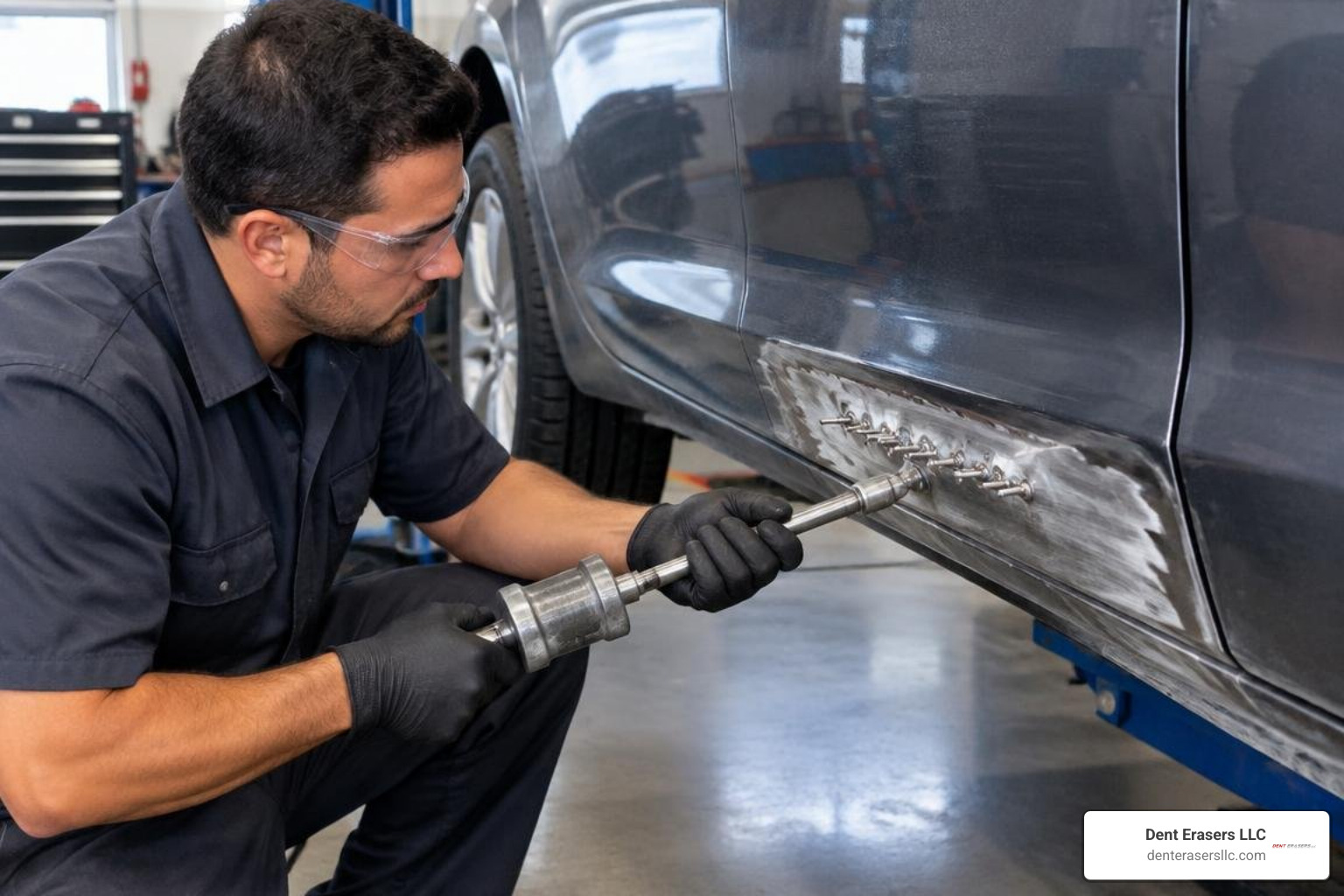
When rocker panel steel is struck hard, the metal stretches along the crease edge, creating high-tension “crowns” that lock the low spots in place. If you pull aggressively on the center of the crease without relieving this perimeter stress, the metal will stretch further, causing oil-canning (metal popping back and forth loosely).
To resolve stretched metal:
- Follow a Spiral Pull Pattern: Start your pulling setup along the outer boundaries of the dent, working inward toward the deepest center in a circular or spiral pattern.
- Relieve Crowns Simultaneously: Tap down high-tension crowns alongside the dent using an aluminum or composite knockdown tool while tension is applied to the puller.
- Avoid Open Flame Heat: Modern vehicle sills contain advanced high-strength steels that lose their engineered temper when heated with an open torch. Always use cold mechanical straightening methods to protect the steel’s structural ratings.
Leveling, Sealing, and Internal Cavity Protection
Once the sheet metal is pulled true, the finishing stages ensure lasting weatherproofing and aesthetic matching:
- Apply Body Filler: Clean the bare steel with isopropyl alcohol (IPA) or prep-solvent. Mix automotive polyester body filler with its cream hardener. Apply the filler in thin, firm passes using a flexible plastic spreader to eliminate trapped air pockets.
- Block Sanding: Level the cured filler using a long-board sander with 120-grit sandpaper, following the horizontal body lines of the sill. Finish with 220-grit to blend the edges seamlessly into the surrounding original paint.
- Epoxy Priming: Coat the bare metal and filler with two medium wet coats of a chemically activated 2K epoxy primer. Standard 1K spray cans are porous; a true 2K epoxy primer forms an impermeable, waterproof seal that prevents rust from forming beneath the paint.
- Chip-Guard and Paint Matching: Many lower door sills feature a textured “orange peel” anti-chip coating. Apply an aerosol rocker-guard texture coat before spraying your factory color-matched base coat and 2K urethane clear coat.
- Internal Cavity Waxing: Welding studs to a panel burns away the internal e-coat protection inside the boxed sill. Locate the rubber factory drain grommets along the bottom or inner sill, insert a 360-degree extension wand, and flood the interior chamber with heavy-duty automotive cavity wax. This seals the inner weld burns against road salt, condensation, and pocket corrosion.
Comparing Professional Body Shop Rates and DIY Expenses
Repairing a damaged rocker panel can range from a budget-conscious DIY weekend project to a comprehensive structural overhaul performed in a professional collision facility.
Professional vs. DIY Dented Sill Repair Costs
When reviewing pricing across the auto body sector as of 2026, labor rates typically range from $65 to $125 per hour depending on region and specialization.
| Repair Route | Estimated Cost Range | Repair Timeframe | Primary Advantages & Risks |
|---|---|---|---|
| DIY Stud Welder & Epoxy | $120 – $280 (Tools & Materials) | 8 – 16 Hours | Lowest monetary cost; requires metalworking tools and carries risk of internal rust or wavy finish. |
| Professional Mobile PDR | $150 – $500 | 1 – 3 Hours | Preserves factory paint and e-coat; zero filler or repainting required; fast on-site turnaround. |
| Body Shop Conventional Pull | $450 – $1,200 | 2 – 4 Days | Restores severe gouges and cracked paint; includes texture spray and booth paint matching. |
| Full Sill Panel Replacement | $1,500 – $3,500+ | 5 – 10 Days | Necessary for rusted or ripped panels; highly labor-intensive cutting, welding, and repainting. |
To understand how repair methods influence total labor and refinishing pricing, review our complete auto body repair cost guide for an in-depth component breakdown.
Insurance Deductibles and Panel Value Impact
If the repair estimate for your sill damage falls close to your comprehensive or collision deductible (often $500 to $1,000), paying out-of-pocket for paintless restoration or localized spot repair is frequently the smarter financial move. Filing an insurance claim creates an entry on your vehicle history report, which can decrease resale value by registering structural unibody work.
Whenever the sill paint remains intact, our convenient mobile dent repair services offer a fast, affordable alternative that avoids insurance claims and preserves the car’s clean title.
Frequently Asked Questions About Sill Restoration
Can I pull a rocker panel dent using a standard suction cup or plunger?
No. Standard suction tools and household plungers rely on lightweight, flexible sheet metal (like wide hood surfaces or thin door panels) to create vacuum lift. Rocker panels are constructed from thick, double-walled, high-strength boxed steel engineered with compound curves. The mechanical rigidity of a car sill easily resists standard suction cups. Attempting to force suction will simply pop the cup off without shifting the metal.
How do I prevent internal sill rust after welding puller pins?
Welding pins or studs to the outer skin generates localized heat that scorches off the protective anti-corrosion primer on the inside face of the boxed sill. Because the interior is enclosed, road moisture and humidity collect in this chamber, causing rapid inside-out rust. To stop this, remove the nearest plastic access plug or drain grommet and coat the internal cavity with atomized rust-inhibiting cavity wax using a flexible 360-degree spray tube.
Is a dented door sill an automatic vehicle inspection failure?
A cosmetic dent or scrape along the outer sill will not fail a vehicle safety inspection. However, if the sill damage is severe enough that the door frame binds, the latch fails to engage securely, or the sheet metal has torn open to reveal structural cracking along structural pillar welds, the vehicle may be flagged as unsafe for road use until certified repairs are completed.
Conclusion
A crushed or dented rocker panel doesn’t have to turn into an overwhelming repair project. By evaluating the depth of the damage, respecting the structural role of double-walled boxed steel, and using the right pulling methods, you can restore your vehicle’s clean lines and structural integrity. Whether you use cold glue pulling to protect your factory paint or traditional stud welding and 2K epoxy sealing for deep creases, never skip applying internal cavity wax to protect your vehicle from hidden rust.
If your vehicle has suffered a dented sill or body scrape anywhere across Contra Costa County—including Concord, Walnut Creek, Antioch, Brentwood, Pittsburg, San Ramon, or Richmond—our team at Dent Erasers LLC is here to help. We bring nearly three decades of dedicated experience directly to your driveway, offering expert mobile paintless restoration that saves you time, money, and hassle. Explore our professional paintless dent repair services today to get a fast, accurate quote and return your vehicle to pristine condition.