Luxury Vehicle Dent Repair: Start With the Finish
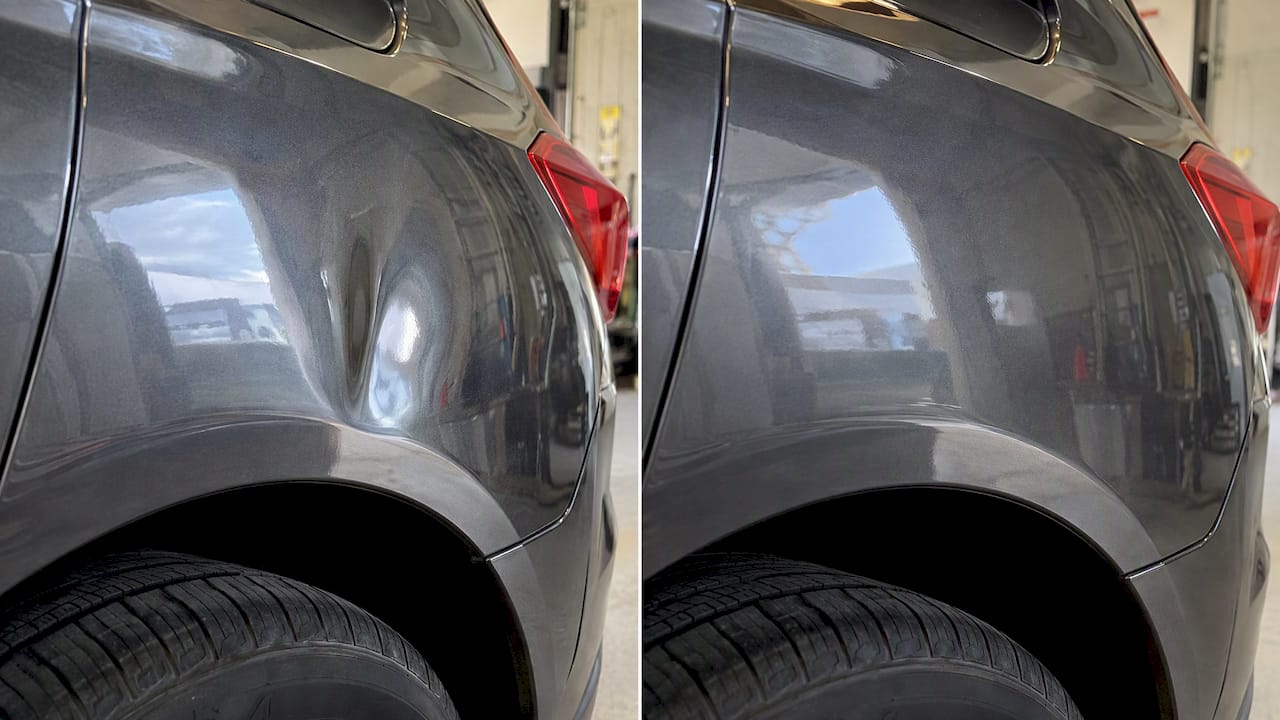
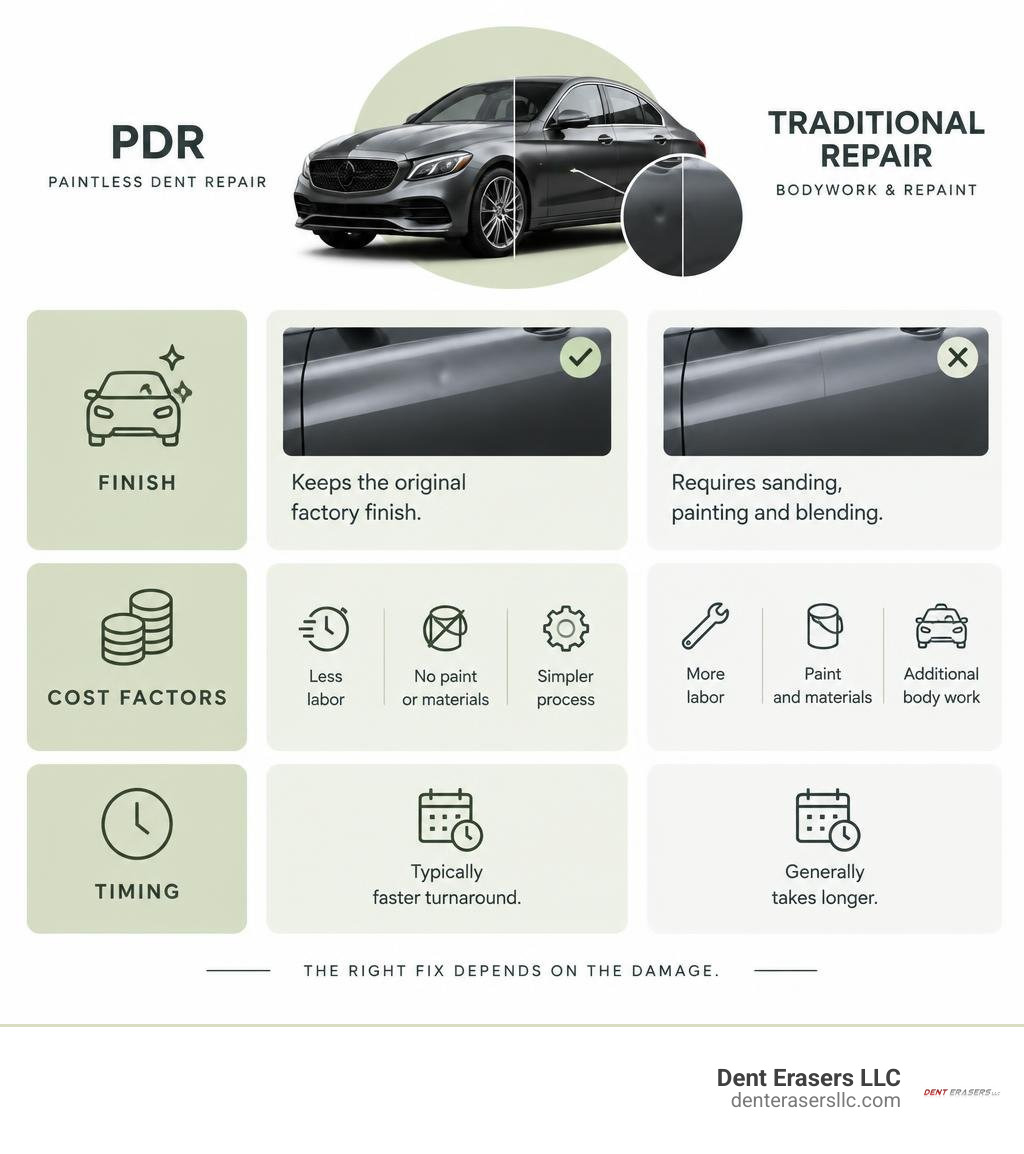
For a small dent with intact paint, ask a specialist to assess paintless dent repair (PDR) first. PDR reshapes the panel without sanding or repainting it, which can protect the factory finish and may cost less than traditional bodywork. If the paint is cracked, the metal is sharply creased, or the panel is otherwise compromised, a closer inspection will help determine whether the damage still falls within the scope of a paintless repair.
Even a minor parking-lot ding can be costly on a high-end car. Aluminum panels, complex paint finishes, and nearby sensors can make the repair harder than it looks. The right fix depends on the damage, not just the size of the dent. On many luxury vehicles, a small door ding can require careful access behind interior trim, precise heat control, and specialized tools that protect the surrounding clear coat while the metal is gently worked back into place.
I’m Brian Blanc, owner of Dent Erasers LLC, and I’ve spent 28 years providing mobile PDR in the East Bay. My approach to luxury vehicle dent repair starts with checking whether the original finish can be kept. That matters because preserving the factory paint helps maintain the vehicle’s appearance, resale value, and long-term structural integrity.
Important Luxury vehicle dent repair terms:
Understanding Luxury Vehicle Dent Repair: Materials and Engineering Challenges
When people think of a luxury automobile, they picture hand-stitched leather, whispering V8 engines, and sleek body lines. What they rarely consider is the extreme engineering beneath the surface. Modern luxury vehicles are built using advanced metallurgical blends, complex multi-stage tri-coat finishes, and sensitive Advanced Driver Assistance Systems (ADAS).
Unlike standard production cars that rely heavily on mild stamped steel, exotic and premium vehicles use high-strength aluminum alloys, carbon fiber, and magnesium subframes to shed weight without sacrificing rigidity. When a panel takes an impact, these exotic materials respond completely differently than standard metal. A dent on a luxury hood or quarter panel requires precise knowledge of panel memory, heat manipulation, and access pathways.
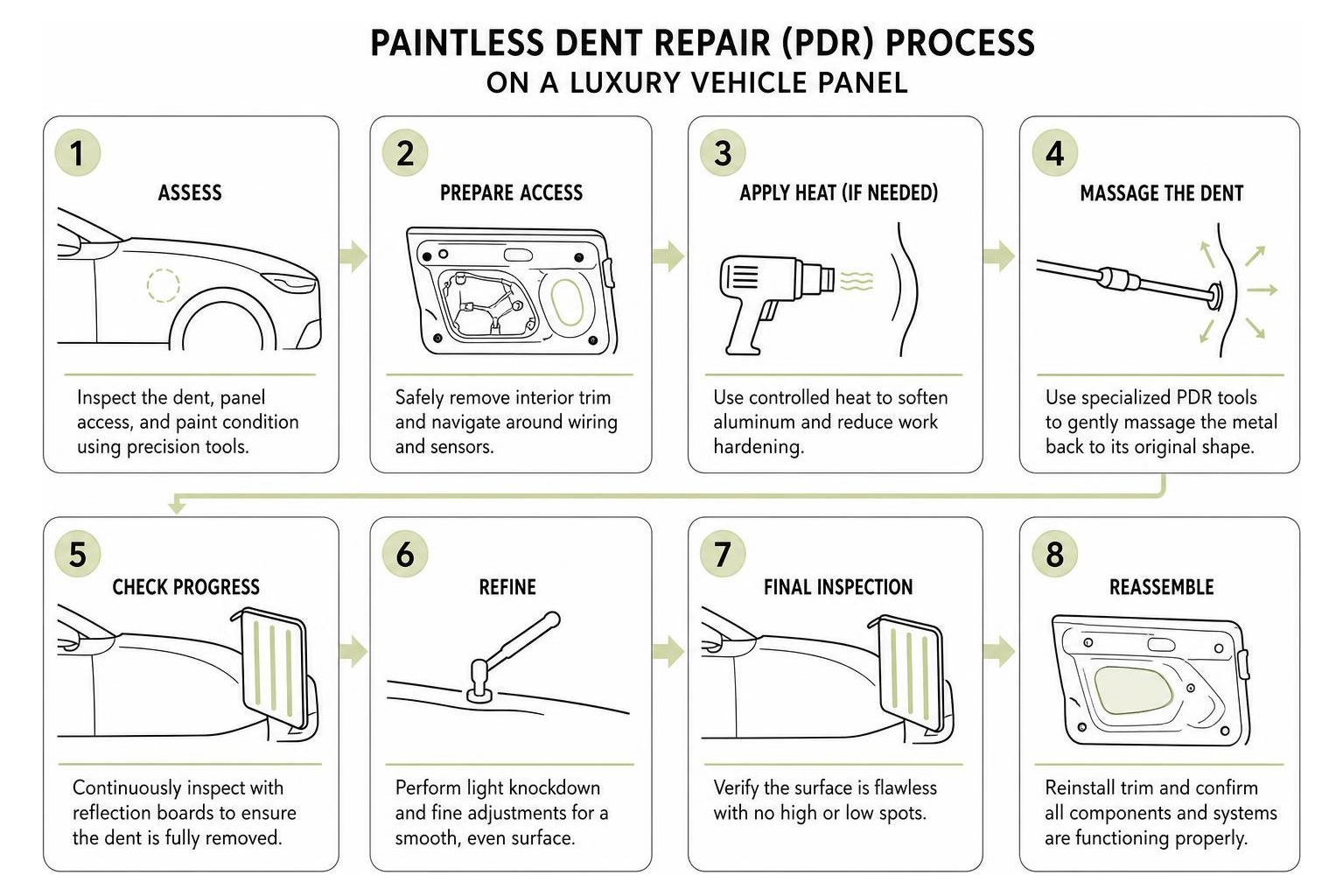
Furthermore, these panels often house sensitive radar sensors, cameras, and ultrasonic proximity units. Simply removing an interior trim panel to reach a dent from behind requires careful navigation around intricate wiring harnesses. A single misstep can throw off sensor calibration, triggering dashboard warning lights or affecting safety systems. That is why a technician must understand both the visible body line and the hidden electronics before applying pressure to a luxury panel.
Aluminum vs. Traditional Steel in Luxury Vehicle Dent Repair
One of the biggest factors separating luxury repair from everyday dent work is the extensive use of aluminum. Aluminum has little natural metal elasticity compared to standard mild steel. While steel holds a gentle “memory” that wants to return to its original shape when manipulated, aluminum suffers from work hardening—meaning it stiffens and resists movement when struck.
| Feature / Trait | Mild Steel Panels | High-Strength Aluminum Panels |
|---|---|---|
| Material Memory | High (naturally springs back) | Low (resists reshaping) |
| Work Hardening Risk | Low to moderate | High (stiffens quickly during repair) |
| Heat Requirement | Rarely needed for minor dings | Precise controlled heat required |
| Tooling Needs | Standard PDR rods and picks | Specialized high-leverage aluminum tools |
| Repair Complexity | Standard | High (requires master technician) |
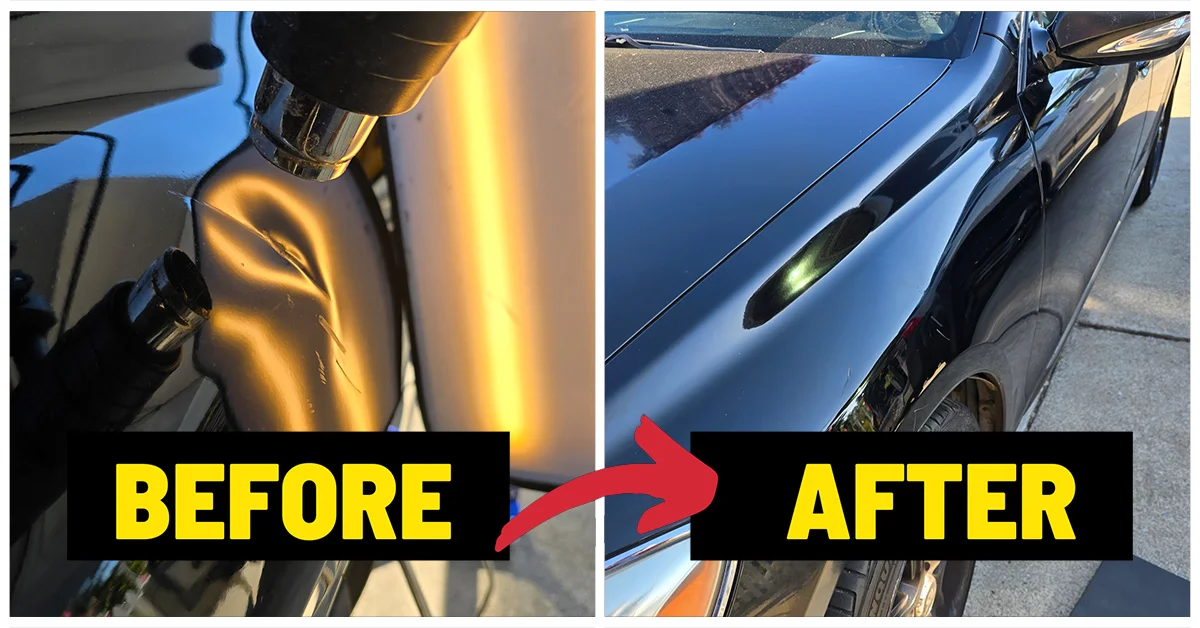
To reshape aluminum without cracking the metal or stretching the clear coat, a master technician must apply controlled heat using digital heat guns or infrared systems. This softens the metal’s crystalline structure just enough to allow micro-massaging from specialized, high-leverage tools. The process is slower and more deliberate than steel repair, but it helps avoid the paint damage that can occur when an inexperienced technician forces the panel too quickly.
Preservation of OEM Paint and Complex Finishes
Exotic and high-end automotive brands use intricate painting processes, featuring ceramic clear coats, deep pearl layers, and delicate matte finishes. Once a factory finish is sanded, filled with body filler, and repainted, it loses its original chemical bonding and micro-texture.
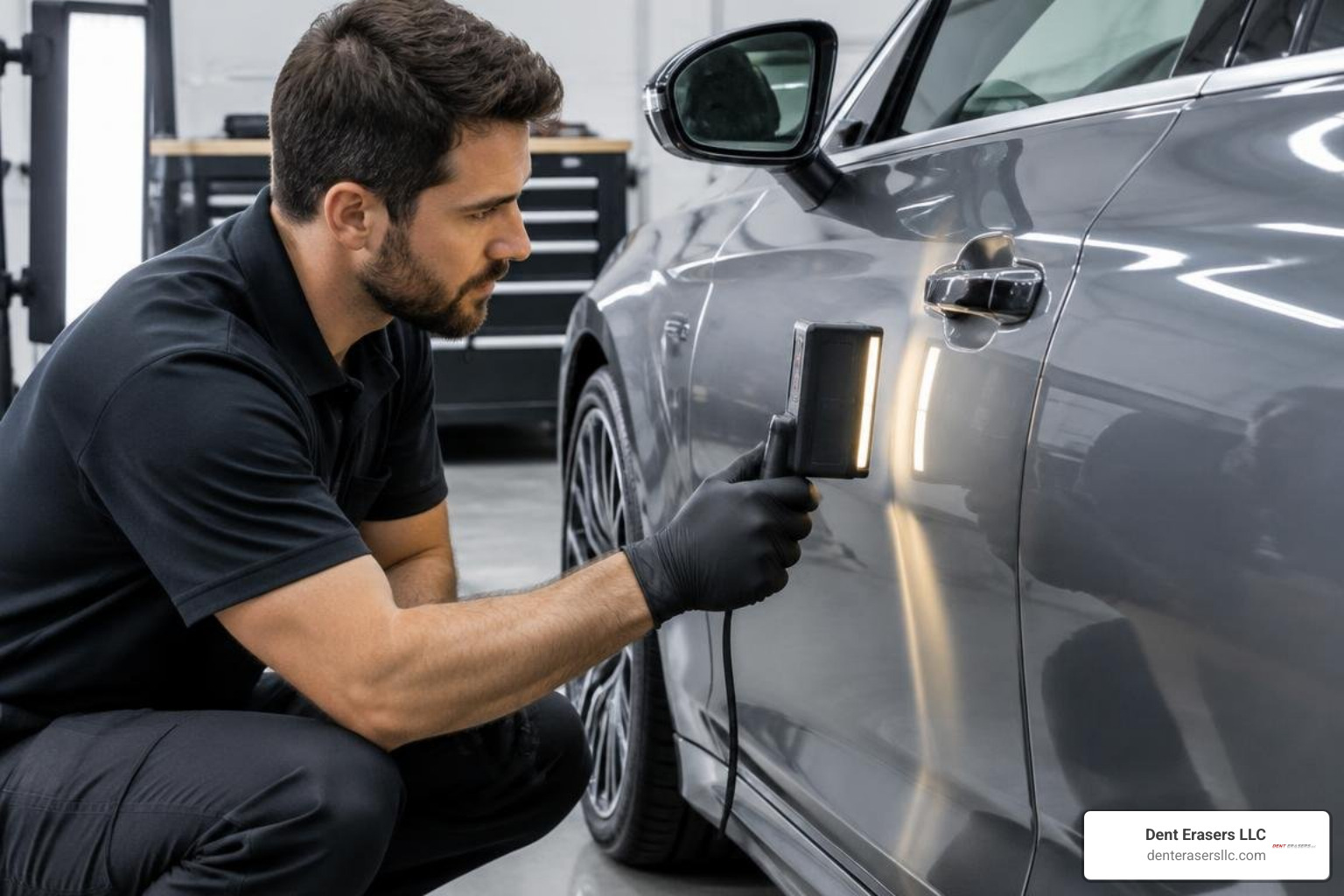
We use digital paint thickness gauges to assess the clear coat before starting any work. By leveraging how PDR keeps your high-end ride looking brand new, we massage the sheet metal back into place from behind without touching the outer clear coat with abrasives, preserving the original factory finish entirely intact. This non-invasive approach is especially important on luxury vehicles, where even a slight variation in pearl depth or clear coat texture can be visible under showroom lighting.
Paintless Dent Repair (PDR) for Luxury Vehicles
Paintless Dent Repair is the gold standard for fixing minor dents, door dings, and hail damage on high-end cars. Because PDR eliminates the need for sanding, body fillers, or repainting, it bypasses the risks of mismatched color tones, orange peel textures, or paint overspray.
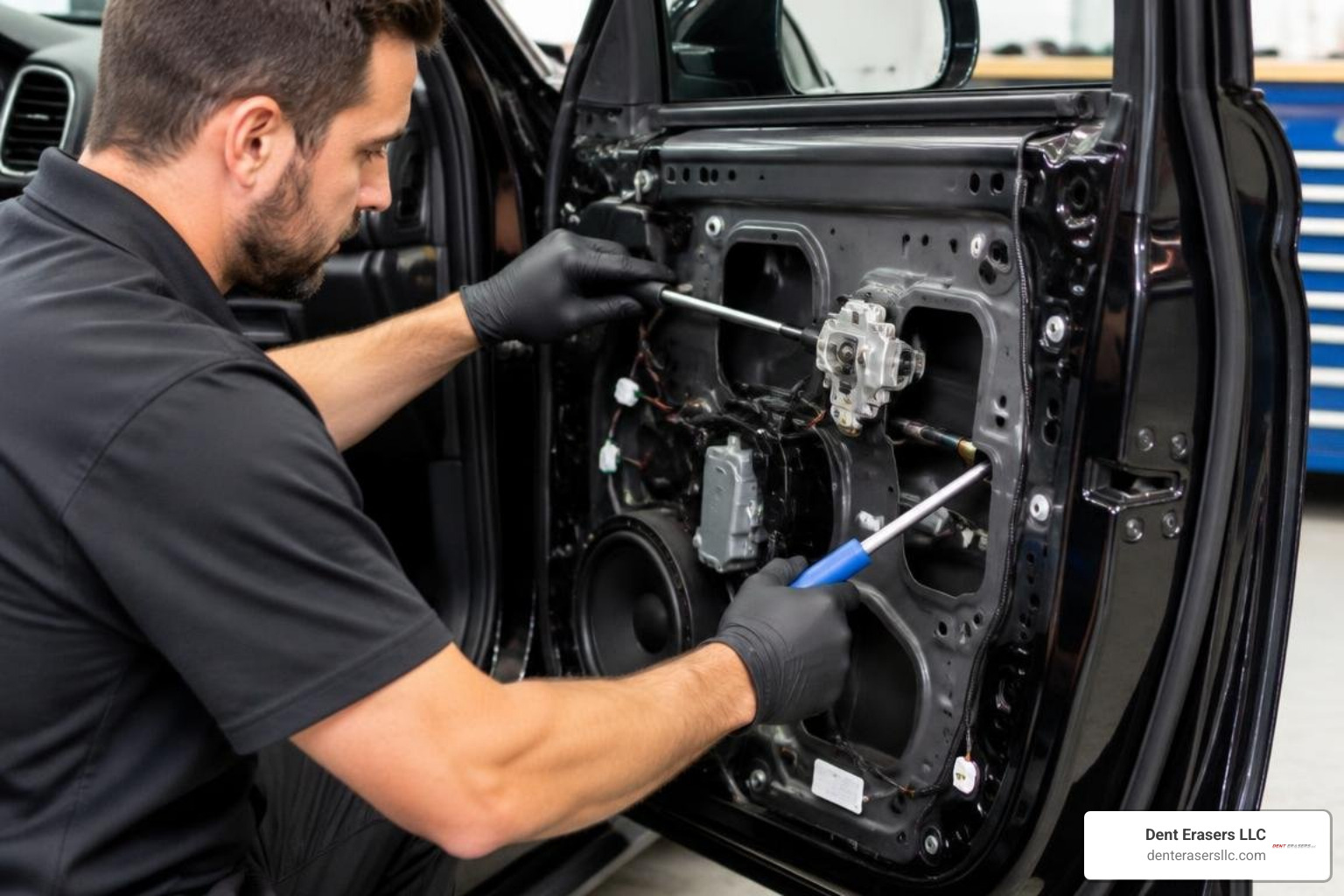
Luxury car owners frequently choose PDR over conventional methods because it is non-invasive, preserves the vehicle’s structural integrity, and delivers rapid turnaround times. More than 80% of luxury car owners prefer paintless dent repair over traditional body shop methods to preserve their original finish and protect their vehicle’s value. The process also avoids the environmental waste associated with sanding dust, paint solvents, and body filler, making it a cleaner option for owners who want a precise repair without a full repaint.
Cost and Time Efficiencies of Advanced PDR Techniques
Traditional body shop visits often keep your vehicle in the shop for days or weeks while waiting for disassembly, paint blending, and curing times. In contrast, advanced mobile PDR techniques can often be completed on-site in a single afternoon.
The average cost to repair a dent on a luxury vehicle using PDR is 40-60% less than traditional body shop repair, saving owners hundreds of dollars per incident. When the price of perfection and what it costs to fix your car dents is analyzed across the lifespan of a premium vehicle, choosing precision PDR over repainting represents massive savings while preserving factory authenticity. For many owners, the shorter repair time also means less disruption to a daily routine and no need to arrange a rental car while the vehicle sits in a shop.
Protecting Resale Value and Vehicle History Reports
Any repainting work reported on a luxury vehicle can decrease its market value. Discerning buyers and exotic car dealerships inspect paint depth across every panel; inconsistent micron readings often signal prior collision damage.
By opting for PDR, you avoid invasive bodywork and keep your vehicle’s history report clean. Using proper techniques helps with protecting your investment by choosing the right vintage car dent repair method or modern exotic restoration plan, ensuring your vehicle retains maximum collector and trade-in value. A clean history report can be especially valuable when selling or trading a high-end vehicle, because buyers and dealers often use paint meter readings and repair records to negotiate a lower price.
Navigating Costs, Insurance, and Choosing the Right Specialist
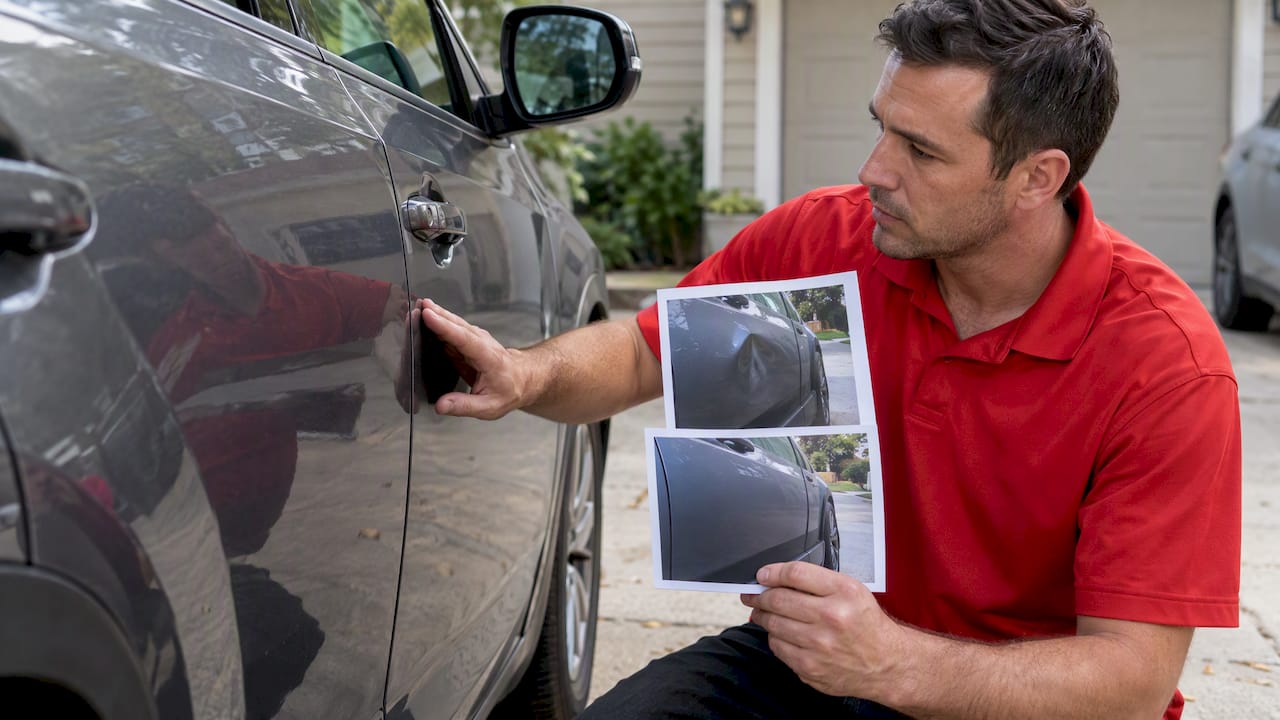
While standard commuter vehicles average $75 to $200 per dent repair, luxury vehicles typically range from $150 to $600 per dent due to aluminum panel dynamics, complex access points, and tighter tolerances. If a deep crease crosses a prominent body line, the repair requires greater leverage and precision. Additional factors such as trim removal, sensor recalibration, and the location of the dent can also influence the final price, which is why a specialist should inspect the panel before providing an estimate.
When considering insurance, minor dings are often lower than typical comprehensive deductibles ($500 to $1,000), making out-of-pocket PDR the smarter financial move that avoids unnecessary rate hikes. In many cases, paying directly for a mobile repair is faster and less expensive than filing a claim, especially when the damage is limited to a single panel and the paint remains intact.
Key Qualifications for Luxury Vehicle Dent Repair Technicians
Not every dent repair technician possesses the tooling or experience required for exotic materials. When choosing a specialist, look for:
- Extensive Experience: Proven experience working with aluminum bodies, exotic alloys, and high-end automotive design.
- Specialized Tooling: High-grade stainless steel rods, carbon fiber leverage handles, and LED/fog reflection boards.
- Flawless Track Record: High customer ratings and verified portfolio examples of repairs on comparable luxury models.
- Current Industry Standards: Strict adherence to the high-end dent repair guide 2026 guidelines for non-invasive panel restoration.
A qualified technician should also be able to explain how the repair will be performed, what access points will be used, and whether the damage is a good candidate for PDR before any work begins. That level of transparency helps owners feel confident that their vehicle will be handled with the care it deserves.
Long-Term Prevention Strategies
Protecting your high-end automobile from dents requires proactive habits:
- Park at the far end of parking lots away from high-traffic clusters.
- Avoid parking next to two-door coupes, which have longer, heavier doors that swing wider.
- Ensure proper clearance around garage doors, overhead racks, and wall-mounted tools.
- Park defensively in end stalls or wider designated parking spots to maximize buffer space.
- Check for shopping carts, bicycles, and other rolling hazards before leaving your vehicle in a parking space.
- Use covered parking when possible to reduce exposure to hail and falling debris.
Frequently Asked Questions About Luxury Vehicle Dent Repair
Does paintless dent repair void luxury vehicle manufacturer warranties?
No. Because PDR does not alter the factory paint, introduce aftermarket body fillers, or modify the structural frame, it keeps your OEM anti-corrosion and paint warranties intact. The original finish remains chemically bonded to the panel, so the repair does not create the kind of aftermarket paintwork that can raise warranty concerns.
Can dents on aluminum luxury panels always be repaired with PDR?
Most minor-to-moderate dents on aluminum panels can be successfully repaired using specialized heating and massaging techniques. However, if the metal has stretched beyond its elastic limit or the impact has caused tearing, panel replacement may be necessary. A specialist should evaluate the depth, location, and paint condition before deciding whether PDR is the safest option.
When Is PDR Not Suitable for Exotic Cars?
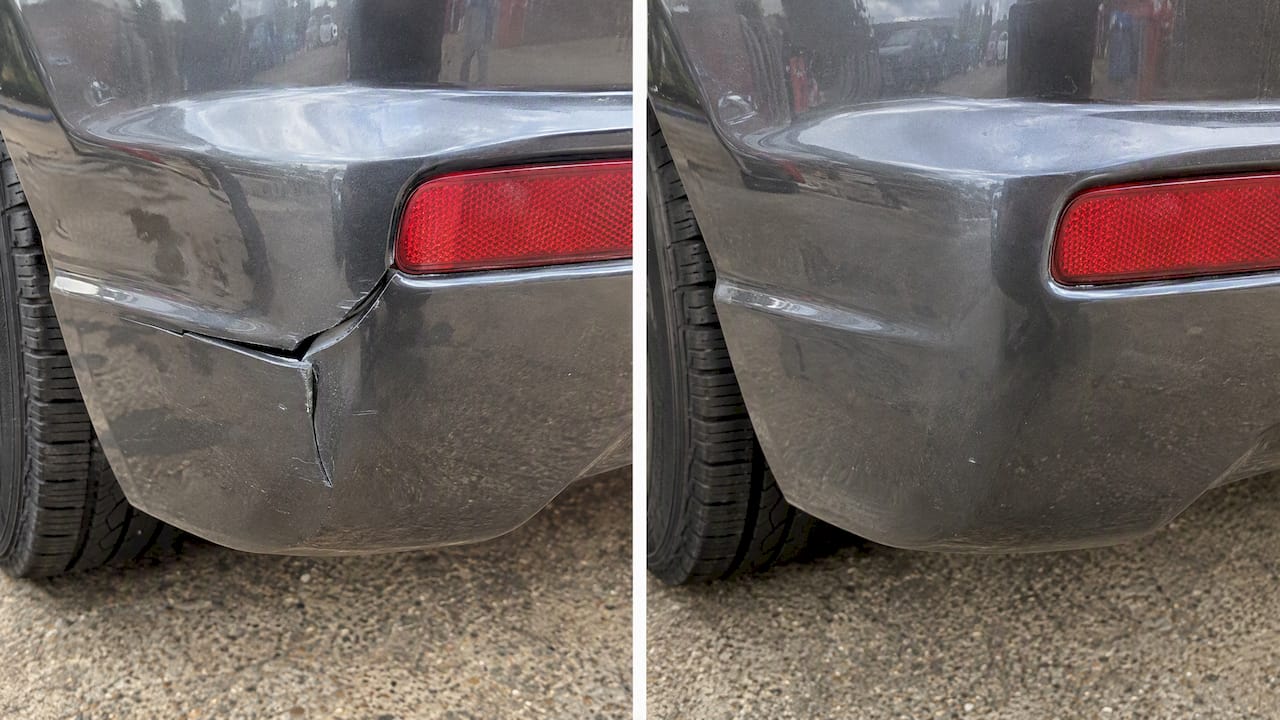
PDR is not suitable when the paint has cracked down to the primer, the sheet metal is torn, or the damage is located directly on an unyielding structural reinforcement. In addition, carbon fiber panels cannot be repaired using standard PDR techniques because carbon fiber does not deform plastically like metal. In those cases, the damage falls outside the scope of paintless repair and requires a different restoration approach to safely address the panel.
Conclusion
Minor dings do not have to diminish the beauty, structural integrity, or resale value of your high-end automobile. By catching damage early and utilizing non-invasive paintless dent repair, you protect your vehicle’s irreplaceable factory finish while avoiding unnecessary body shop costs. The right repair preserves the original paint, keeps the vehicle’s history clean, and helps maintain the long-term value that luxury car owners expect.
At Dent Erasers LLC, Brian Blanc brings 28 years of dedicated, master-level mobile PDR experience right to your home or office across Concord, Walnut Creek, Danville, San Ramon, and the entire Contra Costa County area. When you demand perfection for your prized vehicle, schedule expert auto body and dent repair directly with us today.