What Does Auto Body Repair Actually Cost in 2026?
Auto body repair cost catches most drivers off guard — especially when a minor parking lot scrape turns into a four-figure estimate. Here’s a fast breakdown so you know what to expect before you talk to a single shop:
| Damage Type | Typical 2026 Cost Range |
|---|---|
| Minor scrapes, scuffs, small dents | $150 – $1,500 |
| Paintless Dent Repair (PDR) | $150 – $500 per panel |
| Moderate single-panel damage + paint blend | $500 – $3,500 |
| Bumper replacement (with sensors) | $900 – $2,500+ |
| Door or fender replacement | $1,000 – $3,500 |
| Major multi-panel collision | $2,500 – $8,500 |
| Frame or structural damage | $5,000 – $20,000+ |
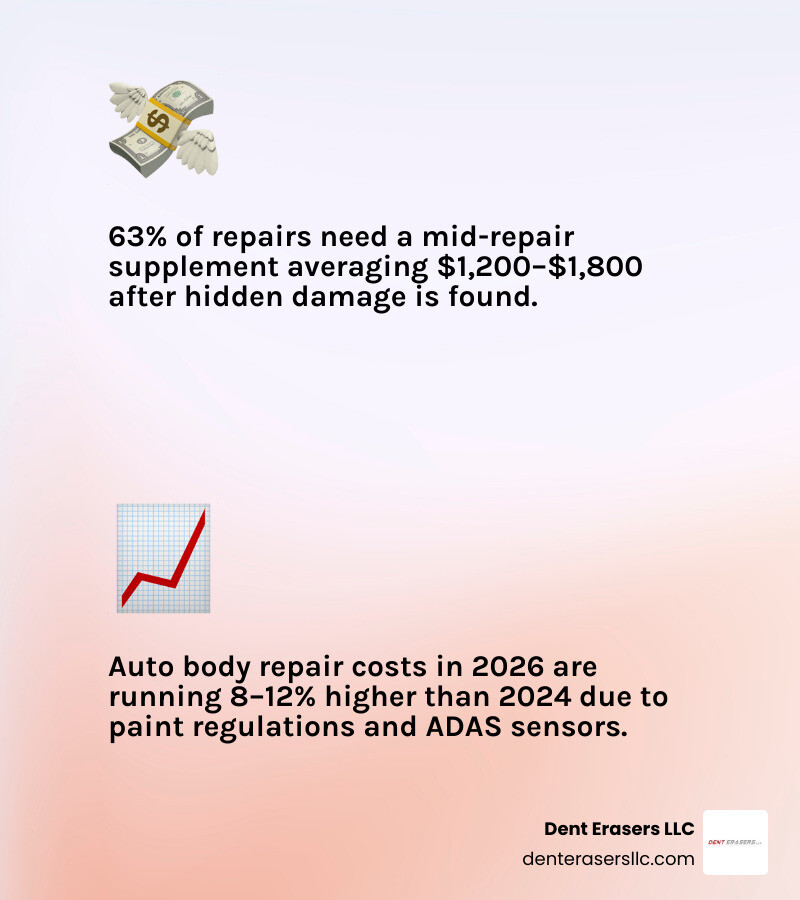
Costs in 2026 are running 8–12% higher than 2024, driven by waterborne paint regulations, rising material prices, and the growing cost of ADAS sensor recalibration on modern vehicles.
And here’s the part most drivers don’t see coming: 63% of multi-panel insurance repairs require a mid-repair supplement averaging $1,200–$1,800 once the panels come off and hidden damage is revealed. That $800 estimate can quietly become $2,600.
The good news? Not every dent, ding, or scrape needs a full body shop visit — or a full body shop bill.
I’m Brian Blanc, owner of Dent Erasers LLC, a mobile paintless dent repair service serving the East Bay area with nearly three decades of hands-on experience navigating auto body repair cost for everyday drivers and high-end vehicle owners alike. In this guide, I’ll walk you through exactly what drives repair costs in 2026, when PDR is the smarter alternative, and how to avoid overpaying — whether you’re dealing with insurance or paying out of pocket.
Simple guide to auto body repair cost:
Deconstructing the Auto Body Repair Cost in 2026
When you receive a collision repair estimate, it can look like it is written in a completely different language. You might see terms like “R&I,” “refinish,” “blend,” and “feather-prime-block.” Understanding the “recipe” of your estimate is the first step toward making sure you aren’t being overcharged.
A standard auto body repair estimate is built on three primary pillars: labor, parts, and materials. To get a comprehensive sense of these components, you can read our detailed breakdown on What to Expect for Car Body Shop Repair Costs .
Here is what really goes into that final number:
- Labor Hours: This is usually the most expensive ingredient in the recipe. Labor is broken down into specific types—body labor, paint labor, frame labor, and mechanical labor. In the San Francisco Bay Area and throughout Contra Costa County, professional labor rates reflect our high cost of living, which means labor alone can quickly drive up the total bill.
- Refinish Materials: This covers the paint, primer, clear coat, and miscellaneous supplies (like sandpaper and masking tape) used to restore your vehicle’s finish. Interestingly, body shops do not itemize every drop of paint. Instead, material costs are typically calculated as a flat rate multiplied by your paint labor hours.
- Administrative Overhead: Traditional brick-and-mortar collision centers carry high overhead costs—renting massive commercial spaces, running heavy-duty paint booths, and employing estimators to handle insurance paperwork. These operational costs are naturally baked into their hourly rates.
Labor Rates and the 63% Supplement Risk
One of the most frustrating aspects of traditional body shop repairs is when the final bill is significantly higher than the initial estimate. This is rarely a scam; rather, it is the result of the “supplement” process.
When you first bring your car in for a quote, the estimator can only write a bill for what they can physically see. However, modern vehicles are designed with energy-absorbing crumple zones. When a bumper takes an impact, the plastic outer cover often pops back into shape, hiding bent brackets, cracked reinforcement bars, or misaligned structural components underneath.
Once the technicians begin the disassembly process, they frequently uncover this hidden structural damage. To proceed, the shop must write an insurance “supplement”—a request for additional funds to cover the extra parts and labor. According to industry data, 63% of multi-panel insurance claims require a mid-repair supplement, adding an average of $1,200 to $1,800 to the final bill.
To learn more about how these hidden costs pile up during the disassembly phase, explore The Complete Guide to Auto Body Repair Costs.
OEM vs. Aftermarket Parts Impact on Auto Body Repair Cost
The parts selected for your vehicle have a massive influence on your final auto body repair cost. When replacing a panel, headlight, or bumper, you generally have three choices:
- OEM (Original Equipment Manufacturer) Parts: These are brand-new parts made directly by your vehicle’s manufacturer. They are designed to match factory specifications exactly for fit, performance, and structural safety. While they are the highest quality option, they are also the most expensive.
- Aftermarket Parts: Made by third-party manufacturers, these parts are designed to mimic OEM components at a lower price point. While many aftermarket parts fit well, some can suffer from minor alignment issues or thinner metal/plastic construction. Opting for aftermarket parts can save you 15% to 30% on the parts portion of your bill.
- LKQ (Like-Kind-and-Quality) or Recycled Parts: These are used OEM parts salvaged from donor vehicles. They offer factory-grade fit and structural integrity at a fraction of the cost of new OEM parts, making them an excellent middle-ground option for cash-paying customers.
For a deeper look into how panel replacement choices affect your wallet, see The Price of a Panel and What Fixing Your Hood Really Costs.
Collision Repair Tiers: From Minor Scratches to Major Frame Damage
Every collision is unique, and repair methods must match the severity of the damage. Treating a minor door ding with a full-panel replacement is overkill, just as trying to patch a bent frame with body filler is incredibly dangerous. To understand how professional collision centers evaluate these tiers, you can read What Is Collision Repair? Everything You Need to Know in 2025 – Top Automotive Wire .
Minor Cosmetic Scrapes and Paintless Dent Repair (PDR)
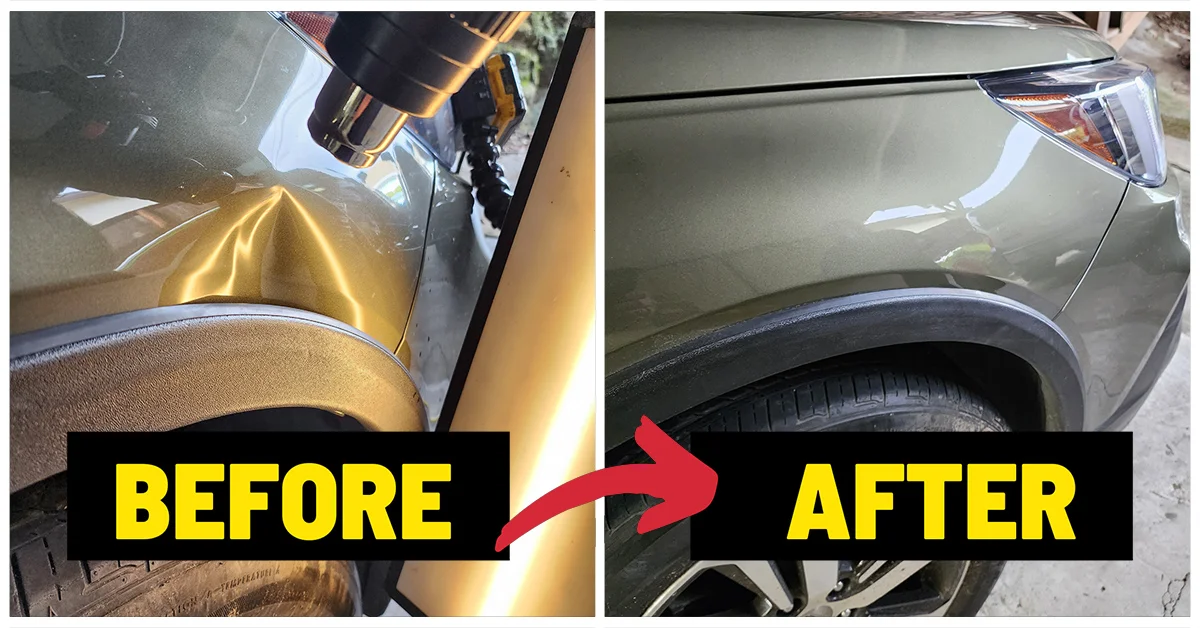
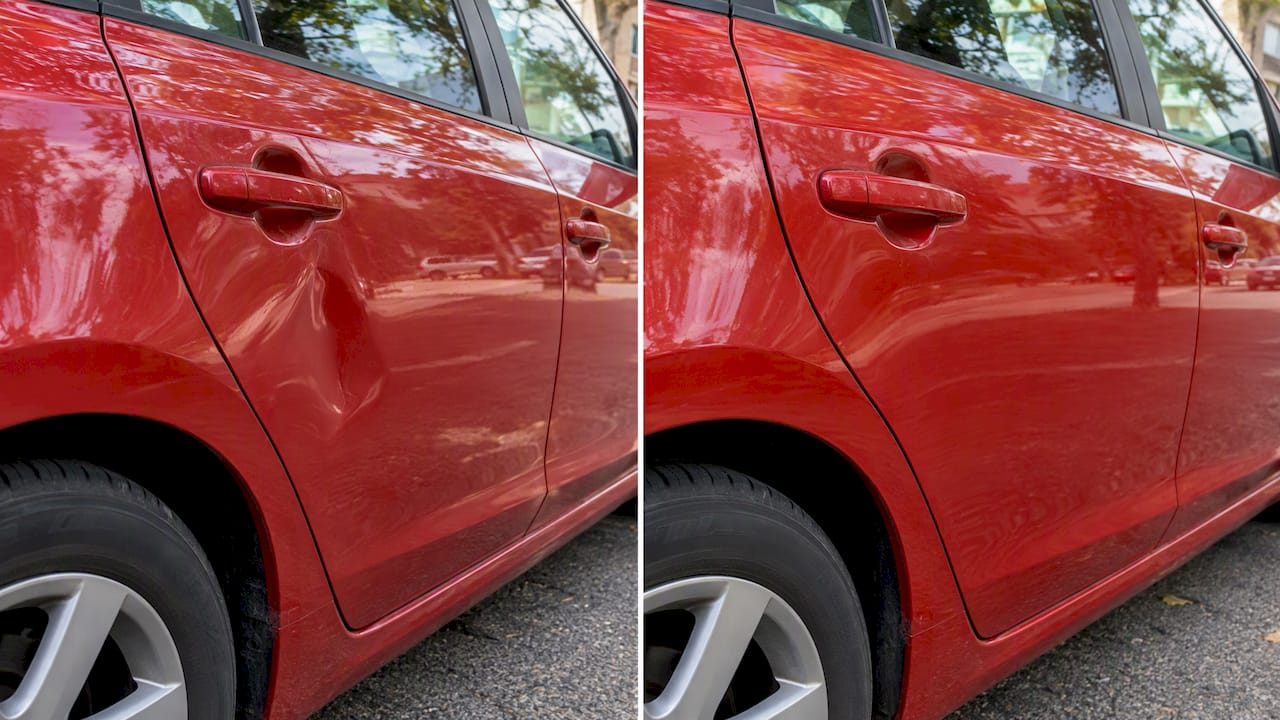
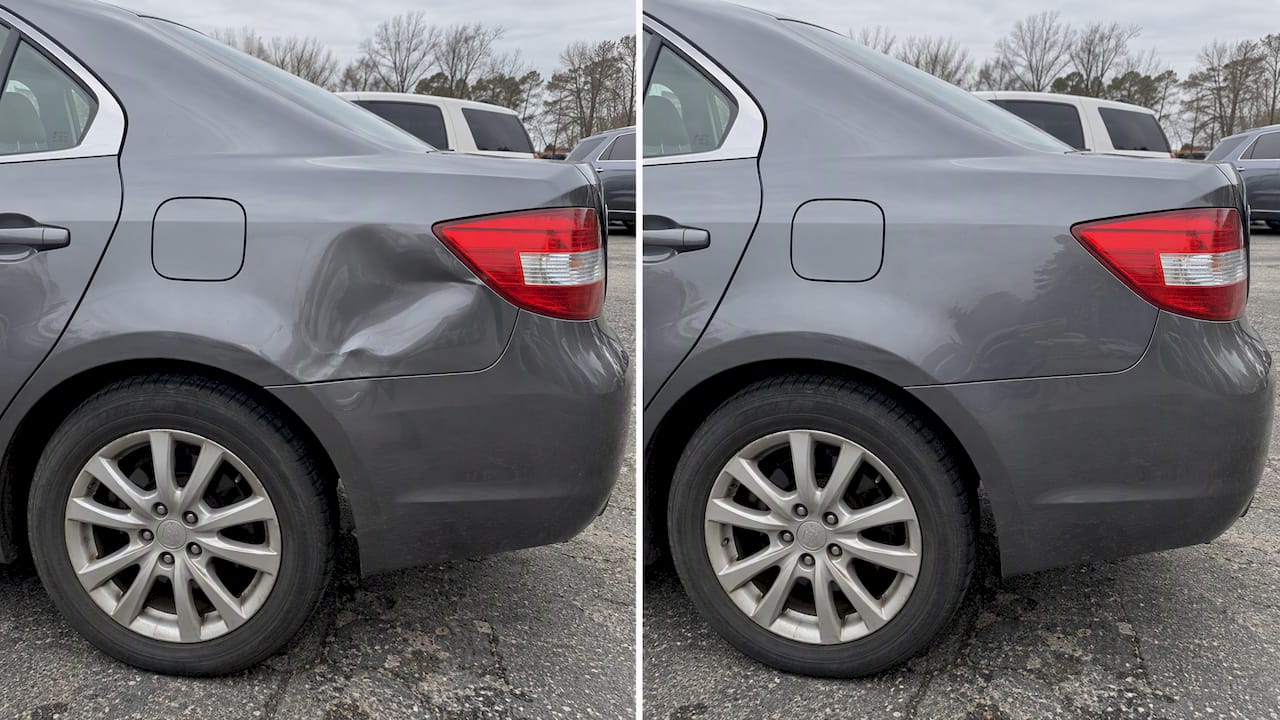
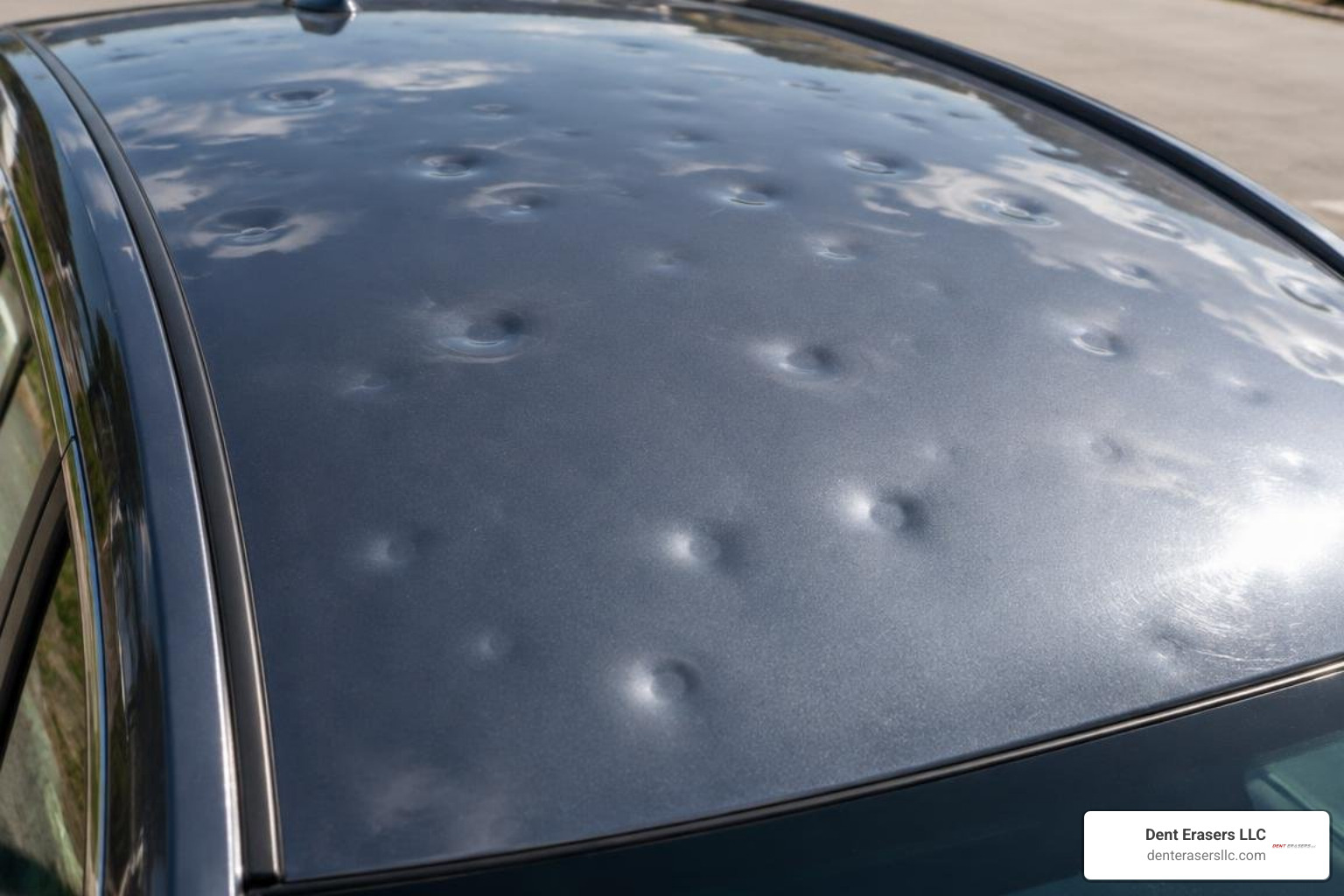
If your vehicle has sustained minor dent damage but the paint remains completely intact, you may not need traditional bodywork at all. Paintless Dent Repair (PDR) is a highly specialized method where technicians use custom-engineered tools to gently massage the metal back into its original shape from behind the damaged panel.

Because PDR bypasses the need for sanding, body filler, priming, and painting, it offers several massive advantages:
- Original Paint Preservation: It preserves your vehicle’s factory paint finish, which is crucial for maintaining its resale value.
- Speed: Most PDR repairs can be completed in a matter of hours rather than the days or weeks required by a traditional body shop.
- Affordability: PDR typically costs between $150 and $500 per panel, saving you hundreds or even thousands of dollars compared to traditional refinishing.
For more information on PDR pricing, read The Complete Guide to PDR Pricing and Estimates. If you are curious about other cost-effective strategies for minor dings, check out these helpful guides:
- Don’t Get Dented by the Bill a Guide to Small Dent Costs
- The Cheapest Ways to Fix a Car Dent
- How to Find Affordable Dent Removal for Your Car
- Dent Removal Service Cost a Guide to Professional Estimates
Moderate to Major Structural Damage and Frame Straightening
Once an accident involves structural damage or multiple panels, the repair process becomes significantly more complex. If your vehicle’s unibody or frame is bent, it must be mounted to a heavy-duty frame rack. Technicians use hydraulic pullers and computerized measuring systems to pull the metal back to within millimeters of its factory specifications.
This type of repair requires specialized structural technicians and a significant amount of labor. A frame-rack setup alone typically costs $500 to $2,500, with structural labor running $100 to $150+ per hour.
Here is a quick comparison of what different repair tiers typically include:
| Repair Tier | Damage Severity | Typical Components Included | Average Cost Range |
|---|---|---|---|
| Minor | Small dings, shallow scratches, minor scuffs | Paintless Dent Repair (PDR), localized scratch buffing, minor touch-ups | $150 – $1,500 |
| Moderate | Single-panel damage, deep gouges, dented doors/fenders | Panel repair or replacement, bumper replacement, paint blending to adjacent panels | $1,500 – $4,500 |
| Major | Multi-panel collisions, deployed airbags, structural issues | Frame straightening, mechanical repairs, suspension work, full-panel repainting, ADAS calibration | $4,500 – $12,000+ |
In California, insurance companies use a specific Total Loss Formula (Repair Cost + Salvage Value $\ge$ Actual Cash Value) rather than a simple flat percentage threshold to determine if a car is totaled. If your vehicle is older or has lower market value, even moderate structural damage can quickly push it past the total-loss threshold.
Paint Blending vs. Full Panel Repainting Economics
Why is paint work so expensive? It is common to look at a minor scratch on a door and wonder why the estimate includes painting the adjacent fender and rear door as well.
Modern automotive finishes are incredibly complex. They consist of a primer layer, a base color coat (which often contains metallic flakes or pearlescent particles), and a protective clear coat. Because of natural paint fading from UV exposure and slight variations in factory paint batches, spraying only the repaired area will leave a highly visible “patchwork” effect on your car.
To prevent this, shops use panel blending. Instead of stopping the paint abruptly at the edge of the repaired panel, the technician gently feathers (blends) the new base coat color onto the adjacent undamaged panels. The entire area is then covered with a continuous sheet of clear coat.
- Panel Blending: Adds $400 to $1,200 per adjacent panel, but ensures a seamless, invisible repair.
- Full Panel Repaints: Run $600 to $1,500 per panel due to the intensive prep work, sanding, and premium materials required.
- Waterborne Paint Regulations: Environmental laws have mandated the transition to waterborne paint systems. While safer for the environment, these paints require specialized spray booths with high-volume air dryers, driving up material costs and booth time.
- Specialty Finishes: If your vehicle features a three-stage pearl, metallic, or matte finish, expect a 20% to 40% premium on paint labor and materials because these finishes are exceptionally difficult to match and blend.
To understand how paint prep and blending affect bumper scuffs, check out our Bumper Scuff Repair Cost Guide from Cheap DIY Fixes to Professional Paint Jobs.
Insurance Claim vs. Out-of-Pocket: The Real Math
When you are staring at a fresh scrape or dent, one of the biggest decisions you face is whether to file an insurance claim or pay out of pocket. To help calculate your potential expenses and compare options, you can use the Body Shop Repair Cost Calculator — 2026 Dent, Panel & Frame Damage | UseCalcPro .
We recommend using the 2x Deductible Rule as a general mathematical guide:
- When to Pay Out of Pocket: If the total repair estimate is less than twice your insurance deductible, it is usually financially smarter to pay cash. For example, if you have a $1,000 deductible and the repair costs $1,500, filing a claim only saves you $500 upfront. However, a single at-fault claim can easily raise your insurance premiums by $200 to $400 per year for three to five years, completely wiping out your short-term savings. Paying out of pocket also prevents the damage from being reported to vehicle history databases like CarFax, protecting your vehicle’s resale value.
- When to File a Claim: If the damage is major (exceeding $2,500), involves multiple panels, structural frame damage, airbag deployment, or if another driver was at fault, filing a claim is almost always the right move.
- Diminished Value: Even a perfectly repaired vehicle suffers from “inherent diminished value” once an accident is recorded on its history report. A car with a collision history is typically worth 15% to 30% less on the trade-in market than an identical vehicle with a clean history.
How ADAS and Modern Tech Inflate Your Auto Body Repair Cost
Modern safety technology has made our roads safer, but it has also made even the simplest fender benders incredibly expensive. What used to be a simple plastic bumper cover is now a highly complex safety shield packed with:
- Ultrasonic parking sensors
- Blind-spot monitoring radar units
- Rearview and 360-degree cameras
- Lane-departure warning sensors
If a bumper is removed or replaced during a repair, these Advanced Driver Assistance Systems (ADAS) must be professionally recalibrated to ensure they function safely. This process requires specialized diagnostic tools, target boards, and dedicated shop space.
A professional repair must include electronic pre- and post-repair scans to check for system faults, as well as the physical recalibration itself, which typically adds $200 to $500 per sensor system to your total bill. For a detailed breakdown of how modern vehicle electronics impact scratch and dent estimates, see Car Dent Scratch Repair Cost What to Expect at the Shop.
Frequently Asked Questions about Auto Body Repair
How long do common auto body repairs take?
Repair timelines depend heavily on the severity of the damage and parts availability:
- Minor Repairs (PDR, bumper scuffs, headlight replacement): Typically take 1 to 3 days.
- Moderate Repairs (single-panel replacement, light structural work, paint blending): Typically take 3 to 7 days.
- Major Repairs (frame straightening, multi-panel replacement, suspension work): Can take 10 to 20+ business days.
In 2026, electric vehicles (EVs) like Tesla or Rivian often experience longer repair timelines (sometimes 30 to 60+ days) due to highly specialized structural parts and supply chain backlogs.
What certifications should I look for in a collision repair shop?
To ensure your vehicle is repaired to original structural safety standards, look for these key credentials:
- I-CAR Gold Class: This is the industry-standard baseline certification. It indicates that the shop’s technicians undergo continuous training in modern vehicle materials and repair techniques.
- OEM Certifications: Many manufacturers (like Ford, GM, Tesla, or BMW) certify specific shops that have invested in the exact tools, equipment, and training required to repair their specific vehicles.
- ASE Certification: Indicates that individual technicians have passed rigorous testing in specific areas of automotive repair.
Why does auto body repair cost more in certain states like Hawaii?
Auto body repair costs vary significantly by geographic region. For example, according to How Much Does Auto Body Repair Cost in Hawaii? (2026) | CostWhale , the average cost for auto body repair in Hawaii is $2,840 per repair—which is 42% higher than the national average of $2,000. This is driven by high shipping costs for heavy OEM parts, limited local salvage yard options, and elevated utility and labor rates.
While we don’t face island shipping constraints here in the East Bay, labor rates in Contra Costa County are similarly influenced by our high local cost of living and strict California environmental regulations on paint booths.
Conclusion
Navigating auto body repair cost doesn’t have to be overwhelming or incredibly expensive. While major structural collisions will always require the heavy machinery and deep pockets of a traditional collision repair center, many of the everyday dings, dents, and creases we pick up in grocery store parking lots can be resolved without ever leaving your driveway.
At Dent Erasers LLC, we specialize in mobile paintless dent repair (PDR) for cars, motorcycles, luxury, and classic vehicles throughout Concord, CA, and the wider Contra Costa County area. Because we are a mobile service, we bring our expert, on-site repairs directly to your home or office, preserving your vehicle’s original factory paint, delivering quick turnarounds, and keeping our pricing highly affordable (typically ranging from just $150 to $500).
Whether you are in Walnut Creek, San Ramon, Antioch, or right here in Concord, we are here to help you bypass the traditional body shop wait times and high overhead costs.
Skip the body shop hassle and protect your car’s value today. Get a Professional Auto Body Repair Estimate from our local, family-owned team.