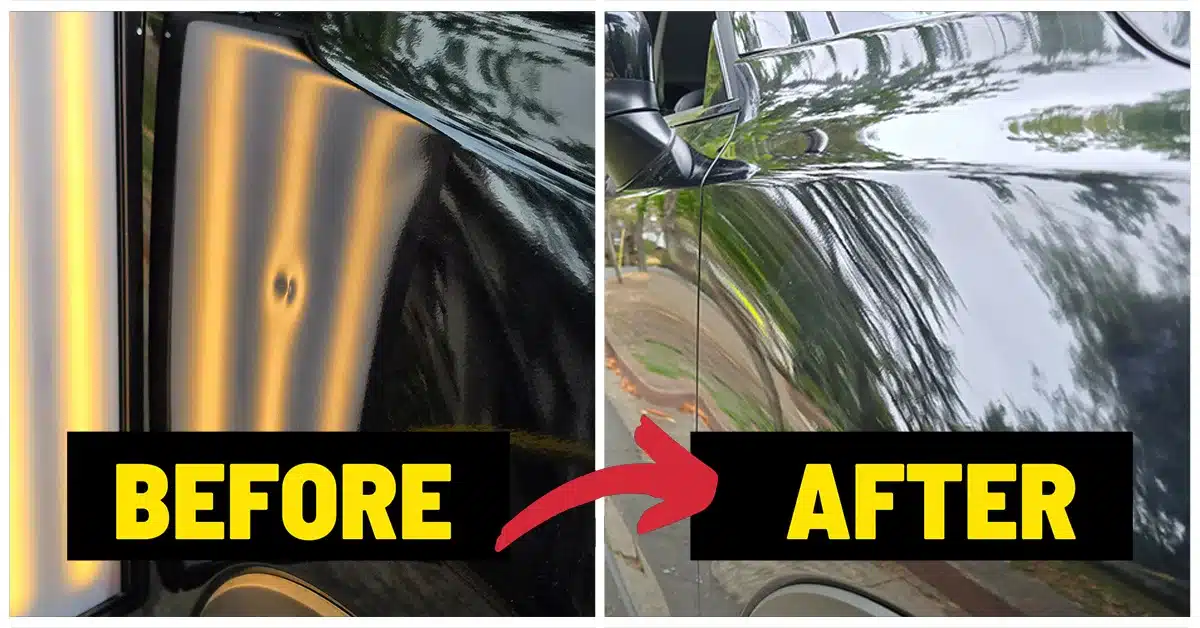
What You Need to Know About the Auto and Body Shop
Visiting an auto and body shop after an accident can feel overwhelming – especially when you’re not sure what kind of repair you need, what your insurance covers, or whether a full body shop visit is even necessary.
Here’s a quick answer to what an auto and body shop actually does:
| Question | Quick Answer |
|---|---|
| What does an auto body shop fix? | Exterior damage – dents, paint, frame, glass, collision damage |
| Is it different from a repair shop? | Yes – body shops fix structure and appearance; repair shops fix mechanical systems |
| When do you need a body shop? | After a collision, for dents, paint damage, frame issues, or glass replacement |
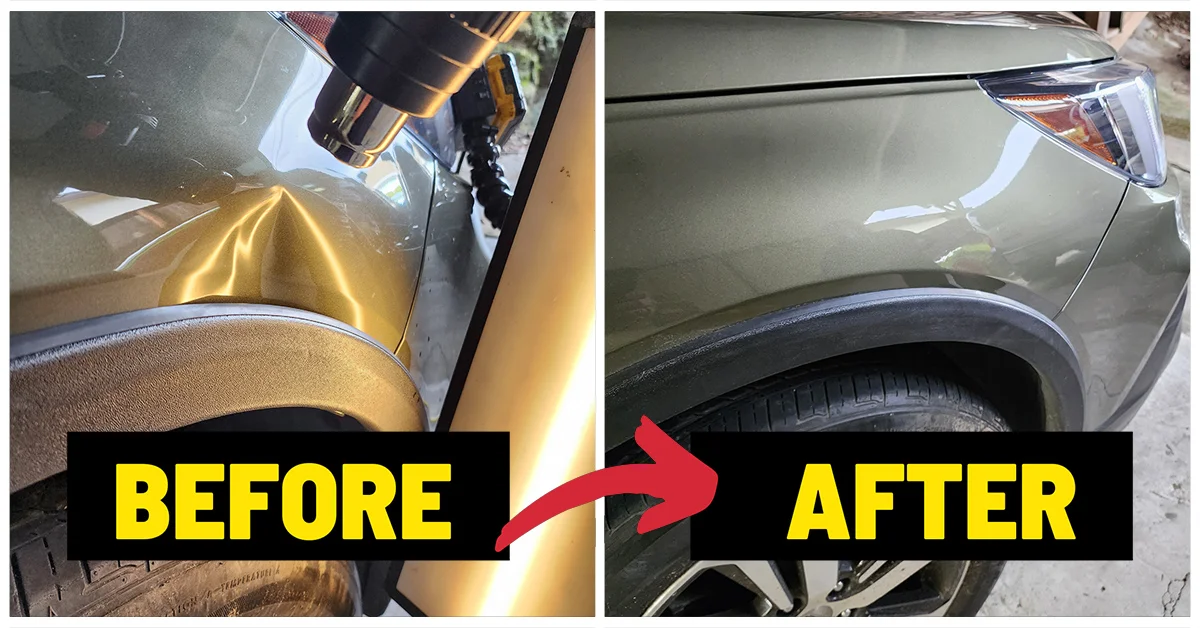
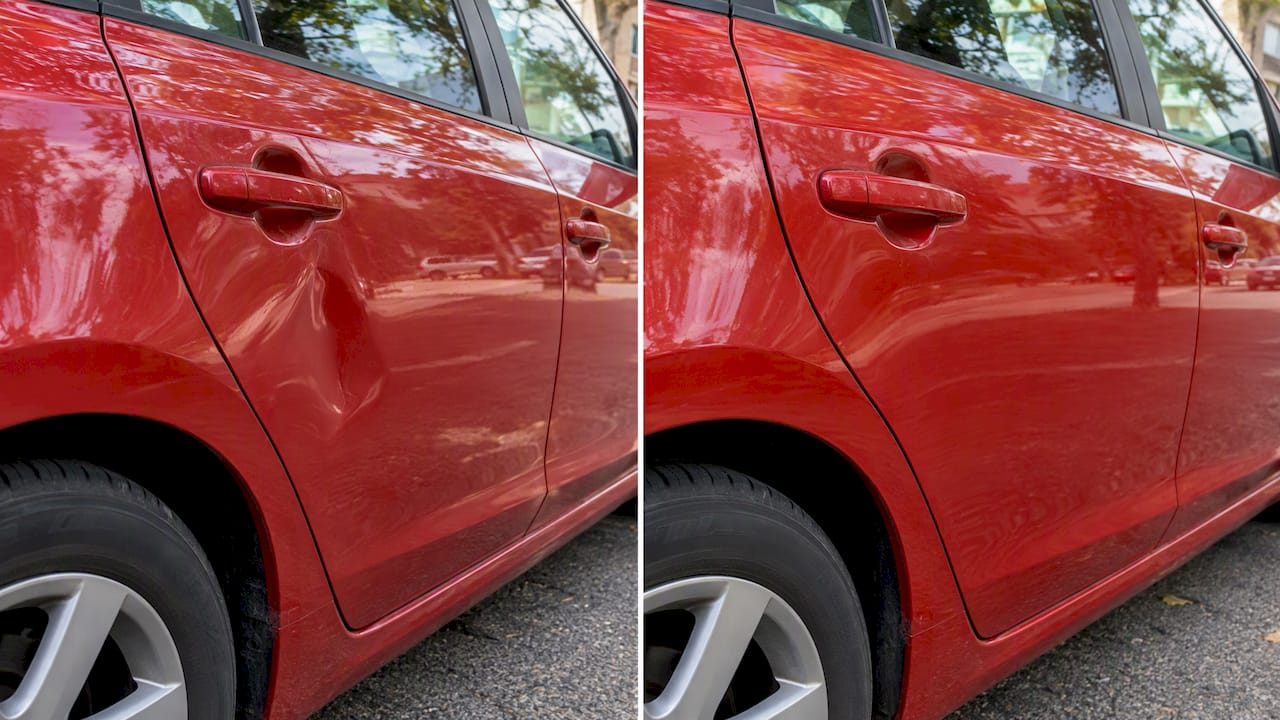
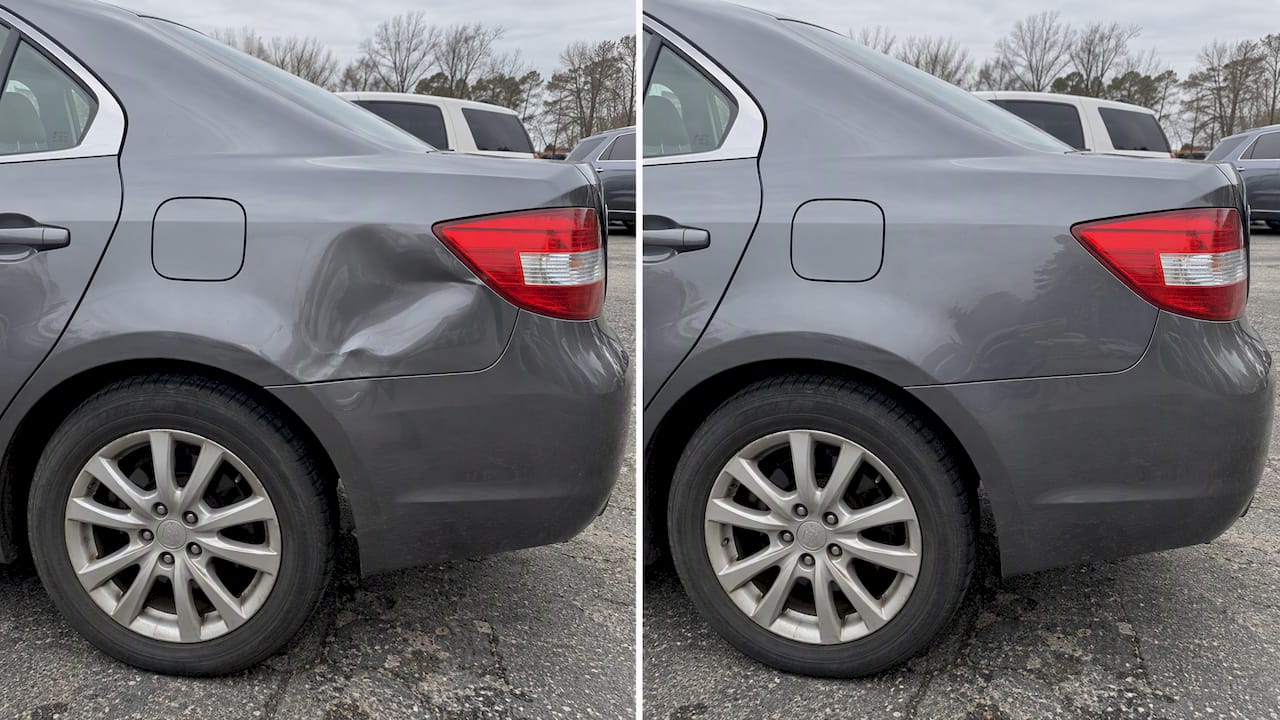
| Is there a faster alternative for minor dents? | Yes – paintless dent repair (PDR) skips paint and filler entirely |
| Can you choose your own shop? | Yes – you generally have the legal right to pick your own repair facility |
According to the National Safety Council, one in every eight drivers will be involved in a motor vehicle accident this year. That means most of us will face this decision at some point – often when we’re already stressed and short on time.
This guide walks you through everything: how body shops work, what the repair process looks like, how to handle insurance, and when a faster, more affordable option like mobile paintless dent repair makes more sense.
I’m Brian Blanc, owner of Dent Erasers LLC, with 28 years of hands-on experience in mobile paintless dent repair serving the East Bay Area – and I’ve worked alongside auto and body shops, dealerships, and insurance companies long enough to know exactly what vehicle owners need to understand before they commit to a repair. Let’s break it all down so you can make the right call for your car and your budget.
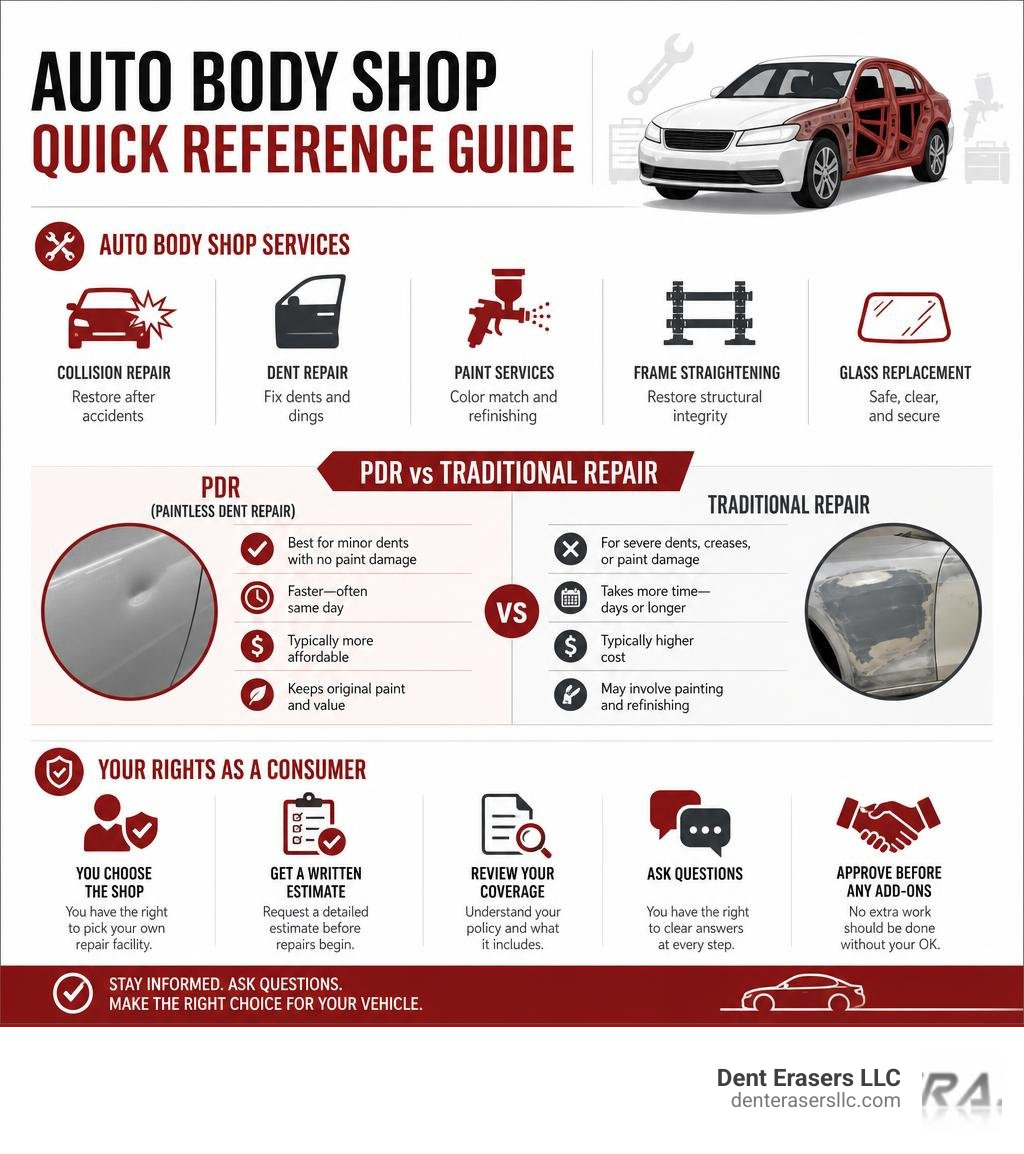
Glossary for auto and body shop:
Understanding Collision Repair and Auto Maintenance
When your vehicle sustains damage, understanding where to take it is the first step toward a successful recovery. The automotive repair world is broadly split into two camps: fixing how a car runs and fixing how a car looks and protects you.
While both are essential for keeping your vehicle on the road, they require entirely different skill sets, tools, and certifications. Let’s look at how structural integrity, cosmetic damage, and mechanical systems interact, and how to identify what your car needs.
What is the Difference Between an Auto and Body Shop and a Repair Shop?
The easiest way to distinguish between these two facilities is to think of an auto repair shop as your car’s doctor for internal medicine, while an auto and body shop is the surgeon and cosmetic specialist.
- Auto Repair Shops: These facilities focus on the mechanical and electrical systems that make your car run. If your “Check Engine” light is flashing, your brakes are squeaking, or your transmission is slipping, you need an auto repair shop. They handle engine diagnostics, oil changes, brake replacements, suspension work, and climate control systems. For example, if you live in the East Bay, you might visit a dedicated mechanical specialist to address engine or brake issues.
- Auto and Body Shops: These facilities focus on the vehicle’s structural envelope, frame, and exterior cosmetics. If you get rear-ended, side-swiped, or hit by a stray shopping cart, a body shop is your destination. They specialize in structural repairs, frame straightening, panel replacement, dent removal, painting, and glass replacement.
Sometimes, a major collision damages both the mechanical systems (like a cracked radiator or bent suspension) and the body panels. In these cases, a full-service collision center will coordinate both types of repairs, but their primary expertise lies in restoring the physical structure of your vehicle. If you are trying to figure out what to expect budget-wise before you even walk through their doors, reviewing a guide on Car Dent Scratch Repair Cost What to Expect at the Shop can help demystify the initial numbers.
Core Services Offered by a Full-Service Auto and Body Shop
A comprehensive auto and body shop is equipped to handle everything from minor cosmetic blemishes to severe, structural reconstructions. If you visit a major local collision center, you will typically find a suite of core services designed to restore your vehicle to factory specifications:
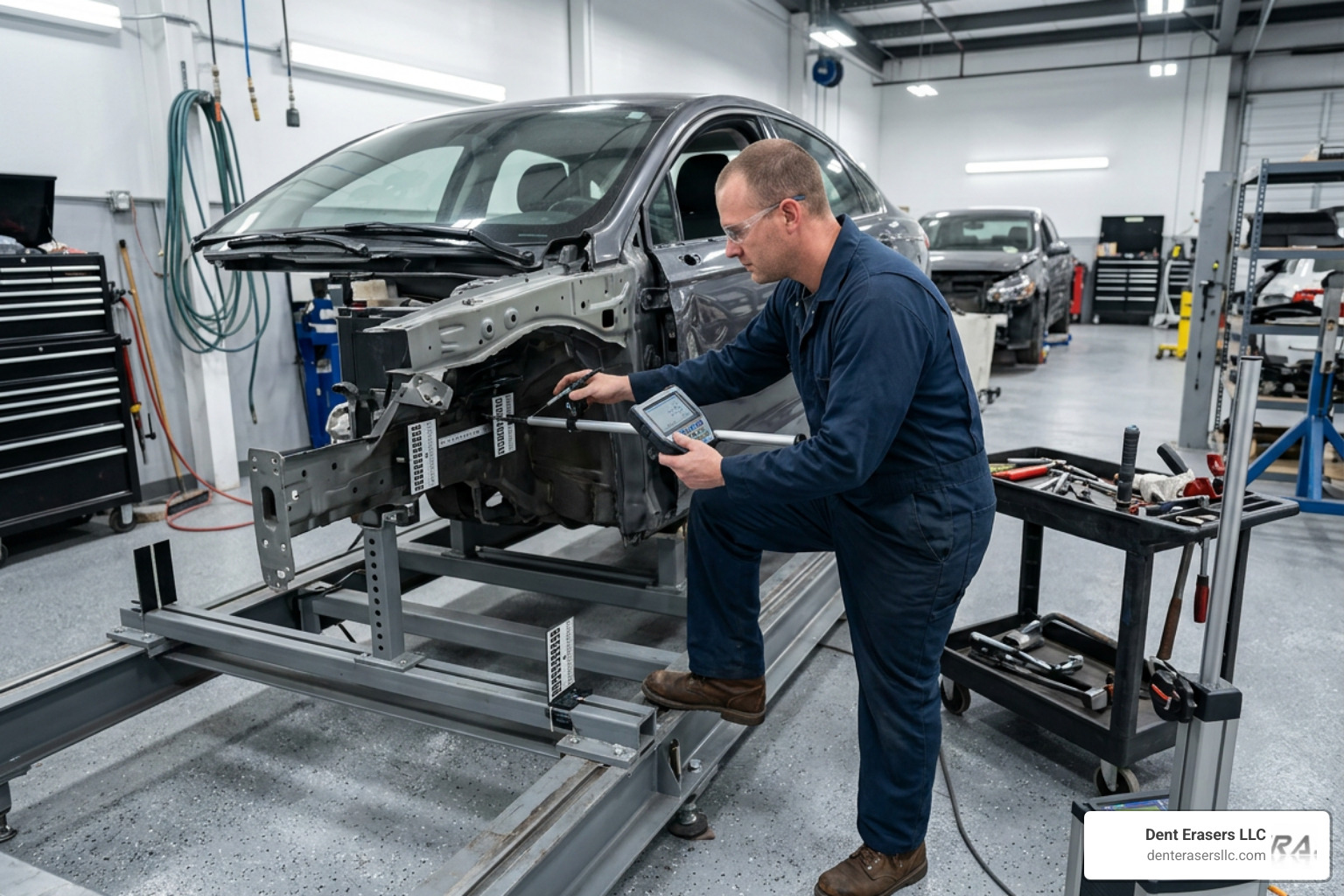
- Structural Frame Straightening: Modern vehicles are built with crumple zones designed to absorb impact energy during a crash. When a collision bends your vehicle’s frame or unibody structure, it compromises your safety in any future accidents. Body shops use advanced, laser-guided frame alignment systems (such as Car-o-liner) to pull and measure the frame back to within 1 millimeter of its original factory specifications.
- Complete Vehicle Repainting and Refinishing: Matching modern automotive paint is an incredibly complex science. Factory finishes consist of multiple layers, including primers, base coats, pearl or metallic mid-coats, and protective clear coats. Full-service shops utilize computerized paint-matching technology and specialized downdraft paint booths to ensure a seamless, dust-free finish that blends perfectly with your existing panels.
- Heavy Collision Damage Reconstruction: This involves replacing entire welded-on body panels (like quarter panels or roofs), repairing crushed doors, and rebuilding the front or rear structural assemblies of the vehicle.
- Windshield and Glass Replacement: Beyond aesthetics, your windshield is actually a structural component of your vehicle that supports the roof during a rollover. Body shops replace cracked or shattered glass and, crucially, recalibrate the safety cameras and sensors (ADAS) mounted behind the rearview mirror.
The Step-by-Step Collision Repair Process
When you drop your vehicle off at an auto and body shop in 2026, it doesn’t just get immediately sanded and painted. Modern collision repair is a highly structured, multi-phase engineering process designed to uncover hidden issues and guarantee safety.
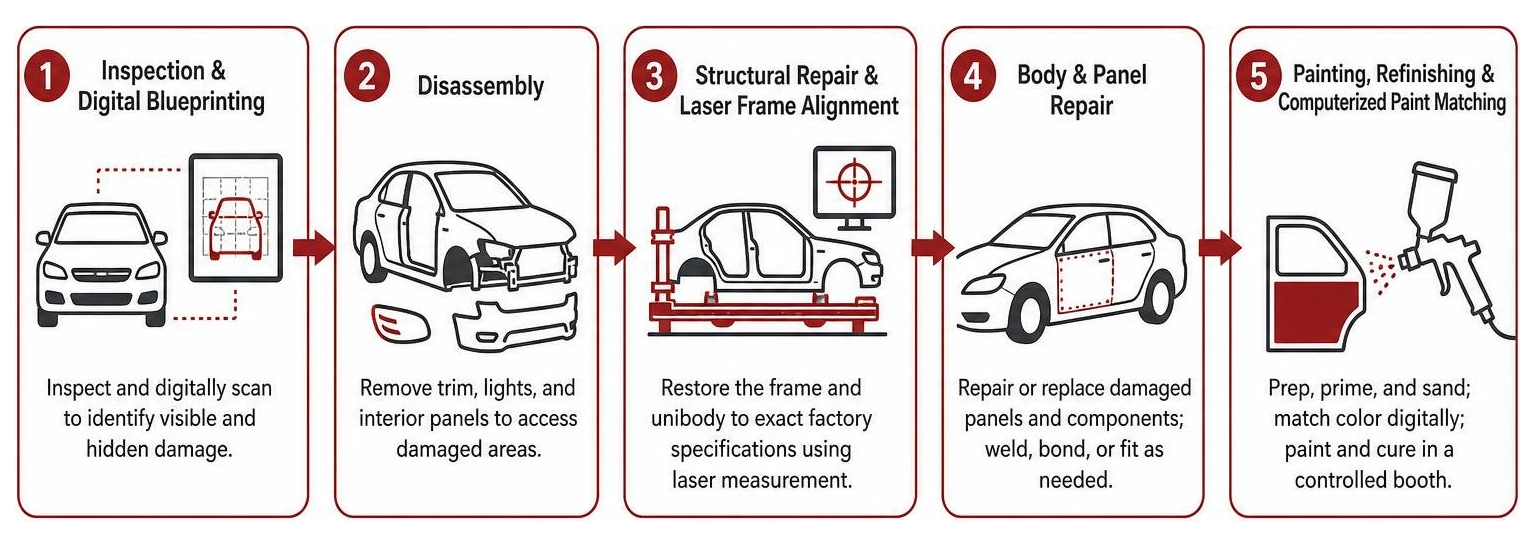
- Inspection and Digital Blueprinting: The process begins with a meticulous visual inspection, but it doesn’t stop there. Leading shops perform “digital blueprinting.” This involves completely disassembling the damaged area of the vehicle to scan and measure the underlying structure. This ensures that hidden structural damage — which is often missed in basic visual estimates — is identified and documented right away, preventing unexpected delays later.
- Disassembly: Technicians carefully remove all trim, lights, and interior panels surrounding the damaged area. This gives them unobstructed access to the metal or composite structures that require repair.
- Structural Repair and Laser Frame Alignment: If the vehicle’s frame or unibody has been compromised, it is secured to a heavy-duty frame machine. Using computerized laser measurement systems, the technician restores the structural skeleton of the car to its exact factory dimensions.
- Body and Panel Repair: Once the structural foundation is straight, technicians repair or replace individual body panels. This may involve welding new metal, utilizing nitrogen plastic welding to repair cracked bumpers, or replacing bolted-on panels like fenders and hoods.
- Painting, Refinishing, and Computerized Paint Matching: The repaired panels are prepped, primed, and sanded. Painters use digital spectrophotometers to analyze your car’s exact paint color, accounting for any minor fading from the sun. The vehicle is then painted and baked in a controlled downdraft booth to cure the finish.
- Reassembly: All mechanical components, electrical wiring, safety sensors, lights, and trim pieces are carefully reinstalled.
- Final Quality Audit and Calibration: The shop performs a comprehensive quality inspection, test-drives the vehicle, and recalibrates all Advanced Driver Assistance Systems (ADAS) such as blind-spot monitors and lane-keep assist cameras to ensure your safety systems function flawlessly.
If you want to understand how these phases translate into your final invoice, check out our Step-by-Step Guide to Car Body Repair Price.
Paintless Dent Repair vs. Traditional Body Work
For many minor accidents, door dings, or hail damage, leaving your vehicle at a traditional auto and body shop for weeks is actually overkill. This is where Paintless Dent Repair (PDR) comes in as a highly efficient, non-invasive alternative.
| Feature | Paintless Dent Repair (PDR) | Traditional Body Shop Repair |
|---|---|---|
| Process | Massages metal from the back using specialized tools. | Sands panel, applies plastic body filler, primes, and repaints. |
| Factory Paint | Preserved completely. | Sanded away and replaced with aftermarket paint. |
| Carfax History | Often remains clean (no paintwork reported). | Shows accident history and paint refinishing. |
| Turnaround Time | Hours (often completed same-day or on-site). | Days to weeks (due to paint curing and multi-stage processes). |
| Environmental Impact | Eco-friendly; zero chemicals, fillers, or emissions. | Generates paint fumes, chemical waste, and plastic dust. |
| Average Cost | Highly affordable ($150 to $500 for most dings). | Expensive ($500 to $3,000+ due to materials and labor). |
Paintless Dent Repair is truly an art form of metal shaping and shrinking. At Dent Erasers LLC, we use specialized steel rods, glue-pulling systems, and LED reflective light boards to access the backside of your vehicle’s panels. We gently massage the dented metal back into its original shape without cracking the paint. Because we don’t use harsh chemicals, body fillers, or aftermarket paint, we preserve your vehicle’s original factory finish — which is the absolute best way to protect your car’s long-term resale value.
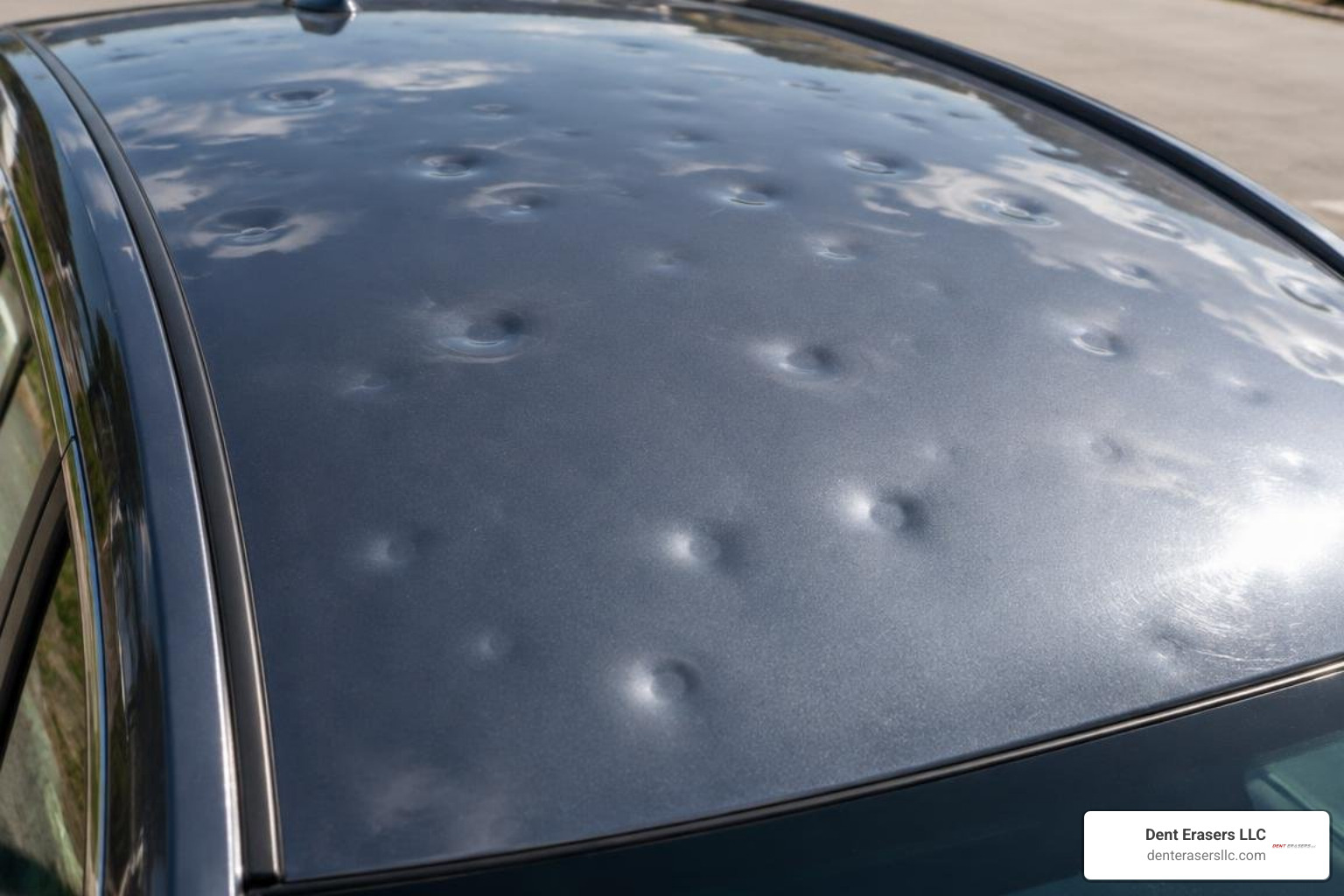
However, PDR does have limitations. It is the ideal choice for hail damage, shopping cart dings, and minor bumper indentations where the paint is completely unbroken. If your accident has caused deep scratches, cracked paint, torn metal, or structural frame damage, you will need to take your vehicle to a traditional body shop for a full paint and structural restoration. To explore your options for keeping costs low on minor damage, take a look at our breakdown of The Cheapest Ways to Fix a Car Dent.
Choosing the Right Auto and Body Shop After an Accident

Finding a trustworthy repair facility in Contra Costa County is critical to ensuring your vehicle is returned to you in safe, pre-accident condition. With so many options available in the East Bay, here is what you should look for when making your choice:
- Look for I-CAR Gold Class Certification: This is the gold standard for training in the collision repair industry. Only about 10% of collision repair facilities nationwide achieve this status, which requires ongoing, annual training for technicians on the latest vehicle technologies and materials (such as aluminum and high-strength steel).
- Verify OEM (Original Equipment Manufacturer) Certifications: Modern cars are essentially rolling computers. A shop that is OEM-certified by your vehicle’s manufacturer (such as Tesla, Honda, Ford, or Subaru) has invested in the exact tools, diagnostic software, and training specified by the factory to repair your specific vehicle safely.
- Demand a Detailed Written Estimate: A reputable shop will provide a transparent, itemized estimate breaking down labor rates, paint materials, and the exact parts they plan to use.
- Read Local Reviews and Ask Questions: Look for shops with a proven track record of clear communication and customer satisfaction. If you are researching local options, you can check out our Detailed Reviews of the Top 10 Collision Repair Shops.
If you require extensive traditional bodywork or frame straightening, we highly recommend looking into established local collision centers with excellent reputations in our service areas that specialize in structural repairs.
Navigating Insurance Claims and Your Consumer Rights
Dealing with insurance companies after an accident can feel like navigating a minefield. Many drivers don’t realize that they hold all the power when it comes to where and how their vehicle is repaired.
First and foremost, you must understand Anti-Steering Laws. In California, it is your legal right to choose whichever licensed repair facility you want. Insurance companies often try to “steer” you toward their preferred or “network” shops to save themselves money. While these network shops may be perfectly fine, you are under no legal obligation to use them. If you have a trusted local independent shop, you have the absolute right to take your vehicle there.
Additionally, pay close attention to the parts being used. Insurance policies often default to aftermarket, salvage, or reconditioned parts to keep costs low. However, you have the right to request OEM parts (Original Equipment Manufacturer parts) to ensure a perfect fit and preserve your safety sensors, though you may need to review your specific policy terms or pay the difference if your policy doesn’t cover them.
Many modern shops now offer convenient photo-based estimating tools to help you start your claim quickly, allowing you to submit smartphone photos of the damage for a preliminary evaluation. For a deep dive into navigating these financial waters, read The Complete Guide to Auto Body Repair Costs.
Even when working with highly respected auto body shops, knowing your consumer rights ensures that you remain in control of your vehicle’s repair journey.
Frequently Asked Questions About Collision Repair
How do I get a free estimate for auto body repairs?
Most modern shops make getting an estimate incredibly simple. You can typically use online estimating tools on their websites to upload clear photos of the damage from multiple angles, along with your vehicle’s VIN and mileage. Alternatively, you can drop by a local shop for an in-person inspection, which usually takes about 10 to 15 minutes. If you are looking for tips on finding budget-friendly options, take a look at our guide on How to Find Affordable Dent Removal for Your Car.
What warranties should I expect from a quality body shop?
A reputable collision repair facility should stand behind its craftsmanship. You should look for a written lifetime warranty covering all bodywork and structural repairs for as long as you own the vehicle. Additionally, quality shops often offer a lifetime paint guarantee (frequently backed by major paint manufacturers like PPG or Axalta) covering peeling, cracking, or loss of gloss. For minor dings and dent costs, read our Don’t Get Dented by the Bill a Guide to Small Dent Costs.
Why do OEM certifications and factory-approved parts matter?
OEM certifications guarantee that the technicians working on your car have been trained by the manufacturer to use specialized equipment and follow exact repair procedures. This is especially vital for modern vehicles equipped with advanced safety sensors, cameras, and radar systems. Using cheap aftermarket knockoffs can compromise these safety systems, misalign your crumple zones, and negatively impact your vehicle’s structural integrity in a future collision.
Conclusion
Navigating collision repair doesn’t have to be a stressful experience. Whether your car requires heavy structural rebuilding at a full-service auto and body shop or you simply need a few annoying door dings removed to restore your car’s sleek look, knowing your options and your rights is the key to a smooth process.
If your vehicle has suffered minor dents, creases, door dings, or hail damage, you don’t have to lose your car to a traditional body shop for days on end. At Dent Erasers LLC, we specialize in expert, mobile paintless dent repair serving Concord, CA, and communities across Contra Costa County. We bring our mobile workshop directly to your home or office, restoring your car, motorcycle, classic, or luxury vehicle in a matter of hours while keeping your original factory paint perfectly intact.
To find the most convenient and affordable solutions in your neighborhood, check out our guide on The Best Places to Get Your Dings and Dents Fixed Nearby, or visit our Auto Body Repair Services page to schedule your free estimate with us today!