Find Certified Auto Body Collision Shops Near You With Less Stress
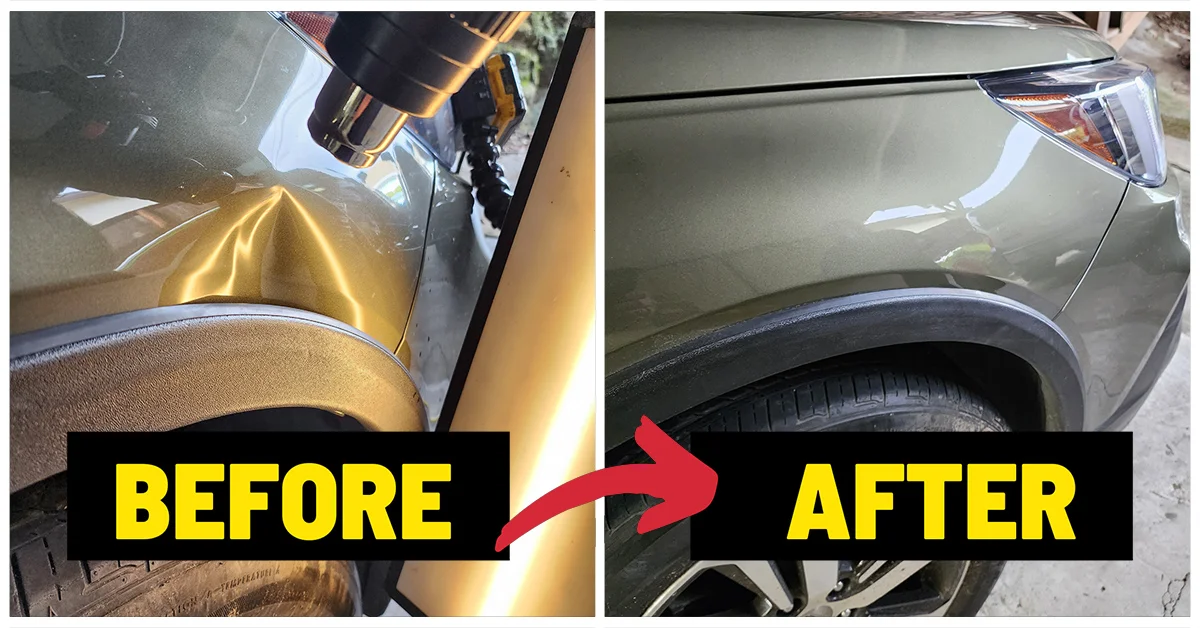
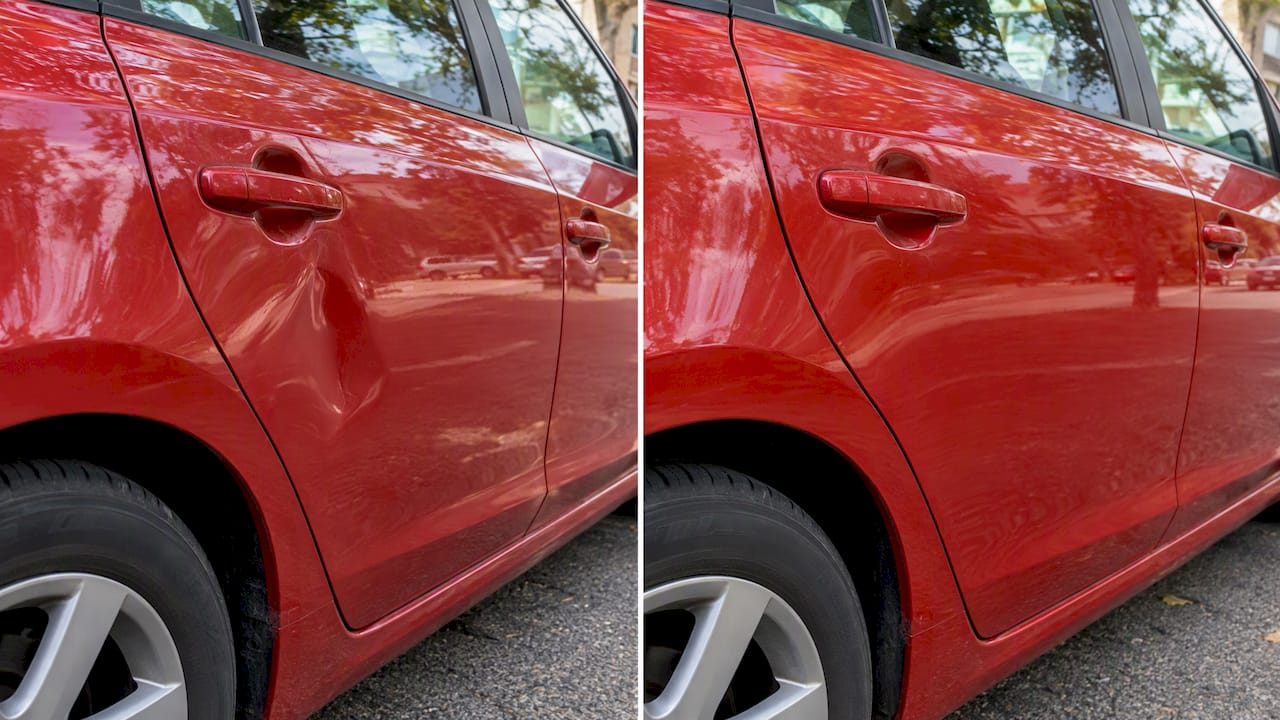
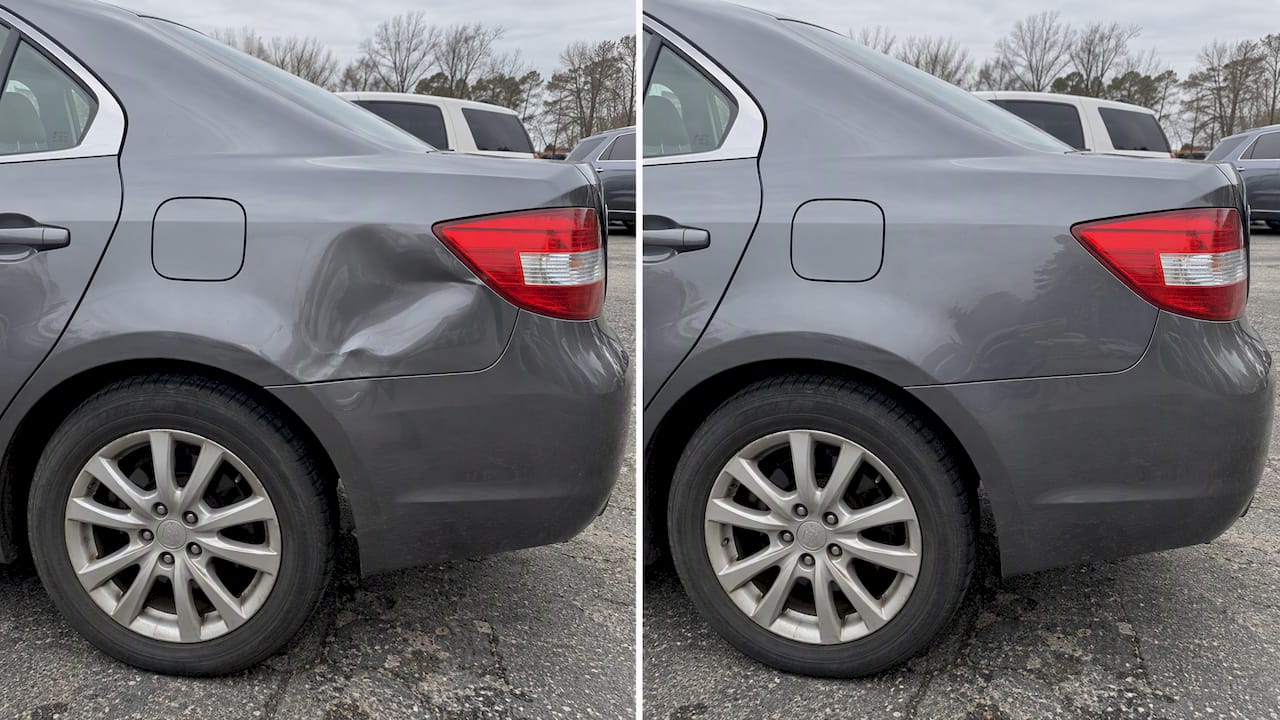
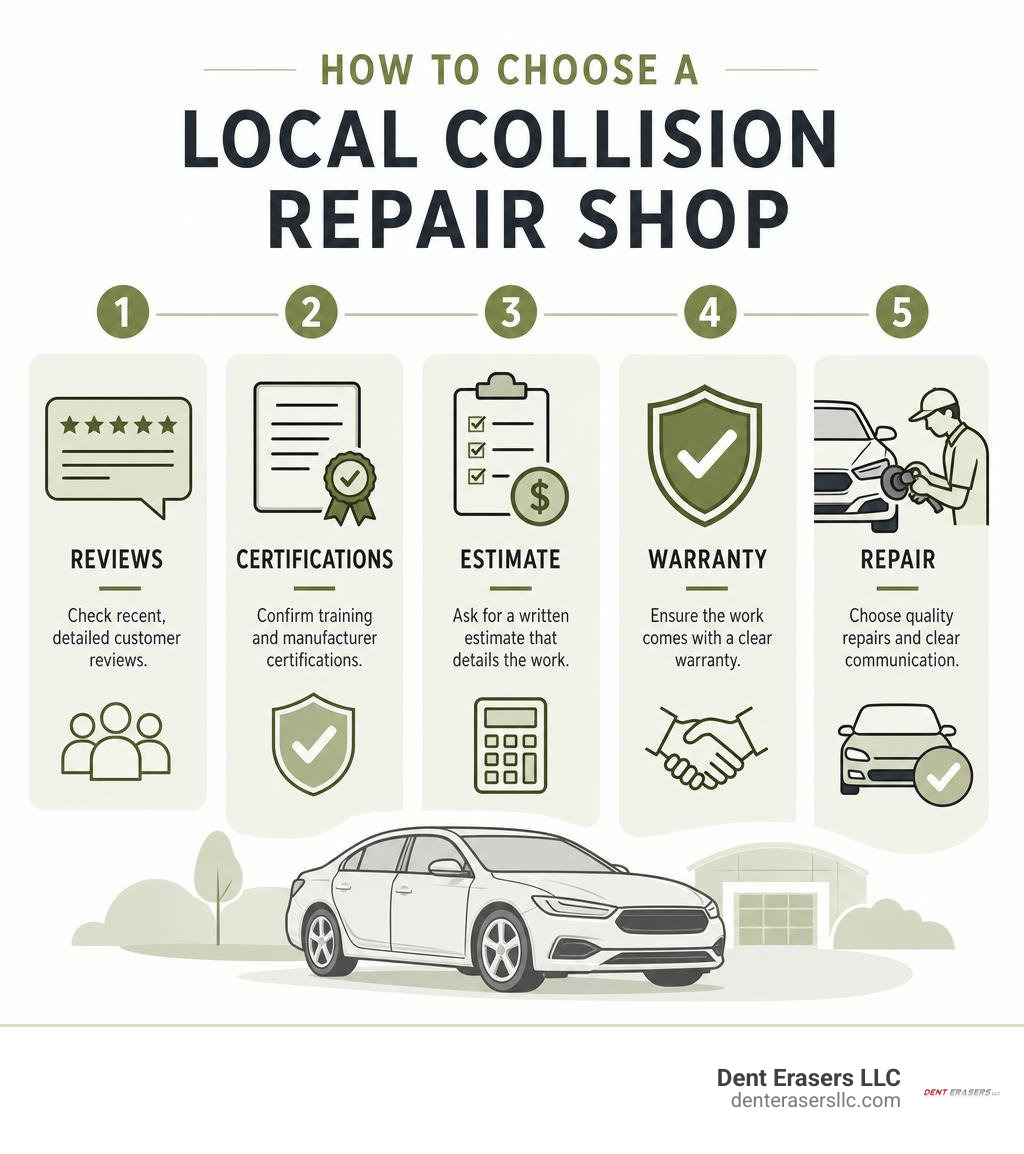
To find trustworthy auto body collision shops near me, start by checking recent, detailed customer reviews, confirming the shop’s training and manufacturer certifications, and asking for a written estimate and warranty. For a minor dent with undamaged paint, ask whether paintless dent repair (PDR) is an option – it can avoid repainting and may be completed much faster than traditional bodywork.
A good local shop should explain what it sees, communicate about parts delays or added damage, and handle insurance paperwork when needed. Modern collision repairs may also require diagnostic scans and ADAS calibration to make sure features like lane assistance and collision warnings work correctly after the repair.
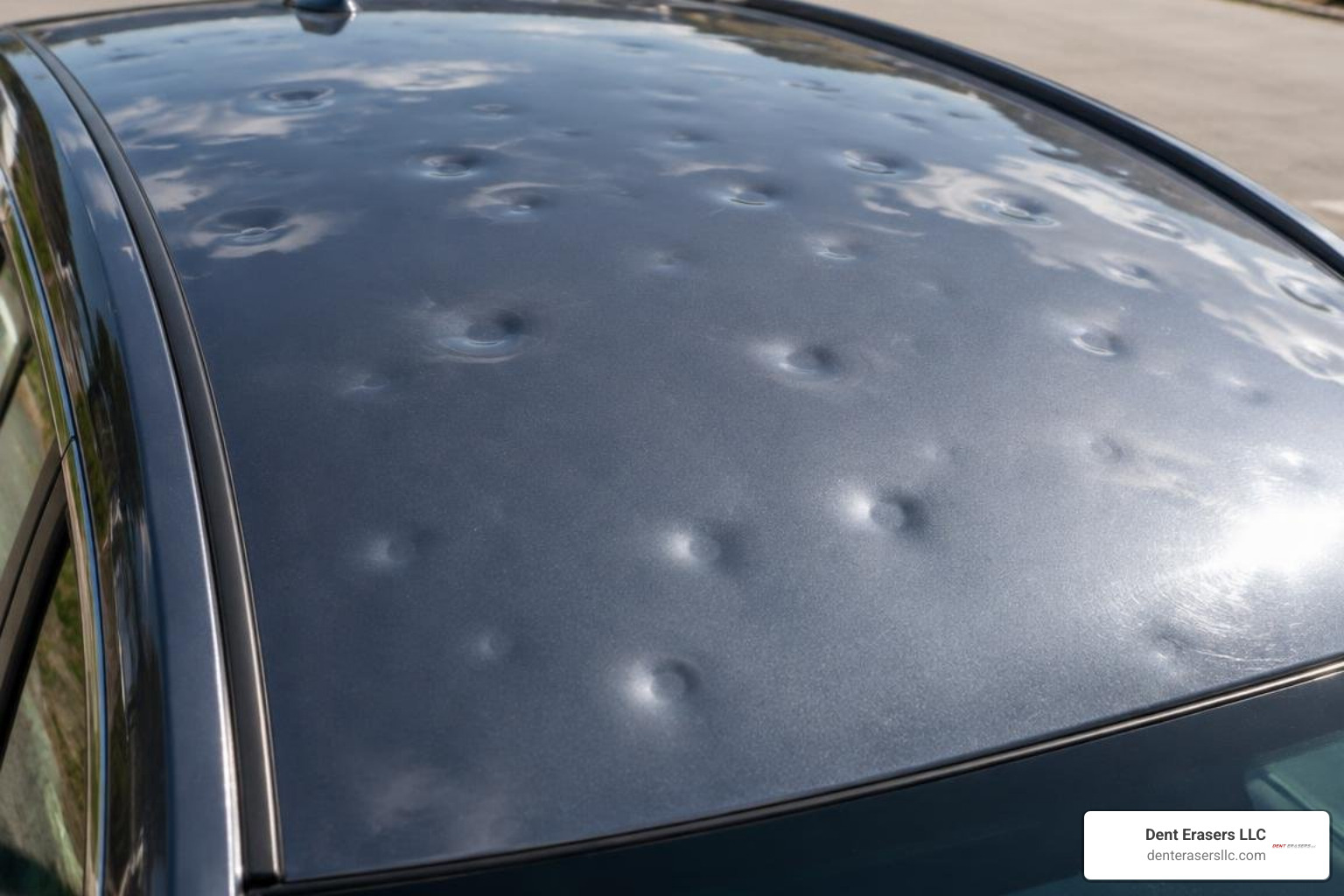
For small parking-lot dents, door dings, and hail damage, a full collision shop is not always necessary. Mobile PDR can restore the panel while keeping the original factory finish intact, often at your home or office.
I am Brian Blanc, owner of Dent Erasers LLC, and I have spent 28 years repairing dents for drivers, dealerships, body shops, and insurers across the East Bay. My experience with auto body collision shops near me helps vehicle owners tell the difference between damage that needs full collision work and a dent that can be repaired quickly without paint.
Important auto body collision shops near me terms:
How to Choose the Best Auto Body Collision Shops Near Me
When you are involved in a traffic accident or minor collision anywhere in Contra Costa County—from Concord and Walnut Creek to Antioch, Brentwood, and San Ramon—the aftermath feels overwhelming. Your car is damaged, your daily schedule is thrown off balance, and you need quick answers.
Choosing where to take your vehicle requires a careful look at several factors. First, consider the experience of the technicians handling your car. Modern vehicles are complex machines built with ultra-high-strength steel, aluminum alloys, and sophisticated electronics. You want a facility staffed by professionals who understand metallurgical properties and manufacturer-recommended assembly procedures.
Second, pay attention to the cleanliness, organization, and customer service approach of the business. A clean intake bay and clear customer communication reflect meticulous workmanship behind closed shop doors. When selecting a reliable auto body shop, ask whether you will receive regular status updates via text or phone and verify that all quotes and guarantees are delivered in writing before work begins.
Evaluating Reviews and Ratings for Auto Body Collision Shops Near Me
Online reviews provide an unfiltered look into real customer experiences. However, reading reviews effectively requires looking beyond overall star counts. Dig deeper into the written feedback to evaluate:
- Consistency Across Platforms: Check independent customer directories and local listings, such as local verified customer directories, to see how the shop handles everyday collision work.
- Photo Proof: Look for before-and-after photographs uploaded by local drivers showing paint matching, body line gaps, and panel realignment.
- Problem Resolution: Notice how management responds to constructive feedback or unexpected delays. A shop that handles issues professionally is one that takes customer satisfaction seriously.
- Recurring Praise: Look for mentions of timely delivery, honest billing, friendly staff, and transparent explanations regarding parts and repairs.
Key Industry Certifications to Look For
High-end modern auto collision restoration demands up-to-date technical training. When evaluating prospective shops, prioritize those holding recognized industry credentials:
- I-CAR Gold Class Certification: The highest standard for training in the collision repair industry. To maintain Gold Class status, a shop’s technicians must undergo continuous annual training on evolving vehicle technologies, structural welding, and advanced safety systems.
- OEM (Original Equipment Manufacturer) Certifications: Vehicle manufacturers certify select body shops that invest in specific tooling, computerized frame benches, and factory repair procedures for brands like Honda, Ford, GM, or European automakers.
- ASE (National Institute for Automotive Service Excellence) Certifications: Verifies that individual mechanical and structural specialists have passed rigorous, industry-recognized competency exams.
The Collision Repair Process: Timelines, Warranties, and Insurance
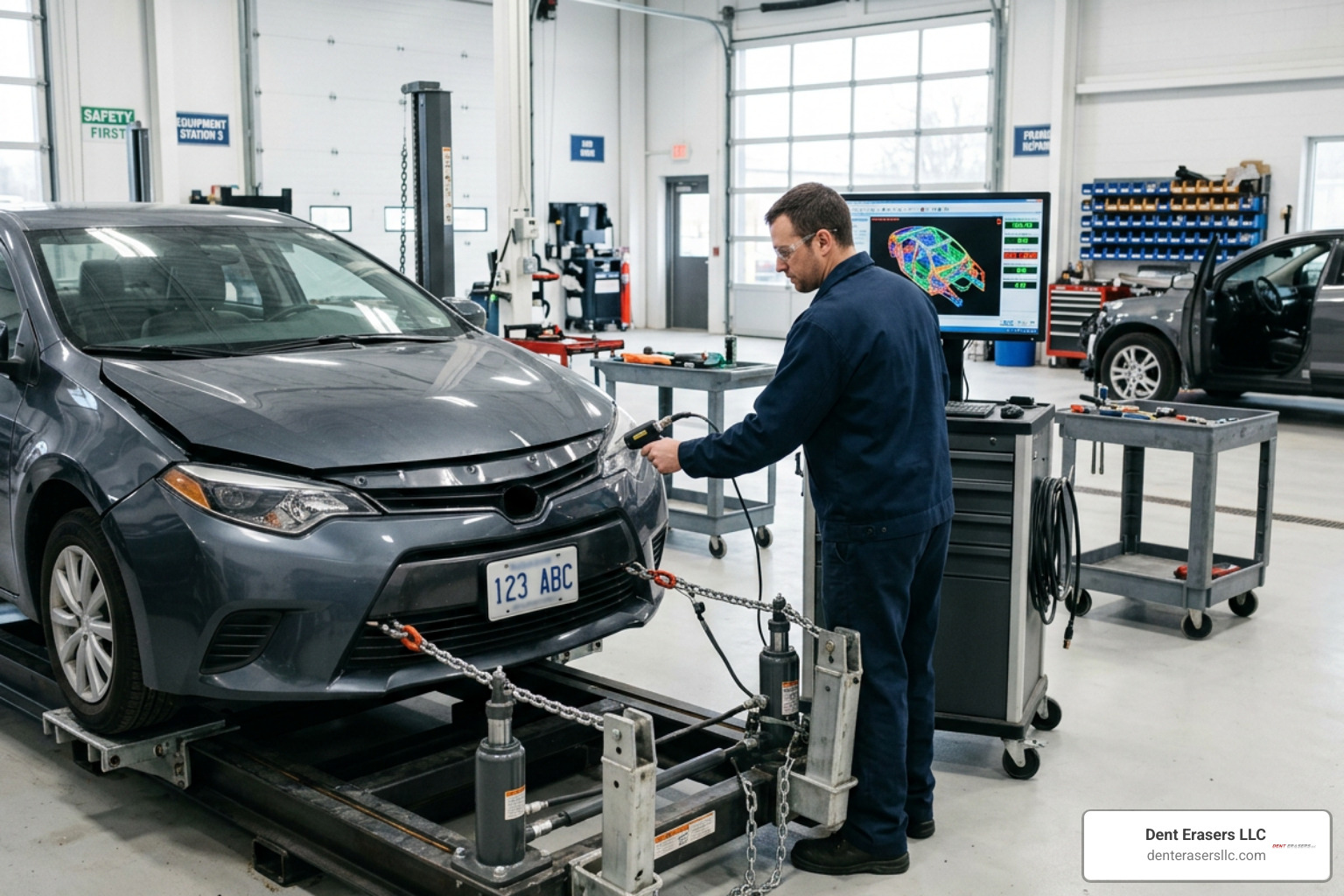
When an accident occurs, understanding the sequence of repairs helps set realistic expectations. Collision repair is rarely as simple as popping out a dent and spraying fresh paint.
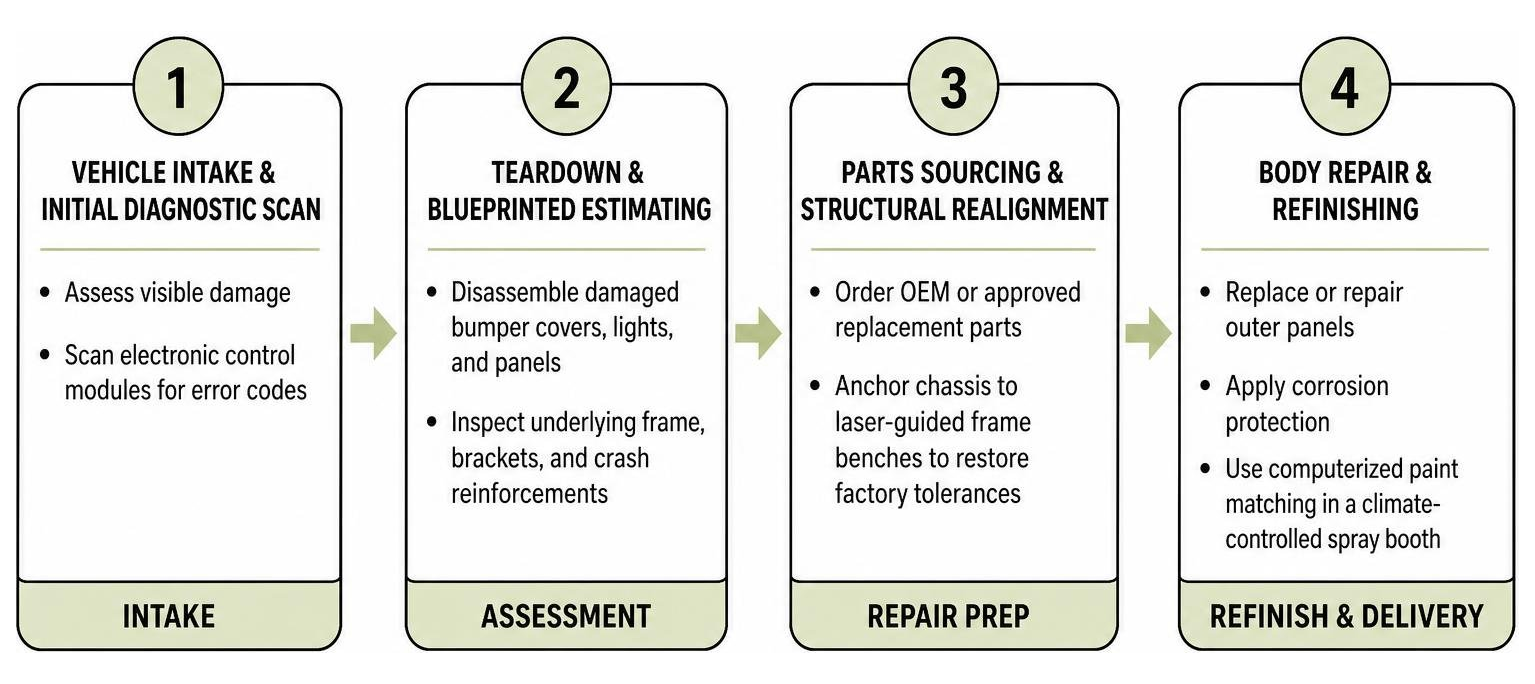
The process typically involves:
- Vehicle Intake & Initial Diagnostic Scan: Assessing visible damage and reading electronic control modules for error codes.
- Teardown & Blueprinted Estimating: Disassembling damaged bumper covers, lights, and panels to inspect the underlying frame, brackets, and crash reinforcements.
- Parts Sourcing & Structural Realignment: Ordering required OEM or approved replacement parts while anchoring the chassis to laser-guided frame benches to restore factory tolerances.
- Body Repair & Refinishing: Replacing or repairing outer panels, applying corrosion protection, and using computerized paint matching inside a climate-controlled spray booth.
- Reassembly & Safety Calibration: Installing mechanical components, reattaching exterior trim, and calibrating cameras and radar units.
- Final Detailing & Quality Control: Cleaning the vehicle and conducting road tests and quality inspections.
Understanding typical collision repair timelines helps eliminate frustration when waiting for parts or specialized diagnostic work.
Working Directly with Auto Insurance Claims
Navigating an insurance claim after a crash can feel like a full-time job. Leading collision centers help relieve this burden by managing the insurance process directly on your behalf.
When you drop off your vehicle, providing your claim number and insurance details allows the facility’s estimators to coordinate with your adjuster. If hidden damage is uncovered during the teardown phase, the shop drafts a detailed “supplement”—an itemized document of additional parts and labor needed—and submits digital photo evidence directly to the insurer for approval.
They also assist with deductible collection, coordinating rental vehicle logistics at nearby vehicle staging hubs, and ensuring repairs follow manufacturer safety standards rather than short-sighted insurer cost-cutting. Having a clear grasp of understanding collision repair services ensures you know what questions to ask when discussing coverage and repairs with your adjuster.
Lifetime Warranties on Workmanship and Paint
Reputable auto body shops stand behind their work with written lifetime warranties. These warranties protect you against defects in workmanship, structural realignment integrity, and paint failure such as peeling, cracking, or premature fading for as long as you own the vehicle.
While replacement parts carry their own manufacturer guarantees, the shop’s warranty covers labor, corrosion treatments, and refinishing. Before handing over your keys, request a copy of their written guarantee to confirm what components are covered and clarify transferability terms should you choose to sell the vehicle later.
Modern Repair Capabilities: Beyond Basic Bodywork
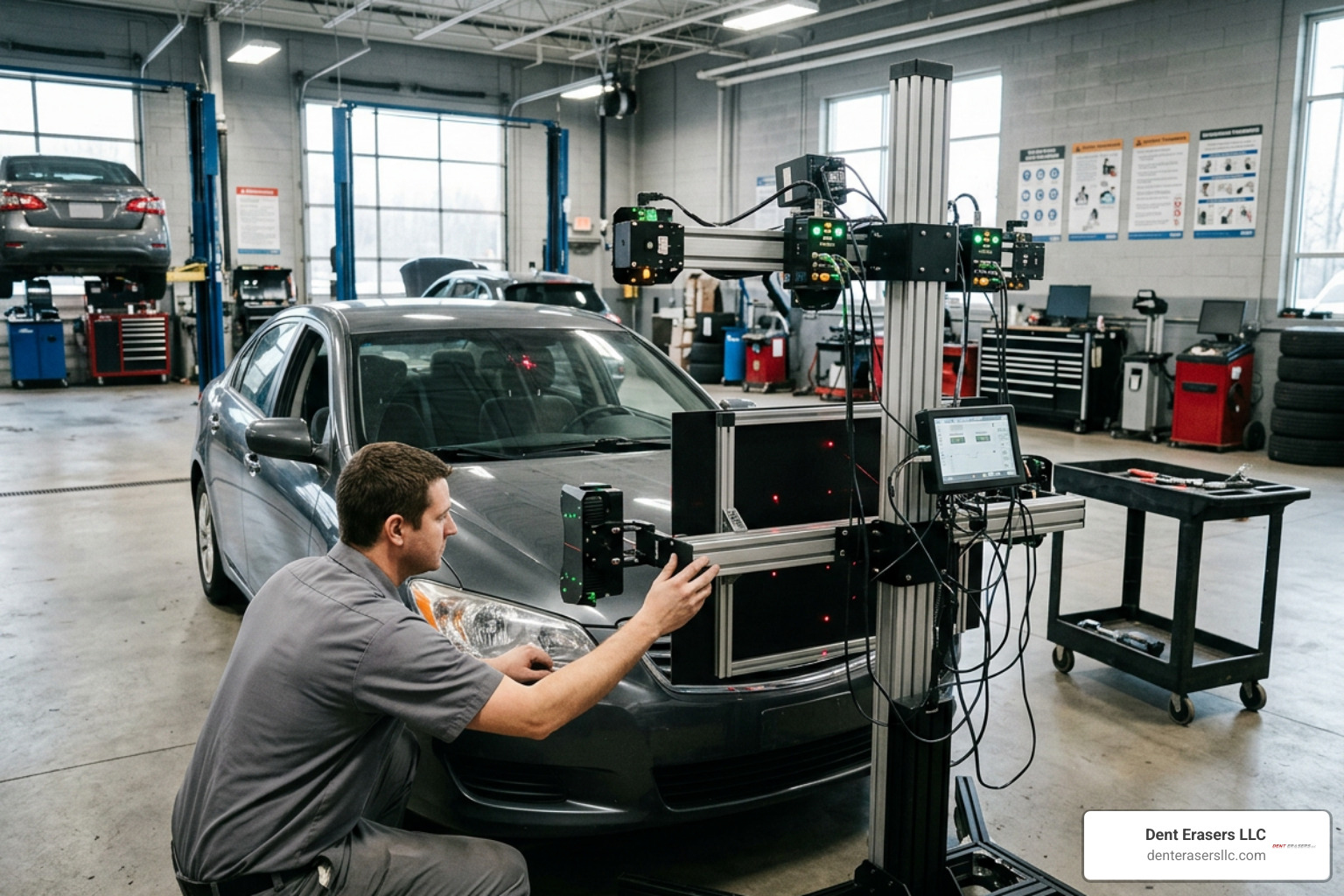
Modern vehicles rely on intricate combinations of high-strength metals, computerized electronics, and active safety systems. Restoring a damaged vehicle today requires far more technology than traditional hammer-and-dolly bodywork.
State-of-the-art repair facilities use computerized spectrophotometers to match paint down to microscopic flake variations, laser-guided measuring benches to detect unibody frame misalignments measured in millimeters, and dedicated clean rooms for aluminum panel manipulation. When evaluating collision repair shop capabilities, verify that the shop possesses the specialized tools required for your vehicle’s specific make and model.
The Vital Role of ADAS Sensor Calibrations
Advanced Driver Assistance Systems (ADAS) have become standard features on modern vehicles. These systems include:
- Forward Collision Warning (FCW) and Automatic Emergency Braking (AEB)
- Blind Spot Monitoring (BSM) and Rear Cross-Traffic Alert
- Lane Departure Warning (LDW) and Lane Keep Assist (LKA)
- Adaptive Cruise Control (ACC) and 360-degree surround cameras
When a vehicle suffers an impact—even a minor fender bender that pushes a bumper cover by a few millimeters—these delicate cameras, radar units, and ultrasonic sensors can be knocked out of alignment.
Proper collision restoration requires both pre-repair diagnostic scans to find hidden trouble codes and post-repair calibrations. These calibrations can be static (performed inside a controlled space with laser targets and leveling boards) or dynamic (conducted by driving the vehicle at set speeds on marked roadways). Failing to calibrate ADAS sensors properly can lead to malfunctioning safety alerts or unpredictable braking on the highway.
Traditional Body Repair vs. Mobile Paintless Dent Repair (PDR)
Not every collision or dent requires weeks in a full-scale collision center, panel cutting, or invasive repainting. For minor dents, door dings, creases, and hail damage where the original paint finish remains intact, Paintless Dent Repair (PDR) is the preferred, non-invasive alternative.
Here is a comparison of how traditional collision body repair stacks up against specialized mobile paintless dent repair:
| Feature / Consideration | Traditional Auto Body Collision Repair | Mobile Paintless Dent Repair (PDR) |
|---|---|---|
| Primary Use Case | Severe structural damage, cracked paint, torn metal, frame bends | Dents, dings, body line creases, hail damage (paint unbroken) |
| Preservation of Factory Paint | No (requires sanding, body filler, primer, and repainting) | Yes (100% original factory paint preserved) |
| Typical Turnaround Time | 3 to 10+ business days in-shop | 1 to 3 hours on-site at your home or office |
| Carfax Impact | Often reported as structural/body paint repair | Zero paint mismatch, retains original factory value |
| Environmental Impact | Uses solvents, volatile organic compounds (VOCs), and fillers | Eco-friendly with zero chemicals, paints, or fillers |
| Average Cost Range | $1,000 – $5,000+ depending on paint and panels | Affordable: typically $150 – $500 per panel |
Our team at Dent Erasers LLC provides precision mobile paintless dent repair throughout Contra Costa County—including Martinez, Pleasant Hill, Pittsburg, Danville, and Lafayette. By using specialized hand tools to gently massage damaged metal back into its factory shape from behind the panel, we provide convenient on-site dent services that save you time and money while keeping your vehicle’s original factory finish intact.
Understanding Repair Costs and Getting Accurate Estimates
Collision repair costs depend on several specific variables:
- Labor Categories: Collision shops bill different hourly rates for structural frame labor, standard body labor, mechanical work, and paint refinishing.
- Parts Classification: Estimates may list OEM (Original Equipment Manufacturer) parts, high-grade CAPA-certified aftermarket parts, or recycled/salvage components.
- Paint and Materials: Basecoat, clearcoat, primers, masking materials, and spray booth operating fees are calculated using standard estimating guides.
- Diagnostic Scans & Calibration Fees: Computerized scanning and ADAS sensor re-indexing add specialized electronic labor fees to modern repair bills.
Reviewing a comprehensive guide to collision repair costs can help you read an itemized estimate with confidence. If you want to check local rates across the region, explore regional collision repair resources to compare service offerings.
Free Online Estimates from Auto Body Collision Shops Near Me
Most collision centers and mobile dent repair specialists offer quick online estimates through digital photo uploads. To get an accurate preliminary estimate without making unnecessary trips:
- Clean the Damaged Area: Wipe away road grime, dust, and water spots that could obscure fine scratches or minor dent edges.
- Capture Multiple Angles: Take wide shots showing the entire panel, medium shots showing the dent relative to body lines, and close-up photos from a 45-degree angle to display depth.
- Use Natural, Indirect Lighting: Bright midday sunlight can cause harsh glare, while dark garages hide panel distortions. Early morning or overcast daylight yields the clearest photos.
- Provide Vehicle Details: Include your vehicle’s Year, Make, Model, and Vehicle Identification Number (VIN) so estimators can pull exact paint codes and trim specifications.
That photo estimates are preliminary visual assessments. If internal braces, clips, or structural components beneath the exterior skin are compromised, an in-person teardown inspection will determine the final repair scope.
Frequently Asked Questions About Collision Repair
How long does a typical auto body collision repair take?
A typical collision repair takes between 3 to 10 business days, though timelines vary based on the extent of the damage. Minor bumper repairs or cosmetic panel replacements can be completed in 2 to 4 days, while heavy structural repairs involving frame realignment, multiple part orders, and ADAS calibrations can take two weeks or longer.
Minor dent damage with intact paint repaired via mobile Paintless Dent Repair (PDR) avoids these long shop stays altogether, taking only 1 to 3 hours right in your driveway.
Can I get an accurate repair estimate by sending photos online?
Yes, online photo estimates provide a reliable baseline quote for cosmetic damage, minor fender dents, and paintless dent repair. However, for moderate to severe collisions, visual estimates cannot reveal hidden structural damage beneath the bumper covers or quarter panels.
Shops provide a preliminary quote from your photos, followed by a final itemized repair plan once the vehicle is partially disassembled in the shop bay.
Do I have to use the collision repair shop my insurance recommends?
No. Under California law, you have the legal right to choose any collision repair facility or mobile repair specialist you prefer.
Insurance companies maintain “Direct Repair Programs” (DRPs) with preferred networks to streamline their own administrative costs. While choosing a network shop can offer minor paperwork conveniences, non-network independent shops often prioritize strict factory repair standards. Reputable independent shops honor comprehensive lifetime workmanship warranties and work directly with all major insurance providers.
Conclusion
Finding the right collision repair professional should not add extra stress to an already frustrating situation. By prioritizing I-CAR Gold Class certifications, reading authentic customer reviews, verifying lifetime workmanship warranties, and ensuring accurate ADAS calibrations, you can rest easy knowing your vehicle will return to safe, pre-accident condition.
For minor collisions, door dings, creases, and hail damage where your paint is still intact, you can skip the body shop delays entirely. Contact Brian Blanc and our mobile team at Dent Erasers LLC to preserve your vehicle’s factory value with quick, affordable, and professional on-site paintless dent removal.
Ready to restore your vehicle’s clean lines without the hassle? Schedule your certified auto body repair estimate with Dent Erasers LLC today.