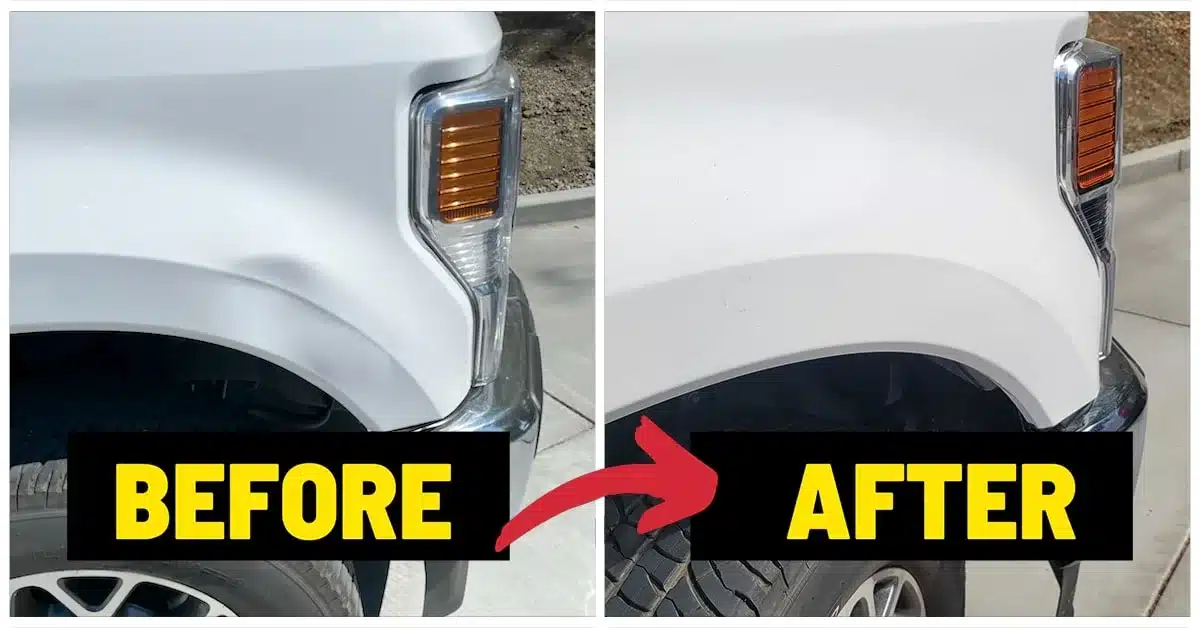
Why Auto Dent and Paint Repair Matters More Than You Think
Auto dent and paint repair is something most vehicle owners will need at some point — whether it’s a parking lot door ding, a hail storm, or a mystery scuff that appeared overnight.
Here’s what you need to know at a glance:
| Repair Type | Best For | Paint Required? | Typical Time |
|---|---|---|---|
| Paintless Dent Repair (PDR) | Door dings, hail, minor dents with intact paint | No | 30 min – 3 hrs |
| Traditional Body Repair | Deep scratches, cracked paint, structural damage | Yes | 1–3+ days |
| Mobile PDR | Any PDR-eligible damage, at your home or office | No | Same day |
Most minor dents — the kind that show up after a busy day at the grocery store — don’t need sanding, fillers, or a repaint. A method called paintless dent repair (PDR) can fix them in hours, preserve your factory finish, and cost a fraction of what a traditional body shop would charge.
But not every dent qualifies. And choosing the wrong repair method can actually hurt your vehicle’s resale value.
This guide breaks down exactly what your options are, what damage qualifies for each, and how to get your car looking flawless again — fast.
I’m Brian Blanc, founder of Dent Erasers LLC, and I’ve spent nearly three decades in the auto dent and paint repair industry, building a mobile PDR service across the East Bay that serves everyday drivers, luxury vehicle owners, dealerships, and body shops alike. I’ll walk you through everything you need to make a smart, confident repair decision.
Easy auto dent and paint repair word list:
Choosing the Right Auto Dent and Paint Repair Method
When we look at a dented panel, we aren’t just looking at an eyesore; we are looking at metal that has been forced out of its original shape. To repair it correctly, we have to understand how modern vehicle panels behave.

Every modern vehicle panel possesses what we in the industry call “metal memory.” When a panel is stamped at the factory, the metal is pressed into a specific shape under immense pressure. It wants to stay in that shape. When a low-speed impact occurs — like a runaway shopping cart or a stray basketball — the metal is stretched, but its underlying memory remains intact.
Our goal in professional auto dent and paint repair is to gently guide that metal back to its original state. However, the success of this process hinges entirely on the condition of your vehicle’s factory finish. The original factory paint is highly elastic and engineered to withstand minor flexing. If the paint is completely intact, we can preserve it. If the paint is cracked, chipped, or scraped down to the metal, paint preservation is no longer an option, and a more invasive approach is required.
What is Paintless Dent Repair (PDR)?
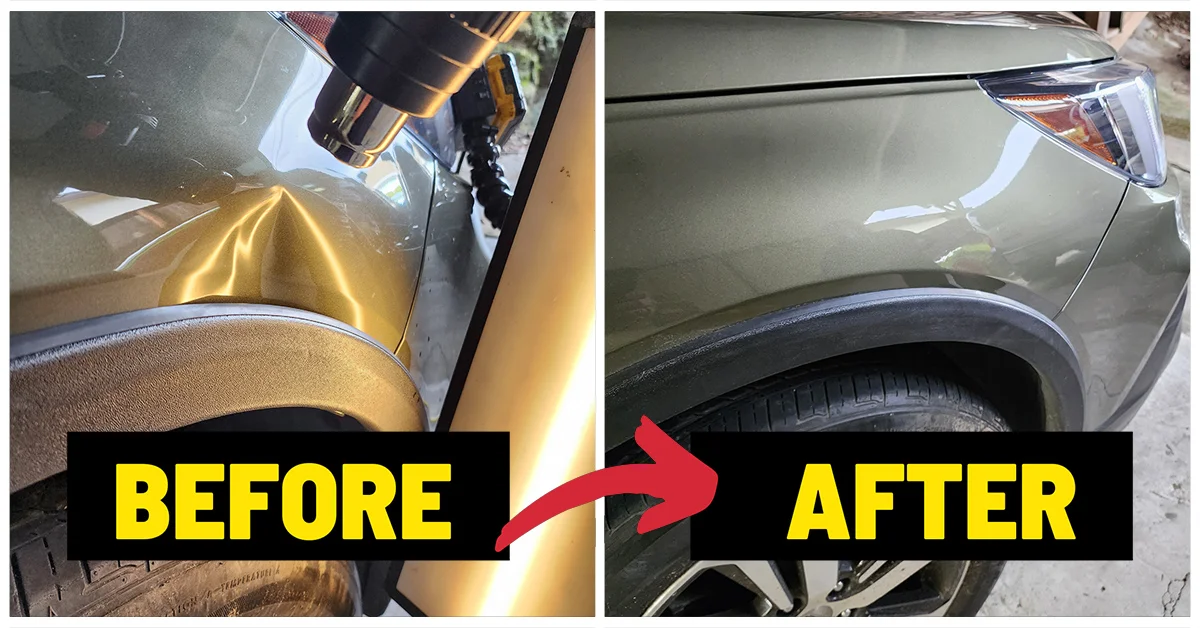
Paintless Dent Repair (PDR) is the art and science of removing dents from a vehicle’s body panels without disturbing the original factory finish. Rather than masking the damage with body filler and spraying a fresh layer of aftermarket paint, we manipulate the metal back into its exact original shape.
To do this, we use three primary tools and techniques:
- Specialized Rods and Picks: These long, high-strength steel and carbon-fiber tools are inserted behind the damaged panel through existing access points (such as window channels, wiring harness ports, or removed trim panels). We then apply highly controlled, incremental pressure to massage the dent out from the inside.
- Glue Pulling Systems: When access to the back of a panel is structurally blocked — such as on roof pillars or double-walled panels — we use a specialized glue pulling process. We apply custom-formulated hot or cold glue to plastic tabs, adhere them to the front of the dent, and use slide hammers or mini-lifters to pull the metal back into place. The glue is designed to release cleanly without harming the clear coat.
- Reflective LED Light Boards: PDR is a game of millimeters. We position specialized LED light boards next to the panel to cast a series of parallel lines across the dent. By reading how these lines distort over the metal, we can see the exact high and low spots of the dent, allowing us to perform expert dent removal with absolute precision.
Limitations of PDR: When Traditional Repair is Required
As much as we love the magic of PDR, it isn’t a cure-all. There are specific scenarios where traditional auto body repair is the only viable path forward.
Traditional repair is necessary when you encounter:
- Severe Paint Cracking or Peeling: If the impact was sharp enough to split the paint or cause it to flake away, PDR cannot restore the finish. Leaving exposed metal invites rust, which will destroy the panel over time.
- Deep, Sharp Scratches: Scratches that have penetrated past the clear coat and base coat into the primer or bare metal require sanding, priming, and repainting.
- Stretched or Torn Metal: If a dent is exceptionally deep with sharp, creased edges, the metal may be permanently “stretched” beyond its elastic limit. In these cases, the metal cannot return to its original shape without cracking or leaving a visible warp.
- Structural and Frame Damage: Major collision impacts that compromise the vehicle’s structural integrity or crumple zones require heavy-duty frame straighteners and panel replacements.
Because we at Dent Erasers LLC specialize exclusively in mobile PDR, we do not provide traditional painting, sanding, or body filler services. If your vehicle has sustained severe impact damage where the paint is broken, you will need to seek external best body paint car services.
For drivers in our local East Bay service areas who require full-service collision repairs, frame alignment, or panel repainting, you will need to visit an established physical collision repair facility. Traditional auto body shops have the heavy machinery, dust-free paint booths, and computerized color-matching technology required to safely execute major collision repairs and full panel repainting.
What Types of Damage Qualify for Paintless Dent Repair?
To determine if your vehicle is a candidate for PDR, we evaluate three primary factors: paint integrity, dent depth, and panel location.
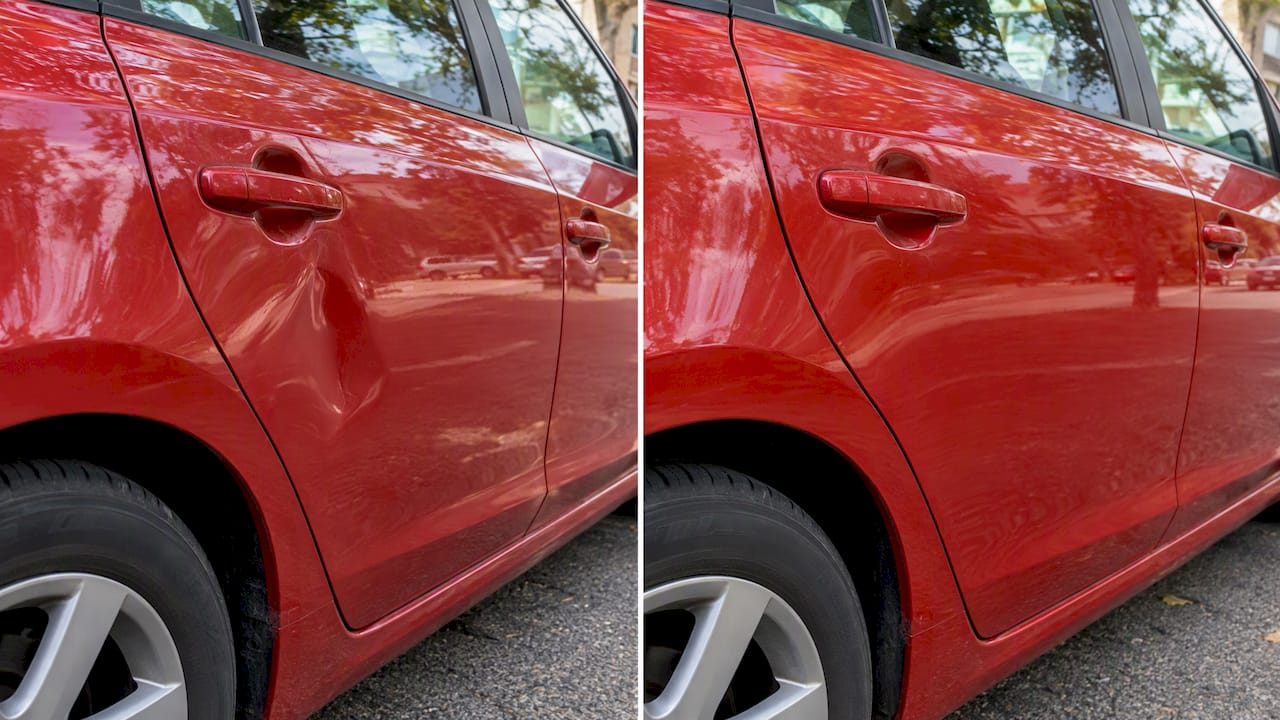
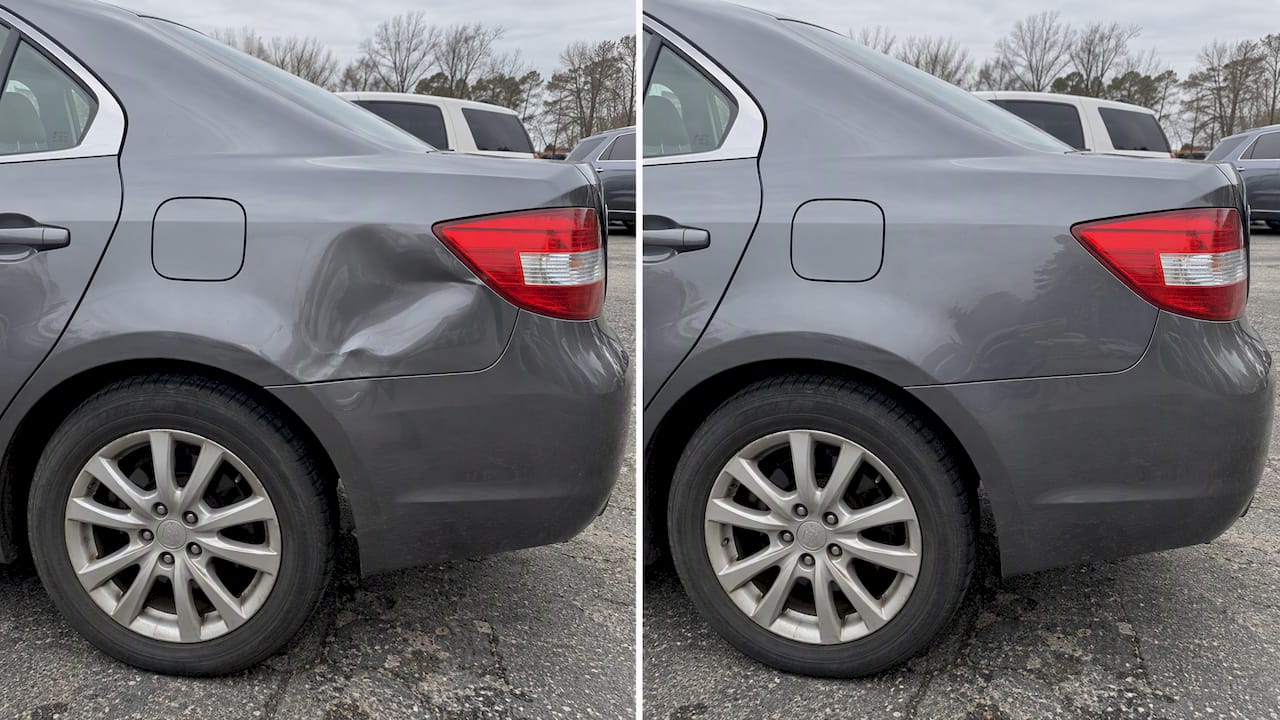
Most everyday parking lot mishaps qualify perfectly. Door dings caused by runaway shopping carts or car doors opening into yours are the most common candidates. Creases — which are elongated dents caused by something dragging along the panel — can also be repaired using PDR, provided the crease isn’t so sharp that it has creased the metal like a piece of folded paper.
We also look closely at the panel location. Most outer body panels, including fenders, doors, hoods, trunks, and roofs, are highly accessible. However, dents located directly on structural double-walled braces, tight panel edges, or the very edge of a door hem can be more challenging. Fortunately, with modern glue-pulling technology and ultra-thin custom tools, we can successfully resolve small dents and big problems that would have required a traditional body shop just a decade ago.
Eligible Dents and Modern Vehicle Materials
Modern vehicles are built using a mix of advanced materials designed to reduce weight and improve safety. The two most common metals we work with are steel and aluminum.
- Steel Panels: Traditional mild and high-strength steels are highly elastic. They have excellent “metal memory,” making them incredibly receptive to PDR. We can easily massage steel back into place with predictable results.
- Aluminum Panels: Increasingly common on modern hoods, doors, and electric vehicles (like Teslas), aluminum is much lighter and stiffer than steel. It does not have the same metal memory as steel and requires significantly more force to move. Because aluminum is prone to work-hardening (becoming brittle as you work it), it requires highly specialized PDR techniques, including the careful application of controlled heat to make the metal more pliable.
Understanding these material properties is crucial. Working on aluminum requires a certified touch to avoid over-stretching the metal, which can dramatically affect small dent costs if handled incorrectly.
PDR for Hail Damage and Insurance Claims
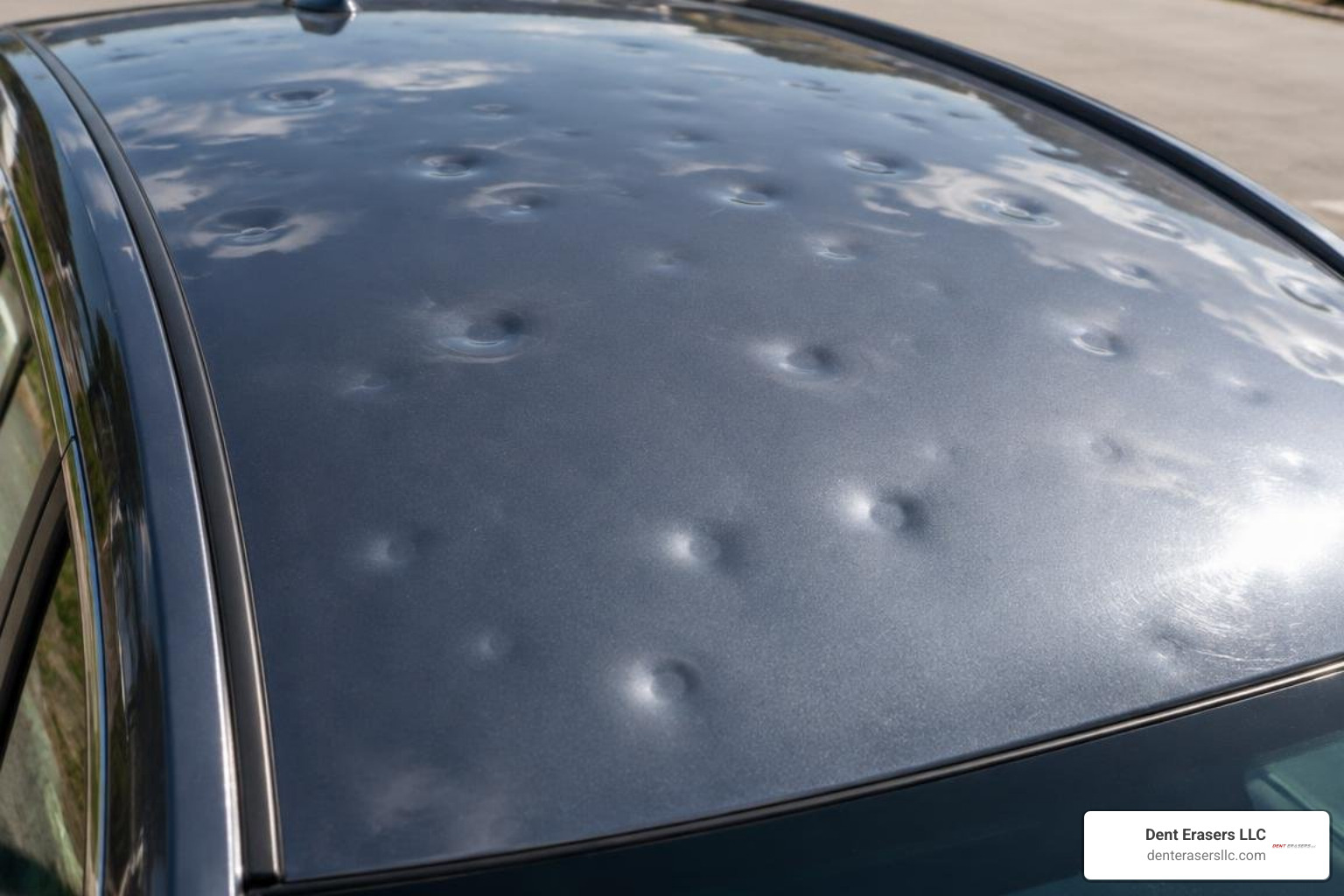
If you’ve ever lived through an East Bay storm that dropped unexpected hail, you know how devastating it can be to your car’s exterior, often leaving the hood, roof, and trunk looking like a dimpled golf ball.
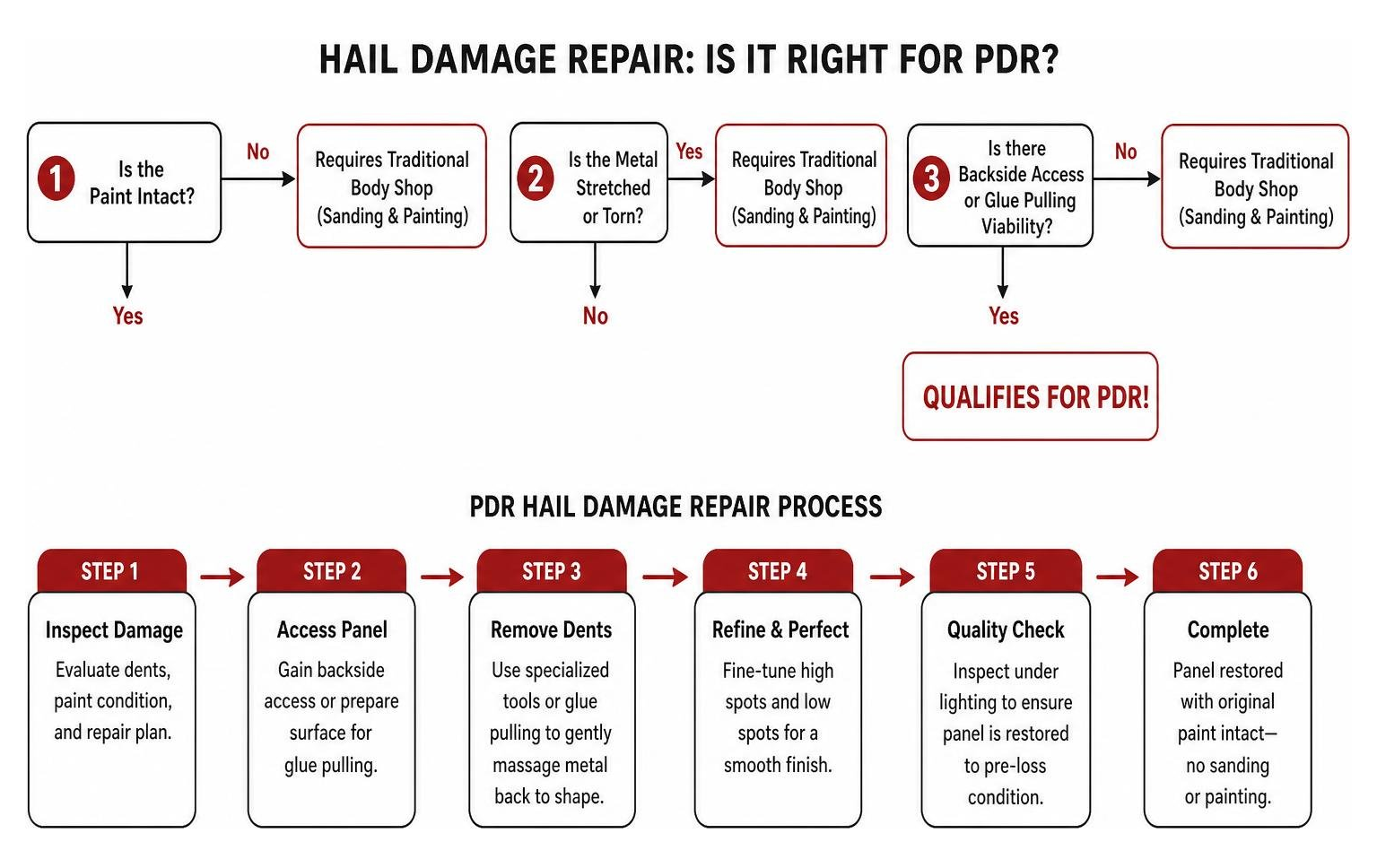
PDR is the industry-standard, preferred method for hail damage repair by leading insurance agencies. Because hail impacts are rounded and rarely break the paint, PDR can restore the entire vehicle to pre-loss condition in a fraction of the time a traditional shop would take.
Furthermore, opting for PDR for hail damage offers a massive financial and reporting advantage:
- No Carfax Red Flags: Because PDR does not involve replacing structural panels, grinding metal, or spraying aftermarket paint, it typically does not trigger the negative “accident history” flags on a Carfax report that traditional collision repairs do.
- Insurance Coverage & Deductible Assistance: Comprehensive insurance policies cover hail damage. We work directly with major insurance providers to streamline the claims process, and we can often assist with deductible savings to minimize your out-of-pocket expenses.
- Preventing Structural Leaks: Roof dents that occur near sunroof seals or roof racks can compromise the vehicle’s weatherproofing. Addressing these quickly via PDR ensures your cabin remains watertight.
The Benefits of Choosing PDR Over Traditional Bodywork
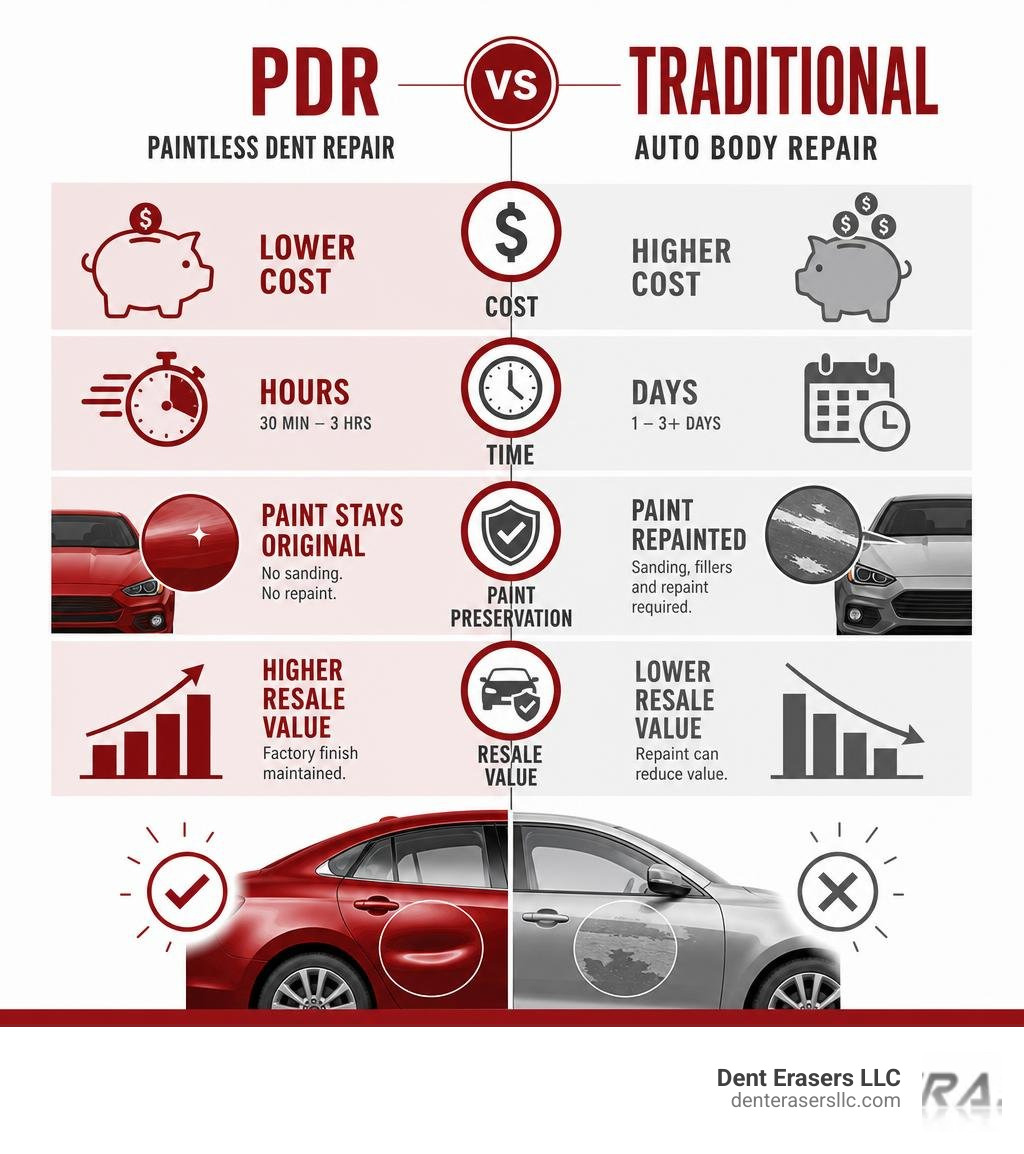
When your vehicle qualifies for Paintless Dent Repair, choosing it over a traditional body shop is a no-brainer. It saves you time, protects your wallet, and preserves your vehicle’s long-term value.
| Feature | Paintless Dent Repair (PDR) | Traditional Auto Body Shop |
|---|---|---|
| Cost | Highly affordable ($150 – $500) | Expensive ($500 – $3,000+) |
| Time | 30 minutes to 3 hours (Same Day) | 3 to 10+ days (Requires rental car) |
| Paint Finish | 100% original factory paint preserved | Aftermarket paint (Risk of color mismatch) |
| Vehicle Value | Maintains maximum resale value | Can depreciate value due to paint work |
| Eco-Friendly | Zero chemicals, primers, or paint waste | High VOC emissions and chemical waste |
By keeping the original factory paint intact, you completely bypass the risk of paint mismatching, peeling, or fading over time due to UV exposure. This is why PDR is consistently recognized as one of the cheapest ways to fix a car dent without cutting corners on quality.
How Mobile Services Bring the Repair Shop to You
In the busy world of July 2026, nobody wants to lose their vehicle to a body shop for a week just to fix a minor ding. That is where mobile PDR shines. We bring the entire repair shop directly to your home, office, or dealership.
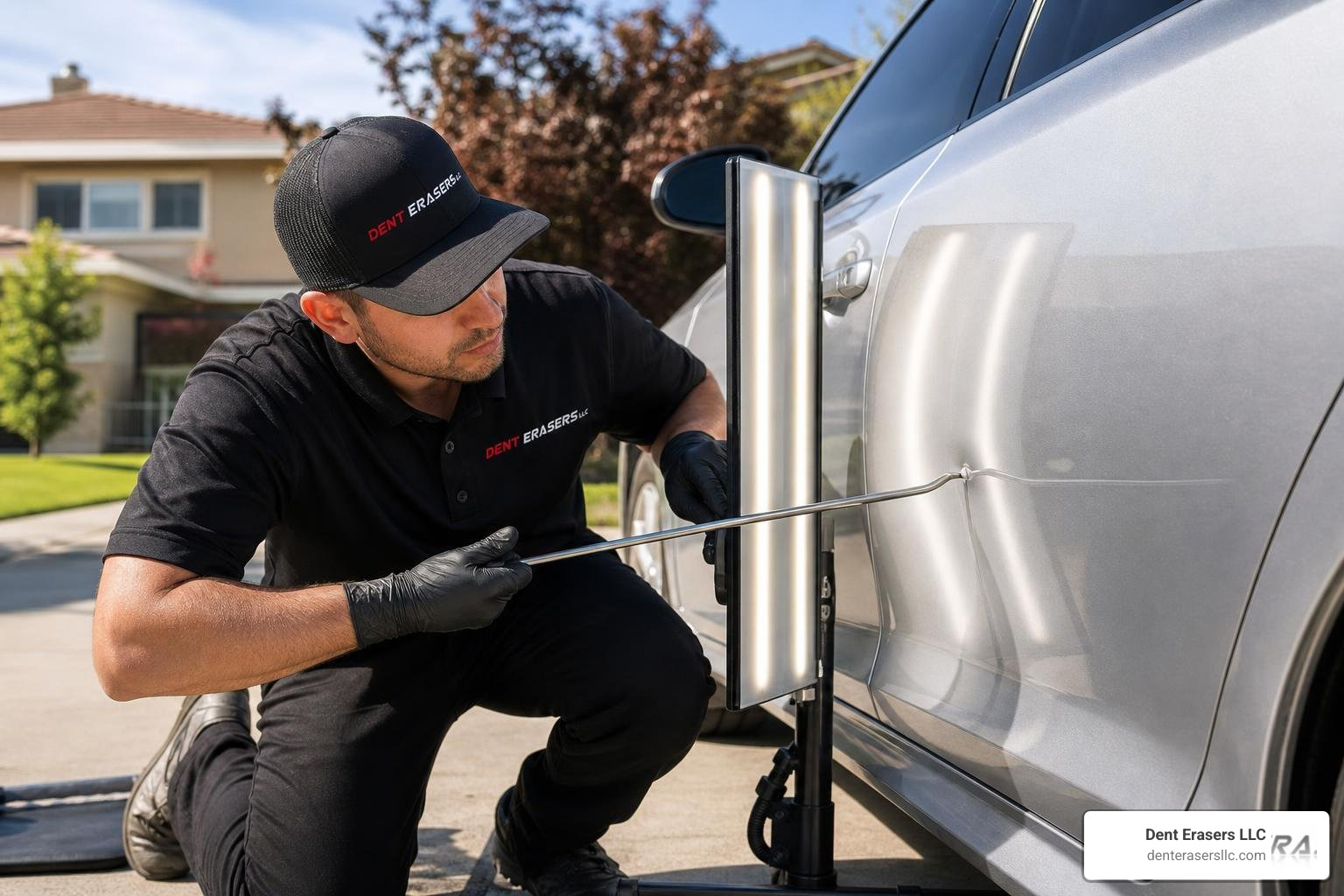
To perform a mobile repair, we only require two basic things:
- A Private Driveway or Garage: For safety and legal reasons, we cannot perform repairs on public streets. A spacious driveway, private parking lot, or garage provides the controlled environment we need.
- Sufficient Working Clearance: We need enough space to set up our specialized LED light boards and maneuver our tools around the vehicle.
To make the process as seamless as possible, we offer virtual estimates. By taking three clear photos of your damage — a close-up, an angled shot to show the depth, and a wider shot from a distance — you can text or email them to us for a rapid, accurate ballpark quote. This completely eliminates the hassle of driving around the East Bay just to get a price comparison, helping you quickly understand your potential car dent scratch repair cost.
The Convenience of Mobile Auto Dent and Paint Repair
At Dent Erasers LLC, we have optimized our mobile service to fit seamlessly into your day. Operating throughout Concord, CA, and the wider Contra Costa County area, we specialize in delivering flawless results right where you are.
Our typical repair takes under 3 hours, and our pricing ranges from an incredibly affordable $150 to $500 for standard dents. Compare that to a traditional collision shop where the same repair would easily cost double, require a hefty insurance deductible, and leave you stranded without a car for several days.
Specialized Paintless Dent Repair Applications
Because PDR is a highly precise art form, its applications extend far beyond standard passenger cars:
- Motorcycle Dent Repair: We can successfully remove dents from motorcycle gas tanks and fenders (including Harley-Davidsons) without damaging custom, expensive paint finishes.
- Luxury and Classic Vehicles: Owners of high-end brands like Tesla, BMW, and Porsche trust us to maintain their vehicles’ pristine factory finishes, ensuring their warranties remain completely intact.
- Plastic Bumper Dent Removal: Many modern bumpers are plastic. If a low-speed impact has “popped” the bumper inward but the plastic hasn’t torn and the paint hasn’t cracked, we can use controlled heat and specialized shaping tools to pop the bumper back into its original shape. This completely avoids the high bumper scuff repair cost associated with traditional body shops, making paintless bumper reshaping a highly preferred alternative to costly plastic bumper repair processes that require full repainting.
Frequently Asked Questions about Dent Repair
How much does paintless dent repair typically cost?
For most minor dents, door dings, and creases, our professional mobile PDR services range between $150 and $500. The final price depends on the size of the dent, its depth, the panel material (aluminum requires more time and effort), and access difficulty.
Because our rates are highly competitive, most clients choose to pay out-of-pocket rather than filing an insurance claim, which helps them avoid rising premiums and bypasses the high deductibles associated with traditional auto body repair costs.
How long does a mobile dent repair take?
The vast majority of our mobile repairs are completed in 1 to 3 hours. A simple, straightforward door ding can often be massaged out in as little as 30 to 60 minutes while you wait in the comfort of your home or office.
What should I look for when choosing a dent repair service provider?
When hiring a PDR technician, look for:
- Industry Certifications: Ensure your technician is certified by recognized bodies such as the ARC (Auto Reconditioning Certification) or NAPDRT (National Association of Paintless Dent Repair Technicians).
- Workmanship Warranty: A reputable provider should always stand behind their work with a solid warranty.
- Local Reputation: Check local customer feedback on trusted directories. You can browse THE BEST 10 MOBILE DENT REPAIR IN CONCORD, CA or THE BEST 10 MOBILE DENT REPAIR IN WALNUT CREEK to see what your neighbors are saying about local mobile providers. For broader auto body needs, you can also consult the list of top-rated contractors in Contra Costa County.
Conclusion
Your vehicle’s factory paint is a shield that can never be truly replicated once it is sanded away. By choosing Paintless Dent Repair, you choose a faster, more affordable, and eco-friendly method that preserves your vehicle’s original finish and safeguards its maximum resale value.
If you are located in Concord, Walnut Creek, Antioch, San Ramon, or anywhere else in Contra Costa County, let us bring our three decades of expertise straight to your driveway.
Don’t let those annoying dings drive you crazy any longer. Schedule your paintless dent repair service today with Dent Erasers LLC and get your car looking showroom-new again!