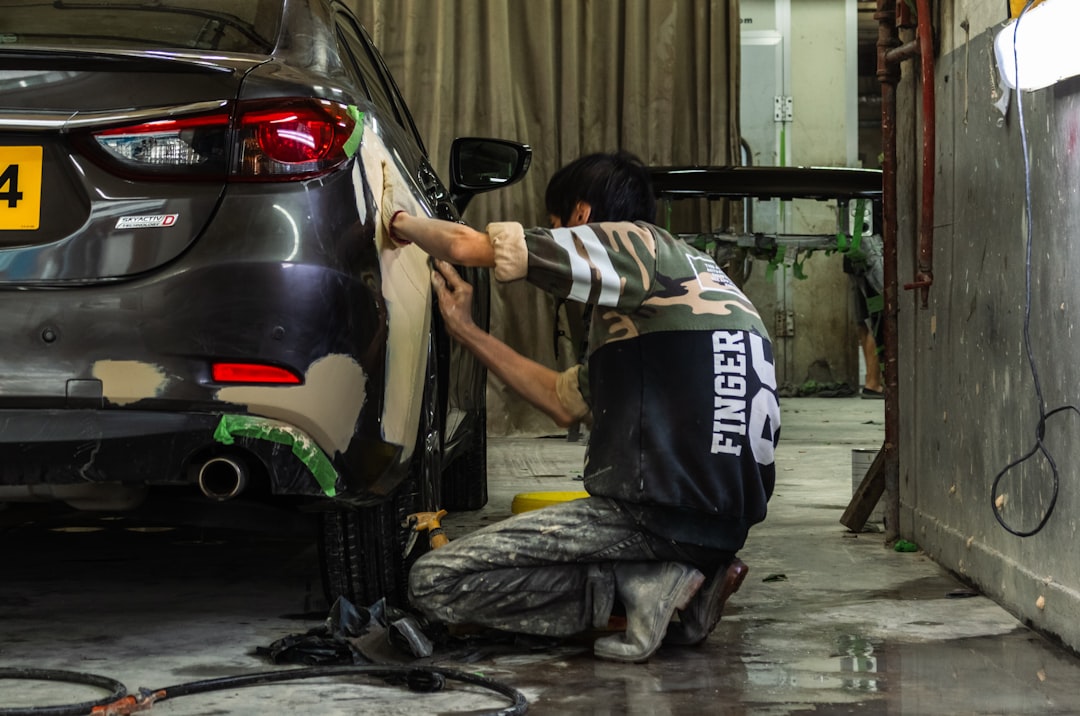
Find the Right Local Paint and Auto Body Repair
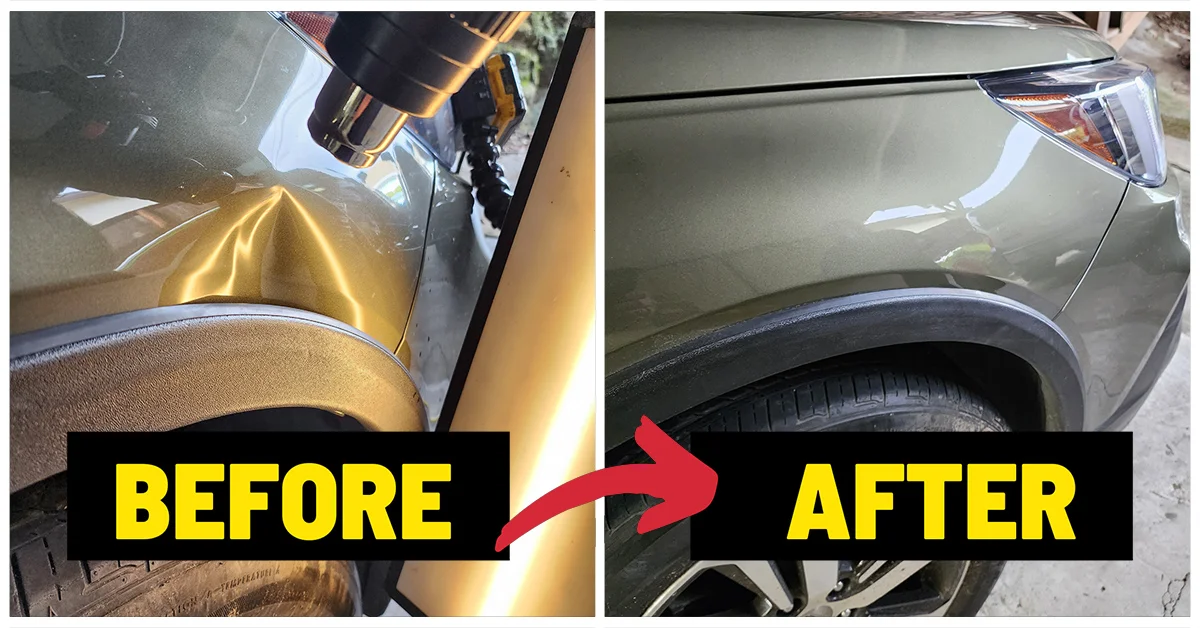
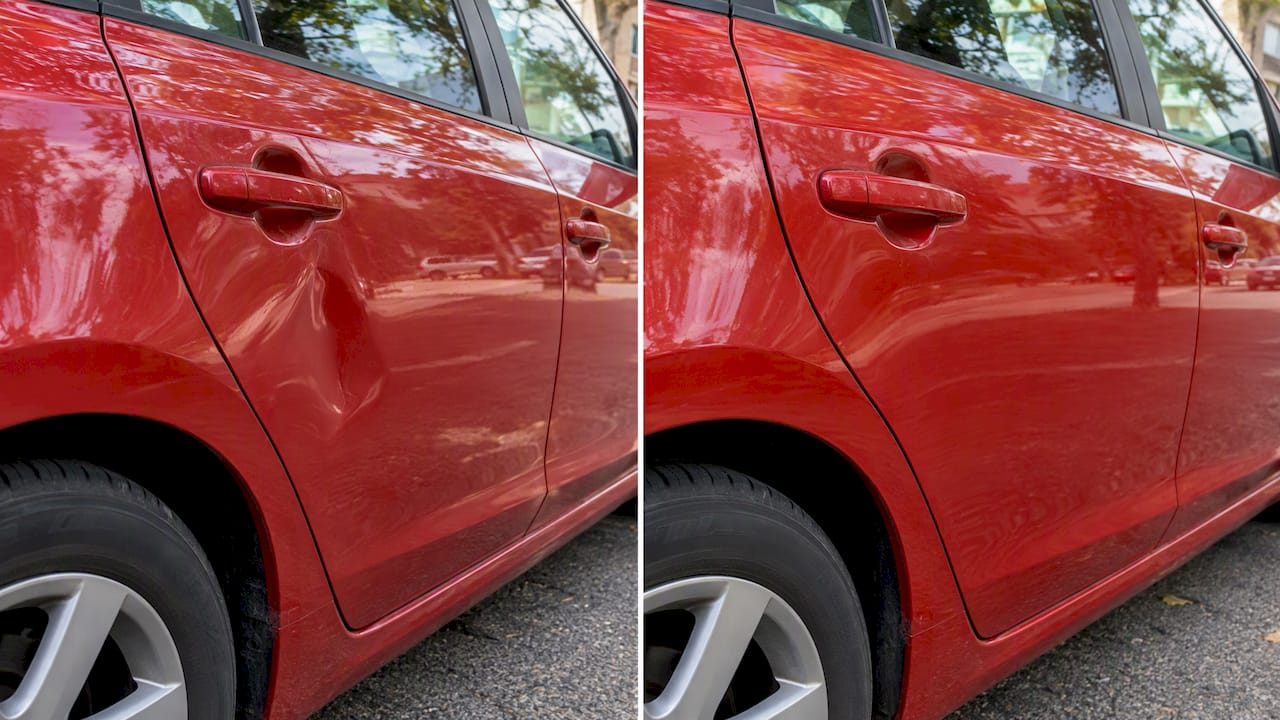
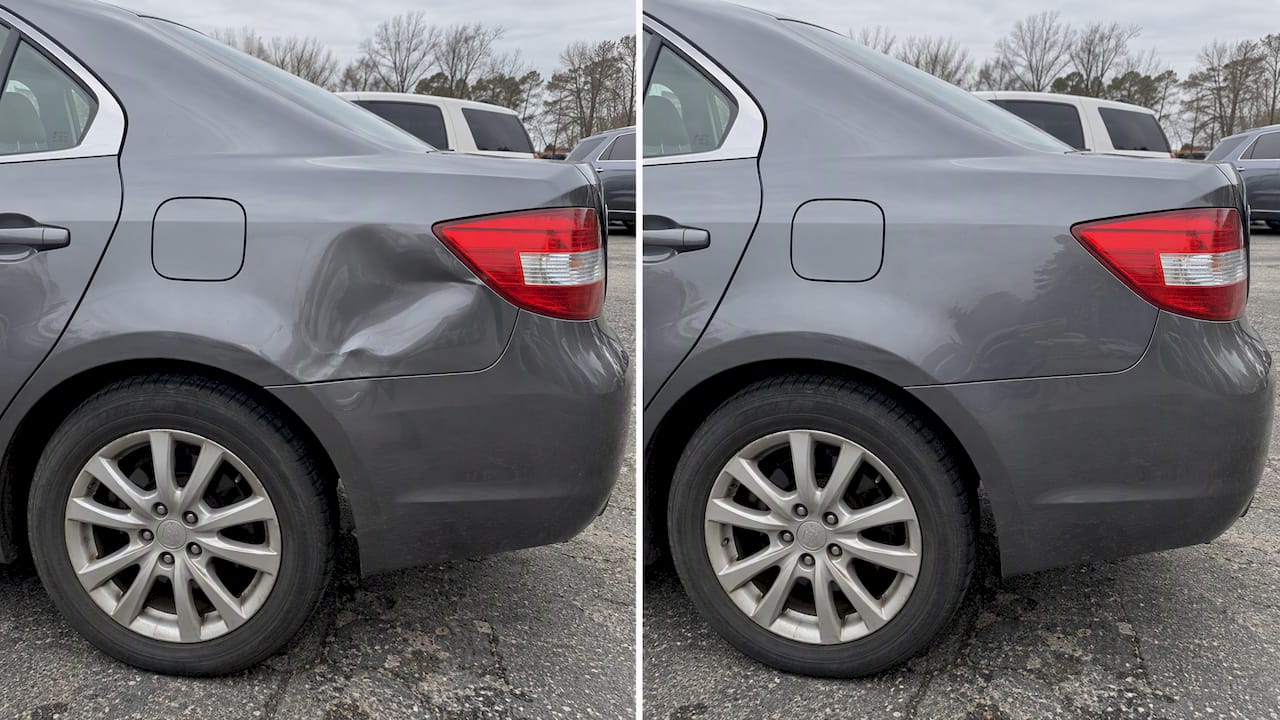
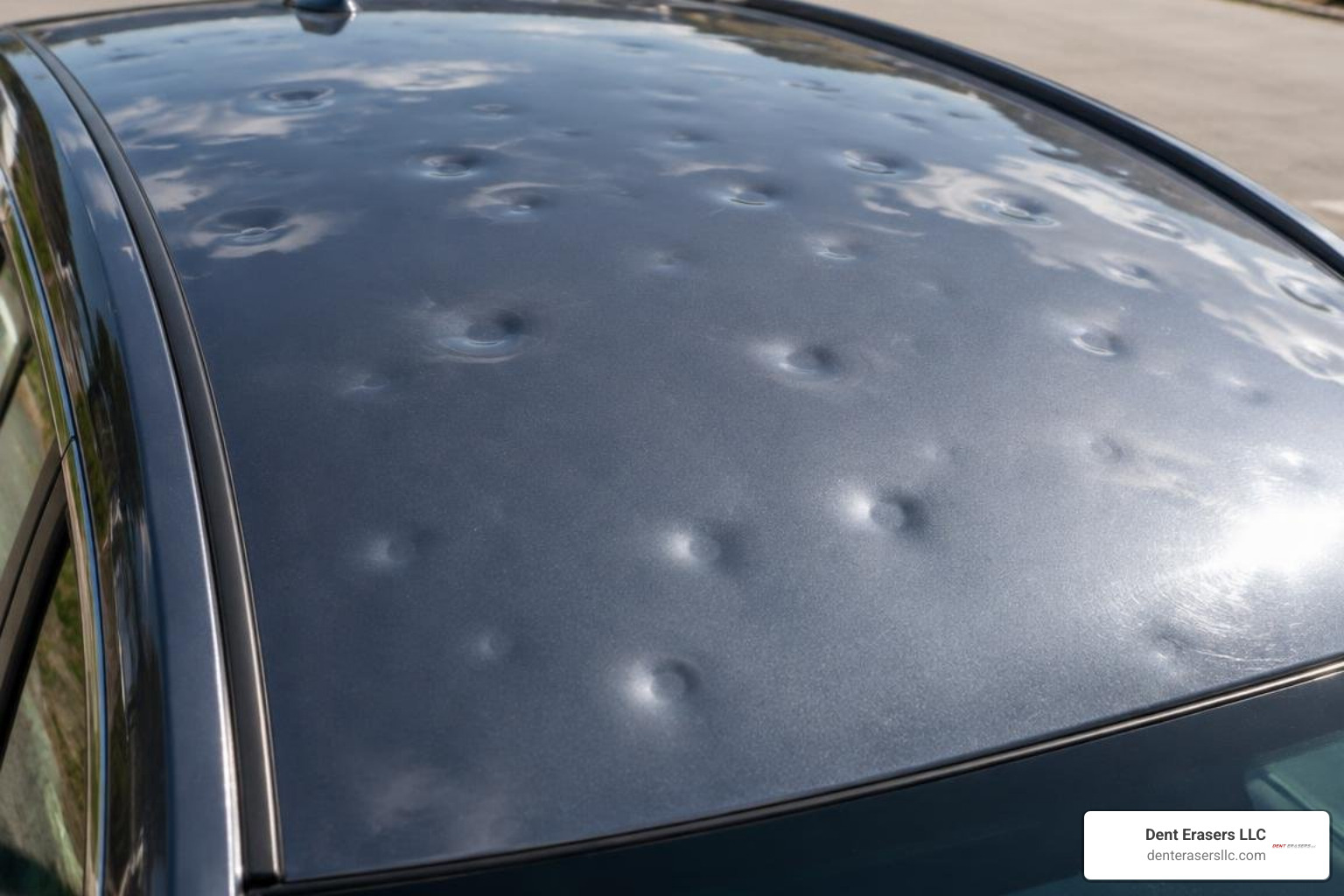
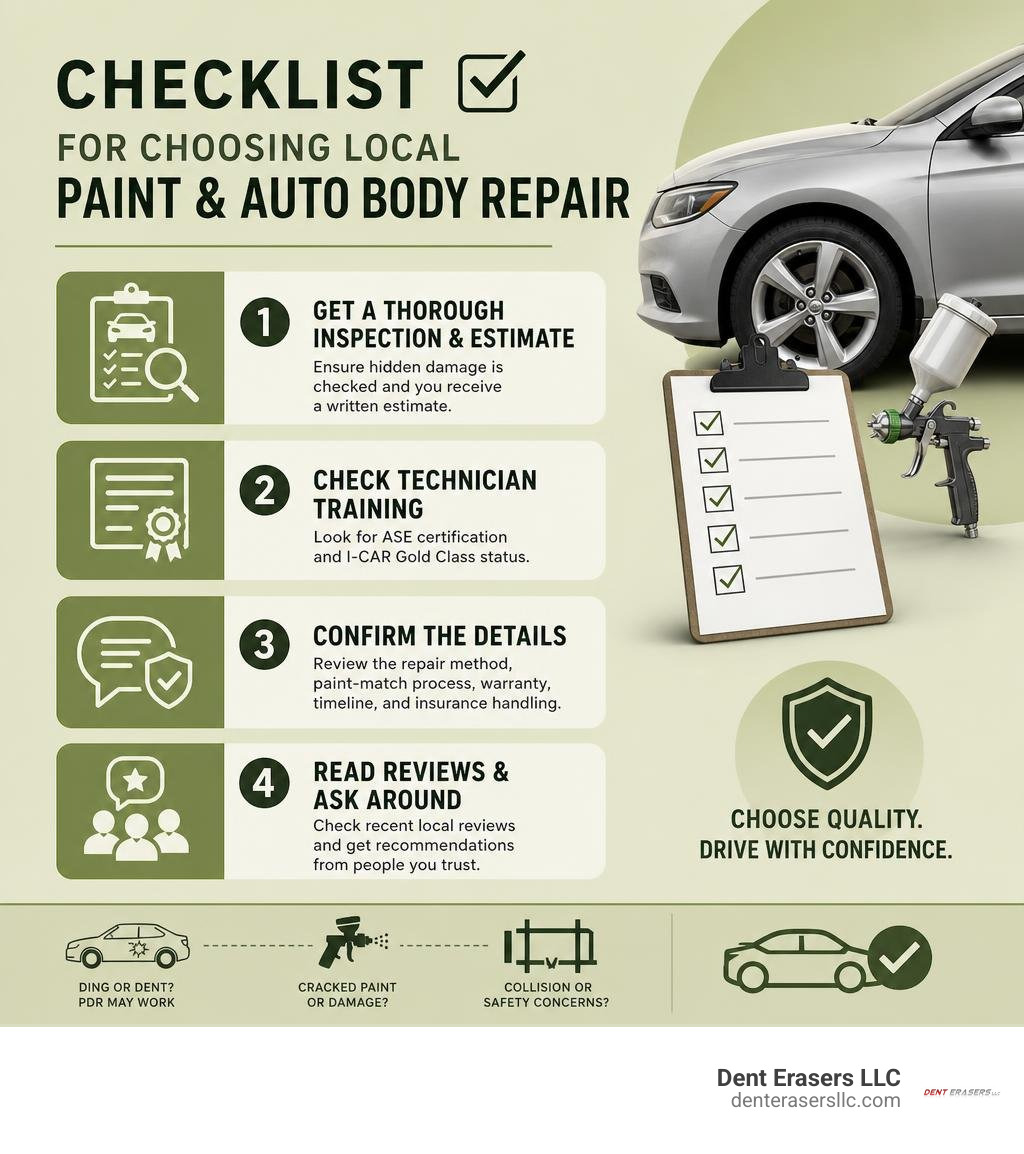
When searching for paint and auto body near me, start by matching the shop to the damage. For a parking-lot ding, door dent, or hail mark with intact paint, mobile paintless dent repair may restore the panel faster and without repainting. For cracked paint, bumper damage, collision damage, or suspected frame and safety-system issues, choose a collision facility with trained technicians, clear estimates, and insurance claim experience.
Before you book, check these basics:
- Ask whether the shop can inspect for hidden damage and provide a written estimate.
- Look for technician training such as ASE certification and I-CAR Gold Class status. Only about 15% of collision repair businesses reach Gold Class.
- Confirm the repair method, paint-match process, warranty, timeline, and who will handle insurance paperwork.
- Read recent local reviews and ask people you trust. Word of mouth remains a common way drivers find repair shops.
A good local specialist should explain what can be repaired without paint, what requires refinishing, and what may change once the vehicle is taken apart for a full inspection.
I’m Brian Blanc, owner of Dent Erasers LLC and a paintless dent repair technician with 28 years of experience serving the East Bay. For drivers comparing paint and auto body near me options, I help identify when mobile PDR can preserve the factory finish and avoid the time and cost of a traditional body-shop repair.
Similar topics to paint and auto body near me:
Essential Services Offered by Paint and Auto Body Near Me Facilities
When dealing with the aftermath of an unexpected accident or navigating daily road wear, understanding the full scope of collision restoration helps you make informed choices. Today’s dedicated auto care facilities combine craftsmanship with advanced structural diagnostic equipment. If you are demystifying the auto and body shop with our guide to collision repair services, you will discover that modern shops handle everything from superficial sheet-metal scuffs to intricate mechanical restorations.

A comprehensive repair facility provides several core restoration capabilities:
- Digital Frame Straightening and Structural Repair: Severe impacts can bend the underlying unibody or chassis out of alignment. Facilities utilize three-dimensional laser measuring systems and hydraulic pulling equipment to return the vehicle’s structural skeleton back to strict factory tolerances.
- Bumper Restoration and Plastic Welding: Modern bumper covers absorb minor impacts but frequently crack, scuff, or detach. Specialized repair techniques restore structural integrity to thermoplastic bumper covers before refinishing.
- Automotive Glass Replacement: Windshields, quarter glass, and rear windows often shatter or crack during collisions. Proper resealing prevents moisture leaks and restores structural rigidity.
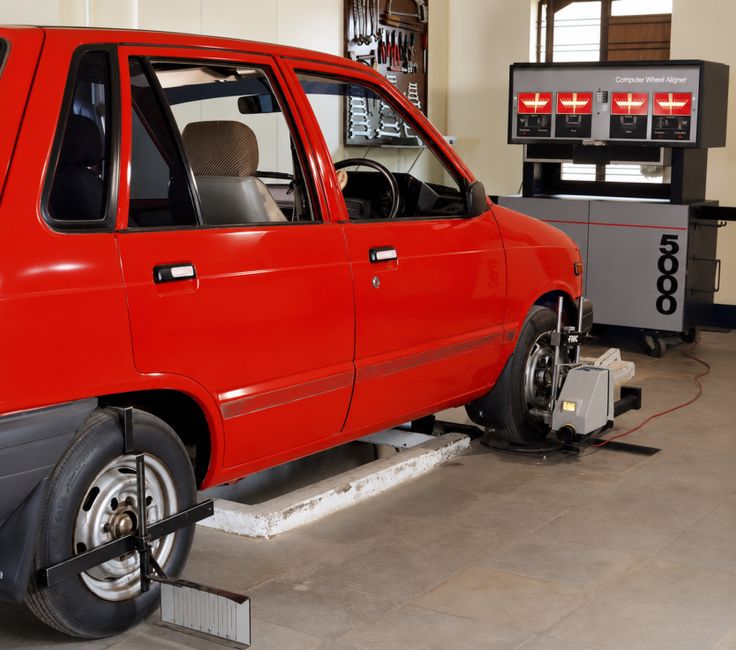
- Mechanical Wheel and Suspension Alignment: Collisions routinely knock suspension assemblies out of geometry. Computerized alignment racks verify that steering components, thrust angles, and camber settings match exact original specifications.
Computerized Paint Matching and Refinishing Techniques
Achieving an unnoticeable paint repair requires scientific precision. Modern automotive finishes consist of multiple layers, including electrocoat primers, colored basecoats, and protective clear coats. Environmental factors such as direct sunlight cause subtle variations across identical vehicle models over time.
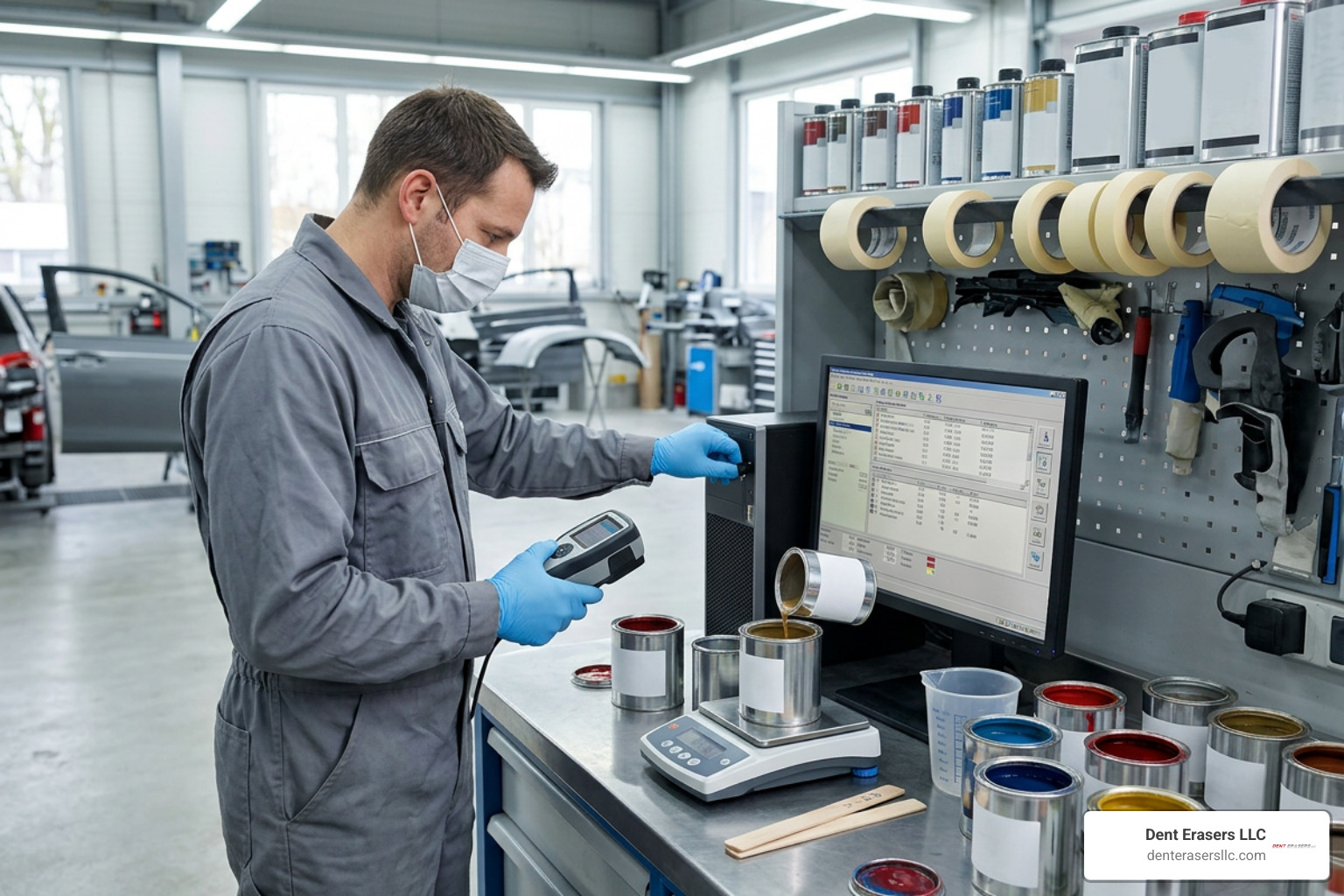
To guarantee a seamless transition, refinishing specialists employ digital spectrophotometers. These optical devices scan the vehicle’s existing paint directly to read pigment levels, metallic flake distribution, and natural aging. Technicians then consult factory color code databases to mix tailored formulas on-site. Once mixed, the basecoat and clear coat layers are applied in climate-controlled, downdraft spray booths. These booths filter out microscopic airborne contaminants and use accelerated heat-curing cycles to bake the finish into a durable, factory-grade shell. This process helps completely restore your car’s body and paint after side-swipes or panel abrasions.
Paintless Dent Repair vs Traditional Body Repair
Not all panel damage requires stripping paint, sanding metal, or applying polyester body fillers. Vehicle owners throughout Contra Costa County—from Concord and Walnut Creek to San Ramon and Brentwood—often have the choice between conventional auto body repair and specialized Paintless Dent Repair (PDR).
Paintless Dent Repair relies on specialized hand tools, reflective LED lighting boards, and precise metal manipulation from behind the panel. Technicians massage bent metal back into its original shape without disturbing the factory clear coat. Exploring local dent and paint repair options allows drivers to preserve original factory corrosion barriers while saving significant time and expense. In contrast, traditional collision repairs remain necessary whenever the paint surface is torn, sheet metal is sharply creased, or panels require structural replacement.
How to Evaluate Quality and Certifications in Local Collision Shops
Finding an auto repair center you can trust shouldn’t feel like a gamble. When evaluating local facilities, look beyond proximity and promotional claims. Relying on established benchmarks and selecting a reliable auto body shop ensures your car receives safe, warrantied repairs. You can also consult vetted regional directories, such as Local directory listings for certified collision repair, to read independent feedback from vehicle owners in your neighborhood.
Evaluating Certifications When Searching for Paint and Auto Body Near Me
Industry certifications highlight a shop’s dedication to ongoing technician education and modern repair methodologies:
- I-CAR Gold Class Certification: Recognized as the highest training credential in the collision repair industry. Only about 15 percent of collision repair businesses achieve Gold Class status. Technicians undergo continuous annual training to learn proper repair techniques for high-strength steels, advanced driver assistance systems (ADAS), and complex vehicle electronics.
- ASE (National Institute for Automotive Service Excellence) Certification: ASE-certified technicians demonstrate verified mechanical competency across structural analysis, non-structural panel repair, electrical systems, and custom painting.
- Advanced Diagnostic Capabilities: Modern collision facilities use pre- and post-repair computer diagnostics. Hidden structural displacement or tripped safety sensors cannot always be seen with the naked eye; electronic diagnostic scanners detect internal component faults before you get back on the road.
- Lifetime Craftsmanship Warranties: Reliable repair centers back their structural repairs and paint refinishing with lifetime warranties valid for as long as you own the vehicle.
Insurance Direct Repair Programs and Free Visual Estimates
Many established facilities operate as Direct Repair Facilities (DRPs) for major insurance providers such as Progressive, USAA, and other leading carriers. DRP shops maintain pre-established workflows with insurers, which accelerates repair authorizations, simplifies rental car logistics, and eliminates paperwork delays.
When visiting a facility, technicians perform an initial visual estimate outlining exterior labor, required refinishing, and visible part replacements. However, vehicle owners should note that initial visual quotes represent a baseline assessment. Once technicians perform a complete vehicle teardown and remove outer bumper covers or damaged quarter panels, hidden supplemental damage may emerge. A trustworthy facility contacts both you and your insurance provider immediately to document these secondary repairs through detailed supplemental line items.
Understanding Collision and Refinishing Costs and Timelines
Vehicle repair costs vary based on component materials, modern electronic sensors, and paint composition. While standard labor rates among certified facilities within a specific geographic area remain relatively uniform, overall repair bills depend directly on the depth of the initial estimate and chosen replacement parts.
During the estimating stage, you will encounter three primary categories of replacement components:
- Original Equipment Manufacturer (OEM) Parts: Brand-new parts produced directly by your vehicle’s manufacturer, designed to match original structural dimensions and factory crash-test performance.
- Aftermarket Parts: Components produced by third-party manufacturers that serve as direct-fit alternatives, often helping lower overall project costs.
- Recycled (LKQ) Components: Original OEM parts sourced from undamaged vehicles that provide factory fitment at reduced pricing.
Factors Influencing Quotes at Paint and Auto Body Near Me Shops
Calculating final costs involves assessing damage severity, panel access, paint type, and labor requirements. Three-stage pearlescent coats and specialized metallic finishes require extra blending into adjacent doors or fenders to avoid visible color mismatches, which increases material and labor hours. Drivers can review our breakdown on car dent repair cost with paint alongside our comprehensive guide to auto body repair costs to plan ahead for their budget.
| Service Level | Typical Repair Scope | Estimated Cost Range | Average Completion Timeline |
|---|---|---|---|
| Mobile Paintless Dent Repair (PDR) | Minor door dings, shallow body creases, hail damage without paint damage | $150 – $500 | 1 to 3 hours (On-site) |
| Bumper & Single Panel Refinishing | Deep scratches, scraped paint, plastic bumper cover welding and color blending | $450 – $1,200 | 2 to 4 business days |
| Moderate Collision Restoration | Multiple panel replacements, light suspension repair, blending adjacent panels | $1,500 – $4,500 | 5 to 10 business days |
| Comprehensive Frame & Structural Overhaul | Unibody realignment, airbag deployment reset, suspension and multi-panel replacement | $5,000 – $10,000+ | 2 to 4 weeks |
Financing Options and Payment Structures for Major Repairs
Unexpected vehicle repairs can strain household budgets, especially when paying an insurance deductible out-of-pocket or managing repairs without insurance coverage. Many certified collision centers partner with specialized automotive lenders to provide low-interest or interest-free repair financing.
Under standard operating procedures, vehicle owners are not required to pay for collision work upfront. Reputable facilities collect deductibles or direct customer payments only upon the vehicle’s completed delivery, giving you the opportunity to inspect the finished paint, body gaps, and overall repair quality before signing off.
Actionable Steps to Take Immediately Following an Accident
The moments following a collision can be stressful, but taking methodical steps protects both your personal safety and your vehicle repair claim.
Follow this immediate post-accident checklist:
- Ensure Scene Safety First: Check yourself and your passengers for injuries. If the vehicle is operable and you are on an active highway, move carefully to the shoulder or a well-lit parking area. Turn on your emergency hazard lights immediately.
- Contact Local Authorities: Request a police officer to the scene to file an official accident report. This documentation helps insurance adjusters determine liability accurately.
- Capture Detailed Photo Evidence: Take wide-angle photos showing vehicle positioning, lane markings, and skid marks. Next, take high-resolution, close-up pictures of all damaged panels, cracked lights, wheel scuffs, and existing scratches across both vehicles.
- Collect Vital Information: Exchange full names, phone numbers, driver’s license details, insurance policy numbers, and license plate information with all involved drivers.
- Coordinate Towing Carefully: If your vehicle is unsafe to drive due to leaking fluids, smoking radiators, or rubbing fenders, arrange towing to your chosen repair facility rather than an unfamiliar storage yard.
- Notify Your Insurance Carrier: File your initial claim promptly, providing photos and the police report number to establish your case file.
Frequently Asked Questions About Local Collision Repair
How long does a typical auto body repair and paint job take?
Straightforward cosmetic repairs, bumper repainting, or single-panel repairs generally take between two and five business days. This window covers complete vehicle disassembly, surface preparation, computerized paint spraying, clear coat baking, and final buffing. Extensive structural repairs requiring unibody pulling, multiple replacement parts, and mechanical recalibration can take two to three weeks, depending on part availability and insurance supplement approvals.
Can a body shop match my vehicle’s paint if it has faded?
Yes. Experienced auto paint specialists account for paint aging and sun oxidation. Rather than spraying generic factory formulas straight from a mixing guide, technicians use digital spectrophotometer cameras to scan your vehicle’s current, weathered finish. Paint specialists then tint basecoat pigments manually and blend clear coats across adjacent panels, ensuring the repaired area matches your vehicle’s overall finish.
Do I have to use the repair shop recommended by my insurance company?
No. California law protects your right to choose any licensed auto body repair facility you prefer. While insurance adjusters frequently recommend preferred Direct Repair Program facilities for faster processing, they cannot mandate where you take your vehicle. You can review independent platforms like Regional auto body directories to select a local, certified collision specialist based on technician training, equipment standards, and customer feedback.
Conclusion
Restoring your vehicle after an accident or minor impact requires the right balance of technical expertise, modern diagnostic tools, and quality craftsmanship. From assessing I-CAR Gold Class certifications and digital paint matching to understanding supplemental repair estimates, taking an informed approach ensures your vehicle looks great and remains structurally safe.
For vehicle owners across Concord, Walnut Creek, Pittsburg, Antioch, and surrounding East Bay communities who are dealing with minor door dings, bumper dents, or hail damage without broken paint, mobile Paintless Dent Repair offers a fast, affordable alternative to traditional body shop visits. Our team at Dent Erasers LLC brings 28 years of specialized metal-shaping experience directly to your driveway, restoring body panels while preserving your car’s original factory finish. When your vehicle requires full panel replacement, structural alignment, or spray-booth refinishing, schedule a consultation for professional auto body repair to get your car safely back on the road.